Key takeaways
- Orange, powdery spots under the leaves mean rust; flat black blotches on top mean black spot
- Rust starts on the lowest leaves in late spring and is worst in warm, humid summers
- The spores overwinter on fallen leaves and old stems, so clear leaves in autumn
- Cut out stems with swollen orange patches when you prune in late winter
- Open, airy roses watered at the base get far less rust
- If a variety rusts badly every year, replace it with a disease-resistant rose
Tiny bright orange dots under your rose leaves mean rose rust. It is a fungal disease that starts on the lowest leaves in late spring and can strip a bush by late summer. The good news is that it spends the winter in two places you can easily reach: fallen leaves and old stems. Deal with those and you break the cycle.
This guide covers how to spot rose rust, how to tell it from black spot, and the simple jobs through the year that keep it down. For rust on other plants, see the guide to rust disease in plants.
What does rose rust look like?
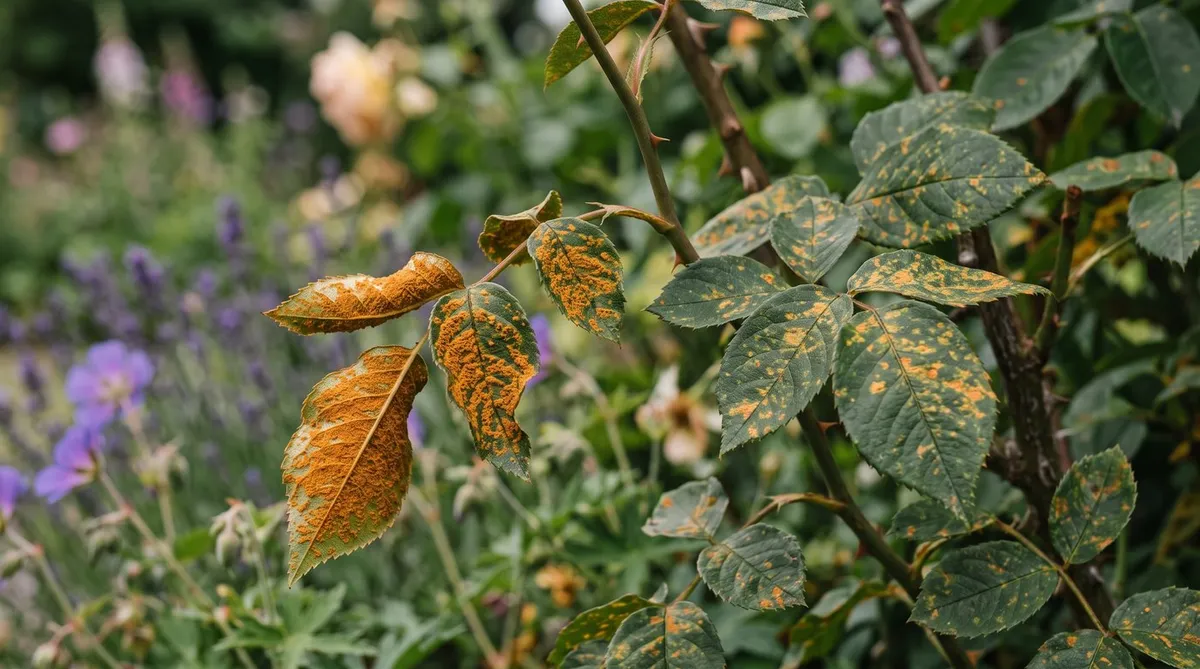
Rose rust shows up on the underside of the leaf. Look for small, raised, bright orange spots that feel dusty. Turn the leaf over and you will see yellow flecks on top, right above each spot. Rub one with a fingertip and it leaves an orange smear of spores.
It starts low and works its way up. The bottom leaves go first, then it climbs the bush. In a warm, wet summer a prone variety can be spotted all over within a few weeks.
There is an earlier sign that is easy to miss. In spring you may see swollen orange patches on last year’s stems. These release the first spores of the year, so cutting them out early really helps.
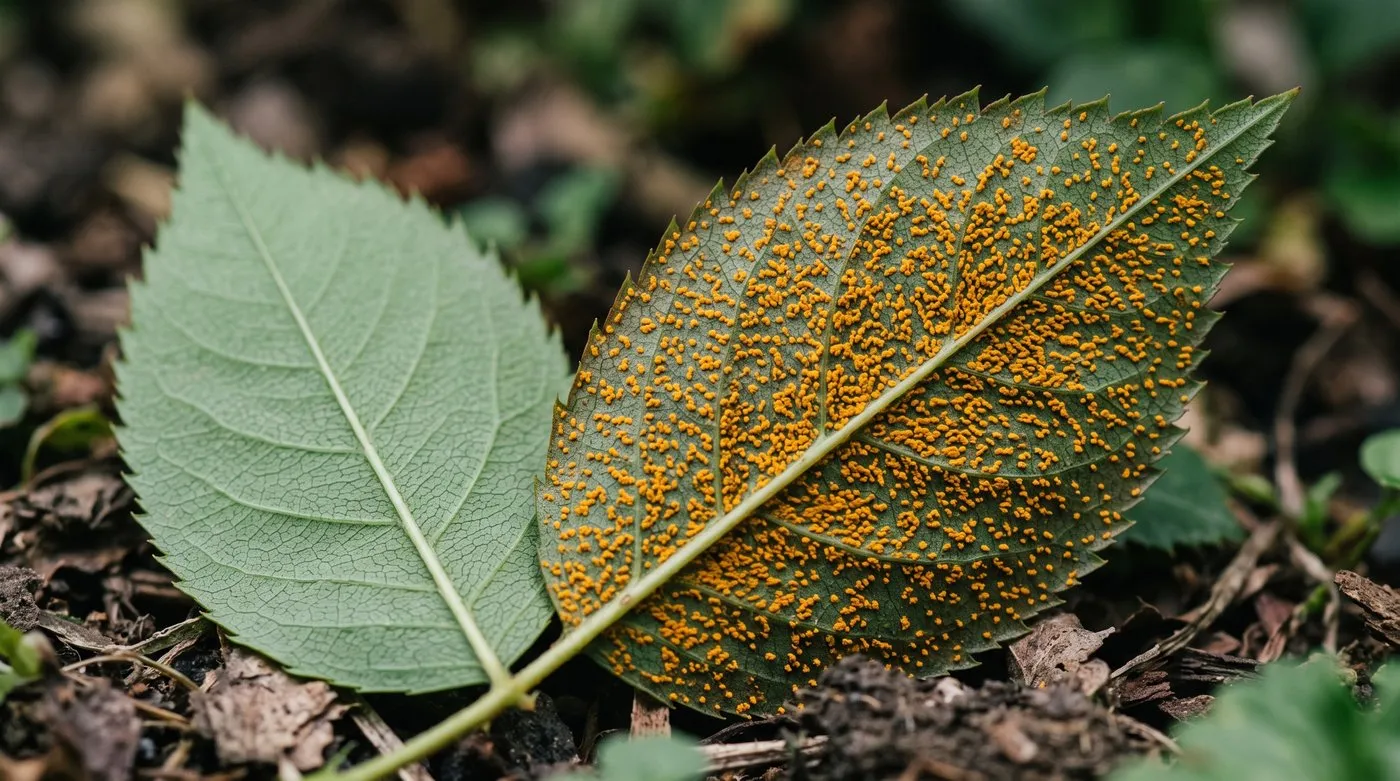
Turn a leaf over to check. Rose rust makes small, dusty orange spots underneath, while a healthy leaf stays clean.
Is it rose rust or black spot?
These two often turn up on the same bush, but they are easy to tell apart. Turn the leaf over.
- Rose rust is orange, raised and powdery, on the underside of the leaf.
- Black spot is flat and black, on the upper side, with feathery edges and often a yellow halo. The guide to black spot on roses covers it in full.
- Powdery mildew is a white, dusty coating on young leaves and buds. The powdery mildew guide explains how to deal with it.
| Feature | Rose rust | Black spot | Powdery mildew |
|---|---|---|---|
| Colour | Bright orange | Black or dark brown | White |
| Where | Leaf underside | Leaf upper side | Young leaves, buds, shoots |
| Feel | Raised and powdery | Flat | Dusty coating |
| Rub test | Orange smear | No smear | White wipes off |
| Worst | July to August | June to September | Dry spells in summer |
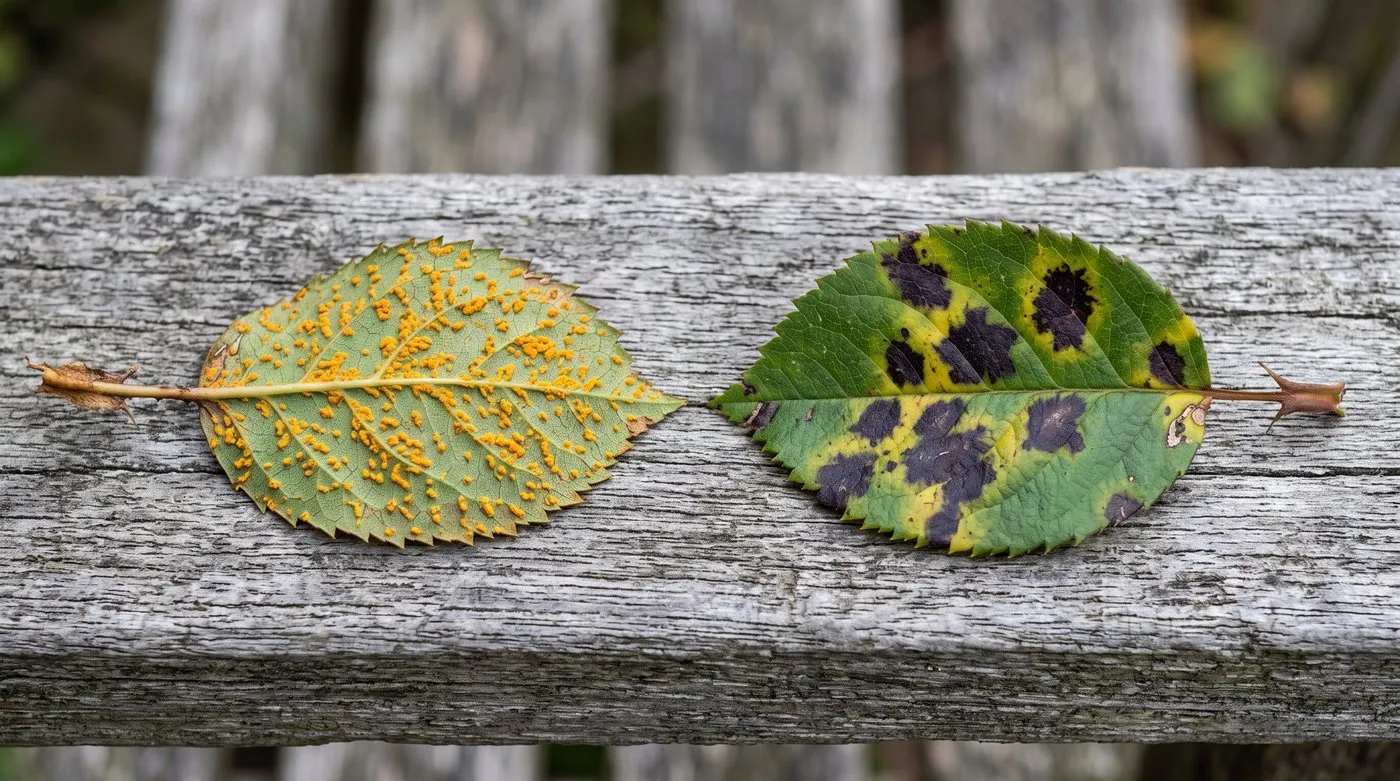
Rust on the left, black spot on the right. Orange dots mean rust; dark blotches with yellowing mean black spot.
How rose rust survives from year to year
Knowing the yearly cycle tells you when to act.
- Spring. Spores that survived the winter wake up. Orange patches appear on old stems and small spots on the lowest leaves.
- Summer. Orange spots spread under the leaves and release spores that blow onto other leaves and nearby roses. Warm, humid weather speeds this up.
- Late summer. The orange spots turn dark brown to black. These are the tough spores that survive winter.
- Winter. The dark spores sit on fallen leaves on the soil and on marks on the stems. In spring the cycle starts again.
The common mistake is fighting the orange stage in summer and forgetting the winter stage. Leaves left under the bush in autumn give next year’s outbreak a head start.
Clear fallen leaves in autumn
This is the most useful job of the year. Rake up every fallen rose leaf in autumn and put it in the green waste bin.
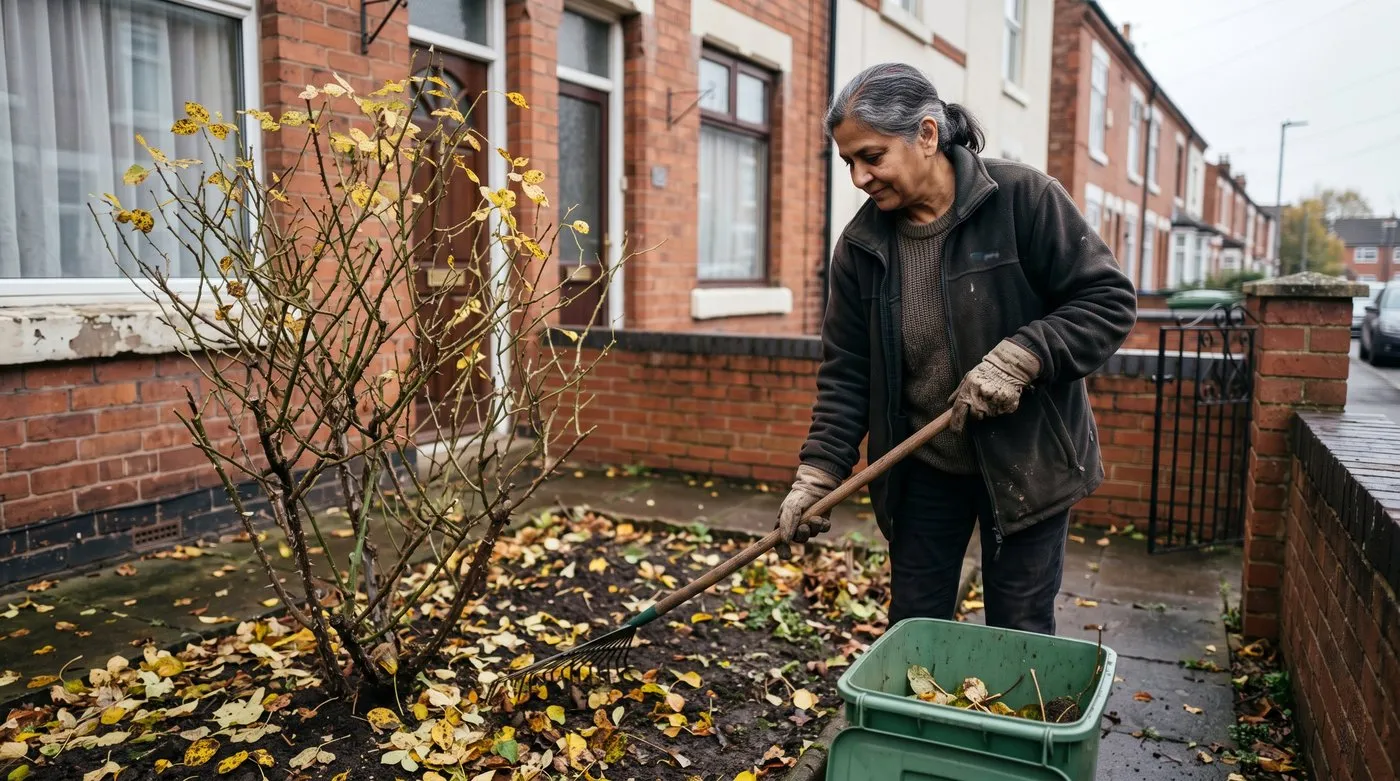
Raking up fallen rose leaves in autumn takes away the spores that would start next year’s rust.
Clear right up to the stems, as a few tucked-away leaves are enough to start the cycle again. Two passes work well: one as most leaves fall, then a tidy-up once the last are down. Don’t put rusty leaves on a home compost heap, as the spores can survive and spread round the garden later.
Feeding, airflow and watering
Rust loves crowded, damp, soft-growing roses. A few easy changes make your roses far less welcoming.
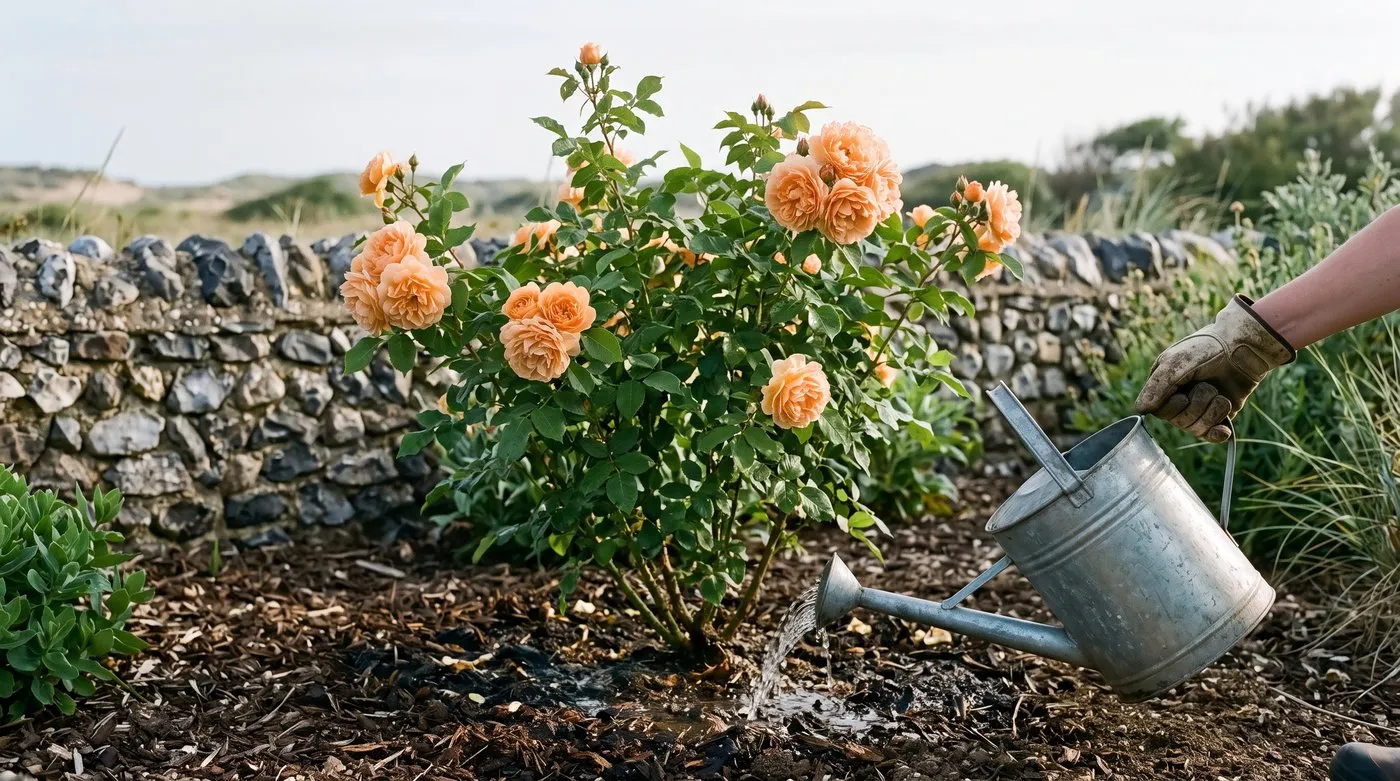
An open, airy rose watered at the base dries quickly after rain, which gives rust far less chance.
Feed sensibly. Use a rose feed in spring and early summer, following the pack. Avoid lots of high-nitrogen feed, which pushes soft, sappy growth that rust attacks easily.
Let air in. Spores need leaves to stay wet for a while to infect. Prune for an open centre, thin out crossing stems and don’t cram roses against fences or each other.
Water the roots, not the leaves. Water at the base, ideally in the morning, so any splashes dry quickly. Roses in pots need the same care. The guide to growing roses in containers covers watering and feeding potted roses.
Cut out infected stems when you prune
When you prune in late winter or early spring, look for swollen orange patches on last year’s stems. Cut those stems back to clean, healthy wood, just above an outward-facing bud. Take the prunings away rather than leaving them on the border.
If rust was bad last year, wipe your secateurs between bushes. This is also the time to open up the middle of the plant. The guide on how to prune roses shows the cuts.
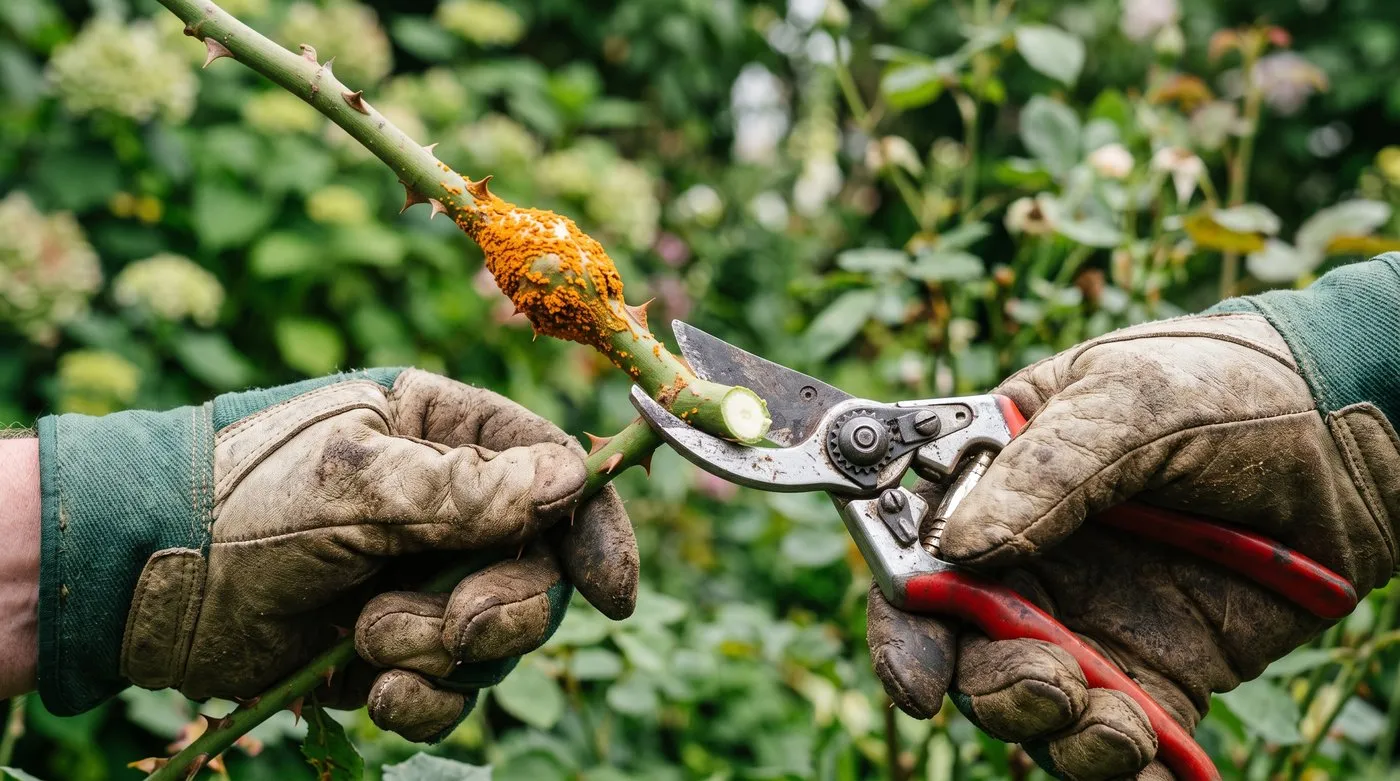
Swollen orange patches on old stems are where the year’s first spores come from. Cut them out back to clean wood.
Do fungicides work on rose rust?
They help a little, but they are not a cure. A spray protects healthy leaves and can slow an attack. It won’t fix leaves that are already rusty, and it does nothing about the spores on fallen leaves.
If you have a prized rose that suffers every year, use a fungicide labelled for rust on roses. Follow the label exactly, including how often to spray. Keep up the leaf clearing and pruning too, or the rust will be back.
Which roses resist rust?
Choosing a healthy variety saves a lot of effort. Many rugosa roses and modern roses bred for disease resistance cope well. Some older hybrid teas and ramblers catch rust most years whatever you do.
When buying, look for roses described as disease resistant, and plant them in a sunny, airy spot. If a rose rusts badly three years running despite good care, replace it. The guide to the types of roses helps you pick, and good companion plants for roses keep the base open and airy.
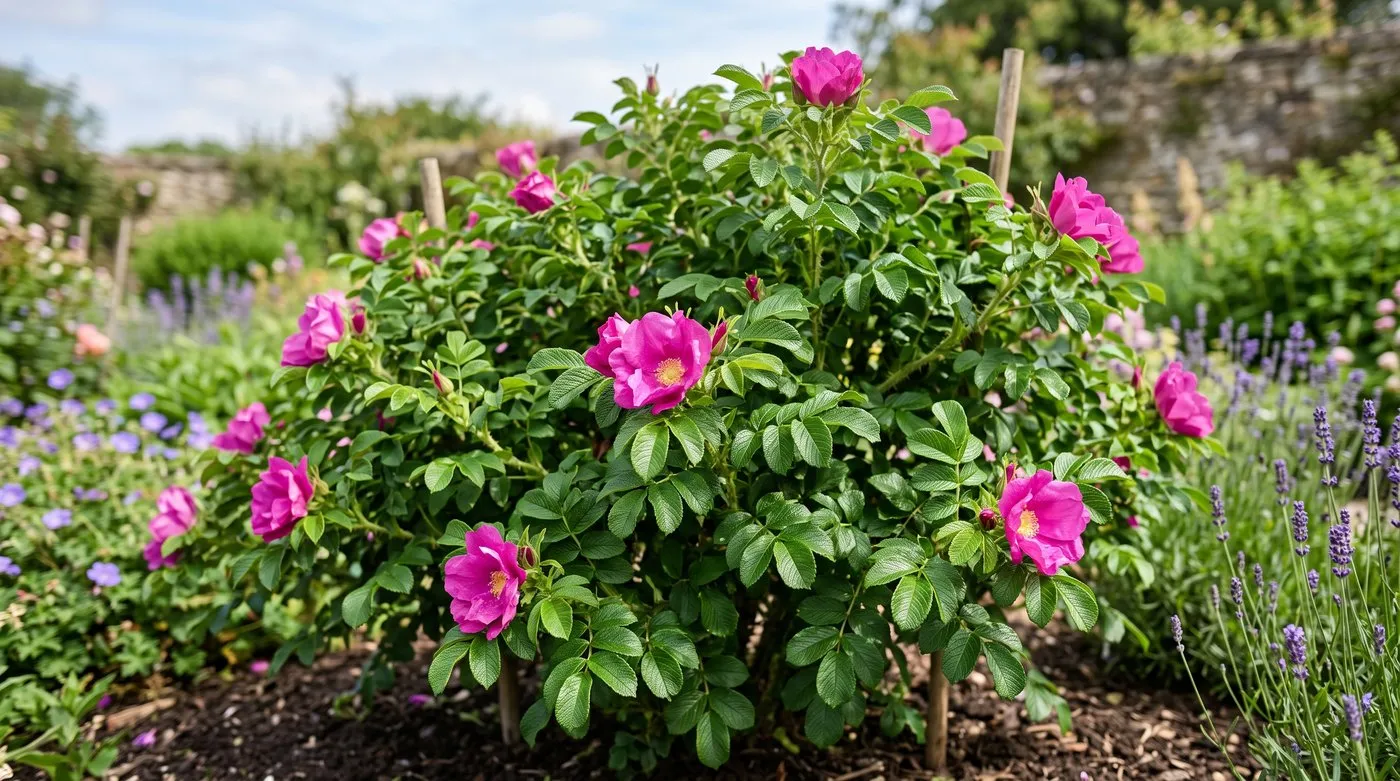
Rugosa roses usually stay healthy. Clean leaves in a sunny, airy spot are the easy route to a rust-free rose.
Month-by-month rose rust calendar
| Month | What to do |
|---|---|
| January to February | Prune out stems with orange patches. Open up the centre. Bin the prunings |
| March | Clear the soil under roses before mulching |
| April to May | Check stems and the lowest leaves for the first orange spots. Remove them |
| June | Check leaf undersides weekly. Water at the base only |
| July | Rust is at its worst in warm, humid spells. Pick off the worst leaves |
| August | Keep checking. Bin badly rusted leaves |
| September | Spots turn dark. Start picking up fallen leaves |
| October | Rake up and bin fallen rose leaves |
| November | Main leaf clear-up. Clear right up to the stems |
| December | Final tidy of the last fallen leaves |
Common mistakes with rose rust
- Treating it as black spot. Turn the leaf over first. Orange underneath is rust.
- Spraying in summer but leaving leaves in autumn. The fallen leaves carry next year’s rust. Clear them.
- Composting rusty leaves at home. The spores can survive. Use the green waste bin.
- Feeding lots of nitrogen to green it up. Soft, leafy growth gets rust more easily.
- Crowding roses. Still, damp air keeps leaves wet. Give roses space and prune for airflow.
Frequently asked questions
How do I tell rose rust from black spot?
Turn the leaf over: rust is orange underneath, black spot is black on top. Rose rust makes raised, powdery orange spots on the underside, with yellow flecks above them. Black spot makes flat black blotches with feathery edges on the upper surface and no orange powder.
What causes rose rust?
A group of fungi called Phragmidium that only attack roses. The spores spread on wind and rain splash and need wet leaves to get going. Crowded roses, still air and watering over the leaves all make it worse.
Can a rose recover from rust?
Yes, rust rarely kills an established rose. A bad attack can strip leaves early and weaken the plant, but it usually leafs up again the next spring. Clear the fallen leaves, prune for air and it should bounce back.
Should I remove leaves with rose rust?
Yes, pick off badly affected leaves and put them in the green waste bin. Through summer this slows the spread. In autumn, clear every fallen leaf from under the rose, because that is where the disease spends the winter.
Does rose rust spread to other plants?
No, rose rust only infects roses. Rust fungi stick to their own hosts, so the rust on your roses won’t move to leeks, beans or hollyhocks. Those plants get their own separate rusts.
When does rose rust appear in the UK?
Usually from May, and it is worst in warm, humid July and August weather. Small orange spots appear first under the lowest leaves. By late summer the spots turn dark brown to black, ready to overwinter.
Is there a spray for rose rust?
Some fungicides are approved for rust on roses, but they only protect healthy leaves. Choose one labelled for rose rust and follow the label exactly. Spraying does little without clearing leaves and improving airflow.
Now you can spot and stop rose rust, read the guide on how to grow roses in the UK to keep your roses healthy all year, or browse more fixes in the garden problems section. The RHS rose rust page has more photos.
Our team produces practical UK gardening guidance from source research, contributor records and established horticultural practice. Editorial standards are overseen by Matt W.