Key takeaways
- Use a pot at least 40cm wide and 40cm deep, as smaller pots dry out fast
- John Innes No. 3 with a little multipurpose compost mixed in suits roses best
- Feed every two weeks from April to late August, then stop so stems toughen up for winter
- Patio roses like 'Sweet Dream' and 'Top Marks' are bred for pots and stay small
- Move pots against a house wall in winter, or wrap them, to protect the roots
- Repot every three years or so into fresh compost
Roses grow beautifully in pots, even on a small patio or balcony. Pick a compact rose, give it a big pot of good soil-based compost, and keep it fed and watered. Here’s how to get it right. For more on rose types and planting in borders, see our guide to growing roses in the UK.
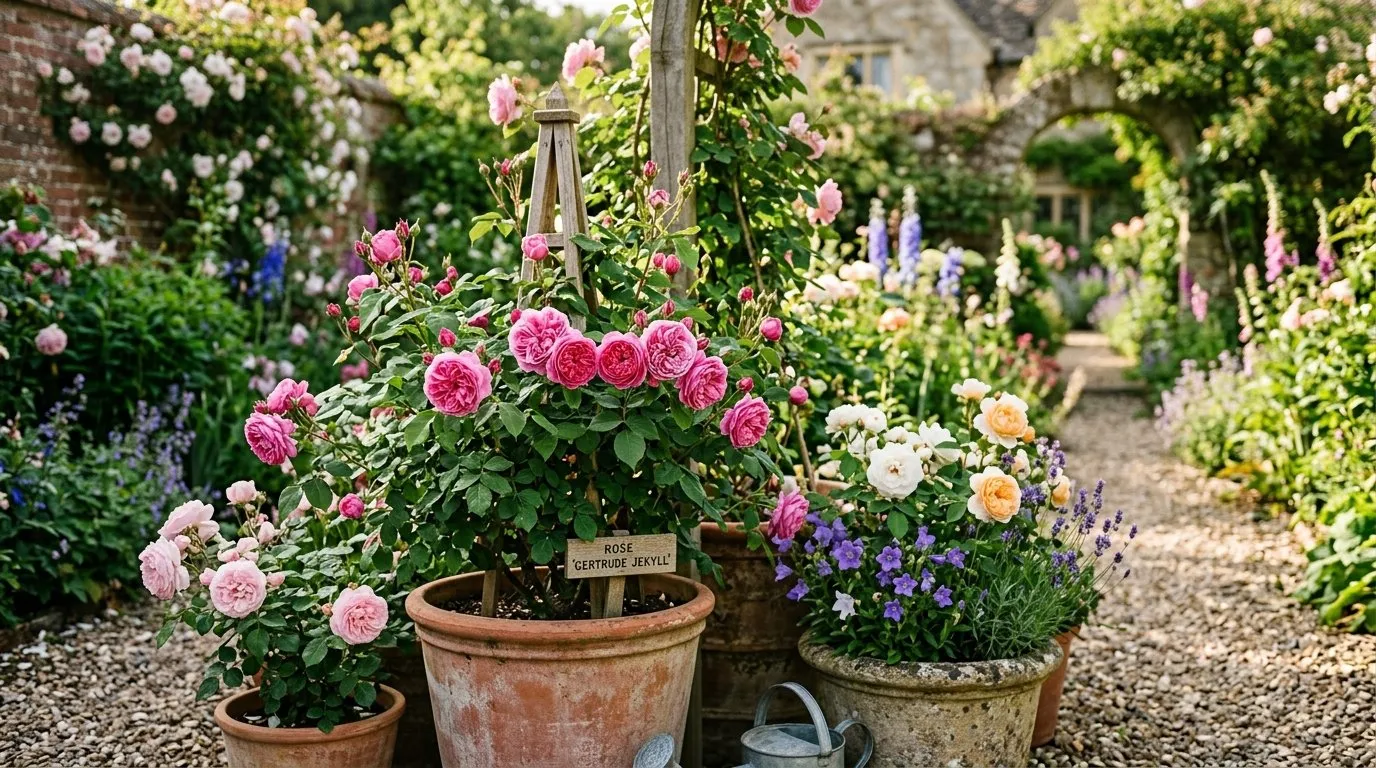
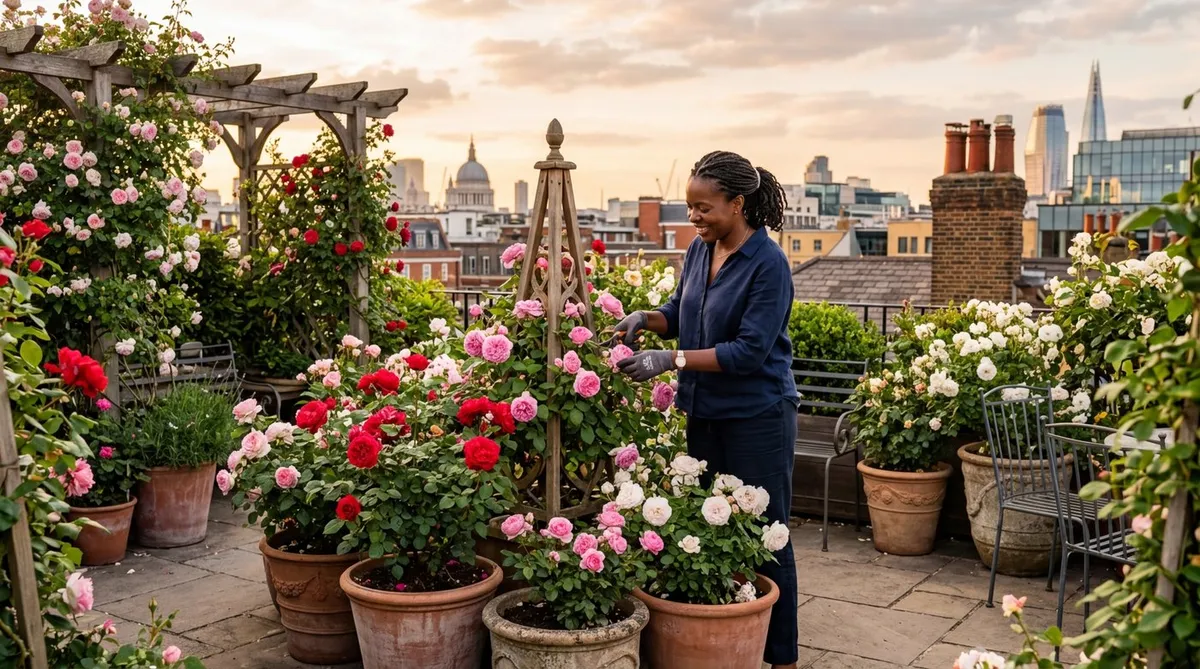
Roses in pots on a rooftop terrace. Heavy terracotta and stone pots keep them steady in the wind.
Which roses grow best in containers?
Compact roses are the ones to go for. Big hybrid teas and large shrub roses soon outgrow a pot and stop flowering well. Look for these instead.
Patio roses are bred for pots. They stay small and bushy and flower for months. ‘Sweet Dream’, ‘Top Marks’ and ‘Queen Mother’ are popular choices.
Miniature roses are tiny, with clusters of small flowers. They suit windowsills, table pots and small balcony containers. ‘Stars ‘n’ Stripes’ and ‘Little Flirt’ are good ones. They cope in small pots but need watering often in summer.
Compact shrub roses need a bigger pot, 50cm or more. David Austin’s ‘Harlow Carr’ (pink) and ‘Desdemona’ (white) both do well. You get lovely scent and old-fashioned flowers, but they need more feeding and watering.
Small climbing roses on an obelisk make a great feature. ‘Warm Welcome’ (orange-red) and ‘Phyllis Bide’ (pale yellow) are good container climbers. Use a 50 to 60cm pot and put a sturdy obelisk in before planting. For more ideas, see our guide to climbing roses for UK gardens.
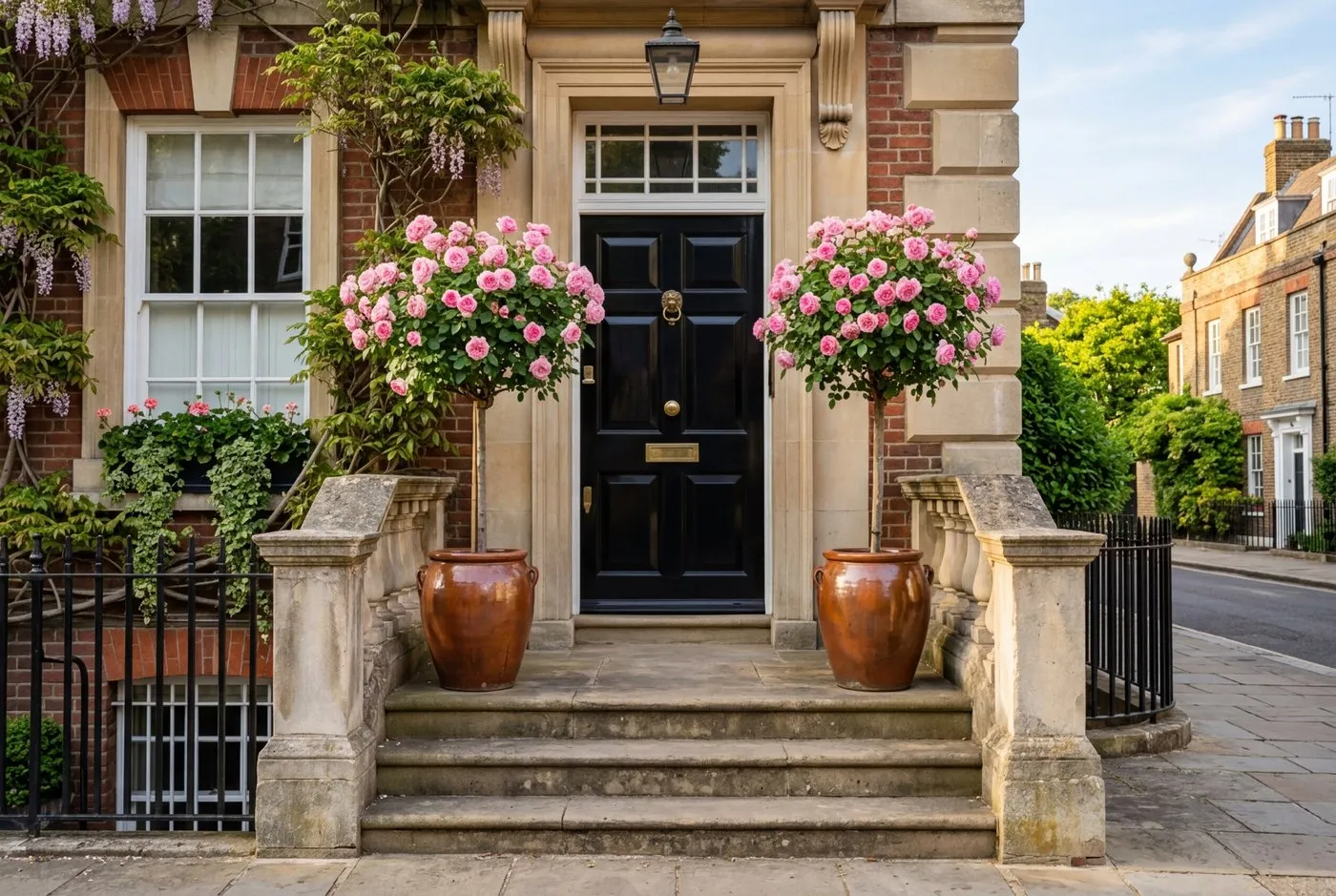
Standard roses in matching pots either side of a front door. Repeat-flowering varieties work best for this look.
Best roses for containers: comparison table
| Variety | Type | Size | Pot size | Scent | Flowers |
|---|---|---|---|---|---|
| Sweet Dream | Patio | Small | 35cm+ | Light | June to October |
| Top Marks | Patio | Small | 35cm+ | Light | June to October |
| Queen Mother | Patio | Small | 40cm+ | Medium | June to September |
| Little Flirt | Miniature | Tiny | 25cm+ | None | June to September |
| Harlow Carr | Shrub | Medium | 50cm+ | Strong | June to October |
| Desdemona | Shrub | Medium | 50cm+ | Strong | June to October |
| Warm Welcome | Climber | Tall | 50cm+ | Light | June to October |
| Phyllis Bide | Climber | Tall | 55cm+ | Light | June to September |
How to choose a container for roses
The pot matters as much as the rose. Roses need depth for their roots, width to spread, and some weight so they don’t blow over.
Size: At least 40cm wide and 40cm deep for patio and shrub roses. Climbers on obelisks need 50 to 60cm. Miniatures manage in 30cm pots but dry out faster.
Material: Terracotta is a great all-rounder. It’s heavy, so tall roses stay put, and it looks lovely. Make sure it’s labelled frost-proof, as ordinary terracotta can crack in a hard frost.
Glazed pots are pretty and frost-resistant but heavy to move. Plastic is light and holds water longer, which is handy on a balcony. Avoid metal pots in full sun, as they get hot and cook the roots.
Drainage: Every pot needs a drainage hole. Cover it with a crock or a bit of mesh so the compost doesn’t wash out. Stand pots on feet or bricks so water runs away freely. Roses hate sitting in water.
What compost to use for roses in pots
Use John Innes No. 3 with a little multipurpose compost mixed in, roughly four parts to one. John Innes No. 3 is soil-based, heavy and holds food and water well. The multipurpose lightens it a bit. Multipurpose on its own is too light, dries out quickly and runs out of food by midsummer.
On a wet balcony, add a handful of perlite to help drainage.
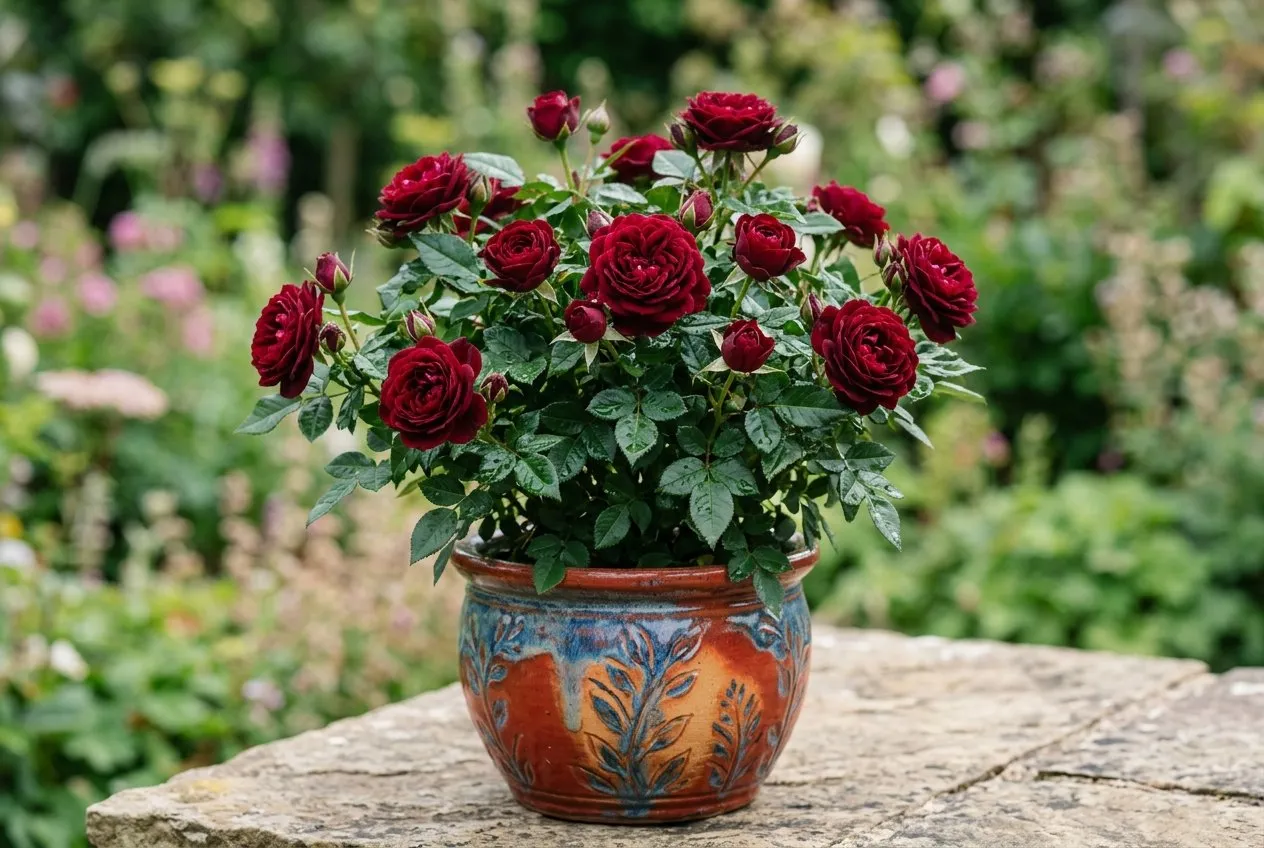
A compact patio rose in a glazed pot. These stay small and keep flowering from June.
How to plant a rose in a container
Bare-root roses, planted between November and March, are cheaper than potted ones and settle in well. The RHS growing guide for roses has more on bare-root planting.
How to do it:
- Soak bare-root roses in a bucket of water for a couple of hours.
- Put a few crocks or a little gravel over the drainage hole.
- Half-fill the pot with your compost mix.
- Sit the rose on the compost so the graft union (the knobbly bit where the stems join the roots) will end up at compost level. Leave a few centimetres between the compost and the rim for watering.
- Spread the roots out over the compost.
- Fill in around the roots, firming gently with your fingers as you go.
- Water well until it runs out of the bottom.
- Add a thin layer of bark on top to hold in moisture.
Potted roses from the garden centre can go in at any time of year. Tease out any roots circling the pot, and plant at the same depth as before.
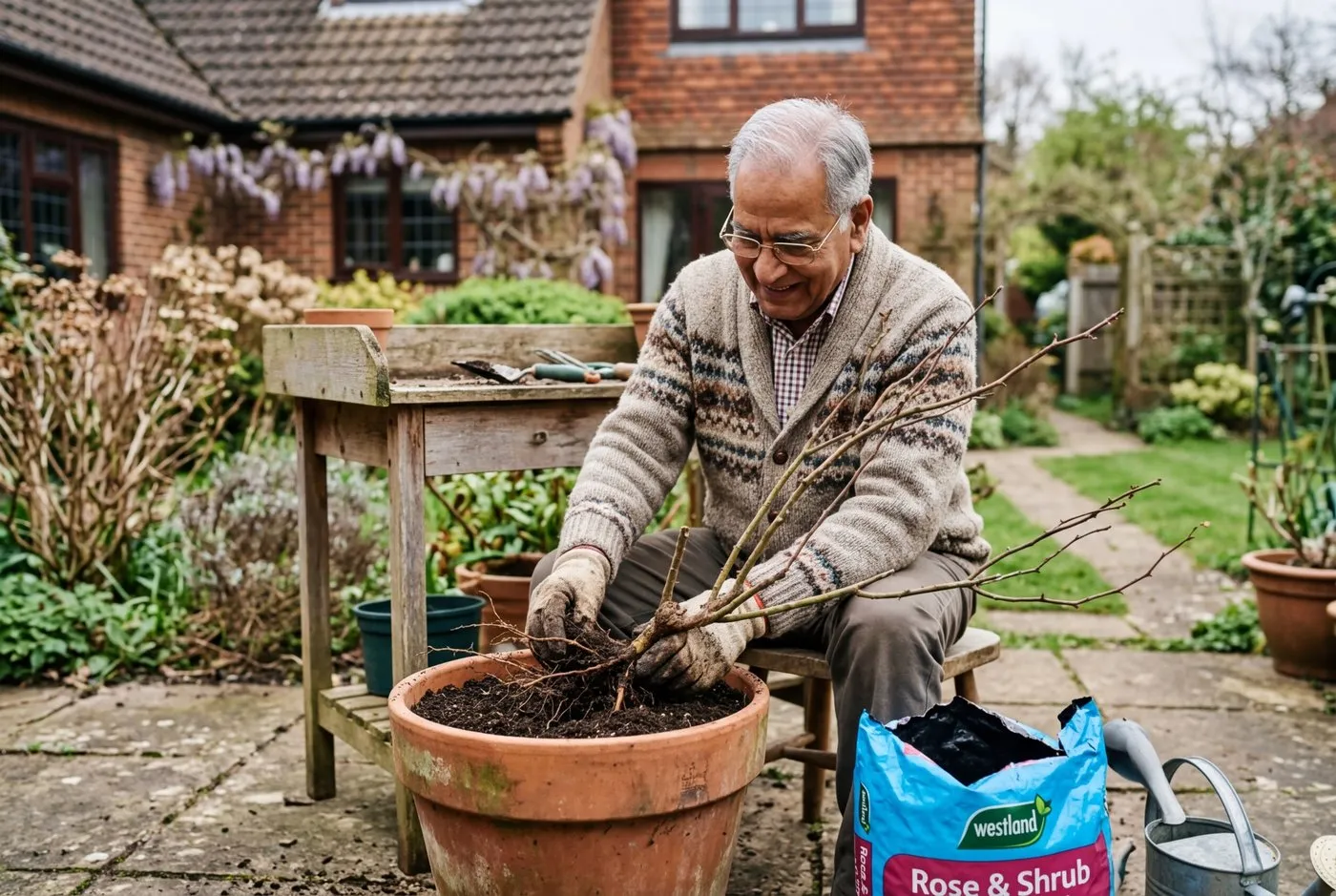
Potting up a bare-root rose in late winter. The graft union sits at compost level.
Feeding roses in containers
Roses in pots run out of food much faster than roses in a border. Regular feeding keeps them flowering all summer instead of fizzling out by July.
March: Sprinkle a slow-release rose feed on the compost.
April to August: Give a liquid rose feed every two weeks, mixed as the label says. Rose feeds are high in potash, which helps flowering. Too much feed gives soft, sappy growth that gets diseases.
September onwards: Stop feeding. Late feeding gives soft new shoots that frost will damage.
Top-dressing: Each March, scrape off the top few centimetres of old compost and replace it with fresh John Innes No. 3 and a sprinkle of slow-release feed.
How to prune roses in containers
Roses in pots need lighter pruning than border roses, as they have less root to regrow from.
Patio and miniature roses: In late February or early March, take out dead, damaged and crossing stems. Shorten the rest by about a third, cutting just above an outward-facing bud. Remove any spindly growth thinner than a pencil. Our guide to pruning roses has more detail.
Compact shrub roses: Do the same, and also take out one or two of the oldest stems at the base each year to encourage fresh growth.
Climbers on obelisks: Remove dead wood and cut side-shoots back to two or three buds. Leave the main stems unless they’re diseased or overcrowded. Tie in new growth through summer.
Deadheading matters most for lots of flowers. Snip off faded blooms and new ones will follow. Stop in September and let hips form, which helps the plant wind down for winter.
Monthly care calendar for container roses
| Month | Job | What to do |
|---|---|---|
| January | Check supports | Tighten obelisk ties loosened by wind |
| February | Prune | Take out dead wood, shorten by about a third |
| March | Top-dress and feed | Fresh compost on top, plus slow-release feed |
| April | Start liquid feed | Rose feed every two weeks |
| May | Look for greenfly | Squash them or hose them off with water |
| June | Deadhead | Snip off faded flowers for more to come |
| July | Water | Check every morning in hot spells |
| August | Last feed | Final liquid feed by late August |
| September | Stop feeding | Let stems toughen for winter |
| October | Tidy | Pick up fallen leaves to help prevent black spot |
| November | Protect | Move pots to a sheltered wall or wrap them |
| December | Check drainage | Clear blocked holes in wet weather |
Greenfly usually get eaten by ladybirds and birds. If they get out of hand, use an approved bug spray exactly as the label says. Home-made soap sprays aren’t approved pesticides in the UK.
Winter protection for container roses
Roots in a pot get much colder than roots in the ground, because there’s less soil around them to keep the chill out.
Move pots against a house wall from November, ideally a south or west-facing one. The wall gives off a little warmth at night and blocks the worst wind. That one step stops most winter losses.
Wrap pots you can’t move in fleece or bubble wrap. Wrap the pot rather than the stems, as the roots are the tender part. Grouping pots together helps too.
Keep pots off the ground on feet or bricks, so the drainage hole doesn’t sit in a frozen puddle.
Keep them outside. Don’t bring roses into a heated conservatory over winter. They need a cold rest to flower well next year.
When to repot container roses
Repot every three years or so, while the rose is dormant in late autumn or winter. By then the compost is worn out and the roots have filled the pot.
Lift the rose out, shake off the old compost, and trim any dead or circling roots. Replant at the same depth in fresh John Innes No. 3. Use the same pot if there’s still some room, or move up a size if roots fill it.
Signs it’s time: smaller flowers even though you feed, water running straight through, roots poking out of the bottom, and a pot that dries out within hours.
Scented roses are lovely in pots near a bench or doorway, where you can enjoy them up close. See our best scented plants for more fragrant ideas, and our types of roses guide explains the different groups.
For more on the compact roses bred for pots, see our guide to growing patio roses in pots.
Frequently asked questions
What size pot do I need for a rose?
At least 40cm wide and 40cm deep for most roses. That holds enough compost for healthy roots and stops it drying out too fast in summer. Climbing roses on an obelisk need a bigger pot, around 50 to 60cm. Miniature and small patio roses manage in a 30cm pot but need watering more often.
Can you grow roses in pots all year round in the UK?
Yes, they can stay outside in pots all year. The main worry is roots freezing, as a pot gets colder than a border. From November, move pots against a sheltered house wall, or wrap them in fleece or bubble wrap. Use frost-proof pots so they don’t crack.
What is the best compost for roses in containers?
John Innes No. 3 with a little multipurpose compost mixed in. The John Innes is soil-based, so it’s heavy, holds food well and keeps water. The multipurpose lightens it a bit. Multipurpose on its own dries out too fast and can be hard to re-wet.
How often should I water roses in pots?
Daily in hot summer weather, less in spring and autumn. Push a finger into the compost. If it feels dry, water until it runs out of the bottom. In winter, water only when the compost is properly dry, as soggy pots do more harm than good.
When should I repot a container rose?
Every three years or so, while it’s dormant. Late autumn to late winter is best. Lift the rose out, shake off the old compost, trim any dead or circling roots and replant in fresh John Innes No. 3. If roots fill the whole pot, move it up a size.
What are the best roses for pots in the UK?
Patio roses are the best fit for pots. ‘Sweet Dream’ (apricot), ‘Top Marks’ (red) and ‘Queen Mother’ (pink) stay small and bushy. For scent, compact shrub roses like ‘Desdemona’ and ‘Harlow Carr’ do well in a bigger pot.
Do roses in containers need feeding?
Yes, more than roses in a border. Give a slow-release rose feed in March, then a liquid rose feed every two weeks from April to late August. Stop by early September so new growth can toughen up before the frosts.
Our team produces practical UK gardening guidance from source research, contributor records and established horticultural practice. Editorial standards are overseen by Matt W.