Key takeaways
- Patio roses grow about 40-60cm tall and flower in repeat flushes from June to autumn
- Use a pot at least 30-40cm wide and deep, with drainage holes, raised on pot feet
- Loam-based John Innes No 3 holds water and food better than multipurpose compost
- Water deeply when the top few centimetres are dry and feed every two weeks until August
- Deadhead every few days in summer and prune by a third to a half in late winter
Patio roses are the easiest way to grow roses in a pot. They stay small, about 40-60cm tall, and flower in flushes from June until autumn. Give one a big enough pot, loam-based compost and regular water and feed, and it will happily brighten a patio or balcony for years.
This guide is just about these compact roses. If you want to grow a full-size shrub, English or climbing rose in a container, the guide to growing roses in containers covers the bigger pots and extra care they need.
What is a patio rose, and why does it suit a pot?
A patio rose is a compact, repeat-flowering rose. It sits between a tiny miniature rose and a full-size floribunda. Most make a bushy, well-branched plant about 40-60cm tall and wide.
That small size is the whole point. The roots are happy in a pot, the plant doesn’t get top-heavy, and it fits on a step, a balcony or beside a bench. The flowers come in the same colours as bigger roses, usually in clusters.
Patio roses are different from miniature roses, which are smaller still and often sold as houseplants. Miniatures can go outside too, but patio roses are tougher and give a bigger show.

Patio roses give you full-sized colour on a neat little bush. Most flower in repeat flushes rather than one big show.
Which patio roses grow well in pots?
Choose a rose that is sold as a patio rose and described as healthy or disease resistant. Healthy leaves matter more in a pot, where the plant is always on show. A few long-standing favourites:
- Sweet Dream: apricot-peach flowers on a bushy plant.
- Queen Mother: soft pink, semi-double flowers.
- Anna Ford: bright orange-red flowers.
- Regensberg: pink flowers edged and centred with white.
Check the label for height and scent before you buy. Newer patio roses appear every year, and many are bred for good disease resistance. For more on how patio roses compare with floribundas, shrubs and climbers, see the friendly guide to types of roses.
What pot and compost do patio roses need?
Use a pot at least 30-40cm wide and deep, with drainage holes, filled with loam-based John Innes No 3. One rose per pot is best. The pot size and compost decide how often you water and how well the rose feeds.
A bigger pot holds more compost, so it dries out more slowly. Terracotta looks lovely but dries faster than glazed or plastic pots, so line the sides with old compost bags if you like (leave the base open). Choose a frost-proof pot if it will stay out all winter.
Loam-based compost is heavier than multipurpose. It holds water and nutrients well and keeps the pot steady in wind. You can mix in a little peat-free multipurpose to lighten it if the pot needs moving.
Stand the pot on pot feet so water drains freely. Pick a spot with at least five or six hours of sun a day.
How to plant a patio rose in a pot
Plant container-grown patio roses at any time of year when the compost isn’t frozen. Bare-root roses go in from November to March. Water the rose well an hour before planting.
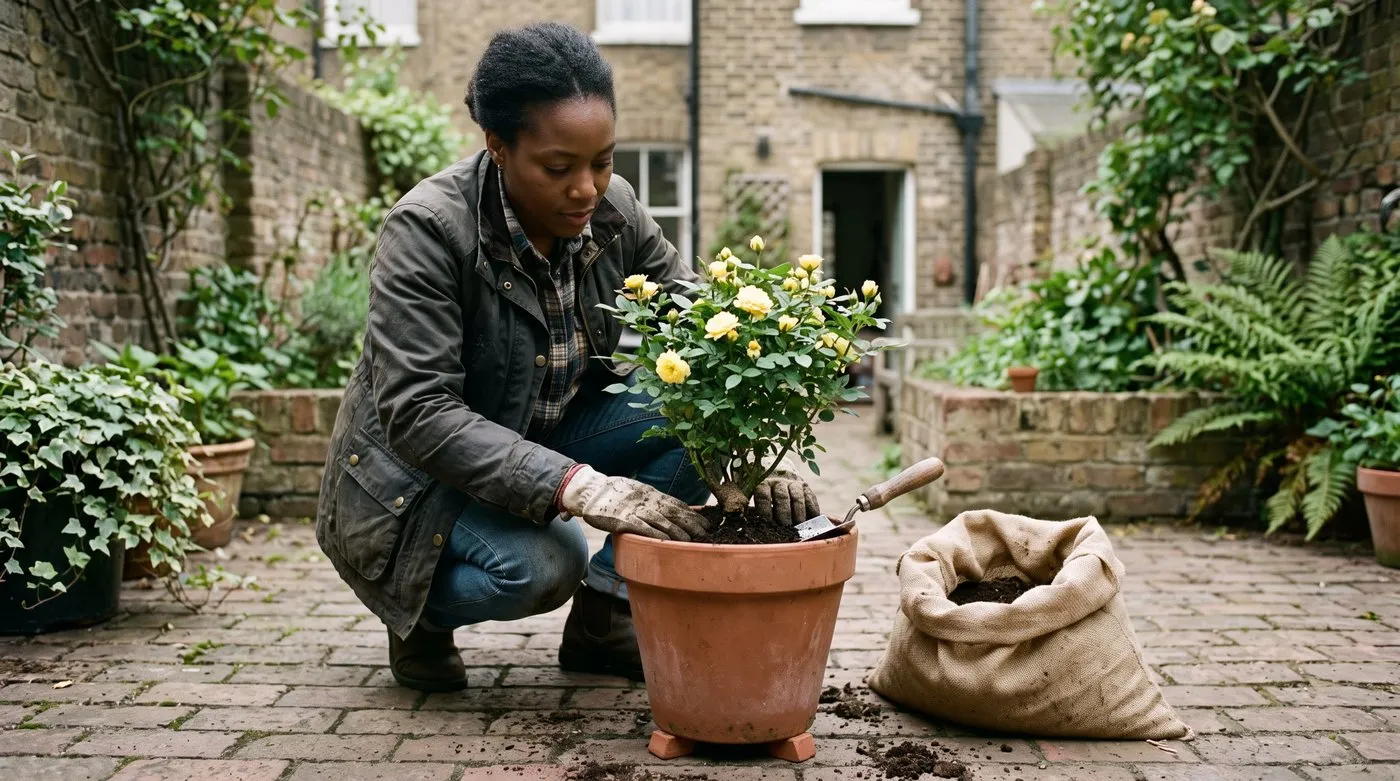
Keep the knobbly graft union at the compost surface and leave a gap below the rim for watering.
- Cover the drainage holes with a few crocks or a piece of mesh.
- Part-fill the pot with John Innes No 3.
- Set the rose so the graft union (the knobbly bit where the stems join the roots) sits at the compost surface, not buried.
- Fill around the roots, firming gently as you go, and leave a 3-5cm gap below the rim for watering.
- Water thoroughly until it runs out of the base.
A light mulch of gravel or bark on top helps hold moisture and keeps the compost from splashing.
Watering and feeding for flowers all summer
Water whenever the top few centimetres of compost feel dry, and feed every two weeks from spring until August. A pot runs out of both much faster than open ground.
In summer, check pots every day. A rose in a sunny pot can dry out in one hot afternoon, then drop buds and lower leaves. Water slowly until it runs from the base, rather than giving a quick splash. Early morning or evening is best. In a heatwave, move pots out of the fiercest afternoon sun.
For feeding, use a liquid rose or tomato feed every two weeks, or a slow-release rose fertiliser in spring topped up with liquid feeds. Stop feeding in August so soft new growth can firm up before the cold.

Water slowly at the base until it runs out of the bottom. A quick splash only wets the top of the compost.
Gardener’s tip: Lift the pot after watering. A heavy pot is fine; a light one needs more water, even if the surface looks damp.
Deadheading and pruning patio roses
Deadhead every few days in summer and prune once a year in late winter. Both jobs are quick, and patio roses are very forgiving.
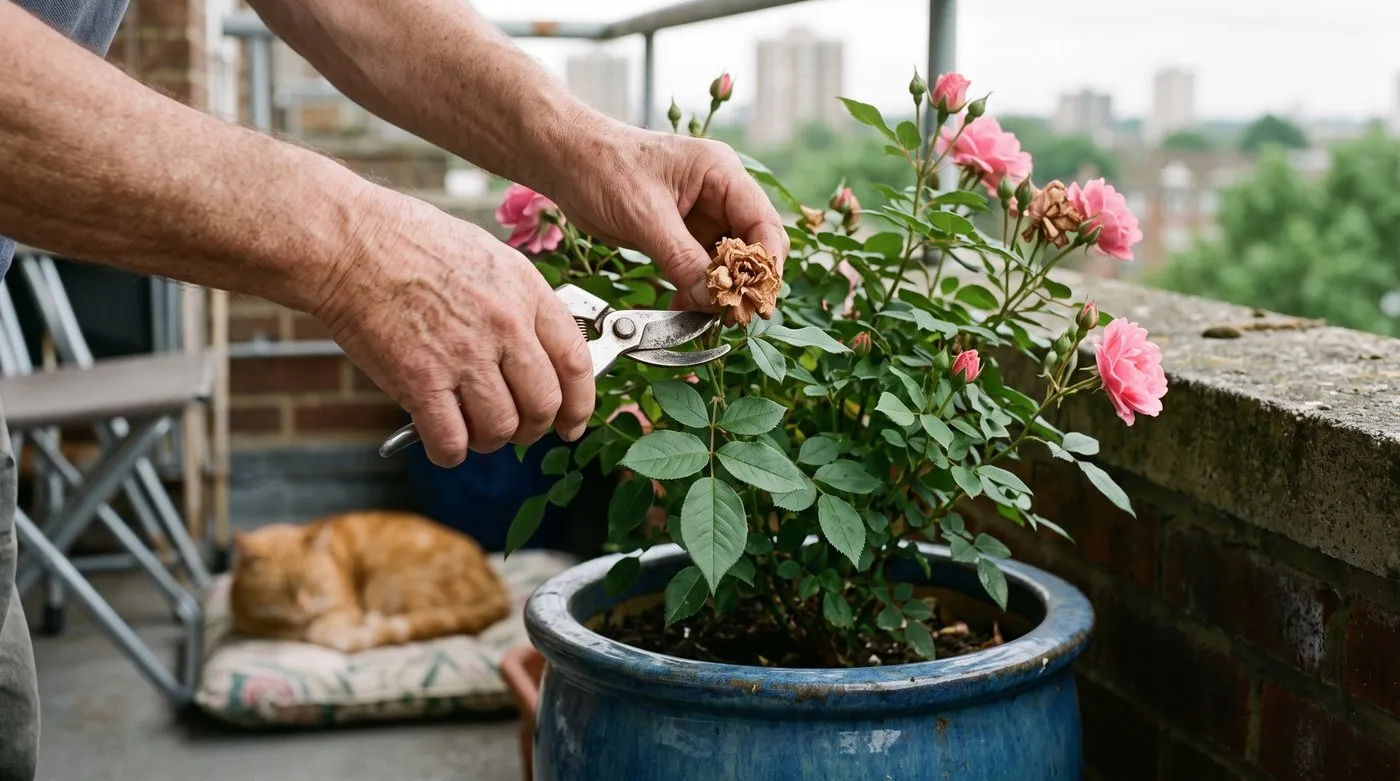
Snip faded flowers just above the next healthy leaf every few days. New buds soon follow.
Deadheading keeps the flowers coming. Snip off each faded flower, or the whole spent cluster, just above the next healthy leaf. The plant then puts its energy into new buds rather than hips. The guide to deadheading flowers shows the technique.
Pruning happens in February or March, as buds begin to swell. Use clean, sharp secateurs.
- Remove dead, damaged and crossing stems.
- Cut the remaining stems back by a third to a half.
- Cut just above an outward-facing bud, to keep the centre open.
For more detail on cuts and timings for every type of rose, read the guide to pruning roses.
Keeping patio roses healthy in a pot
Healthy roses start with a healthy variety, a sunny airy spot and steady watering. Stressed roses in dry pots get more pests and diseases.
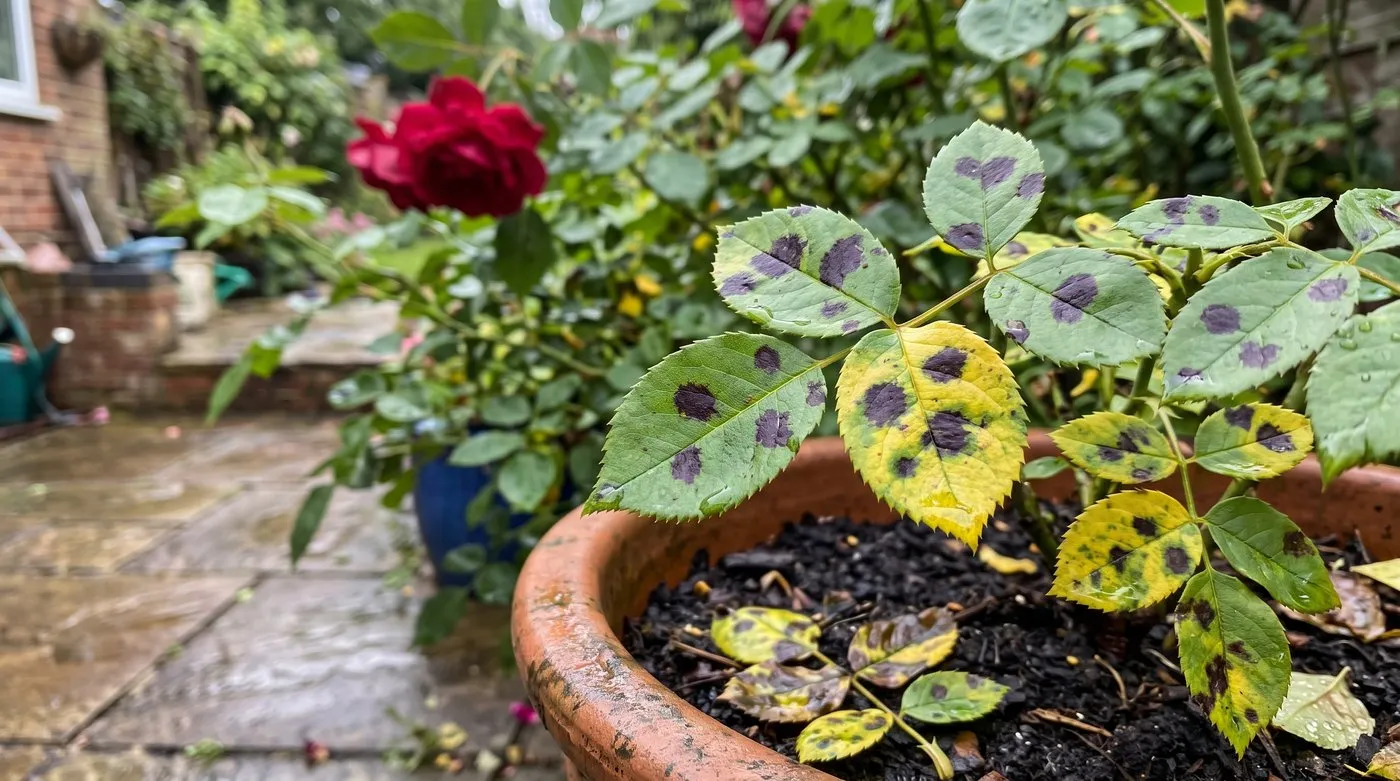
Black spot shows as dark blotches, then yellow leaves. Pick off spotted leaves and clear fallen ones from the pot.
- Black spot: dark blotches on leaves that then yellow and drop. Pick up fallen leaves and remove spotted ones. The guide to black spot on roses covers the rest.
- Aphids: green or pink insects on shoot tips in spring. Squash them or wash them off with water, and let ladybirds and blue tits help.
- Vine weevil: grubs eat roots in pots, and the plant wilts for no clear reason. Check the compost when repotting. The guide to container pest protection explains how to deal with them.
Every two or three years, repot in late winter into fresh compost, or scrape off the top 5cm and replace it.
Caring for potted roses in winter
Patio roses are hardy, so they can stay outside all winter. The roots in a pot are more exposed than roots in the ground, though, so give the pot a little shelter.
Group pots together against a house wall, out of cold winds. Keep them on pot feet so they don’t sit in frozen water. In a hard frost, wrap the pots in hessian, bubble wrap or fleece. Water only if the compost is drying out, and don’t feed until spring.

The rose is hardy, but its roots in a pot are exposed. Grouping and wrapping the pots keeps the compost from freezing solid.
Patio rose care calendar
| Month | What to do |
|---|---|
| January | Plant bare-root roses. Check pots are raised and drain freely |
| February to March | Prune by a third to a half. Top-dress or repot |
| April to May | Start feeding every two weeks. Watch for aphids |
| June to July | Water often, feed and deadhead every few days |
| August | Last feed. Keep watering and deadheading |
| September to October | Light deadheading. Plant container-grown roses |
| November to December | Move pots to shelter. Wrap in hard frosts |
Common mistakes with patio roses in pots
A pot that’s too small. Anything under 30cm dries out fast and starves the rose. Go bigger.
Burying the graft union. Keep the knobbly join at the compost surface, where it can breathe.
Skipping the feed. Compost in a pot runs low on food within weeks. No feed means fewer flowers.
Little and often watering. A daily splash wets only the surface. Water less often but more deeply.
Pots flat on paving. The holes block and the roots sit wet. Use pot feet.
Pair your rose with low plants to cover its bare stems. The list of companion plants for roses has ideas, and more plant guides live in the plants section.
Frequently asked questions
What is a patio rose?
A compact, repeat-flowering rose that grows about 40-60cm tall. It sits between a miniature rose and a floribunda in size, and its neat habit and smaller root system make it the easiest rose for a pot.
What size pot do patio roses need?
At least 30-40cm wide and deep, with drainage holes. A bigger pot holds more compost, so it dries out more slowly and feeds the rose for longer. Small or shallow pots dry out in a single hot day.
How often should you feed patio roses in pots?
Every two weeks from spring until August. Use a liquid rose or tomato feed, or a slow-release rose fertiliser in spring topped up with liquid feeds. Stop in late summer so the new growth can firm up before winter.
Can patio roses stay outside in winter?
Yes, patio roses are hardy and can stay outside all winter. Move the pots to a sheltered spot by a house wall, raise them on pot feet and wrap the pots in hessian or bubble wrap in a hard frost.
How do you prune patio roses in pots?
Cut stems back by a third to a half in February or March. Take out dead, damaged and crossing stems first, then cut just above an outward-facing bud to leave an open shape. Deadhead through summer as well.
Which patio roses are good for pots?
Sweet Dream, Queen Mother, Anna Ford and Regensberg are popular choices. Look for a rose sold as a patio rose with good disease resistance, and choose one with scent if you will sit beside it.
Now your rose is settled, read the guide to grouping pots for impact to build a whole patio display around it.
Our team produces practical UK gardening guidance from source research, contributor records and established horticultural practice. Editorial standards are overseen by Matt W.