Key takeaways
- Vine weevil grubs are the worst container pest, eating roots unseen until the plant collapses
- Drench pots with vine weevil nematodes in spring and late summer
- Check pots at dusk after rain for slugs, and keep foliage off the rim
- Knock aphids off with a jet of water before reaching for anything else
- Pick red lily beetles, eggs and grubs off lilies and fritillaries weekly from April
- Refresh the top of the compost each spring and check rootballs when repotting
Plants in pots need a little more pest protection than plants in the ground. A pot holds a small amount of compost, so a few vine weevil grubs or one night of slugs can finish off a plant. The good news is that pots are easy to check, and most problems are simple to sort if you catch them early.
This guide covers the four pests that cause most trouble on UK patios, plus a simple yearly routine. If your plants are under glass, the greenhouse pest control guide is a better fit.
Why patio pots get more pest damage
Pots concentrate the damage. A few grubs in a border are spread thin. The same grubs in a pot are all eating one plant’s roots.

A quick weekly look under leaves and around rims catches most pot pests while they’re still small.
Pot plants also get stressed more easily. They dry out, overheat and run short of food quicker than plants in the ground, and stressed plants are easier targets. The upside is that a quick look round your pots once a week spots most problems before they get out of hand.
How to stop vine weevil in pots
Vine weevil is the most damaging container pest in the UK. The adults are matt black beetles about 1cm long. The grubs are creamy, C-shaped and brown-headed, and live in the compost around the roots.
- Signs: Notches nibbled from leaf edges in summer show adults are about. A plant that wilts or rocks loose in its pot may have grubs.
- Favourite plants: heuchera, primula, fuchsia, sedum, cyclamen, strawberries and hostas in pots.
- The fix: Water on vine weevil nematodes, a biological control. Apply in spring and again in late summer, into moist compost. Follow the pack for the minimum temperature, and apply in the evening.
- Extra help: Look for adults on plants with a torch after dark and pick them off. Check rootballs whenever you repot.
The guide to vine weevil treatment covers the lifecycle and all the options in detail.

Lift a sickly plant out of its pot and you may find these. Creamy, C-shaped grubs mean vine weevil.
How to protect pots from slugs and snails
Slugs and snails climb pots at night, especially after rain or watering. They love hostas, lettuce, strawberries, dahlias and young seedlings.
- Go on slug patrol. Take a torch round your pots at dusk after rain and pick them off.
- Keep the rim clear. Trim leaves that drape over the edge, as they make a handy bridge.
- Check under pots and saucers. Slugs hide there in the day.
- Try copper tape, if you like. It may help a little, but only as an unbroken band, and results are mixed.
- Use nematodes. Slug nematodes are watered into moist compost in spring and autumn.
- Choose tougher plants. Thick-leaved hostas such as ‘Halcyon’ and ‘Sieboldiana Elegans’ are less appealing to slugs.
If you use slug pellets, choose ferric phosphate ones and scatter them thinly, as the label says. The guide to getting rid of slugs has the full picture.

Ragged holes and silvery trails the morning after rain are a sure sign slugs have climbed the pot.
How to get rid of aphids on container plants
Aphids turn up on new shoots from spring. Look for curled leaves, sticky patches and ants running up and down the stems.
- Squash or wash. Rub small colonies off with your fingers, or blast them with a strong jet of water. Repeat every day or two.
- Let predators help. Ladybirds, hoverflies and lacewings soon move in. Avoid sprays that would kill them too.
- Feed sensibly. Too much nitrogen gives soft, sappy growth that aphids love.
- Only if needed, use an approved product for that use, following the label. Home-made sprays are not legal to use as pesticides.
The guide to getting rid of aphids covers the different types.

Catch aphid colonies early, while they’re small. The ladybirds will soon join in.
How to stop lily beetle on potted lilies
Lily beetle is bright red with a black head and legs, and about 8mm long. It attacks lilies and fritillaries from spring to late summer. The orange-red eggs sit in rows under the leaves. The grubs cover themselves in black droppings and strip the foliage fast.
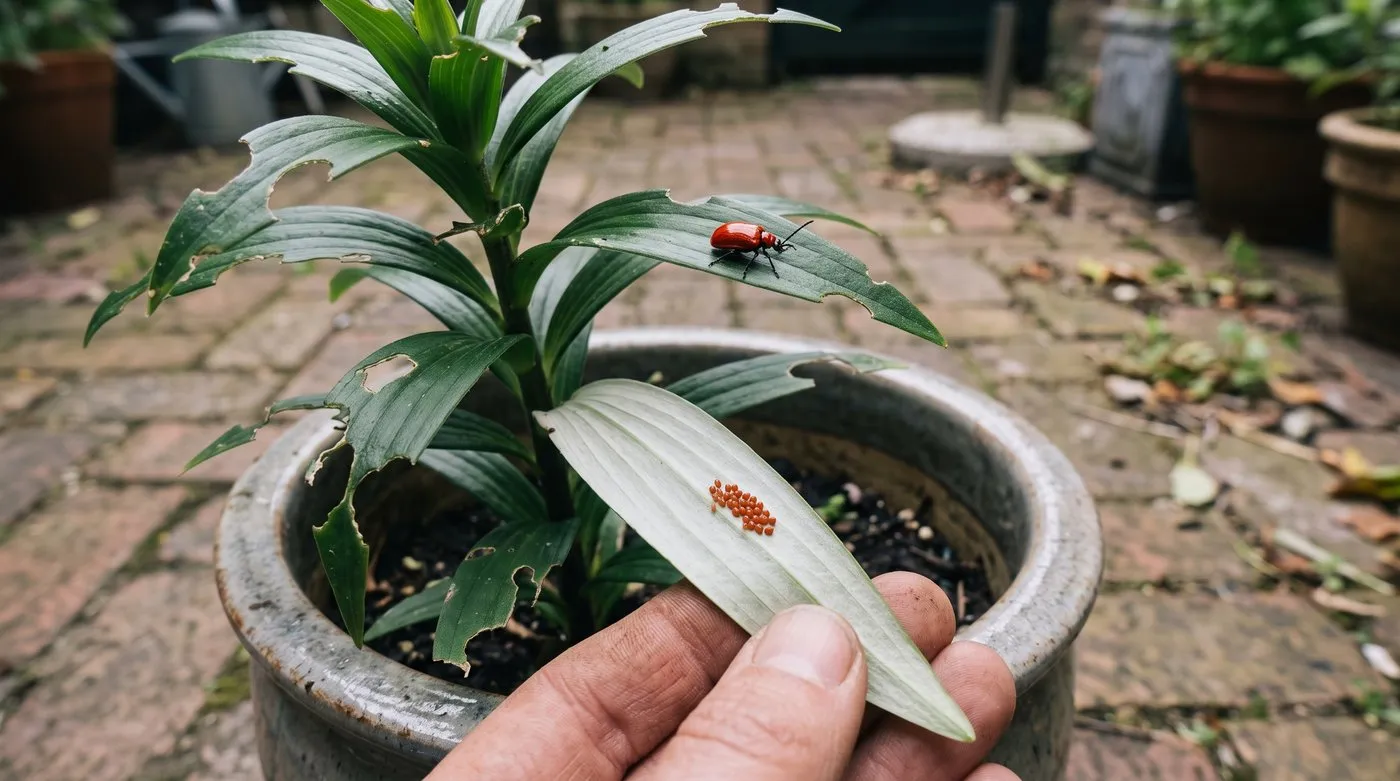
Chewed leaves and a scarlet beetle mean lily beetle. Check under the leaves for eggs too.
Hand-picking is the best control. Check every lily pot weekly from April to August.
- Hold a cupped hand under the beetle before you grab it, as it drops when disturbed.
- Rub off egg clusters from the undersides of leaves.
- Wipe off the messy grubs with a gloved hand or damp cloth.
Warning: Lilies are deadly to cats. Even a little pollen licked off fur can cause kidney failure. If you have a cat, it’s safest not to grow lilies at all.
The guide to lily beetle has more on spotting each stage.
Other pests to watch for in pots
- Cabbage white caterpillars on potted kale and other brassicas. Cover with fine netting from May to September.
- Carrot fly on container carrots. Fine mesh covers keep it out.
- Red spider mite in hot, sheltered spots. Look for pale speckled leaves and fine webbing. Water plants well and mist around them in hot spells.
- Fungus gnats in damp compost. Let the surface dry between waterings.
A yearly routine for patio pest control
| Month | What to do |
|---|---|
| March | Refresh the top of the compost in pots. Check rootballs for vine weevil grubs |
| April | Spring nematode drench for vine weevil once the compost is warm enough. Start lily beetle checks |
| May to June | Look for aphids weekly and wash them off. Slug patrols after rain |
| July | Keep picking lily beetles. Check brassicas for caterpillars |
| August to September | Late-summer vine weevil drench. Look for notched leaves |
| October to November | Empty summer pots, bin old compost and scrub pots before storing |
| December to February | Look over overwintering pots monthly |
Common container pest mistakes
- Not looking. A weekly five-minute check catches most problems while they’re small.
- Reusing old compost from a pot that failed. It may be full of vine weevil grubs. Bin it.
- Leaving leaves over the rim. They give slugs a free bridge.
- Spraying first. Most sprays also kill the ladybirds and hoverflies that would have helped.
- Drenching nematodes into dry or cold compost. They need moisture and warmth to work.
When plants come out for summer, the guide to putting houseplants outside shows what to watch for. For more help with patio problems, browse the problems section.
Frequently asked questions
What is the biggest pest threat to UK container plants?
Vine weevil is the most damaging pest of plants in pots. Adults lay eggs in the compost in summer. The creamy, C-shaped grubs then eat the roots through autumn, winter and spring. Plants often collapse before you notice anything.
How do you kill vine weevil grubs in pot compost?
Water on a biological control of vine weevil nematodes. Apply in spring and again in late summer, when grubs are active. The compost must be moist and warm enough, as given on the pack. The tiny nematodes hunt down and kill the grubs.
Does copper tape really work on slugs?
It may help a little, but results are mixed. Copper tape only stands a chance if it goes right round the rim with no gaps. Leaves hanging over the edge let slugs walk straight across, so trim them back. Don’t rely on it alone.
How do you stop aphids on container plants?
Squash them or wash them off with a strong jet of water. Repeat every day or two until numbers fall. Ladybirds, hoverflies and lacewings will soon join in. If you need more, use an approved product for that use, following the label.
What pests attack potted lilies?
Lily beetle is the main pest of lilies in pots. The bright red adults appear from spring to late summer and lay orange-red eggs under the leaves. The grubs hide under their own black droppings and strip the foliage. Pick off all three stages.
Should I change container compost annually?
Refresh the top layer every year and replace it fully every two to three years. Each spring, scrape off the top few centimetres and add fresh compost. When you repot, check the roots for vine weevil grubs.
Our team produces practical UK gardening guidance from source research, contributor records and established horticultural practice. Editorial standards are overseen by Matt W.