Key takeaways
- Plant between late September and mid-October so roots establish before soil drops below 7C
- A 40cm pot takes 5-7 plants and costs £25-35 using 9cm and 2-litre stock
- Skimmia 'Rubella' holds its red buds for 5 months and shrugs off -15C
- Violas stop flowering below 2C but restart within a week of milder weather
- Pot feet lift containers 2-3cm and prevent the waterlogging that kills more plants than frost
- Winter pots still need water every 10-14 days; an east-facing doorstep pot can dry out under the house eaves
What makes a winter container last until March?
A winter container lasts because every plant in it is hardy to at least -10C and earns its place for five months, not five weeks. The structure is the same thriller, filler, spiller formula used in summer pots, just built from evergreens and winter flowerers. The thriller is the tall centrepiece, usually a skimmia or a dwarf conifer. Fillers pack the middle: carex, heuchera, cyclamen. Spillers soften the rim, with ivy or Gaultheria trailing 15-30cm down the pot side. The formula carries straight over from summer hanging basket recipes; only the plant list changes. If you want flowers rather than evergreen structure, our winter bedding plants guide ranks the bedding that keeps going until March.
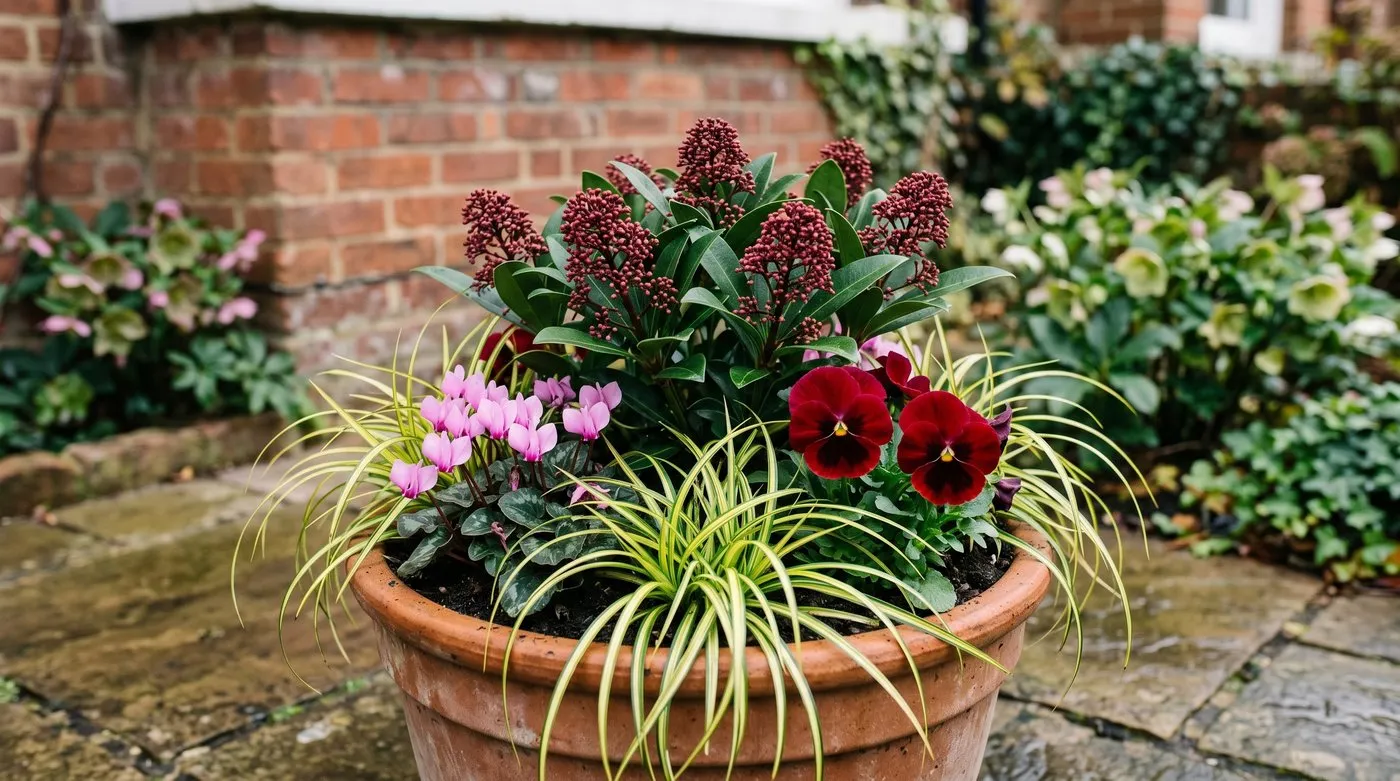 Recipe one at planting on 12 October: seven plants in a 40cm pot, already touching, because winter pots barely grow.
Three doorstep recipes that survived to March
Each recipe below filled one 40cm pot, cost £25-35 in October 2025 prices, and held its display past 20 weeks on a real doorstep. Buy fillers in 9cm pots at £3-6 each and the thriller as a 2-litre plant at £8-12.
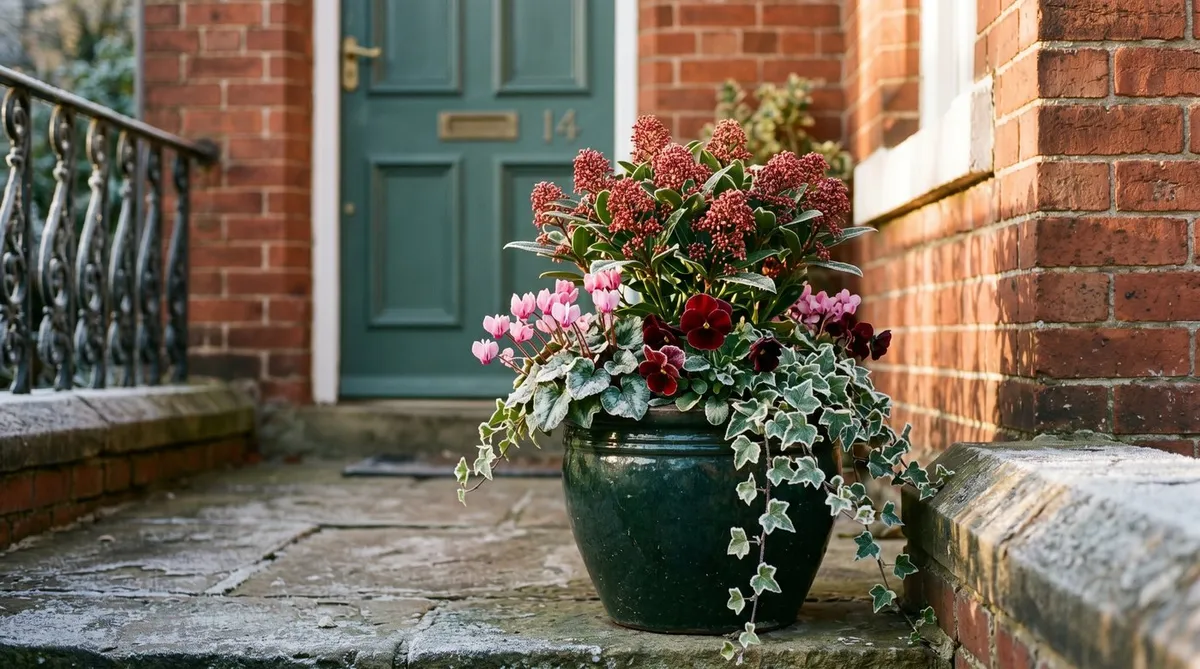
Recipe one: the classic red and green. One Skimmia japonica ‘Rubella’ in the centre. Three Cyclamen coum around it. Two deep-red violas from the ‘Sorbet’ series. One ivy ‘Glacier’ trailing at the front. The skimmia’s red bud clusters held from October to late March without browning, and the cyclamen flowered for 14 straight weeks from December. Total: £29.
Recipe two: gold and bronze for a dark doorstep. One Carex oshimensis ‘Evergold’ as the thriller, its striped leaves arching to 40cm. Two Heuchera ‘Marmalade’ for bronze-orange foliage. Two orange violas. One Gaultheria procumbens for red berries through January. This was the Bolton pot, north-facing and sunless from November to February, and it never looked thin. The full heuchera growing guide covers which cultivars keep their colour in shade. Total: £27.
Recipe three: the bulb upgrade. Recipe one, plus 15 ‘Tete-a-Tete’ daffodils and 10 ‘Ruby Giant’ crocus layered 8-12cm deep beneath the plants at planting time. The crocus broke through between the cyclamen on 18 February, the daffodils followed in the first week of March, and the pot relaunched itself just as the violas tired. Layering bulbs under a display is the same trick as a bulb lasagne, compressed into one layer or two. Extra cost: £6.
How the five core plants compare
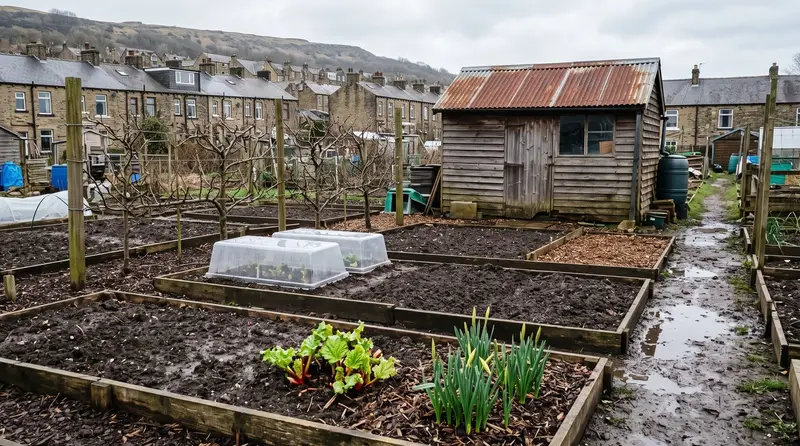
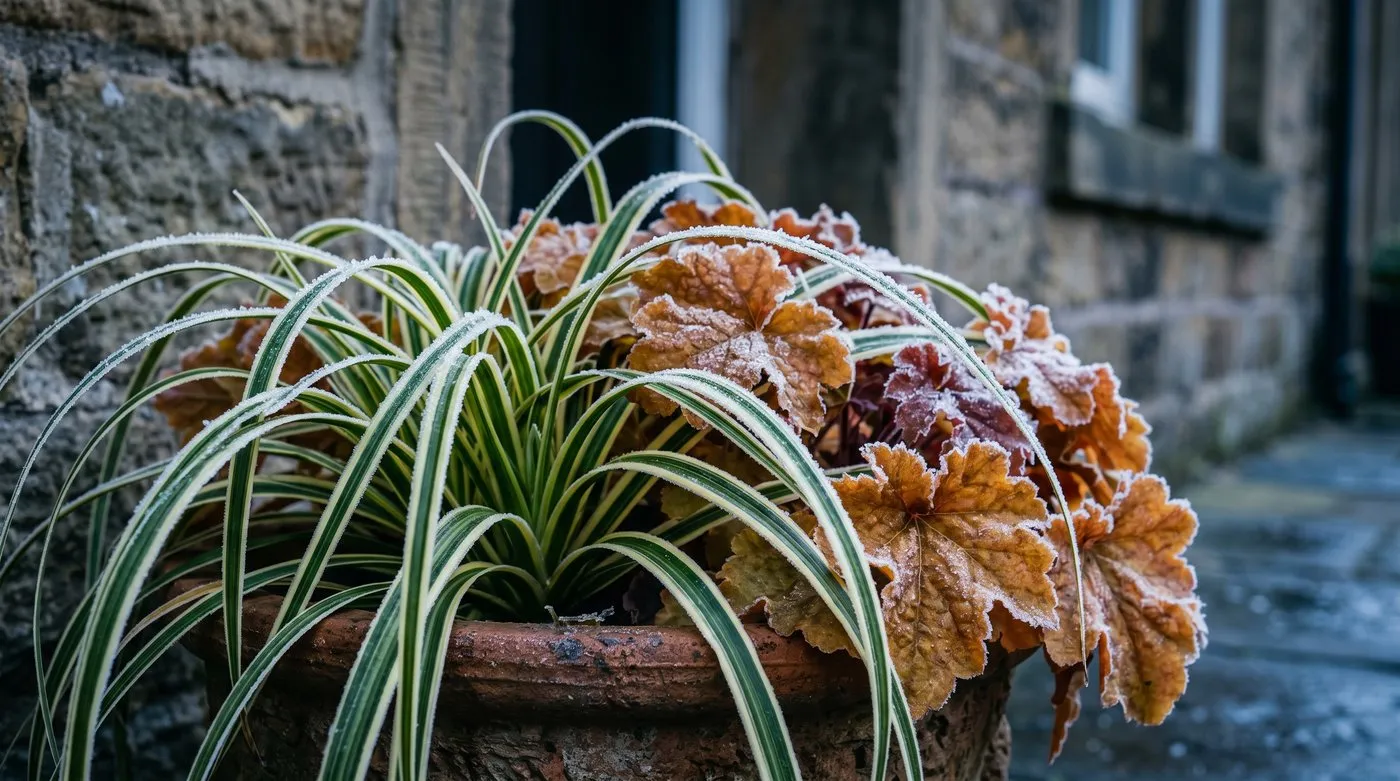 The Bolton pot on a -4C morning in January: carex and heuchera foliage takes frost and looks better for it.
Which compost should you use for winter pots?
Use a 50:50 mix of John Innes No 3 and peat-free multipurpose, with a handful of horticultural grit per 40cm pot. The loam in John Innes adds weight, so pots stand up to winter gales, and it holds its structure for the full five months. Straight multipurpose is the common mistake: it slumps by 3-5cm over winter, compacts, and waterlogs the roots of cyclamen and skimmia alike. A 40cm pot takes roughly 25 litres of mix, about £4-5 per pot when bought as two big bags split across several containers.
Skip the old advice about a gravel drainage layer in the base. It raises the soggy zone closer to the roots rather than draining anything. One 5cm crock over each drainage hole stops compost washing out, and that is all the base needs. For skimmia, check the bag: it wants neutral to acid compost, and its leaves yellow within 6-8 weeks in alkaline mixes. An ericaceous John Innes works if your tap water is hard. The RHS container gardening advice backs the loam-based approach for any pot planted for more than one season.
Will your pots survive frost?
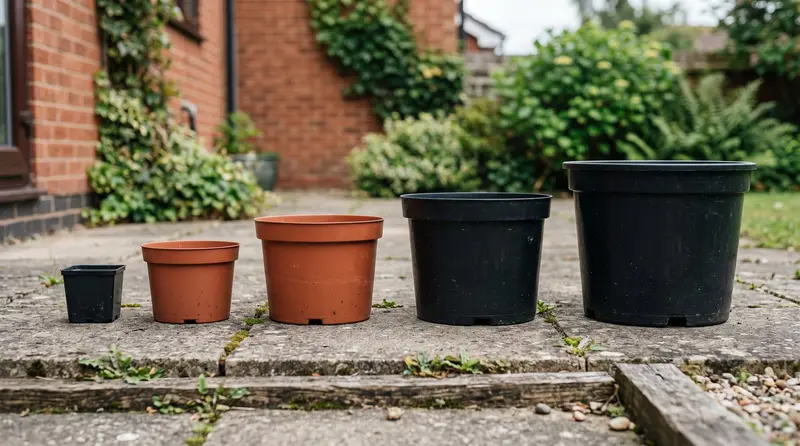
The buying rules are short. Look for “frost-proof” on the label, not “frost-resistant”, which only means the maker expects it to survive some frost. Hand-thrown stoneware fired above 1,200C is genuinely frost-proof and costs £25-50 for a 40cm pot. Glazed ceramic at £15-30 and fibre-clay at £12-25 are reliable cheaper routes, and a heavy-duty plastic pot at £6-12 is the budget answer for a windy northern doorstep.
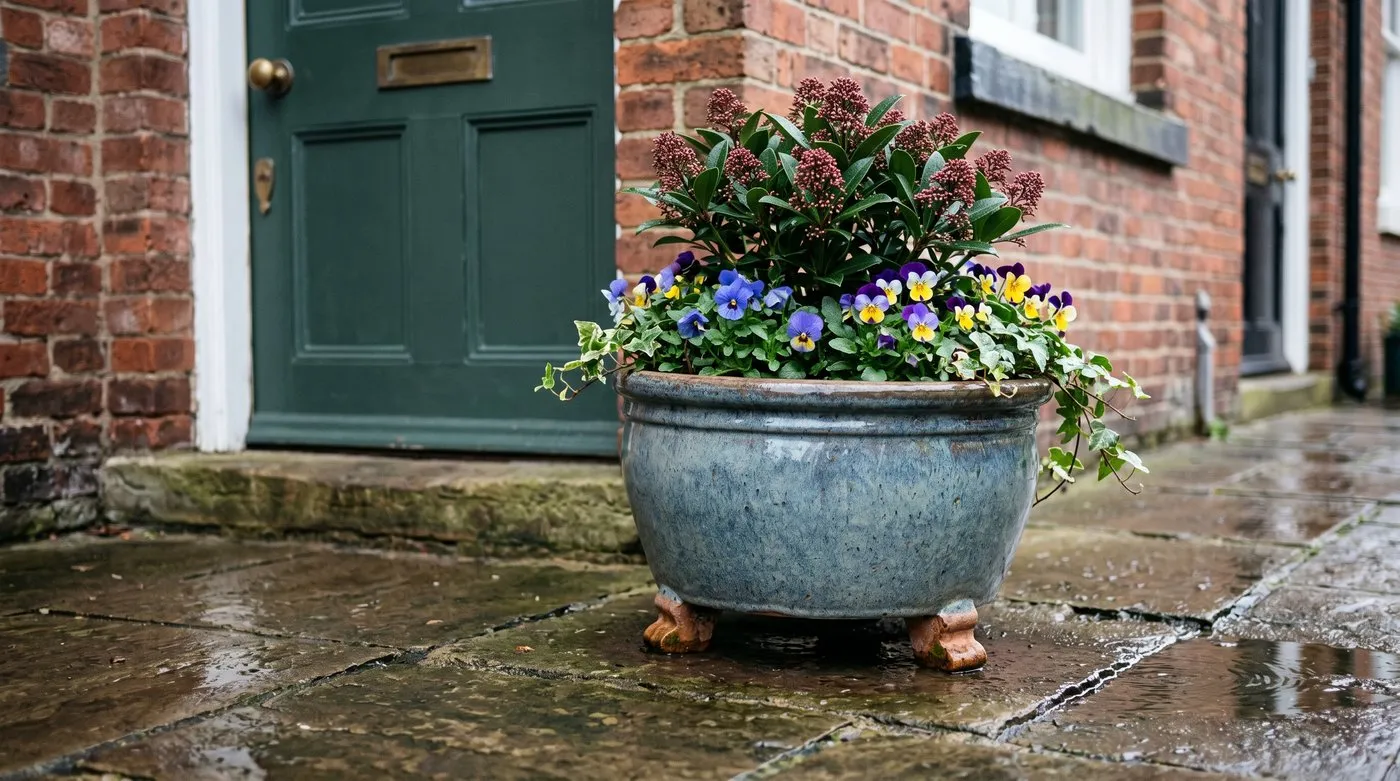 Three pot feet and 2-3cm of clearance: the cheapest insurance a winter container gets.
How often should you water containers in winter?
The test is the same finger test as any other season: push a finger in to the second knuckle, about 5cm, and water only if it feels dry. When you do water, do it in the morning of a mild day, so the surface drains before night frost. Never water in the 24 hours before a forecast hard freeze; saturated compost freezes solid and squeezes roots. The Met Office frost warnings are worth a glance before you reach for the can in December and January.
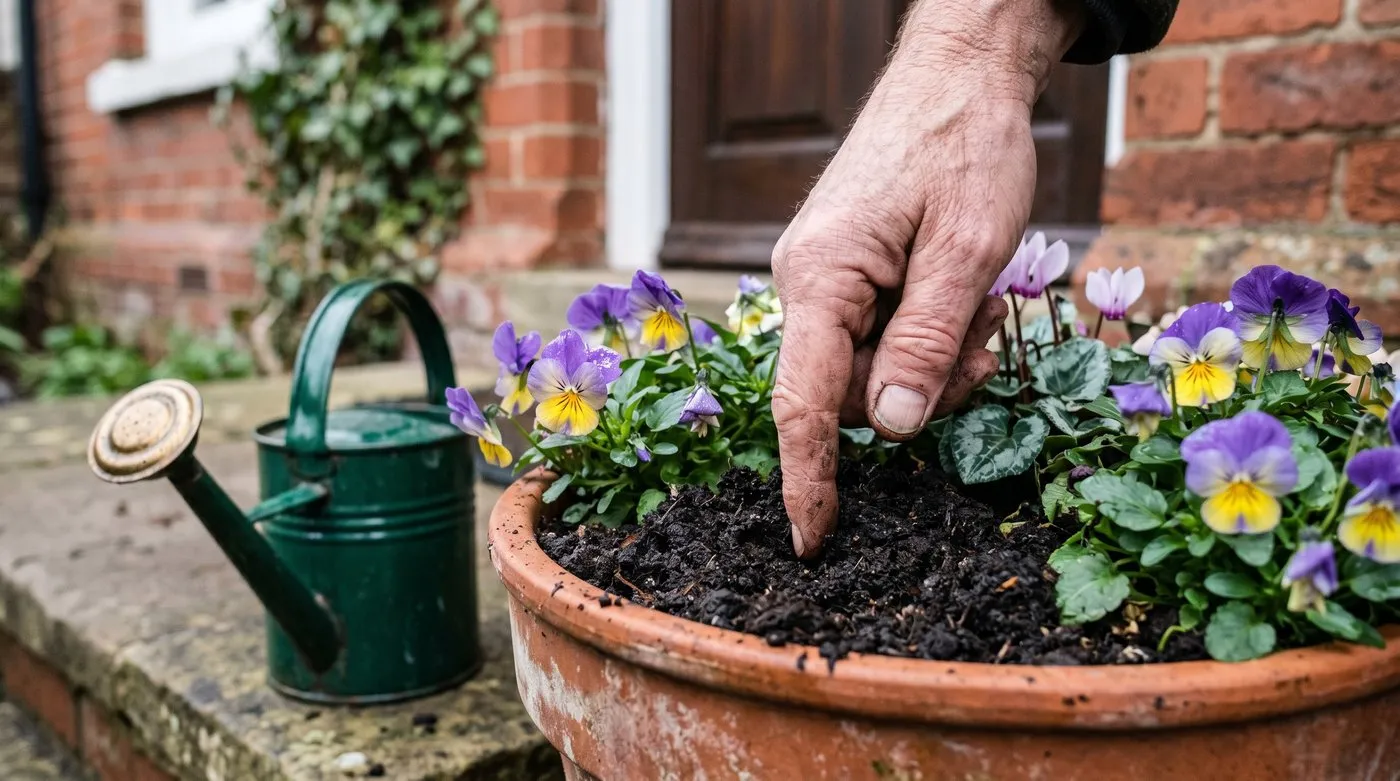 The 5cm finger test still applies in December: doorstep pots sit in the rain shadow of the house and dry out quietly.
Why skimmia ‘Rubella’ earns the thriller spot
One warning carries over from the compost section: ‘Rubella’ sulks and yellows in hard-water, alkaline conditions. Mix in ericaceous compost and rain-water it where you can. The full guide to growing skimmia covers feeding and what to do with the plant after its container season.
Common winter container mistakes
- Planting too late. Pots planted in November sit static until March because roots cannot establish in compost below 7C. Mid-October is the cut-off; late September is better in northern towns.
- Planting too thin. Summer spacing relies on plants doubling in size. Winter plants will not. Use 5-7 plants per 40cm pot, touching from day one, or live with gaps for five months.
- Buying bedding cyclamen instead of hardy types. The large-flowered persicum hybrids on autumn benches die at -2C. Check the label for Cyclamen coum or hederifolium, hardy to -15C.
- Leaving pots sitting flat in saucers. Trapped water rots roots and freezes solid. Remove saucers in October, fit pot feet, and let every pot drain freely.
- Forgetting water entirely. Doorstep pots under eaves can go bone dry in a rainless fortnight. A 10-14 day finger-test round takes two minutes per pot.
- Using last summer’s tired compost. It has slumped, lost structure and carries vine weevil eggs that hatch among heuchera roots. Start each winter pot with a fresh 50:50 John Innes mix.
Related reading: Some potted plants come under cover instead, see our guide to growing abutilon in containers.
Frequently asked questions
When should you plant winter containers?
What plants last all winter in pots?
Skimmia, carex, heuchera, hardy cyclamen and violas last reliably from October to March. All five are sound to at least -10C in a container. Skimmia ‘Rubella’ holds its red buds for five months. Add ivy or Gaultheria for trailing cover. Avoid bedding cyclamen sold in autumn, which collapses at -2C.
Do you need to water containers in winter?
Will terracotta pots crack in frost?
Cheap terracotta cracks once compost freezes and expands inside it. Standard terracotta is porous, absorbs water and flakes or splits below about -5C. Choose glazed ceramic, fibre-clay or thick plastic, or pay £20-40 more for stoneware rated frost-proof rather than frost-resistant. Pot feet halve the risk by keeping drainage holes clear.
What compost is best for winter containers?
Use a 50:50 mix of John Innes No 3 and peat-free multipurpose. The loam adds weight and drainage structure, and the multipurpose keeps the mix open. Straight multipurpose slumps and waterlogs by January. Mix in a handful of grit per 40cm pot on exposed, wet sites.
How many plants fit a 40cm winter container?
Five to seven plants fill a 40cm pot for instant effect. Winter planting makes almost no new growth, so plant at final density: one central thriller, three or four fillers, and two trailers at the rim. The same recipe in summer would need half the plants.
Once the pots are planted, the same formula scales upward and downward: winter hanging baskets use the identical plant list at the smaller end, and our guide to the best winter flowering plants covers what to add in the borders behind them. Browse the full how-to section for every step-by-step guide. In a hard freeze, a wrap of garden fleece will carry the display through unmarked.
Our team produces practical UK gardening guidance from source research, contributor records and established horticultural practice. Editorial standards are overseen by Matt W.