
Key takeaways
- Pansies have big flowers, violas have smaller ones but many more of them
- Plant winter-flowering types in September or October for colour through to spring
- Both cope with UK frosts. Soggy soil is the real danger
- Deadhead every few days to keep the flowers coming
- Feed every fortnight with half-strength tomato feed once they flower
- Sow seed indoors from February, or buy plug plants for a quicker start
Pansies and violas are some of the most reliable flowers for UK gardens from late autumn to early summer. They shrug off frost and grim weather that flattens other bedding. A tray of plug plants costs very little and can fill a window box with colour for months.
Between them, these two cover more of the year than almost anything else at the garden centre. Winter violas planted in October can flower on and off through the cold months and keep going until May. Spring-sown pansies pick up from April and carry on into summer.
What is the difference between pansies and violas?
They’re close relatives, but they differ in flower size, toughness and how many flowers they give. Knowing which is which helps you pick the right one.
Pansies (Viola x wittrockiana) are bred for big, showy flowers, often with dark “face” markings in the middle. There are colours and patterns galore. They flower well in cool weather but can stall in hot summers.
Violas (Viola cornuta and hybrids) have smaller flowers but far more of them, so a single plant can be smothered in blooms. They’re tougher than pansies, cope better with rain, flower for longer and put up with more shade.
| Pansies | Violas | |
|---|---|---|
| Flowers | Big, often with “faces” | Small, but lots of them |
| Frost | Hardy | Hardy |
| Rain | Petals can get battered | Shrug it off better |
| Summer heat | Can stall | Cope a bit better |
| Scent | Rarely | Often sweetly scented |
| Self-seeding | Some | Lots |
| How long they live | Best treated as one-season plants | Often a couple of years |
 Pansies with their famous “faces”. Purple, blue and golden yellow are always popular.
Which varieties should I grow?
It depends on when you want flowers. Winter-flowering types are bred to bloom in cold, dull weather. Spring and summer types give the biggest, brightest flowers in the longer days.
Good winter-flowering pansies: ‘Ultima Morpho’, ‘Universal Plus’ and the ‘Matrix’ series, which also holds its colour well in sun.
Good winter-flowering violas: ‘Sorbet XP’ and ‘Penny’, which are tough and flower over a long season.
Good spring and summer violas:
- ‘Magnifico’ has big flowers for a viola, halfway to a pansy.
- ‘Jewel’ series trails naturally, perfect for baskets and the front of borders.
- ‘Endurio’ copes with heat better than most and keeps flowering into July.
For the longest show, plant winter types in autumn and sow spring types from February. You’ll have colour from October to July, which looks great with other spring flowers in mixed borders.
How to grow pansies and violas from seed
Seed costs much less than plug plants and gives you loads more varieties to choose from.
Indoors (February to March): Fill small pots or cell trays with fine seed compost and water well. Scatter the seeds thinly and cover with a thin layer of sieved compost or vermiculite. Pansies and violas like the dark to germinate, so lay newspaper or cardboard over the tray. Keep them somewhere cool, as too much warmth stops them coming up. Seedlings appear in a couple of weeks. Take the cover off straight away and move them into good light.
Outdoors (March to May): Rake a patch of soil or a big pot until fine and crumbly. Sow thinly in shallow drills 15cm apart and cover lightly. Keep moist. Thin to 10cm apart once they have two pairs of true leaves, then move them to where they’ll flower in May. Our guide to sowing seeds indoors has more tips.
Summer sowing for winter flowers: Sow in June or July for plants that flower from October. These plants build strong roots through late summer and autumn.
Handy sowing facts:
- Keep them cool, not warm, to germinate
- Seedlings appear in about two weeks
- Expect flowers about three to four months after sowing
- Seed keeps a couple of years if stored cool and dry
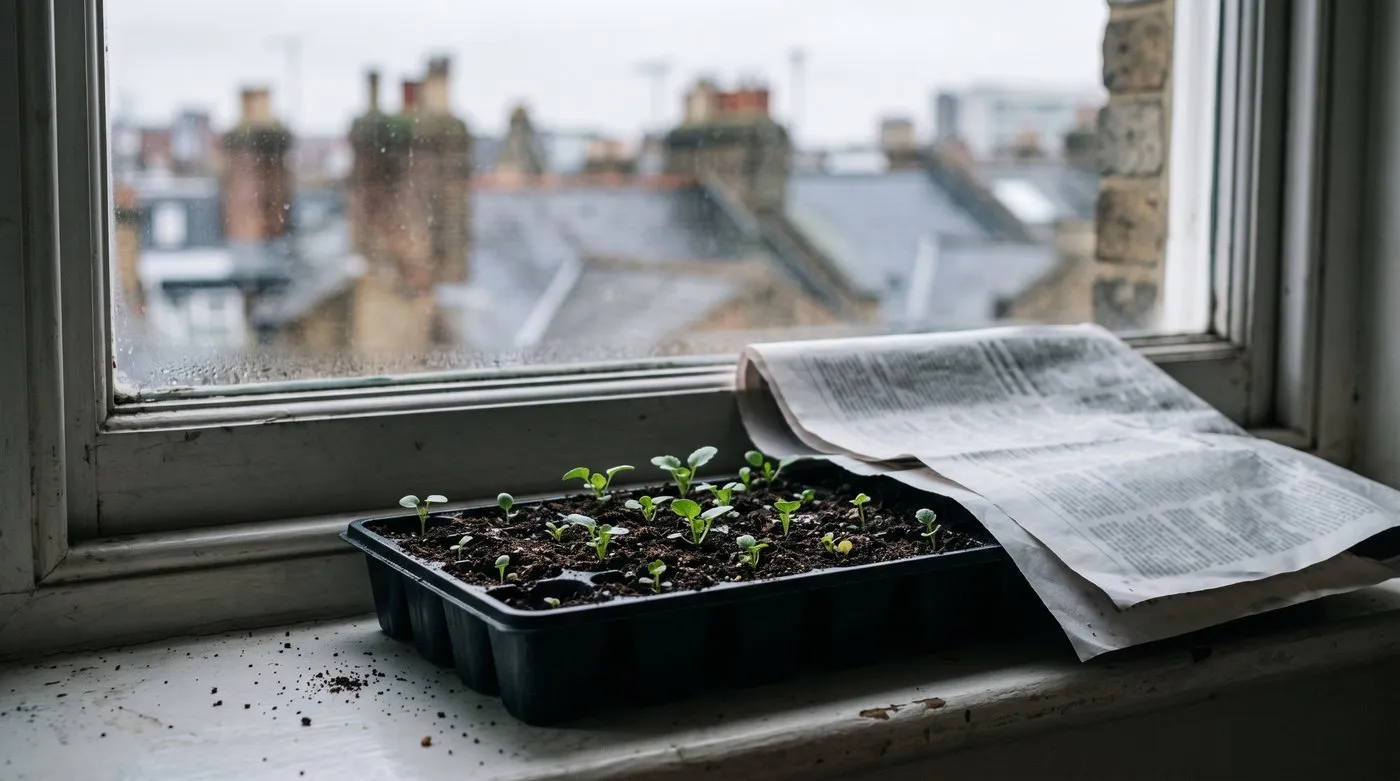
Pansy seed likes the dark to germinate, so cover the tray until the seedlings appear. Then take the cover off straight away and give them good light.
How to plant pansies and violas
Where you plant them matters more than the soil. They’re happy in almost any soil but need the right amount of light.
Soil: Any soil that drains well. On heavy clay, mix plenty of compost into the planting holes. Pansies rot at the base in waterlogged ground.
Spacing: 15-20cm apart in borders and 10-12cm apart in pots for a full look. Five plants fill a 60cm trough nicely.
Pots: Use multipurpose compost with some perlite mixed in, and make sure every pot has drainage holes. Pansies in pots flower just as well as those in the ground if you feed them.
Depth: Plant so the top of the root ball sits level with the soil. Too deep and the base rots. Too shallow and frost can lift the roots.
When to plant out: Harden off home-raised plants for a week or so first. In most of England, plant from mid-March. In Scotland and the north, wait until early April. For winter displays, plant by mid-October so the roots settle before hard frosts.
 Winter violas spilling over a window box, bringing colour from late autumn to spring.
How to care for pansies and violas
Deadheading is the most important job. Everything else comes second.
Watering: Water when the top couple of centimetres feel dry. Pots may need it daily in warm weather but much less in winter. Overwatering causes rot and grey mould. Water at the base, not over the flowers, as wet petals turn to mush in the cold.
Feeding: Start when the first flowers open. Use tomato feed at half strength every two weeks. It encourages flowers, while too much nitrogen gives leggy, leafy plants with few blooms.
Summer: In hot spells, pansies stop flowering and go leggy. Cut the whole plant back to about 8cm in July, then water and feed. Fresh, bushy growth soon follows with a new flush of flowers into autumn.
Winter: Pansies and violas are frost-hardy and rarely need protecting. In a really severe frost, cover them with fleece overnight. Soggy soil is a bigger danger than cold, so make sure pots drain freely and border soil isn’t compacted.
Pests: Slugs and snails are the main problem, munching flowers and leaves overnight, especially on young plants. Ferric phosphate slug pellets or evening torch patrols both help. Our slug control guide has more ideas. Aphids sometimes gather on stems in spring but rarely do much harm. A jet of water knocks them off.
 Deadheading pansies in a raised bed. Snap the stem back to a leaf joint rather than just pulling off the petals.
Month-by-month pansy and viola calendar
| Month | What to do |
|---|---|
| January | Check winter displays for slug damage. Pull off dead or yellow leaves. |
| February | Sow seed indoors somewhere cool. Order plug plants. |
| March | Keep sowing. Plant out hardened-off plants in mild areas. |
| April | Main spring planting month. Sow outdoors once the soil warms. |
| May | Deadhead regularly. Start fortnightly tomato feed. |
| June | Peak spring flowering. Sow seed for autumn and winter plants. |
| July | Cut back leggy plants to about 8cm. Keep deadheading and feeding. |
| August | Move June-sown seedlings to their final spots. Winter plug plants arrive in shops. |
| September | Plant winter-flowering pansies and violas. |
| October | Last chance to plant for winter. The first winter flowers appear. |
| November | Winter displays in flower. Deadhead when the weather allows. |
| December | A quiet month. Fleece only in a really severe frost. |
Our flower planting calendar helps you plan the rest of the garden around them.
Best ways to use pansies and violas
Window boxes and troughs: Five plants per 60cm trough. Put trailing violas like the ‘Jewel’ series at the front and upright pansies behind. Swap plants in October and April for colour all year.
Hanging baskets: Violas suit baskets better than pansies because wind and rain don’t spoil them as much. A standard basket takes eight to ten plants, with trailing types round the edge and bushy ones on top. Our hanging basket guide shows you how.
Border edging: Plant 15cm apart along the front of a border for a neat ribbon of colour. Violas self-seed and over a few years make a lovely, easy edging.
Under spring bulbs: Pansies and violas are perfect with tulips and daffodils. They cover the bare soil between bulb stems and keep flowering after the bulbs have finished.
On the plate: Pansies and violas are edible flowers. Scatter petals on salads, cakes and drinks, or freeze flowers in ice cubes for summer.
Which to choose: Violas usually flower for longer, shrug off rain better and are less tempting to slugs. Pansies give the biggest, boldest flowers. Plenty of gardeners grow both.
Common problems with pansies and violas
Leggy, stretched growth: Too little light or too much warmth. Move pots somewhere brighter, cut plants back by half in summer and go easy on nitrogen.
Grey mould: Fuzzy grey patches on flowers and stems, worst in damp, still weather. Remove affected bits straight away, give plants space and water the soil rather than the plant.
Crown rot: Plants collapse at soil level, usually from planting too deep or soggy soil. Plant with the top of the root ball level with the soil and make sure it drains well. Throw away affected plants and don’t replant in the same spot.
Powdery mildew: White powder on the leaves in late summer, when days are warm and nights cool. Give plants air and water the soil, not the leaves. Badly hit plants are best replaced with fresh autumn ones.
Faded flower colour: Normal in bright sun, especially in dark purples and blues. Afternoon shade helps. The ‘Matrix’ series holds its colour better than most.
Healthy leaves but no flowers: Usually too much nitrogen feed or too much shade. Stop feeding for a couple of weeks, then switch to tomato feed only. Make sure they get at least a few hours of direct sun.
The RHS pansy and viola growing guide has helpful photos of common problems.
Growing pansies and violas in pots
Pots are where pansies and violas really shine. They bring the flowers up to eye level, keep slugs at a distance and let you move them into the sun.
Compost: Multipurpose compost with some perlite mixed in drains well but still holds enough water. Don’t use garden soil in pots, as it packs down and drains badly.
Pot size: At least 15cm deep for pansies and 10cm for violas. Wider is better, and a 40cm pot holds five to seven plants. Terracotta drains better than plastic, which helps in winter.
Feeding: Start two weeks after planting, as fresh compost has enough food to begin with. Feed with half-strength tomato feed every fortnight. Stop in December and January when growth slows, and start again in February.
Winter: Stand pots against a south or west-facing wall for warmth, and raise them on pot feet so they don’t sit wet. Roots in pots feel the cold more, so wrap pots in bubble wrap in a really hard freeze.
Violas in pots also make great partners for herbs and salads on a patio, bringing in pollinators next to your food plants.
For more colour through the coldest months, read our guide to winter flowering plants that pair well with pansies and violas. Words like hardening off and pricking out are explained in our plain-English glossary.
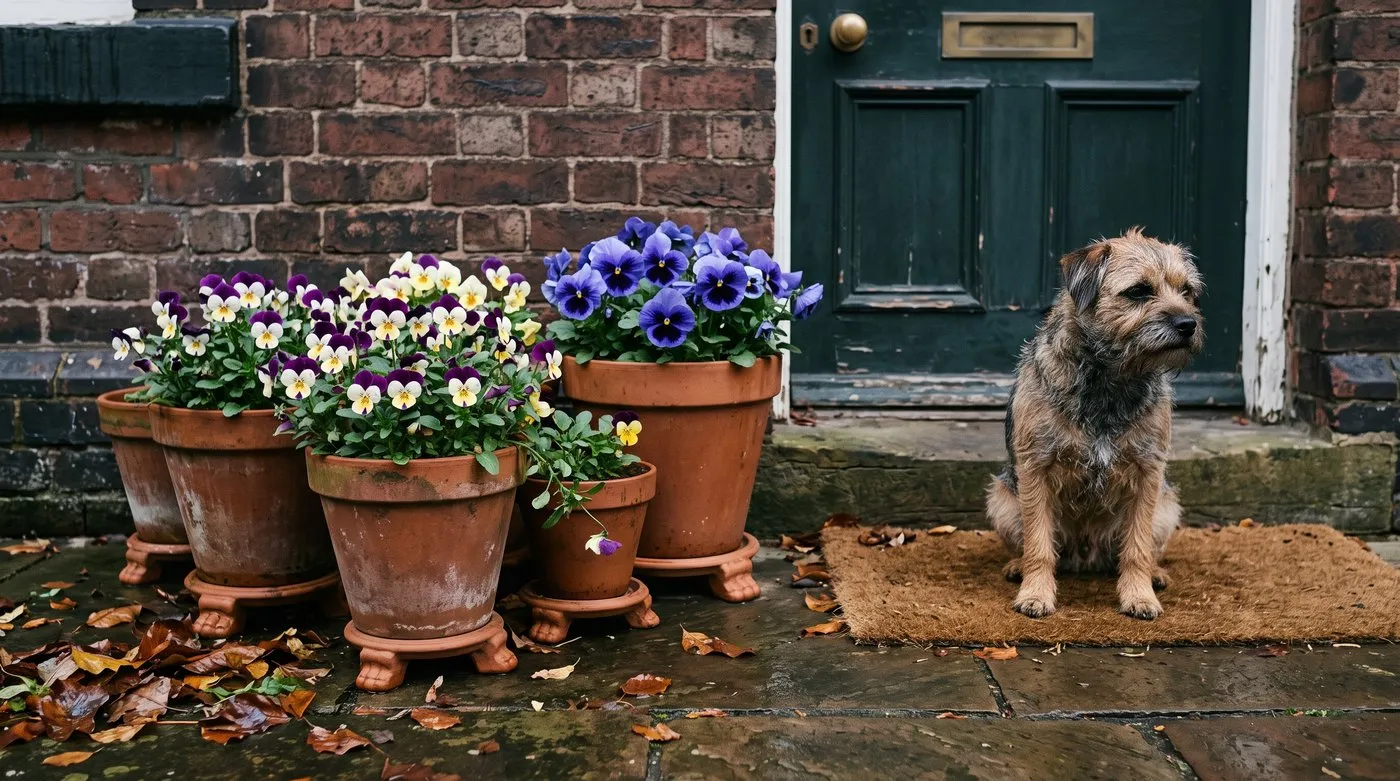
Pot feet stop winter pots sitting in the wet, which matters more than the cold. A sheltered doorstep against the house wall gives them a little extra warmth too.
Frequently asked questions
What is the difference between pansies and violas?
Pansies have bigger flowers, often with dark “face” markings. Violas have smaller flowers but many more of them. Violas are closer to the wild plants and tend to be tougher, shrug off rain better and flower for longer. Both need exactly the same care.
When should I plant pansies and violas in the UK?
Plant from March to May for spring colour. For winter flowers, plant in September and October. Sow seed indoors from February, or buy plug plants from March for a quicker start. In northern England and Scotland, plant out a couple of weeks later.
Can pansies survive winter in the UK?
Yes, they get through most UK winters without help. Winter-flowering varieties such as ‘Ultima Morpho’, ‘Universal Plus’ and ‘Sorbet XP’ are bred for it. Snow actually keeps them snug. The real winter danger is soggy soil, so make sure pots drain well and border soil isn’t packed down.
How often should I deadhead pansies and violas?
Every few days for the most flowers. Snap each faded flower stem back to the nearest leaf joint, rather than just pulling off the petals. Regular deadheading keeps a plant flowering for much longer.
Do pansies and violas come back every year?
Violas often come back for a couple of years. Pansies are best treated as one-season plants. Both self-seed in UK gardens. Viola cornuta types like ‘Sorbet’ and ‘Penny’ usually come through winter and reshoot. For a guaranteed show, plant fresh each autumn and spring.
Are pansies and violas edible?
Yes, garden pansy and viola flowers are edible. They taste mild, slightly sweet and a bit grassy. Use them fresh in salads, on cakes or frozen in ice cubes. Pull off the green bit at the base first. Only eat flowers from plants that haven’t been sprayed.
Why are my pansies going leggy and not flowering?
Usually too much shade or too much heat. Pansies want a few hours of direct sun a day, with afternoon shade in summer. Too much nitrogen feed also gives leaves instead of flowers. Cut leggy plants back by half in July and they soon bush up and flower again.
Our team produces practical UK gardening guidance from source research, contributor records and established horticultural practice. Editorial standards are overseen by Matt W.


