Key takeaways
- Hang summer baskets outside in mid to late May, after the last frost
- Bigger baskets hold more water, so they dry out less and look fuller
- Water daily in summer and twice a day in a heatwave
- Feed weekly with tomato feed from June to September
- Pick off dead flowers every week to keep new ones coming until October
A good hanging basket turns a bare wall or porch into a waterfall of colour from June to October. It looks effortless, but the secret is simple: a big basket, decent compost, the right plants and plenty of water.
Choosing the right basket
Go as big as you can. A bigger basket holds more compost and more water, so plants grow better and you’re not watering every few hours.
A 40cm basket is even better than a 35cm one. Plants settle in faster, a missed watering is less of a disaster, and the display looks fuller.
Wire baskets with a liner are the traditional choice. You can plant through the sides for a full ball of colour. Solid plastic baskets are easier to look after, but you can only plant in the top.
| Basket type | Watering | Best for |
|---|---|---|
| Wire with liner | Daily, twice in heat | The fullest ball of flowers |
| Solid plastic | Every day or two | Easy care |
| Self-watering | Every few days | Going away in summer |
| Wicker or rattan | Daily | A cottage look |
The compost mix that works
Plain multipurpose compost can pack down over summer and is hard to re-wet once it dries. A few simple additions fix that:
- Peat-free multipurpose compost as the main ingredient. Our peat-free compost guide covers good options
- A few handfuls of perlite to keep it open and free-draining
- Slow-release feed granules, at the rate on the pack
- Water-retaining granules, also at the rate on the pack
Leave out garden soil, sand and gravel. They just add weight and make the mix heavy and airless.
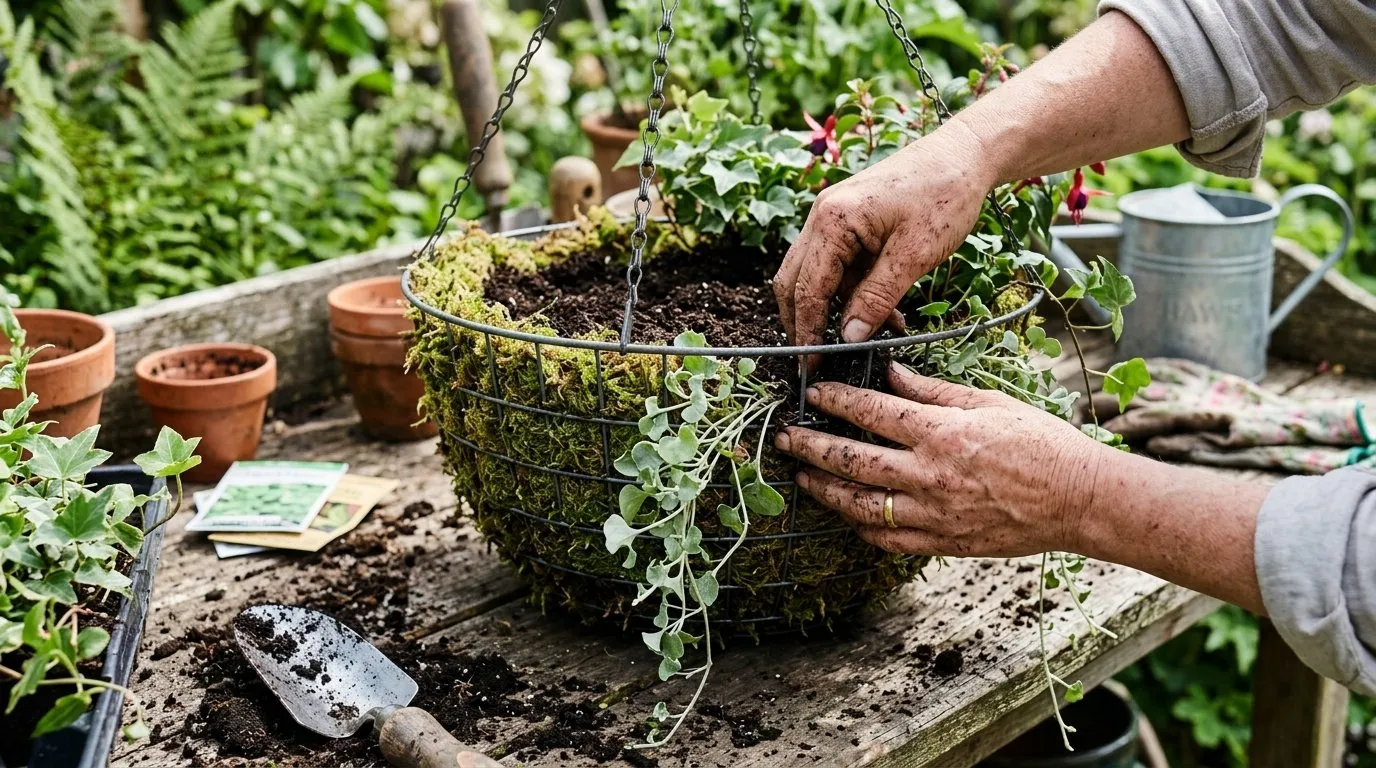
A lined wire basket, half filled with compost. Trailing plants go through the sides before the top layer goes on.
Best plants for UK hanging baskets
The best baskets mix three kinds of plant: an upright one for the middle, trailers for the edges and sides, and foliage to fill gaps.
Trailing plants (edges and sides)
Trailing petunias (Surfinia type): The star of the show. Long stems smothered in flowers from June to October, in white, pink, purple and red. They need full sun and a weekly feed.
Trailing lobelia: Clouds of tiny blue, white or pink flowers. Happy in part shade. If it gets straggly in August, cut it back by half and it will flower again in September.
Trailing fuchsia: Pretty dangling flowers, and better in part shade than most basket plants. Hardy fuchsias survive winter in the ground, but basket types are tender.
Bacopa: Small white, pink or blue flowers on trailing stems. A great gap filler that keeps going in August heat.
Upright plants (centre)
Geraniums (Pelargonium): The classic centrepiece. Bold flower heads and happy to dry out a little. Snap off faded flower heads each week.
Upright fuchsia: Gives height in the middle. Match it with trailing fuchsias in a similar colour for a neat look.
Osteospermum: Daisy flowers that close at night. Best in full sun, so ideal for a south-facing wall.
Foliage plants
Helichrysum: Soft silver trailing leaves that tie the whole basket together. It grows fast, so trim it in August if it takes over.
Small-leaved ivy: A tough green trailer that looks good all season. Handy for baskets in part shade.
| Plant | Type | Sun | Flowers |
|---|---|---|---|
| Surfinia petunia | Trailer | Sun | June to October |
| Trailing lobelia | Trailer | Sun or part shade | June to September |
| Trailing fuchsia | Trailer | Part shade | June to October |
| Bacopa | Trailer | Sun or part shade | May to October |
| Verbena | Trailer | Sun | June to October |
| Geranium | Upright | Sun | June to October |
| Helichrysum | Foliage trailer | Sun | Grown for leaves |
Step-by-step planting method
For a 35cm wire basket:
- Sit the basket on a large pot or bucket so it stays steady
- Line it with a coir, wool or moss liner
- Fill a third of the way with compost
- Push 3-4 trailing plants through the sides
- Add compost until it’s two-thirds full
- Push in another ring of 3-4 trailers, set between the first ones
- Fill to 2cm below the rim
- Plant one upright plant in the middle and 3-4 trailers round the top edge
- Water well until it drips from the bottom
- Hang it up and water again the next morning
You’ll fit 8-12 plants in a 35cm basket. It looks crowded at first, but that’s what gives you a lush ball of colour by summer.
Watering and feeding through the year
Watering makes or breaks a basket. Here’s a simple routine:
May (after planting): Water every other day. The plants are small and the compost is fresh.
June: Water daily. Start a weekly liquid feed with tomato feed at half strength.
July and August: Water daily, and twice a day in a heatwave. This is when baskets struggle most, especially on a sunny south-facing wall. Switch to full-strength tomato feed once a week.
September: Cut back to every other day as it cools. Keep feeding weekly while plants are still growing.
October: Water only when needed and stop feeding. Take baskets down after the first hard frost.
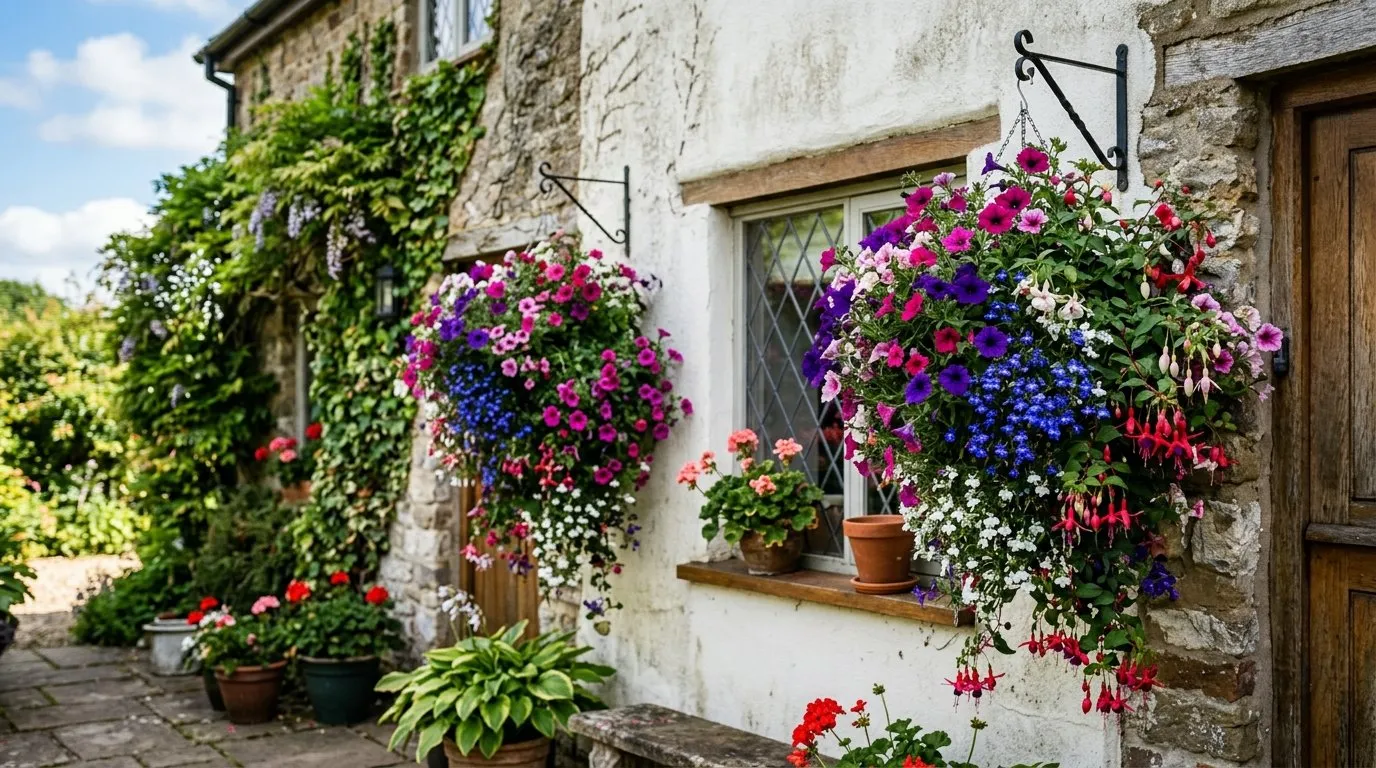
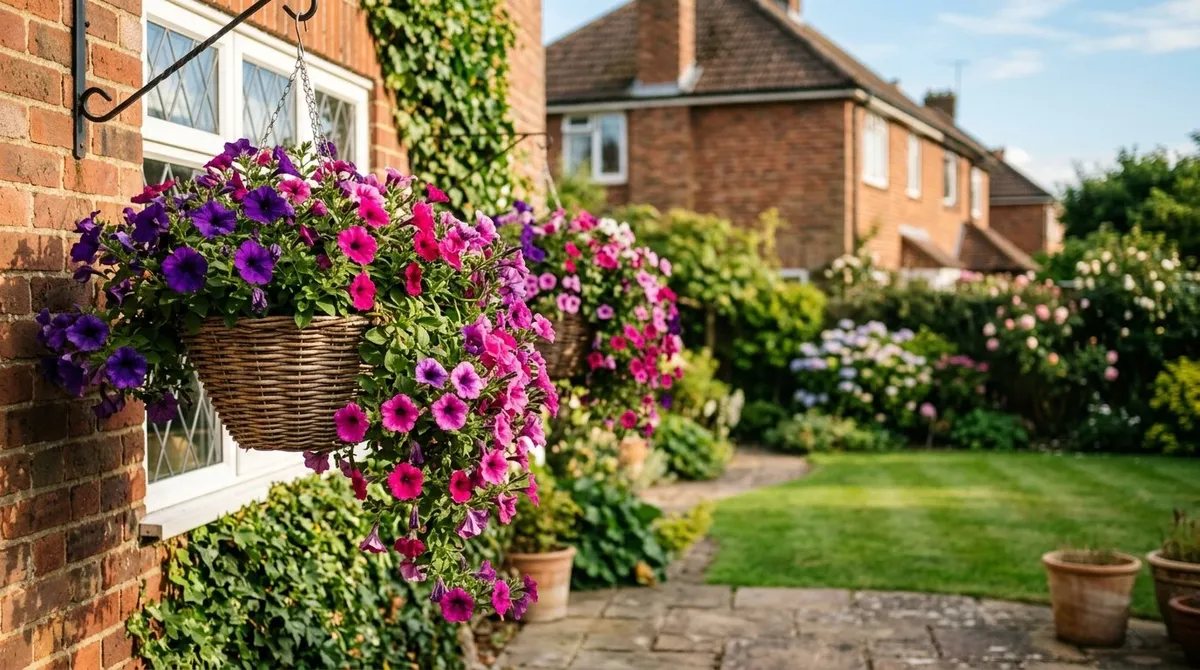
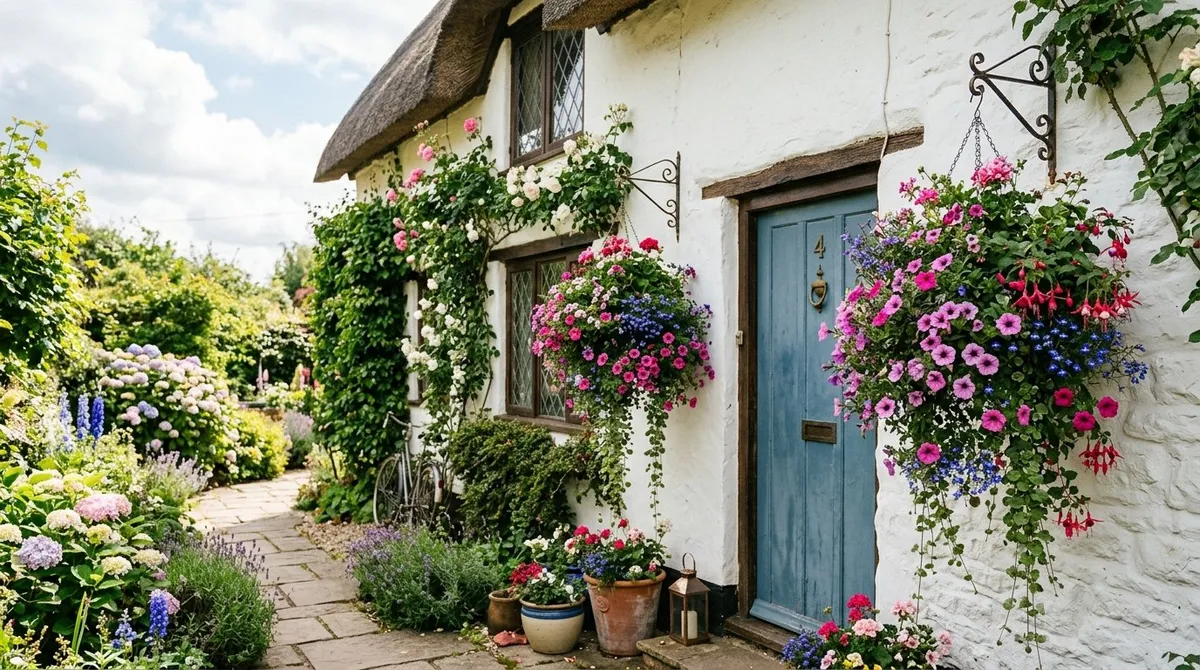
A pair of baskets at their July best. Petunias, lobelia and fuchsia make a curtain of colour on a sunny wall.
Keeping baskets looking good all summer
Three easy jobs keep baskets going from June to October.
Deadheading: Pick off faded flowers every week. Trailing petunias love this, because it stops them setting seed and pushes them to make more flowers. Pinch the old bloom off where its stalk meets the stem.
Trimming: If lobelia or bacopa looks straggly in August, cut the trailing stems back by half. Fresh growth and new flowers follow in a couple of weeks.
Pests: Aphids gather on new shoot tips. Squash small groups by hand or knock them off with a jet of water. A biological control is another option. Skip washing-up liquid sprays, as home-made mixes aren’t legal to use as pesticides in the UK. Vine weevil grubs can wreck basket plants, so a nematode drench in August is a good safeguard.
Winter and spring hanging baskets
Baskets aren’t just for summer. A winter basket brings colour from November to March.
Winter plants: Cyclamen, winter pansies, heather, trailing ivy, euonymus and ornamental cabbage. Hang them somewhere sheltered.
Spring plants: Primroses, polyanthus, small daffodils such as Tête-à-Tête, grape hyacinths and trailing aubrieta. Plant in October for colour from February.
Winter baskets need far less water. Once a week in mild spells is usually enough. Don’t feed them between November and February.
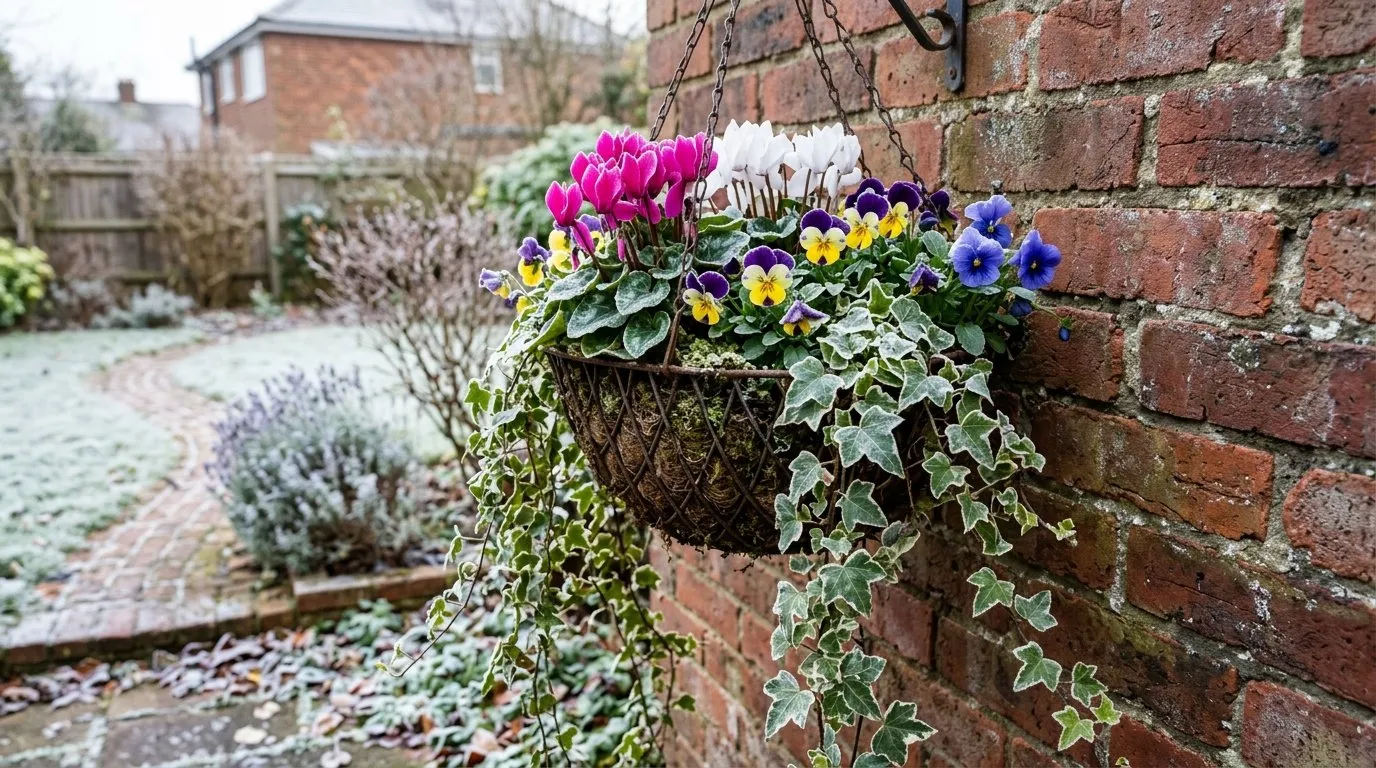
A winter basket with cyclamen, ivy and winter pansies, bringing colour from November to March.
Frequently asked questions
When should I plant hanging baskets UK?
Hang them outside in mid to late May, after the last frost. In southern England that is usually mid-May. In Scotland and northern England, wait until late May or early June. Bedding plants can’t take frost, so only plant earlier if you can keep baskets under cover on cold nights.
How often should I water hanging baskets in summer?
At least once a day, and twice in hot or windy weather. Lift the basket a little to check. If it feels light, it needs a drink. Water slowly until it drips from the bottom. Baskets in full sun dry out much faster than ones in part shade.
What is the best compost for hanging baskets?
A good peat-free multipurpose compost works well. Add a little perlite to help it drain, and mix in slow-release feed when you plant. Water-retaining granules mean you water a bit less often. Don’t use garden soil, as it’s heavy and drains badly in a basket.
How do I stop hanging baskets drying out?
Start with a bigger basket, because it holds more compost and water. Add water-retaining granules when you plant, and use a liner with a plastic layer pierced for drainage. Hang baskets out of strong midday sun if you can. If one dries right out, stand it in a bucket of water to soak.
What are the best plants for hanging baskets UK?
Trailing petunias, lobelia, fuchsias, bacopa and verbena are all reliable. Add trailing helichrysum or ivy for foliage. Put trailers round the edge and an upright plant, such as a geranium, in the middle. For a shadier spot, fuchsias and begonias cope best.
Should I use moss or a liner in hanging baskets?
Both work, so choose whichever you prefer. Moss looks natural but dries out faster. Coir fibre liners are easier to use and hold water better. Rigid plastic liners hold the most water but need drainage holes. Wool and other fibre liners are good alternatives to moss.
Can I plant hanging baskets earlier indoors?
Yes, plant them in April and keep them somewhere frost-free. A greenhouse or conservatory is ideal. Move them outside after the last frost, usually mid to late May, after a week or two of hardening off. You’ll get a fuller basket sooner.
Related reading
Our team produces practical UK gardening guidance from source research, contributor records and established horticultural practice. Editorial standards are overseen by Matt W.