Key takeaways
- Start with pots at least 30cm across, as small pots dry out fast in summer
- Every pot needs drainage holes, and pot feet stop the holes from blocking
- Use peat-free multipurpose compost for seasonal plants and John Innes No.3 for shrubs
- Match plants to your light, as sun lovers sulk in shade and ferns scorch in sun
- Water by feel, not the calendar, and feed every two weeks in the growing season
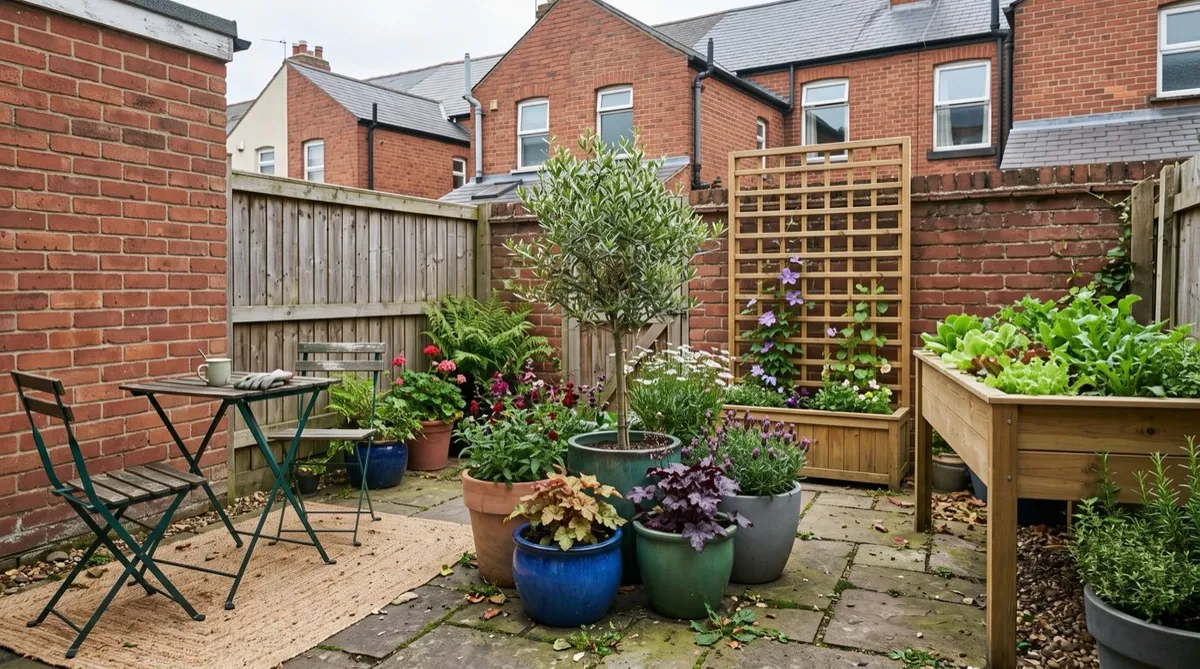
Container gardening is the easiest way to start growing if you have little or no soil. Pots work on paving, decking, gravel, steps and balconies, and you can move them as the seasons change. This guide covers the basics a beginner needs: the right pot, the right compost, what to plant where, and how to keep it all alive through summer.
The one catch is that potted plants rely on you for everything. They can’t send roots out to find water or food. Get the pot, compost and watering right, though, and containers give you colour, scent and even dinner in the smallest space. If you’re working with a high-up space, the guide to balcony gardening ideas covers wind and weight limits.
What do you need to start container gardening?
You need three things: a decent-sized pot with drainage holes, good compost, and plants that suit your light. Everything else is a bonus.
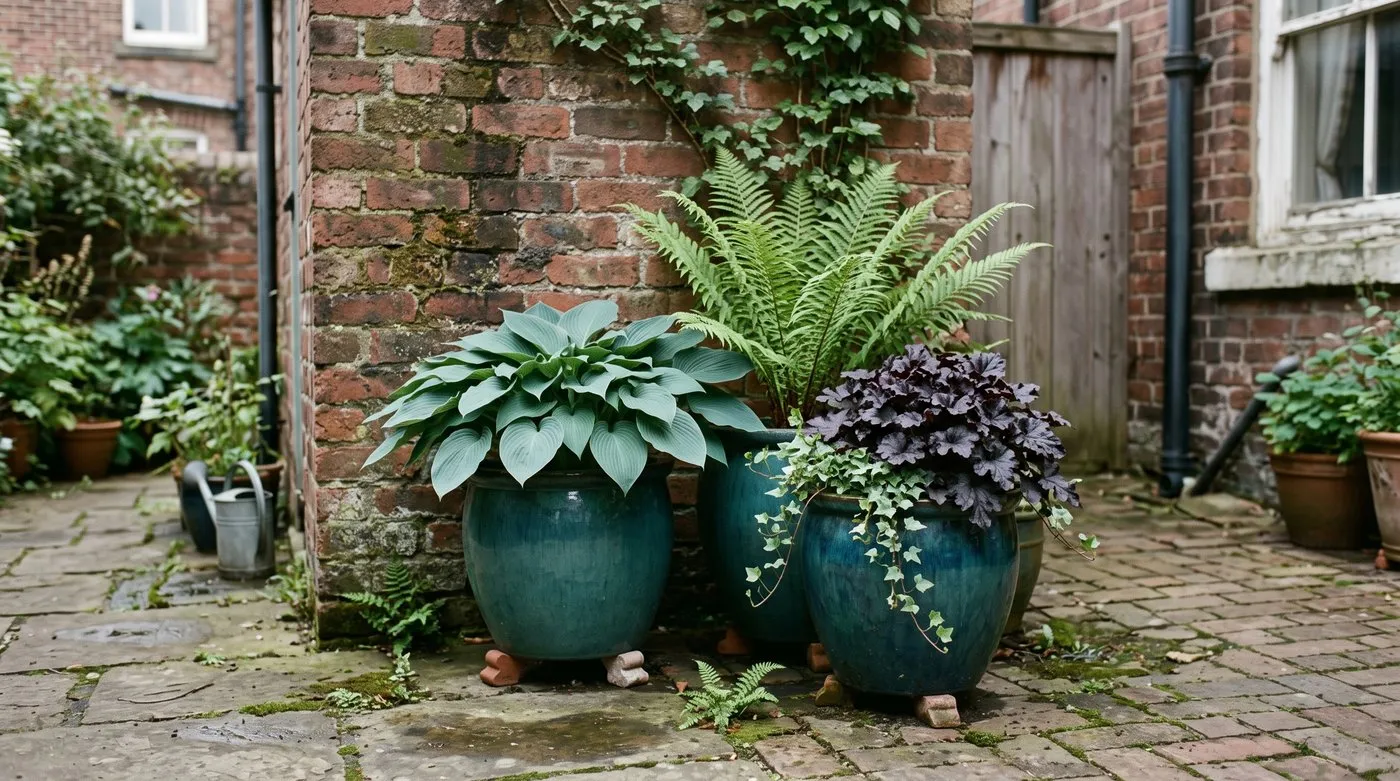
Hostas, ferns and heuchera are happy with a little morning sun. Pick plants for the light you have, not the light you wish you had.
Before you buy anything, watch where the sun falls for a day. A spot with six or more hours of direct sun suits herbs, lavender and most bedding. A spot with a few hours of morning sun suits hostas, ferns and heuchera. Shopping for the light you have saves a lot of sulking plants.
A starter kit for a beginner looks like this:
- Two or three pots, at least 30cm across, with drainage holes
- Pot feet or a couple of bricks for each pot
- A bag of peat-free multipurpose compost
- A watering can with a rose, or a hose with a gentle spray
- A liquid feed for the summer
Which pots work best for container gardening?
The best pot is one that’s big enough, drains well and suits where it will sit. Material changes how heavy the pot is, how fast it dries and whether it survives frost.
| Material | Weight | Dries out | Good for |
|---|---|---|---|
| Frost-proof terracotta | Heavy | Fast | Herbs, lavender, Mediterranean plants |
| Glazed ceramic | Heavy | Slowly | Shrubs, Japanese maples, shady spots |
| Fibreglass or resin | Light | Slowly | Balconies and roof terraces |
| Galvanised metal | Medium | Slowly, but heats up in sun | Modern looks, part shade |
| Wood | Heavy | Medium | Herbs, veg and mixed troughs |
| Plastic | Very light | Slowly | Budget pots and inner liners |
Heavy pots are great on a windy patio, because they won’t blow over. On a balcony, lighter fibreglass or plastic is safer. Terracotta looks lovely but dries out fast, so it suits plants that like it dry. Check the label says frost-proof if it’s staying out over winter.

A tall plant at the back and trailing ones at the front makes even three pots look planned. Odd numbers usually look more natural than pairs.
What size pot do you need?
Go for at least 30cm across for most plants. Smaller pots hold so little compost that they can dry out in a single hot afternoon.
- 30cm pots: herbs, summer bedding, small grasses
- 40cm pots: lavender, heuchera, hostas, small shrubs
- 50cm or more: Japanese maples, hydrangeas, agapanthus, dwarf fruit trees
- Troughs 60cm or longer: mixed plantings, salad leaves and herbs
Depth matters too. Tomatoes, potatoes and shrubs want a deep root run, while alpines and succulents are happy in shallow pans. If the pot is labelled in litres, the guide to plant pot sizes converts litres to centimetres.
Which compost should you use in pots?
Use peat-free multipurpose compost for bedding, herbs and veg that you replace each year. For shrubs, trees and perennials that stay for years, use a loam-based compost such as John Innes No.3.
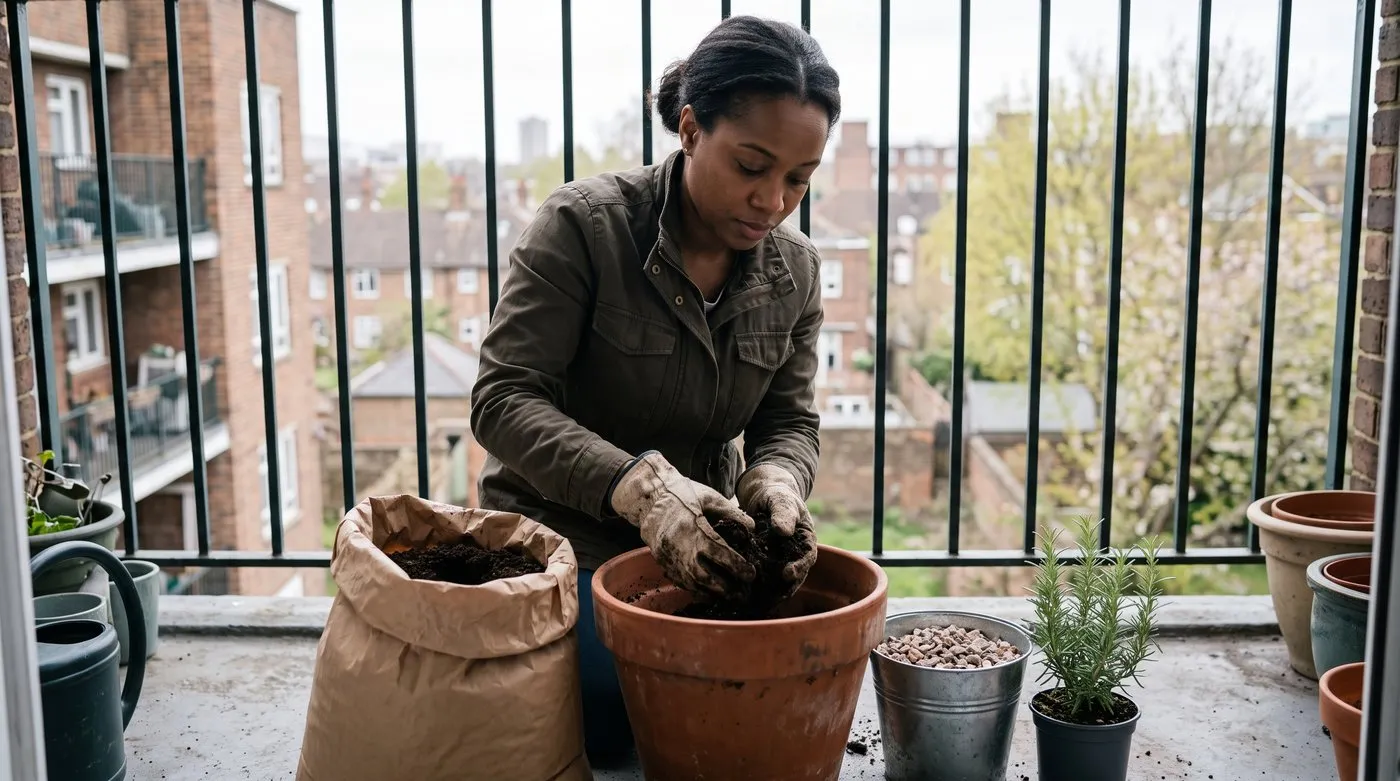
A few handfuls of grit in the compost keeps rosemary, thyme and lavender happy. They hate sitting wet.
Loam-based compost holds on to nutrients for longer and doesn’t shrink as it dries. It also makes the pot heavier, which helps tall plants stay upright. Many gardeners mix the two for permanent pots.
A few plants want something different:
- Lavender, rosemary and thyme like sharp drainage. Mix in a few handfuls of horticultural grit.
- Camellias, blueberries and rhododendrons need acid conditions. Use ericaceous compost and water with rainwater where you can.
- Alpines and succulents want a gritty mix, roughly half compost and half grit.
Never fill pots with garden soil. It packs down hard in a container and drains badly.
Container ideas for sun, shade and small spaces
The best container ideas start with your light and how much time you have. Here are a few easy looks to borrow.
Sunny herb and Mediterranean pots
Plant thyme, sage, rosemary and lavender in terracotta and stand them by the back door. They like sun, sharp drainage and being left a bit dry. Add a pot of agapanthus for summer flowers.
Shady corner pots
Hostas, ferns, heuchera and hellebores are happy with a few hours of morning sun. Glazed or plastic pots keep the compost moist for longer. Trailing ivy softens the edges all year.
Pots you can eat from
Tomatoes, chillies, salad leaves, herbs and strawberries all grow well in pots. Give them the sunniest spot you have, ideally against a warm wall. The guide to container vegetable gardening covers pot sizes and varieties crop by crop.

Tomatoes, herbs and strawberries are all happy in pots. Put the edible ones nearest the kitchen so you pick them more often.
Modern, low-fuss pots
Tall black, grey or white planters with one plant each look sharp and need little care. Try grasses such as Hakonechloa, a clipped evergreen ball or a single agapanthus. Box is often used, but box blight and box tree caterpillar are common, so yew or Ilex crenata are easier choices.
Once you have a few pots, arranging them well makes a big difference. The guide to grouping pots for impact shows how to mix heights and repeat colours. For more layouts on a small patch of paving, see these patio garden ideas for small spaces.
How to keep containers colourful all year
Plant one or two permanent plants per pot group, then change the seasonal plants around them. That way the pots never look empty.
Good permanent anchors include Japanese maples, bay, small evergreen grasses, skimmia and phormium. Around them, swap the seasonal plants two or three times a year.
| Season | Plant in | Flowers | Easy plants |
|---|---|---|---|
| Spring | October to November | February to May | Tulips, daffodils, hyacinths, primroses |
| Summer | Late May, after frosts | June to October | Petunias, geraniums, fuchsias, verbena |
| Autumn and winter | September to October | October to March | Winter pansies, cyclamen, heathers, skimmia |
For spring, try bulb lasagne planting: layers of different bulbs at different depths in one pot, so they flower one after another. The list of best plants for pots year-round has more ideas for each season.

A maple and an evergreen ball stay put all year, while pansies, cyclamen and heathers add autumn colour around them.
How to water and feed container plants
Water when the top few centimetres of compost feel dry, then water until it runs out of the bottom. Push a finger in to check. Little splashes that only wet the surface do more harm than good.
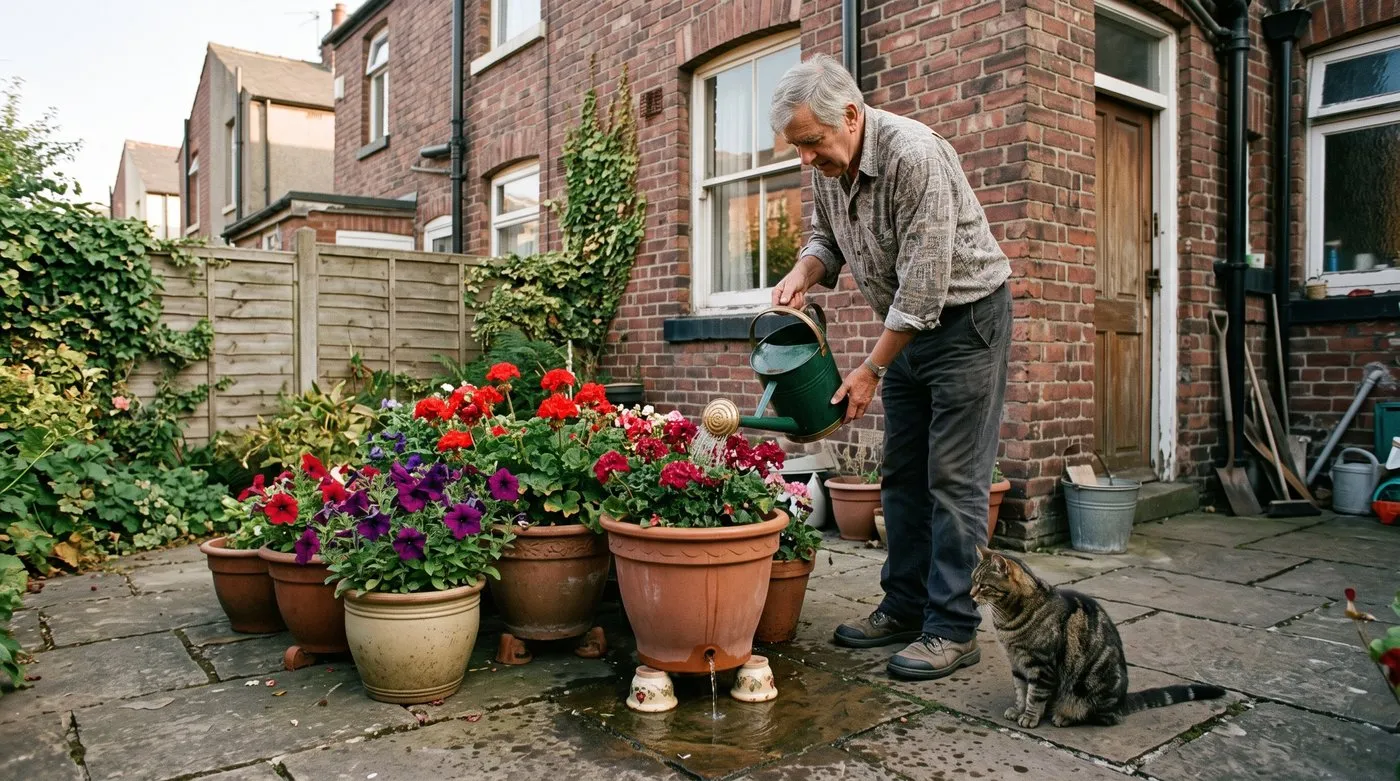
Water until it trickles out of the bottom, then stop. A good soak every so often beats a daily sprinkle.
In summer, small pots may need watering every day, and twice in a heatwave. Big pots usually manage two or three days. Mornings are best, as the plants go into the heat with a full drink. The guide to hot weather watering has tips for heatwaves and holidays.
In winter, water much less. Soggy, cold compost rots roots, so only water when the pot is properly dry.
Feeding: fresh multipurpose compost runs low on food after about six weeks. From April to September, give a liquid feed every two weeks. Use a high-potash feed, such as tomato food, for flowering plants and fruiting veg. For permanent plants, scratch slow-release granules into the top of the compost each spring.
Common container gardening mistakes
Pots that are too small. Small pots dry out fast, overheat in summer and freeze through in winter. Go bigger than you think.
No drainage. Water sits at the bottom and roots rot. Drill holes if a pot has none, and use pot feet so the holes don’t block.
Using garden soil. It turns into a hard block in a pot. Buy proper compost.
Forgetting to feed. Plants in pots run out of food by midsummer. Growth slows and flowering stops.
Overwatering in winter. More potted plants drown in winter than freeze. Let the compost dry a little between waterings.
Wrong plant, wrong spot. Sun lovers go leggy in shade, and ferns scorch in full sun. Check the label before you buy.
Frequently asked questions
What are the easiest plants for containers in the UK?
Herbs, lavender, heuchera, hostas and bedding plants are easy starters. Thyme, rosemary and lavender like a sunny spot. Hostas, ferns and heuchera suit shade. Petunias, geraniums and calibrachoa give summer colour, and tulips are simple for spring.
What size pot do I need for container gardening?
Use a pot at least 30cm across for most plants. Shrubs and small trees need 40-50cm or more. Small pots dry out quickly and restrict roots, so you water more and get weaker plants.
Do containers need drainage holes?
Yes, every container needs drainage holes. Without them, water collects at the bottom and roots rot. Raise pots on feet or bricks so the holes stay clear. Crocks in the base are not needed.
How often should I water containers?
Water small pots most days in summer, and big pots every two or three days. Hot, windy weather dries compost faster. In winter, water only when the top few centimetres feel dry.
What compost should I use for containers?
Use peat-free multipurpose compost for most seasonal plants. For shrubs and small trees that stay for years, use a loam-based compost such as John Innes No.3. It holds nutrients longer and makes pots heavier and more stable.
Can I leave terracotta pots outside in winter?
Only frost-proof terracotta is safe outside all winter. Ordinary terracotta soaks up water, which freezes and cracks the pot. Raise pots on feet, or move them under cover in the coldest months.
Can I grow vegetables in containers?
Yes, plenty of vegetables grow well in pots. Tomatoes, chillies, salad leaves, dwarf beans, herbs and strawberries are good starters. Use pots at least 30-40cm deep and put them in your sunniest spot.
Now your first pots are planted, try our modern container combinations for plant pairings that look great together. You’ll find more ideas in the garden design hub.
Our team produces practical UK gardening guidance from source research, contributor records and established horticultural practice. Editorial standards are overseen by Matt W.