
Key takeaways
- Choose hardy perennials and grasses so the pot stays planted for two to three years
- Let foliage carry the look, with flowers as a seasonal bonus
- Use a pot at least 40cm across and 35cm deep for a mixed perennial planting
- Mix peat-free compost with John Innes No 3 for a longer-lasting, heavier mix
- Refresh the top 5cm of compost each spring and repot every two or three years
- Leave small gaps for bulbs or bedding so you can change the colour each season
A perennial pot is a container planted with hardy plants that stay put for years. Choose foliage that looks good in every season, add a few flowers as a bonus, and you’ll only need to top up the colour now and then. It’s less work than replanting bedding twice a year, and it looks smart on a patio all winter.
This guide covers choosing the plants, five combinations to copy and how to keep the pot going for two or three years. For seasonal bedding recipes, see our container planting ideas. For pots built around one show-stopping plant, try our pot planting recipes.
How do you plan a perennial pot combination?
Use one tall plant, a few mid-height plants and something to trail over the edge. Gardeners call this thriller, filler and spiller.
| Layer | Job | Hardy perennial choices |
|---|---|---|
| Thriller | Tall centrepiece | Stipa tenuissima, Carex, small Miscanthus, foxglove |
| Filler | Bulks out the pot | Heuchera, Hakonechloa, salvia, hardy geranium, ferns |
| Spiller | Softens the rim | Golden creeping Jenny, ivy, trailing rosemary, Lamium |
A pot about 50cm across fits one thriller, three fillers and one or two spillers. Plant the thriller in the centre or towards the back. Arrange the fillers round it and tuck the spillers in at the edge. Pack them fairly close for an instant look, as they’ll fill in.

A soft grass gives height and movement, while trailing plants spill over the rim. The pot looks good from spring to autumn.
Which foliage plants keep a pot looking good all year?
Evergreen and long-lasting foliage is what makes a perennial pot work. Flowers come and go in a few weeks. Good leaves look smart for most of the year.
- Heuchera comes in purple, lime, bronze and near-black leaves. It’s evergreen and mounds to about 20-30cm. Look out for vine weevil grubs at the roots.
- Hakonechloa macra ‘Aureola’ is a soft, golden grass for part shade. It dies back in winter and returns in spring.
- Black mondo grass (Ophiopogon planiscapus ‘Nigrescens’) has near-black, strappy leaves that suit pale pots.
- Carex testacea has bronze-orange leaves that glow in low sun. It’s evergreen.
- Autumn fern (Dryopteris erythrosora) has coppery new fronds and suits shady pots.
- Lamb’s ear (Stachys byzantina) has soft silver leaves for sunny pots.
Our guides to growing heuchera and Hakonechloa cover care and the best varieties.

No flowers needed: dark heuchera, black grass, gold and silver leaves keep this pot interesting all year.
Five perennial pot combinations to try
1. The sunny Mediterranean pot
For a hot, sunny patio. Drought-tolerant and loved by bees.
- Thriller: Stipa tenuissima
- Fillers: Lavender ‘Hidcote’ and Salvia nemorosa ‘Caradonna’
- Spiller: prostrate rosemary
2. The shady courtyard pot
For a north- or east-facing spot. Cool, leafy and bright even in winter.
- Thriller: autumn fern (Dryopteris erythrosora)
- Fillers: Heuchera ‘Obsidian’ and Hakonechloa ‘Aureola’
- Spiller: Lamium ‘White Nancy’
3. The black and gold pot
For a modern patio. Evergreen and striking all year.
- Thriller: Carex testacea
- Fillers: black mondo grass and a caramel or amber heuchera
- Spiller: golden creeping Jenny (Lysimachia nummularia ‘Aurea’)
4. The cottage pot
For a relaxed, flowery look in sun or light shade.
- Thriller: a foxglove, such as a white or cream variety
- Fillers: Geranium ‘Rozanne’, Salvia ‘Caradonna’ and a scented dianthus
- Spiller: trailing ivy or Lamium
Foxgloves are poisonous if eaten, so site this pot away from small children and pets that chew plants.
5. The autumn pot
For late colour from September onwards.
- Thriller: a compact Miscanthus, such as ‘Morning Light’
- Fillers: Hylotelephium (sedum) ‘Autumn Joy’ and a small aster
- Spiller: an orange or bronze heuchera at the edge
How to add seasonal colour without replanting
Leave one or two small gaps in the pot for seasonal plants. The perennials stay; only the gap fillers change.
- Autumn: plant tulip or crocus bulbs in the gaps, with violas on top.
- Spring: enjoy the bulbs, then lift or cut them back once they fade.
- Summer: fill the gaps with a few bedding plants, such as verbena or trailing petunias.
- Late autumn: swap in ornamental cabbage or cyclamen for winter colour.
Cyclamen and tulips are toxic to cats and dogs if eaten, so skip them if your pets nibble pots. Our guide to bulb lasagne planting shows how to layer bulbs in a pot.

The heuchera stays all year. Ornamental kale and asters slot in for an autumn lift.
What compost and pot does a perennial container need?
Use peat-free multipurpose compost mixed roughly half and half with John Innes No 3. The loam-based John Innes holds nutrients longer and gives the pot weight, so it’s less likely to blow over.
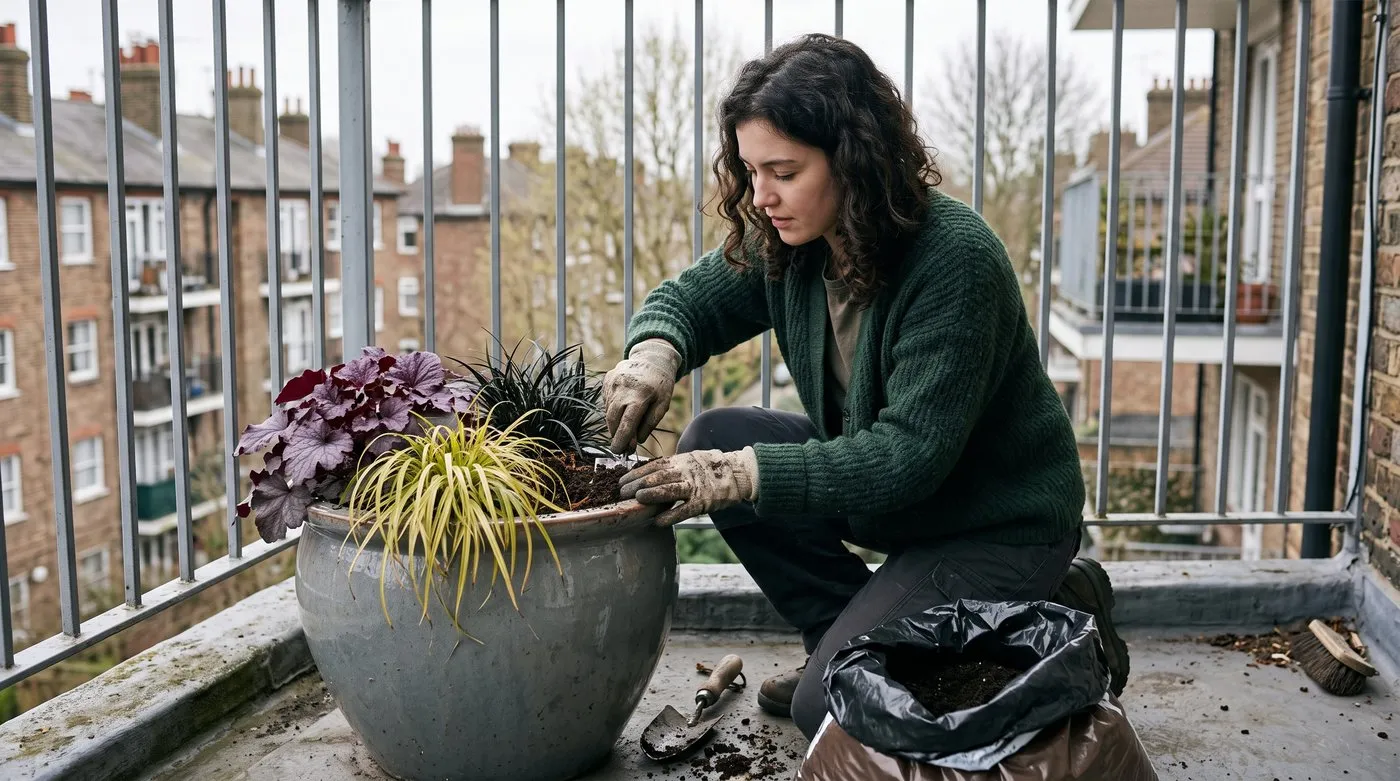
Swapping the top few centimetres of compost each spring gives a long-lived pot a fresh start.
Choose a pot at least 40cm across and 35cm deep, with a drainage hole. Frost-resistant glazed stoneware, good-quality terracotta and recycled plastic all work for pots left out all winter. Cheap terracotta can crack in hard frost.
Raise the pot on feet over winter so water can drain away. Each spring, scrape off the top 5cm of compost and replace it with fresh compost mixed with slow-release fertiliser. Every two or three years, tip the plants out in early spring, divide any that fill the pot, and replant in fresh compost.
How should you group perennial pots?
Group pots in threes, at different heights, rather than dotting single pots about. Use matching or similar pots so the group looks planned.
Repeating one plant, such as a heuchera or lavender, across all three pots links them together. Our potscaping guide goes into heights, materials and staging.

Three pots in one colour family, at three heights, look far more planned than one pot on its own.
Common perennial pot mistakes
- Choosing a pot that’s too small. Roots fill it fast and it dries out daily. Go bigger than you think.
- All flowers, no foliage. The pot looks bare for most of the year. Build it on leaves first.
- Leaving saucers full in winter. Roots rot and pots can crack. Remove saucers and use pot feet.
- Forgetting to feed. Pot compost soon runs out of food. Add slow-release fertiliser every spring.
- Never repotting. After a few years plants get congested and tired. Divide and refresh every two or three years.
Frequently asked questions
Can you keep perennials in pots all year?
Yes, most hardy perennials and grasses live happily in pots all year. Use a large, frost-resistant pot and free-draining compost. Raise it on pot feet in winter so it doesn’t sit in water.
How big should a container be for a mixed planting?
Aim for a pot at least 40cm across and 35cm deep. Bigger pots hold more water and give roots room for several years. Small pots dry out fast and need repotting sooner.
What plants work for year-round container interest?
Evergreen foliage plants give the best year-round interest. Heuchera, black mondo grass, Carex, small evergreen ferns and Hakonechloa are reliable. Add bulbs in spring and bedding in summer for extra colour.
How often do I water a perennial pot?
Water whenever the top few centimetres of compost feel dry. That can mean daily in hot, dry spells and much less in winter. Water until it runs out of the bottom.
Do I need to feed perennial container plants?
Yes, as pot compost runs out of food within a couple of months. Mix slow-release fertiliser into the top layer each spring. Add a liquid feed every couple of weeks in summer if plants look pale.
When should I repot a perennial container?
Repot every two to three years, in early spring. Tip the plants out, divide any that have filled the pot, and replant in fresh compost. Refresh the top 5cm of compost in the years in between.
New to pots? Our container gardening ideas for beginners cover the basics, and there’s more in the garden design hub.
Our team produces practical UK gardening guidance from source research, contributor records and established horticultural practice. Editorial standards are overseen by Matt W.


