
Key takeaways
- Build each pot around one star plant, then add two or three supporting plants and one trailer
- Four to six plants in a big pot looks calmer and lasts longer than a crammed one
- Use pots at least 45cm across, and 60-70cm for grasses and shrubs
- Mix peat-free compost with John Innes No. 3, and add grit for Mediterranean plants
- Replace the top 5cm of compost each March and feed through the summer
- Lavender, hydrangea and tomato leaves are not safe for pets that chew
A good pot planting recipe is simple: one star plant, two or three supporting plants and one trailer to spill over the edge. That’s four to six plants in a big pot, not a crammed mix of twelve.
Below are six recipes you can copy for big UK containers. Each one comes with a plant list, the spot it suits and the aftercare it needs. If you’d rather design your own from scratch, the thriller, filler, spiller method for modern pots explains how.
How do you build a pot around one star plant?
Pick one plant with real presence, then choose everything else to set it off. The star might be a tall grass, a shrub with dark leaves or a long-flowering perennial.
- Star plant: the tallest or boldest thing in the pot. It goes in the middle, or at the back of a pot against a wall.
- Supporting plants: two or three plants with different leaf shapes or flowering times. They fill the gaps without fighting the star.
- Trailer: one plant to soften the rim, such as ivy, creeping Jenny or Mexican daisy.
Stick to a few varieties. Two of one supporting plant is fine in a bigger pot, but keep the list short. A pot that’s tall as well as wide holds more compost, which means more roots and less watering.

The same three plants repeated in matching troughs. Repeating one recipe looks calmer than three different pots.
Recipe 1: Tulips into salvia for spring and summer
This pot gives you tulips in April, then summer perennials from June. Use a 60cm pot in full sun.
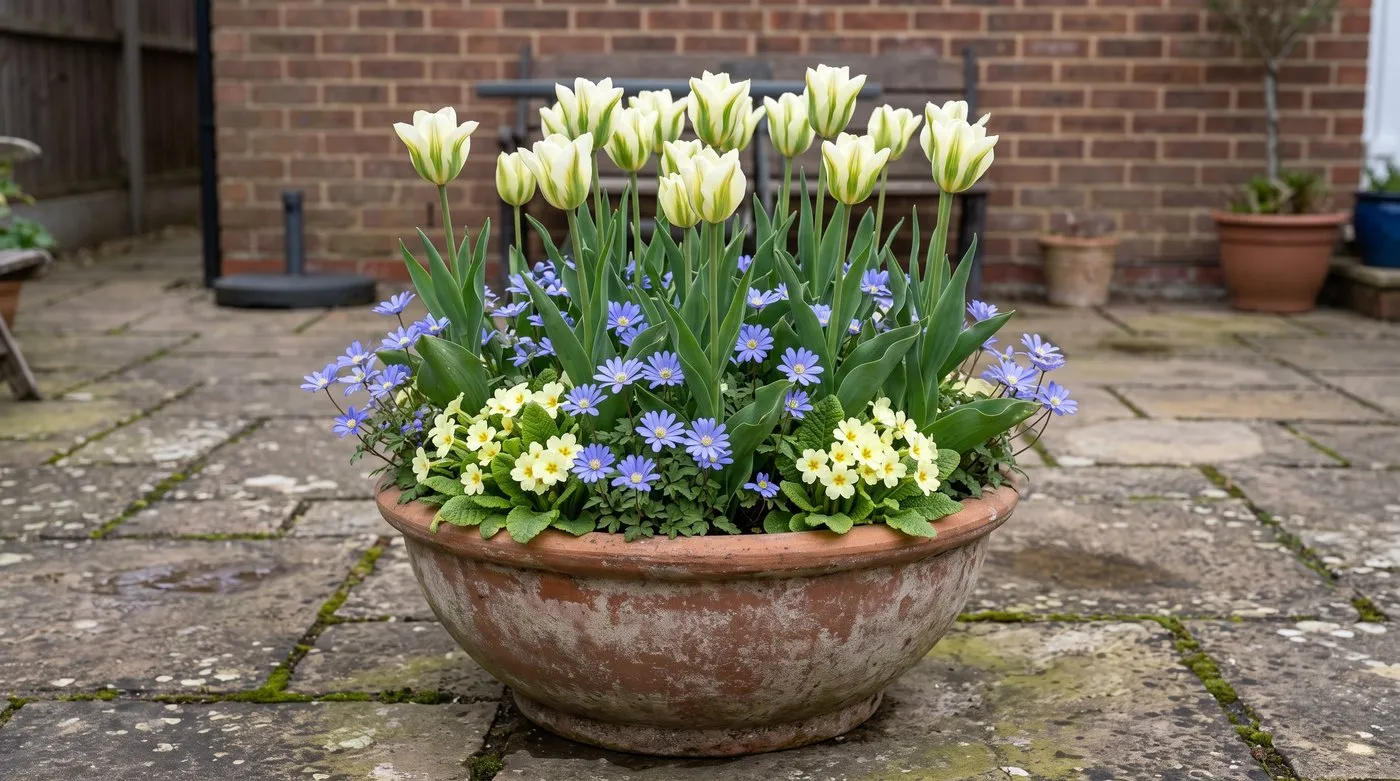
Tulips over a carpet of anemones in April. Swap in summer perennials once the tulips have finished.
Plant in November:
- Star: 15 Tulip ‘Spring Green’, planted about 15cm deep
- Supporting: 20-25 Anemone blanda tubers between the tulips
- Edge: 5 primroses (Primula vulgaris) around the rim
Plant in late May, once the tulips are over:
- Star: 1 Salvia ‘Caradonna’
- Supporting: 2 Astrantia ‘Roma’ and 2 Geum ‘Mai Tai’
Lift the tulips after flowering and treat them as one-season bulbs, or let the leaves yellow in a spare pot. Tulips rarely flower as well a second year in a container. Water weekly in dry spells and deadhead the salvia for more flowers. For bulbs layered at different depths in one pot, try bulb lasagne planting.
Recipe 2: A grass pot that moves in the breeze
Grasses give a pot shape and movement with very little fuss. It looks best from August to October, when the fluffy flower heads appear. Use a 70cm pot in full sun.
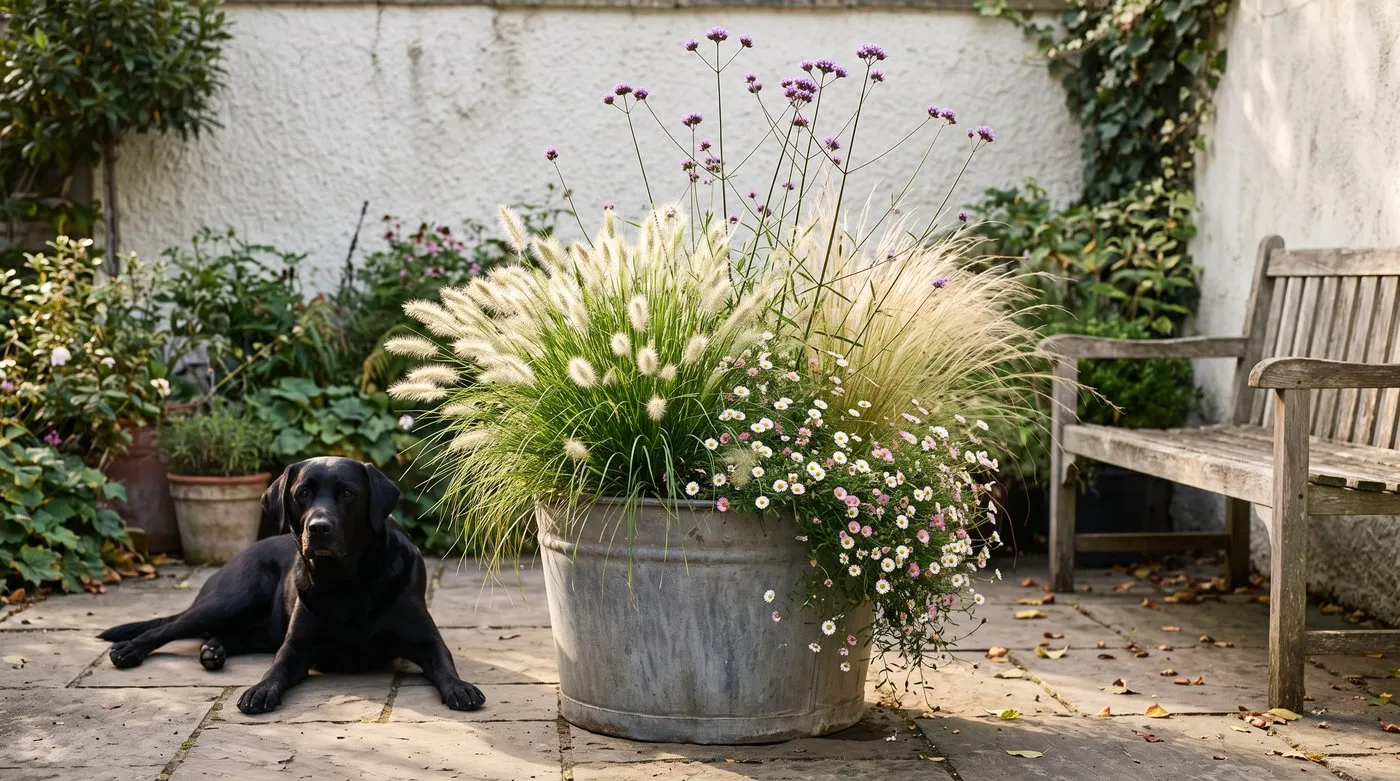
The grass pot is at its best in early autumn, when the fluffy flower heads catch the light.
- Star: 1 Pennisetum alopecuroides ‘Hameln’ (fountain grass)
- Supporting: 2 Verbena bonariensis for tall, see-through purple
- Supporting: 3 Stipa tenuissima for soft, low texture
- Trailer: 2 Erigeron karvinskianus (Mexican daisy) over the rim
Cut the pennisetum back to about 10cm in late winter, before new growth starts. Don’t cut the stipa hard. Just comb out the dead bits with your fingers in spring. Stipa is short-lived, but verbena and stipa both self-seed, so you’ll often find spares.
Recipe 3: A foliage pot with no flowers needed
This pot runs on leaf colour, so it looks good for most of the year. It suits modern gardens and a spot with sun for half the day. Use a 50cm Corten steel or dark ceramic pot.
- Star: 1 Sambucus nigra ‘Black Lace’ (black elder)
- Supporting: 2 Heuchera ‘Marmalade’ for orange leaves
- Supporting: 2 Carex ‘Frosted Curls’ for silvery, wispy leaves
- Trailer: 2 Ajuga reptans ‘Black Scallop’
‘Black Lace’ can reach 2m or more in the ground. In a pot, cut it back hard in February to keep it in scale. It loses its leaves in winter, but the heuchera and carex keep the pot from looking bare.

Dark elder, orange heuchera and silvery carex. Strong leaf colour does the work of flowers.
Recipe 4: A winter pot for September to March
This one keeps the patio going when summer pots have finished. Use a 45-50cm pot near the house, out of cold wind.
- Star: 1 Hydrangea paniculata ‘Little Lime’, a compact variety whose flower heads fade to pink and stay on in winter
- Supporting: 1 Skimmia japonica ‘Rubella’ for red buds all winter
- Supporting: 2 Heuchera ‘Forever Red’
- Edge: 2 Bergenia ‘Bressingham Ruby’, whose big leaves turn bronze in cold weather
Give it morning sun and shelter from hot afternoon sun. Prune the hydrangea in March, cutting each stem back to a pair of fat buds. Water the skimmia with rainwater where you can, as it prefers slightly acid conditions. For more on hydrangeas in containers, see growing hydrangeas in pots.

A white paniculata hydrangea over dark heuchera and trailing ivy. The flower heads hold on long after summer.
Recipe 5: An edible pot you can pick from
This pot gives you cherry tomatoes, herbs and edible flowers from one container. It’s summer-only, so plant it in late May after the last frost. Use a 50cm pot in full sun.
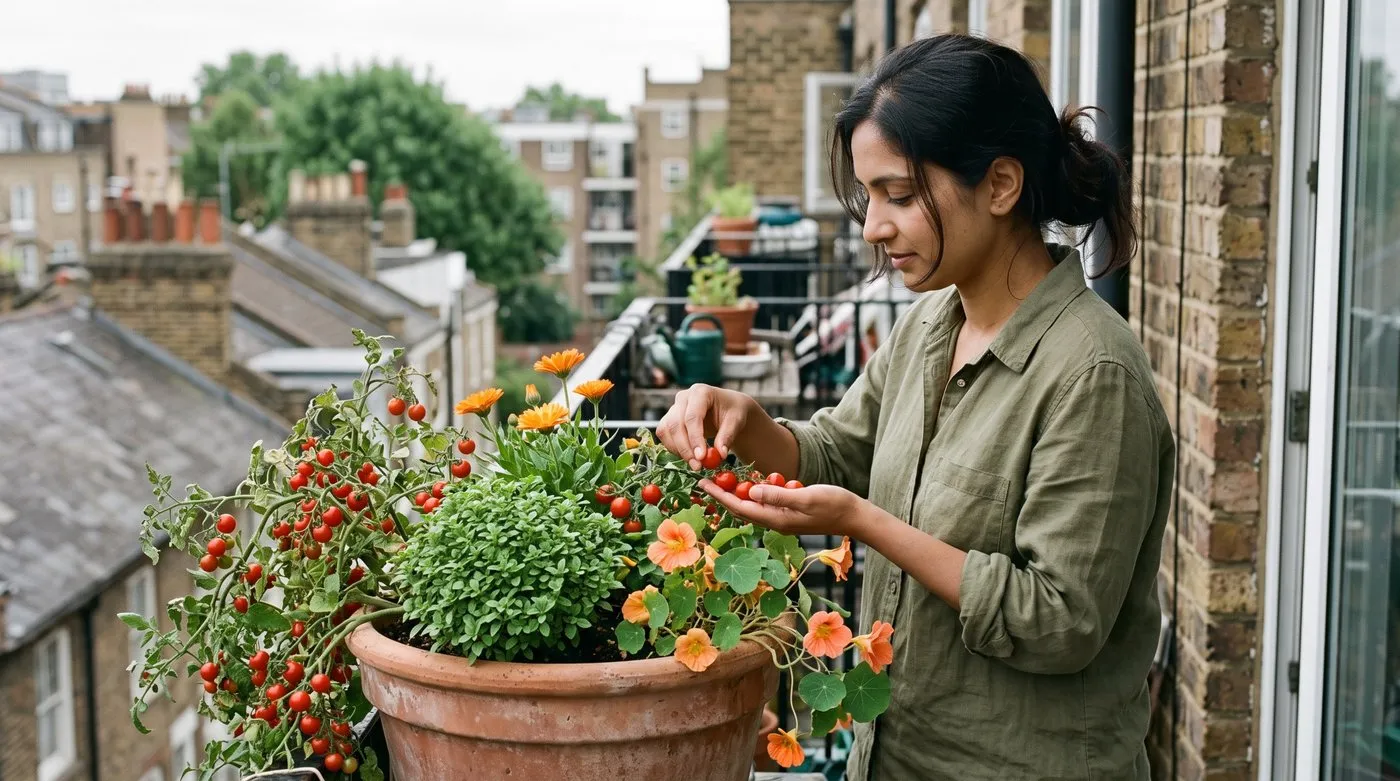
One pot, three harvests. Pick the tomatoes, basil and nasturtium flowers all summer.
- Star: 1 Tomato ‘Tumbling Tom Red’, a trailing bush cherry tomato
- Supporting: 1 Greek basil, a small-leaved compact type
- Supporting: 1 Calendula ‘Indian Prince’ for orange flowers
- Trailer: 2 Nasturtium ‘Salmon Gleam’
‘Tumbling Tom’ is a bush type, so there’s no need to pinch out side shoots. Water every day in hot weather, and give a tomato feed once a week once the first fruits form. Clear it out in autumn and start again next year.
Recipe 6: A dry Mediterranean pot for hot corners
This pot copes in a sunny spot you can’t water often. Use a 55cm terracotta pot.
- Star: 1 Cistus x pulverulentus ‘Sunset’ (rock rose, magenta-pink flowers)
- Supporting: 2 Lavender ‘Munstead’
- Supporting: 2 Stachys byzantina (lamb’s ears) for silver leaves
- Trailer: 5 mixed sempervivums (houseleeks) tucked in at the edge
Use John Innes No. 2 or 3 with about a third grit mixed in. Water only in long dry spells, and don’t feed. Trim the lavender after flowering, but don’t cut into old bare wood. A very cold, wet winter can kill cistus, so raise the pot on feet. Lavender is not safe for pets that chew it. More tough choices are in our guide to container plants that thrive on neglect.
Which pot recipe should you choose?
Pick by your spot and how much watering you can manage.
| Recipe | Pot size | Best season | Spot | Watering |
|---|---|---|---|---|
| Tulips into salvia | 60cm | April to September | Full sun | Weekly in dry spells |
| Grass pot | 70cm | August to October | Full sun | Weekly in dry spells |
| Foliage pot | 50cm | Spring to autumn | Half-day sun | Weekly |
| Winter pot | 45-50cm | September to March | Morning sun, sheltered | Light in winter |
| Edible pot | 50cm | June to September | Full sun | Daily in summer |
| Mediterranean pot | 55cm | June to August | Hot and sunny | Only in long dry spells |
What compost and drainage do these pots need?
Use peat-free multipurpose compost mixed half and half with John Innes No. 3. The loam in John Innes holds water and nutrients better than peat-free alone, and keeps its structure for longer.
Make sure the pot has drainage holes and keep them clear. Stand it on pot feet so water can run out, especially in winter. For the Mediterranean pot, add extra grit. Our peat-free potting compost recipes give mixes for different plants.
Each March, scrape off the top 5cm of old compost and replace it with fresh. Feed perennial pots in spring with slow-release granules, following the label, or use a liquid feed every couple of weeks in summer.
How to plant a big recipe pot
Planting in the right order makes it easy to get the star plant in the right place.
- Put the pot where it’s going before you fill it. A 60cm pot full of wet compost is very heavy.
- Fill it about two-thirds full with your compost mix and firm it lightly.
- Stand the star plant, still in its nursery pot, in place. Its top should sit about 3cm below the rim.
- Plant the star, then the supporting plants around it.
- Add the trailer at the front edge so it can spill over.
- Top up the compost to 3cm below the rim and firm gently.
- Water well until it runs out of the bottom.
- Add a layer of gravel on top if you like. It slows drying out and looks tidy.
Once your pots are planted, think about how they sit together. Our guide to grouping pots for impact covers heights, odd numbers and backdrops.

A big pot with smaller ones beside it. Plant the star first, then add the supporting plants around it.
Common pot planting mistakes
Cramming in too many plants. A big pot stuffed with a dozen plants looks great for a few weeks, then they fight for water. Stick to four to six.
A pot that’s too small. Shrubs and big grasses need at least 50-60cm. Smaller pots dry out fast and stunt the plants.
Cheap terracotta that isn’t frost-proof. It can crack or flake in the first hard winter. Look for “frost-proof” or “frost-resistant” on the label.
Mixing plants that want different things. Lavender wants dry, gritty compost. Heuchera wants it moist. Keep plants with the same needs in the same pot.
Forgetting about vine weevil. The grubs eat roots, especially heuchera and sempervivum in pots. Our guide to protecting containers from pests covers what to do.
For a single pot that changes through all four seasons, read one pot, one year: a UK container plan next, or browse more ideas in our garden design guides.
Frequently asked questions
What is a pot planting recipe?
It’s a ready-made plant list for one container. Each recipe names a star plant, two or three supporting plants and a trailer, plus the pot size and spot it suits. You just buy the list and plant it.
How many plants should go in one large pot?
Four to six plants is plenty for a 50-70cm pot. One star plant takes the centre, with two or three supporting plants around it and a trailer at the edge. Fewer, bigger plants grow better than a crammed pot.
What size pot do I need for these recipes?
At least 45cm across, and 60-70cm for grasses or shrubs. Bigger pots hold more compost, so they dry out more slowly and keep perennials going for years. Small pots suit a single plant or summer bedding.
How long does a planted pot last?
Most perennial pots look good for two to three years. After that, lift everything, split or replace tired plants and replant in fresh compost. Shrubs such as skimmia can stay longer if you refresh the top layer of compost every spring.
Can I keep these pots outside all winter?
Yes, if the plants are hardy and the pot is frost-proof. Raise pots on feet so water drains away, and move them against a wall in cold snaps. The edible pot is summer-only.
Are these container plants safe for pets?
Not all of them. Lavender, hydrangea and the leaves of tomato plants can upset cats and dogs that chew them. Check the PDSA or your vet if you have a pet that nibbles plants.
Our team produces practical UK gardening guidance from source research, contributor records and established horticultural practice. Editorial standards are overseen by Matt W.


