Key takeaways
- Four ingredients cover most mixes: sieved garden compost, loam, leaf mould and grit or sharp sand
- Seed compost should be lean, so add no fertiliser and sieve it fine
- An easy potting-on mix is 3 parts compost, 2 parts loam and 1 part grit
- Ericaceous mixes use bark and leaf mould, with no loam and no lime
- Sterilise garden loam before using it for seeds, or weeds and damping off follow
- Measure by volume with one bucket, and test the pH of any acid mix
Mixing your own peat-free potting compost is easy once you know four ingredients and a few simple ratios. Sieved garden compost, loam, leaf mould and grit can make a lean seed mix, a richer potting-on mix and an acid mix for blueberries. Measure everything by the bucket and you can’t go far wrong.
If you’d rather buy a bag, the peat-free compost guide covers what to look for in the shops. This page is for mixing your own.
What goes into homemade potting compost?
Most potting mixes are a blend of four ingredients. Each does a different job.
- Sieved garden compost holds water and gives a gentle feed. On its own it’s too rich and heavy for seeds.
- Loam is good garden topsoil, sieved. It adds body and helps the mix hold water and feed for longer.
- Leaf mould is rotted autumn leaves. It’s light, open and low in feed, so it suits seeds and cuttings. Use well-rotted, crumbly leaf mould, at least a year or two old.
- Sharp sand or grit opens the mix up and helps water drain. Avoid soft builder’s sand, which packs down hard.
A few extras help too. Perlite or vermiculite lighten a heavy mix. Composted bark keeps long-term pots airy and is useful for acid-lovers. If you only stockpile one ingredient, make it leaf mould. The guide to making leaf mould shows how.

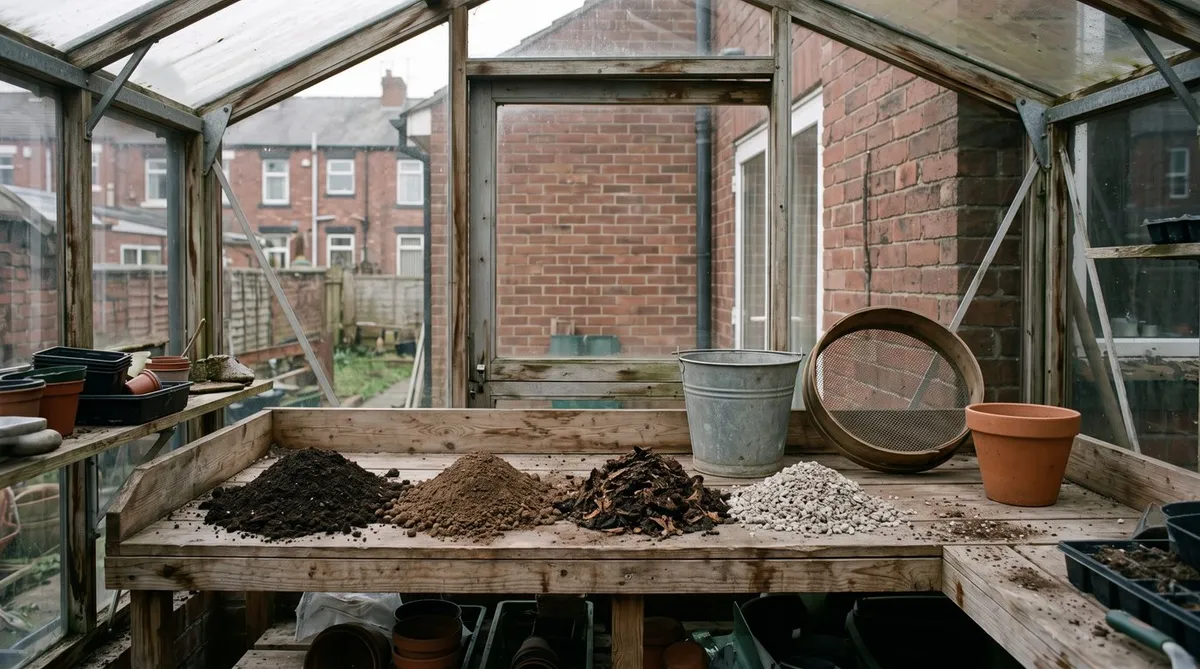
Compost, loam, leaves and grit: the basic building blocks. Leaves need a year or two to rot down before they go in a seed mix.
How to make seed compost at home
Seed compost needs to be lean, fine and open. Seeds carry their own food, and a rich mix can harm tender new roots.
Mix 2 parts sieved leaf mould, 1 part sterilised loam and 1 part sharp sand by volume. Don’t add any fertiliser. Sieve the leaf mould and loam through a fine riddle so the surface is crumbly with no lumps. Small seeds then sit snugly and roots push through easily.
No leaf mould? Fine coir works as a stand-in. Keep the mix just moist, never soggy. Cold, wet compost is where damping off gets going.
Once seedlings have their first true leaves, prick them out into a richer potting-on mix.

Fine, lean compost fills modules evenly and keeps the surface open. Seedlings don’t need feeding until their true leaves appear.
An easy potting-on mix
Once seedlings are growing well, they need more food and good drainage. This is your everyday mix for potting on and for most containers.
Mix 3 parts sieved garden compost, 2 parts loam and 1 part grit by volume. Stir in a general organic fertiliser, such as blood, fish and bone or seaweed meal, at the rate on the pack. For pots that will stay put for a year or more, swap some of the compost for composted bark. It keeps the mix open for longer.
This suits most annuals, veg and young perennials. Hungry plants such as tomatoes will still want a liquid feed once they flower. The guide to making garden compost covers how to get a good supply of the main ingredient.

A garden riddle takes out lumps, twigs and stones. Sieved compost mixes evenly and fills pots without big air gaps.
How to make ericaceous compost
Ericaceous compost is an acid mix for plants such as blueberries, camellias, rhododendrons and azaleas. The trick is to leave out anything limy.
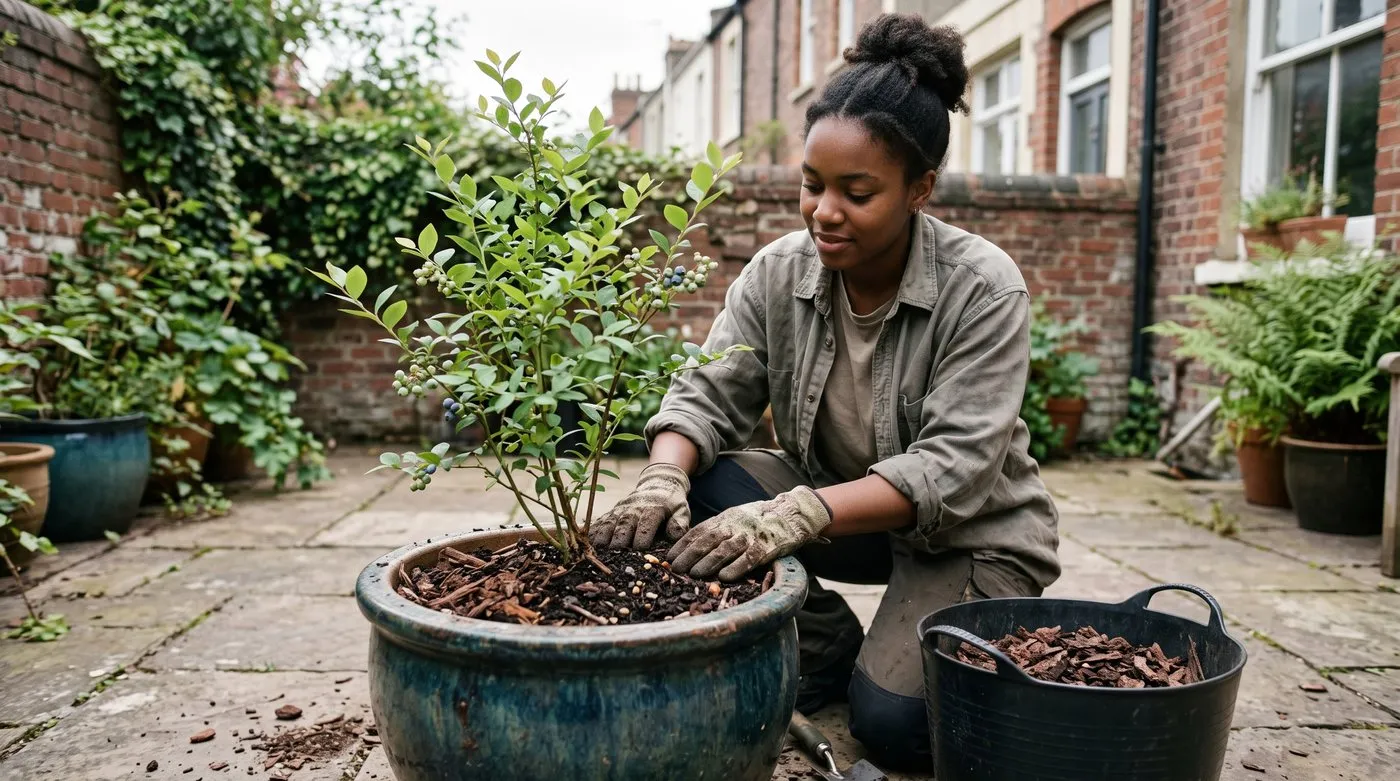
Blueberries need an acid mix to thrive in pots. Bark and leaf mould with no lime keep them happy.
Mix 2 parts composted bark, 2 parts leaf mould and 1 part sharp sand. Leave out loam and garden compost, which are often neutral or limy. Never add ground limestone. Leaf mould from oak or pine is ideal if you can get it.
Test the finished mix with a simple pH kit before you plant. If it isn’t acidic enough, add more bark. The list of best plants for acid soil has more ideas for what to grow in it.
A peat-free take on John Innes
John Innes composts are loam-based recipes. They hold water and feed well, and they’re heavy enough to keep tall plants and shrubs from blowing over. That makes them good for long-term pots.
The classic recipe is 7 parts loam, 3 parts peat and 2 parts sand by volume. For a peat-free version, swap the peat for leaf mould or coir. Then add John Innes base fertiliser and ground limestone. Garden centres sell the base fertiliser in packs.
| Mix | Feed level | Good for |
|---|---|---|
| John Innes Seed | Very low | Sowing seeds |
| John Innes No 1 | Single dose | Pricking out and young plants |
| John Innes No 2 | Double dose | Most pots and potting on |
| John Innes No 3 | Triple dose | Shrubs, roses and long-term pots |
Follow the pack rates for the fertiliser and lime. The loam must be sterilised first, or weeds will sprout in every pot.

Measuring by the bucket keeps the ratios right. Mixing on a sheet makes it easy to turn and scoop into pots.
How to sterilise loam for seed mixes
Garden soil carries weed seeds and the fungi that cause damping off. For seed and cuttings mixes, sterilise it first.
Spread moist, sieved soil in an oven tray, no more than about 10cm deep. Heat it until the middle reaches about 80°C and hold it there for half an hour. A cooking thermometer helps. Don’t overheat it, as very hot soil can harm young roots. Let it cool fully before mixing.
It does smell earthy, so open a window. The guide to sterilising garden soil covers microwave and steam methods too.
Gardener’s tip: Sterilise a batch in autumn and store it dry in a lidded bucket. Then it’s ready for the first sowings in late winter.
Checking the pH of your mix
A cheap pH test kit tells you whether a mix is acid, neutral or limy. Most homemade mixes come out roughly neutral, which suits most plants. It matters most for ericaceous mixes, where acid-lovers sulk if the mix is too limy.
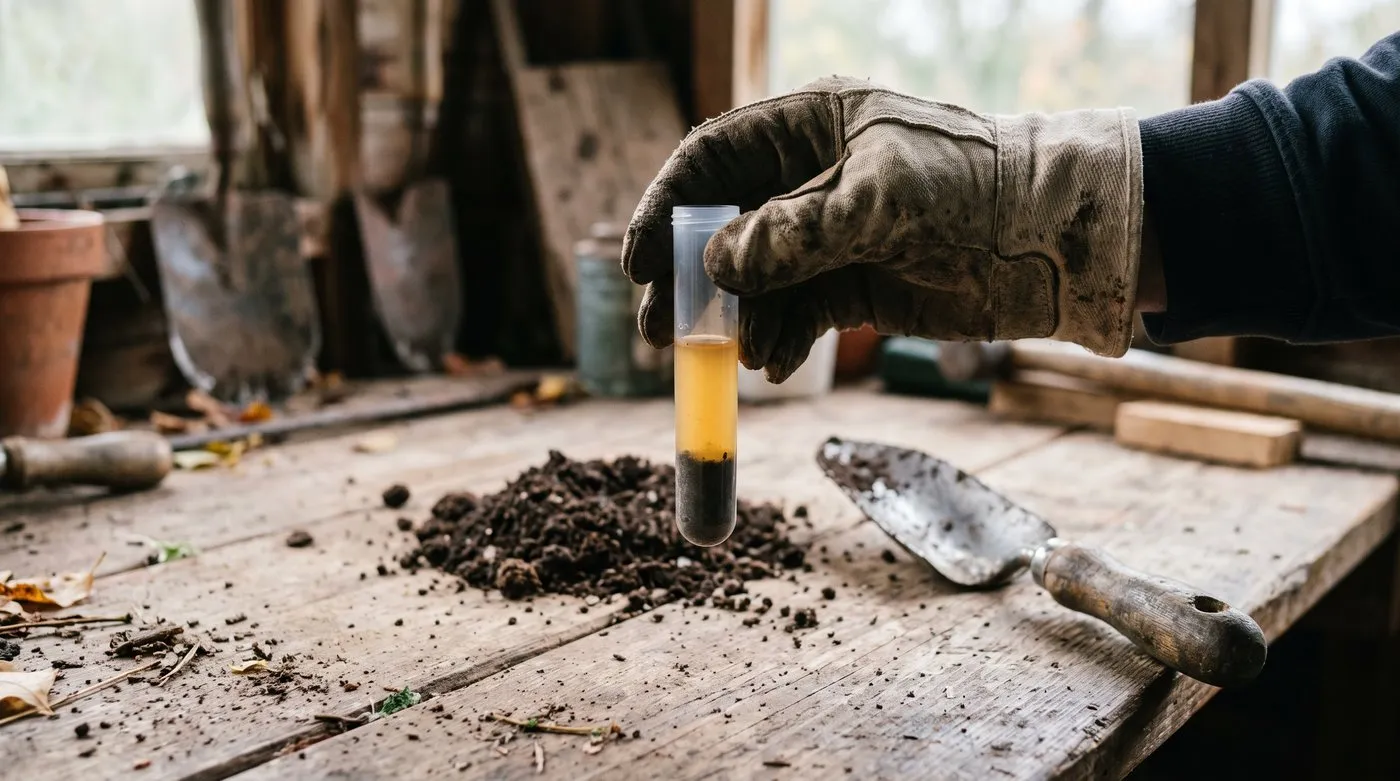
A cheap pH kit takes a few minutes. It’s the easiest way to check an ericaceous mix is acid enough.
Add more bark to make a mix more acidic. Add a little ground limestone to make it less so, then test again a week later.
What to use if you’re missing an ingredient
You can usually swap one thing for another. Start with the first option in each row.
| Missing | Use instead | Then | Avoid |
|---|---|---|---|
| Leaf mould | Coir | Composted bark | Fresh sawdust or wood shavings |
| Loam | Molehill soil, sterilised | Bought topsoil, sterilised | Builder’s subsoil |
| Sharp sand | Horticultural grit | Perlite | Soft builder’s sand |
| Garden compost | Bagged peat-free compost | Well-rotted manure, for shrubs only | Fresh manure |
Old compost from last year’s pots can also go back in. The guide to reusing spent compost explains how to refresh it.
When to mix and use each compost
| Month | Job |
|---|---|
| October to November | Gather leaves for leaf mould. Sterilise and store loam |
| December to January | Sieve garden compost. Stock up on grit |
| February | Mix seed compost for the first sowings under cover |
| March to April | Sow into seed compost. Mix potting-on batches |
| May | Pot on young plants. Mix ericaceous compost for acid-lovers |
| June to August | Pot up summer containers. Liquid feed established pots |
| September | Use up spare mixes. Start the next leaf mould heap |
Common mistakes when mixing potting compost
Sowing into a rich mix. Seeds need a lean compost. Keep the compost-heavy mix for potting on.
Skipping sterilising. Unsterilised soil brings weeds and damping off into seed trays.
Leaving it lumpy. Lumps leave air gaps that strand small seeds. Sieve seed and pricking-out mixes fine.
Forgetting drainage in winter pots. Add extra grit to pots that stand outside through the wet months.
Guessing the pH for acid-lovers. Test every ericaceous batch before you plant anything precious.
Frequently asked questions
What can I use instead of peat in potting compost?
Leaf mould, sieved garden compost, composted bark and coir all replace peat. Leaf mould is the best match for seed and cuttings mixes. Composted bark keeps pots open and airy for shrubs. Blend two or three together to get both good drainage and good water holding.
How do you make seed compost at home?
Mix 2 parts sieved leaf mould, 1 part sterilised loam and 1 part sharp sand. Add no fertiliser, because seedlings don’t need it until they have true leaves. Sieve everything fine so small seeds sit snugly. Prick seedlings out into a richer potting mix once they are big enough to handle.
What is the John Innes formula?
The classic recipe is 7 parts loam, 3 parts peat and 2 parts sand. Peat-free gardeners swap the peat for leaf mould or coir. A base fertiliser and ground limestone are then added, with a single dose for No 1, double for No 2 and triple for No 3.
Do I need to sterilise soil for potting compost?
Yes, if the loam is going into seed or cuttings mixes. Garden soil carries weed seeds and the fungi that cause damping off. Heat moist soil to about 80°C for half an hour, then let it cool. Don’t overheat it. For pots of shrubs and big plants, unsterilised loam is usually fine.
How do you make ericaceous compost?
Blend composted bark, leaf mould and a little sharp sand, with no lime. Leave out loam and garden compost, which are often neutral or limy. Test the mix with a simple pH kit before planting blueberries or camellias. If it isn’t acidic enough, add more bark.
Is homemade potting compost cheaper than bought?
Usually, yes, if you already make compost and leaf mould. Then you only pay for grit, sand or a little fertiliser. The real cost is time and space for heaps and storage. Bagged peat-free compost is handy when you need a lot at once.
Now you can mix your own compost, read the guide to mixing your own compound fertiliser to feed what you grow in it. There are more practical projects in the how-to guides.
Our team produces practical UK gardening guidance from source research, contributor records and established horticultural practice. Editorial standards are overseen by Matt W.


