Key takeaways
- A compound fertiliser has two or more of nitrogen, phosphate and potash; a straight has one
- The three straights are sulphate of ammonia, superphosphate and sulphate of potash
- Divide the percentage you want by the percentage in the straight to get parts by weight
- A 7-7-7 mix is 33 parts sulphate of ammonia, 39 superphosphate, 14 sulphate of potash, 14 sand
- Never mix fertiliser with lime, and keep the blend dry, airtight and labelled
- Home mixing only pays off if you feed a fair-sized veg plot, fruit or lawn
Mixing your own compound fertiliser means blending three straight fertilisers by weight to get the nutrient balance you want. All you need is a kitchen scale, a bucket and one easy sum. It’s handy if you feed a big veg plot or want a ratio you can’t buy off the shelf.
This guide gives a Growmore-style recipe, three custom blends and the sum behind them. If the numbers on fertiliser packs are new to you, start with NPK explained, then come back.
Compound fertiliser vs straight fertiliser
A compound fertiliser contains two or more of the three main nutrients: nitrogen (N), phosphate (P) and potash (K). Growmore is the best known, a balanced 7-7-7. Tomato feeds and rose feeds are compounds too, just with different ratios.
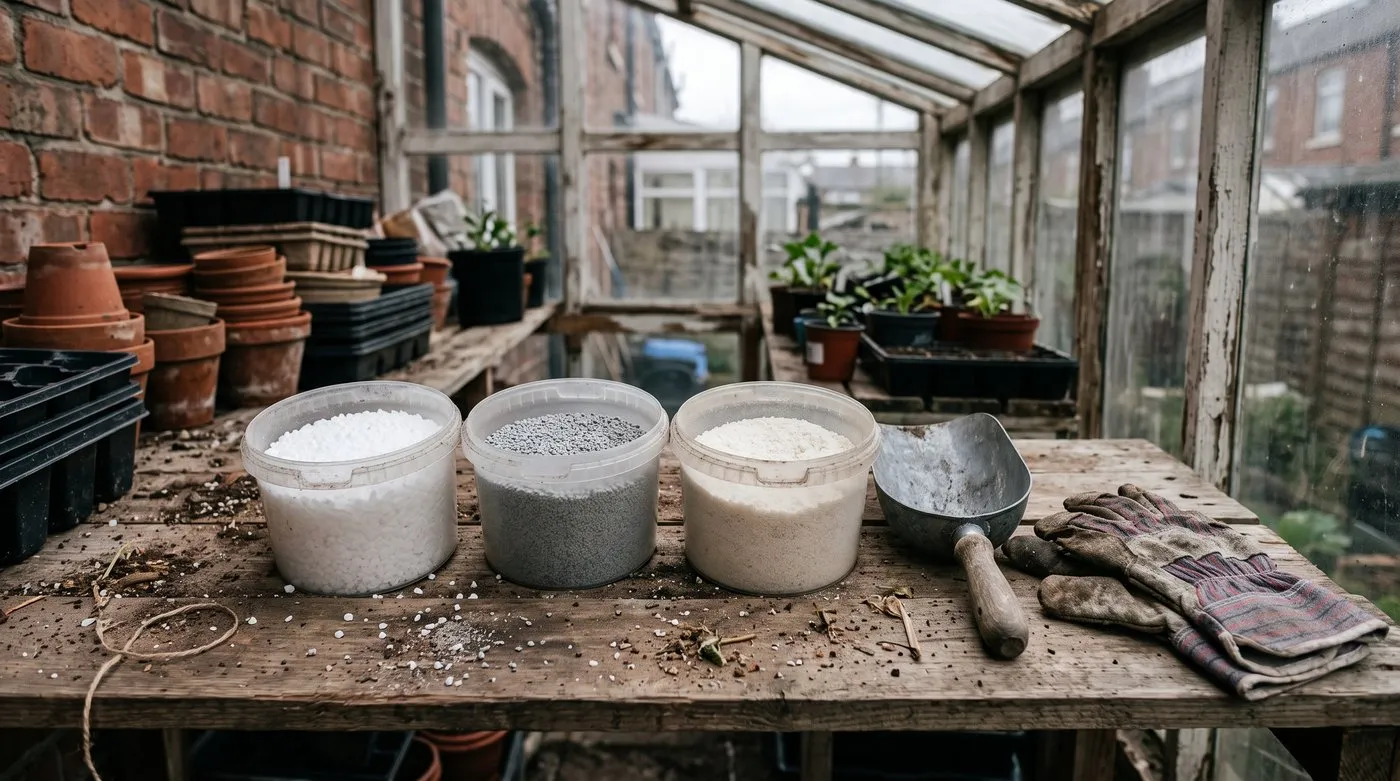
Three straights are all you need: one each for nitrogen, phosphate and potash.
A straight fertiliser supplies only one nutrient. These three do the work in a home blend:
| Straight | Nutrient | Roughly | What it helps |
|---|---|---|---|
| Sulphate of ammonia | Nitrogen | 21% N | Leafy growth |
| Superphosphate | Phosphate | 18% P | Roots and establishment |
| Sulphate of potash | Potash | 50% K | Flowers and fruit |
Check the pack for the exact figure, as superphosphate in particular varies between brands.
How to work out any NPK ratio
Divide the percentage you want by the percentage in the straight. The answer is the number of parts by weight.
Here’s the sum for a balanced 7-7-7:
- Nitrogen: 7 ÷ 0.21 = 33 parts sulphate of ammonia
- Phosphate: 7 ÷ 0.18 = 39 parts superphosphate
- Potash: 7 ÷ 0.50 = 14 parts sulphate of potash
That adds up to 86 parts. Add 14 parts dry sand to make 100 parts, and the mix works out at 7-7-7. In grams, 33g, 39g, 14g and 14g of sand makes 100g. Change the target numbers to hit any other ratio.

An ordinary kitchen scale is all you need. Weigh each straight separately, then mix.
Home-made fertiliser recipes for common jobs
These four blends are in parts by weight. Multiply every number by the same amount to make a bigger batch.
| Blend | Sulphate of ammonia | Superphosphate | Sulphate of potash | Sand | About |
|---|---|---|---|---|---|
| Growmore-style, general use | 33 | 39 | 14 | 14 | 7-7-7 |
| High-potash, fruit and flowers | 20 | 28 | 32 | 20 | 4-5-16 |
| High-nitrogen, leafy crops | 60 | 17 | 8 | 15 | 13-3-4 |
| Roots and new plantings | 24 | 56 | 12 | 8 | 5-10-6 |
Times 100 turns the Growmore row into a 10kg batch: 3.3kg, 3.9kg, 1.4kg and 1.4kg of sand.
- Use the balanced mix as a general base dressing before planting.
- Use high-potash around fruit bushes and flowering plants. The guide to feeding fruit bushes explains timing.
- Use high-nitrogen for leafy greens such as cabbages and chard.
You can swap in organic straights: dried blood or hoof and horn for nitrogen, bonemeal for phosphate and wood ash for potash. Their strength is lower and varies more, so the sums are rougher. The guide to natural fertilisers covers these in more detail.

Keep turning the mix until it looks even, so every handful has the same balance.
How to mix and store home-made fertiliser
Mix outdoors or in an open shed, wearing gloves and a dust mask. The dust irritates skin, eyes and lungs.
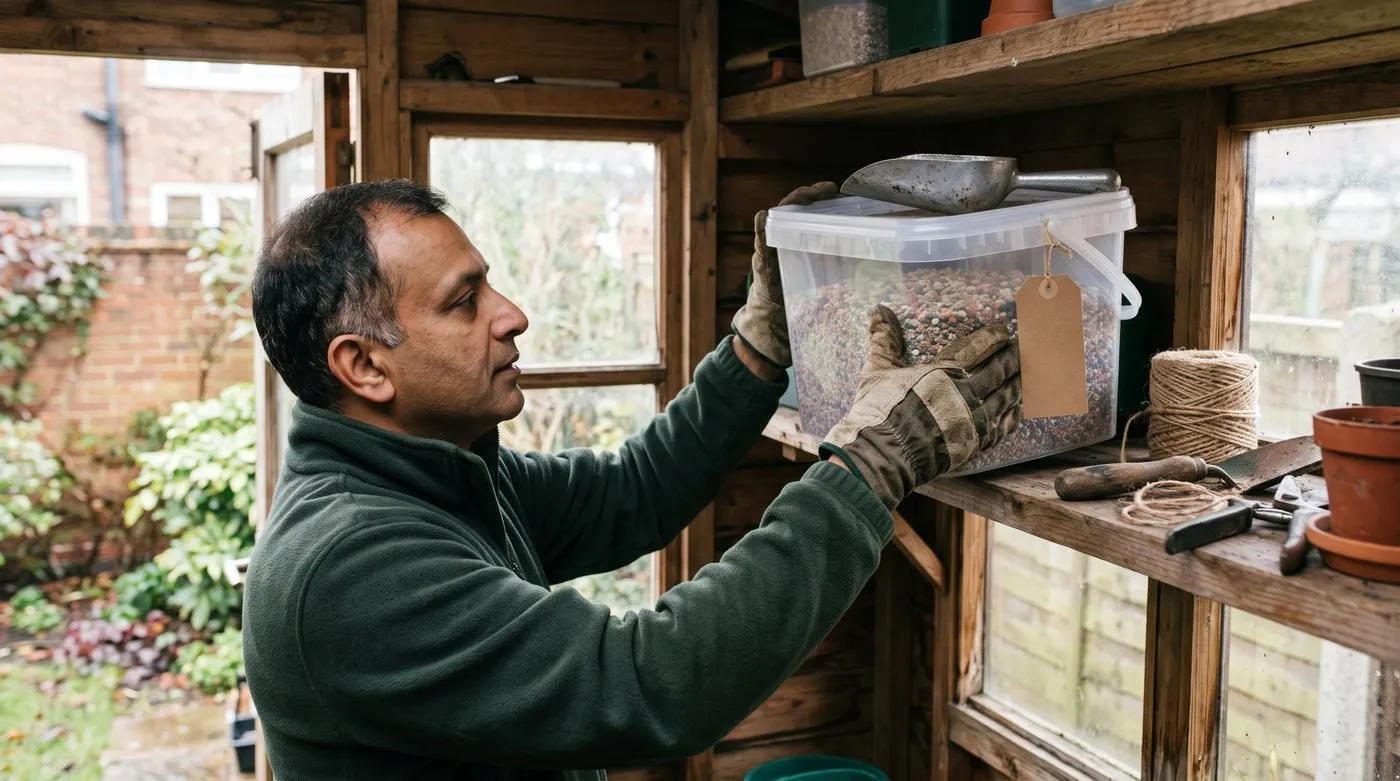
Keep the blend airtight, labelled and up high, away from damp, children and pets.
- Weigh each straight into a bucket, following the recipe.
- Add the dry sand, which helps the mix spread evenly.
- Mix well, turning it over until the colour looks even.
- Break up any lumps with the back of a trowel.
- Store it airtight in a tub labelled with the ratio and date.
Keep the tub cool and dry. Fertilisers soak up moisture from the air and set rock hard if left open. Mix only what you’ll use in a season. Store it out of reach of children and pets, and away from food.
What never to mix with fertiliser
Never mix fertiliser with lime. Lime makes sulphate of ammonia give off ammonia gas, so the nitrogen is wasted. It also locks up phosphate. If your soil needs lime, apply it separately, weeks or months apart.
Avoid mixing straights with anything damp, such as fresh manure or wet compost. Blends that get wet set solid. Keep each straight in its own sealed, labelled tub until you mix.

Sprinkle evenly around plants, keeping it off the stems, then water it in.
How to use your home-made compound
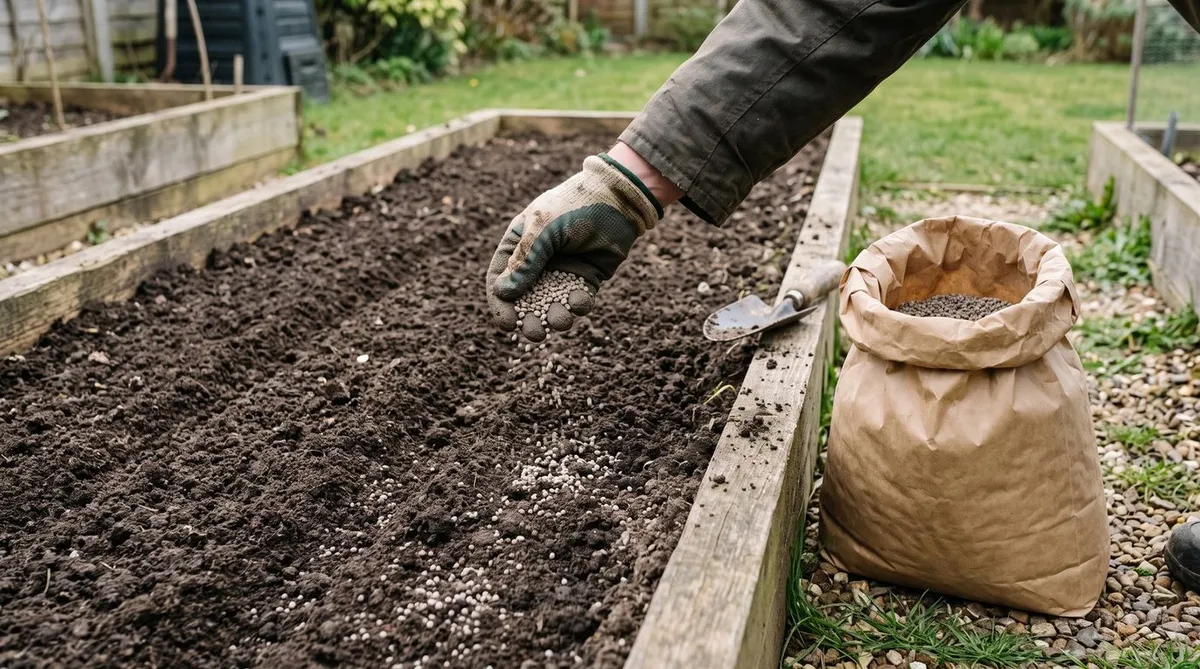
Use a balanced 7-7-7 mix at about 70g per square metre, roughly two handfuls. Rake it into the top few centimetres before sowing or planting. During the season, scatter a lighter dose around hungry crops every few weeks.
- Water it in so it dissolves and reaches the roots.
- Keep it off leaves and stems, which it can scorch.
- Don’t spread it on dry soil in hot sun.
Fertiliser feeds plants, but it doesn’t improve soil. Dig in or mulch with organic matter too, such as compost or well-rotted animal manure. A comfrey liquid feed is a good free potash top-up for tomatoes.
Common fertiliser mixing mistakes
- Guessing the amounts. Eyeballing gives a lopsided blend. Weigh everything.
- Adding lime. It wastes the nitrogen. Keep lime separate.
- Storing it open or damp. The blend sets like concrete. Keep it airtight.
- Skipping the label. Straights and blends look alike. Write the ratio and date on every tub.
- Using too much. A home blend is as strong as a bought one. Stick to sensible rates and water in.
Should you mix your own or buy ready-made?
Mixing your own pays off if you garden on a fair scale. Think a veg plot, fruit and a lawn, with dry storage for bigger bags. It also suits you if you want a ratio no boxed product offers.
For a few pots or a small garden, a box of balanced feed and a bottle of tomato food are simpler. You’d struggle to use up three big bags of straights before they go lumpy. The guide to the best fertilisers for gardens covers the ready-made options. For more feeding advice, browse the how-to guides.
Frequently asked questions
What is a compound fertiliser?
It is a fertiliser with two or more of nitrogen, phosphate and potash. Growmore, a balanced 7-7-7, is the classic UK example. A straight fertiliser, such as sulphate of ammonia, supplies just one nutrient.
How do you make your own compound fertiliser?
Weigh out three straight fertilisers in set proportions and mix them well. Use sulphate of ammonia for nitrogen, superphosphate for phosphate and sulphate of potash for potash. Add dry sand to make up the batch, then store it airtight.
How do you calculate a fertiliser blend?
Divide the percentage you want by the percentage in the straight. For 7% nitrogen from sulphate of ammonia at 21%, that is 7 divided by 0.21, about 33 parts. Repeat for phosphate and potash, then add sand to make 100 parts.
What can I use to make a Growmore replica?
Mix 33 parts sulphate of ammonia, 39 parts superphosphate and 14 parts sulphate of potash. Add 14 parts dry sand to make 100 parts. By weight, that gives roughly a 7-7-7 balanced feed.
Is it cheaper to mix your own fertiliser?
It can be, but only on a larger scale. Straights bought in bigger bags usually cost less per kilo of nutrient. For a few pots or a small garden, a box of ready-made feed is simpler and often cheaper overall.
Can you mix any fertilisers together?
No, never mix fertiliser with lime. Lime makes sulphate of ammonia give off ammonia, so the nitrogen is lost. The three straights here mix fine, but mix only what you’ll use soon, as blends can absorb damp and set hard.
Our team produces practical UK gardening guidance from source research, contributor records and established horticultural practice. Editorial standards are overseen by Matt W.