Key takeaways
- Blood fish and bone at about 70g per square metre is the best all-round feed for veg beds
- Bone meal goes on in autumn and feeds roses and fruit slowly through the next year
- Dried blood is the quickest natural nitrogen boost, so use it sparingly
- Comfrey feed is free to make and perfect for tomatoes once they start flowering
- Vegan options: seaweed meal, comfrey, nettle tea, rock phosphate and organic potash
- Stop feeding by the end of August so growth toughens up before frost
Natural fertilisers feed your plants and your soil at the same time. The trick is matching the feed to the crop and the season. Here are nine of the best for UK gardens, how much to use and when, plus a simple calendar to keep you on track.
Best natural organic fertilisers for UK vegetable plots
These nine feeds cover everything a UK plot needs. Five you can buy (blood fish and bone, bone meal, dried blood, hoof and horn, seaweed meal), two you make at home (comfrey and nettle feed), and two are vegan minerals (rock phosphate and organic sulphate of potash).
Pick by what you’re growing. Cabbages, sweetcorn and potatoes are hungry for nitrogen, which drives leafy growth. Tomatoes, peppers and fruit want potassium once they flower. Root crops just need a little phosphorus for good roots. Match the feed to the crop and you’ve done most of the thinking.
| Feed | How much | How fast | Best for | Vegan? |
|---|---|---|---|---|
| Blood fish and bone | 70g per m² | Medium | All vegetables | No |
| Bone meal | 90g per m² | Slow | Roses, fruit, autumn planting | No |
| Dried blood | 35g per m² | Fast | Leafy crops, cabbages | No |
| Hoof and horn | 60g per m² | Slow | Fruit trees and bushes | No |
| Seaweed meal | 100g per m² | Medium | All crops | Yes |
| Comfrey feed | Diluted, as a liquid | Fast | Tomatoes, peppers, fruit | Yes |
| Nettle tea | Diluted, as a liquid | Fast | Leafy crops, young plants | Yes |
| Rock phosphate | 120g per m² for new beds | Very slow | Building up new beds | Yes |
| Organic sulphate of potash | 30g per m² | Medium | Fruit, flowers, roots | Yes |
 Measuring out blood fish and bone for a cabbage bed. A small tub goes a surprisingly long way.
Blood fish and bone NPK and how much to use
Blood fish and bone is the go-to organic feed in the UK. It mixes quick-acting blood, medium-speed fish and slow bone, so one dose feeds for a couple of months.
Use about 70g per square metre for most beds. Hungry crops like cabbages, leeks and sweetcorn can have 100g. Lighter feeders like lettuce, radish and carrots need only about 35g. Rake it into the top few centimetres two to three weeks before sowing or planting, and water in if the soil is dry.
It isn’t vegan, and some blends use by-products from non-organic farms, so check the label if that matters to you. The Vegan Organic Network can point you to stockfree options.
Bone meal application rate for UK roses and brassicas
Bone meal is mostly phosphorus, which helps roots grow. It’s the classic feed for planting roses and fruit trees, and it also suits autumn-sown cabbages and overwintering onions.
Rake in about 90g per square metre in October or November. When planting a rose, mix a good handful into the bottom of the hole. For a fruit tree, use a couple of handfuls.
It’s slow because soil life has to break it down first. So there’s no point using it in spring for a quick boost, as it won’t kick in fast enough. Rock phosphate is the vegan swap, and it’s even slower.
 Adding bone meal to a rose planting hole, right where the new roots will find it.
Dried blood: fastest organic nitrogen source for UK gardens
Dried blood is the quickest natural nitrogen feed you can buy. It’s great for rescuing leafy crops with pale, yellowing lower leaves and slow growth.
Sprinkle about 35g per square metre around leafy crops and cabbages. Keep it off the leaves and water it in. If growth is still slow after six weeks, give a little more. It works fastest in warm, moist soil.
Go easy with it. Too much makes soft, sappy growth that aphids love and frost damages easily. Only use it when plants clearly need a boost.
It isn’t vegan. Nettle tea (below) is the vegan way to give a quick nitrogen boost.
Hoof and horn for long-season nitrogen on fruit trees
Hoof and horn releases nitrogen slowly over many months. That makes it ideal for fruit trees, soft fruit and asparagus beds, where you want steady growth without feeding again and again.
Rake in about 60g per square metre in March. For fruit trees, scatter a couple of handfuls around the edge of the branches, where the feeding roots are. Coarse grades last longer than fine ones, so coarse suits trees best. Because it’s so gentle, it’s hard to overdo.
It isn’t vegan. A vegan way to add slow nitrogen is to grow green manures. Our green manures and cover crops guide explains which ones to sow.
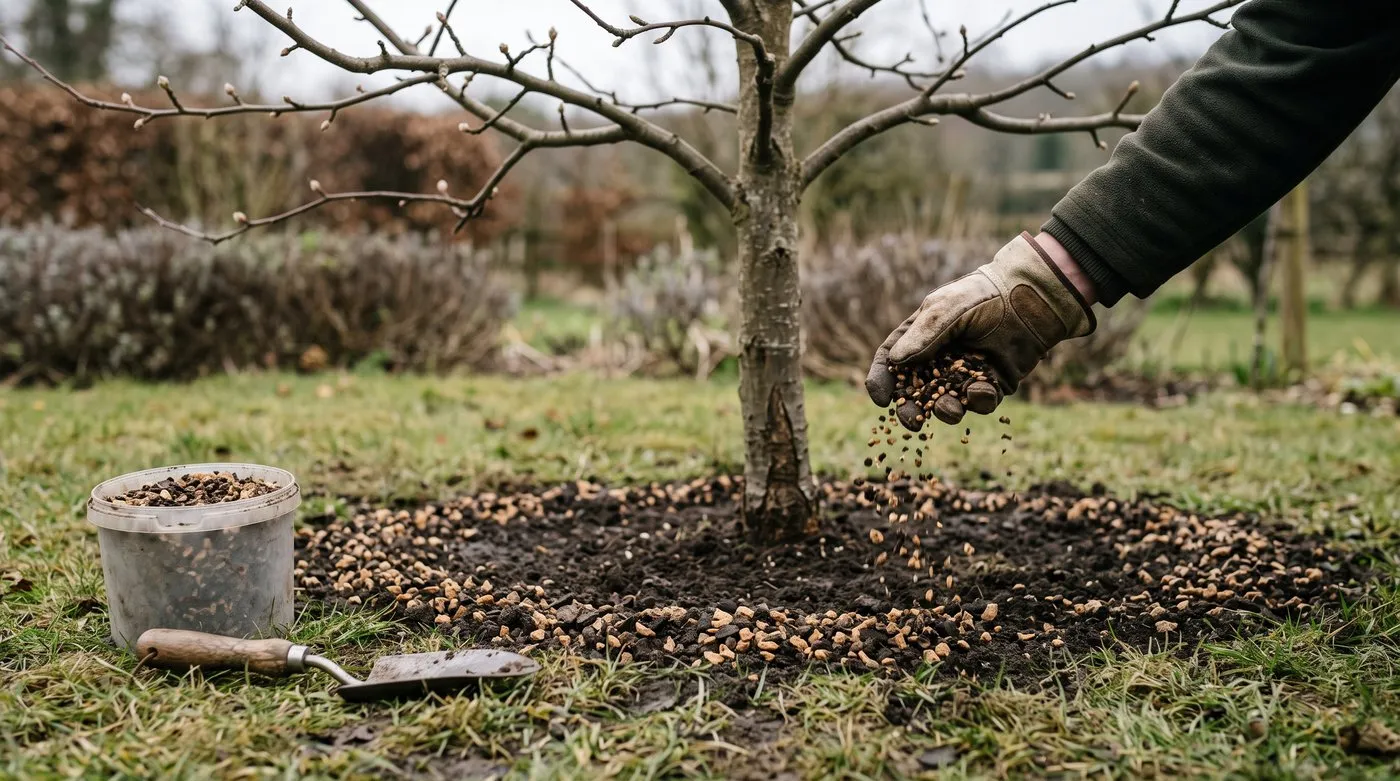
Scatter it under the outer edge of the branches, where the feeding roots are. It releases nitrogen gently over many months.
Seaweed meal application rate UK
Seaweed meal is low in the main nutrients but rich in trace elements, the little extras plants need to stay healthy. Think of it as a tonic for the soil.
Rake in about 100g per square metre in March. For brand-new beds, you can double that once. Liquid seaweed is handy too. Dilute it as the label says and spray or water it on every couple of weeks.
Seaweed meal is fully vegan.
 Spraying liquid seaweed onto greenhouse tomatoes as a tonic every couple of weeks.
Homemade comfrey fertiliser for UK tomatoes
Comfrey feed is the best free fertiliser you can make. It’s packed with potassium, which is just what tomatoes, peppers, courgettes and soft fruit want once they start flowering.
Grow the variety ‘Bocking 14’. It doesn’t set seed, so it won’t spread around the garden. You can cut it several times between May and September, and one good plant gives plenty of leaves for a row of tomatoes.
Making comfrey concentrate (no water method)
- Cut a big armful of comfrey leaves and bruise them a little.
- Pack them into a bucket with a tap at the bottom, or a container with holes over a collecting tray.
- Weigh them down with a brick or slab.
- Cover loosely and leave for four to six weeks.
- A dark liquid will drip out of the bottom. That’s your concentrate.
Dilute it about 1 part to 15 parts water. Neat concentrate is too strong and can burn roots. Give each plant about 500ml of the diluted feed a week, from the first flowers to late August.
Be warned, it smells. Make it in a corner you don’t visit much. The concentrate keeps for months in sealed bottles.
It’s fully vegan. Garden Organic sells ‘Bocking 14’ root cuttings. Plant them in October or March in deep, moist soil, well away from beds you dig, as any bit of root left behind will regrow.
 The water method: comfrey leaves topped up with rainwater in an old bin. Strain after about four weeks and dilute 1 part to 10 parts water.
Making nettle tea fertiliser for UK leafy crops
Nettle tea is comfrey’s nitrogen-rich cousin. It’s a quick liquid feed for cabbages, leafy crops and young plants. Use it before flowering, then switch to comfrey.
Making nettle tea
- Cut a bucketful of young nettle tops in April or May, before they flower.
- Wear gloves. Pack them into a large bucket.
- Cover with water.
- Cover loosely and leave for two to four weeks (less in hot weather).
- Strain through an old cloth into a container with a lid.
Dilute it about 1 part to 10 parts water. Pour about 500ml around each plant every 10-14 days from late April to mid-June.
It smells even worse than comfrey, so brew it well away from the house. The spent leaves can go on the compost heap.
 Young nettle tops in a bucket of rainwater. Pick them before they flower, then strain and dilute after about three weeks.
Rock phosphate and organic sulphate of potash for vegan gardens
These two mineral feeds fill the gaps that animal-based feeds usually cover.
Rock phosphate
This is ground-up rock that releases phosphorus very slowly, over a few years. Rake in about 120g per square metre when making a new bed, or about half that as a yearly top-up.
Organic sulphate of potash
A natural mineral source of potassium. It suits fruit, flowers, root crops and anything about to flower or fruit. Sprinkle about 30g per square metre in spring and water it in.
It works much faster than rock phosphate. Don’t confuse it with muriate of potash, which isn’t allowed in organic growing.
Add seaweed meal and some homemade comfrey or nettle feed, and you have a fully vegan feeding plan that does the same job as blood fish and bone.
Why synthetic NPK damages UK soil microbiome over 5 years
Chemical fertilisers feed the plant, but natural ones feed the soil too. That’s the big difference.
Chemical feeds go straight to the roots, and plants take them up within days. That gives quick growth, but it adds nothing to the soil itself. Natural feeds are broken down by worms, fungi and bacteria first, so all that soil life gets fed along the way.
Use chemical feeds on their own, with no compost or manure, and soil slowly loses its structure and its worms. Switch to natural feeds and keep adding organic matter, and over a few years you’ll see darker, crumblier soil with more worms in it.
For building better soil year after year, our four-year crop rotation guide and green manures and cover crops guide are good next steps.
Natural fertiliser application calendar UK
| Month | What to do | Feed | How much |
|---|---|---|---|
| March | Feed beds before planting | Blood fish and bone | 70g per m² |
| March | Slow feed for fruit | Hoof and horn | 60g per m² |
| March | Trace element tonic | Seaweed meal | 100g per m² |
| April | Boost cabbages | Dried blood | 35g per m² |
| April | Plant comfrey | ’Bocking 14’ | |
| May | Start liquid feeding | Nettle tea, diluted 1:10 | 500ml per plant |
| May | First comfrey cut | Start a brew | |
| June | Switch to potash-rich feed | Comfrey, diluted 1:15 | 500ml per plant every 2 weeks |
| June | Boost sweetcorn | Blood fish and bone | 50g per m² |
| July | Keep up comfrey feeding | Comfrey, diluted 1:15 | Every 2 weeks |
| July | Tonic spray | Liquid seaweed | As the label says |
| August | Last feeds (stop at month end) | Comfrey or seaweed | Every 2 weeks |
| September | Cut back comfrey for a last brew | ’Bocking 14’ | |
| October | Slow feed for next year | Bone meal or rock phosphate | 90-120g per m² |
| November | Mulch beds | Garden compost | About 5cm deep |
Stop feeding at the end of August. Late feeding makes soft growth that doesn’t toughen up in time, so frost hits it harder.
Common mistakes with natural organic fertilisers
Applying granular feeds in summer
Granular feeds take a few weeks to break down. Scatter blood fish and bone in July and the crop may be finished before it kicks in. Use granules in March or April for spring planting, or in October or November for overwintering crops.
Skipping the dose calculation
A handful is often more than you think. That’s fine for blood fish and bone but too much for dried blood. Weigh a dose on the kitchen scales once, so you know what it looks like.
Mixing comfrey concentrate too strong
Neat comfrey concentrate can burn roots. Always dilute it about 1 part to 15 parts water. Dilute nettle tea about 1 to 10.
Feeding too late into the season
Stop liquid feeding by the end of August. Fruit trees fed late are especially prone to winter dieback.
Assuming all “organic” labels are vegan
Many organic feeds contain blood, bone, fish, hoof, horn or feathers. If you garden vegan, look for feeds clearly marked as stockfree or vegan.
Tip: Water dry soil the day before you scatter granular feed, then water again after raking it in. Feed sitting on dry soil does nothing, and it can scorch any leaves it touches.
Frequently asked questions
What is the best natural organic fertiliser for a UK vegetable garden?
Blood fish and bone is the best all-rounder. Rake in about 70g per square metre a couple of weeks before planting, and it feeds for a couple of months. Add seaweed meal for extra goodness. In a vegan garden, use seaweed meal, rock phosphate and organic potash instead.
How much blood fish and bone per square metre UK?
Use about 70g per square metre for most beds. Give hungry crops like cabbages and sweetcorn about 100g, and salad beds about 35g. Rake it into the top few centimetres of soil two weeks before planting, then water in.
How do you make comfrey liquid fertiliser UK?
Pack comfrey leaves into a bucket with a tap or holes at the bottom. Weigh them down with a brick and add no water. After four to six weeks, a dark liquid drips out. Dilute it about 1 part to 15 parts water before you use it.
Is bone meal vegan?
No, it’s made from ground animal bones. Blood fish and bone, dried blood and hoof and horn aren’t vegan either. Good vegan swaps are rock phosphate, seaweed meal and organic sulphate of potash.
When should you apply natural fertiliser to UK garden?
Rake in granular feeds two weeks before planting in March or April. Use liquid feeds every couple of weeks from late May to mid-August. Slow feeds like bone meal go on in October or November. Stop feeding by the end of August.
Do natural fertilisers work as well as synthetic NPK?
Yes for steady growth, but they’re slower in a rescue. Natural feeds are broken down by soil life, so they release food gently over weeks or months. Chemical feeds act within days but do nothing for the soil itself. Whichever you use, keep adding compost.
Can I use comfrey and nettle feed on tomatoes?
Yes, and tomatoes love comfrey. Use diluted comfrey every 10-14 days from the first flowers until late August. Nettle tea is richer in nitrogen, so it’s better for leafy growth earlier on. Switch to comfrey once flowers appear.
Now build your organic feeding system
Our team produces practical UK gardening guidance from source research, contributor records and established horticultural practice. Editorial standards are overseen by Matt W.