Key takeaways
- Feed the soil with organic matter and the soil life feeds your plants
- Spread about 5cm of compost or well-rotted manure over beds each autumn
- Keep soil covered with mulch or a green manure rather than leaving it bare
- Dig less, so worms and fungi can keep their tunnels and threads intact
- Use liquid feeds such as comfrey as top-ups for hungry crops, not the main meal
- Give it two or three years and most soils become darker, crumblier and easier to work
“Feed the soil, not the plants” is the simple idea at the heart of organic gardening. Instead of feeding each plant from a bottle, you add compost, manure and mulch to the soil. Worms and other soil life break it down and feed your plants slowly, all season. Over a few years the soil gets darker, crumblier and easier to grow in.
This guide explains what that means in practice and how to start on an ordinary garden or allotment. For the bigger picture on soil biology, carbon and wildlife, see regenerative gardening.
What does feed the soil, not the plants mean?
Healthy soil is full of life. Worms, fungi, bacteria and tiny creatures feed on dead plant material. As they eat, they release nutrients in a form roots can take up.
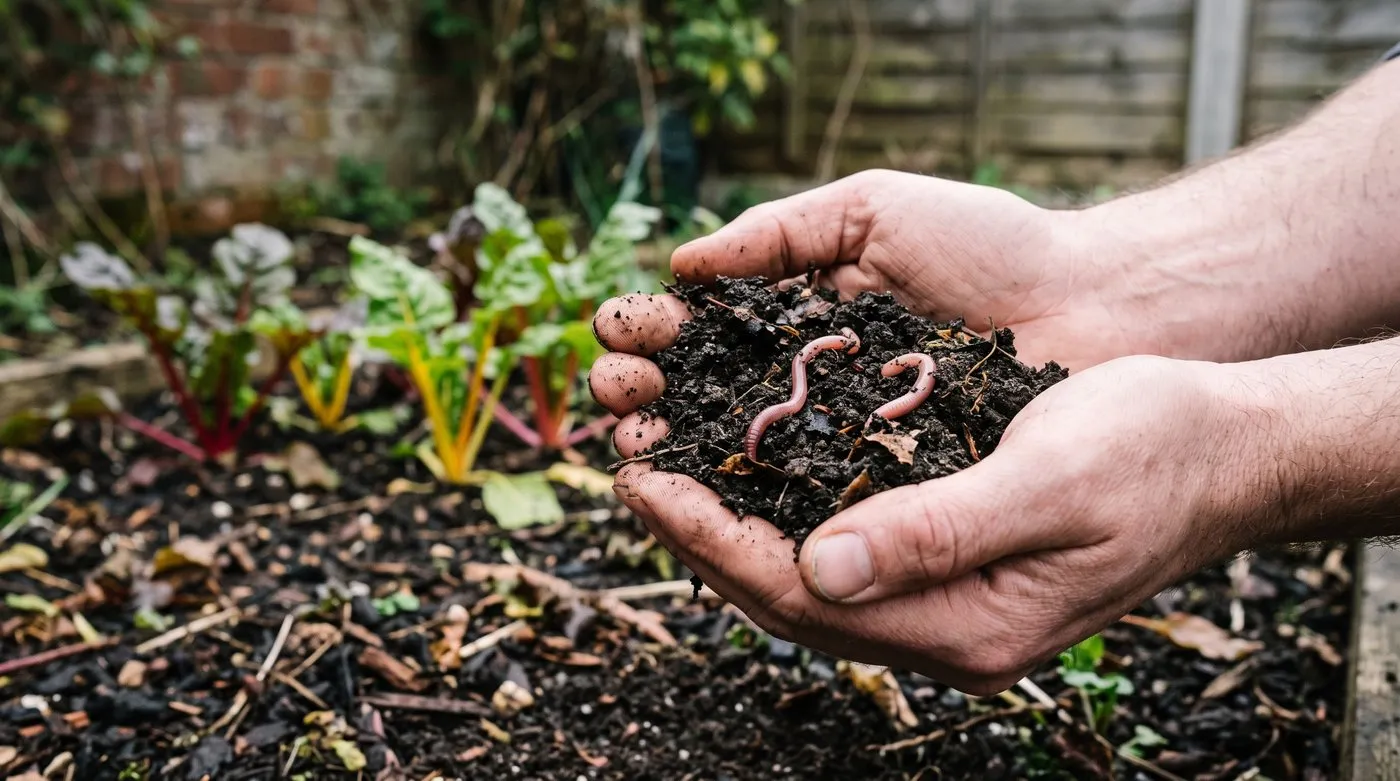
Dark, crumbly soil full of worms is what you’re aiming for. Each autumn mulch takes you a step closer.
When you add compost or manure, you feed that whole community. They turn it into plant food and, in the process, glue soil crumbs together. That gives roots more air in clay soils and helps sandy soils hold water.
Bottled fertilisers do feed plants, and they have their uses. But they add nothing to the soil’s structure or life. Too much nitrogen also gives soft, sappy growth that aphids love. Feeding the soil keeps the whole system ticking along instead.
Add compost or manure every autumn
This is the single most useful habit. Each autumn, spread about 5cm of garden compost or well-rotted manure over your beds. There’s no need to dig it in. Worms pull it down over winter, and by spring the bed is ready to plant.
Good sources include:
- Your own compost heap. The guide to making compost covers cold, fast and hot heaps.
- Well-rotted manure from a local stable or farm. Make sure it has rotted down to a crumbly, earthy mix.
- Council green-waste compost, sold in bags or bulk by many councils.
Warning: Some manure carries weedkiller residues from the grass the animals ate. These can twist and stunt beans, peas and tomatoes. Ask your supplier, and read about aminopyralid in manure before spreading a big load.

Compost spread on the surface in autumn. Worms and winter weather do the digging for you.
Keep the soil covered
Bare soil gets battered by rain, baked by sun and blown by wind. Covered soil stays moist, crumbly and full of life.
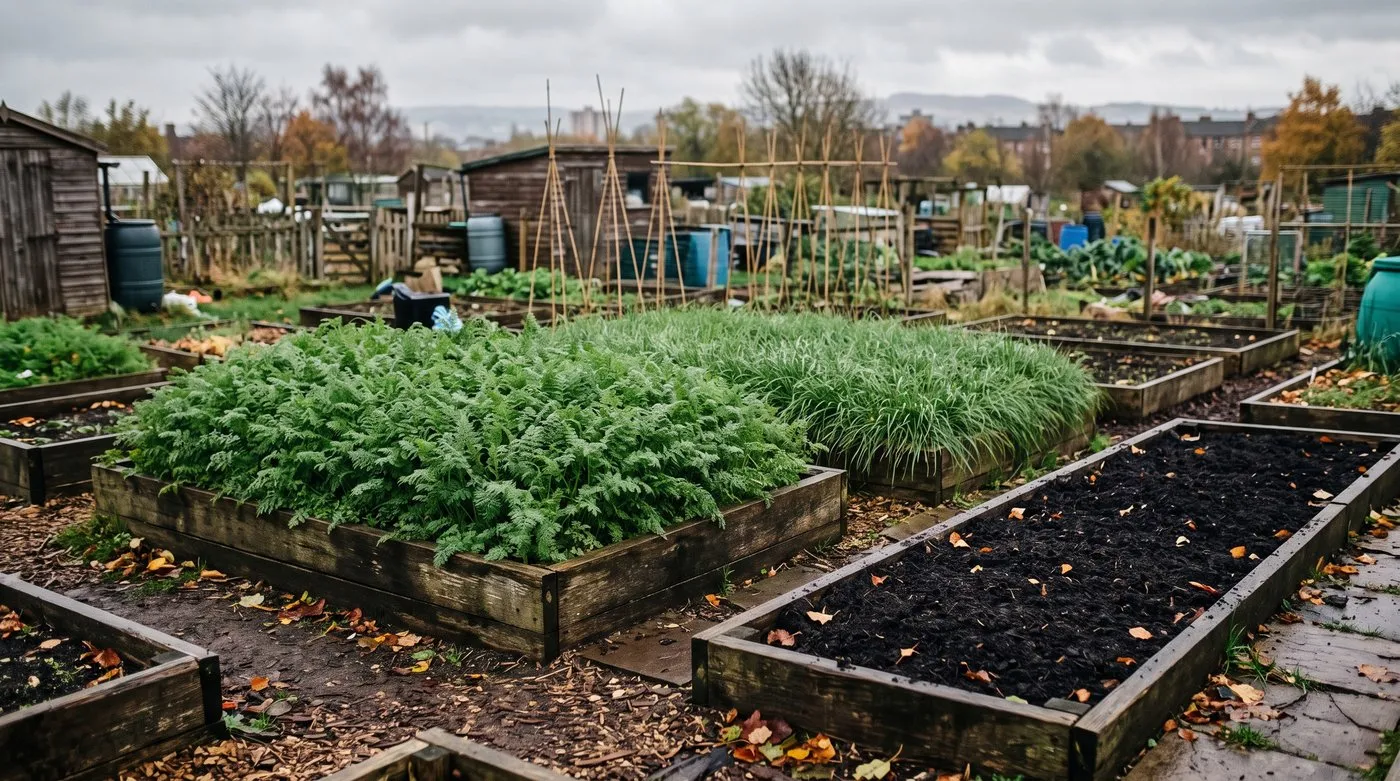
A green manure keeps winter rain off bare soil and feeds it when you chop it down in spring.
Mulch around plants. Good options that also feed the soil include:
- Compost or well-rotted manure
- Leaf mould, which is free and great for soil structure
- Grass clippings, in thin layers so they don’t go slimy
- Straw, handy around strawberries and squash
- Wood chip, best on paths and around trees and shrubs
Spread mulch on moist soil, after rain, and keep it a few centimetres clear of stems.
Sow green manures in empty beds. A green manure is a quick crop sown to cover and feed the soil. Phacelia, field beans, grazing rye and crimson clover all suit UK gardens. Chop them down before they set seed and leave them on the surface or let them rot under compost. The guide to green manures and cover crops covers what to sow when.
Dig less, or not at all
Digging breaks up worm tunnels and the fine threads of soil fungi. It also brings buried weed seeds up to the light, where they sprout.
The no-dig approach skips digging. You simply add compost to the surface each year and plant into it. Many gardeners find their soil stays crumblier and they spend less time weeding. It’s also kinder on your back.
You don’t have to go all in. Start with one bed and see how you get on. The no-dig gardening guide covers how to set up a bed from grass or weeds.

A compost-mulched bed beside a dug one. The mulched soil stays moist and crumbly, while bare dug soil can dry out and sprout weeds.
When plants still need a feed
Good soil feeds most plants well. A few hungry crops still enjoy a top-up in summer, especially in pots or on poor soil.
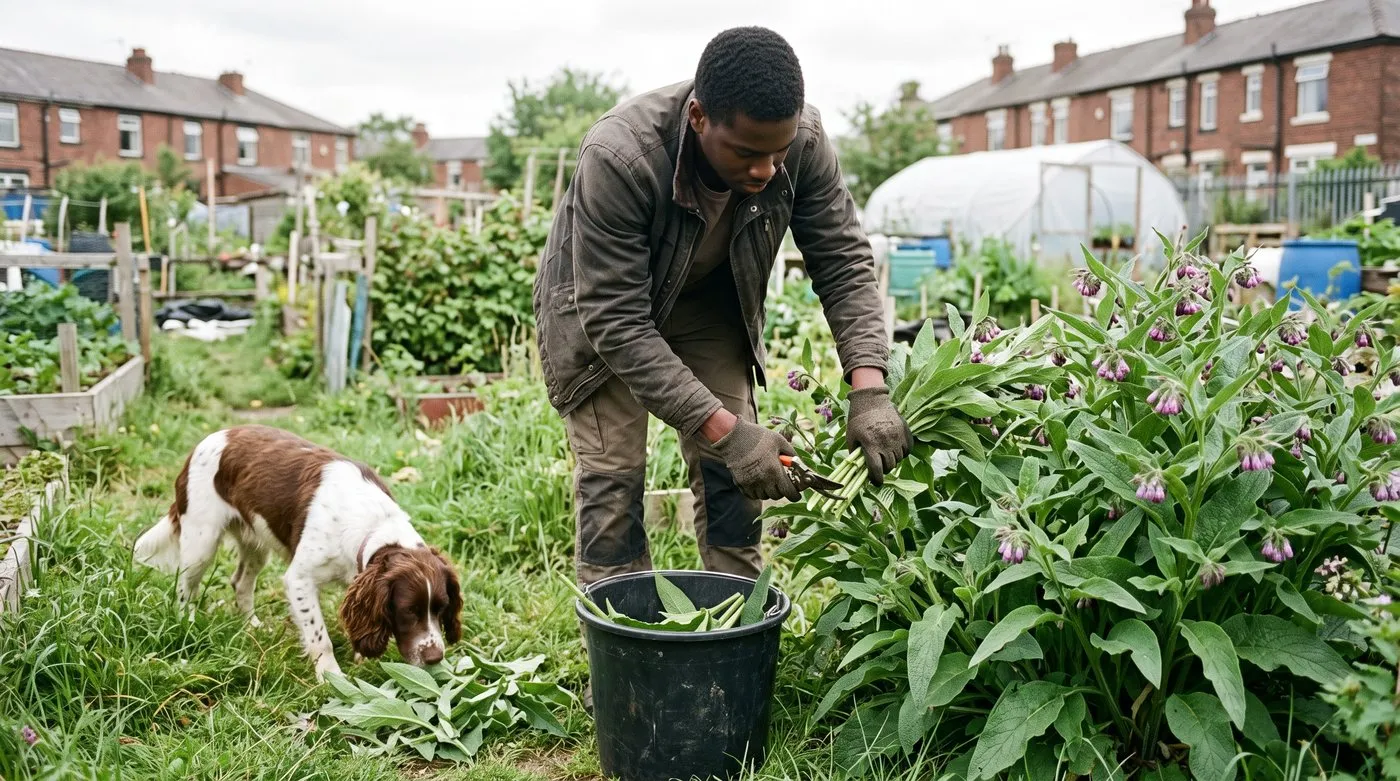
Comfrey regrows after cutting, so one clump keeps you in tomato feed all summer. Wear gloves, as the leaves are bristly.
- Comfrey feed is rich in potassium, so it suits tomatoes, peppers, courgettes and other fruiting crops once they flower. The comfrey liquid feed recipe shows how to make it.
- Nettle feed gives a nitrogen boost for leafy crops early in the season. Soak nettle tops in water for a couple of weeks, then dilute it well.
- Seaweed feed is a gentle general tonic. Use it at the rate on the bottle.
- Wormery liquid can be diluted and used as a general feed.
- Pelleted chicken manure or blood, fish and bone give a slow boost when sown into beds in spring.
Some gardeners also brew compost tea from finished compost. Think of all of these as top-ups. The main meal is the compost you spread in autumn.
How to start feeding your soil this year
You don’t need to change everything at once. Here’s a simple plan for a typical garden or allotment.
- Start a compost heap or bin. Add kitchen peelings, garden waste and torn cardboard.
- Make leaf mould. Pile autumn leaves into a simple wire cage. They rot down into lovely crumbly mulch in a year or two.
- Get some compost or manure for the first year. A few bags of council compost or a load of well-rotted manure bridges the gap until your heap gets going.
- Mulch in autumn. Spread about 5cm over your beds.
- Sow a green manure in any bed that would otherwise sit bare over winter.
- Plant straight into the mulch in spring, and repeat each year.

A compost bin, a leaf cage and a few bags of compost to get you through the first year. That’s all the kit you need.
Feeding the soil through the year
| Month | Task |
|---|---|
| January to February | Order green manure seed. Turn the compost heap |
| March to April | Plant into last autumn’s mulch. Sow quick green manures in gaps |
| May to June | Mulch around crops after rain. Start comfrey and nettle feeds |
| July to August | Top up hungry crops with comfrey feed. Keep adding to the compost heap |
| September | Sow overwintering green manures in empty beds |
| October to November | Spread compost or manure over beds. Collect leaves for leaf mould |
| December | Rest. Check the compost heap isn’t waterlogged |
Common mistakes when feeding the soil
Digging compost in deep. It works fine on the surface, and the worms do the job for you.
Using fresh manure. It can scorch plants and smells strong. Let it rot down for six months to a year first.
Leaving soil bare over winter. Rain washes nutrients away and flattens the surface. Mulch it or sow a green manure.
Expecting instant results. Soil improves slowly. Give it two or three years.
Overdoing liquid feeds. Too much gives soft growth that pests love. Feed hungry crops, and follow the dilution.
Frequently asked questions
What does feed the soil not the plants mean?
It means adding organic matter so soil life can feed your plants. Worms, fungi and bacteria break down compost, manure and mulch and release nutrients slowly. Over time the soil holds more water and air too. You end up needing far less bought fertiliser.
How long does it take to switch to feeding the soil?
Allow two or three growing seasons. In the first year you may notice little change while soil life builds up. By the second or third year, most soils are darker and crumblier, and hold water better. Heavy clay and thin sandy soils both improve, though at their own pace.
What is the best soil feed for UK gardens?
Garden compost or well-rotted manure is the best all-round choice. Spread it about 5cm deep over beds each year, ideally in autumn. Winter rain and worms work it in for you. Leaf mould is a good, gentler alternative for improving soil structure.
Do organic gardeners use any fertiliser?
Yes, as top-ups for hungry crops. Comfrey and seaweed feeds help tomatoes, peppers and courgettes once they flower. Pelleted chicken manure or blood, fish and bone give a boost in spring. These sit on top of good soil care rather than replacing it.
How do worms feed plants?
Worms recycle dead leaves and compost into rich worm casts. They pull organic matter down into the soil and mix it in. Their tunnels let air and water reach the roots. A soil full of worms is usually a fertile one.
Is feeding the soil cheaper than feeding plants?
Usually, yes, once you’re making your own compost and leaf mould. Kitchen and garden waste become free soil food. You may still buy a few bags of compost or manure at first. Healthy soil also tends to need less watering.
Now you know the idea, the easiest next step is the guide to making leaf mould, the cheapest soil food there is. There are more practical guides in the how-to section.
Our team produces practical UK gardening guidance from source research, contributor records and established horticultural practice. Editorial standards are overseen by Matt W.