
Key takeaways
- Cold composting is the least work, but takes a year or more
- Turning a heap every month or so roughly halves the wait
- Hot composting needs a heap built in one go, about 1m across, turned often
- A hot heap's centre should reach about 55-65°C, so a long thermometer helps
- Keep any heap as damp as a wrung-out sponge, with a good mix of greens and browns
- Keep club root, cooked food and pet waste out of every heap
Hot, warm and cold composting all end in the same crumbly brown stuff. What changes is how long it takes and how much work you put in. A cold heap takes a year or more but you barely touch it. A hot heap can be ready in a few months, but you’ll be building and turning it.
This guide helps you pick the method that fits your garden and your spare time, then shows you how to run a hot heap. New to composting? Start with our guide on how to make compost at home, which covers bins, what to add and the basics.
Hot, warm and cold composting compared
Pick by how much material you have, how much time you’ll give it, and how soon you want compost.
| Cold heap | Warm heap | Hot heap | |
|---|---|---|---|
| Time to compost | A year or more | Six months to a year | A few months |
| Work | Almost none | Turn monthly | Build in one go, turn often |
| Heap size | Any | Bin or bay | At least 1m across |
| Kills weed seeds? | No | Some | Many |
| Best for | Small gardens, little waste | Most gardens and allotments | Lots of waste, keen composters |
Choose cold if you have a small garden, add waste in dribs and drabs and want an easy life.
Choose warm if you have a steady supply of waste and don’t mind turning the heap once a month. It’s the sweet spot for most gardeners.
Choose hot if you have plenty of material at once, such as an allotment clear-out, and want compost quickly.
Cold composting: the easy way
Add waste as it comes, keep a lid or cover on, and leave it. The bottom of the heap turns into compost first, so you dig from the base while adding to the top.
A plastic “dalek” bin, a wooden bay or a simple heap on bare soil all work. Our guide to compost bin ideas compares the options. Standing it on soil lets worms move in, and they do much of the work.
Mix greens and browns as you go. A cold heap is happy with a bit more brown, which stops it going slimy. It slows almost to a stop in winter, so be patient.
The catch is that a cold heap doesn’t get hot enough to kill weed seeds or roots. Leave seeding weeds and perennial roots out.

A cold heap just gets layered up as waste comes along. Leaves, peelings and grass all go in together.
Warm composting: the middle way
A warm heap is a cold heap you turn. Turning lets air in, so the microbes work faster and the heap warms up, though it won’t get as hot as a proper hot heap.
- Fill a bin or bay as waste comes in, mixing greens and browns.
- Once it’s well filled, start a new heap alongside and stop adding to the first.
- Turn the full heap about once a month, moving the outside to the middle.
- Keep it as damp as a wrung-out sponge.
It’s usually ready in six months to a year. Two or three bays side by side make this easy: one filling, one cooking, one ready.

Turning a heap once a month lets air in and speeds things up. Move the dry outside bits into the middle.
How to make hot compost step by step
Build a hot heap all in one go, about 1m across, with plenty of greens. Keep it damp and turn it often. The middle should heat up to about 55-65°C within a few days.
What you need
- Enough material to fill about a cubic metre at once. Stockpile it for a few weeks if needed.
- A bay or bin with gaps for air, such as a pallet bay. Insulated hot-compost bins suit smaller gardens.
- A long compost thermometer. It’s the easiest way to know if it’s working.
- A cover, such as old carpet or a sheet of cardboard, to hold in heat and keep off rain.
Building the heap
- Chop it up. Smaller pieces break down faster. Run a mower over leaves and shred woody bits.
- Mix greens and browns. Use roughly equal amounts, with a little more brown if anything. Fresh grass clippings and veg waste get it going.
- Wet as you go. Water the dry layers so the whole heap feels like a wrung-out sponge.
- Build it high. Aim for about 1m tall, wide and deep.
- Cover it. Put the lid or carpet on top.
Keeping it hot
Check the temperature every day or two. Once the middle has been hot for a few days and starts to cool, turn it. Fork the outside into the middle and the middle to the outside. It should heat up again.
Turn it every few days to a week while it keeps reheating. Add water if it’s dry, and browns if it’s soggy. When it no longer heats up after turning, leave it to finish and cool. Worms will move in and finish the job.

Steam on a cold morning means the heap is working. A long thermometer tells you for sure.
What can go in each kind of heap
Most garden and kitchen waste can go in any heap. A few things need care.
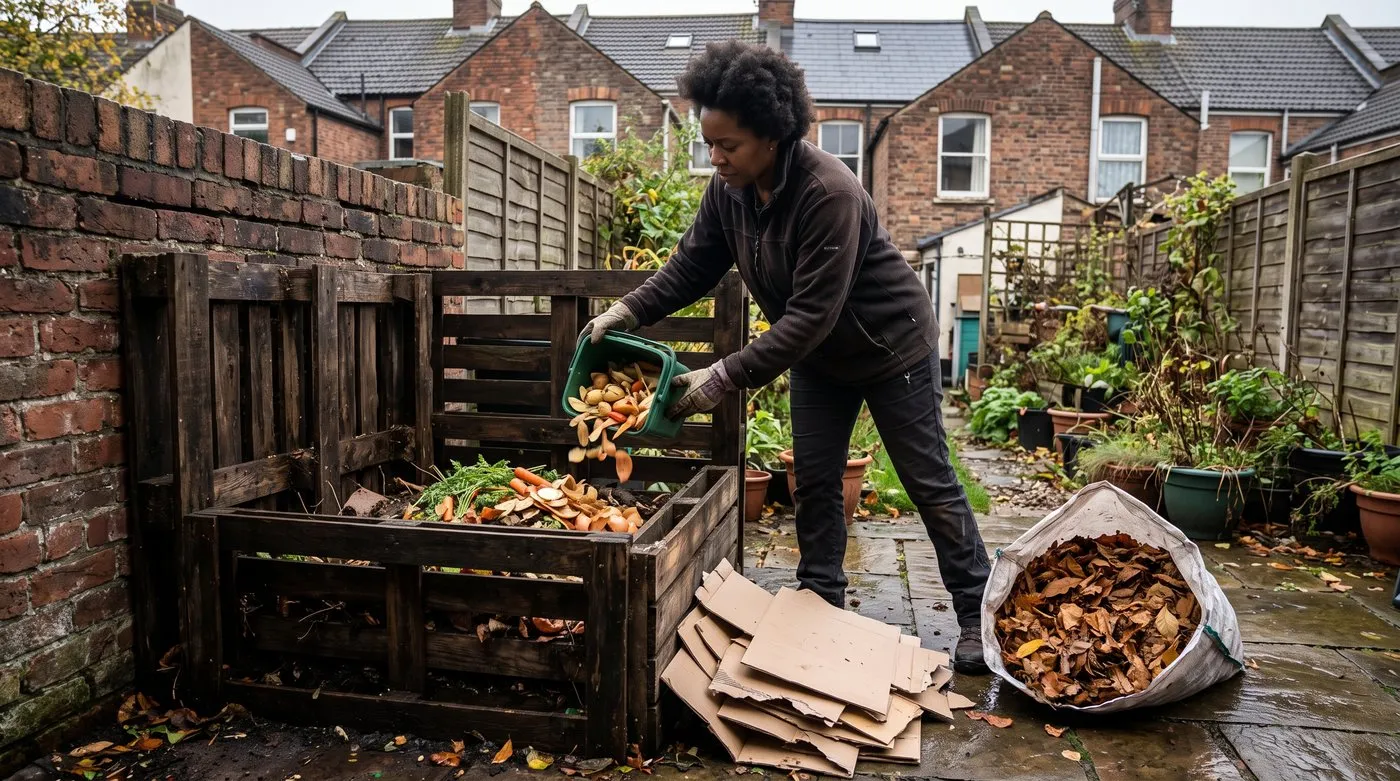
Greens from the kitchen, browns from the shed. A rough half-and-half mix keeps a heap happy.
Greens (wet, nitrogen-rich): grass clippings, raw veg and fruit peelings, coffee grounds, soft green prunings, annual weeds without seeds, comfrey leaves.
Browns (dry, carbon-rich): autumn leaves, shredded plain cardboard and paper, straw, egg boxes, woody prunings chopped small.
Keep out of every heap:
- Cooked food, meat, fish and dairy, which attract rats
- Dog and cat poo, and cat litter
- Coal or barbecue ash
- Plants with club root or other soil-borne diseases
- Glossy or plastic-coated paper, and tea bags containing plastic
Weeds and roots. Even a hot heap may not get every bit hot, so don’t rely on it. Drown perennial weed roots such as bindweed and couch grass in a bucket of water for a few weeks first, or put them in your council green bin. Our guide to composting for wildlife explains why a heap is also a home for hedgehogs, slow-worms and frogs, so fork gently.
Common compost problems and fixes
Not heating up. Too small, too dry or short of greens. Add fresh grass clippings or veg waste, water it and turn.
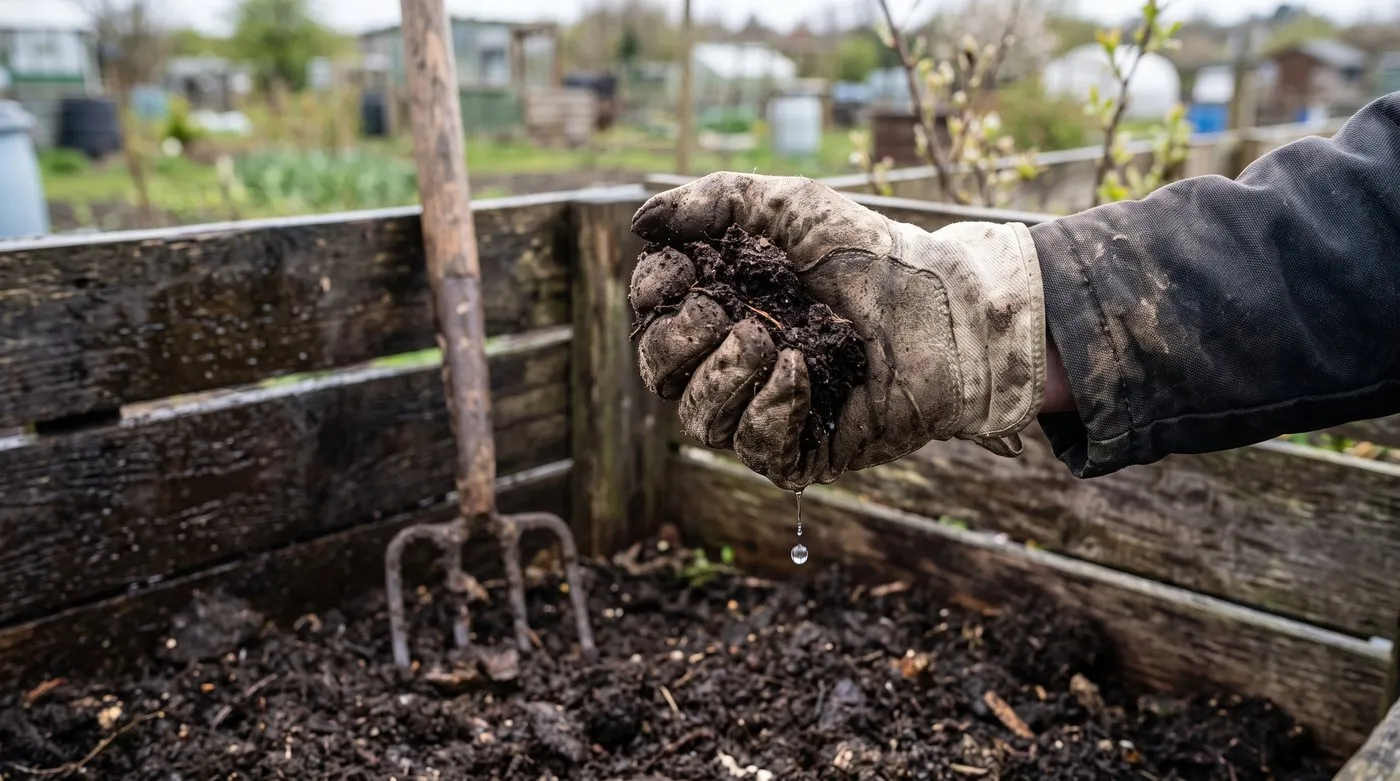
The squeeze test: a drop or two of water is perfect. Dripping means add browns, crumbly-dry means add water.
Smells of ammonia. Too many greens. Mix in dry browns and turn.
Smells rotten. Too wet with no air. Fork in plenty of dry browns and cover it from rain.
Dry and not rotting. Water it as you turn, and add greens.
Rats. Stop adding any cooked food. Turn the heap often, keep it damp, and stand bins on fine wire mesh. Our guide on getting rid of rats in the garden has more.
Lots of sticks left. Normal. Sieve it and put the bits back in the next heap.
Using your compost
Finished compost is dark, crumbly and smells like a woodland floor. Sieve it if you want a fine texture.
- Mulch beds with a 5cm layer in autumn or spring. Worms pull it in, or dig it in if you prefer. Our no-dig gardening guide shows how to use it on top.
- Feed shrubs, fruit and perennials with a layer around them in spring.
- Mix into potting compost as one ingredient. On its own it’s too rich for seedlings.

Sieving gives you fine compost for pots. The lumps go back into the next heap.
Other ways to compost
Leaf mould. Autumn leaves rot down slowly on their own into a lovely soil improver. Our guide on how to make leaf mould shows how.
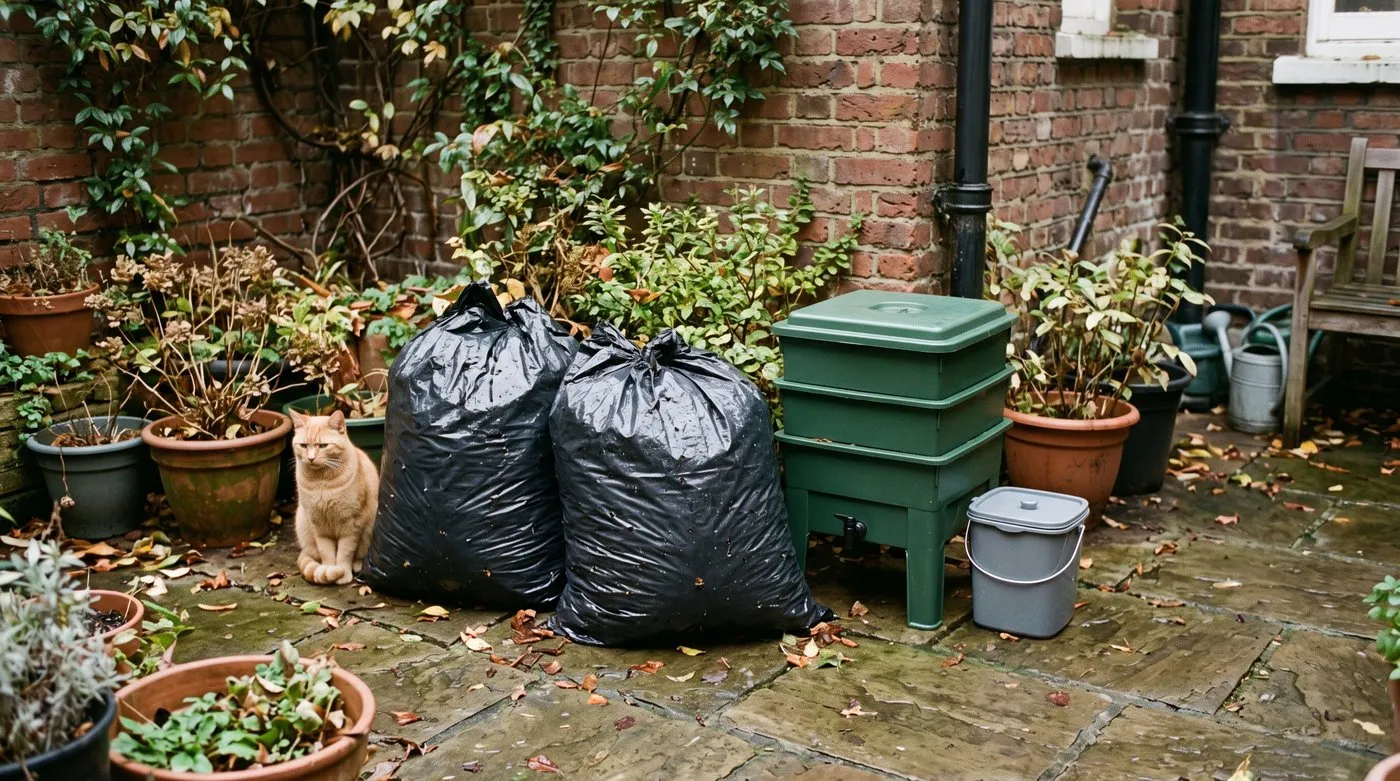
No room for a heap? Bagged leaves and a wormery fit into the smallest garden.
Bokashi. A sealed bucket that ferments kitchen scraps, including cooked food. The result is then buried or added to a heap.
Wormery. Worms turn kitchen waste into rich compost and liquid feed. Handy for small gardens.
Composting through the year
| Season | Cold heap | Warm heap | Hot heap |
|---|---|---|---|
| Spring | Add weeds and trimmings | Start turning again | Build a heap as growth starts |
| Summer | Water if dry | Turn monthly, keep damp | Best time, it heats fastest |
| Autumn | Add leaves and clear-outs | Add leaves, start a new bay | Build with leaves and clear-out waste |
| Winter | Leave it be | Cover it | Insulate, or wait for spring |
Common composting mistakes
Too many greens. A heap of only grass goes slimy and smelly. Mix in browns.
Letting it dry out. A dry heap just sits there. Water it as you turn.
Building a hot heap too small. Under about 1m across, it won’t hold the heat.
Adding cooked food. It brings rats. Use a bokashi bin for scraps instead.
Trusting a heap to kill everything. Keep club root and perennial roots out, however hot it gets.
Frequently asked questions
What is the difference between cold and hot composting?
Cold composting is slow and easy, while hot composting is quick but needs work. A cold heap is added to gradually and left alone. A hot heap is built in one go with plenty of greens and browns, then turned often so it heats up and breaks down in a few months.
How long does compost take to make?
From a few months to two years, depending on the method. A well-run hot heap can be ready in a few months in summer. A heap turned every month or so takes about six months to a year. A cold heap often takes a year or more, and everything slows in winter.
What is the best brown to green ratio for compost?
Roughly equal greens and browns by volume, or a bit more brown. Browns include dry leaves, cardboard and straw. Greens include grass clippings and veg peelings. If the heap is wet and smelly, add browns. If it’s dry and slow, add greens.
Why does my compost smell bad?
It’s usually too wet and short of air. Mix in dry browns such as shredded cardboard, straw or autumn leaves. Turn the heap to let air in, and cover it against heavy rain. The smell usually fades within a few days.
How big does a hot compost pile need to be?
At least about 1 cubic metre. Smaller heaps lose heat too fast, so the middle never gets hot enough. Insulated hot-compost bins can manage smaller amounts. Build it in one go and keep it damp.
Does hot composting kill weed seeds?
A well-run hot heap kills many weed seeds, but not always all of them. The edges stay cooler than the middle, so turn the outside in. Drown perennial weed roots in water first, and keep club root out of any heap.
Once your heap is cooking, read our guide on whether mulch is the same as compost to make the most of it, or find more projects on the how-to hub.
Our team produces practical UK gardening guidance from source research, contributor records and established horticultural practice. Editorial standards are overseen by Matt W.


