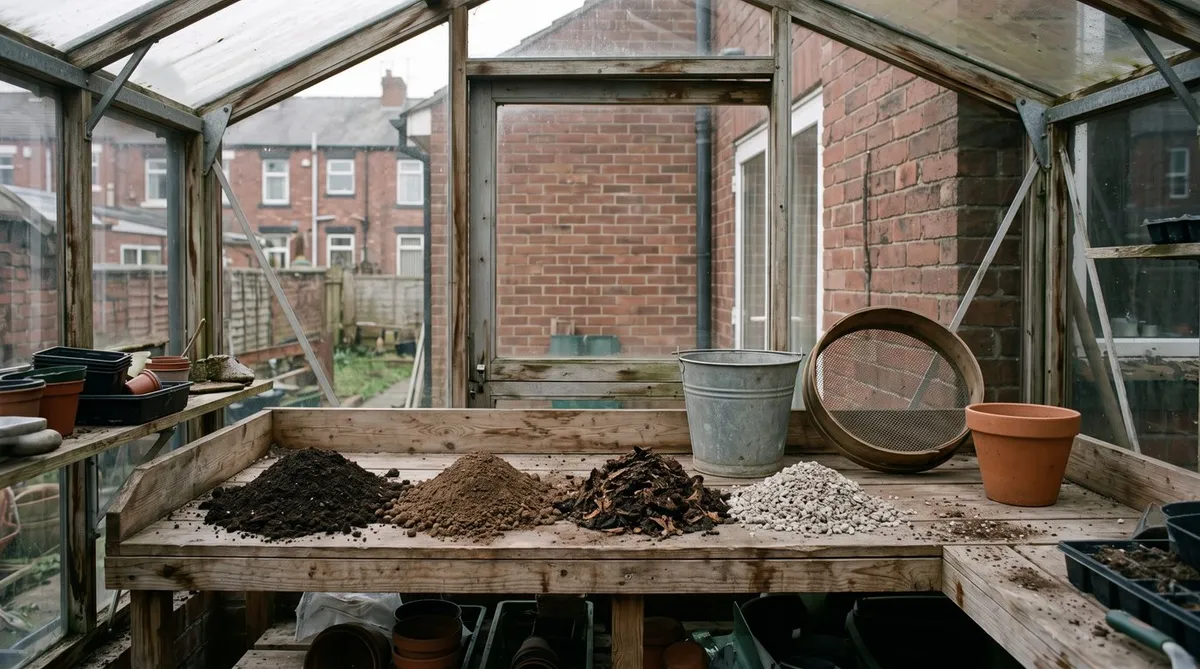
Key takeaways
- A plastic Dalek is cheap and tidy but slow, usually around a year to usable compost
- A heap about 1 cubic metre holds enough warmth to heat up and rot quickly
- Two or three bins or bays let one batch finish while you fill the next
- Tumblers and insulated hot composters are faster and keep rats out
- Wormeries and Bokashi bins suit flats and courtyards
- Stand open bins on bare soil in part shade, with room for a barrow
The best compost bin is the one that fits your space and your patience. A plastic Dalek suits a small garden but is slow. Wooden bays hold enough to heat up and give compost in months. Tumblers and hot composters are quicker still and keep rats out. If you have no garden at all, a wormery or Bokashi bin will do the job.
This guide compares the main types, then covers where to put your bin and how to build a free one from pallets. For the composting method itself, see the guide to making compost at home.
Which compost bin type is right for your garden?
Three things decide it: how much space you have, how much waste you make and how quickly you want compost. Here’s how the main types compare.
| Bin type | Rough size | Speed | Best for |
|---|---|---|---|
| Plastic Dalek cone | About 220-330 litres | Slow, around a year | Small gardens, low effort |
| Single wooden bay | About 1 cubic metre | Medium, several months | Medium gardens, lots of garden waste |
| Double or triple wooden bay | 2-3 cubic metres | Fastest of the open bins | Big gardens and allotments |
| Pallet bin | About 1 cubic metre | Medium | Allotments, tight budgets |
| Tumbler | Small to medium | Fast in warm weather | Small gardens, courtyards |
| Insulated hot composter | Small to medium | Fast, even in winter | Kitchen waste, small spaces |
| Wormery | Small | Steady | Flats, balconies, kitchen scraps |
| Bokashi bin | Bucket-sized | Pre-treats scraps in a few weeks | Kitchen waste, including cooked food |
Plastic Dalek bins
The Dalek, a black plastic cone with a lid and a hatch at the bottom, is where most gardeners start. It sits straight on the soil, so worms can move up into it. Many councils sell them at a reduced price, so check your council’s website first.
The catch is size. A Dalek holds far less than a cubic metre, so it rarely gets properly hot. It composts slowly, usually around a year, and often only the bottom layer is ready when you open the hatch.
To get the best from one, chop waste small, mix soft greens with dry browns, and lift the bin off once a year to fork the contents back in. For a steadier supply, run two side by side and fill one while the other finishes.

A Dalek sits straight on the soil so worms can move in. It’s cheap and neat, but slow.
Wooden compost bays
Wooden bays are the best choice if you make lots of garden waste. A bay is an open-fronted timber box, roughly 1m x 1m x 1m, with slatted sides to let air in and a removable front for forking the compost out. The slats let the heap breathe in a way a solid plastic bin can’t.
The real trick is having more than one. In a double bay, you fill one side, then turn it into the empty side when it has heated and started to settle. Turning lets air back in and gets it rotting again, while you start filling the first bay. A triple bay adds a third bay for finished compost to mature, so you always have one filling, one rotting and one ready. The guide to cold, fast and hot composting explains how to build and turn a hot heap.
Bays can be built from gravel boards, scaffold boards or pallets.

Three bays in a row: one filling, one rotting and one ready to use. Turn the heap along the row as it breaks down.
Tumblers and hot composters
Tumblers and hot composters are smaller than bays but quicker, and both keep rats out.
A tumbler is a sealed drum on a stand. You turn it every few days, which lets air in and speeds things up. In warm weather a batch can be ready in a couple of months. Twin-chamber models let one side finish while you fill the other. Because the drum sits off the ground and closes tight, rats can’t get in.
A hot composter is an insulated, lidded bin that holds in the heat the heap makes. It keeps working through winter, when a Dalek has gone cold. Some are designed to take cooked food scraps, so check the maker’s guidance before adding them.
Both cost more than a Dalek, but they suit small gardens and anyone who wants compost quickly.

A tumbler stands happily on paving and keeps rats out. Give it a turn every few days to speed things up.
Wormeries and Bokashi for flats
No garden? You can still compost kitchen scraps.
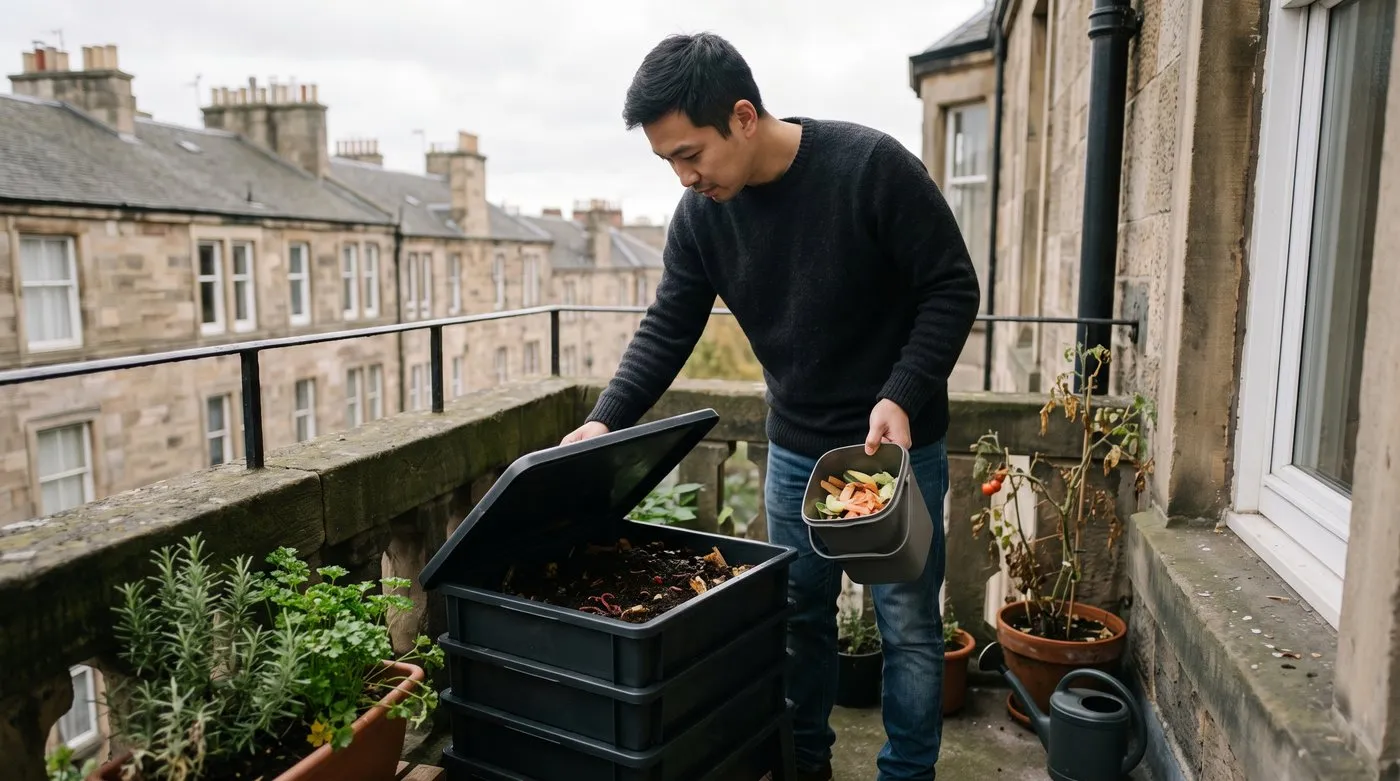
A wormery fits on a shaded balcony and turns kitchen peelings into rich compost and liquid feed.
A wormery uses special composting worms to turn peelings into rich compost and a liquid feed. Keep it somewhere sheltered that doesn’t freeze or bake, such as a shed, porch or shady balcony. The guide to starting a wormery covers set-up and feeding.
A Bokashi bin is a sealed bucket that ferments kitchen waste, including cooked food, using a special bran. After a few weeks you bury the result in a bed or add it to an outdoor bin, where it rots down fast. See the Bokashi composting guide for the method, and composting in a flat to compare the options.
Where to put a compost bin so it works
Where you put a bin matters as much as which one you buy.
- Bare, level soil. Worms and other helpers move up from the soil, and extra water drains away. A bin on paving can turn into a cold, soggy mess. Sealed tumblers and hot composters are the exception.
- Part shade. Deep shade keeps a heap cold. Full sun dries it out. Somewhere with sun for part of the day is ideal.
- Easy access. Leave room to wheel a barrow alongside and swing a fork. A bin squeezed into an awkward corner never gets turned.
Size matters for speed. A heap of around 1 cubic metre holds enough warmth to heat up. Smaller heaps still rot down, just more slowly. That’s why one big bay beats two small bins for speed.
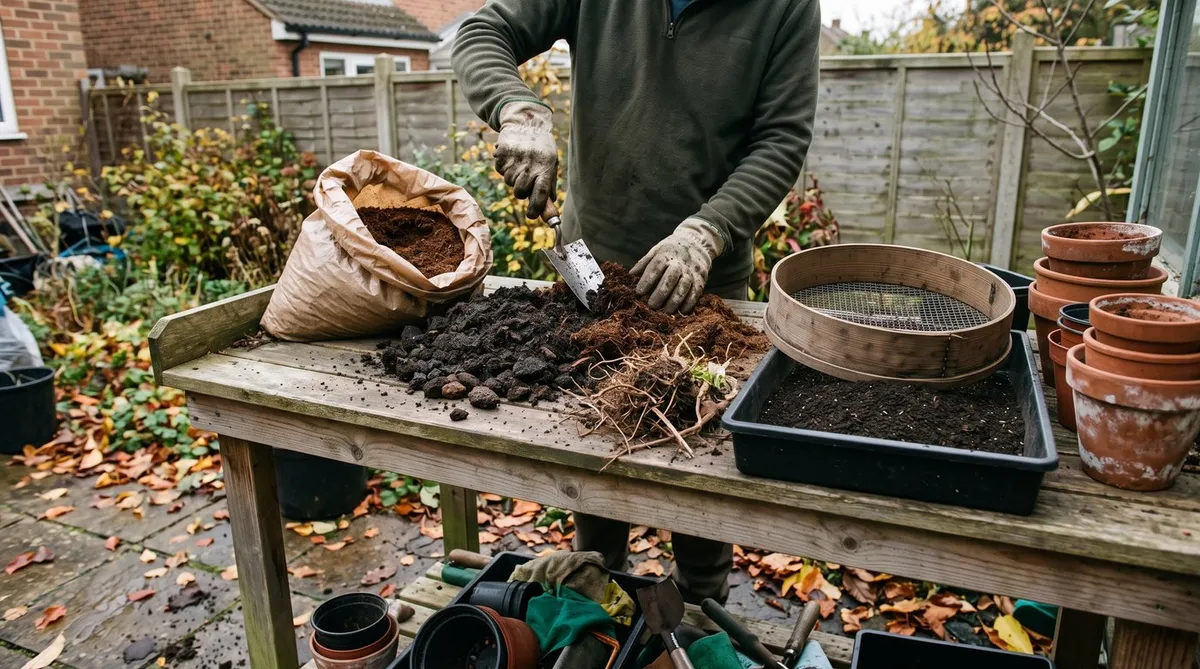
As you fill any bin, mix greens (grass clippings, peelings, soft plant waste) with browns (cardboard, dry leaves, straw, shredded prunings). Roughly equal amounts keeps the heap airy and stops it going slimy.

Layers of soft greens and dry browns keep air in the heap. The dark, crumbly compost forms at the bottom first.
Why two bins beat one
With only one bin, you keep adding fresh waste on top of part-rotted waste. The heap never really finishes. You end up digging crumbly compost out from under last week’s peelings.
A second bin fixes that. Fill the first until it’s full, then leave it to finish while you fill the second. By the time the second is full, the first is often ready. A third bin gives finished compost somewhere to mature. You can mix types too. Run a Dalek for kitchen scraps and a wooden bay for garden waste, and empty the Dalek into the bay when you turn it.
How to keep rats out of a compost bin
Rats come for food, warmth and shelter. Take those away and they’ll look elsewhere.
- Keep meat, fish, dairy and cooked food out of open bins and bays. Never add pet poo either.
- Lay fine galvanised wire mesh under the base of an open bin. Worms and water get through, rats can’t dig up.
- Turn the heap every couple of weeks in the warmer months. Rats don’t like being disturbed.
- Keep it moist. A dry, warm heap makes a cosy nest.
- Fit a lid that closes properly.
If you already have rats, the guide to getting rid of rats in the garden explains what to do next.
How to build a pallet compost bin
Four pallets make a compost bin of about a cubic metre for next to nothing. Use pallets stamped HT (heat-treated). Avoid any marked MB, as they have been treated with the chemical methyl bromide.
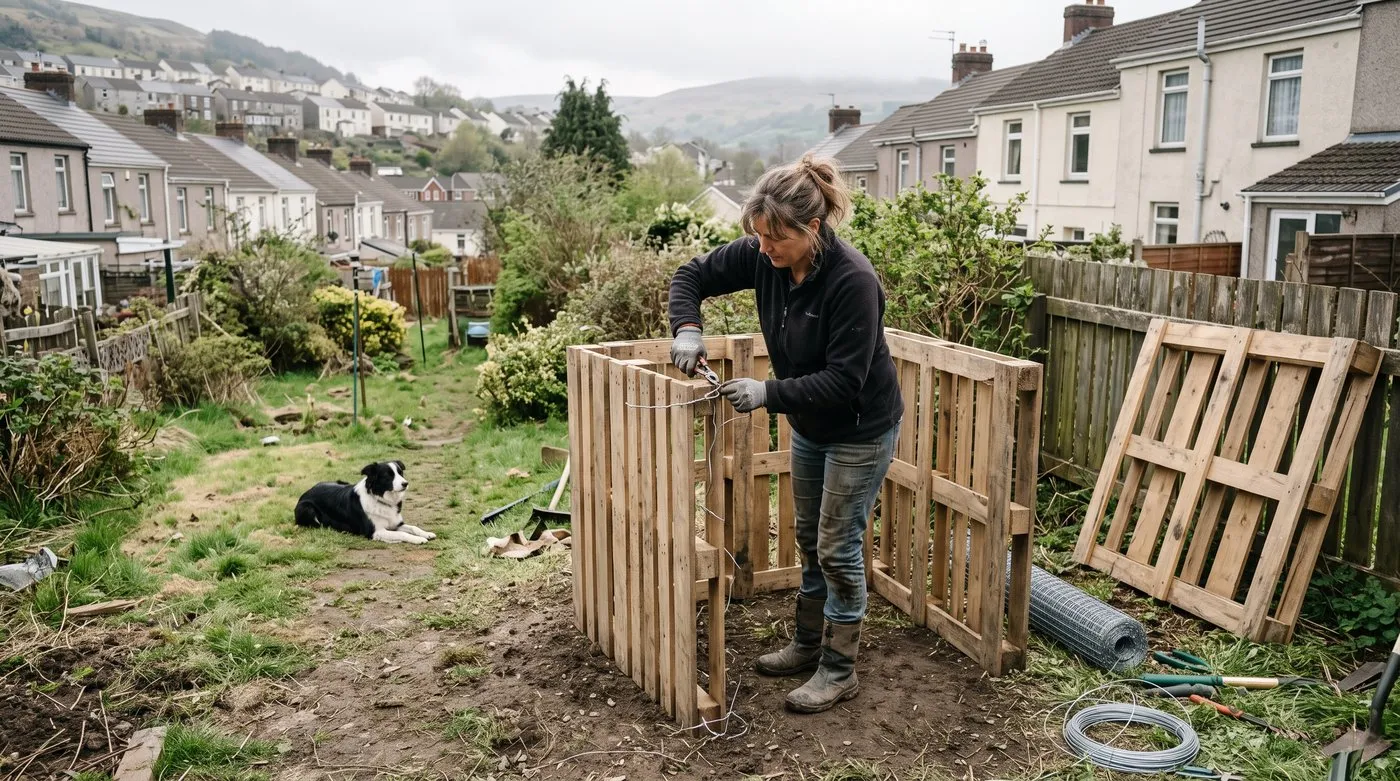
Wire three pallets into a U, add a fourth as a gate, and you have a compost bin for next to nothing.
- Stand the back pallet upright on bare, level soil.
- Add the two side pallets at right angles to make a U shape.
- Fix the corners together with galvanised wire or metal brackets, top and bottom.
- Add the front pallet fixed on one side only, so it opens like a gate. Or leave the front open and slot in loose boards as the heap grows.
- Lay wire mesh underneath first if rats are a problem in your area.
For a double bay, build two boxes side by side sharing the middle pallet.
Gardener’s tip: Matching pallets make a neat cube that’s easy to fill and turn. Builders’ merchants often have spares they’re happy to give away.
Composting through the seasons
Heaps work all year, but much more slowly in winter.
| Season | What’s happening | What to do |
|---|---|---|
| Winter | Cold and slow | Keep adding, cover the heap, add browns to soak up wet |
| Spring | Warming up | Turn the heap to get it going again |
| Summer | Fast, can dry out | Mix grass clippings with cardboard, water a dry heap |
| Autumn | Slowing, lots of leaves | Empty finished bays, stockpile dry leaves as browns |
Hedgehogs, toads and slow worms like to shelter in heaps, so fork gently and check as you go, especially from autumn to spring. Insulated hot composters keep working through winter. Autumn leaves are best saved in a separate cage or bags to make leaf mould. The guide to making leaf mould shows how.

Finished compost is dark and crumbly and smells earthy. Lumpy bits with twigs and eggshells need more time.
Common compost bin mistakes
- Expecting a small bin to be fast. A Dalek rarely gets hot. Accept it will be slow, or run two.
- Only having one bin. Fresh waste keeps landing on almost-finished compost. A second bin lets one batch finish.
- All greens and no browns. Grass clippings and peelings alone turn slimy and smelly. Mix in cardboard and dry leaves.
- Standing an open bin on paving. It can’t drain and worms can’t reach it. Put it on soil.
- Adding cooked food to an open heap. It draws rats. Use a Bokashi bin or a suitable hot composter instead.
Frequently asked questions
What is the best type of compost bin for a UK garden?
A wooden double bay suits most medium to large gardens. It holds enough to heat up and lets you turn one bay into the next. For a small garden, a plastic Dalek works well. For speed and keeping rats out, choose a tumbler or an insulated hot composter.
How big does a compost heap need to be to get hot?
About 1 cubic metre, filled in one go, is the size to aim for. Smaller heaps lose warmth faster than they make it, so they rot slowly. A bay roughly 1m x 1m x 1m, filled with a good mix of greens and browns, can heat up within days.
Are plastic Dalek compost bins any good?
Yes, they are cheap, tidy and easy, but slow. They rarely get hot, so compost usually takes around a year. They suit small gardens and a steady trickle of kitchen and garden waste. Many councils offer them at a reduced price, so check your council’s website.
Do compost tumblers work better than bins?
Tumblers usually make compost faster and keep rats out. Turning the drum every few days lets air in, so a batch can be ready in a couple of months in warm weather. They hold less than a bay, though, and you have to stop adding while a batch finishes.
How do I stop rats nesting in my compost bin?
Keep food scraps that attract rats out and make the bin hard to get into. Never add meat, fish, dairy or cooked food to an open heap. Stand the bin on fine galvanised wire mesh, turn the heap regularly and keep it moist. Sealed tumblers and hot composters keep rats out best.
Where should I put my compost bin?
On bare, level soil in part shade, with room to get a barrow alongside. Soil lets worms move in and water drain away. Part shade stops the heap drying out in summer. Sealed tumblers and hot composters can stand on paving.
Your heap can help wildlife too. The guide to composting for wildlife shows how to make it a haven for hedgehogs, toads and slow worms. For more practical guides, browse the how-to hub.
Our team produces practical UK gardening guidance from source research, contributor records and established horticultural practice. Editorial standards are overseen by Matt W.