Key takeaways
- Bokashi takes all food waste, including cooked food, meat and dairy, and fits under a sink
- Bokashi output needs two to four weeks in a tub of old compost before plants can use it
- A wormery makes the best plant food but only takes raw fruit and veg scraps
- Keep a balcony wormery shaded in summer and above freezing in winter
- The council food caddy is the no-effort option, but you get no compost back
- Most smells and fruit flies come from overfeeding or uncovered food, not the system
Yes, you can compost in a flat with no garden at all. The three easy routes are a bokashi bin under the sink, a wormery on the balcony and your council’s food caddy. Each suits a different kind of household, and plenty of people use two together.
This guide is for one household in a flat or a home with no soil. It compares the options, then shows how to use what comes out. If you’d rather share a big heap with your neighbours, see the guide to starting a community composting scheme.
Which flat composting system suits you?
Pick bokashi if you cook a lot, a wormery if you grow in pots, and the caddy if you want no effort. Here is how they compare.
| Bokashi bin | Wormery | Council caddy | |
|---|---|---|---|
| Takes cooked food, meat, dairy | Yes | No | Yes |
| Where it goes | Under the sink or in a cupboard | Shaded balcony, porch or shed | Kitchen, then kerbside |
| What you get back | Pickled waste to finish in soil, plus liquid feed | Worm casts and liquid | Nothing |
| Effort | A minute a day | A few minutes a week | Put it out on bin day |
| Main worry | Too little bran | Heat, frost and overfeeding | None |
Every system here moves house with you, which suits renters. If you rent, the ideas in rental garden ideas go well with it.
Using the council food caddy
The simplest route is the council food caddy. Most councils now collect food waste every week, and it goes off to be composted or turned into energy at a large site. Check your council’s website if you haven’t been given one.
The catch is that nothing comes back to you. If you grow anything at all on a balcony or windowsill, a home system gives you free plant food as well.
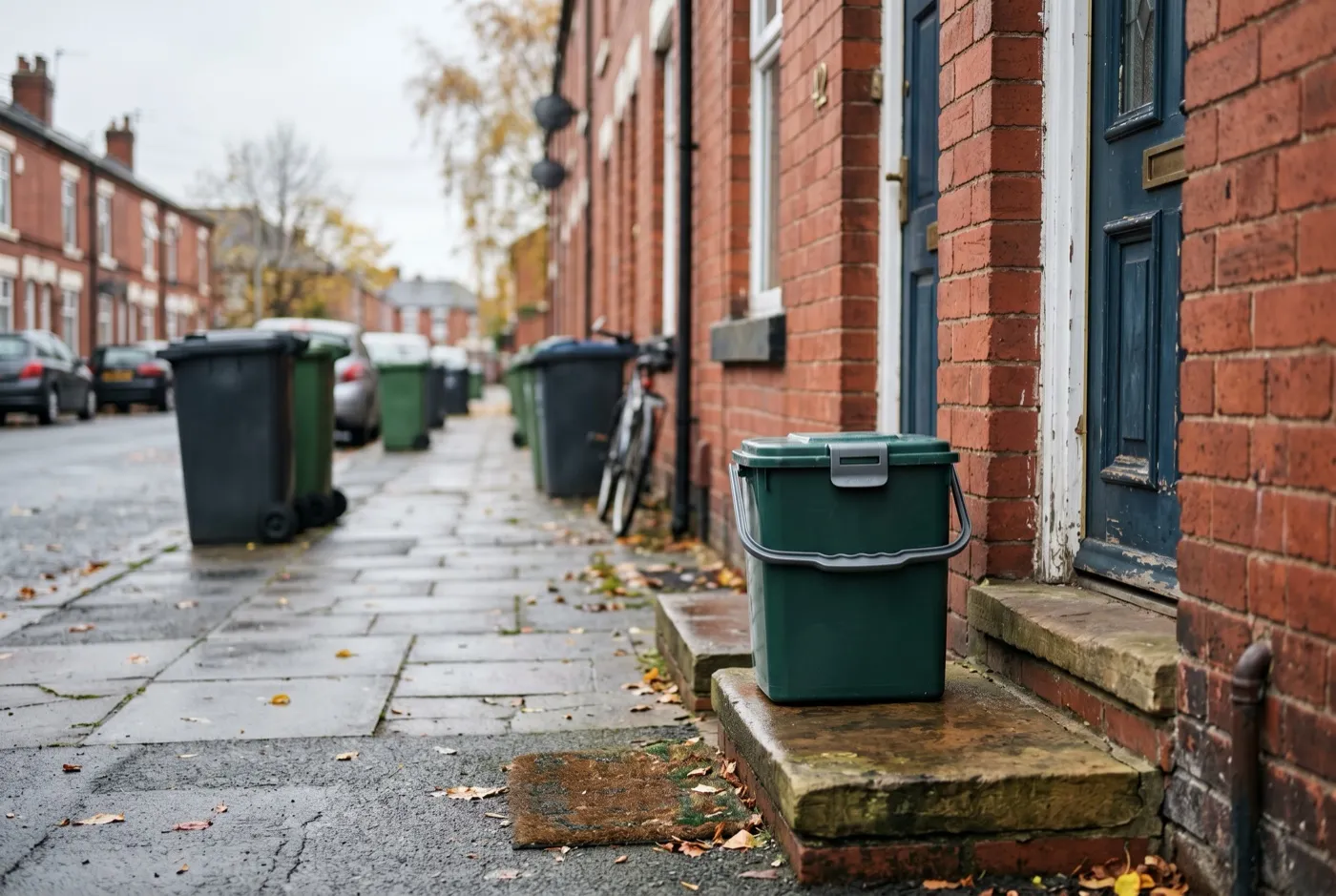
The council caddy takes everything with no effort, but none of the compost comes back to you.
How a bokashi bin works in a small kitchen
Bokashi pickles food waste rather than rotting it. You put scraps in a sealed bucket, sprinkle each layer with a handful of bokashi bran, press it down and close the lid. The bran contains friendly microbes that ferment the waste.
Because it is sealed and sour, bokashi happily takes cooked food, meat, fish, cheese and bread. No other home system can.
- Use two buckets. Fill one while the full one sits sealed for about two weeks.
- Drain the liquid. Run off the juice from the tap every couple of days. Dilute it heavily before using it on plants.
- Press out the air. Air pockets are what turn a batch bad.
The bokashi composting guide covers the full bucket routine.

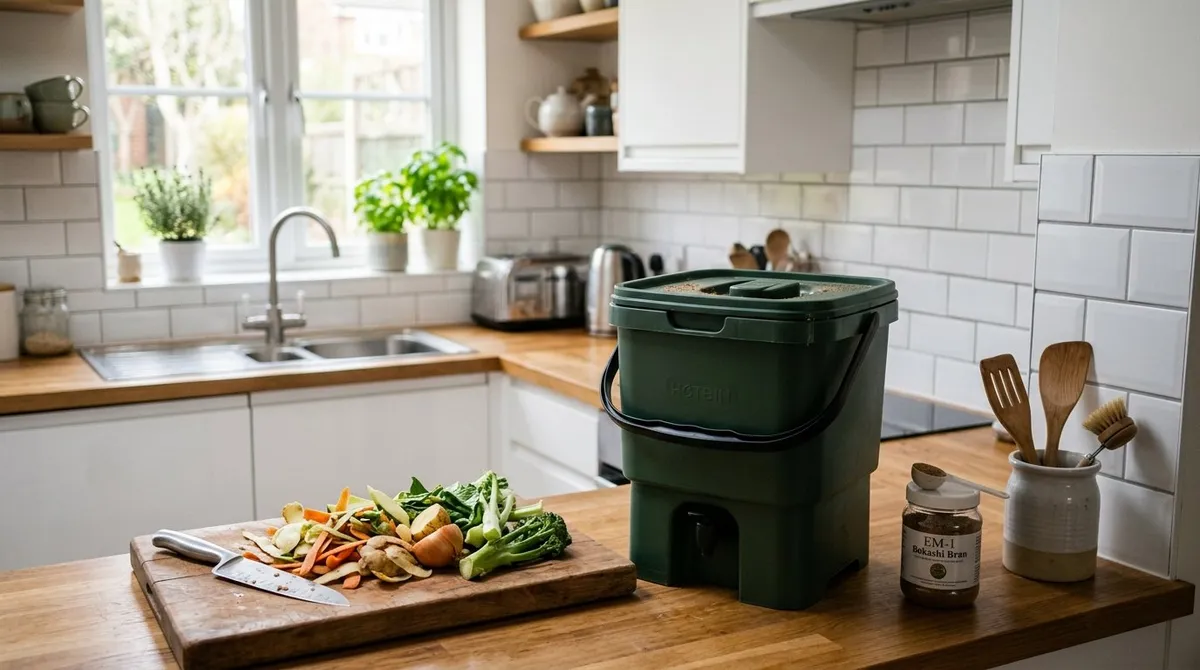
A bokashi bin sits happily on the worktop or under the sink. Peelings go straight in with a handful of bran.
How a wormery works on a balcony
A wormery is a bin of composting worms that eat your raw scraps and leave behind worm casts, a rich, crumbly plant food. You need tiger worms, also called brandling worms, from a supplier. Garden earthworms won’t live in a bin.
Feed them raw fruit and veg peelings, tea leaves, coffee grounds and torn cardboard. Avoid meat, dairy, cooked food and lots of citrus or onion.
Worms like it cool and damp, not hot or frozen. On a balcony, keep the bin out of full summer sun. In winter, wrap it up or move it into a porch, shed or cupboard. The guide to starting a wormery walks you through bedding and the first feeds.
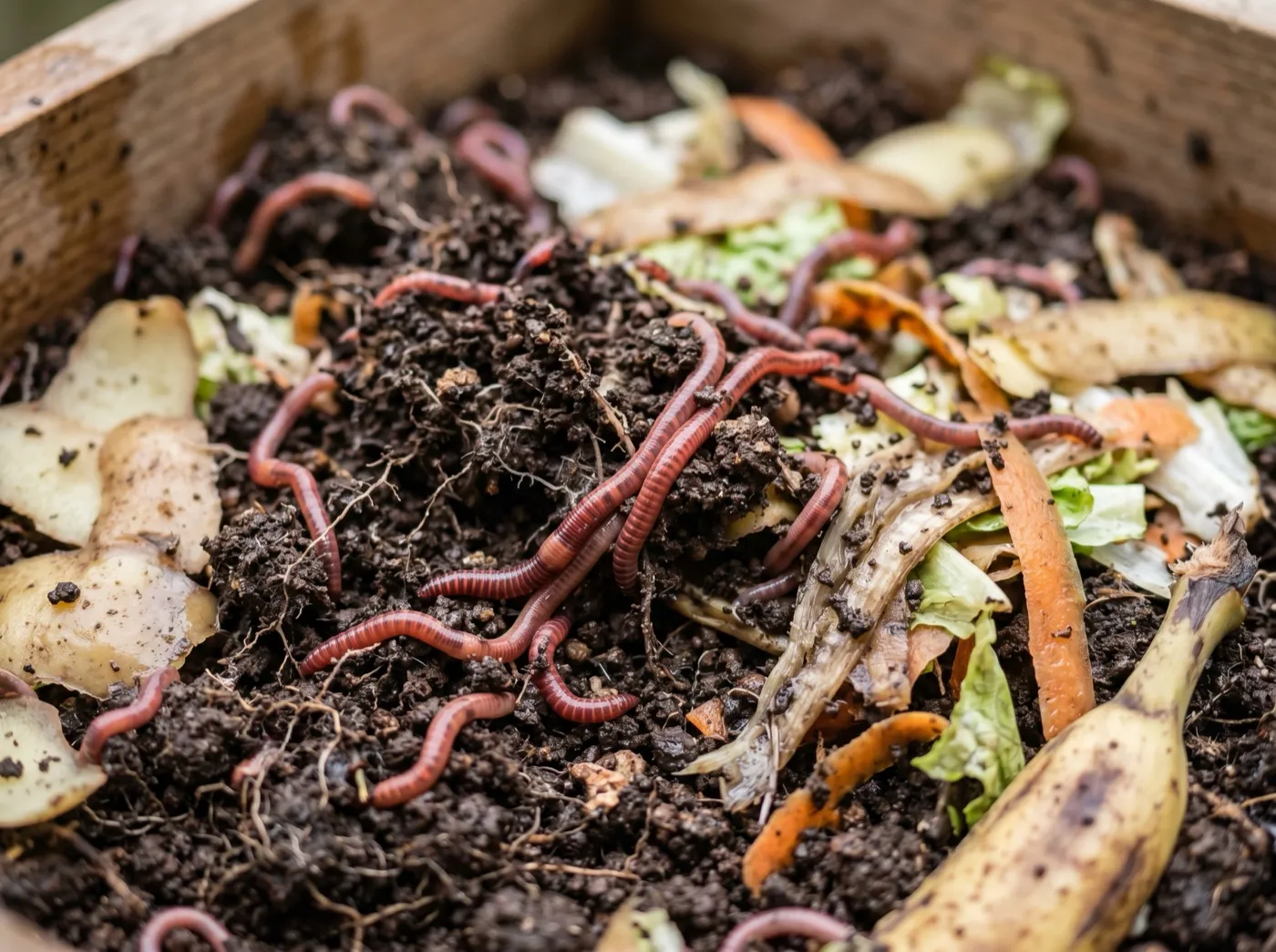
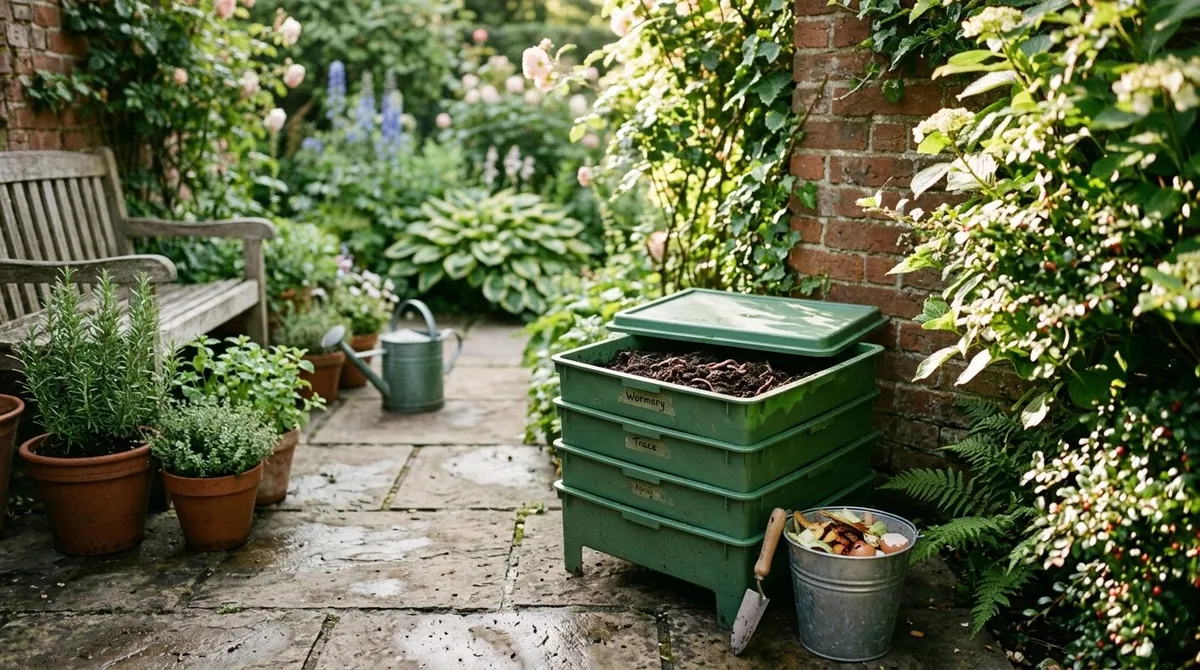
Tiger worms have tell-tale stripes. They are the right worms for a wormery, unlike garden earthworms.
How to finish bokashi in a soil factory
Fermented bokashi isn’t ready for plants straight from the bucket. It is acidic and can harm roots. Finish it in a soil factory, a lidded tub of old compost.
- Half-fill a large lidded tub with old or spent compost.
- Tip in the fermented bokashi and mix it through.
- Cover with more old compost and put the lid on.
- Leave it for two to four weeks, longer in winter.
When you can no longer see the scraps, it’s ready to use in pots. The guide to reusing spent compost has more ways to refresh old potting mix.
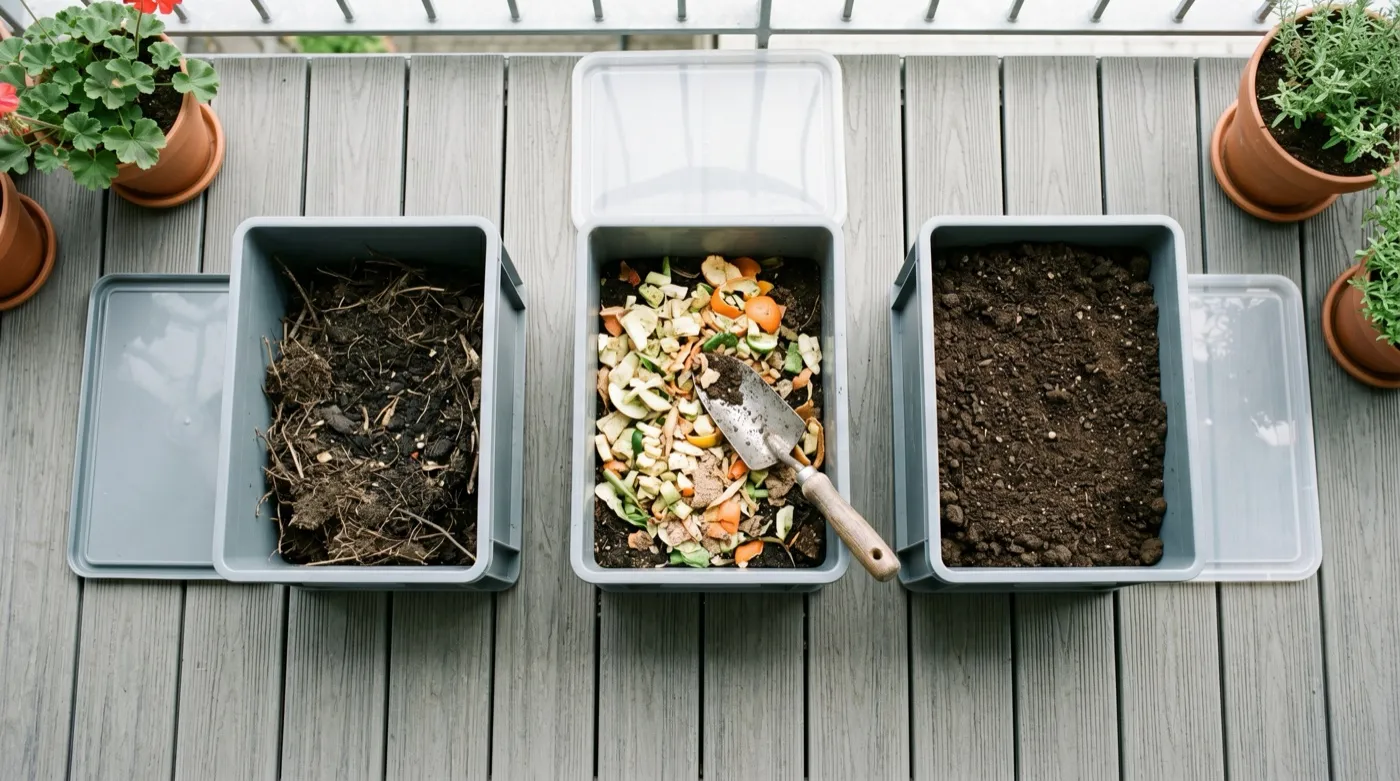
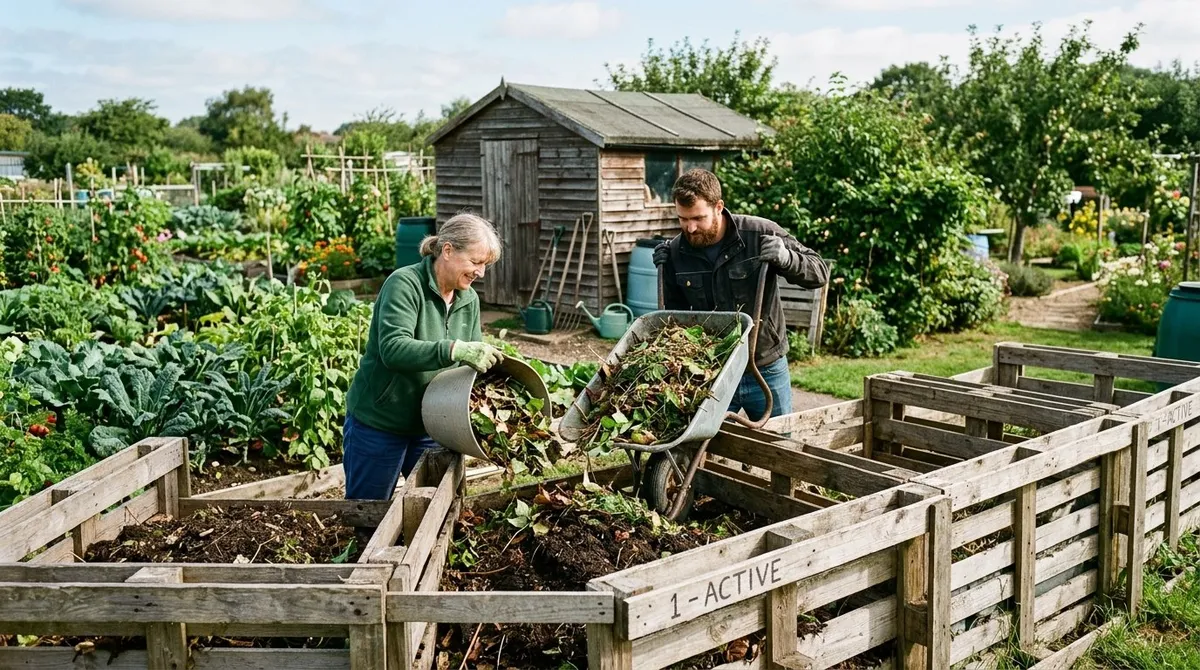
Old compost, fermented bokashi, then crumbly soil a few weeks later. That’s the whole soil factory.
Why flat compost bins smell or get fruit flies
A smelly or fly-ridden bin almost always has a simple cause. Fix the cause rather than masking it.
- Wormery smells sour or rotten. It has too much food and not enough dry bedding. Add shredded cardboard or egg boxes and stop feeding for a week.
- Fruit flies around the wormery. Food is sitting uncovered. Bury each feed and keep a thick layer of damp cardboard on top. Freezing scraps for a day first kills eggs on fruit skins.
- Bokashi smells rotten or grows blue-green mould. It had too little bran, air pockets or undrained liquid. Tip it into the caddy and start again. White mould is fine.
If flies have spread to the fruit bowl, the guide to getting rid of fruit flies has simple traps that won’t harm your worms.
What to do with home compost when you have no beds
Pots, window boxes and houseplants use it up quickly. The amount you make is small, so it soon finds a home.
- Worm casts: Mix a handful into potting compost or spread a thin layer on top of pots.
- Worm liquid: Dilute it until it looks like weak tea and use it as a plant feed.
- Soil factory output: Use it to fill containers for salads and herbs, as in the guide to growing vegetables on a windowsill.
- Extra: Community gardens and allotment holders are usually glad of it.
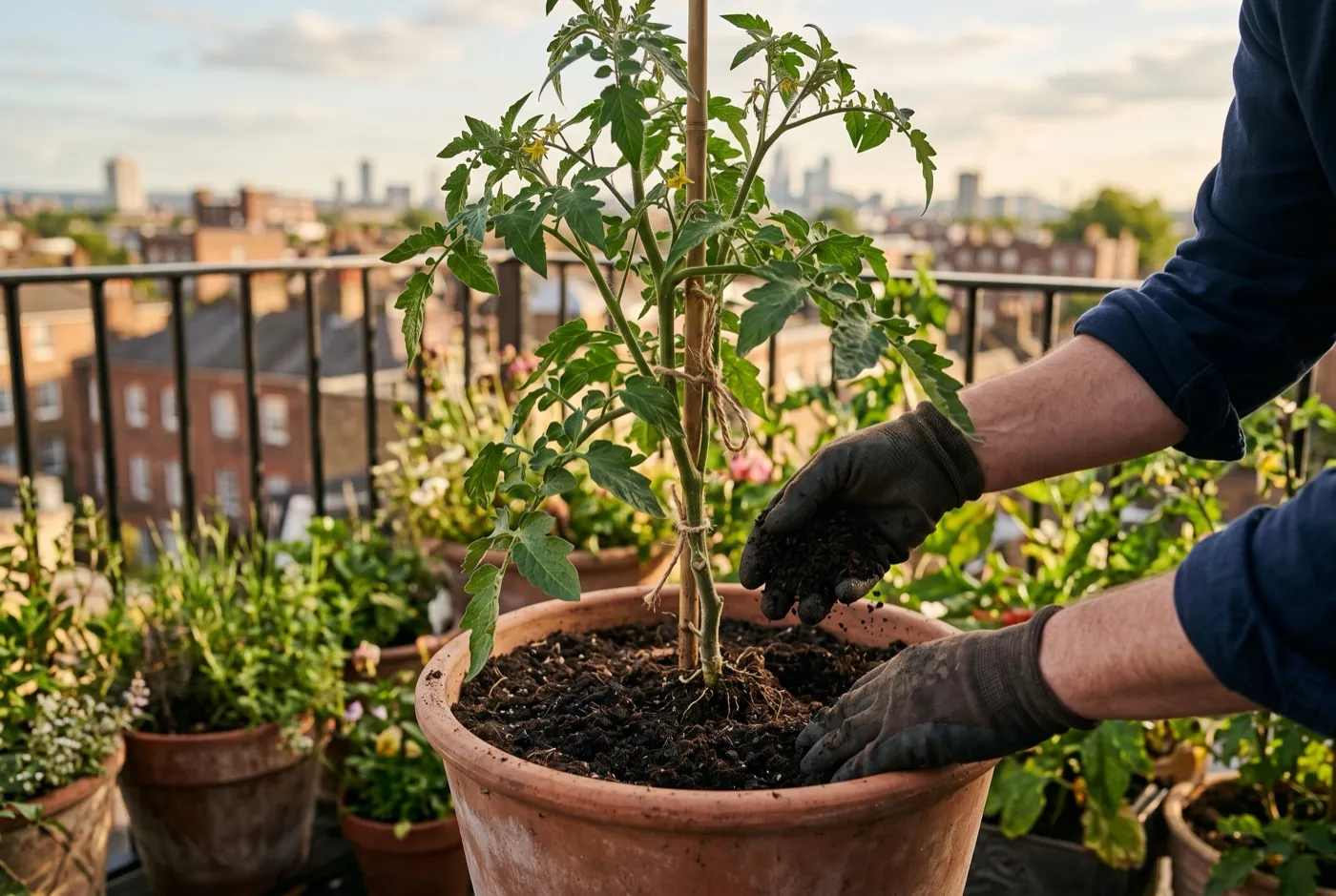
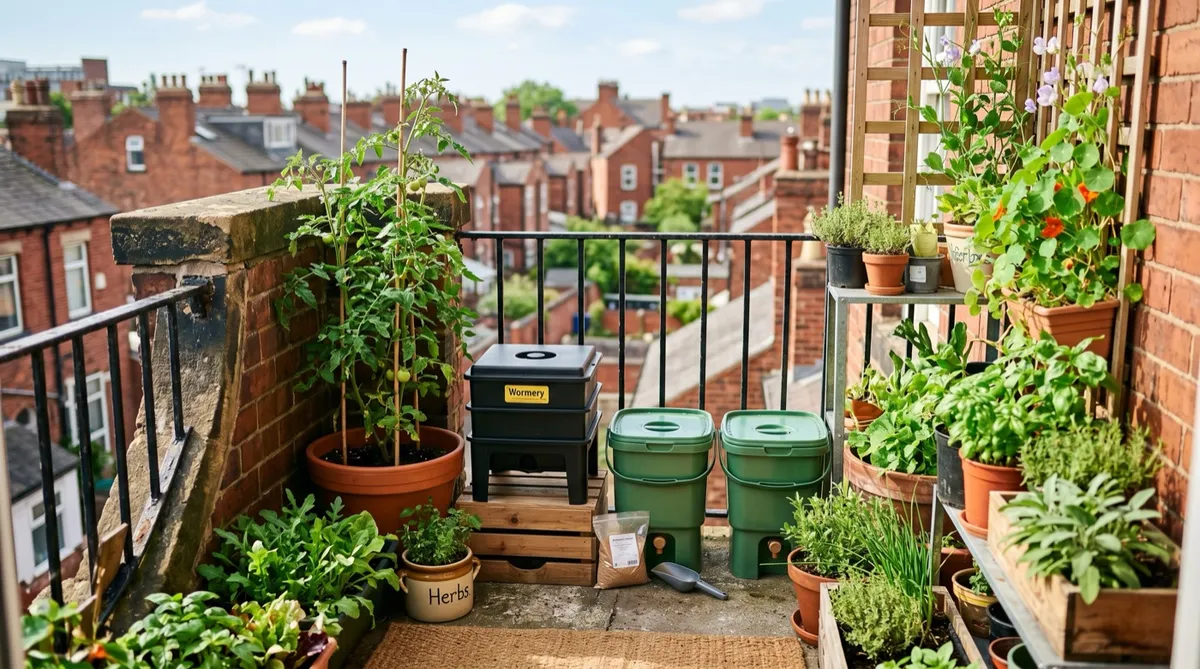
A thin top layer of worm casts gives balcony crops a gentle feed through the summer.
Common flat composting mistakes
- Putting fresh bokashi in pots. It is too acidic. Finish it in a soil factory first.
- Buying one bokashi bucket. You need two, so one can ferment while you fill the other.
- Overfeeding a new wormery. Start small and only add more when the last feed has gone.
- Leaving a wormery in full sun. A hot balcony can cook the worms. Find shade in summer.
- Forgetting to drain the liquid. Waterlogged bins smell. Drain them often.
Once your system is running, you’ll have plenty to feed your pots. The balcony gardening ideas guide is a good next step, and the how-to section has more small-space projects.
Frequently asked questions
Can you compost in a flat without a garden?
Yes, with a bokashi bin, a wormery or a council food caddy. Bokashi fits under the sink and takes all food waste. A wormery suits a balcony or porch and makes the best plant food. The caddy takes anything the other two can’t.
Does a bokashi bin smell?
A healthy bokashi bin smells sour, like pickles. The lid stays shut between feeds, so the smell stays inside. A rotten smell or blue-green mould means the batch has gone wrong. Tip it into the food caddy and start again with more bran.
How many worms do I need to start a wormery?
Most starter packs hold about 500g of compost worms, enough for a small household. Use tiger worms, also called brandling worms, from a wormery supplier. Garden earthworms won’t live in a bin. Feed lightly for the first few weeks while they settle.
What do I do with bokashi pre-compost if I have no garden?
Bury it in a lidded tub of old compost, called a soil factory. Mix the fermented waste through the old compost and leave it for two to four weeks. The result works in balcony pots and containers. Spare material is welcome at most community gardens.
Why does my wormery have fruit flies?
Usually because food is left uncovered on the surface. Bury each feed under the bedding and cover it with a thick layer of damp shredded cardboard. Freezing scraps for a day before feeding also kills eggs on fruit skins.
Can worms survive winter on a UK balcony?
Yes, if the bin doesn’t freeze. Worms slow right down in cold weather, so feed them less from late autumn. Wrap the bin in old blankets or bubble wrap, or move it into a porch, shed or cupboard.
Our team produces practical UK gardening guidance from source research, contributor records and established horticultural practice. Editorial standards are overseen by Matt W.