Key takeaways
- Clear the breeding spot first; a trap alone can't keep up
- Check the fruit bowl, compost caddy, bin base, recycling and drains
- A jar of cider vinegar with a paper cone catches the adults
- In the greenhouse, pick up split and fallen fruit every day
- Fruit flies hover round fruit; fungus gnats run over damp compost
- Spotted wing drosophila is the outdoor fruit fly that damages sound soft fruit
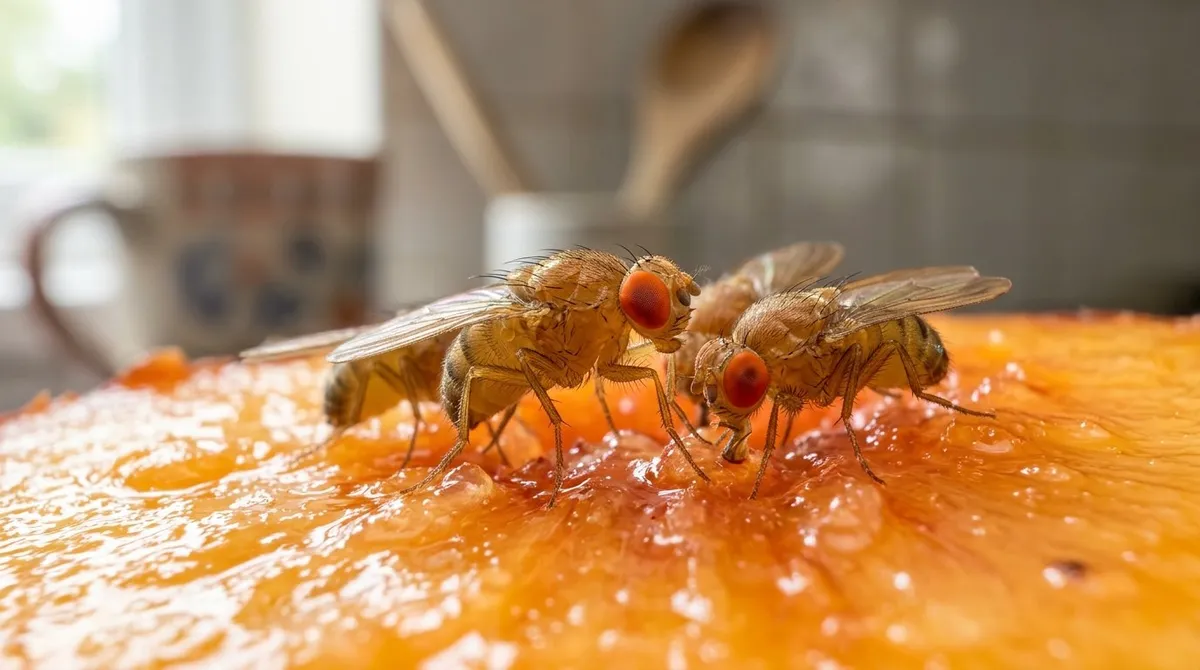
To get rid of fruit flies, find where they’re breeding and clear it, then trap the adults. That’s the whole method. Fruit flies are harmless to you and to healthy plants, but they multiply fast in warm weather and are maddening around the fruit bowl or the greenhouse tomatoes.
This guide covers fruit flies in the kitchen and greenhouse. If your tiny flies are running over houseplant compost instead, you probably have fungus gnats; see the guide to getting rid of houseplant flies.
How to get rid of fruit flies without chemicals
It’s a two-part job: clear the breeding source, then trap the adults. Neither half works well alone.
A trap beside an open fruit bowl can’t keep up, as new flies hatch faster than you catch them. A clean-up without a trap leaves the existing adults circling for days. Do both, and most outbreaks are over within a week or two.
Why fruit flies appear so fast
The common fruit fly is Drosophila melanogaster. In a warm kitchen or greenhouse, it can go from egg to adult in about 8-10 days. In cooler weather the cycle is slower.
Females lay their eggs on fermenting fruit or the slimy film in drains. The tiny larvae feed on the rot for a few days, then pupate and emerge as adults that soon breed again. So a few flies on Monday can become a cloud the following week. That’s why a holiday with fruit left in the bowl can end with a kitchen full of them.
Where fruit flies breed in the kitchen and greenhouse
Fruit flies breed on anything moist and fermenting. The source is almost always closer than you think.
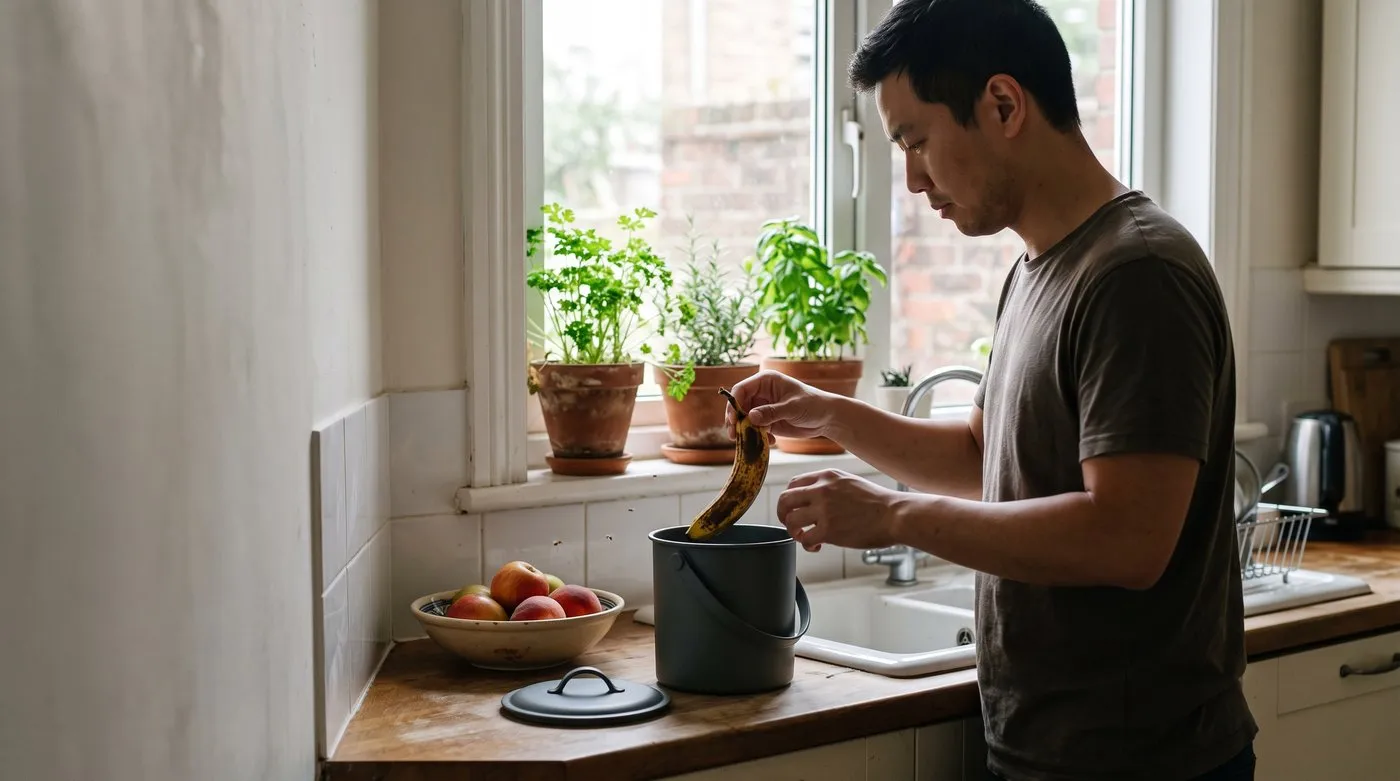
The fruit bowl is the usual culprit. Bin anything over-ripe and keep the rest in the fridge for a while.
In the kitchen, check:
- the fruit bowl, especially bananas, tomatoes and soft fruit
- the compost caddy
- the base of the bin, where juice collects unseen
- unrinsed bottles and cans in the recycling
- sink plugholes and the overflow
- a forgotten potato or onion at the back of a cupboard
In the greenhouse, check:
- split tomatoes on the plant or the floor
- windfall apples, pears or plums
- open water butts or buckets with scum on top
- a compost caddy or heap close to the door
Split tomatoes are a big one under glass, as ripening fruit cracks in the heat and the flesh soon ferments. The guide to tomatoes splitting on the vine explains how to stop the cracking.
Clear the source first
Clearing the breeding spots is the step that actually ends an outbreak. Work through them one by one.
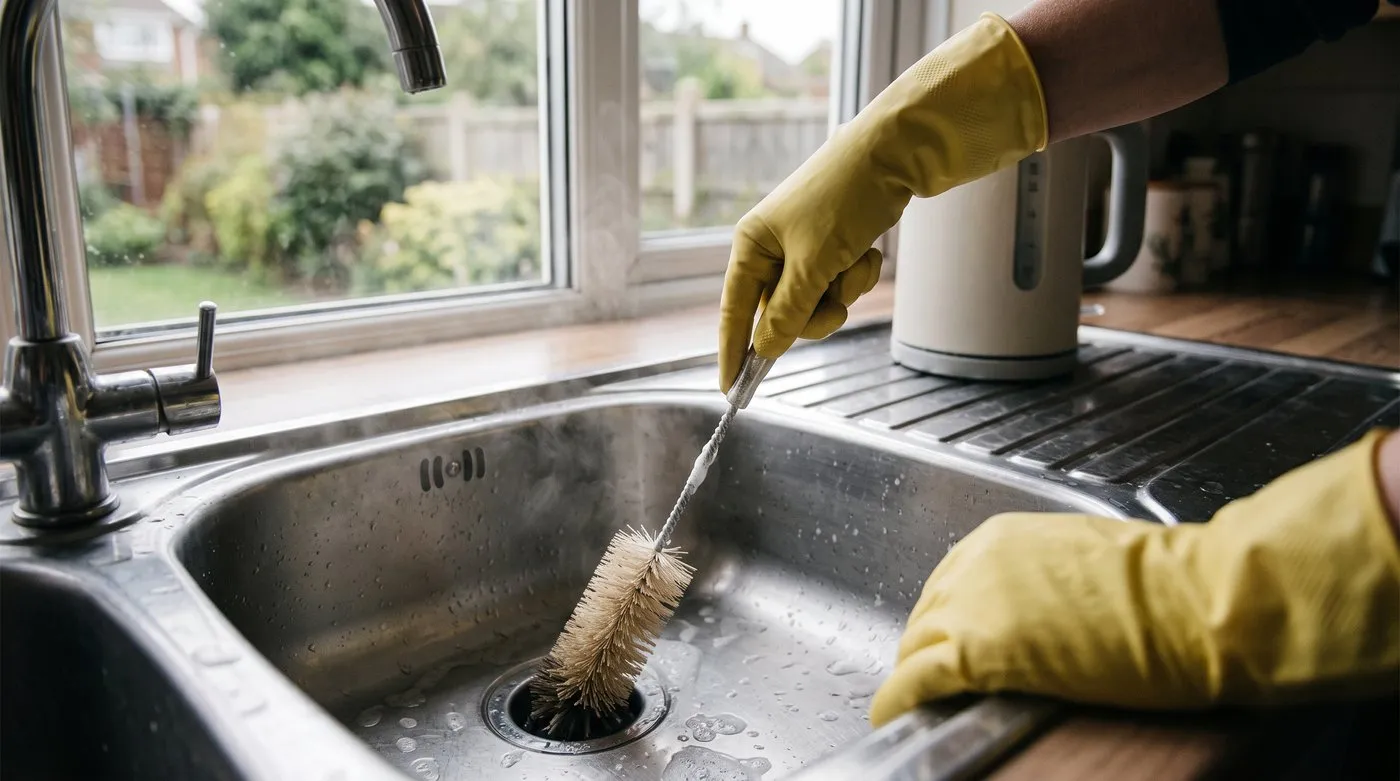
Drains are the breeding spot most people miss. A hot-water rinse and a scrub clears the film flies breed in.
- Bin or eat over-ripe fruit. Keep the rest in the fridge for a while.
- Empty and wash the compost caddy, and keep its lid on.
- Clean the bin base and rinse bottles before they go in the recycling.
- Clean the drains. Pour a kettle of hot water down the plughole, scrub with a bottle brush, and clean the overflow too.
- Check cupboards for sprouting or rotting potatoes and onions.
Drains are the spot people miss most. Fruit flies can breed in the thin film of gunk inside a plughole. A weekly hot-water rinse and scrub keeps it clear.
How to make a cone-jar fruit fly trap
The best trap is a jam jar of cider vinegar with a paper cone pushed into the neck. Flies smell the vinegar, walk down through the small hole at the tip and struggle to find their way out. It takes ten minutes. The steps are in the how-to box above, and here’s why each part matters.
- Cider vinegar smells like fermenting fruit, which is what the flies are after.
- One drop of washing-up liquid stops flies walking off the surface. More just makes froth.
- The paper cone with a small hole at the tip makes escape hard.
- Sealing the rim stops flies slipping out round the edge.
Put the trap right next to the worst spot. Empty and refill it every 2-3 days, as a stale trap stops working. In a bad outbreak, use two or three traps. An open jar without a cone still catches some flies, just not as many. Yellow sticky traps aren’t much use for fruit flies, which follow smell rather than colour.
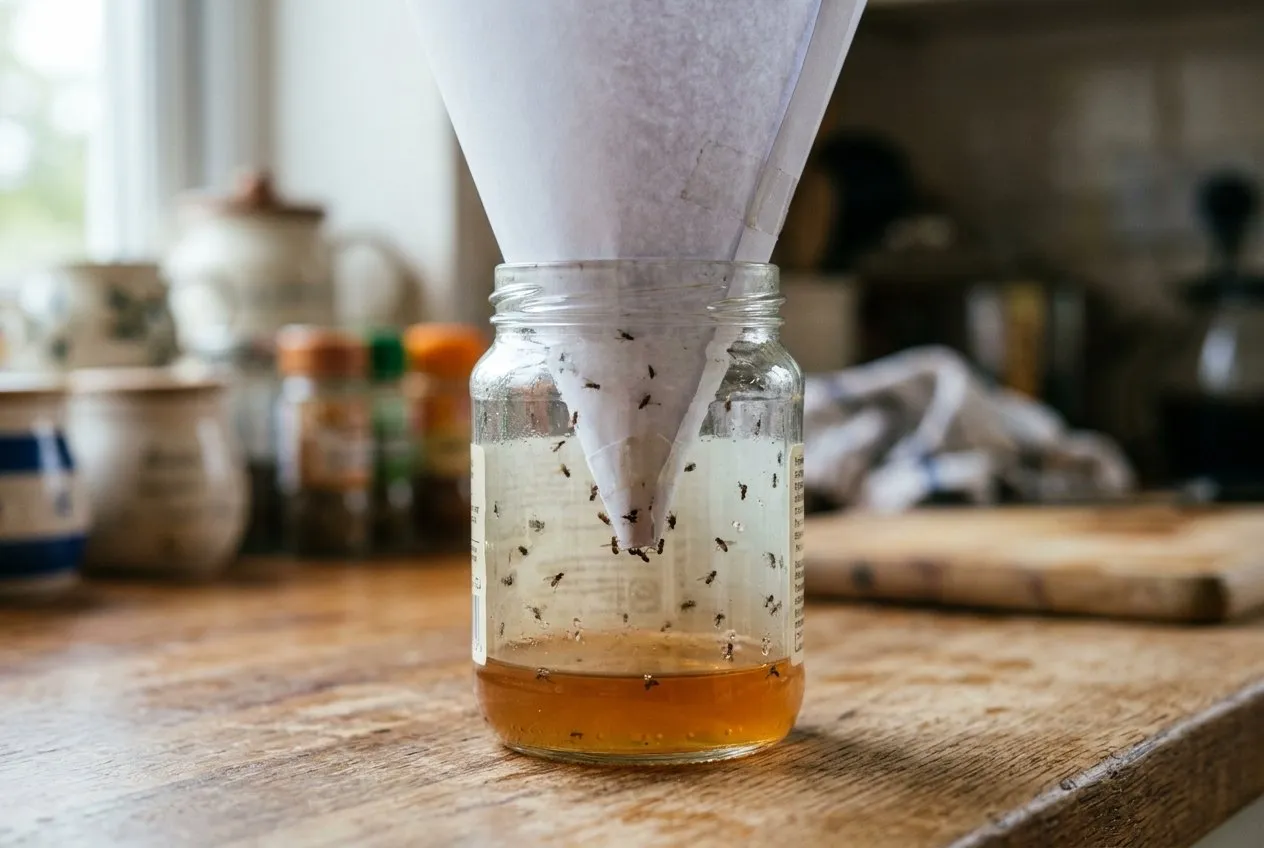
The cone-jar trap in action. Flies walk down through the hole at the tip and can’t find their way back out.
Getting rid of fruit flies in the greenhouse
In the greenhouse, beat fruit flies with tidiness rather than sprays. The heat that ripens your tomatoes also speeds up the flies’ life cycle, and there’s often plenty of fallen fruit about.
- Walk round daily and pick up any split or fallen fruit.
- Take windfalls away to a lidded bin or the far end of the compost heap.
- Cover water butts and buckets.
- Ventilate well, as moving air makes the greenhouse less inviting.
- Set a vinegar trap or two on the staging, near the tomatoes and by the door.
Fruit flies don’t harm healthy tomato or cucumber plants. They feed only on rot, so lots of flies usually means some fruit needs clearing up. For other summer greenhouse pests, see the guide to organic greenhouse pest control.
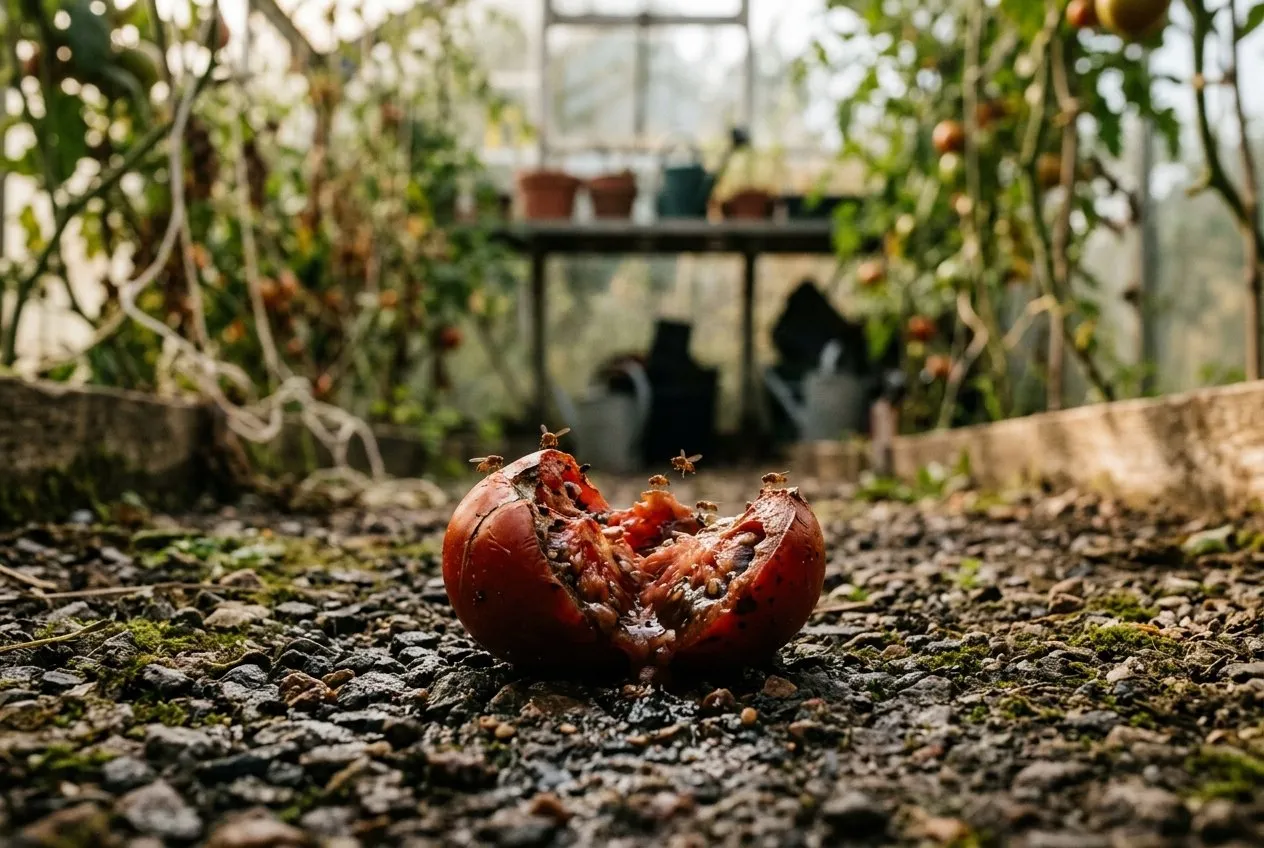
A split tomato left on the floor soon ferments and draws in fruit flies. Pick fallen fruit up every day.
When are fruit flies worst?
| Season | What to expect |
|---|---|
| Spring | Few flies. A good time to clean drains and caddies |
| Early summer | Numbers start to build as kitchens and greenhouses warm up |
| Mid to late summer | The peak. Ripe fruit, split tomatoes and warm rooms all help them |
| Autumn | Windfalls and harvests keep numbers up until the weather cools |
| Winter | Usually quiet, though a warm kitchen with a fruit bowl can still have a few |
Fruit flies or fungus gnats?
Fruit flies and fungus gnats look similar but need different fixes. Mixing them up wastes weeks.
| Fruit flies | Fungus gnats | |
|---|---|---|
| Look | Tan, chunky, red eyes | Dark grey, slim, long legs |
| Where you see them | Fruit bowl, bins, drains | Houseplant pots, seed trays |
| Larvae live in | Rotting fruit, drain gunk | Damp compost |
| Fix | Clean-up and vinegar traps | Drier compost and yellow sticky traps |
If the flies rise off the fruit bowl or bin, they’re fruit flies. If they lift off a pot when you water, they’re fungus gnats, also called sciarid flies. The guide to getting rid of fungus gnats covers the fix for those.
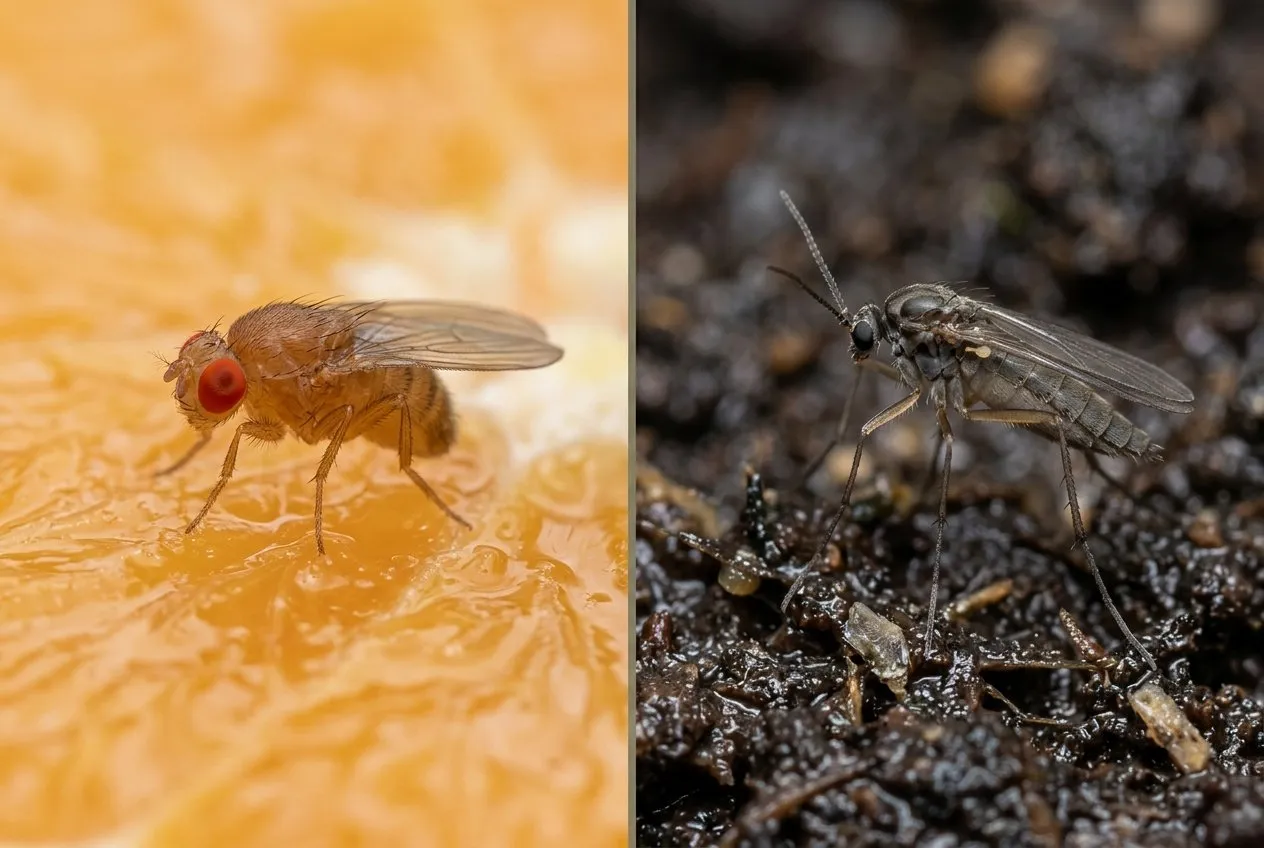
Fruit fly on the left, fungus gnat on the right. The fruit fly is tan with red eyes; the gnat is darker and slimmer.
Spotted wing drosophila: the fruit fly that damages crops
Spotted wing drosophila (SWD) is the one fruit fly that harms healthy fruit. Unlike the kitchen fruit fly, the female can cut into the skin of sound, ripening fruit to lay her eggs. The larvae then feed inside raspberries, blackberries, strawberries, blueberries, cherries and plums. Fruit goes soft and collapses.
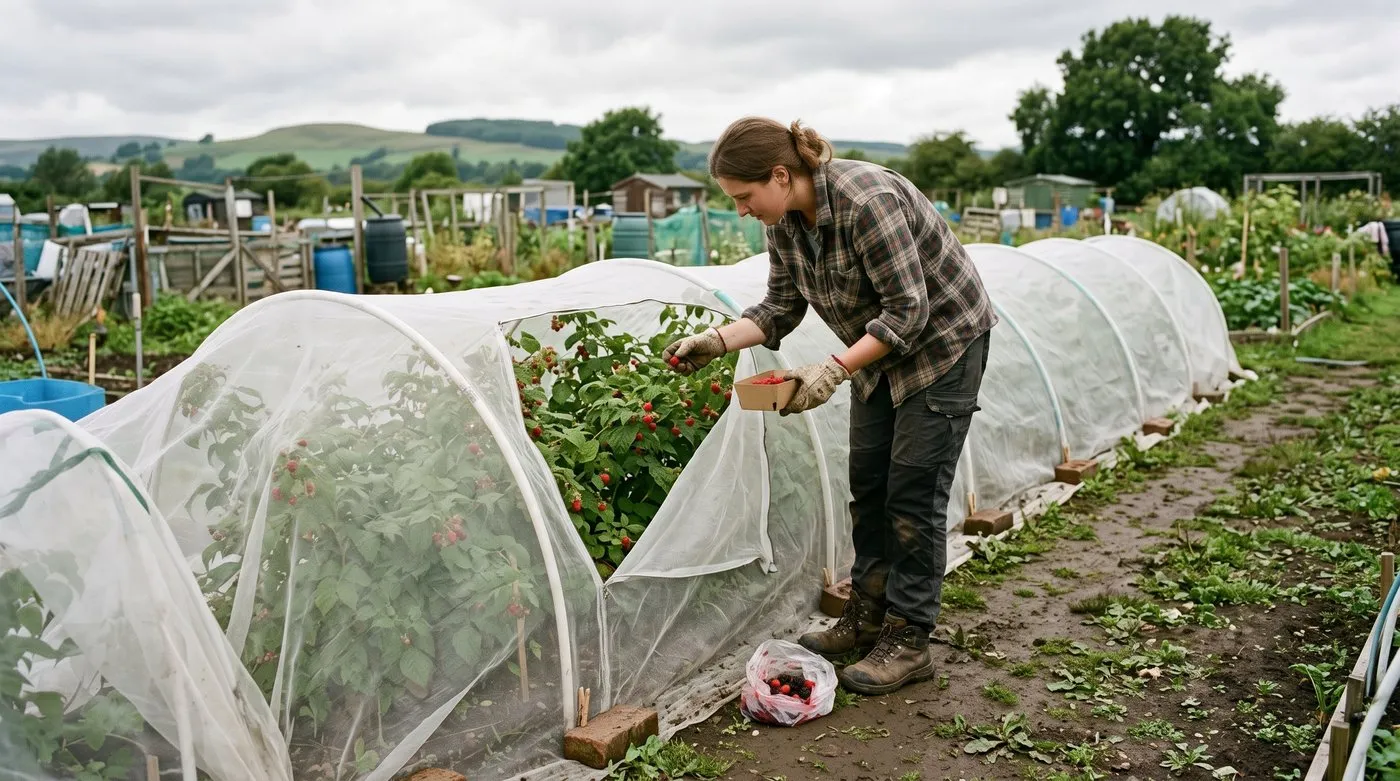
Fine mesh over ripening raspberries and picking little and often are the best defences against spotted wing drosophila.
SWD reached Britain in 2012 and is now widespread. It’s most active from midsummer into autumn. Males have a dark spot near each wing tip, but you’ll usually notice the soft, weeping fruit first.
To protect soft fruit without sprays:
- Cover crops with very fine insect mesh before the fruit starts to colour.
- Pick fruit as soon as it’s ripe, and pick often.
- Clear up fallen or damaged fruit. Bag it and put it in the general waste, not the compost.
The RHS spotted wing drosophila page has the latest advice. The guide to raspberry pests and diseases covers SWD alongside other cane fruit problems.
Common fruit fly mistakes
- Trapping without clearing the source. The flies breed faster than you can catch them. Clean up first.
- Leaving the trap until it goes stale. Refresh it every 2-3 days.
- Forgetting the drain. A slimy plughole can keep an outbreak going after the fruit bowl is clear.
- Using sticky traps. They suit fungus gnats and whitefly, not fruit flies.
- Composting SWD-damaged fruit. The larvae can carry on developing. Bag it and bin it.
Keeping fruit flies away for good
Once the outbreak is over, a few habits keep it that way. Keep ripe fruit in the fridge in hot weather, or only put a day or two’s worth in the bowl. Empty the compost caddy often in summer and keep the lid shut. Rinse bottles and cans before recycling them, and give the drains a hot-water rinse each week.
In the greenhouse, do a quick fallen-fruit patrol each day and keep water covered. The vinegar trap is always there as a quick backstop for the odd flare-up.
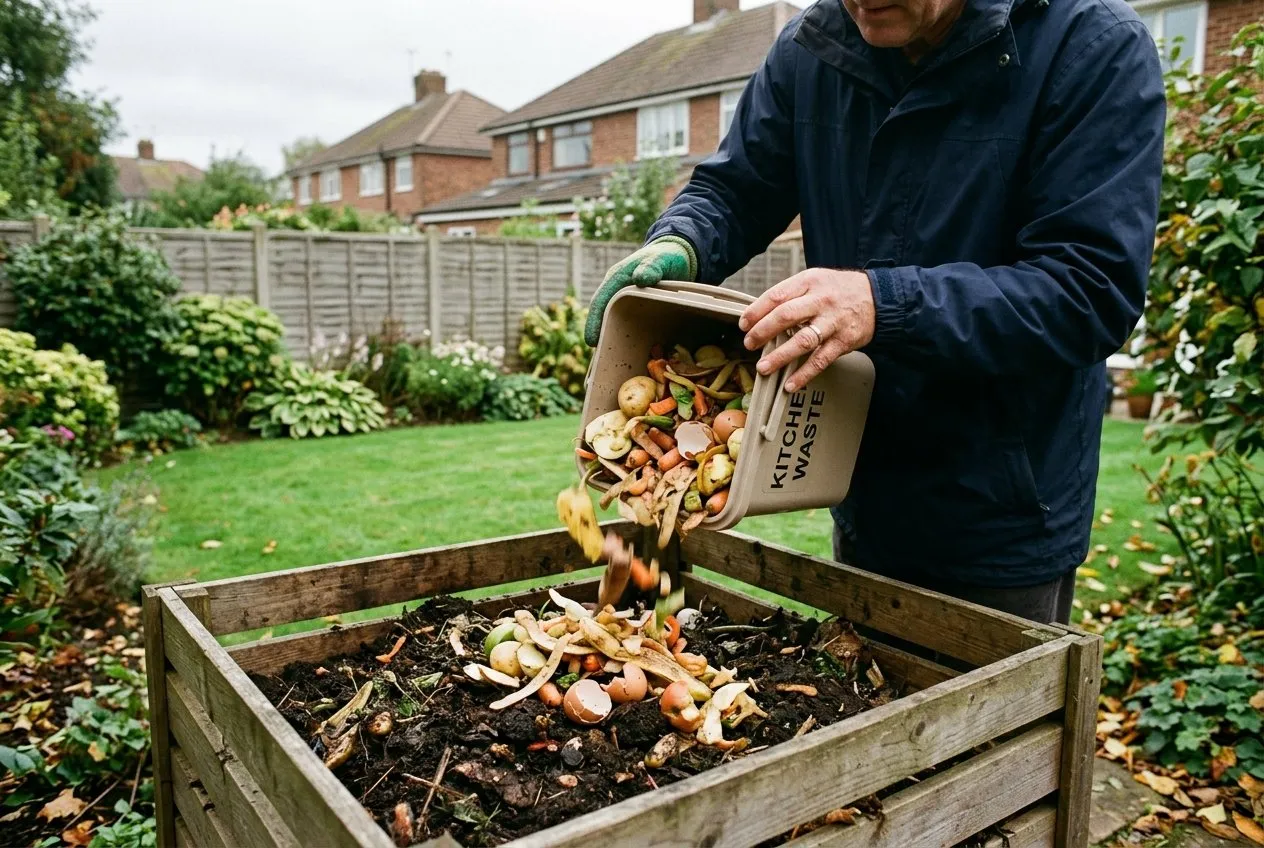
Emptying the kitchen caddy often in summer removes one of the biggest indoor breeding spots.
Frequently asked questions
What is the best homemade fruit fly trap?
A jar of cider vinegar with a paper cone in the neck. The vinegar smells like fermenting fruit and draws the flies in. The cone makes it hard for them to get out, and the drop of washing-up liquid stops them walking off the surface.
How do I get rid of fruit flies fast?
Clear where they’re breeding, then set a vinegar trap. Bin over-ripe fruit, empty the compost caddy and clean the bin base and drain. Once they can’t breed, numbers drop quickly, and a trap mops up the rest. A trap without the clean-up rarely clears an outbreak.
Why do I suddenly have loads of fruit flies?
One breeding spot can produce a swarm within a couple of weeks. In a warm kitchen, fruit flies can go from egg to adult in about 8-10 days. A single over-ripe banana or split tomato is enough to start it. Warm weather speeds everything up.
Are fruit flies the same as fungus gnats?
No, they’re different insects with different habits. Fruit flies are tan with red eyes and hover round fruit, bins and drains. Fungus gnats are darker and thinner, and run over damp compost in pots. Fruit flies need a clean-up and vinegar traps; gnats need drier compost and yellow sticky traps.
Does apple cider vinegar really work for fruit flies?
Yes, it’s a good lure, especially in a jar with a paper cone. The smell draws the flies in. A drop of washing-up liquid stops them walking back off the surface, and the cone makes escape harder.
How do I stop fruit flies in my greenhouse?
Pick up split and fallen fruit every day, and cover any water. Fruit flies breed on rotting tomatoes, windfalls and open compost. Keep the caddy out of the greenhouse, ventilate well and set a vinegar trap or two on the staging.
Do fruit flies harm my greenhouse plants?
No, common fruit flies only feed on rotting fruit, not healthy plants. They’re a nuisance and a sign that fruit needs clearing up. The one to watch outdoors is spotted wing drosophila, which lays eggs in sound, ripening soft fruit.
If your flies are running over seed-tray compost rather than circling the fruit bowl, switch to the guide on sciarid fly control in seed trays, or browse more how-to guides.
Our team produces practical UK gardening guidance from source research, contributor records and established horticultural practice. Editorial standards are overseen by Matt W.


