Key takeaways
- Splitting happens when dry soil is suddenly soaked by rain or a big watering
- Ring-shaped cracks circle the stalk; deeper cracks run from the stalk downwards
- Steady, regular watering is the best way to stop splitting
- A 5cm mulch on borders helps keep the soil evenly moist
- Thin-skinned cherry types such as 'Sungold' split more easily than most
- Pick split fruit promptly and eat it soon; bin any that are mouldy or oozing
Tomatoes split when they get a sudden rush of water after a dry spell. The fruit swells faster than its skin can stretch, and the skin tears. It’s one of the most common tomato problems in late summer, and steady watering prevents most of it.
This guide explains the two kinds of crack, how to water and mulch to stop them, and what to do with fruit that has already split.
Why do tomatoes split?
The fruit grows faster than its skin. When the soil or compost dries out, the fruit slows down and the skin firms up. Then heavy rain or a big watering arrives, the plant takes up water quickly, and the fruit swells. The skin can’t keep up, so it cracks.
This often happens in late summer, when a hot, dry spell ends in a downpour. Plants in grow bags and pots are most at risk, because they dry out so quickly. In greenhouses, a forgotten day of watering in hot weather followed by a big drink has the same effect.
Ring cracks and radial cracks
There are two main kinds of crack:
- Ring cracks (concentric cracks) circle the stalk end of the fruit in curved lines. They are usually shallow and often heal over, so the fruit is fine to eat.
- Radial cracks run from the stalk down the sides of the fruit. They are deeper, can open right into the flesh and let rot get in.
Both come from the same cause: the fruit swelling faster than the skin can stretch. The fix is the same for both.

Ring cracks (left) circle the stalk, while radial cracks (right) run down the sides of the fruit.
How to water tomatoes to stop splitting
Steady watering is the most important thing. Aim to keep the compost or soil evenly moist, never bone dry and then soaked.
In grow bags and pots: water little and often. In hot summer weather that can mean once or twice a day, as the compost dries out fast. Check before you water by pushing a finger into the compost. The growing in grow bags guide has more tips.
In greenhouse and outdoor borders: water thoroughly a few times a week rather than a light sprinkle every day. Light watering only wets the surface. After heavy rain, hold off until the top few centimetres start to dry.
Always:
- Water at the base, not over the leaves.
- Water in the morning so any splashes dry before evening.
- Don’t wait for wilting. By then the swing has already started.
A self-watering system, drip line or capillary matting makes steady watering much easier, especially if you’re away. For heatwaves, the hot weather watering guide has more help.

Watering steadily at the base keeps the compost evenly moist, so the fruit grows at a steady pace.
Mulching to keep soil evenly moist
A mulch on the soil surface slows evaporation and softens the effect of heavy rain. Spread about 5cm of composted bark, well-rotted compost or straw around tomatoes in borders.
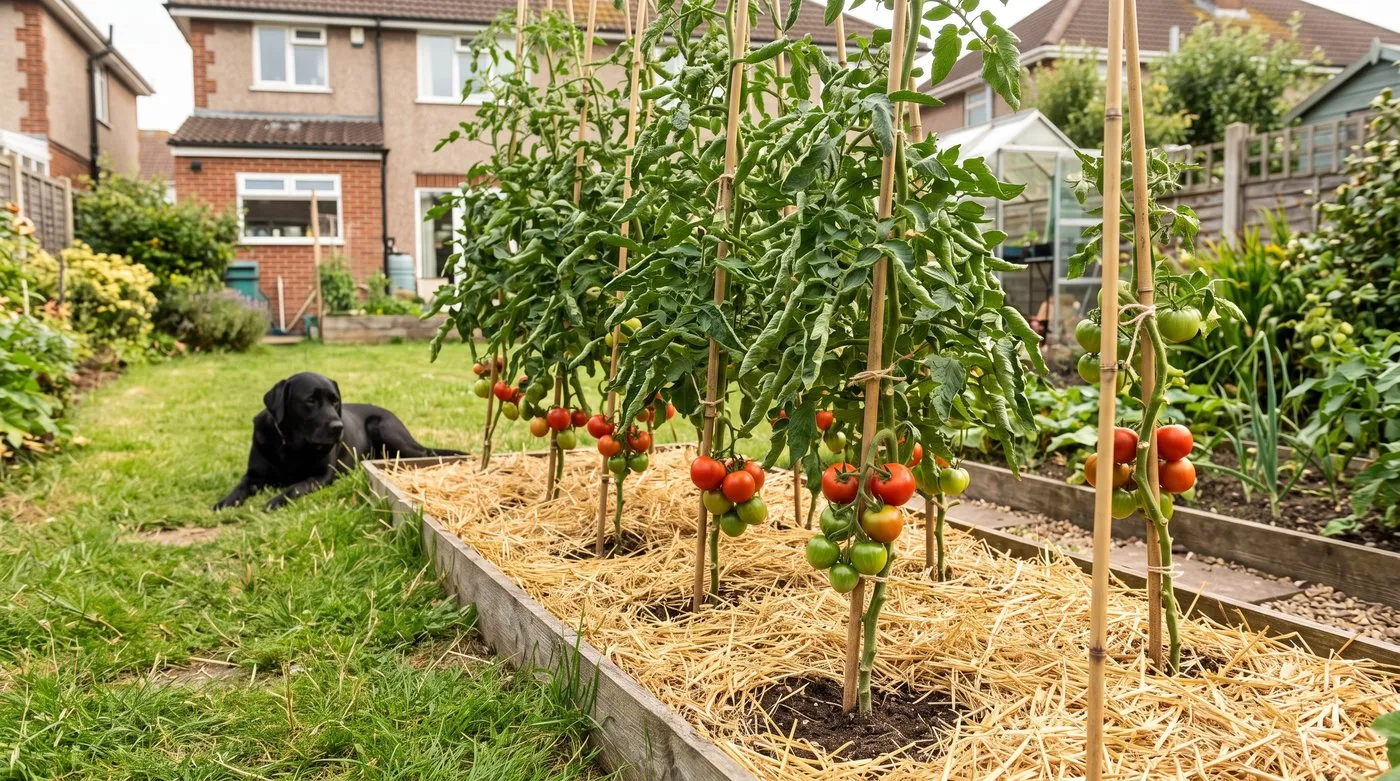
A layer of straw mulch keeps the soil evenly moist between waterings and softens the effect of a sudden downpour.
- Composted bark breaks down slowly and stays put.
- Straw is cheap and works well, though slugs can hide in it in wet summers.
- Grass clippings are free, but use thin layers so they don’t turn slimy.
Mulch in early summer, once the soil has warmed and the first truss has set. Keep it a few centimetres clear of the stems. Grow bags and pots can take a thin layer too.
Which tomato varieties split most?
Some varieties crack more readily than others. Thin-skinned cherry types such as ‘Sungold’ are well known for splitting, but many people grow them anyway for their sweet flavour. Large, fleshy beefsteak tomatoes can be prone to ring cracks.
If splitting is a regular problem, look for “crack resistant” on seed packets and grow a few different varieties. The best tomato varieties guide and the best greenhouse tomato varieties guide compare flavour, growing habit and disease resistance. Whatever you grow, steady watering does more than variety choice.

Thin-skinned cherry tomatoes like ‘Sungold’ split easily. Pick them as soon as they colour if rain is on the way.
Are split tomatoes safe to eat?
Yes, if the crack is clean and there’s no mould. The flesh inside is fine. The risk is that an open crack lets in mould, wasps and fruit flies, so don’t leave split fruit on the plant.
What to do:
- Pick split fruit as soon as you notice it.
- Check the crack. Bin any fruit that is mouldy, slimy, smells off or is oozing.
- Ripen part-red fruit indoors at room temperature, out of direct radiator heat.
- Eat it within a few days. Split fruit doesn’t keep as well as whole fruit.
If a whole truss splits after a storm, cook the fruit straight away into a quick sauce, or roast and freeze it. The garden glut guide has more ideas.
Gardener’s tip: If heavy rain is forecast and your tomatoes are nearly ripe, pick any that are colouring up. They’ll finish ripening indoors without splitting.

Picked fruit ripening indoors. Eat split ones first, as they don’t keep as long.
Common mistakes that cause splitting
- A light sprinkle every day. It only wets the surface. Water thoroughly instead.
- Waiting for wilting. By then the plant is already too dry, and a big drink will split fruit.
- Letting grow bags dry out. They hold little compost, so check them daily in summer.
- Skipping mulch on borders. A mulch evens out dry spells and downpours.
- Leaving ripe fruit on before a storm. Pick colouring fruit if heavy rain is forecast.
- Watering in the evening. Wet leaves overnight encourage disease. Water in the morning.
Tomato splitting calendar
| Month | What to do |
|---|---|
| May-June | Plant out. Set up drip lines or capillary matting if you’re often away |
| Late June | Mulch borders 5cm deep once the first truss has set |
| July | Check grow bags and pots daily. Water before they dry out |
| August | Peak risk. Watch for storms after dry spells. Pick split fruit promptly |
| September | Keep watering steadily as fruit ripens. Pick ripe fruit before heavy rain |
| October | Pick the last fruit and ripen it indoors. Clear plants |
Frequently asked questions
Can I still eat tomatoes that have split on the vine?
Yes, if the crack is clean and there’s no mould. Pick split fruit as soon as you see it and eat it within a few days. Bin any that are mouldy, slimy or oozing.
Why are my tomatoes splitting all of a sudden?
A sudden change in soil moisture is the usual cause. Heavy rain or a big watering after a dry spell makes the fruit swell faster than the skin can stretch, so the skin tears.
Which tomato varieties resist cracking?
Some varieties crack less than others, so check seed packets for crack resistance. Thin-skinned cherry types such as ‘Sungold’ are well known for splitting. Steady watering matters more than variety.
How often should I water tomatoes to prevent splitting?
Often enough that the compost never dries out completely. Plants in grow bags and pots may need watering once or twice a day in hot weather. Border plants need a thorough soak less often, helped by a mulch.
Do greenhouse tomatoes split less than outdoor ones?
They avoid splitting from sudden rain, but missed watering causes it instead. Greenhouses dry out fast in hot weather, so a forgotten day followed by a big drink can split fruit. A self-watering system or capillary matting helps.
For more help with your crop, visit the growing veg hub or the tomato growing guide for beginners. Uneven watering also causes dark patches on the base of the fruit, so read our guide to blossom end rot next.
Our team produces practical UK gardening guidance from source research, contributor records and established horticultural practice. Editorial standards are overseen by Matt W.