Key takeaways
- True clematis wilt is a fungal disease that mostly hits large-flowered hybrids
- Check the stem base first, as drought, slugs and snapped stems look similar
- Cut collapsed stems back to healthy growth, below soil level if needed
- Plant clematis 5-8cm deeper than they were in the pot so buried buds can regrow
- Small-flowered types such as viticella, montana and alpina rarely get wilt
- There is no fungicide for gardeners, so good planting and quick pruning do the work
A clematis that suddenly flops, with shoots turning black from the top, is a heart-sinking sight. The good news is that many plants come back. The first job is to work out what is really going on, because clematis wilt gets blamed for several different problems.
True clematis wilt is a fungal disease that mostly strikes large-flowered hybrids. Drought, slugs at the base and simple snapped stems can look almost the same. Each has a slightly different fix, but the rescue routine is similar for all four. This guide covers how to tell them apart, how to cut back and recover the plant, and how to plant so it can bounce back next time. For general care and pruning groups, see the main guide to growing clematis.
How to tell if it is true clematis wilt
True clematis wilt is a fungus that gets into the stem and stops water reaching the shoots above. The affected shoots collapse quickly, often within a day or two.
Look for these signs:
- Sudden collapse of one or more shoots, often in late spring or early summer after mild, damp weather
- Leaves and leaf stalks turning black from the top of the affected shoot downwards
- A dark patch or lesion on the stem, often near soil level
- Other shoots on the same plant may stay healthy
- Large-flowered hybrids are the usual victims
If you have lost tomatoes or other plants to wilting, that can be a different disease. The guide to verticillium wilt covers it.

A darkened stem and shrivelled leaves above it are classic signs of clematis wilt. Healthy growth below can still recover.
Is it just drought or heat?
Drought wilting is slower and gentler than fungal wilt. Leaves go limp on hot afternoons and often perk up again in the evening or after a good watering.
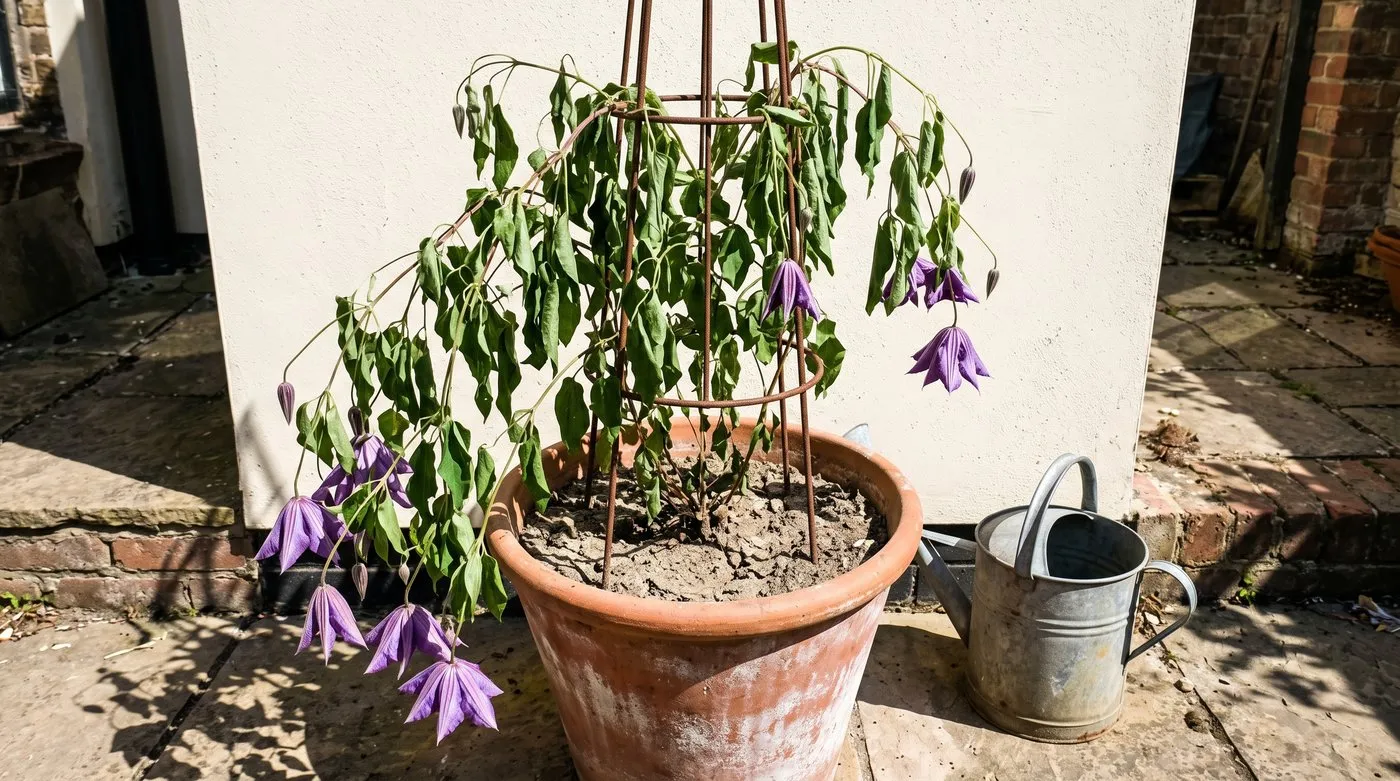
Limp but still green leaves on a hot afternoon usually mean thirst, not wilt disease. A deep soak should perk the plant up by evening.
Signs it is thirst, not disease:
- Leaves droop gradually rather than blackening overnight
- No dark lesion on the stem
- The plant recovers when the weather cools or after watering
- Clematis in pots or against hot, sunny walls are most at risk
Clematis like their heads in the sun and their roots cool. Give a good soak once or twice a week in dry spells rather than a light daily sprinkle. A thick mulch of compost or bark helps hold moisture in. Shade the roots with a paving slab or low plants. The guide to watering in hot weather has more tips.
Slug and snail damage at the base
Slugs and snails love young clematis shoots in spring. If they chew through the base of a stem, the top collapses and looks just like wilt.
Check the bottom of the stem for:
- Chewed or stripped bark at or just above soil level
- Slime trails on the stem or soil nearby
- Soft new shoots eaten off in April and May
Protect young stems with a collar cut from a plastic bottle. Go out with a torch after dark and pick off any slugs and snails. Nematodes watered into moist soil can help, and the guide to biological pest control with nematodes explains how. There are more ideas in the guide on getting rid of slugs naturally.

Chewed, ragged bark at the base points to slugs or snails, not disease. A plastic collar keeps them off young shoots.
Snapped or damaged stems
A stem broken by wind, a dog, a falling support or a careless foot gives the same sudden collapse. Follow the wilting shoot down and you will find a kink or break.
Cut cleanly just below the break, then water the plant. It will usually send up new shoots from lower buds. Tie in new growth loosely so it does not snap again. The guide to training young climbers shows how.
How to save a clematis with wilt
Act as soon as you spot collapsed shoots. The rescue routine is the same whatever the cause:
- Cut out every collapsed stem back to healthy growth. With true wilt, this may mean cutting below soil level.
- Clean your secateurs between cuts so you do not carry the fungus to healthy stems.
- Bin or burn the prunings. Don’t compost them.
- Water the root area well, aiming at the soil, not the leaves.
- Mulch around the plant with compost or bark, keeping it just clear of the stems.
- Be patient. New shoots can appear from below ground later in the season or the following spring.
Don’t dig the plant up too soon. A clematis that looks dead in summer can surprise you the next spring. There are no fungicides you can buy to treat clematis wilt, so good hygiene and patience do the work.

Cut back hard, clear away the old stems and mulch the base. Then give the plant time to regrow.

Fresh shoots from the base mean the roots have survived. Tie them in gently as they grow.
Why deep planting helps clematis recover
Planting deeply does not stop wilt, but it gives the plant a way back. Set the top of the rootball 5-8cm below the surrounding soil, deeper than it sat in the pot. That buries a couple of buds. If wilt kills the top growth, those buds can sprout new stems.
How to plant a clematis deeply:
- Dig a hole about twice the width of the pot, at least 30cm from a wall or fence.
- Mix some well-rotted compost or manure into the soil you dug out.
- Water the plant well in its pot first.
- Set the rootball so its top sits 5-8cm below the soil level.
- Backfill, firm gently and water in well.
- Mulch the surface and shade the roots with low plants or a slab.
Lean the plant towards its support with a cane so the stems reach it easily.

Setting the rootball a few centimetres deeper than it sat in the pot buries a couple of buds. They are the plant’s back-up if wilt strikes.
Which clematis are least likely to get wilt?
Small-flowered clematis rarely get wilt. If you keep losing large-flowered types, swap to one of these.
| Clematis type | Wilt risk | Examples |
|---|---|---|
| Large-flowered early hybrids (Group 2) | Highest | ’Nelly Moser’, ‘The President’, ‘Henryi’ |
| Large-flowered late hybrids (Group 3) | Moderate | ’Jackmanii’, ‘Comtesse de Bouchaud’ |
| Viticella types (Group 3) | Low | ’Etoile Violette’, ‘Polish Spirit’, ‘Madame Julia Correvon’ |
| Montana, alpina and macropetala (Group 1) | Low | C. montana, C. alpina, C. macropetala |
| Tangutica and orientalis types (Group 3) | Low | C. tangutica ‘Bill MacKenzie’ |
Viticella types are especially easy-going. They flower from midsummer, and you prune them hard in late winter. For other wall plants that shrug off disease, see the pick of the best climbing plants for UK gardens.
Common mistakes with wilting clematis
- Leaving dead stems in place to see if they recover. Shoots killed by wilt won’t come back, so cut them out.
- Giving up too soon. A cut-back clematis can regrow from below ground the following spring.
- Planting at pot level. Without buried buds, a plant hit by wilt has nothing to regrow from.
- Light daily watering. A deep soak once or twice a week in dry spells is better.
- Ignoring the stem base. Slug damage and snapped stems often get mistaken for wilt.
Frequently asked questions
Will my clematis recover from wilt?
Often, yes, if it was planted deeply. Cut the collapsed stems back to healthy growth, even below soil level, then water and mulch. New shoots often come from buried buds later that season or the next spring. Be patient before digging the plant up.
What causes clematis wilt in the UK?
True clematis wilt is caused by a fungus. It gets into the stem, often near soil level, and blocks the flow of water so the shoots collapse. Drought, slug damage at the base and snapped stems also cause sudden wilting, but they are not the disease.
How deep should I plant a clematis to prevent wilt?
Plant the rootball 5-8cm deeper than it sat in the pot. That buries a couple of buds below the soil. If wilt kills the top growth, those buds can send up new shoots. Deep planting does not stop the disease, but it gives the plant a way back.
Which clematis varieties resist wilt best?
Small-flowered clematis rarely get wilt. Viticella types such as ‘Etoile Violette’ and ‘Polish Spirit’, plus montana, alpina, macropetala and tangutica, are good choices. Large-flowered hybrids such as ‘Nelly Moser’ and ‘The President’ are the most likely to suffer.
Can I plant a new clematis where one has died from wilt?
It is safer to choose a different spot. If you must reuse the same place, pick a small-flowered type such as a viticella, which rarely gets wilt. Clear away all the old stems and leaves first.
Should I compost stems with clematis wilt?
No, bin or burn them instead. Infected stems can carry the fungus, so keep them away from the compost heap and from other clematis.
Once your clematis is growing again, read the guide on how to prune clematis by group to keep it healthy and flowering. For more plant troubles, browse the problems hub.
Our team produces practical UK gardening guidance from source research, contributor records and established horticultural practice. Editorial standards are overseen by Matt W.