Key takeaways
- The fungi persist in contaminated soil and dead plant material for many years
- Sudden wilting of part or all of a plant is most noticeable during warm weather
- Brown or black streaking beneath bark is a useful diagnostic clue
- Acer, cotinus, catalpa and cercis are the woody plants most often recorded by the RHS laboratory
- No chemical treatment exists, so confirmed cases require removal and resistant replacement planting
- Conifers are effectively immune and several deciduous tree genera are resistant
Verticillium wilt is a soil-borne disease that enters through roots and grows into water-conducting tissue. It can cause sudden wilting, yellow lower leaves and branch dieback, particularly during warm weather. There is no chemical cure, so correct identification matters before a valuable plant is removed.
The host range is very wide. The RHS Pathology Laboratory most often records woody cases on acer, cotinus, catalpa and cercis; tomatoes, potatoes, aubergines, cucurbits, strawberries, roses and chrysanthemums are also susceptible.
What is verticillium wilt and what causes it?
Verticillium wilt is caused by two soil-borne fungi: Verticillium dahliae and V. albo-atrum. They persist for many years in soil or dead plant material as microscopic resting structures.
The infection cycle begins when microsclerotia in the soil detect root exudates from a susceptible plant. They germinate and the fungal hyphae penetrate fine root tips. Once inside, the fungus grows upward through the xylem, the plant’s water-conducting vessels. It produces spores, toxins, and physical blockages that restrict water flow to the canopy.
This vascular blockage is why the symptoms look like drought stress even when soil is moist. The plant cannot move water from roots to leaves efficiently. In warm weather, when transpiration demand peaks, the weakened vessels cannot keep up and branches wilt.
V. dahliae thrives in soil temperatures between 20C and 25C, making mid-summer the peak symptom period in the UK. It tolerates a wide pH range from 5.0 to 8.0 and survives in both clay and sandy soils. The RHS verticillium wilt page lists currently affected plant species and reporting guidance.
How do I identify verticillium wilt symptoms?
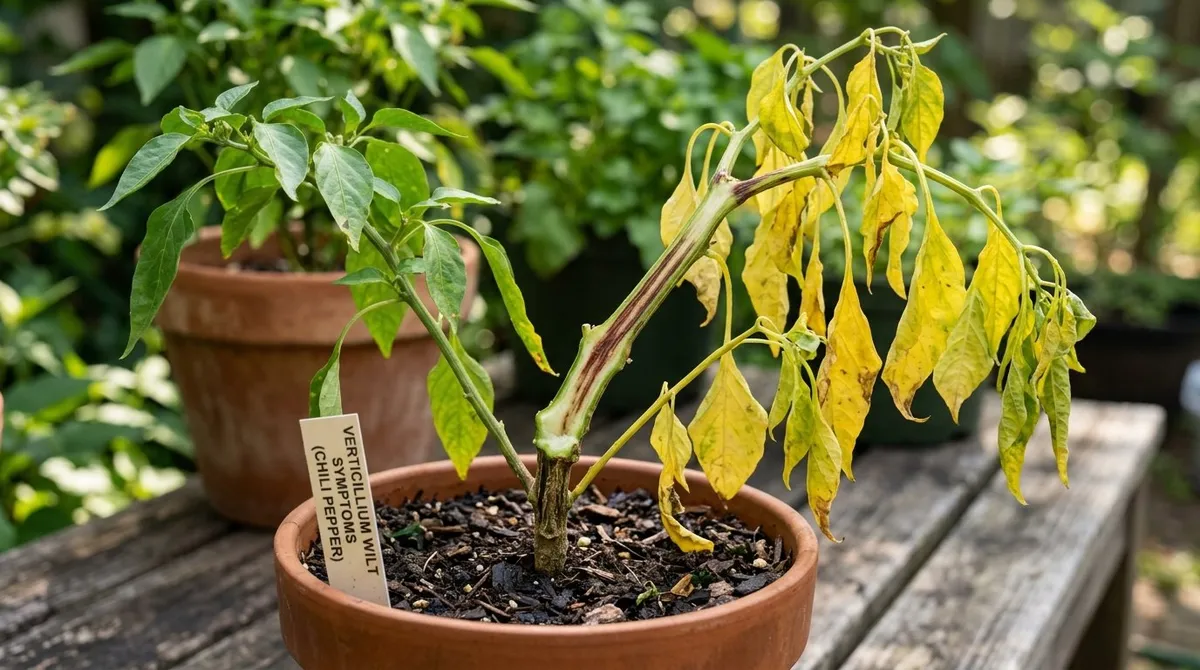
The classic symptom is one-sided wilting. One branch, one half of the canopy, or one side of a herbaceous plant wilts and browns while the other side remains healthy. This asymmetric pattern distinguishes verticillium from drought, which affects the whole plant evenly.
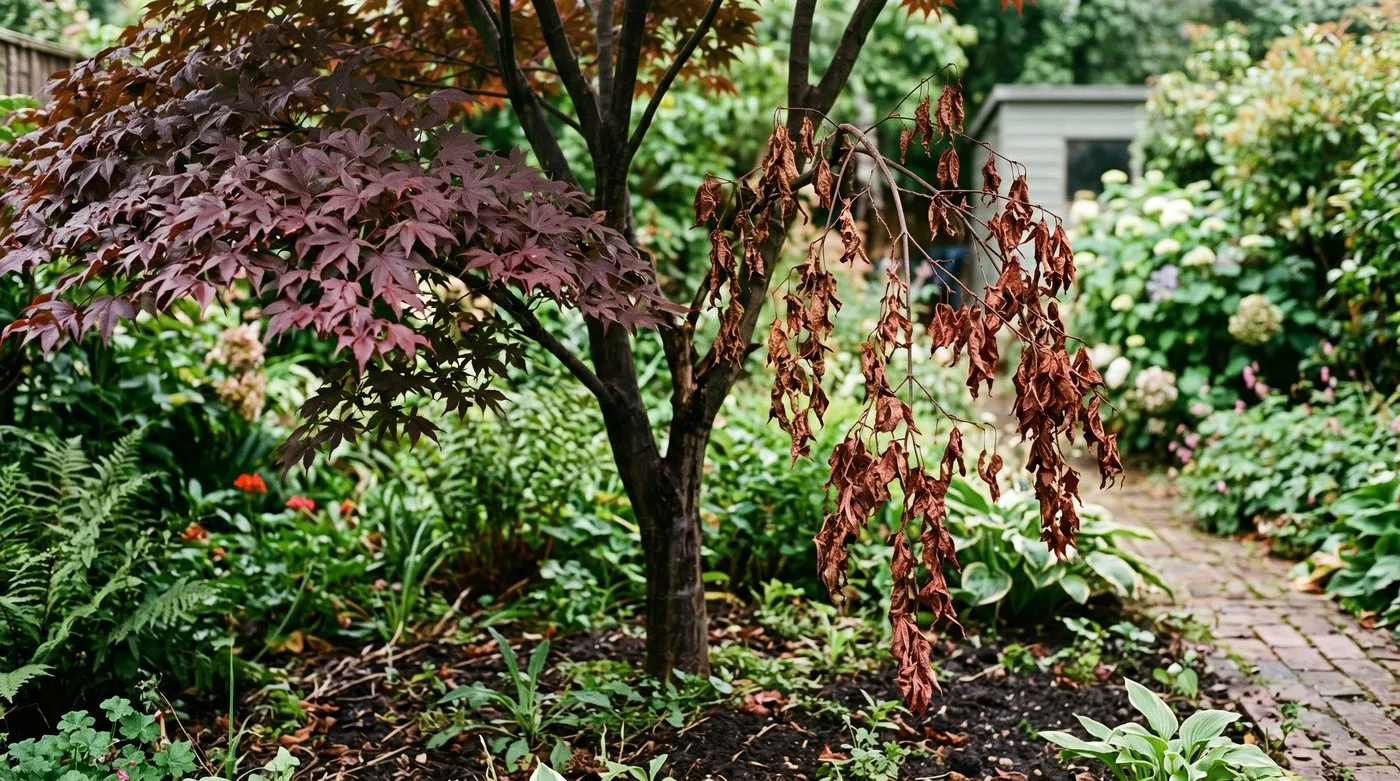 Partial canopy wilt is a warning sign, especially on acer, but it is not proof on its own because root damage and other diseases can look similar.
Leaf symptoms progress from the bottom of the plant upward. Lower leaves yellow first, often with irregular brown patches between the veins. In trees, affected branches may produce undersized leaves in spring before the foliage browns and dies by midsummer. Some trees show dieback of individual branches over several seasons before the whole canopy collapses.
Cut a recently wilted stem across and lengthways with a sharp knife. Verticillium can produce brown or black marks in the outer growth ring, appearing as part of a circle across the stem or as streaks along it. This is a useful clue, not a definitive home test, because other problems can cause vascular discolouration.
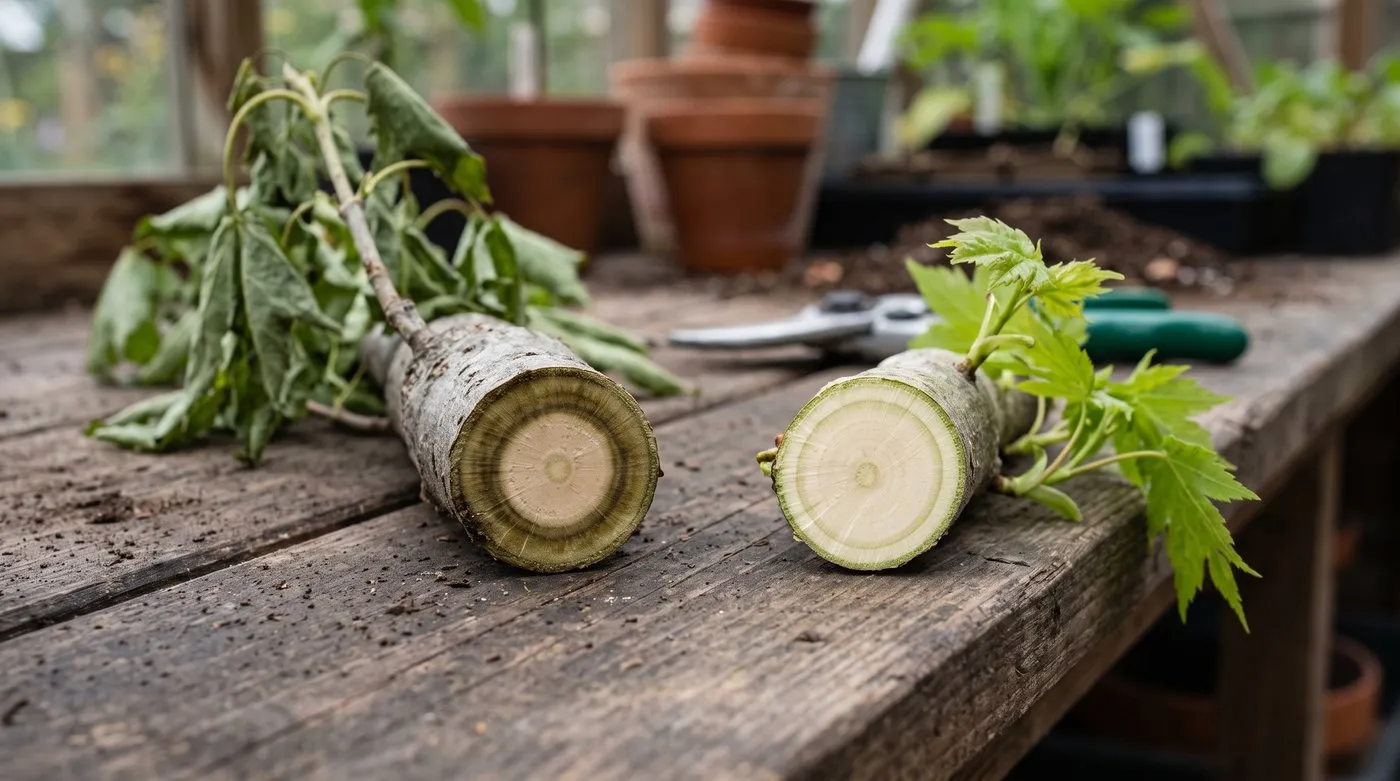 Brown or black marks in the outer growth ring support a verticillium diagnosis. Seek expert confirmation for a valuable tree.
In herbaceous plants like tomatoes and strawberries, the streaking appears in the crown and lower stems. In trees, it is most visible in branches up to 5cm diameter. Older wood in thick trunks may not show obvious streaking even when infected, because the fungus concentrates in the most recent growth rings.
Which UK garden plants does verticillium wilt affect?
Verticillium affects a very wide range of plants. In UK gardens, certain hosts appear far more often in diagnostic records, which makes plant identity an important part of diagnosis.
Trees and shrubs most often recorded: Acer, cotinus, catalpa and cercis are the four woody groups most commonly recorded by the RHS Pathology Laboratory. Roses, berberis and rhus are also susceptible. Our Japanese maple guide covers positioning and general care for acers.
Fruit and vegetables: Strawberries, tomatoes, potatoes, aubergines, peppers, and raspberries are all susceptible. The disease is particularly damaging to strawberry beds established in ground previously used for potatoes or tomatoes, where Verticillium inoculum has built up.
Why does verticillium wilt kill trees slowly?
Verticillium wilt in trees often progresses over multiple growing seasons rather than killing rapidly. This slow decline distinguishes it from acute diseases like honey fungus and makes it harder to diagnose early.
In the first year, one branch or a small section of the canopy may wilt and die back. The rest of the tree compensates and may look almost normal. The tree attempts to wall off the infection by producing tyloses, physical barriers in the xylem vessels that block fungal advance. In some cases, this defence succeeds and the tree stabilises for years.
In many trees, however, the fungus eventually outpaces the defence. Each summer, more branches fail. The canopy thins progressively. Leaves become smaller. By the time half the canopy is dead, the tree is unlikely to recover.
This slow decline means verticillium can be confused with drought stress, root damage or other diseases. Vascular streaking in a susceptible host strengthens the case, but laboratory diagnosis is the safer basis for removing a valuable tree.
Young, vigorous trees sometimes survive infection for 5-10 years by outgrowing the fungus. Feeding and watering to reduce stress can extend the tree’s life. However, the soil beneath the tree is becoming more heavily contaminated each year as infected tissue drops and decays. This matters for what you plant next.
How does verticillium wilt spread in the garden?
Verticillium wilt does not spread through the air like mildew or rust. It is a soil-borne disease. The fungus moves between plants through contaminated soil, infected plant material, and soil water.
The primary source of new infection is microsclerotia in the soil. These form in dying plant tissue and are released into the soil as roots and stems decompose. Each microsclerotium is about 50 micrometres in diameter, invisible to the naked eye. They concentrate in the top 30cm of soil where most root activity occurs.
Spread between different areas of the garden happens through soil movement. Contaminated soil on boots, spades, wheelbarrows, and mowers carries microsclerotia to clean beds. Shared compost from infected plant material is another vector. Drainage water moving downhill between beds can transport microsclerotia slowly across a plot.
Bought-in plants can introduce verticillium to clean soil. Infected strawberry runners, potato tubers, or nursery trees may carry the fungus without showing symptoms at the time of planting. Buy from reputable suppliers and inspect roots for brown discolouration before planting. The soil drainage guide explains how waterlogged conditions worsen soil-borne disease spread.
Can I cure verticillium wilt in my garden?
No. There is no cure for verticillium wilt. No fungicide available to home or professional gardeners kills the pathogen inside a living plant’s xylem vessels. No soil treatment eliminates microsclerotia from garden soil at the scale of a typical garden.
This sounds bleak, but understanding it prevents wasted time and money on ineffective treatments. The practical response focuses on three actions.
Remove infected plants promptly. Cut down and remove all above-ground growth. Dig out as much root material as practical. Do not compost infected material. Burn it, send it to council green waste, or bag and bin it. The faster you remove infected tissue, the fewer microsclerotia are released into the soil.
Do not replant with a susceptible species. The fungus can persist for many years. The RHS advises considering grassing a confirmed site for at least 15 years, or choosing a resistant replacement.
Improve soil health. Well-drained, biologically active soil suppresses verticillium to some extent. Adding organic matter supports beneficial soil fungi that compete with Verticillium. Improving clay soil with compost and grit increases drainage and supports a healthier soil microbiome.
What should I plant instead of verticillium-susceptible species?
Choosing a documented resistant replacement is the most important long-term management step. Use the current RHS host list rather than assuming that a visually similar plant is safe.
Resistant tree alternatives for lost acers: Birch (Betula) provides a light canopy and autumn colour. Beech (Fagus), Liquidambar and willow (Salix) are also on the RHS resistant list. Conifers are effectively immune. Do not substitute cercis: it is a commonly recorded host.
For a lost cotinus, choose from the documented resistant list rather than relying on a general shrub category. Site conditions still matter: match the replacement to the available light, soil moisture and final space.
Vegetable rotation to reduce inoculum: Brassicas, alliums, legumes, sweetcorn, and squash are not susceptible to verticillium. Growing these crops in affected soil for several years reduces microsclerotia levels. Avoid planting tomatoes, potatoes, peppers, or aubergines back into the same bed. Our crop rotation planner helps structure this approach.
How do I protect strawberries and tomatoes from verticillium wilt?
Strawberries and tomatoes are the most commonly affected edible crops in UK gardens. Both are highly susceptible and frequently grown in the same ground year after year, which builds Verticillium populations.
Strawberries: Plant certified disease-free runners on fresh ground that has not grown potatoes, tomatoes, peppers, or strawberries for at least 4 years. Replace beds every 3 years on a rotation. Growing in raised beds with clean compost bypasses contaminated soil entirely. Varieties bred for verticillium tolerance include Hapil, Cambridge Favourite, and Honeoye. Our strawberry growing guide covers variety selection and planting in detail.
Tomatoes: Grow in fresh compost each year using grow bags or large pots. This eliminates soil-borne verticillium risk completely. For greenhouse border growing, use grafted plants on resistant rootstock. Maxifort and Beaufort rootstocks resist both verticillium and fusarium. F1 varieties marked Ve on the seed packet carry verticillium resistance. Our tomato diseases guide covers the full range of tomato pathogens including the closely related fusarium wilt.
Potatoes: Rotate strictly. Never plant potatoes in the same bed within 4 years. Choose resistant varieties where available. Sarpo Mira and Sarpo Axona show good general disease tolerance.
| Crop | Best prevention | Resistant varieties | Container option |
|---|---|---|---|
| Strawberry | Fresh ground, 3-year rotation | Hapil, Cambridge Favourite | Yes, 20cm pots |
| Tomato | Grow bags, grafted rootstock | Ve-marked F1 hybrids | Yes, 10L+ pots |
| Potato | 4-year rotation, resistant cvs | Sarpo Mira, Sarpo Axona | Yes, potato bags |
| Raspberry | Certified canes, new site | Glen Moy, Autumn Bliss | Difficult |
How does soil solarisation help with verticillium?
Soil solarisation uses trapped solar heat to kill soil pathogens. It works by covering moist, cultivated soil with clear polythene for 6-8 weeks during the hottest part of summer. Soil temperatures under the plastic reach 40-50C at 10cm depth, which kills most microsclerotia in the upper soil layers.
Solarisation is most effective in southern England where summer temperatures are highest. In the Midlands and further north, results are less reliable because peak soil temperatures may not reach lethal levels consistently. It works best on light, sandy soils that heat up quickly. Heavy clay soils retain more moisture and heat more slowly.
The method is practical for vegetable beds and strawberry plots. It is not feasible under established trees or in ornamental borders. Prepare the bed by cultivating to 20cm depth and watering thoroughly. Lay clear polythene tightly over the surface, burying edges to trap heat. Leave in place for 6-8 weeks from late June through August.
Solarisation reduces but does not eliminate verticillium. Microsclerotia below 20cm depth survive the treatment. It is best used as part of a combined strategy alongside crop rotation, resistant varieties, and organic matter additions. The Garden Organic soil health guide provides additional guidance on biological soil management.
Frequently asked questions
What does verticillium wilt look like?
Sudden wilting and branch dieback are the main warning signs. Lower leaves may yellow and part of a woody plant can wilt while other branches remain healthy. Brown or black streaks beneath the bark support the diagnosis, but similar symptoms have other causes. Seek laboratory confirmation before treating valuable plants as infected.
How long does verticillium wilt survive in soil?
Verticillium can remain in contaminated soil for many years. The RHS advises considering grassing over a confirmed site for at least 15 years, or choosing a resistant replacement. Avoid moving soil from the affected area on tools, boots or machinery.
Can I cure verticillium wilt?
No cure exists for verticillium wilt in any plant. No fungicide available to home gardeners reaches the pathogen inside the xylem vessels. Mildly affected trees occasionally wall off the infection and survive for several years, but most decline and die. Remove infected plants promptly and do not compost them. Replace with resistant species suited to your soil and aspect.
Which trees resist verticillium wilt?
Conifers are effectively immune and several deciduous genera are resistant. RHS-listed alternatives include Betula, Cercidiphyllum, Crataegus, Fagus, Gleditsia, Liquidambar, Morus, Platanus and Salix. Cercis is susceptible and should not replace an affected acer or cotinus.
Does verticillium wilt affect strawberries?
Strawberries are highly susceptible to verticillium wilt, especially in their first fruiting year. Plants wilt and collapse starting from the outer leaves. Crowns show brown vascular streaking when cut. The pathogen often enters through soil previously used for potatoes, tomatoes, or chrysanthemums. Always plant strawberries in fresh ground or clean compost. Certified disease-free runners from reputable nurseries reduce the risk of introducing the pathogen.
Can I replant in soil where verticillium wilt killed a plant?
Yes, but choose a species listed as resistant. Remove as much infected root material as possible and avoid spreading the surrounding soil. Conifers and RHS-listed resistant trees such as Betula, Fagus, Liquidambar and Salix are safer replacements.
Is verticillium wilt the same as fusarium wilt?
No, they are different fungi with different host ranges and soil persistence. Verticillium dahliae has an extremely broad host range of 300+ species. Fusarium oxysporum is divided into formae speciales, each attacking a single host species. Fusarium wilt of tomatoes only affects tomatoes. The stem symptoms look similar in both, with brown vascular streaking, but verticillium tends to cause one-sided wilting while fusarium affects the whole plant more evenly.
Our team produces practical UK gardening guidance from source research, contributor records and established horticultural practice. Editorial standards are overseen by Matt W.