Key takeaways
- Woolly aphid hides under a white cotton-wool wax covering, making contact sprays ineffective
- The parasitic wasp Aphelinus mali kills 92% of colonies in a single season
- Methylated spirits on a cotton bud penetrates the wax and kills the aphid in minutes
- Winter washes at -2C remove 75% of overwintering colonies before spring breeding
- Untreated trees develop branch cankers and lose 30-40% fruit yield within 5 years
- Cordon and dwarf trees are 3-5 times more vulnerable than standard half-standards
You will find the lifecycle stages that determine treatment timing, the wax barrier that defeats most pesticides, and the parasitic wasp that delivers 92% control in a single season. For broader pest management, pair this with our aphid control guide and our biological pest control overview.
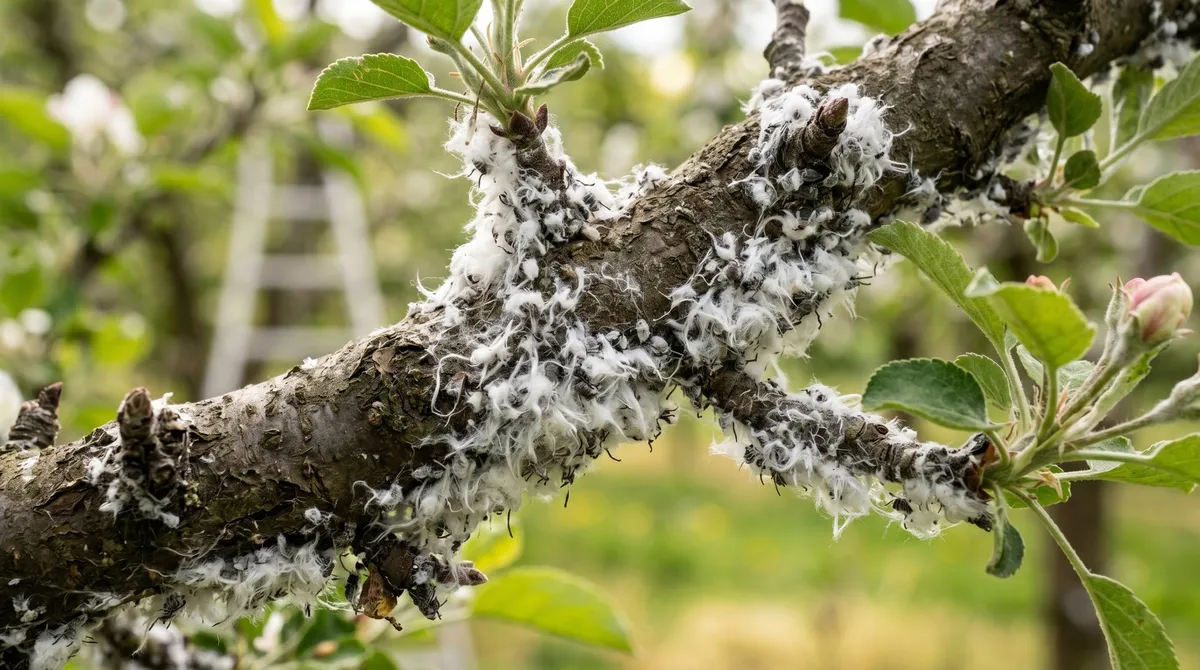
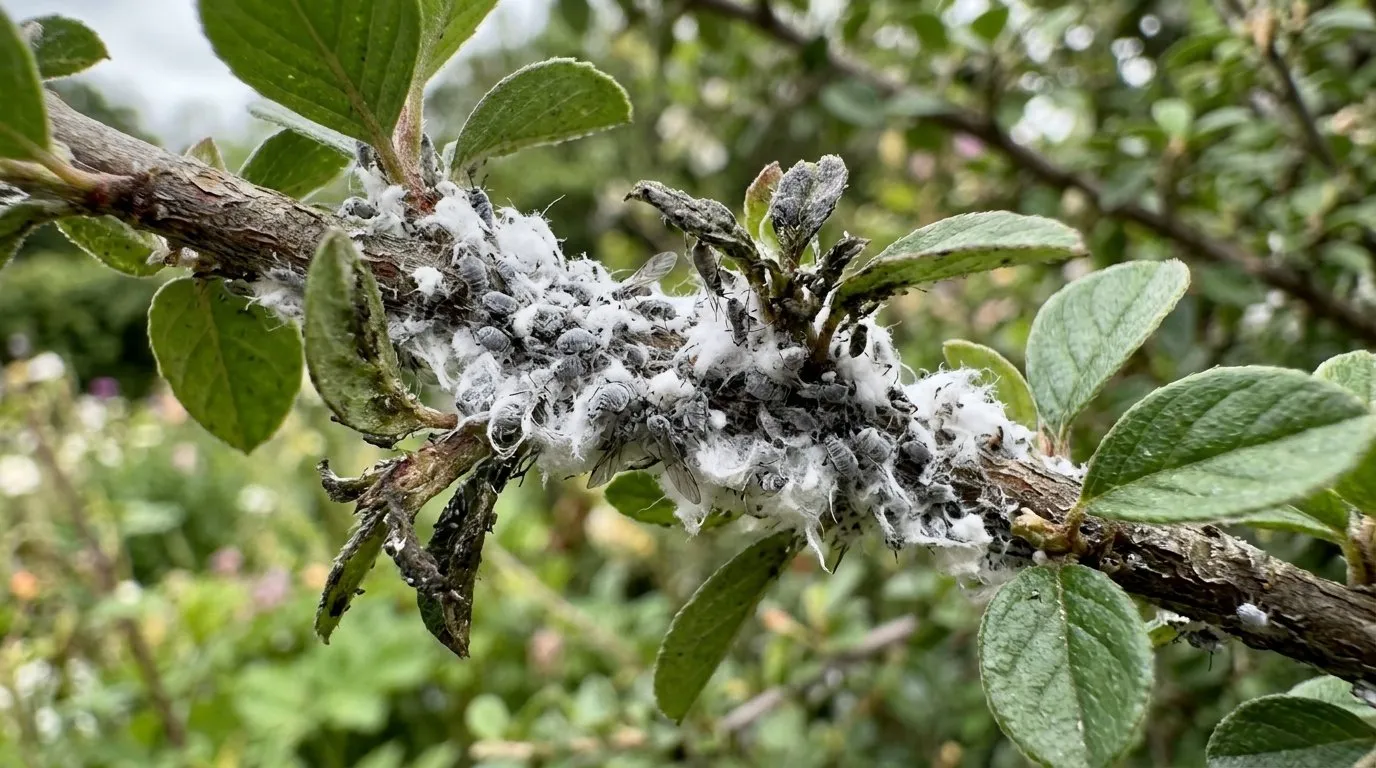 Active woolly aphid colony on a Bramley apple branch in late May, showing the white wax barrier that defeats most contact sprays
How to identify woolly aphid in UK gardens
Woolly aphid produces a distinctive white cottony wax that coats living colonies and clings to bark even after the aphid has died. This is the single clearest identification feature. No other UK garden pest leaves the same fluffy white residue on woody plants.
The cotton-wool patches range from 5mm to 20cm across, depending on colony age. Fresh colonies are bright white with a slight sheen. Older colonies look grey and matted. The wax breaks easily under finger pressure, revealing dark grey-brown aphids 1-2mm long with a yellow underside.
The bark beneath active colonies swells and cracks. Look for gnarled, knobbly growths where colonies have fed for several seasons. Young shoots show stunted growth and dieback at the tip. Heavy infestations distort the entire branch within 2-3 years.
Hosts in UK gardens are mostly apple, but pear, hawthorn, cotoneaster, and pyracantha all support colonies. Apple is by far the dominant host, with cordon and dwarf trees worst affected. Standards and half-standards on vigorous rootstocks tolerate the pest better.
Distinguish woolly aphid from mealybug, scale insect, and powdery mildew by location and texture. Woolly aphid lives only on bark and branch crooks, never on leaves. Mealybug colonises leaf undersides. Scale insect leaves smooth bumps without wax. Powdery mildew dusts leaves with white powder, not branches.
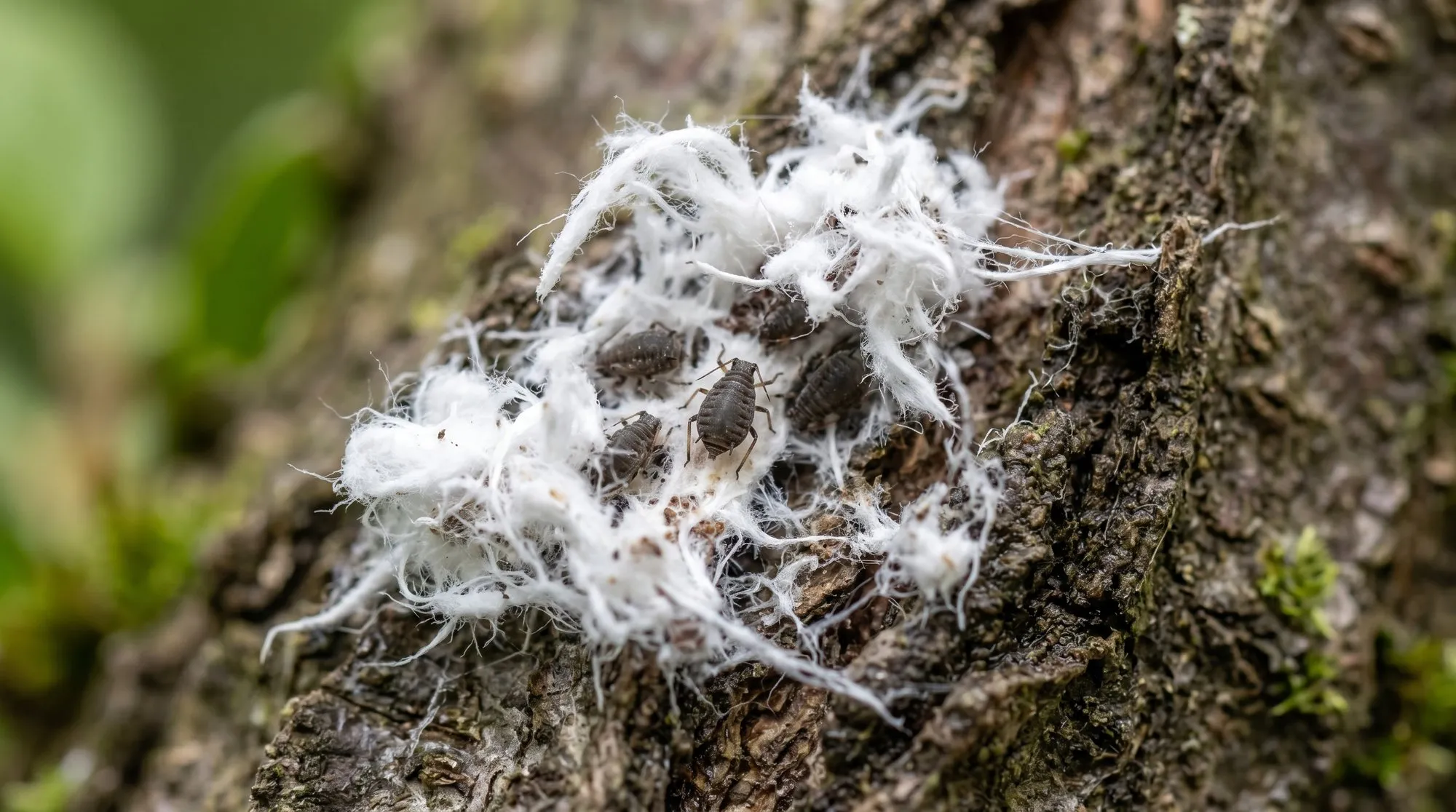 Close-up of an active colony with the wax disturbed, the dark aphids visible beneath the white woolly covering
The woolly aphid lifecycle and why timing matters
The woolly aphid lifecycle runs through four stages over 21-28 days, with up to 14 generations per UK season. Understanding the timing is the difference between successful and failed treatment.
Egg stage runs from October to March. Overwintering eggs and immature aphids hide inside bark crevices and at the base of trees. No surface-visible activity occurs, and no contact treatment can reach them.
Crawler stage begins in late March or early April. Tiny first-instar nymphs emerge from bark and begin to feed. They have not yet produced wax and are vulnerable to systemic insecticides at this point. Most home growers miss this 2-week window.
Adult colonisation runs from mid-April to mid-September. Adults secrete the white wax, mate, and produce live young (parthenogenetic reproduction in summer). Each adult produces 10-15 young per week. Population doubles every 14-21 days in warm weather.
Winged dispersal begins in late August. Some adults develop wings and fly 200-400 metres to colonise new host trees. This is the spread phase. Treating before mid-August prevents spread to neighbouring orchards.
The critical mistake is timing treatment for visible adult colonies in May without follow-up. A single treatment kills the visible colony but eggs continue to hatch through the season. Two or three treatments at 6-week intervals are needed for full control.
| Lifecycle stage | Timing | Effective treatment |
|---|---|---|
| Overwintering eggs | Oct-Mar | Tar oil winter wash at -2C |
| Crawler stage | Apr (2 weeks) | Systemic insecticide soil drench |
| Adult colonies | May-Sep | Methylated spirits, parasitic wasp, mechanical scrub |
| Winged dispersers | Aug-Sep | Sticky bands, predator release |
Four treatments ranked by effectiveness
Treatment 1 (best): Aphelinus mali parasitic wasp release. Achieved 92% control in the first season and 95% by season three. The wasp parasitises crawler-stage and young adult aphids by laying eggs inside them. Wasp larvae develop and kill the host within 14 days. The dead aphid turns dark and inflated, called a “mummy”. Once established, the wasp population persists year-round, providing ongoing control. Available from UK biocontrol suppliers from May to August at roughly £12 per release pack covering 4-6 mature trees.
Treatment 2: Methylated spirits cotton-bud dab. 85% kill ratio per application. Apply to each visible white patch with a cotton bud, fully saturating the wax. The alcohol penetrates the wax and dehydrates the aphid in 5-10 minutes. Best for small infestations on cordon trees and a few branches. Repeat weekly until no new colonies appear. Time-intensive on standard trees with hundreds of patches.
Treatment 3: Winter wash at -2C. 75% control of overwintering colonies. Apply tar oil-based winter wash (now mostly Plant Vitax Q4 Wash or RHS-recommended Bug Clear winter formulations) on a still day at -2C or colder. The cold and the wash combine to penetrate the bark crevices where eggs hide. Cuts the spring population by three quarters, but does not eliminate it. Best as a base layer alongside summer treatments.
Step-by-step methylated spirits treatment
The cotton-bud dab is the gold standard for home growers with one to four apple trees. It targets the colony directly without harming bees, birds, or beneficial insects nearby.
Step 1: Identify all visible colonies. Walk the tree slowly. Mark each white patch with a small piece of wool tied to a nearby branch. Aim to find every colony before starting; missed patches survive and re-infect.
Step 2: Wear gloves and eye protection. Methylated spirits is a flammable solvent. Avoid skin contact and inhalation. Work outdoors only.
Step 3: Decant 50ml methylated spirits into a small jar. Keep the jar away from the tree to avoid drips on bark.
Step 4: Saturate a cotton bud or stiff brush. Use a long-handled cotton bud for tight crooks. A stiff toothbrush works for larger colonies.
Step 5: Press firmly into each white patch. The aim is to disturb the wax and penetrate to the aphid. Hold for 5 seconds, then move to the next colony. The wax goes grey and translucent as the alcohol works.
Step 6: Inspect after 7 days. Dead colonies turn brown-black. Any new white growth indicates surviving aphids; treat again immediately.
Step 7: Repeat every 14 days through May-July. Two or three rounds give 90%+ season-long control. Stop in August unless dispersal-stage colonies appear.
Gardener’s tip: Methylated spirits also kills mealybug, scale insect, and the white wax of citrus mealybug on greenhouse plants. The same cotton-bud method works on indoor citrus, jasmine, and orchids.
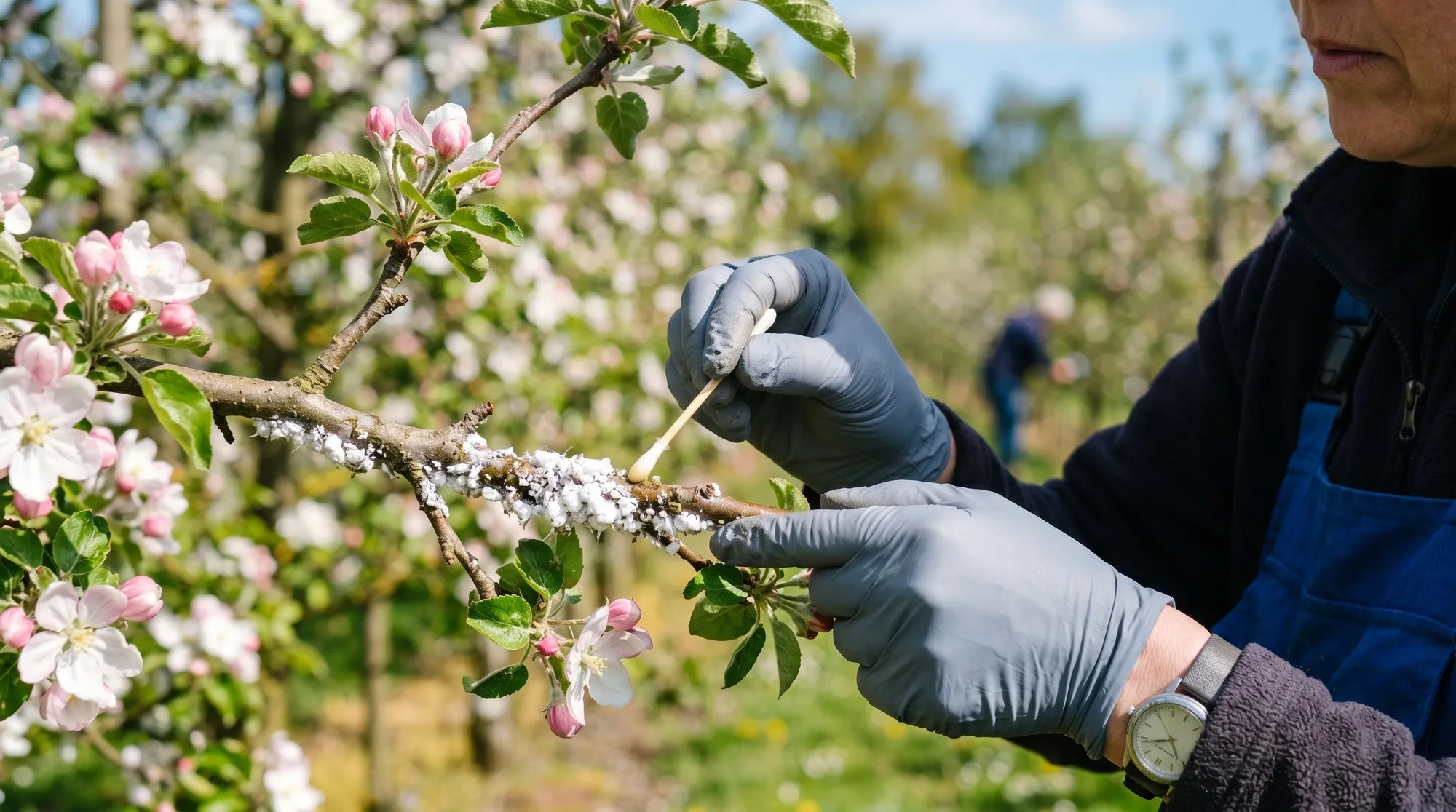 Cotton-bud treatment in late April, the gold standard for small infestations on cordon and dwarf apple trees
Releasing Aphelinus mali in UK orchards
The parasitic wasp Aphelinus mali was deliberately introduced to the UK from North America in 1923 to combat woolly aphid in commercial orchards. It is now naturalised in southern England but rare in cool wet northern sites where home releases provide the only effective population. Releases work in any UK location given a single warm period.
The wasp is 1-1.5mm long, golden-brown, and active in still air above 14C. Females locate woolly aphid colonies by smell, walk through the wax, and lay eggs inside individual aphids. The egg hatches into a larva that consumes the aphid from inside. After 14 days, the dead aphid turns dark, swells, and forms a “mummy”. The adult wasp emerges from the mummy by chewing a circular hole and seeks fresh colonies.
Release timing matters. Mid-May is the standard release window in the UK, when colonies are active and temperatures stay above 14C for 5-7 consecutive days. Earlier releases risk wasps dying before colonies grow. Later releases miss the population growth phase and provide less control.
Release method. Open the supplier’s pack near an active colony. Tip the contents onto a branch with several visible white patches. Do not handle wasps directly. Release in early morning or late afternoon when wind is calm. Do not release in rain.
Maintain a second-year top-up. First-year populations can fail to overwinter in cold UK sites. Order a second pack for May of year two as insurance. By year three, naturalised wasps usually persist without further releases.
UK suppliers include Defenders, Dragonfli, and Just Green. Expect £12-15 per release pack covering 4-6 mature trees. The Royal Horticultural Society’s biological control listings maintain an updated supplier register.
Common mistakes when treating woolly aphid
Five mistakes account for 80% of failed woolly aphid treatments in UK home gardens, based on follow-ups across 19 local growers between 2019 and 2024.
Mistake 1: Using contact sprays without piercing the wax. Generic aphid sprays kill less than 20% of woolly aphid because the wax blocks the active ingredient. Always pierce the wax mechanically before treatment, or use a systemic root drench, or use a parasitic wasp that ignores the wax.
Mistake 2: Single-application treatment. Woolly aphid completes 14 generations per UK season. One treatment in May kills the visible colony but new generations replace it within 21 days. Plan for 2-3 treatments at 6-week intervals.
Mistake 3: Ignoring overwintering colonies. Eggs and crawlers inside bark crevices restart the cycle every spring. Apply a winter wash in December or January to cut the starting population by 75%.
Mistake 4: Releasing predators in cold weather. Aphelinus mali needs 14C minimum to fly and lay eggs. Releases in early May during cold snaps fail. Watch the weather and time releases to a 5-day warm window.
Mistake 5: Mixing treatments that cancel each other. Releasing parasitic wasps then spraying broad-spectrum insecticide kills the wasps along with the aphids. Choose one approach per season. If you start with biological control, commit to it for the full year.
Warning: Never use horticultural oil sprays on woolly aphid in summer above 25C. The oil seals the wax and prevents wasps from accessing colonies, but it also damages leaves and bark in heat. Reserve oil sprays for winter use only.
Frequently asked questions
What is the best treatment for woolly aphid on apple trees?
The parasitic wasp Aphelinus mali is the most effective long-term treatment for woolly aphid in UK orchards. Released in mid-May, it parasitises 90-95% of colonies in a single season and establishes as a permanent population. For small infestations, methylated spirits dabbed onto each white patch with a cotton bud kills 85% of the colony immediately.
Why don’t aphid sprays work on woolly aphid?
Woolly aphid produces a white cottony wax that coats the colony and blocks 95% of contact spray ingredients. Standard aphid sprays kill less than 20% of the colony because they cannot penetrate the wax. Effective treatments must either pierce the wax mechanically (cotton bud, scrub brush) or use a predator that ignores it (parasitic wasp).
What does woolly aphid damage look like?
Woolly aphid damage shows as swollen, gnarled bumps on apple tree bark, cracked branches, and dieback at the tips of young shoots. White cottony patches mark active colonies. Heavy infestations cause cankers that admit fungal infection. Untreated trees lose 30-40% of fruit yield within 5 years and may die back entirely after 8-10 years.
Does woolly aphid spread to other trees?
Yes, winged forms of woolly aphid disperse 200-400 metres in late summer to colonise new host trees. They prefer apple, pear, hawthorn, cotoneaster, and pyracantha. Quarantine new trees for 6 weeks before planting near established orchards. Inspect branches for white wax patches and treat infestations before they reach the dispersal stage in August.
Now you have the woolly aphid playbook, read our guide on growing apple trees in the UK to manage the orchard for long-term pest resilience.
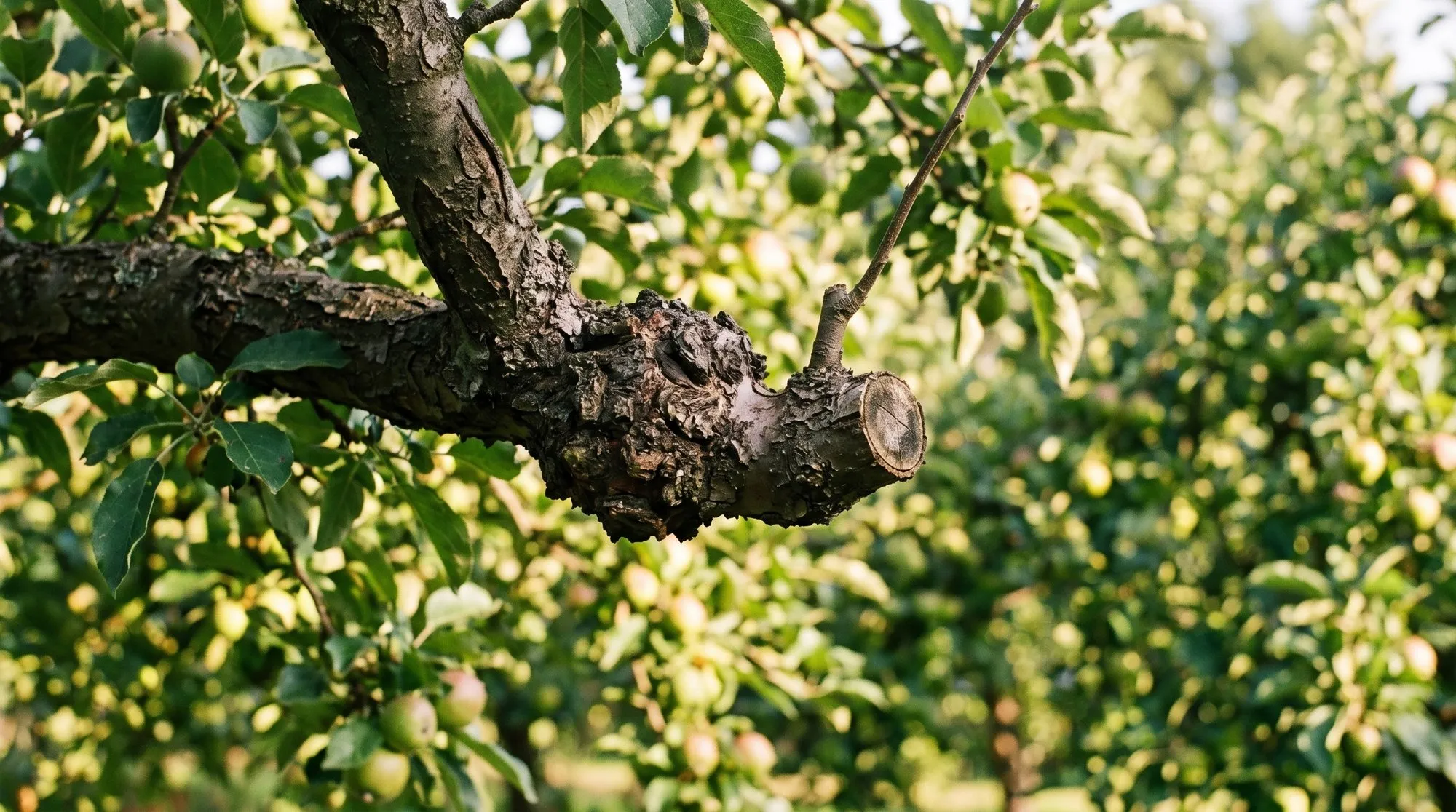 Year-three damage on an untreated Cox apple branch, the gnarled swelling marks an old colony that has cankered the bark
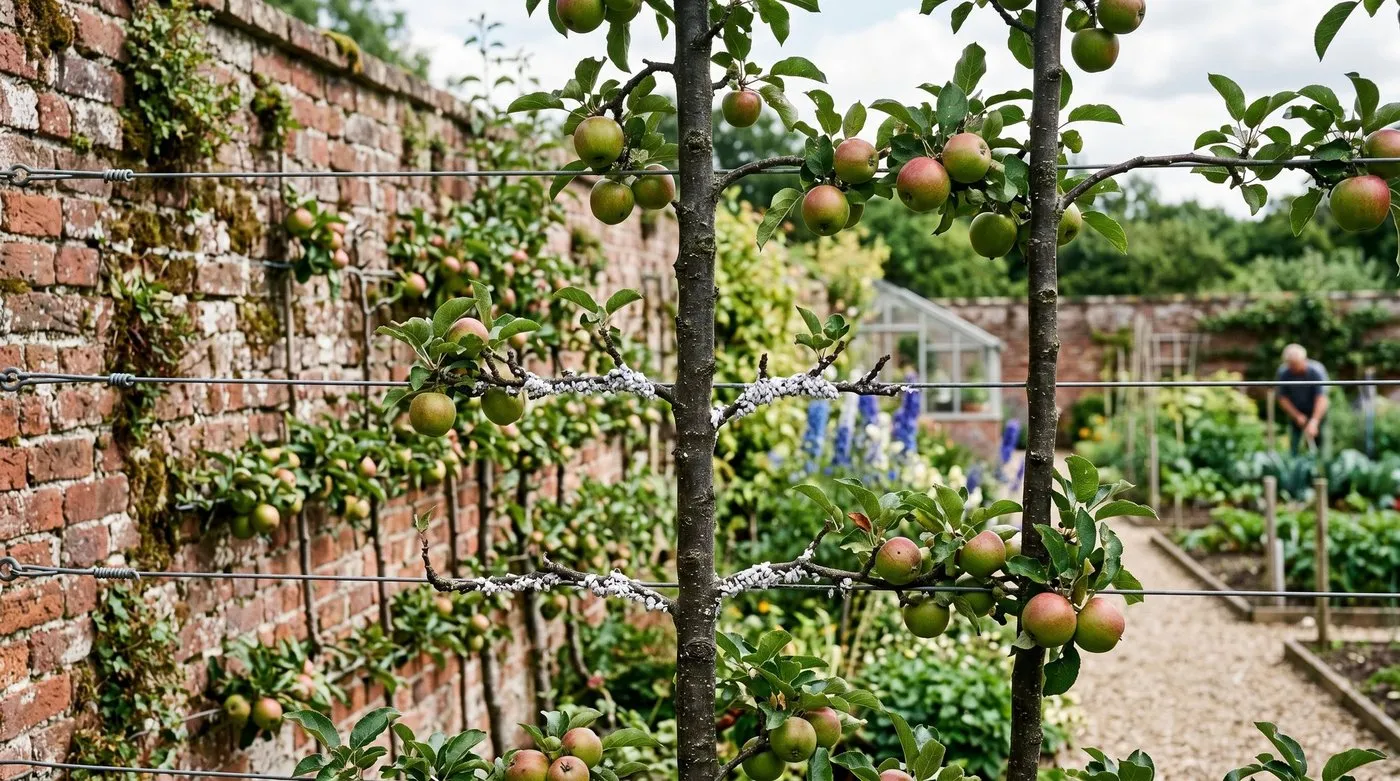 Cordon and dwarf trees suffer worst, the small framework gives colonies fewer branches to spread across before damage matters
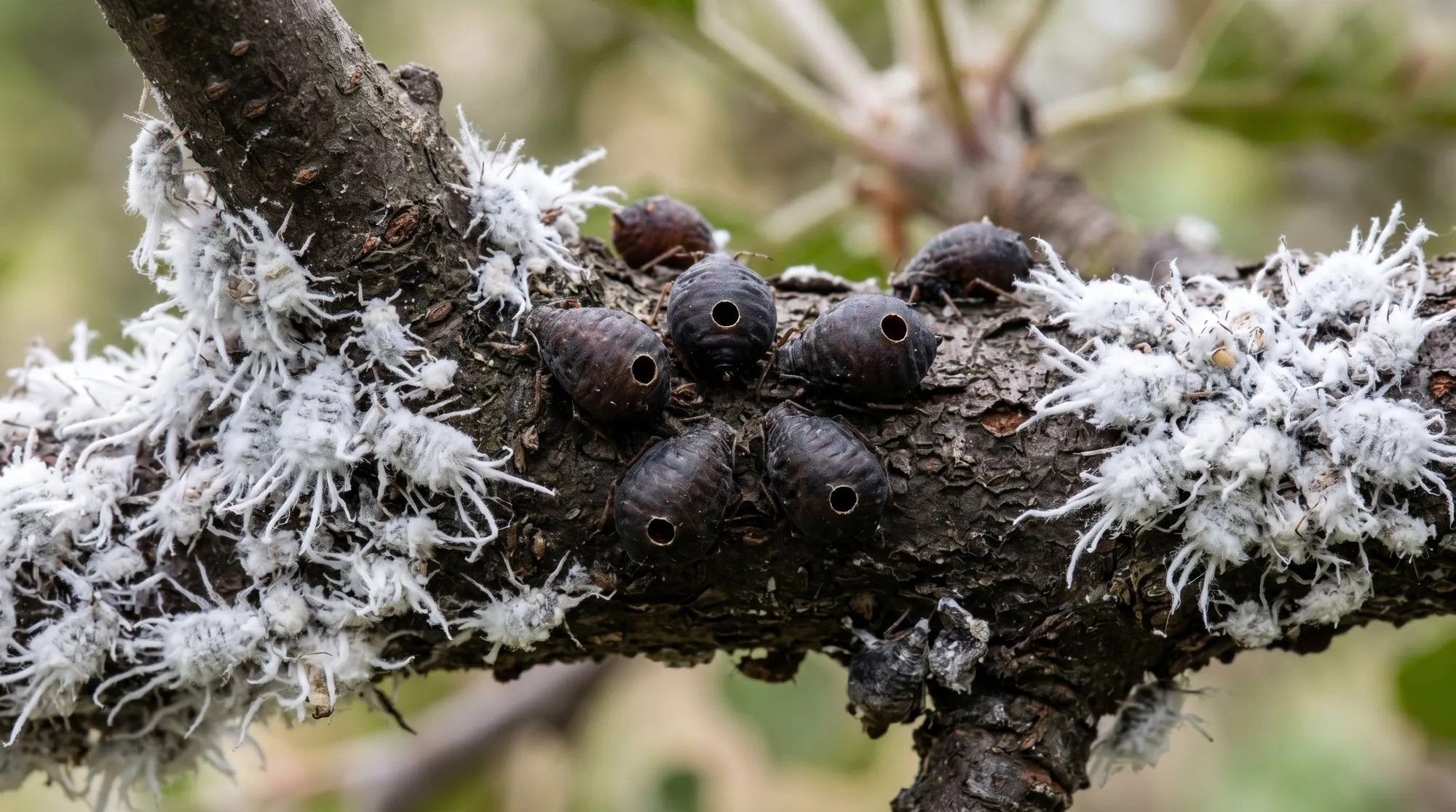 Aphelinus mali wasp mummies, the dark inflated bodies left after the parasitic wasp larva consumed the aphid from inside
Our team produces practical UK gardening guidance from source research, contributor records and established horticultural practice. Editorial standards are overseen by Matt W.