Key takeaways
- Diamondback caterpillars are pale green, about 1cm long, and wriggle backwards fast when touched
- They feed on leaf undersides and leave see-through window panes that later tear into holes
- Most moths fly in from mainland Europe, so numbers swing a lot between years
- Fine insect mesh put on at planting time keeps the moths off
- On uncovered plants, check the undersides of leaves and pick off caterpillars and cocoons
- Bt sprays and home-made sprays are not authorised for UK home gardeners
Small holes in your cabbages that look like tiny see-through windows? That is the classic sign of diamondback moth. Its pale green caterpillars feed under the leaves, wriggle like mad when touched and can build up fast in a warm summer. The good news is that fine mesh keeps them off completely.
This guide helps you tell diamondback apart from the other brassica caterpillars and stop it. If you are finding bigger caterpillars or droppings inside cabbage hearts, the cabbage moth guide is the one you need.
How to identify diamondback moth
The quickest way to spot diamondback is to touch a caterpillar. It wriggles backwards wildly and often drops off the leaf on a silk thread. No other common brassica caterpillar does this so dramatically.
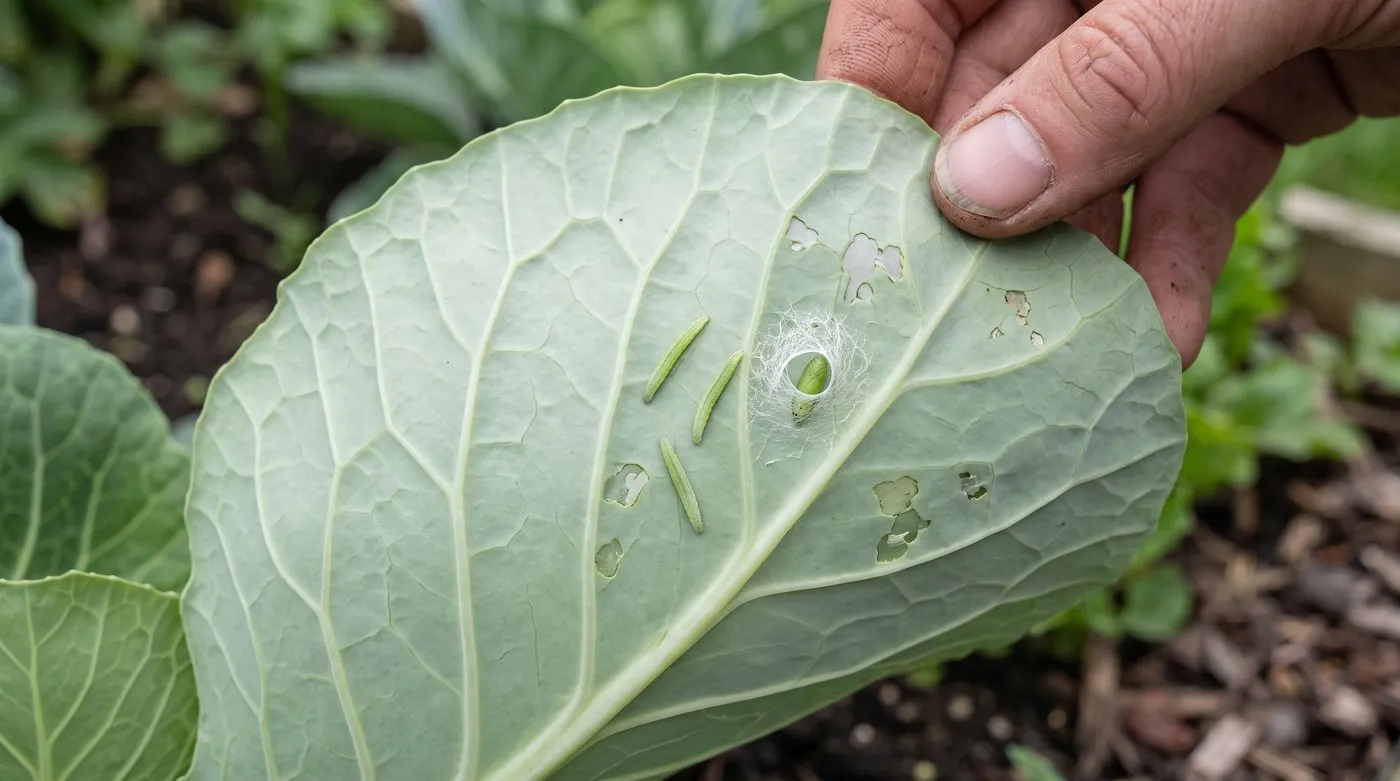
Turn a leaf over to find them: small, slim, pale green caterpillars and see-through silk cocoons.
Caterpillars grow to about 1cm long. They are pale green, slim, and taper at both ends. You’ll find them on the undersides of leaves.
Adult moths are small, slim and brownish grey, around 1cm long. When resting with wings folded, a pale wavy stripe along the back forms a row of diamond shapes. That is where the name comes from.
Cocoons are a giveaway too. Look for small, open, see-through silk nets on leaf undersides, with the pupa visible inside.
| Caterpillar | Size when grown | Looks like | Where it feeds |
|---|---|---|---|
| Diamondback moth | About 1cm | Pale green, slim, tapered | Leaf undersides, window holes |
| Cabbage moth | Up to about 4cm | Green to brown, smooth | Leaves and into cabbage hearts |
| Large cabbage white | Up to about 4cm | Yellow, black spots, hairy | Outer leaves, in groups |
| Small cabbage white | Up to about 2.5cm | Velvety green, single | Leaves and hearts |
The cabbage white butterfly guide has more on the two cabbage whites.
What does diamondback moth damage look like?
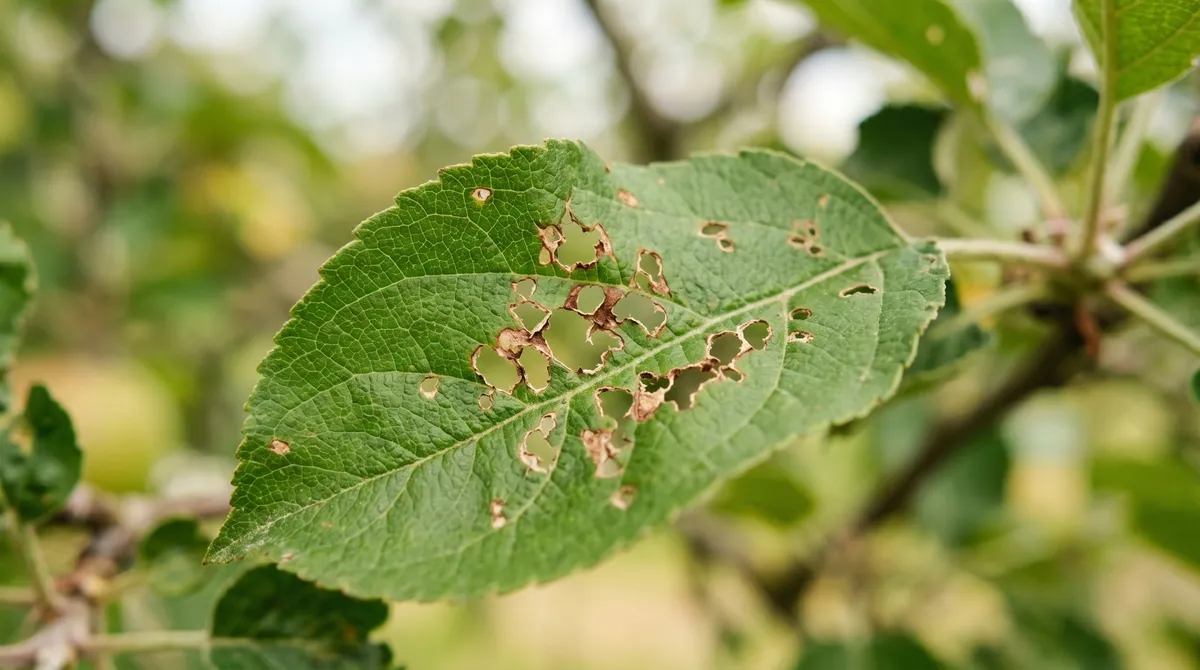
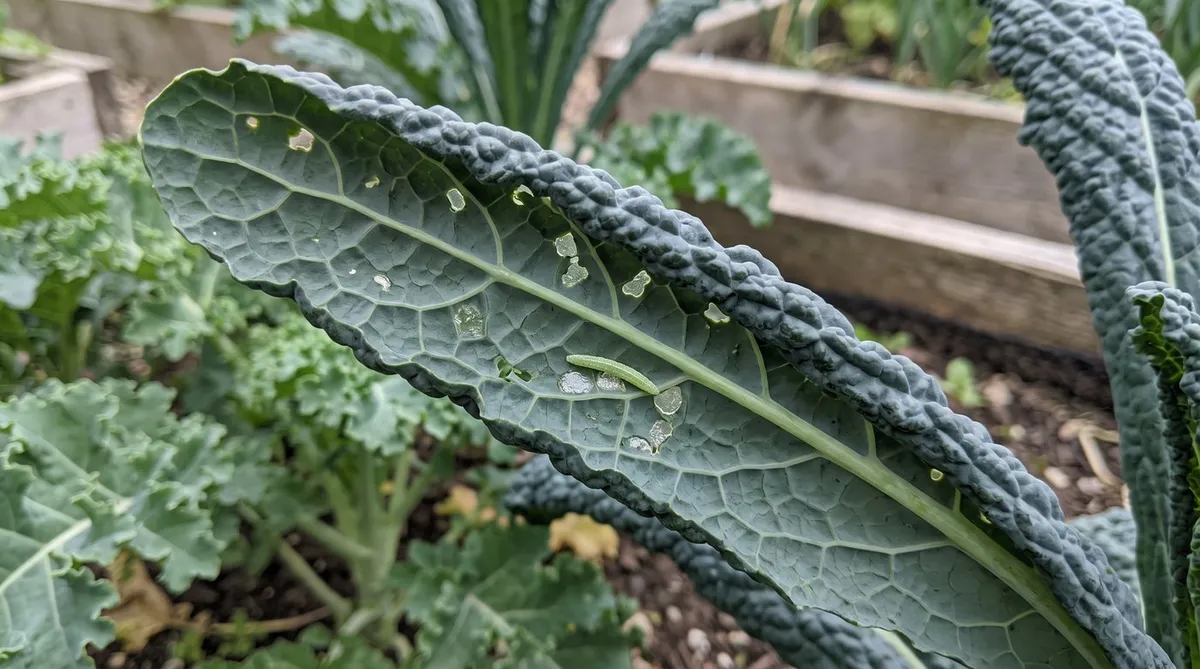
The caterpillars eat the underside of the leaf but leave the thin top layer. This makes clear window panes you can see light through. As the leaf grows, the windows split and leave small, scattered, ragged holes.
Young caterpillars sometimes start by mining inside the leaf before feeding in the open. In a bad year, leaves can end up lacy. Young plants and the hearts of cabbages and sprouts suffer most.
Damage on outer leaves is mostly cosmetic. Plants usually keep growing, and you can cut away the worst leaves and eat the rest.

See-through windows like these are the diamondback giveaway. The caterpillars eat from below and leave the top skin.
Which plants does diamondback moth attack?
It feeds on almost any member of the cabbage family. Cabbage, kale, broccoli, cauliflower, Brussels sprouts, swede and turnip are all on the menu. It also eats cruciferous weeds and leafy crops such as rocket, mustard and watercress.
Oilseed rape fields are a favourite in the countryside. If you grow near them, keep an especially close eye out.
When is diamondback moth a problem in the UK?
Most diamondback moths fly in from mainland Europe on warm southerly winds. Arrivals usually start in late spring and carry on into summer. Some years bring very few. In others, huge numbers arrive at once, as happened in 2016.
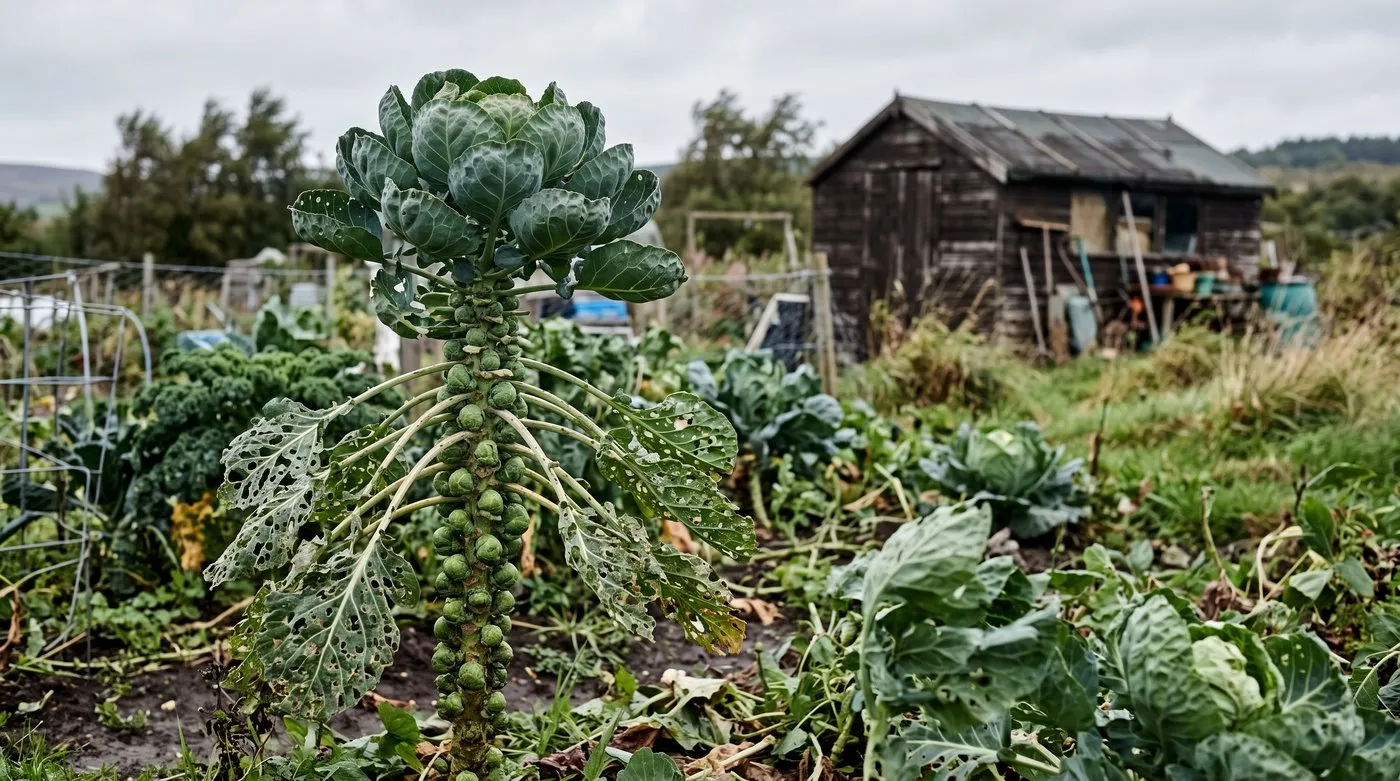
Damage often builds by late summer. Outer leaves look rough, but the sprouts themselves are usually fine.
Once here, they breed on brassicas. In a warm summer, there can be several generations, so the problem often gets worse from midsummer into early autumn.
That is why timing matters. Mesh put on at planting time keeps moths off from the start. Mesh put on late can trap moths, caterpillars or eggs underneath, so check plants carefully before covering.
| Month | What to do |
|---|---|
| April | Get fine insect mesh and hoops ready for planting out |
| May | Cover new brassicas with mesh as you plant them |
| June | Check uncovered plants weekly for caterpillars and window holes |
| July | Keep checking leaf undersides; pick off caterpillars and cocoons |
| August | Watch for a build-up after several generations; check mesh for gaps |
| September | Keep checking until the weather cools |
| October | Clear old brassica stalks and leaves after harvest |
How to stop diamondback moth
Cover brassicas with fine insect mesh
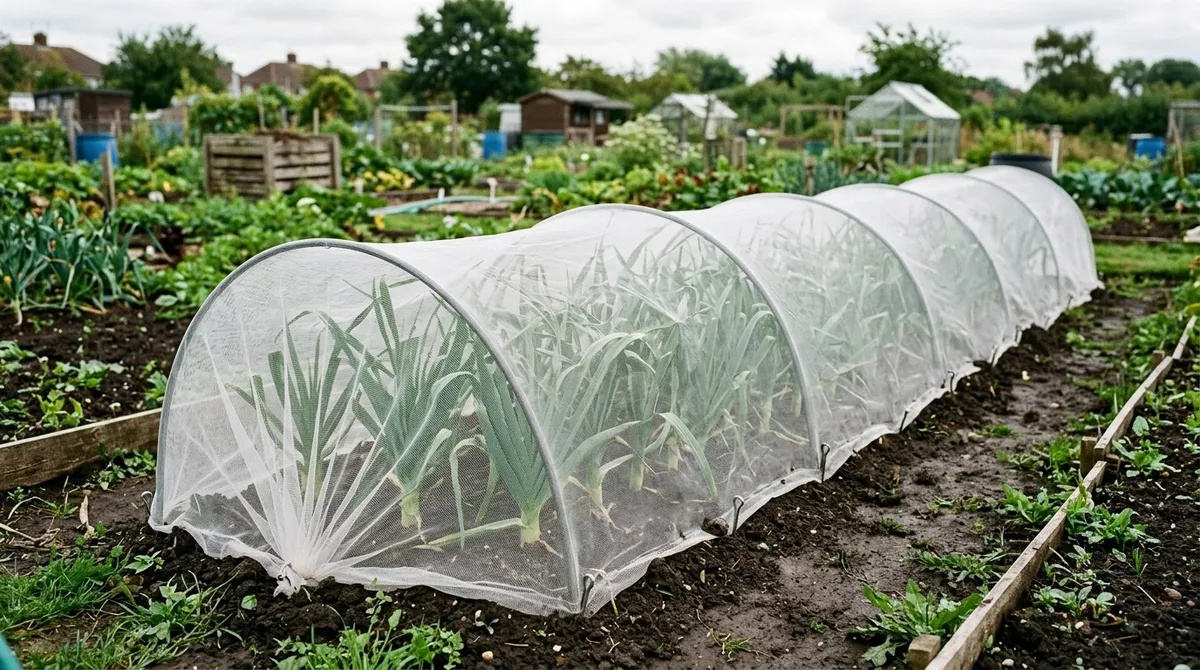
Fine insect mesh is the best defence. It stops the moths laying eggs on your crops, so there are no caterpillars to deal with. It also keeps out cabbage whites, cabbage root fly and flea beetle.
- Use fine insect mesh. Butterfly netting with bigger holes won’t stop such a small moth.
- Cover plants as soon as you plant them out.
- Support the mesh on hoops so leaves don’t press against it.
- Weigh down or bury the edges so nothing crawls under.
- Lift it only to weed or harvest, then close it again.

Mesh tunnels keep the moths off. Lift them only to weed or harvest, then pull them straight back over.
Pick off caterpillars on uncovered plants
For brassicas you can’t cover, hand-picking works well. Turn the leaves over and look underneath. Hold a tray or a piece of card below the leaf, because disturbed caterpillars drop on a silk thread. Pick off any see-through cocoons too.
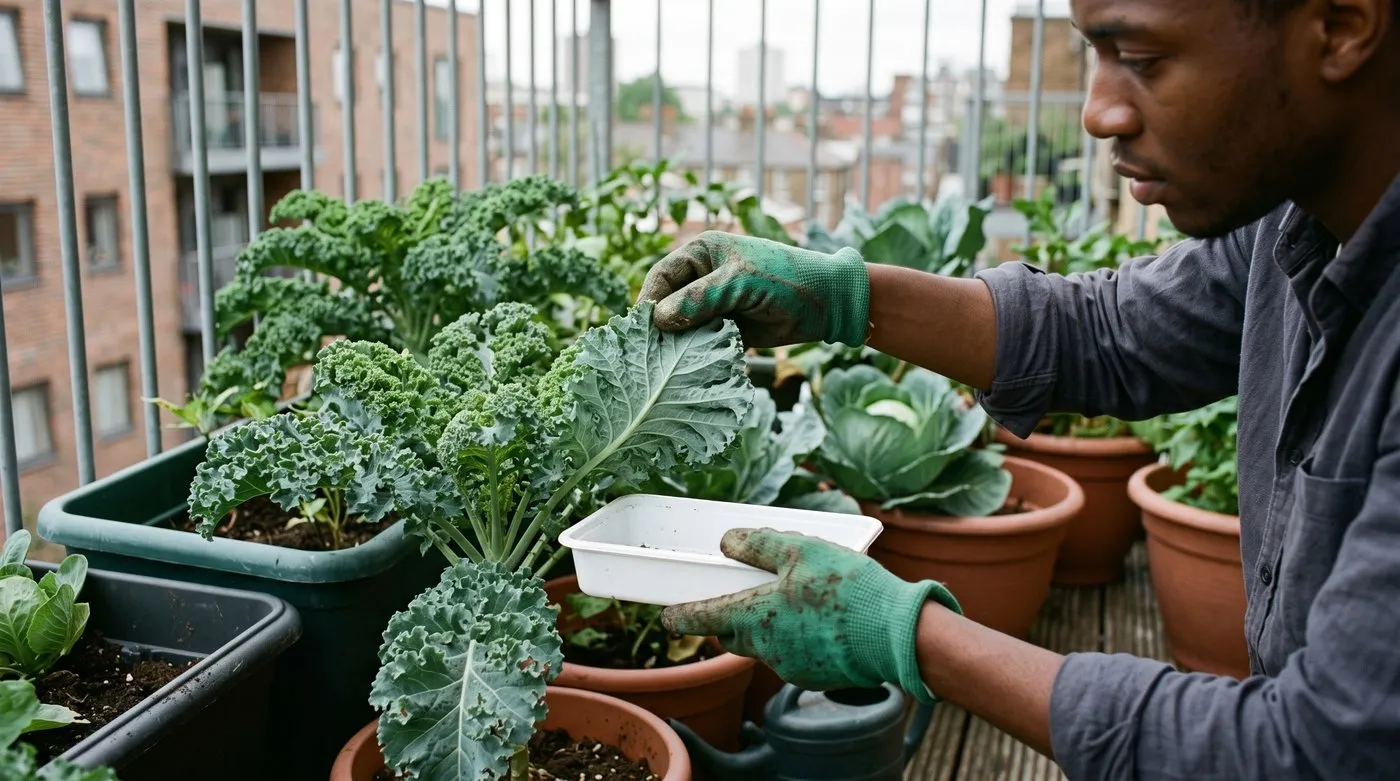
Hold a tray under the leaf as you turn it. Disturbed caterpillars drop on a silk thread and land right in it.
Check once or twice a week through summer. Each check catches the caterpillars that hatched since the last one.
Let wildlife help
Birds, ground beetles, spiders and tiny parasitic wasps all eat or attack diamondback caterpillars. Avoid broad-spectrum insecticides, which kill these helpers too.
Clear up after harvest
Pull up old brassica stalks and remove fallen leaves at the end of the season. Compost them or bin any covered in cocoons. Keep cruciferous weeds such as charlock down nearby.
Note on sprays: Bt (Bacillus thuringiensis) products are not authorised for UK home gardeners, and home-made soap or garlic mixes are not legal to use as pesticides. Mesh and hand-picking are the safe, legal route.
Common mistakes with diamondback moth
- Netting too late. Mesh over plants that already have eggs or caterpillars traps them in with your crop. Cover at planting time, or check carefully first.
- Using the wrong netting. Bird or butterfly netting has holes far too big for this small moth.
- Only checking the tops of leaves. The caterpillars live underneath. Always turn leaves over.
- Leaving gaps at the edges. Moths find any gap. Weigh down the mesh all the way round.
- Reaching for a spray. It kills the wildlife that helps control them, and Bt is not authorised for home use anyway.
Brassicas are fussy about more than caterpillars. The guide to common brassica diseases helps if leaves are yellowing or spotted, and the flea beetle guide covers tiny pinholes on seedlings. You’ll find more pest help in the garden problems guides.
Once your crops are safe under mesh, read the guide to growing kale for the hardiest brassica to keep you picking through winter.
Frequently asked questions
What is diamondback moth and why is it a UK problem?
It is a small moth whose caterpillars eat brassica leaves. Most arrive from mainland Europe in spring and summer, and in some years huge numbers fly in at once. Several generations can follow in a warm summer, so damage builds as the season goes on.
What does diamondback moth damage look like?
Look for see-through window panes in brassica leaves. The caterpillars eat the underside and leave the thin top skin. As the leaf grows, the windows split into small ragged holes. Bad attacks can leave leaves lacy.
How do I get rid of diamondback moth on cabbages?
Cover cabbages with fine insect mesh and pick off any caterpillars. Put mesh on at planting time and weigh down the edges. On uncovered plants, turn leaves over, remove caterpillars and cocoons, and clear old brassica stems after harvest.
How can I tell diamondback caterpillars from cabbage white caterpillars?
Diamondback caterpillars are much smaller and wriggle wildly when touched. They grow to about 1cm, are pale green and taper at both ends. Large cabbage white caterpillars are much bigger, hairy, and yellow with black markings.
Can I use a Bt spray for diamondback moth?
No, Bt products are not authorised for UK home gardeners. Home-made sprays are not legal to use either. Mesh, hand-picking and leaving birds and predatory insects to help are the routes open to you.
Our team produces practical UK gardening guidance from source research, contributor records and established horticultural practice. Editorial standards are overseen by Matt W.