Key takeaways
- Pale, papery window-pane patches on leaves are the first sign of leek moth
- Caterpillars then tunnel into the centre of the leek, leaving droppings and rot
- Two generations a year, with caterpillars in late spring and late summer
- Fine insect mesh or fleece from April to September is the reliable defence
- Leek moth caterpillars have legs and a head; allium leaf miner maggots do not
- Damaged leeks are usually fine to eat once you trim out the tunnelled parts
Leek moth is a small moth whose caterpillars tunnel into leeks, onions, garlic and chives. The good news is that you can keep it out without any spray. A fine mesh cover, fitted before the moths arrive and sealed at the edges, keeps a leek bed almost clean.
This guide shows you how to spot the damage, how to tell leek moth from allium leaf miner, and when to put the mesh on.
What leek moth damage looks like
Pale, papery patches on the leaves are the first sign. Young caterpillars feed inside the leaf and eat everything except the thin outer skin. You can see light through the patches, which is why gardeners call it window-paning.
As the caterpillars grow, they move into the folded centre of the leek and bore down into the shaft. The tunnels fill with green-brown droppings (frass). On onions and garlic they can reach the bulb. Rot often follows, and small plants may collapse.
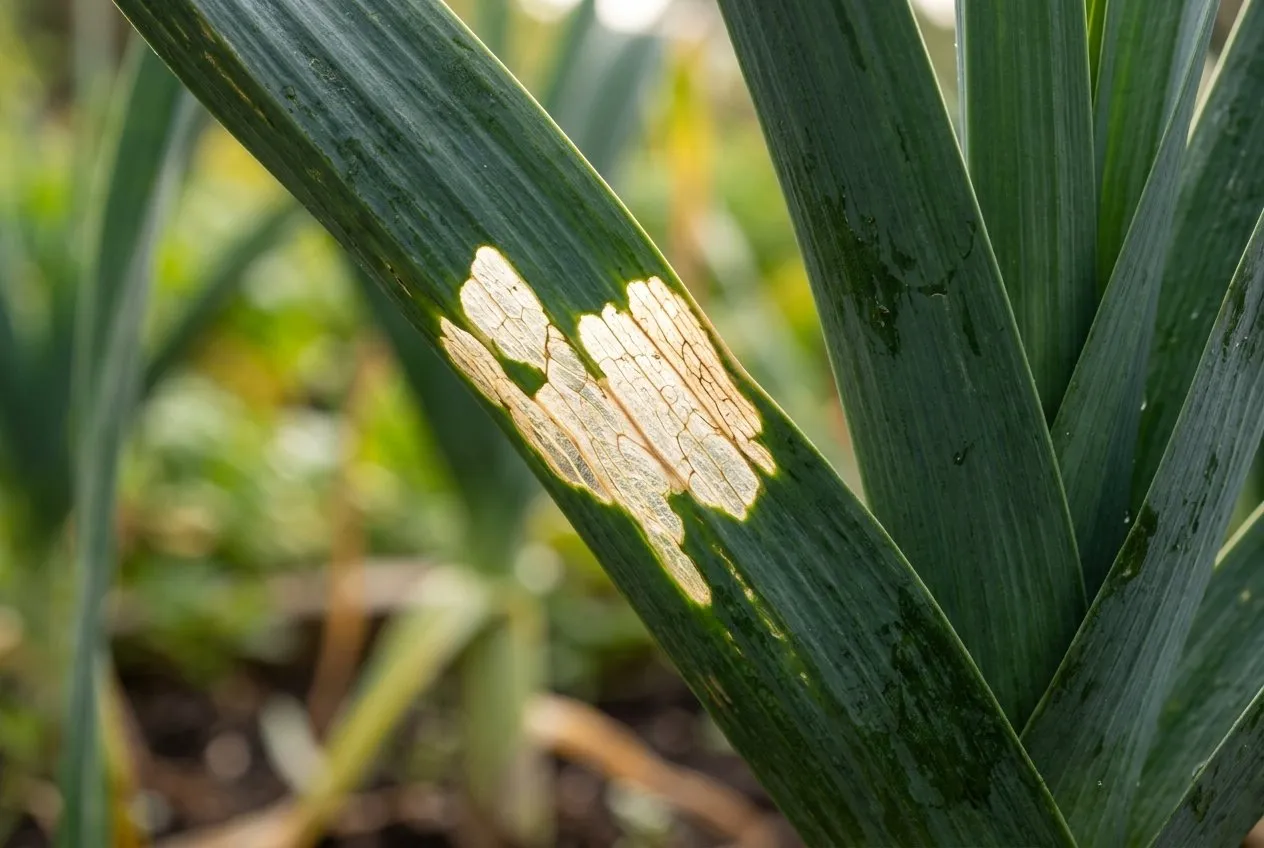
Papery, see-through patches like this are the first clue. Check the centre of the plant for caterpillars straight away.
Slice a damaged leek open and you may find the culprit. Leek moth caterpillars are creamy white with a pale brown head and small legs, and grow to about 1cm long.
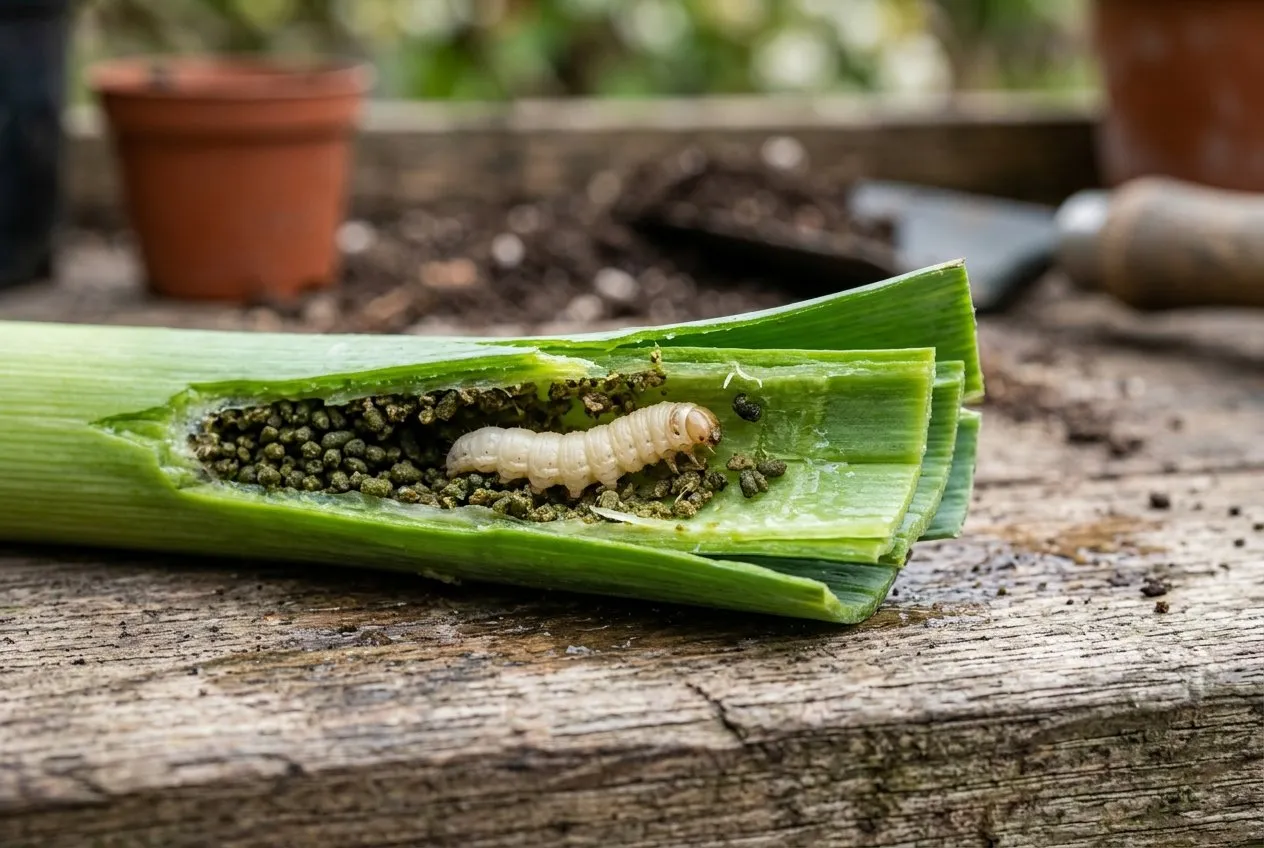
Inside the leek, the caterpillar leaves a tunnel packed with droppings. Once it is in this deep, no cover will help this plant.
How to recognise the moth and its cocoons
The adult is a small, slim brown moth with a white mark on its folded wings. It flies at dusk and hides by day, so most people never see one. The damage almost always turns up first.
The easiest stage to spot is the cocoon. Caterpillars that have finished feeding spin a loose, net-like silk cocoon on the outside of a leaf or on nearby debris. Squash any you find. Each one is a moth that won’t lay eggs on your crop.
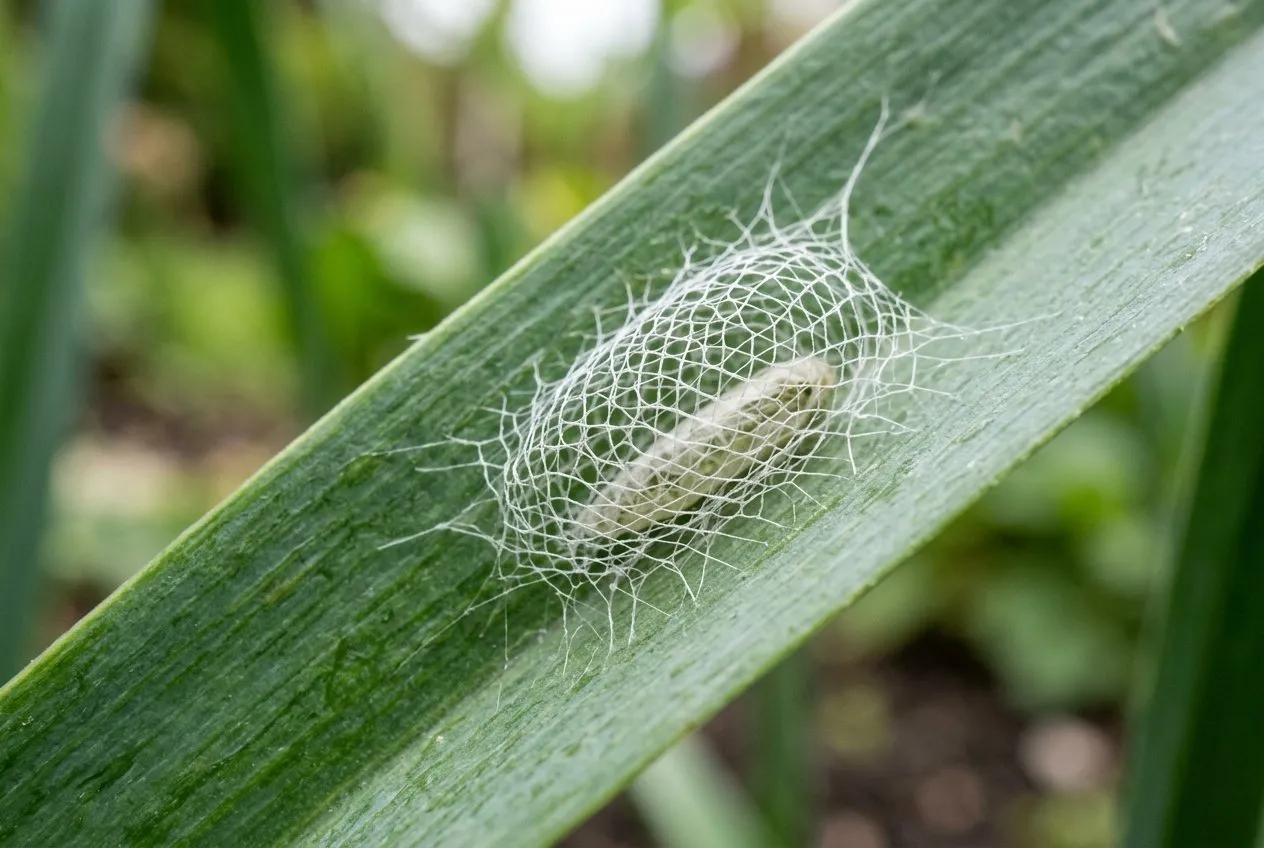
The net-like cocoon is easy to spot once you know it. Squash any you find to cut down the next generation.
Leek moth or allium leaf miner?
The quickest test is the grub. Leek moth caterpillars have a head and legs. Allium leaf miner maggots have neither. The difference matters, because the two pests fly at different times.
| Feature | Leek moth | Allium leaf miner |
|---|---|---|
| Adult | Small brown moth | Small grey fly |
| Grub | Creamy caterpillar with head and legs | Legless white maggot |
| First clue | Pale, papery patches | Neat rows of white dots down the leaves |
| Pupae | Net-like silk cocoons on the leaves | Hard brown pupae inside the stem |
| Adults fly | Spring and late summer | March to April and October to November |
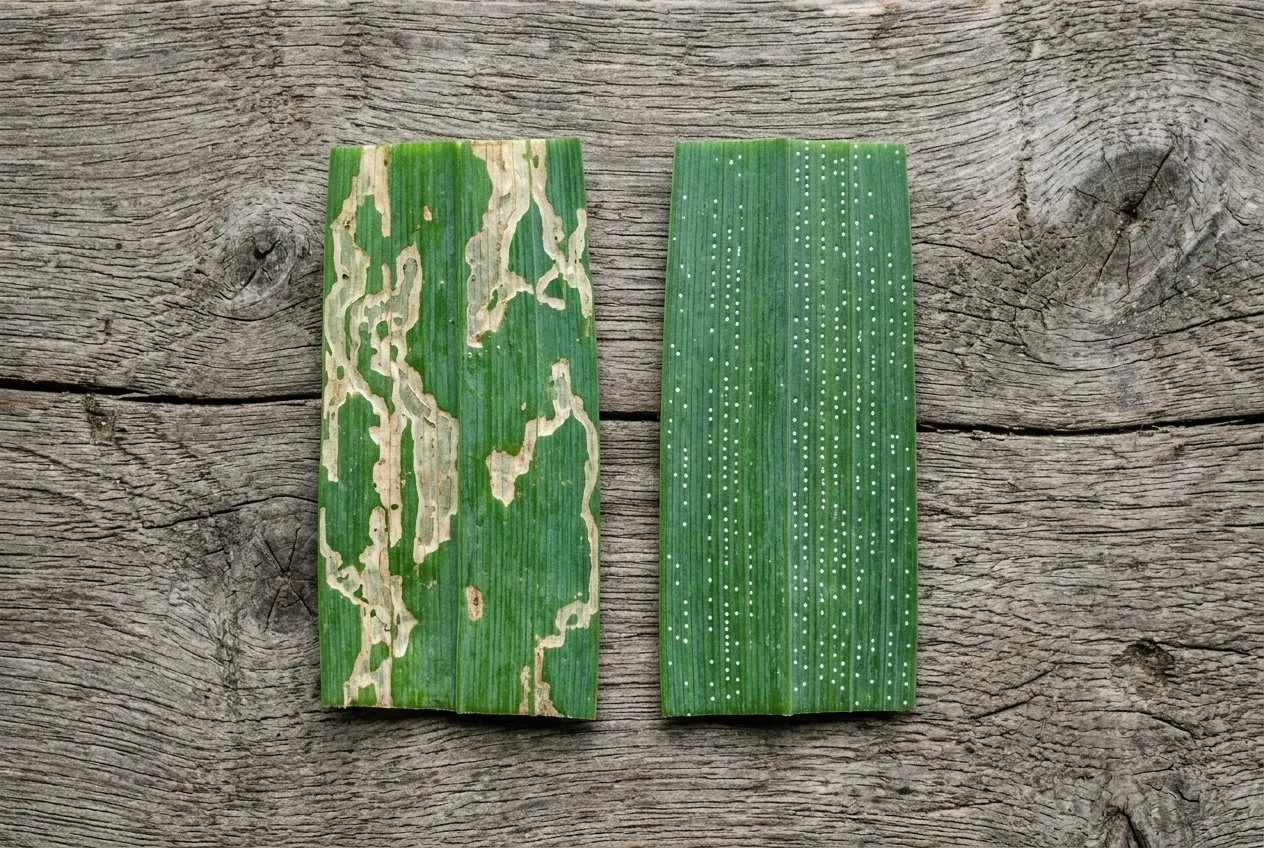
Leek moth leaves pale grazed patches; allium leaf miner leaves neat lines of white dots where the fly has fed.
If you see rows of dots and find brown pupae inside, read the allium leaf miner control guide for its own cover dates. Orange pustules rather than tunnels point to a disease, covered in the guide to leek rust.
When leek moth is active
Leek moth has two generations a year in the UK. Adults spend the winter tucked into sheds, hedge bottoms and plant debris.
| Time of year | What is happening | What to do |
|---|---|---|
| Winter | Adults hidden away | Clear old allium leaves, dig over empty beds |
| April to May | First moths fly and lay eggs | Get mesh on by April |
| May to June | First caterpillars feed | Check for papery patches, keep mesh sealed |
| July to August | Second moths fly and lay eggs | Keep mesh on, squash any cocoons |
| August to September | Second caterpillars feed | Keep mesh on until the end of September |
| October to November | Adults look for winter shelter | Lift mesh, clear debris |
Timings shift by a week or two with the weather and how far north you are. Leek moth is most common in southern and eastern England, but it has spread north and west.
How to stop leek moth with insect mesh
Cover the crop with fine insect mesh or fleece from April to the end of September. It stops females landing on the leaves to lay eggs. There is no spray that reaches caterpillars once they are inside the leek, so prevention is the answer.
- Push hoops into the bed over the row, high enough for the leeks to grow.
- Drape fine insect-proof mesh or fleece over the hoops, leaving plenty of slack.
- Bury or weigh down every edge, including the ends.
- Lift the cover only briefly on a dry day to weed or water, then seal it again.
- Check the edges after windy nights.
Fine mesh lets rain and air through, so it is better than fleece in summer. The garden fleece guide covers the difference between the two.
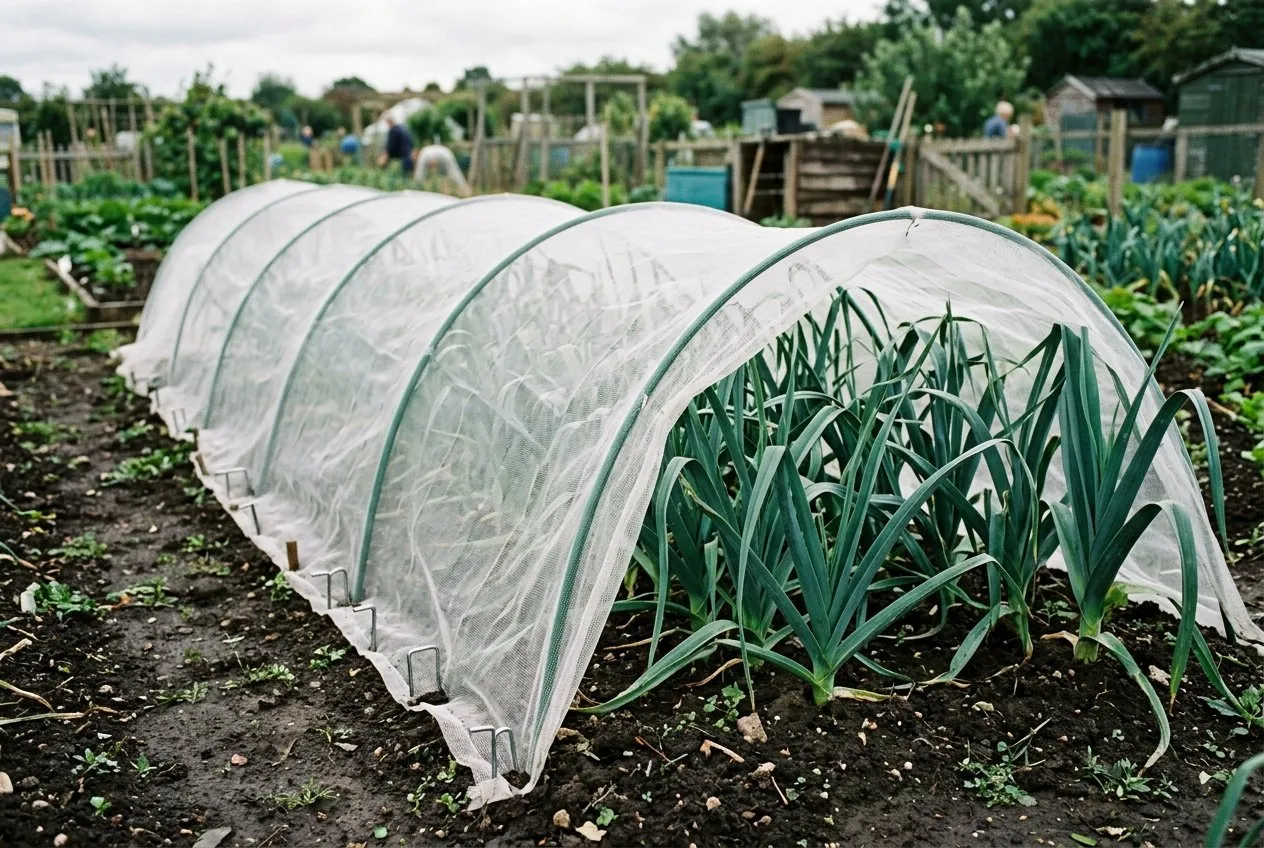
Mesh on hoops does the job, but close the ends too. An open end like this lets moths walk straight in.
Other ways to cut leek moth numbers
Mesh does most of the work. These help keep the local population down:
- Squash cocoons and caterpillars whenever you spot them.
- Clear old leaves of leeks and onions after harvest. Put infested material in the green waste bin rather than an open heap next to the bed.
- Dig over empty allium beds in winter so birds and beetles find any pupae.
- Welcome predators. Ground beetles, birds and small parasitic wasps all take leek moth. A log pile or rough corner nearby helps.
- Rotate your crops. Rotation won’t stop moths flying in, but it helps with soil diseases. The crop rotation planner shows where alliums fit.
If you also get onion root fly, its timing overlaps, and one cover can protect against both. The onion root fly guide has the details.
Can you eat leeks damaged by leek moth?
Yes, most damaged leeks are fine to eat. Strip off the tunnelled leaves, cut away any part with droppings and rinse the rest. The solid white shaft is usually clean.
Throw out any leek that is soft, slimy or smells sour right through. That is rot getting in through the tunnels.

A clean leek beside a tunnelled one. Trim back to firm white flesh and the rest can go in the pot.
Common mistakes with leek moth
- Covering after you see damage. By then eggs are laid. Get mesh on in April.
- Taking the mesh off in summer. The second generation does a lot of damage to bigger leeks. Keep it on until the end of September.
- Leaving gaps. A moth that walks under a loose edge or through an open end lays as many eggs as one that flew in.
- Composting infested leaves beside the bed. Cocoons in that debris become next year’s moths.
- Mistaking it for leaf miner. The two need different cover dates, so check the grub first.
For more help with veg plot pests, visit the pest control hub. The vegetable pests and diseases guide puts leek moth alongside the rest.
Now your leeks are protected, read the guide to growing leeks in the UK for sowing, planting and earthing up.
Frequently asked questions
What does leek moth damage look like?
Pale, papery patches on the leaves first, then tunnels full of droppings. Young caterpillars feed inside the leaf and leave see-through windows. Older ones bore into the folded centre of the leek and down into the shaft. Rot often follows, and small plants can collapse.
When should I put mesh on leeks for leek moth?
Cover from April and keep the mesh on until the end of September. That spans both flights, when females lay eggs on the leaves. Lift it only briefly on dry days to weed, then seal it straight back down.
How do I tell leek moth from allium leaf miner?
Leek moth caterpillars have a head and legs; leaf miner maggots have neither. Allium leaf miner also leaves neat rows of white dots down the leaves and hard brown pupae inside the stem. Leek moth leaves net-like silk cocoons on the outside of the leaves.
Are leeks with leek moth damage safe to eat?
Yes, most are fine once trimmed. Strip off the tunnelled leaves and cut away any part with droppings or rot. The clean white shaft below is good to cook. Throw away only leeks that are soft, slimy or rotten right through.
Does crop rotation stop leek moth?
No, rotation on its own won’t stop it. The moths fly in from nearby gardens and plots. Rotation still helps with soil diseases such as white rot, so keep doing it alongside mesh.
How many generations of leek moth are there a year?
Two a year in the UK. The first lot of caterpillars feeds in late spring and early summer. The second feeds in late summer and early autumn, often doing more harm to bigger leeks. Adults spend the winter hidden in sheltered spots.
Our team produces practical UK gardening guidance from source research, contributor records and established horticultural practice. Editorial standards are overseen by Matt W.