Key takeaways
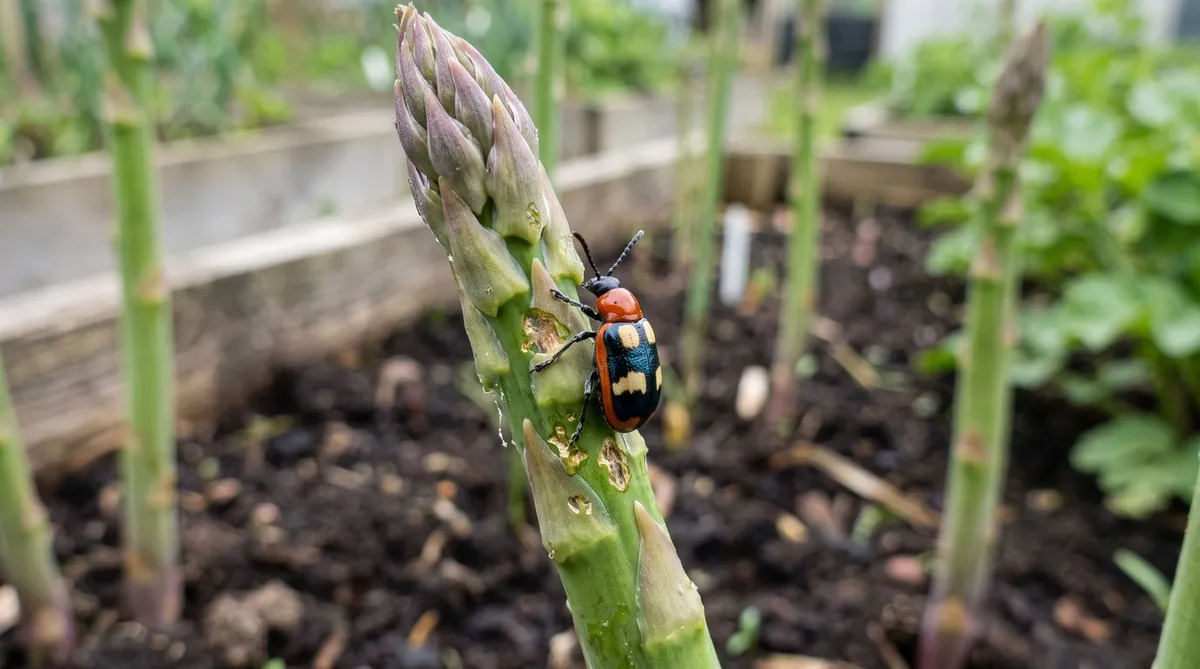
- Adults are 6-8mm, with a red thorax and six cream spots on dark wing cases
- Grubs are plump and grey with a black head, and strip the fern in summer
- Summer fern matters more than spears, as it feeds next year's crop
- Check every few days from May to September and pick off what you find
- Rub off the dark eggs that stand upright along the stems
- Cut down yellowed fern in autumn and clear debris where adults overwinter
The asparagus beetle is a small, handsome beetle with a red thorax and six cream spots on dark blue-black wing cases. It and its grey grubs chew asparagus spears and strip the summer fern. Regular hand-picking and a tidy-up in autumn keep it in check without sprays.
The spears are not the main worry. The fern that grows after harvest feeds the crown for next year, so that’s what you need to protect. This guide shows you how to spot every stage and keep your bed cropping for years.
How to identify asparagus beetle
Look for three stages on the plants: adults, eggs and grubs. They are often all there at once by midsummer.
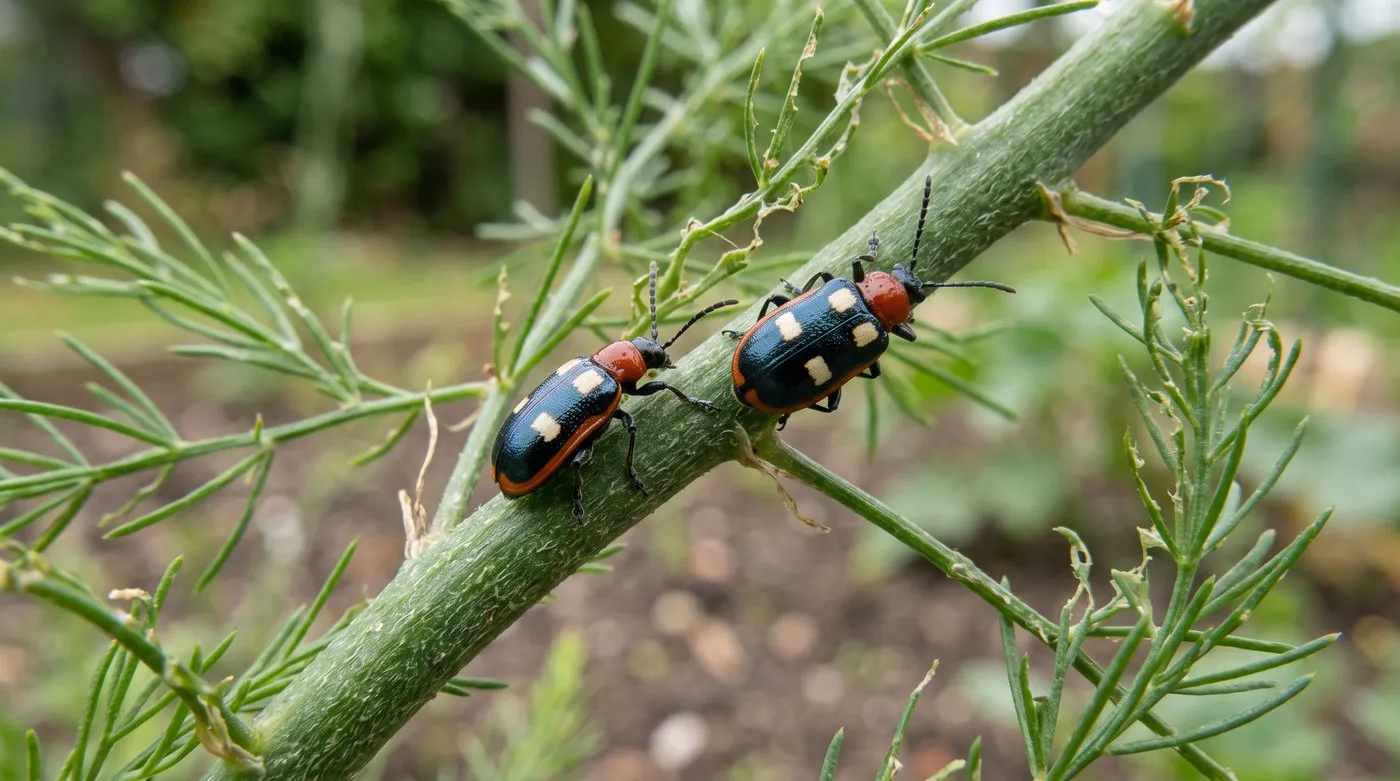
Look for the red thorax and six cream spots. Adults often sit on the upper stems on warm days.
- Adults: 6-8mm long and slim. A red thorax, blue-black wing cases with three cream spots on each, and orange edges. They drop to the ground or fly off when disturbed.
- Eggs: dark brown or black, about 1mm long. They are stuck by one end, so they stand up from the stem, often in short rows.
- Grubs (larvae): plump, soft and grey to olive green, with a black head and up to about 8mm long. They feed on the fern, then drop to the soil to pupate.
A rarer relative, the spotted asparagus beetle, is orange with black spots and feeds mostly on the berries. It does far less harm. Don’t confuse either with the lily beetle, which is all bright red and only eats lilies and fritillaries.
What does asparagus beetle damage look like?
Damage shows up in three ways, and each tells you how urgent things are.
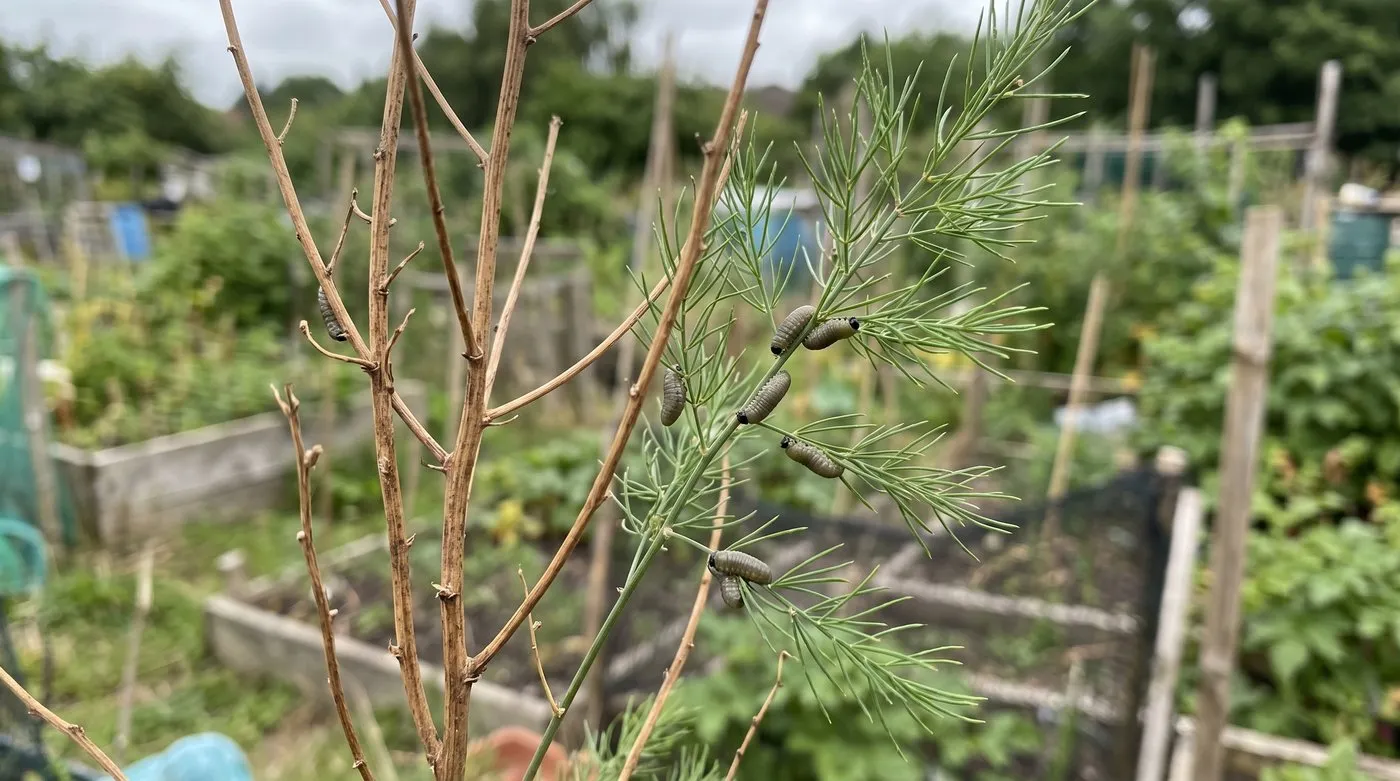
Plump grey grubs with black heads strip the needles and leave bare stalks. Pick them off before they reach the soil to pupate.
- Scarred spears. Small chewed patches on spears in spring. Adults are around, but the spears are still fine to eat.
- Eggs on stems. Rows of dark eggs standing up from the stems. Grubs will hatch within days, so rub the eggs off now.
- Stripped fern. Grubs eat the green needles, leaving bare, brown stems. This is the damage that weakens the crown.

Eggs stand up from the stem like tiny dark pegs. Rub them off with a thumb whenever you spot them.
Why does summer fern damage matter most?
The fern is the crop’s engine. After you stop cutting spears in mid to late June, the plant grows tall fern that feeds the crown underground. Next spring’s spears depend on how well it fed this summer.
If grubs strip the fern in July or August, the crown goes into winter hungry. Next year’s spears are fewer and thinner. Repeat that for a few years and the bed fades.
That’s why the most important checks come after harvest, from late June to September. Lots of growers stop looking once the spears finish, which is just when the grubs get going. Our guide on how to grow asparagus covers when to stop cutting and how to feed the bed.

Bare, brown stems next to lush fern show how much a heavy grub attack takes. Stripped fern can’t feed the crown for next year.
How to get rid of asparagus beetle by hand
Hand-picking is the most reliable way to control asparagus beetle in a garden bed. A few minutes every few days is enough for most home beds.
- Go out on a warm, still day. Beetles are active and easy to see.
- Hold a pot of water under the stem. Adults drop when disturbed, so they fall in rather than escaping.
- Pick or knock off adults. Approach slowly so they don’t fly.
- Squash or pick off grubs. They can’t fly, so they are easier to catch.
- Rub off eggs. Check stems and the tips of the fern.
- Repeat every few days. Catching the first adults in May stops them laying the next round of eggs.
The beetle can have two or more generations in a summer, so keep going until September. The first adults in May are the most valuable to catch, as each one removed means fewer eggs.

Hold a pot of water under the stem before you reach for a beetle. They drop when disturbed, so they fall straight in.
Encouraging predators around the bed
Natural enemies won’t wipe beetles out, but they help keep numbers down. Ground beetles hunt grubs and pupae in the soil. Birds such as robins and blackbirds pick off grubs, and tiny parasitic wasps attack the eggs.
To help them:
- Leave a strip of rough grass or a few low plants around the edge of the bed.
- Add a small log pile for wildlife nearby for ground beetles to shelter in.
- Grow flowers such as yarrow, alyssum and calendula nearby for parasitic wasps and hoverflies.
- Avoid insecticides that kill helpful insects too.
Our guide to ground beetles in the garden explains how to welcome more of these night-time hunters.
Autumn clear-up to stop beetles overwintering
Adults spend the winter in plant debris, hollow stems and cracks in the soil nearby. Clearing up in autumn means fewer beetles waiting in spring.
- Cut down the fern to just above ground level once it has turned yellow, usually October or November.
- Remove it from the bed and take it to green waste rather than leaving it lying about.
- Clear fallen fern bits and weeds so there’s less shelter.
- Mulch the bed with well-rotted compost or manure to feed the crowns.
For other jobs at that time of year, see our list of autumn gardening jobs.
Asparagus beetle calendar
| Month | What to do |
|---|---|
| April | Clear any debris left from winter. Watch for the first adults as spears appear |
| May | Check every few days. Pick off adults and rub off eggs before grubs hatch |
| June | Keep picking while you harvest. Stop cutting spears by late June |
| July and August | Peak grub time on the fern. Check every few days and pick off grubs |
| September | Keep checking. Adults start looking for winter shelter |
| October and November | Cut down yellow fern, clear debris and mulch the bed |
Should you spray asparagus beetle?
Usually not. Hand-picking, predators and an autumn clear-up keep most home beds under control.
If an attack is severe and the fern is being stripped, use an insecticide approved for use on asparagus. Spray only after you’ve finished harvesting, and follow the label exactly. Spray in the evening, when bees are less active, and never on plants in flower.
Common mistakes with asparagus beetle
- Stopping checks when harvest ends. The worst damage comes to the summer fern, so keep looking until September.
- Grabbing at beetles. They drop and escape. Hold a pot underneath first.
- Ignoring the eggs. Rubbing off a row of eggs saves a lot of fern later.
- Leaving old fern standing all winter. It gives adults a cosy place to wait for spring.
- Over-cutting spears. A weak crown suffers more from beetle damage, so stop harvesting by late June.
For more help with pests on your veg plot, see our vegetable pests and diseases guide and the pest control hub.
Frequently asked questions
What does an asparagus beetle look like?
It is a slim beetle about 6-8mm long. It has a red thorax and blue-black wing cases with six cream spots and orange edges. The grubs are plump, grey and soft with a black head. The eggs are dark and stand up along the stems.
When should I check for asparagus beetle?
Check from May to September, every few days in warm weather. Look at the spears, the fern and the stems for beetles, grubs and eggs. Keep checking after harvest ends, as damage to summer fern matters most.
How do I get rid of asparagus beetles without chemicals?
Pick them off by hand. Hold a pot of water under the stem, as beetles drop when disturbed. Squash the grubs, rub off eggs, welcome predators and clear old fern in autumn so fewer adults overwinter.
Do asparagus beetles damage the spring crop?
A little, but the real harm comes later. Adults nibble and scar spears, which is mostly cosmetic. Grubs stripping the summer fern weaken the crown, so next spring’s spears are fewer and thinner.
Do I need to spray for asparagus beetle?
Usually not. Regular hand-picking and autumn tidying keep most beds under control. For a severe attack, use an insecticide approved for asparagus, after harvest, exactly as the label directs.
Is the asparagus beetle the same as the lily beetle?
No, they are different beetles. The lily beetle is all bright red and feeds on lilies and fritillaries. The asparagus beetle has cream spots on dark wing cases and only feeds on asparagus.
Now you can spot and stop asparagus beetle, read our organic pest control guide for more chemical-free ways to protect your crops.
Our team produces practical UK gardening guidance from source research, contributor records and established horticultural practice. Editorial standards are overseen by Matt W.