Key takeaways
- Ground beetles are night-time hunters that eat slugs, snails, caterpillars and grubs
- The violet ground beetle, about 3cm long with a purple sheen, is the easiest to spot
- By day they hide under logs, stones, mulch and fallen leaves
- A log pile or a grassy beetle bank gives them a home all year
- Skip slug pellets and dig less, so the beetles and their young survive
Ground beetles are the night shift of a UK garden. These quick, shiny beetles come out after dark and hunt slugs, snails, caterpillars and soil grubs. Give them somewhere to hide by day and they’ll stick around.
Most gardeners never see them at work, because it all happens while we’re asleep. Lift a log or a stone on a damp day, though, and you’ll often find one dashing for cover. Here’s how to recognise the common ones and how to make your garden a place they want to live.
What are ground beetles and why do they matter?
Ground beetles are a big family of hunting beetles that live at soil level. Most are black or dark brown, some with a lovely metallic sheen. They’re one of the best free slug patrols you can have.
As well as slugs and snails, they eat leatherjackets, cutworms, vine weevil grubs and the eggs and grubs of pests like cabbage root fly. Some smaller kinds eat weed seeds lying on the soil.
The best bit is that they look after themselves. They breed in your soil and come back year after year. They won’t wipe out every slug, but alongside your other efforts they make a real difference. A shady log pile, a layer of mulch and some undisturbed border edges are all they need.
How to identify common UK ground beetles
Most garden ground beetles have the same look: a flattish oval body, long legs for running and strong jaws at the front. Here are the ones you’re most likely to meet.
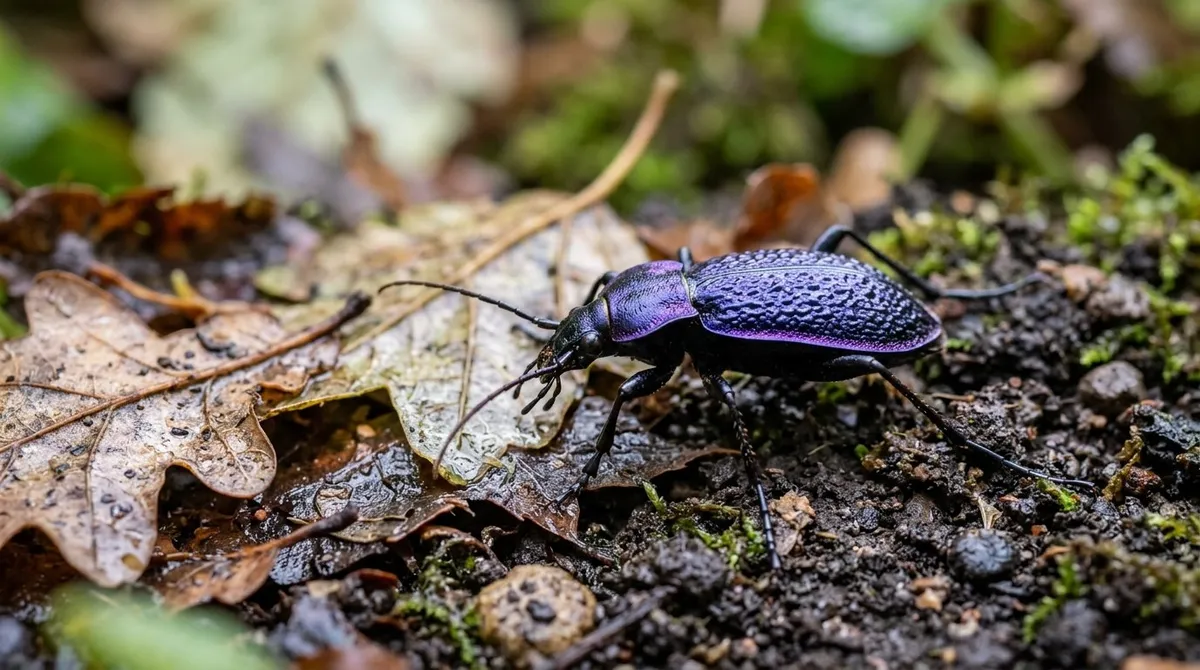
The violet ground beetle (Carabus violaceus) is the one most people know. It’s big, about 3cm long, and black with a violet or purple sheen along the edges, which shows best in sunlight. It can’t fly, and it loves slugs and snails. You’ll find it in gardens, hedgerows and woodland edges all over the UK.
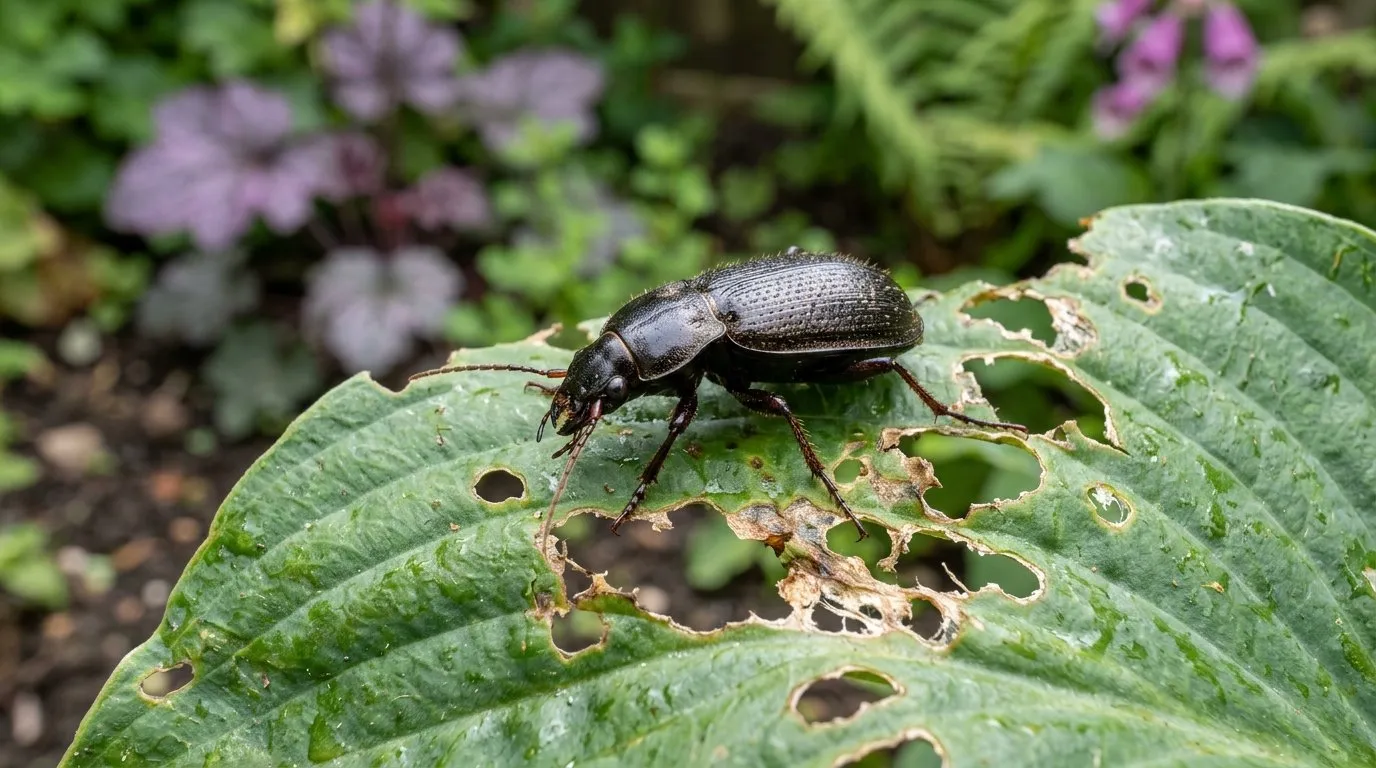
A violet ground beetle with that lovely purple-blue shine on its wing cases. It’s one of the biggest beetles you’ll find in most gardens.
The black clock beetle (Pterostichus madidus) is one of the most common in British gardens. It’s plain shiny black and about 1.5cm long. It eats slugs, caterpillars, aphids and other small creatures.
The common ground beetle (Pterostichus melanarius) looks a lot like the black clock beetle but is a little longer and slimmer, with fine grooves down its back. It’s very common on veg plots and allotments.
The strawberry seed beetle (Harpalus rufipes) is dark brown to black with reddish legs. It eats lots of weed seeds, such as chickweed and fat hen. True to its name, it will also nibble the seeds off ripe strawberries, so it’s a mixed blessing on a fruit patch.
The garden ground beetle (Nebria brevicollis) is smaller, dark with paler legs, and is often about early in the year. It’s good at picking off aphids that fall to the ground.
The rain beetle (Carabus nemoralis) is another big one, with a bronze-green tint. It’s less common than the violet ground beetle and turns up in gardens near hedges and woodland. It tackles large slugs and snails.
UK ground beetle species comparison table
| Beetle | Size | Look | Main food | Can it fly? |
|---|---|---|---|---|
| Violet ground beetle | Large | Black with a violet sheen | Slugs, snails | No |
| Black clock beetle | Medium | Plain shiny black | Slugs, caterpillars, aphids | Rarely |
| Common ground beetle | Medium | Jet black, grooved back | Slugs, grubs | Sometimes |
| Strawberry seed beetle | Medium | Dark brown, reddish legs | Weed seeds, small insects | Yes |
| Garden ground beetle | Small | Dark brown, pale legs | Aphids, small creatures | Yes |
| Rain beetle | Large | Bronze-green tint | Large slugs, snails | No |
There are lots of smaller ground beetles too, but they’re hard to tell apart without a magnifying glass. The Buglife charity has handy ID help if you want to dig deeper.
What do ground beetles eat?
Ground beetles eat pretty much any small creature they can catch. Between them, the different kinds cover most common garden pests.
Slugs and snails are the main meal for the bigger beetles. They grab them with their strong jaws and eat them on the spot. Ground beetles are a great partner to hedgehogs when it comes to slug control.
Caterpillars and grubs are on the menu too, including cutworms, leatherjackets and vine weevil grubs. Beetles find them just under the soil surface, which helps protect root crops and cabbages.
Aphids that drop off plants get picked up by the smaller beetles. Ladybirds and hoverflies deal with the aphids up on the plants, and ground beetles mop up the ones that fall.
Weed seeds are eaten by a few kinds, such as the strawberry seed beetle. That’s a little bit of free weeding every night.
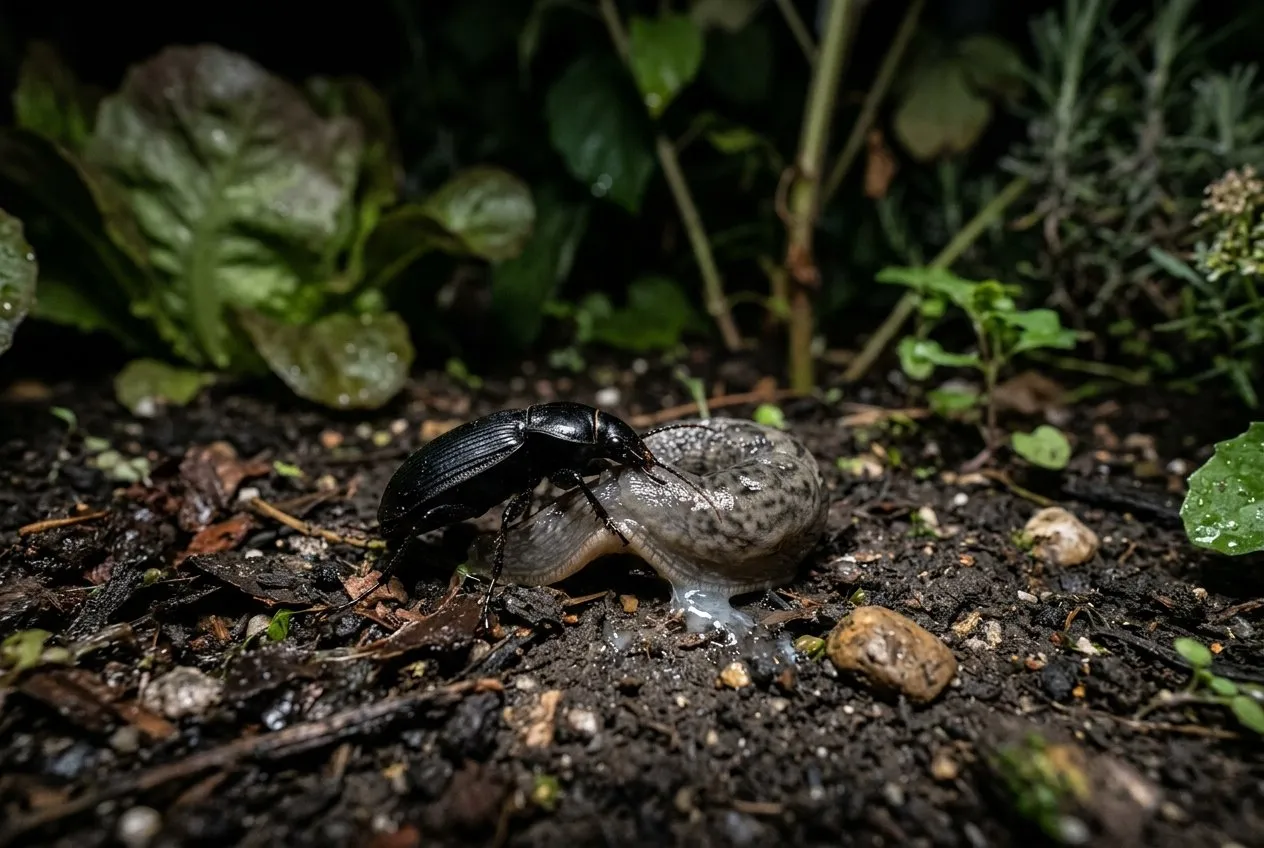
A ground beetle grabbing a slug on damp soil after dark. Most of their hunting happens at night, so it’s easy to miss.
How to encourage ground beetles in your garden
Ground beetles want three things: a hiding place for the day, no pesticides, and soil left alone so their young can grow. Sort those out and numbers build up nicely.
Provide ground-level shelter
Ground beetles hide somewhere dark and damp by day. Easy options:
- Log piles. Stack logs loosely with gaps between them, in a shady corner against a hedge or wall.
- Stone or brick heaps. Even a small pile of old bricks gives plenty of crevices.
- Thick mulch. A layer of bark, leaf mould or woodchip about 7cm deep makes a good cover.
- Fallen leaves. Clear them off paths and the lawn if you like, but leave some under hedges and in borders over winter.
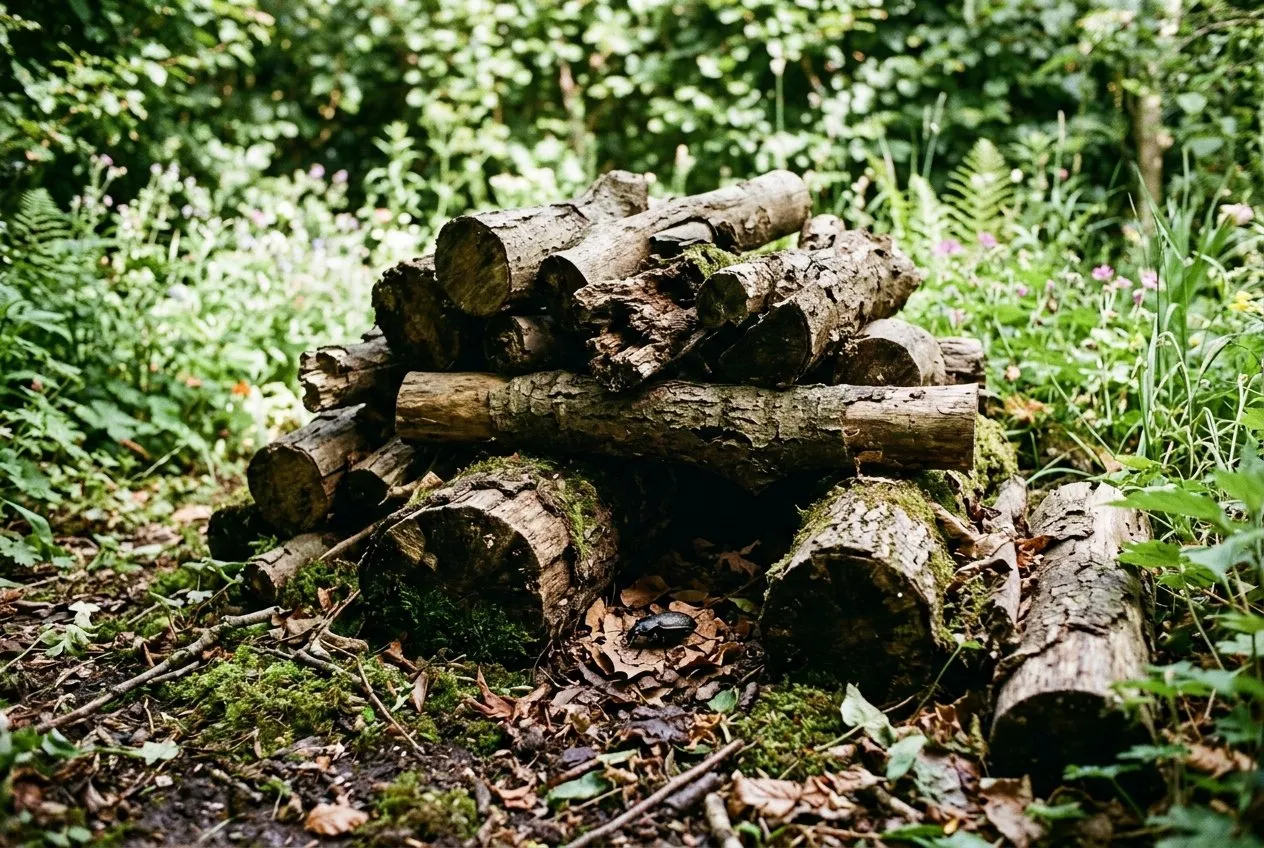
A log pile in a shady corner makes a perfect daytime hideout. Stack it loosely and let moss and leaves gather.
A bug hotel is fun to build, but ground beetles prefer simple shelters right at soil level. A loose stack of old roof tiles on the ground suits them better than a fancy box on a post.
Build a beetle bank
A beetle bank is a low ridge of soil planted with clumpy grasses. It was first used on farms, but it works well on an allotment or in a bigger garden too.
Pile up a ridge of soil about knee high and a couple of metres wide. Run it along the edge of a veg patch. Plant it with tussock grasses such as cocksfoot, timothy or Yorkshire fog. Their dense bases stay snug and dry through winter.
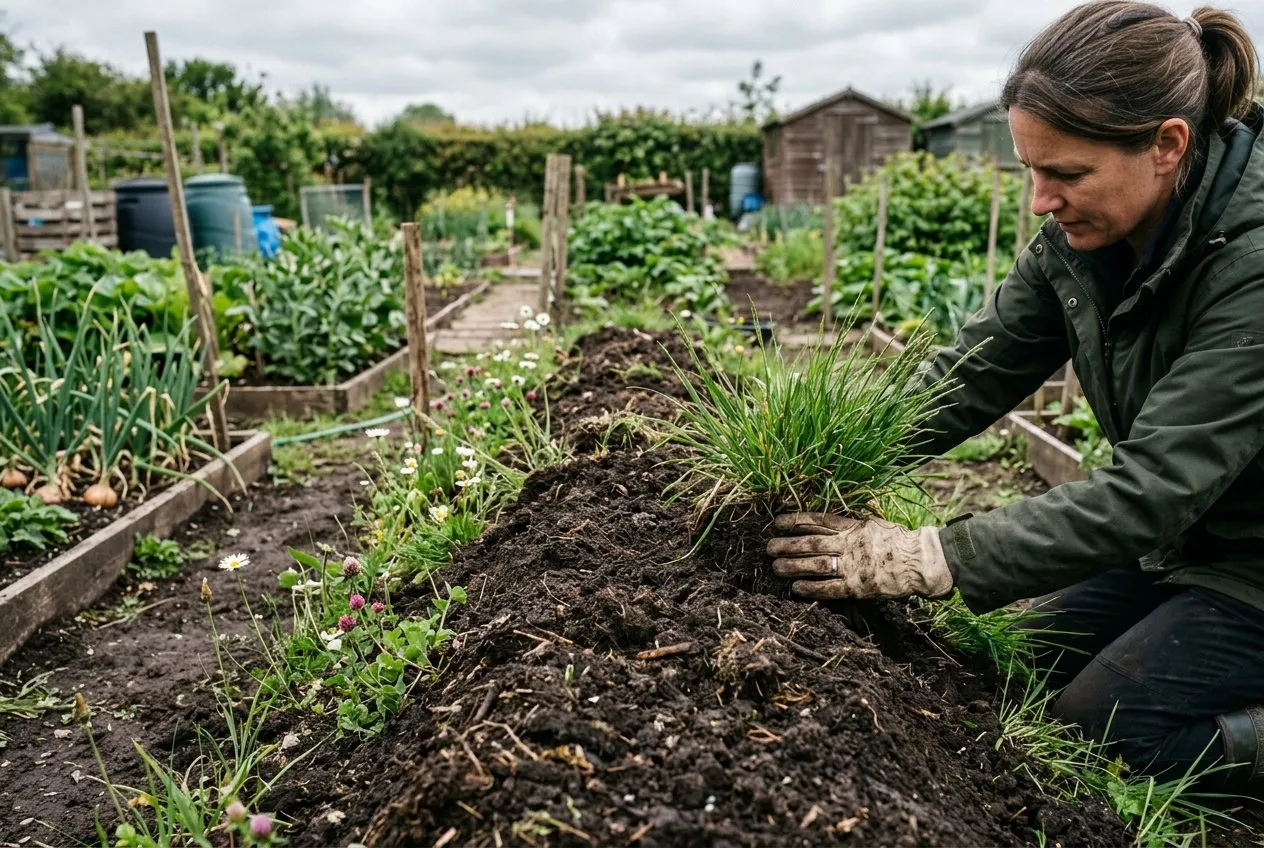
Planting up a beetle bank. The grassy ridge gives ground beetles and other helpful creatures a home all year.
Let the grasses grow tall and don’t cut them back until late winter. Beetles and their young spend the winter tucked into the clumps.
Stop using slug pellets
This is the big one. Slug pellets take away the beetles’ food, and beetles that eat poisoned slugs can be harmed too. That includes pellets sold as “wildlife-friendly”.
The first season without pellets can be a bit rough on your lettuces. Be patient. As the beetles and other predators settle in, things usually even out.
For more ways to manage pests without chemicals, see our organic pest control guide.
Reduce digging
Ground beetles lay their eggs in the soil, and their young grow up there. Lots of digging destroys them. A no-dig approach on the veg patch keeps them safe.
If you do dig, leave some areas alone all year. Permanent borders, the base of a hedge and your beetle bank are good spots to leave be.
Ground beetles and the wider garden ecosystem
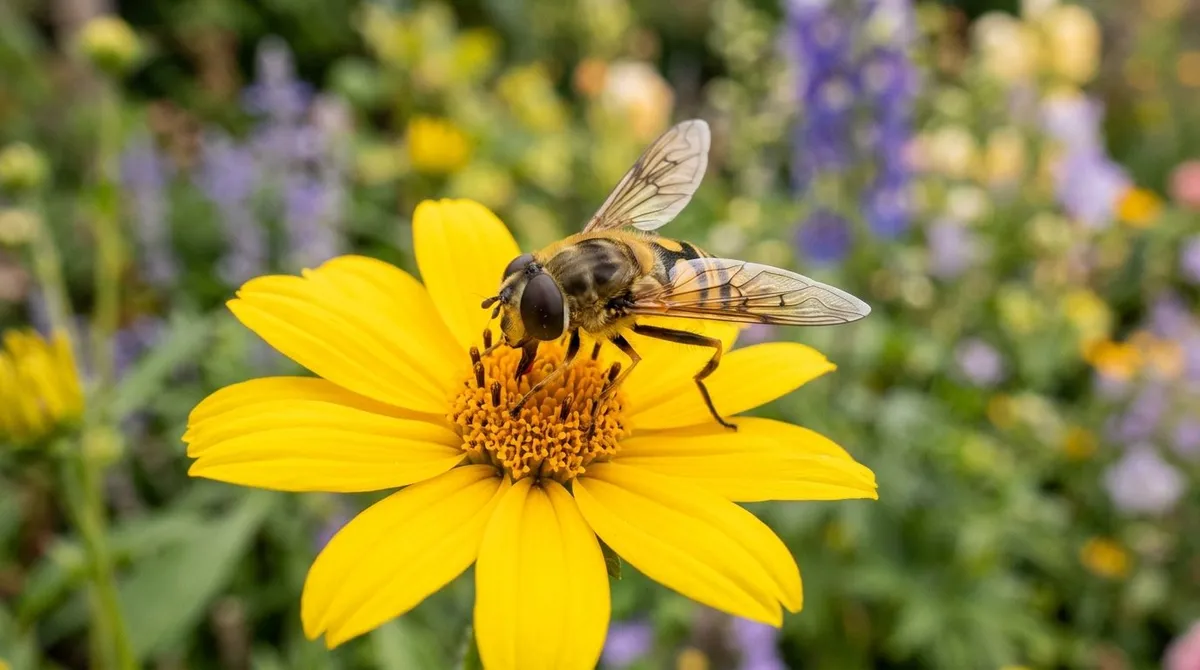
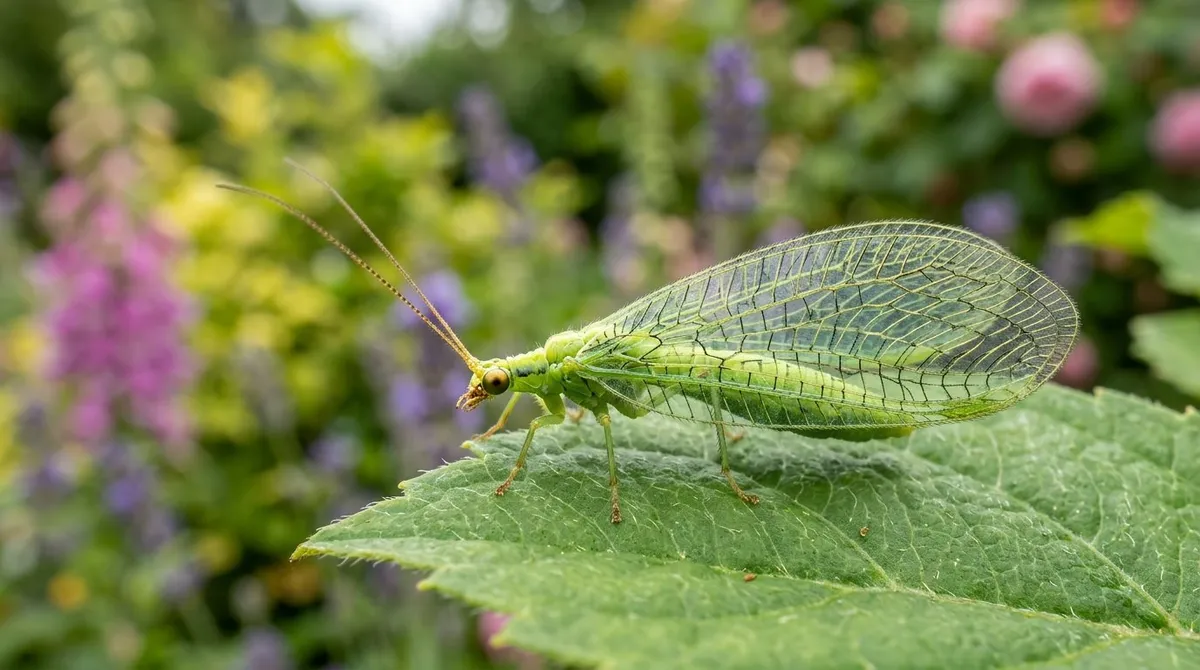
Ground beetles are one part of a team. Lacewings, hoverflies and ladybirds eat aphids, and small parasitic wasps go after caterpillars. Each one handles a slightly different job.
A wildlife garden that welcomes all of them copes better than one that relies on sprays. If one helper has a bad year, the others fill the gap. Ground beetles do the night shift, while ladybirds and hoverflies work the day.
Compost heaps are great for ground beetles too. The warm, damp heap draws in slugs and other small creatures, and the beetles follow. Our guide to composting for wildlife shows how to set one up.
The RHS suggests leaving rough grass edges, mowing a bit less and skipping pesticides. Hedgehogs, frogs and ground-nesting bees will thank you as well.
Frequently asked questions
Are ground beetles harmful to plants or people?
No, they are friends of the garden. They hunt slugs, grubs and other small creatures rather than chewing leaves. A big one might give a curious finger a small nip, and some release a smelly liquid if handled, but they are harmless. Just let them be.
What do ground beetles eat in gardens?
Slugs, snails, caterpillars and soil grubs, plus fallen aphids. The big violet ground beetle loves slugs and snails. Smaller kinds eat aphids that drop to the ground, and a few eat weed seeds lying on the soil.
How do I attract ground beetles to my garden?
Give them somewhere dark and damp to hide by day. Log piles, stone heaps, thick mulch and fallen leaves all work. A beetle bank is great if you have space. Stop using slug pellets, dig less, and leave a patch of rough grass alone all year.
What is a beetle bank and how do I make one?
It’s a low ridge of soil covered in clumpy grasses. Make it about knee high and a couple of metres wide, then plant tussock grasses like cocksfoot or timothy. The dense grass bases give beetles a warm, dry hideout all year.
Why do I see ground beetles in my house?
They wander in at night, often drawn by lights. They do no harm indoors. Pop a glass over the beetle, slide a card underneath, and let it go outside near a log pile or compost heap. Switching off outside lights by the door helps keep them out.
Do ground beetles fly?
Some can, but most garden ones prefer to run. The violet ground beetle can’t fly at all, because its wing cases are joined together. Smaller kinds have working wings but rarely use them. They’re quick on their feet, which is how they catch their dinner.
When are ground beetles most active in UK gardens?
From spring to autumn, after dark. They hide by day and come out at night to hunt. Warm, damp nights are their favourite, which is handy, as that’s when slugs are out too. Some spend the winter as adults and wake up early in spring.
Our team produces practical UK gardening guidance from source research, contributor records and established horticultural practice. Editorial standards are overseen by Matt W.