
Key takeaways
- The red 7-spot is the most common garden ladybird
- Ladybird larvae are spiky and dark, and they're friends, not pests
- Not every ladybird eats aphids. Some eat mildew or scale insects
- Harlequins are big, variable and usually have brown legs
- Stopping pesticides and leaving leaf litter are the two biggest helps
- Fennel, dill and cow parsley give adults nectar and pollen
Ladybirds are some of the best pest controllers you can have in a UK garden. Give them flowers, a few aphids and somewhere to sleep through winter, and they’ll happily keep greenfly and blackfly in check for you.
Not all ladybirds are red with black spots. Some are yellow, orange, cream or brown. Most eat aphids, but some eat mildew or scale insects. Once you know what to look for, you’ll spot them everywhere.
Why ladybirds matter in gardens
Ladybirds are top aphid eaters. They tuck into the greenfly and blackfly that pester roses, beans, cabbages and fruit trees every summer.
Adults eat plenty, but the larvae are the real stars. A single larva gets through hundreds of aphids in the few weeks it spends growing. That makes ladybirds one of the easiest forms of biological pest control you can have, and they arrive for free.
Different ladybirds have different tastes. Some eat scale insects, mealybugs or spider mites. The 22-spot eats mildew. So a garden with a few kinds of ladybird gets help with lots of problems at once.
Common UK ladybird species identification
A handful of species make up most garden sightings, and they’re easy to learn.
The 7-spot ladybird (Coccinella septempunctata) is the classic British ladybird. Bright red with seven black spots: three on each wing case and one in the middle across the join. It’s the one most likely to be in your garden right now.
The 2-spot ladybird (Adalia bipunctata) is smaller. Usually red with two black spots, but some are black with red spots. It used to be very common but has become scarcer since the harlequin arrived.
The 14-spot ladybird (Propylea quattuordecimpunctata) is small and yellow or cream, with squarish black spots that often join up. Easy to miss, but common in gardens and hedges.
The 22-spot ladybird (Psyllobora vigintiduopunctata) is tiny and bright yellow with neat round black spots. It eats mildew rather than aphids, so look for it on plants with a powdery white coating.
The orange ladybird (Halyzia sedecimguttata) is pale orange with white spots. It mostly lives up in trees and turns up in gardens with big old trees nearby. It eats mildew too.
The cream-spot ladybird (Calvia quattuordecimguttata) is maroon-brown with cream spots. You’ll find it in hedges and along woodland edges, eating aphids on trees.

Left to right: 7-spot, 2-spot and harlequin ladybirds, showing how size and colour vary.
The harlequin ladybird problem
The harlequin ladybird (Harmonia axyridis) comes from Asia and turned up in the UK in 2004. It has since spread across much of England and Wales.
Harlequins cause trouble for our native ladybirds. They’re bigger, they compete for the same food, they eat other ladybirds’ eggs and larvae, and they breed fast.
They’re tricky to identify because their patterns vary so much. A common form is orange-red with lots of black spots. Others are black with two or four red spots, or orange with no spots at all. The best clues are brown legs and a white patch behind the head.
You can report harlequin sightings to the UK Ladybird Survey, which helps track how they’re spreading. There’s no need to kill them in your garden. It won’t make a difference, and it’s easy to kill a native ladybird by mistake.
Ladybird lifecycle: eggs, larvae, pupae, adults
Knowing each stage helps you spot ladybirds and leave them alone.
Eggs are laid in spring and early summer, in little clusters under leaves near aphids. They’re tiny, oval and bright yellow or orange. They hatch in about a week.
Larvae start eating aphids straight away. Over a few weeks they grow from tiny to about a centimetre long. They’re long, dark grey or black with orange or yellow marks and little spines. They look nothing like the adults, which is why so many get squashed by mistake.

A fully grown ladybird larva. Its spiky look fools lots of gardeners into thinking it’s a pest.
Pupae stick to leaves or stems and look like small orange or black blobs. They sit still for a week or so. Leave them be, as the adult is almost ready.
Adults come out soft and pale, then darken to their proper colours within a day. From egg to adult takes roughly a month or two, depending on the weather.
How to attract ladybirds to your garden
Making a ladybird-friendly garden is easy, and most of it is just good wildlife gardening.
Stop using pesticides. This is the big one. Insecticides kill ladybirds at every stage, and even organic sprays can harm them. If aphids get out of hand, a strong jet of water knocks them off without hurting the ladybirds. Our aphid control guide has more spray-free ideas.
Put up with a few aphids. A spring burst of aphids isn’t a crisis, it’s a dinner invitation. Ladybirds need aphids to breed. Wipe them all out in April and the ladybirds won’t stay to lay eggs. Give it a week or two before stepping in.
Leave leaf litter and dead stems. Ladybirds spend winter in sheltered spots near the ground. Leave some leaves under hedges, keep dead stems standing until spring and stack a few logs in a quiet corner.
Put up an insect house. A bug hotel filled with hollow stems, cardboard and bark gives ladybirds a winter home. Put it somewhere sunny and sheltered, at least a metre off the ground.
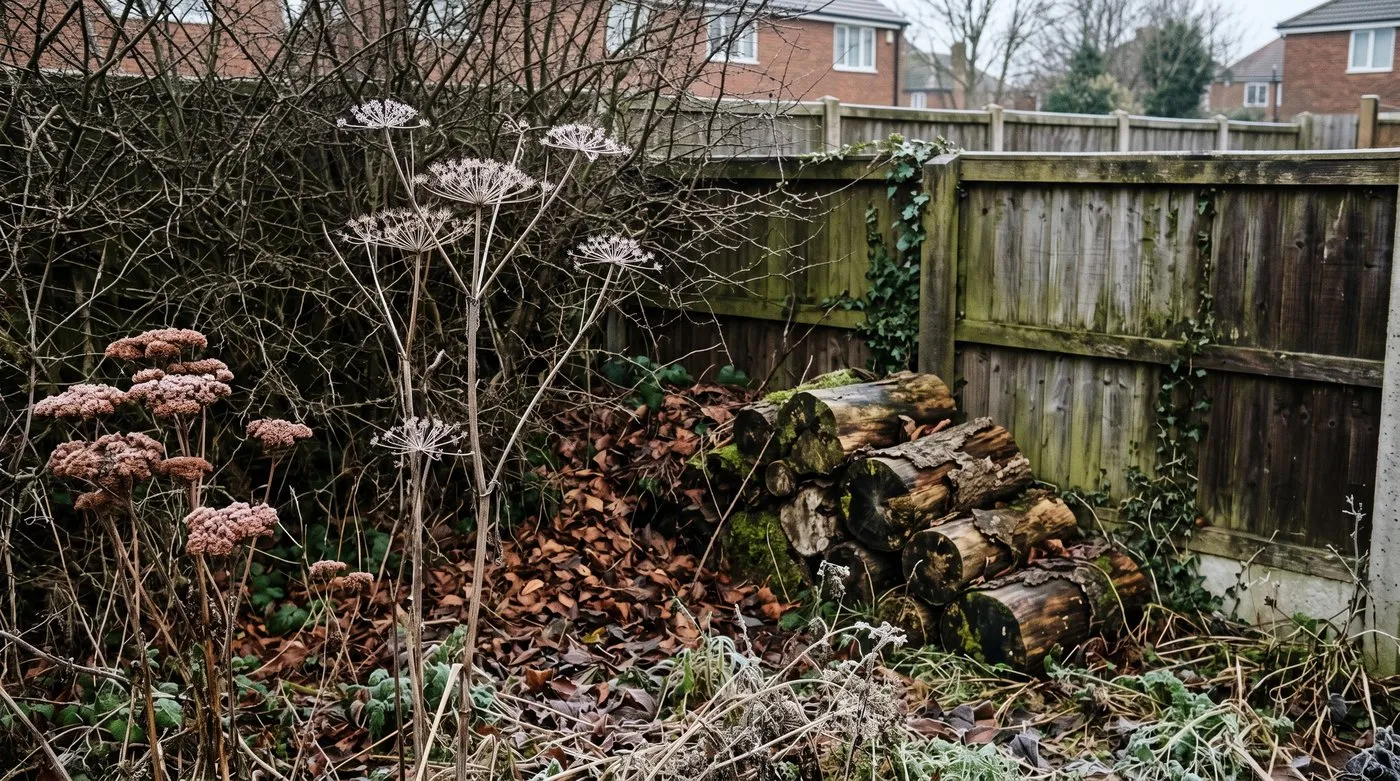
Leave some leaves under hedges and dead stems standing until spring. Ladybirds tuck into these sheltered spots for winter.
Overwintering behaviour and ladybird houses
Ladybirds go quiet from late autumn to early spring. They look for dry, sheltered gaps such as window frames, bark crevices, thick ivy, evergreen hedges and leaf litter.
Harlequins are famous for piling into houses in big groups, often round window frames and in lofts. They’re harmless. Don’t spray them. If they bother you, gently sweep them into a pot and move them to a shed or outdoor shelter.

An insect house packed with hollow stems and bark. A sunny, sheltered spot suits ladybirds best.
You can buy a ladybird house or make one easily. Pack a small wooden box with hollow canes, pine cones, corrugated cardboard and bark. Drill a few small entrance holes. Fix it to a post or wall facing south, out of the wind.
If you find ladybirds in it in early spring, leave them alone. They’ll wander out on their own as it warms up in March and April.
Garden plants that support ladybirds
As well as flat-topped flowers like fennel, lots of plants help ladybirds at different times of year.
| Plant group | Examples | How it helps | When |
|---|---|---|---|
| Flat-topped flowers | Fennel, dill, angelica, cow parsley | Nectar and pollen | Late spring to late summer |
| Nettles | Stinging nettle | Early aphids for food | Spring onwards |
| Wildflowers | Yarrow, oxeye daisy, tansy | Nectar and aphids | Summer |
| Native hedging | Hawthorn, blackthorn, field maple | Winter shelter and aphids | All year |
| Herbs | Coriander, chervil, parsley left to flower | Nectar | Summer |
| Climbers | Ivy, honeysuckle | Winter shelter | All year |
| Long grass | Mixed native grasses | Shelter | All year |
Nettles are a secret weapon. They get their own aphids early in spring, before your crops do, so ladybirds have food to build up numbers. Leave a small patch in a sunny corner.
Mix this with other natural helpers and you’ve got a garden that rarely needs a spray. Our guide to organic pest control has more ideas.
UK ladybird species comparison
| Ladybird | Spots | Colour | Size | Where you’ll find it | Eats |
|---|---|---|---|---|---|
| 7-spot | 7 black | Red | Medium | Gardens, grassland, hedges | Aphids |
| 2-spot | 2 black (varies) | Red | Small | Gardens, woods, towns | Aphids |
| 10-spot | Varies | Orange-red | Small | Woods, hedges, gardens | Aphids |
| 14-spot | Squarish black | Yellow | Small | Grassland, gardens, hedges | Aphids |
| 22-spot | 22 round black | Bright yellow | Small | Grassland, umbellifers | Mildew |
| Harlequin | None to many | Orange, red or black | Large | Everywhere | Aphids, other ladybirds |
| Orange | White | Pale orange | Medium | Trees, especially sycamore | Mildew |
| Cream-spot | Cream | Maroon-brown | Medium | Hedges, woodland edges | Aphids |
| Kidney-spot | 2 red | Black | Small | Ash and sycamore trees | Scale insects |
The 2-spot is one of the natives that has struggled most since the harlequin arrived. Sending your sightings to the UK Ladybird Survey helps keep track of how they’re doing.
Frequently asked questions
How many ladybird species are there in the UK?
There are dozens, though most people only ever meet a handful. The red 7-spot is the one you’ll see most often in gardens. Many of the others are tiny and live on tree bark, in grassland or in wetlands, so you’d have to look hard to find them.
Do ladybirds really eat aphids?
Yes, most of them do, and lots of them. The larvae are especially hungry and eat loads as they grow. Adults keep eating all season. Not every species is an aphid eater, though. The little yellow 22-spot ladybird eats mildew instead.
How do I identify a harlequin ladybird?
Look for a bigger ladybird with brown legs. Harlequins come in lots of patterns. A common one is orange-red with many black spots, while others are black with two or four red spots. A white or cream patch behind the head, often with a black M or W shape, is another clue.
What is the best way to attract ladybirds to my garden?
Stop using pesticides first. Sprays kill ladybirds and wipe out their food. Grow flowers such as fennel, dill and angelica, leave some leaf litter and dead stems for winter, and put up with a few aphids in spring. A varied, spray-free garden pulls ladybirds in on its own.
Are ladybird larvae harmful to plants?
No, they’re on your side. Ladybird larvae eat aphids and leave plants alone. They look nothing like the adults, with long, spiky, dark bodies and orange or yellow marks. Lots of people mistake them for pests, so learn to spot them before you reach for a spray.
Where do ladybirds go in winter?
They tuck themselves away from autumn to early spring. Favourite spots include window frames, bark crevices, leaf litter and thick evergreens. Harlequins often gather indoors. Help them by leaving log piles, leaf litter and hollow stems, or put up an insect house somewhere sheltered.
Should I buy ladybirds for my garden?
It’s not usually worth it, as most fly off soon after release. Making a ladybird-friendly garden works better over time. Grow nectar plants, skip the sprays and give them winter shelter, and they’ll come back each year. For quick aphid control in a greenhouse, parasitic wasps are a more reliable buy.
Our team produces practical UK gardening guidance from source research, contributor records and established horticultural practice. Editorial standards are overseen by Matt W.


