
Key takeaways
- Lacewing larvae are the aphid eaters, and they get through a lot of them
- Green lacewings are lime green with golden eyes. Brown ones are smaller and easy to miss
- Look for tiny white eggs on hair-like stalks under leaves
- Grow fennel, dill and yarrow to feed the adults
- Leave a few aphids and stop spraying so the larvae have food
- A box of rolled corrugated cardboard gives adults a winter home
Lacewing larvae are brilliant aphid eaters, and the adults are some of the prettiest insects in the garden. Give the adults nectar and somewhere to spend the winter, leave the larvae a few aphids to eat, and they’ll do a lot of your aphid control for you.
The trick is learning to recognise their eggs and larvae, so you don’t spray the very insects that are helping you. If you like the idea of using living helpers against pests, our guide to biological pest control with nematodes is a good next read.
How do you identify lacewings in UK gardens?
There are two main types: green lacewings and brown lacewings. Only a handful are regular garden visitors, and they’re easy to tell apart once you know what to look for.
Green lacewings
Green lacewings are lime green, about 1.5cm long, with shiny golden eyes. Their big, see-through wings are covered in a fine net of veins, which is where the name comes from. At rest they fold their wings like a little tent over the body. Pick one up and it may give off a pongy smell.
The common green lacewing (Chrysoperla carnea) is the one you’ll see most. It flies from spring to autumn and loves a lit window at night. The adults sip nectar, pollen and aphid honeydew. It’s the larvae that eat the aphids.
In autumn the adults look for somewhere sheltered to sleep through winter, often in houses, sheds and garages. While they hibernate they fade from green to a pinkish-brown, then turn green again in spring.
Brown lacewings
Brown lacewings are smaller and grey-brown. Their wings are narrower and less lacy-looking, so they blend into bark and dead leaves and get overlooked.
Here’s the bonus: brown lacewing adults eat aphids as well as their larvae. That makes them helpful at every stage of life.
| Feature | Green lacewing | Brown lacewing |
|---|---|---|
| Size | Larger | Smaller |
| Colour | Bright green, golden eyes | Brown or grey-brown |
| Wings at rest | Big, held like a tent | Narrower, held flatter |
| Adults eat | Nectar, pollen, honeydew | Aphids and small insects |
| Larvae eat | Aphids, whitefly, thrips, mites | Aphids, small insects |
| How often seen | Very common | Common but easy to miss |

A lacewing larva, sometimes called an aphid lion, grabbing an aphid on a rose stem with its curved jaws.
What is the lacewing lifecycle?
Knowing the stages helps you spot lacewings at work and leave them be.
Eggs
Lacewing eggs are some of the easiest insect eggs to spot. Green lacewings lay each tiny white egg on top of a thin, hair-like stalk under a leaf. The stalk keeps the egg out of reach of ants and hungry larvae. Females lay them near aphid colonies, so the babies have dinner waiting.
Brown lacewing eggs sit flat on the leaf with no stalk.
Larvae
The larvae are where the pest control happens. They’re small, grey-brown, bristly and shaped a bit like a tiny alligator, with big curved jaws. They look nothing like their parents. Some even pile the empty skins of their victims on their backs as camouflage.
Larvae spend a few weeks growing, eating all the while. As well as aphids, they eat:
- Whitefly
- Thrips
- Spider mites
- Mealybugs
- Very small caterpillars
- Insect eggs
They hunt by feel, swinging their heads from side to side until they bump into prey. Then they grab it and suck it dry in a few minutes.
Pupae
When it’s fully grown, the larva spins a little round silk cocoon under a leaf or in a crevice. About a week later in summer, the adult cuts a lid in the cocoon and climbs out.
Adults
Adults live for a few weeks in summer and are mostly out at dusk and at night. They feed on nectar, pollen and honeydew, mate and lay eggs. The last adults of the year go into hibernation in autumn and come out again in spring.
| Stage | Roughly how long | What’s happening |
|---|---|---|
| Egg | Under a week | Sitting on a stalk near aphids |
| Larva | 2-3 weeks | Eating aphids and other small pests |
| Pupa | About a week in summer | Changing inside a silk cocoon |
| Adult | A few weeks (longer if overwintering) | Feeding on nectar, mating, laying eggs |

Lacewing eggs on hair-like stalks under a leaf. Spot these and you know help is on the way.
How effective are lacewings at controlling garden pests?
Very good, especially the larvae. One larva eats hundreds of aphids while it grows, and it isn’t fussy about other small pests either.
| Predator | What it mainly eats |
|---|---|
| Green lacewing larva | Aphids, whitefly, thrips, mites, mealybugs |
| Ladybird larva | Mostly aphids |
| Hoverfly larva | Mostly aphids |
| Parasitic wasp | Aphids only (lays eggs inside them) |
That wider menu is handy in a greenhouse, where greenhouse pest control often means tackling whitefly and thrips as well as aphids.
What happens after lacewings find an aphid colony?
Adults lay their stalked eggs near the aphids. The eggs hatch within days and the larvae start eating. Over the next couple of weeks the colony shrinks, and ladybirds and hoverflies help mop up the rest. How quickly this happens depends on the weather and how many aphids there are.
So don’t reach for a spray the moment you see aphids. Have a look for lacewing eggs and larvae, ladybird larvae and hoverfly larvae first. If they’re there, give them a week or two to get on with it.
How do you attract lacewings to your garden?
Lacewings need four things: flowers for the adults, aphids for the larvae, shelter for winter and a garden free of pesticides.
Plants that attract adult lacewings
Adults love flat-topped flowers made up of lots of tiny blooms, like fennel and dill. The small, shallow flowers are easy for them to feed from.
| Plant | Flowers | Height | When it flowers | Good to know |
|---|---|---|---|---|
| Fennel | Yellow | Tall | Mid to late summer | Self-seeds, bronze form looks lovely |
| Dill | Yellow | Medium | Summer | Sow outside in April |
| Yarrow | White or pink | Short to medium | Summer | Native, copes with poor soil |
| Angelica | Green-white | Very tall | Early summer | Biennial, a real statement plant |
| Sweet cicely | White | Medium | Late spring | Happy in shade |
| Coriander | White or pink | Short | Summer | Let a few plants flower |
| Tansy | Yellow buttons | Medium to tall | Late summer | Native, spreads quickly |
Many of these are classic companion plants, which is part of why they work. Our companion planting guide has more ideas for growing them alongside your veg.
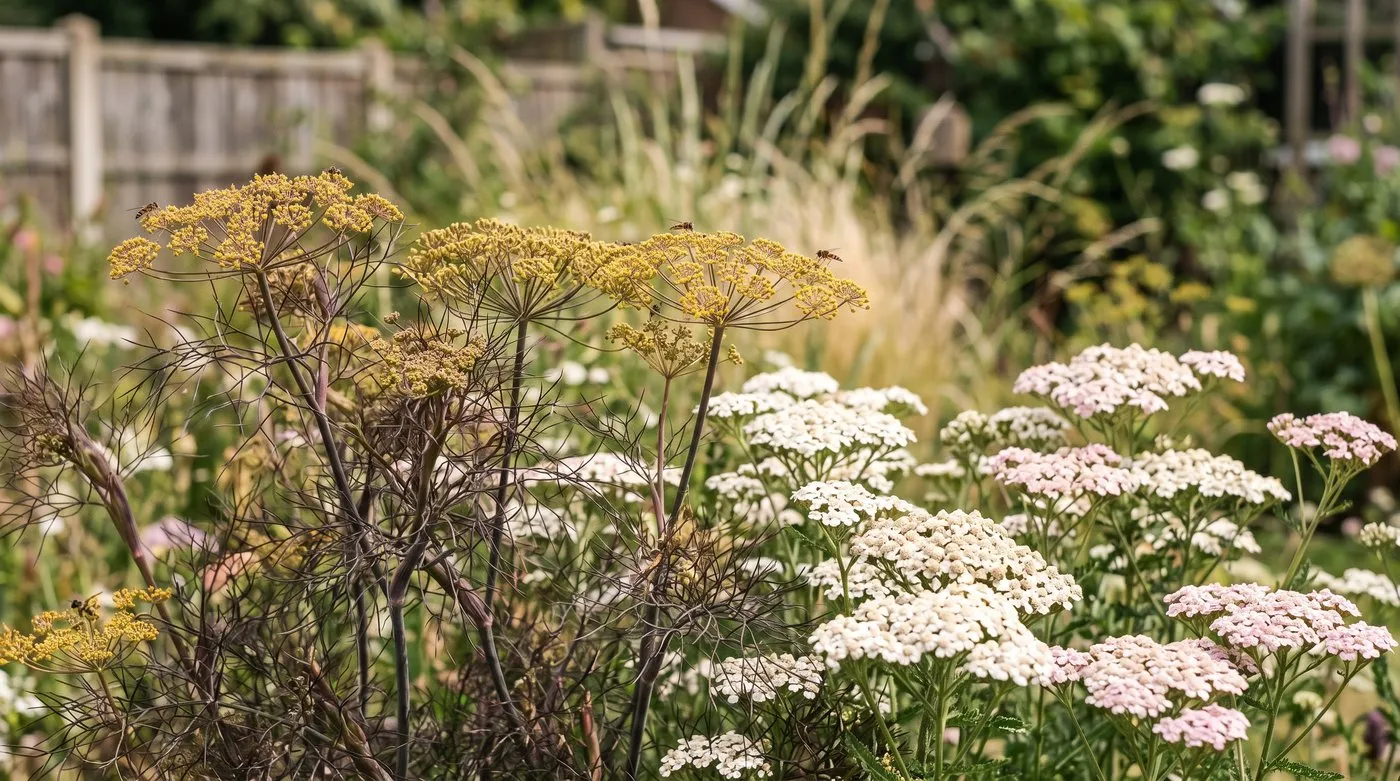
Flat-topped flowers made of lots of tiny blooms, like fennel and yarrow, are easy for adult lacewings to feed from.
Allow some aphid colonies to persist
It sounds odd, but lacewings need aphids. No aphids means nothing for the larvae to eat and no reason for adults to lay eggs. Leave early aphids on a few “sacrificial” plants such as nettles, nasturtiums or broad bean tips. They act as a nursery for lacewings, which then spread to your other plants.
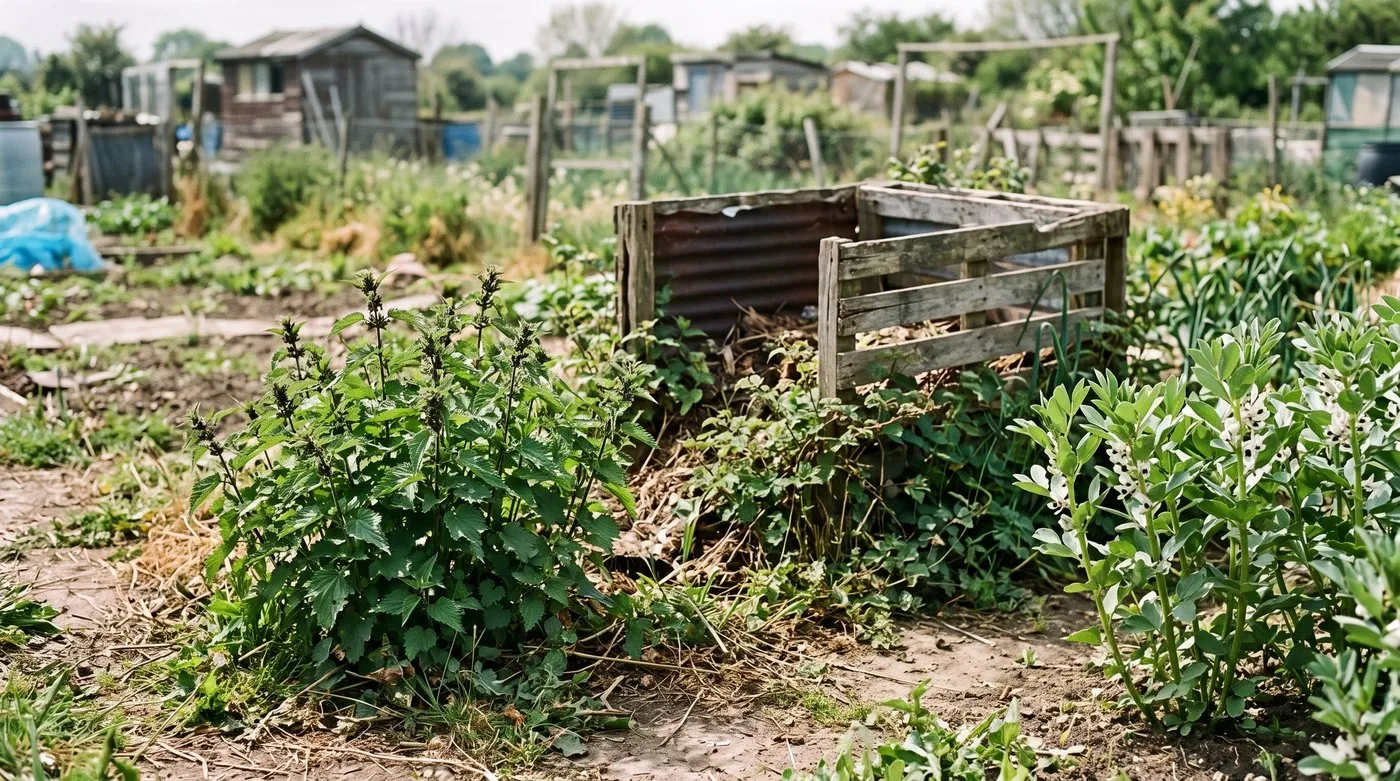
A few aphids on nettles or broad bean tips act as a nursery for lacewings. No aphids means nothing for their larvae to eat.
Stop using pesticides
Insecticides kill lacewings just as well as they kill aphids, and even organic sprays can harm larvae they land on. The kindest thing is not to spray at all. If you really must, treat one plant only and leave the rest alone.
The same no-spray, flower-filled approach is exactly what bee-friendly gardening is all about, so you’ll help bees at the same time.
How do you build a lacewing hotel?
A lacewing hotel gives adult green lacewings a dry place to spend the winter. In the wild they hide in loose bark, leaf litter and evergreens. A hotel gives them a cosy spot close to your plants for spring.

A lacewing hotel on a fence. The rolled cardboard inside is full of little gaps for adults to hide in over winter.
Construction
- Find a small wooden box, about the size of a shoebox stood on end. An old wine box is ideal. Drill a few small drainage holes in the bottom
- Roll up corrugated cardboard into tubes that fit snugly in the box, with the little channels open at the ends
- Pack the box tightly with the rolls so there are no big gaps
- Mount it at about head height on a sunny wall or fence, out of the worst of the rain
Positioning
Face the opening south or south-west for warmth. Put it near hedges or borders where you see lacewings in summer, and away from roof drips. Swap in fresh cardboard each September, before the lacewings move in.
When to expect results
Give it a winter or two. In November or December you can take a careful peek for adults tucked into the cardboard. Once they’ve settled, leave them in peace.
You can also build a bigger bug hotel with rooms for lacewings, solitary bees and beetles, so lots of helpful insects have a home.
Can you buy lacewings for biological control?
Yes, and they can be handy in the right place. UK suppliers sell green lacewing eggs and larvae for gardens and greenhouses.
What is available
| Product | Best for |
|---|---|
| Eggs on cards | Greenhouses and polytunnels |
| Loose larvae | Outdoor beds and allotments |
| Small sachets of larvae | Single plants and pots |
How to release them
Release larvae in the evening on a mild day. Put them right on, or next to, plants with aphids. In a greenhouse, spread them around. Outside, pick a calm, dry evening, because rain washes them off and wind blows them away.
In a greenhouse, lacewings work well alongside other bought-in helpers, such as Encarsia wasps for whitefly and predatory mites for red spider mite.
Limitations
Bought lacewings give quick, short-term help. They won’t stay unless your garden has the flowers, winter shelter and spray-free conditions they need. Think of them as a rescue, and the garden itself as the long-term fix.
How do lacewings fit into a wildlife garden?
Lacewings are part of a bigger garden food web. Their larvae eat plant pests, and the adults are food for bats, birds and spiders. The flowers that feed them also help hoverflies, parasitic wasps and solitary bees.
So a lacewing-friendly garden is good for lots of other wildlife too. A wildlife pond brings in frogs and birds, while fennel and yarrow feed hoverflies, whose larvae are great aphid eaters as well.
Creating a wildlife garden and helping lacewings really are the same job.
Lacewing conservation status
Most garden lacewings are common wherever there are flowers and no sprays. The giant lacewing (Osmylus fulvicephalus) is a rarer one, found by clean, shady streams.
Month-by-month lacewing calendar
| Month | What lacewings are doing | What to do |
|---|---|---|
| January-February | Hibernating | Leave lacewing hotels alone |
| March | First adults out on mild days | Don’t tidy sheltered corners too early |
| April | Adults active, first eggs laid | Look under leaves near aphids for stalked eggs |
| May | Larvae feeding | Leave aphids on nettles and broad beans |
| June | Larvae busy | Don’t spray, let them work |
| July | More larvae about | Plant late-flowering fennel and yarrow |
| August | Still active in warm years | Keep an eye on aphids on roses and fruit |
| September | Adults getting ready for winter | Put up or refresh lacewing hotels |
| October | Adults heading into shelter | Leave some leaf litter where it falls |
| November-December | Hibernating | Don’t disturb hotels or sheltered spots |
For more on spotting and helping these insects, the RHS guide to lacewings is a lovely read.
Frequently asked questions
How many aphids does a lacewing larva eat?
Hundreds, over the couple of weeks it spends growing up. Larvae feed day and night, grabbing aphids with their curved jaws and sucking them dry. That big appetite is why they’re so welcome on roses and beans.
What is the difference between green and brown lacewings?
Green ones are bigger, bright green and golden-eyed. Brown lacewings are smaller and grey-brown, so they’re easy to miss. The larvae of both eat aphids. Adult brown lacewings eat aphids too, while the common green lacewing adult sticks to nectar, pollen and honeydew.
How do I attract lacewings to my garden?
Grow flat-topped flowers like fennel, dill and yarrow. These feed the adults. Leave a few aphid colonies in spring so the larvae have something to eat, avoid insecticides, and put up a lacewing hotel for winter shelter.
Can I buy lacewings for pest control?
Yes, UK suppliers sell lacewing eggs and larvae. Release larvae in the evening near aphid colonies. They do best in a greenhouse, or outdoors in calm, dry weather. Bought lacewings are a short-term rescue. To keep them, your garden needs flowers, shelter and no sprays.
Do lacewings bite humans?
Adults don’t bite. A larva might give a tiny nip if you pick it up, a bit like a little pinch, but it’s harmless and needs no treatment.
When are lacewings active in the UK?
From about April to October. Green lacewing adults spend the winter tucked up in sheds, houses and other sheltered spots, often turning pinkish-brown. Larvae are busiest in summer, when aphids are at their peak.
Are lacewings better than ladybirds for pest control?
Both are great, so welcome them together. Lacewing larvae have big appetites and eat a wider mix of pests, including whitefly and thrips. Ladybirds, hoverflies and tiny parasitic wasps all help too. A garden with lots of different predators keeps pests down best.
Our team produces practical UK gardening guidance from source research, contributor records and established horticultural practice. Editorial standards are overseen by Matt W.


