Key takeaways
- Most UK bee species are solitary bees, and they're gentle, busy pollinators
- Red mason bees, leafcutter bees and tawny mining bees are the ones you'll see most
- Put up a bee hotel facing south or south-east, with tubes 6-10mm wide
- Mining bee nests in lawns are harmless and gone by early summer
- Early spring flowers like crocus, pulmonaria and willow feed the first bees
- Never spray anything on open flowers
Most of the UK’s bees are solitary bees, and there are more than 200 kinds. They don’t live in colonies, make honey or swarm. Each female builds her own little nest, stocks it with pollen, lays her eggs and seals it up. They’re quiet, gentle and brilliant pollinators, especially for fruit trees.
Yet few of us can name one. Here’s how to spot the common ones, where they nest, what they like to eat and how to help them in any size of garden.
Which solitary bees visit UK gardens?
Three kinds make up most garden sightings. Knowing what they look like and when they appear helps you give them the right home at the right time.
The red mason bee (Osmia bicornis) is the one you’re most likely to know. It appears in March and nests in hollow tubes, holes and bee hotels. Females are about 1cm long with thick orange-brown hair. Males are smaller with a white tuft on the face. They’re the main visitors to garden bee hotels and fantastic fruit tree pollinators.
The leafcutter bee (Megachile centuncularis) flies from June to August. Females snip neat half-moons from rose leaves and other soft leaves to line their nests. They carry pollen on their tummies, not their legs. Those round cut-outs on your rose leaves are the easiest way to know they’re about.
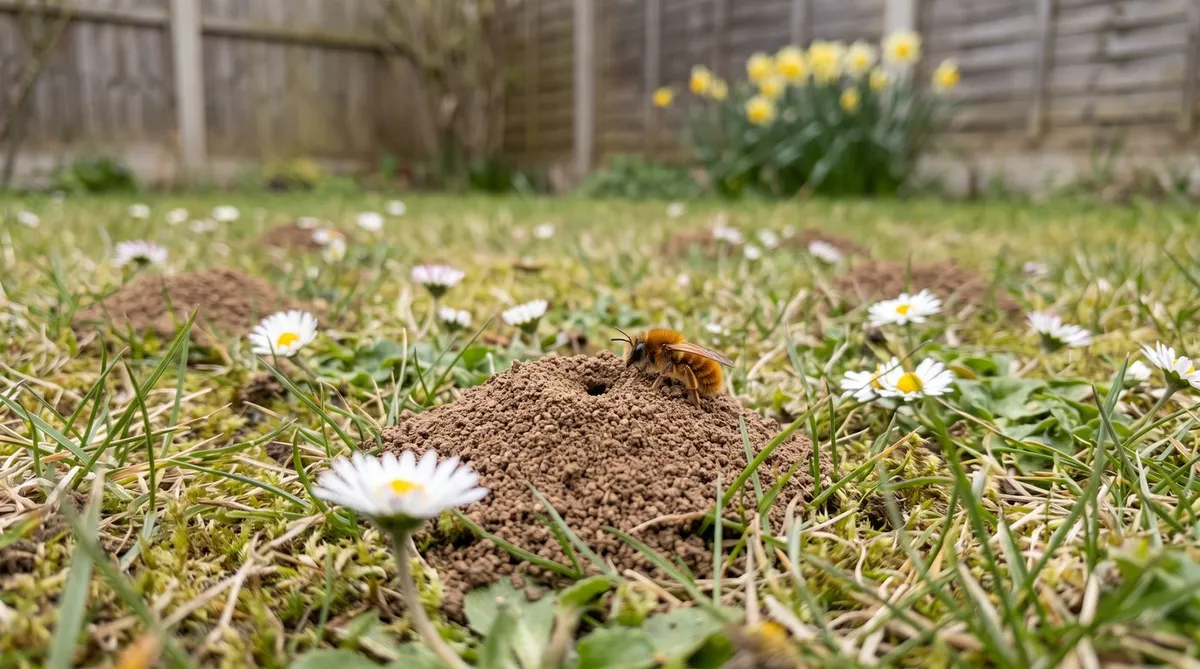
The tawny mining bee (Andrena fulva) is one of the first bees of spring. Females have bright ginger fur. They dig nests in lawns, paths and bare soil, leaving little volcano-shaped mounds. The nests are harmless and only there for a few weeks.
 A leafcutter bee snipping a rose leaf. She uses the pieces to line her nest cells.
Other common garden species
The ashy mining bee (Andrena cineraria) is a looker: shiny black with two bands of grey-white hair. It flies in spring and nests in lawns and sunny banks, often in big groups.
The hairy-footed flower bee (Anthophora plumipes) is one of the earliest bees, out in March. Males are gingery and zip noisily from flower to flower. Females are all black. Both love pulmonaria, wallflowers and dead-nettles. They nest in old soft mortar and crumbly banks.
UK solitary bee species comparison table
| Bee | When you’ll see it | Where it nests | How to spot it |
|---|---|---|---|
| Red mason bee | March to June | Tubes, bee hotels, wall gaps | Thick orange-brown hair, seals nests with mud |
| Leafcutter bee | June to August | Tubes, bee hotels | Pollen carried underneath, round cuts in leaves |
| Tawny mining bee | Spring | Lawns, bare soil | Bright ginger fur |
| Ashy mining bee | Spring | Lawns, sunny banks | Black with grey-white bands |
| Hairy-footed flower bee | March to June | Old mortar, soft walls | Ginger males, black females, fast and noisy |
| Ivy bee | September to November | Sandy soil, banks | Banded tummy, out in autumn |
| Wool carder bee | June to August | Existing holes, bee hotels | Yellow markings, males guard flower patches |
How do solitary bees nest?
Solitary bees nest in one of two ways: in hollow tubes or in the ground. Help both and you’ll see the most kinds.
Cavity nesters
Red mason bees and leafcutter bees nest in hollow tubes. In the wild they use old beetle holes in dead wood, hollow stems and gaps in walls. In a garden, a bee hotel does the same job.
The female crawls to the back of a tube, leaves a ball of pollen and nectar, lays an egg on it and seals it with mud or leaf pieces. She keeps going until the tube is full of little cells, then plugs the entrance. The babies grow inside and come out the next spring.
Ground nesters
Most UK solitary bees nest in the ground. Mining bees dig small tunnels with little chambers off them. Each chamber gets a ball of pollen and one egg.
Tawny mining bees like short grass and firm soil. The tiny mounds they leave look like mini volcanoes. They’re only there for a few weeks, they don’t harm the grass and the soil settles back on its own.
 A tawny mining bee nest in a lawn. Leave these alone. They’re gone by early summer and leave no lasting mark.
How to build and position a bee hotel
A bee hotel is the easiest way to welcome tube-nesting bees. The design is simple, but a few details make the difference between a pretty ornament and a busy home.
Materials that work
Bamboo canes cut to 15-20cm long are the most reliable filling. Choose canes 6-10mm wide inside. Sand the cut ends smooth so the bees don’t snag their wings. Bees prefer deep tubes and tend to skip very short ones.
Drilled hardwood logs work well too. Use untreated oak, ash or beech. Drill holes about 8mm wide and 10-15cm deep, but not all the way through. Leave a good gap between holes. Softwoods like pine soak up damp and go mouldy.
Cardboard or paper tubes made for bee hotels are easy to swap out each year. Slot them into a wooden frame or tin can to keep them dry.
Positioning
Face the hotel south or south-east, 1-1.5m off the ground, on a wall, fence or sturdy post. It needs the morning sun. Red mason bees need warming up to get going each day and won’t use a shady hotel.
Keep it dry. A little roof stops rain driving into the tubes, as damp tubes go mouldy.
 Building a bee hotel is a fun afternoon job. Use tubes 6-10mm wide and at least 15cm deep, face it south and swap the tubes every couple of years.
Maintenance
Swap the tubes every two years in late autumn, in October or November. Old tubes collect pests and mould that harm the baby bees. Take out the used ones and put in fresh bamboo or new cardboard tubes.
You can tell a tube has been used because it’s sealed with mud or leaf pieces. Empty tubes stay open.
Hollow stems from your autumn tidy-up make free nesting tubes too. Bundle stems of teasel, hogweed or sunflower and tie them on their side under a sheltered overhang.
What to plant for solitary bees
Early spring flowers matter most. Females come out in March and need food straight away to build nests and lay eggs. Without early flowers, they have to fly much further for every meal.
| Season | Best plants | Why they matter |
|---|---|---|
| Early spring (March to April) | Crocus, pulmonaria, willow catkins, fruit blossom | First meals for newly emerged bees |
| Late spring (April to May) | Wallflowers, aubretia, rosemary, apple blossom | Red mason bees are busiest now |
| Summer (June to August) | Foxglove, catmint, wild marjoram, scabious | Leafcutter bee season |
| Late summer (July to September) | Knapweed, field scabious, viper’s bugloss | Late bees and second broods |
| Autumn (September to November) | Ivy, autumn hawkbit, devil’s-bit scabious | Ivy is the ivy bee’s main food |
Plant in groups of three or more of the same thing. Bees find it easier to work a patch of the same flower than to hop between lots of different ones. A big drift of crocus is a real spring feast.
The same flowers help hoverflies too, which pollinate and eat aphids.
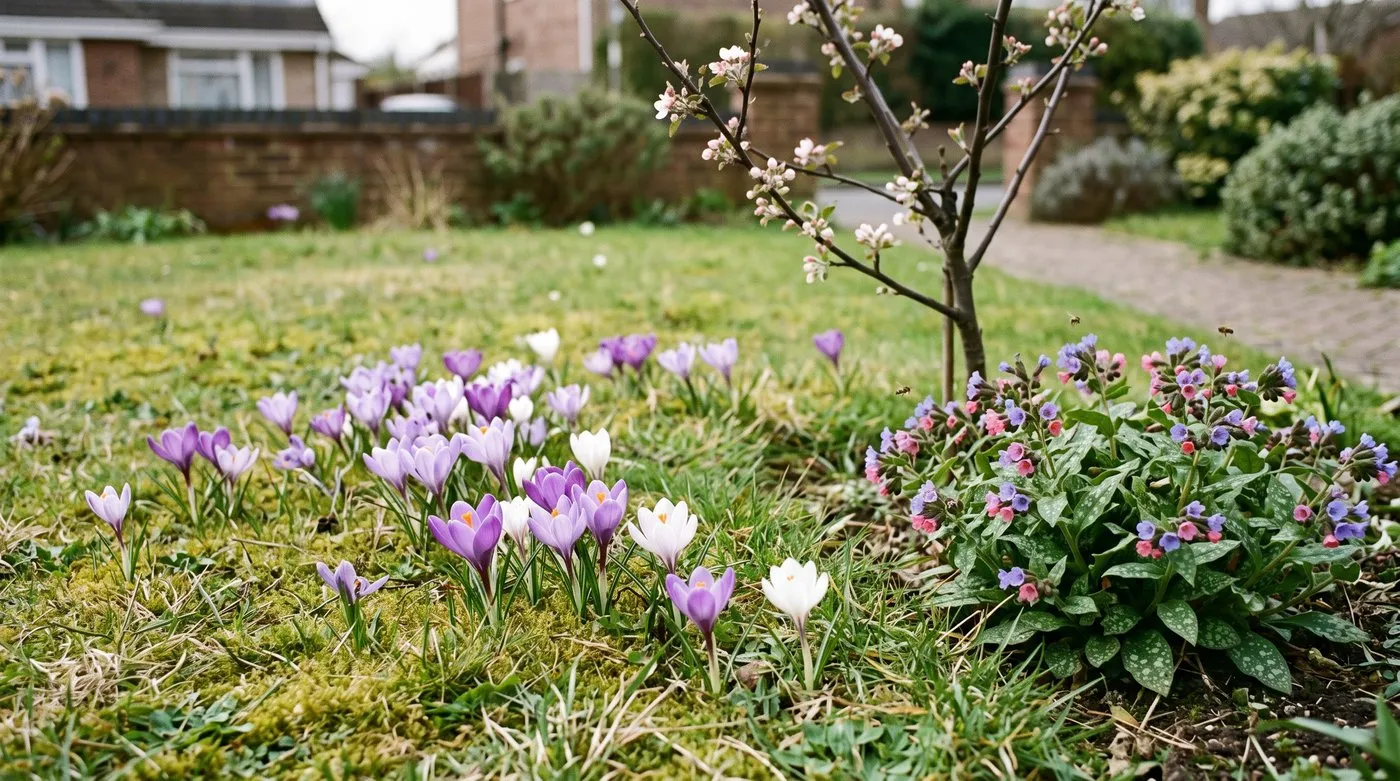
Early flowers matter most, because solitary bees need food the day they emerge. A big drift of crocus gives them a feast right on the doorstep.
How to encourage ground-nesting solitary bees
Ground-nesting bees like mining bees and ivy bees need bare soil, which many tidy gardens cover up. Thick mulch, paving, artificial grass and packed planting all leave them nowhere to dig.
Leave bare soil patches
Keep at least one patch of bare, undisturbed soil in a sunny border or lawn edge. A square metre is plenty. Don’t mulch it, and don’t dig it between March and September.
Tolerate lawn nests
Mining bee nests in lawns are harmless and only there for a few weeks. The bees won’t sting unless trapped against skin. Mow around them, and the mounds will settle once nesting is done.
Create a bee bank
A sunny bank of bare soil copies the crumbly cliffs and banks many solitary bees love. Dig out a sloping face, or build a low mound of firm, sandy soil facing south. Leave it bare, and see who moves in.
It’s a great addition to a wildlife garden.
What threatens solitary bees?
Losing their homes is the biggest problem. Paving, artificial grass and wall-to-wall planting leave nowhere to nest. In the countryside, fewer hedges, rough edges and flowery meadows means less food.
Pesticides kill solitary bees. Any insect spray on open flowers can harm them, organic ones included. Never spray flowering plants or near nests.
Changing weather can bring bees out before their flowers open. Growing plenty of different flowers across the year means there’s always something to eat.
Pests build up in old bee hotels. A tiny parasitic wasp lays its eggs in sealed mason bee tubes, and its grubs eat the baby bees. Changing the tubes regularly is the best fix.
The Bees, Wasps and Ants Recording Society (BWARS) has UK records and identification help for all our solitary bees.
Quick actions to help solitary bees
Six easy things you can do in a weekend:
- Put up a bee hotel facing south, 1-1.5m high, with 6-10mm tubes at least 15cm deep
- Plant crocus bulbs in autumn for the first spring food
- Leave a patch of bare soil in a sunny border or lawn edge
- Stop spraying flowering plants
- Let mining bees nest in the lawn, as they’ll be gone in a few weeks
- Let ivy flower in autumn, to feed ivy bees and late hoverflies
Add a wildflower lawn, a bare patch of soil and a bee hotel, and you’ll have food and homes for lots of different solitary bees.
Frequently asked questions
How many solitary bee species are there in the UK?
There are more than 200 kinds of solitary bee in the UK. That’s most of our bee species. They include red mason bees, leafcutter bees, mining bees, wool carder bees and flower bees. Many are small and easy to miss.
Do solitary bees sting?
Females can, but they very rarely do. They have no hive or honey to guard, so they aren’t aggressive. You’d have to trap one against your skin to get stung, and it’s usually much milder than a honeybee or wasp sting. They’re lovely bees to have around a family garden.
What is the best bee hotel for solitary bees?
A simple wooden box filled with bamboo tubes 6-10mm wide works best. Face it south or south-east, about 1-1.5m off the ground, with tubes at least 15cm deep. Replace the tubes every two years to keep pests down. Skip pine cones and bark, which attract other bugs, not bees.
Why are there small holes in my lawn?
Little volcano-shaped mounds in spring are almost always mining bee nests. These bees are harmless and only nest for a few weeks. They don’t hurt the grass. Leave them be and they’ll be finished by early summer, when the mounds settle back into the lawn.
When should I put up a bee hotel?
Late February is perfect. Red mason bees come out from mid-March and start looking for tubes straight away. Any time before June still works for the first year. Choose a sunny, sheltered spot facing south or south-east, at least 1m off the ground.
What flowers do solitary bees need?
Early spring flowers matter most. Plant crocus, pulmonaria, willow and fruit trees for March and April. For summer, grow foxgloves, catmint and wild marjoram. Choose simple single flowers, as double flowers often have little or no pollen for bees.
Should I leave bare soil for solitary bees?
Yes, most UK solitary bees nest in the ground. Leave a few patches of bare, undisturbed soil in sunny borders and lawn edges. Don’t mulch every bit of ground. Tawny mining bees, ashy mining bees and ivy bees all need bare or sparse soil to dig their nests.
Our team produces practical UK gardening guidance from source research, contributor records and established horticultural practice. Editorial standards are overseen by Matt W.