Key takeaways
- Small soil cones with one hole in the middle are mining bee nests, not a pest
- The fox-red one most people notice is the tawny mining bee
- They're active from March to June, then vanish until next spring
- Females very rarely sting and males can't sting at all
- The mounds do no lasting harm and soon flatten once the bees finish
- The best thing to do is leave them alone and enjoy the show
Small volcano-shaped mounds of soil, each with one hole in the top, popping up in your lawn in spring? Those are almost certainly mining bees. They’re gentle solitary bees, and the bright fox-red one many people spot is the tawny mining bee.
Each female digs her own little burrow and piles the soil around the entrance. This guide shows you how to tell their nests from ants and other lawn diggers, why they’re harmless and what to do. The short answer: leave them alone and enjoy watching them. They’ll be gone by early summer.
How do you identify a mining bee nest in your lawn?
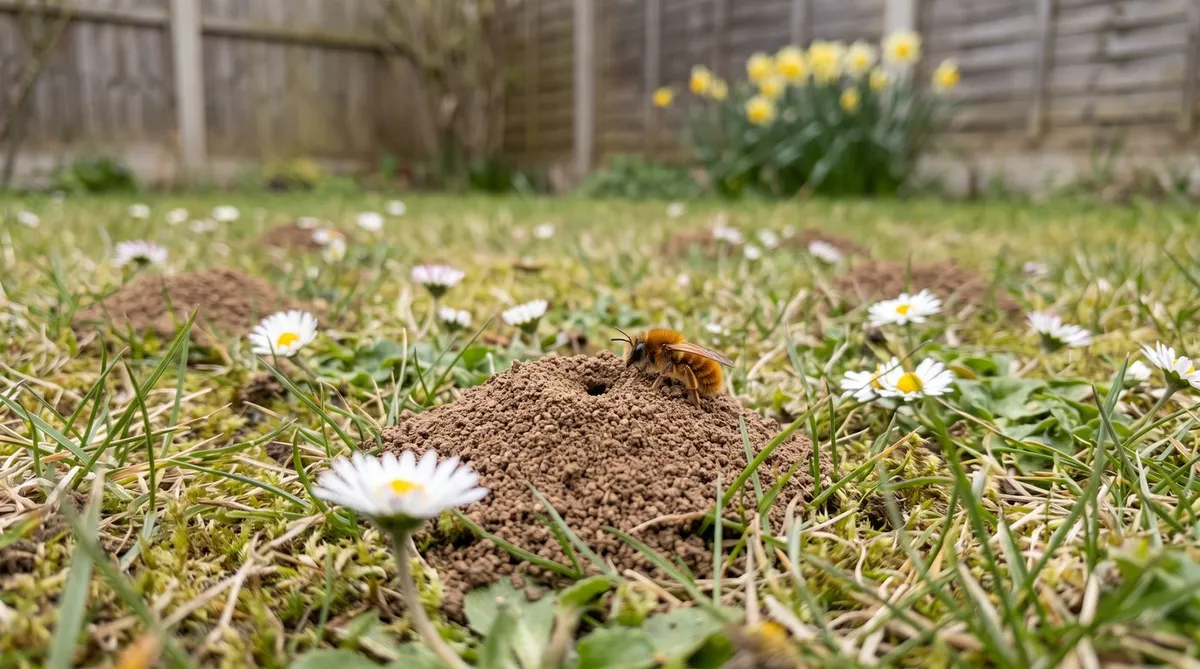
Look for a small cone of fine soil, a few centimetres across, with a single round hole in the centre about the width of a pencil. It looks like a tiny volcano. One mound means one bee and one burrow.
The bees themselves are a giveaway. Mining bees are furry and fly low and alone. The female tawny mining bee is about the size of a honeybee and covered in bright orange-red hair. The males are smaller and browner, with a white tuft of hair on the face.
You’ll often see lots of mounds in one sunny patch. They aren’t one big shared nest. Each female works alone, but many pick the same warm, well-drained spot. Sit and watch for a few minutes and you’ll see them land and drop into their own holes.

The classic mining bee nest: a neat little cone of soil with a single hole in the middle.
Mining bee, ant, wasp or bumblebee?
The quickest test is the nest. A small soil cone with one central hole is a mining bee.
| Mining bee | Ant | Wasp | Bumblebee | |
|---|---|---|---|---|
| Lawn sign | Small cone, one hole | Loose, flatter heap of soil | Rarely nests in open lawn | No mounds |
| Body | Furry, often fox-red or brown | Tiny, mostly wingless | Smooth, bright yellow and black | Large, round and fluffy |
| Lives | Alone | In a big colony | In a shared nest | In a shared nest |
| Behaviour | Gentle, flies low | Swarms when disturbed | Can defend its nest | Gentle |
| When | March to June | Spring to autumn | Spring to autumn | Spring to autumn |
Wasps are smooth and shiny, while mining bees are clearly furry. Bumblebees sometimes nest in old mouse holes or under sheds, but they don’t make little cones of soil. Our bumblebee species guide explains where they do nest.
How to tell a mining bee mound from an anthill
A mining bee mound is one neat cone with a single hole in the middle. The soil sits in a tidy ring around the entrance.
An anthill is looser and flatter. Ants push up fine crumbly soil in a wider heap, with no single hole on top. Disturb it gently and lots of ants pour out. A mining bee nest stays quiet, with one bee coming and going.
Timing helps too. Mining bee mounds appear suddenly in spring and vanish by summer. Ant nests carry on through the warm months and can last for years. If ants are your problem, see our guide to dealing with ants in the garden.

Mining bee nest on the left, ant nest on the right. One tidy hole means a bee. A loose, crumbly heap means ants.
What do mining bees do through the year?
Mining bees spend most of the year underground. You only see them for a few weeks in spring, usually from March to June, with most activity in April and May.
- Spring: adults dig their way out from last year’s nests. Males appear first, then females.
- April to May: after mating, each female digs a burrow and pushes the soil into a mound.
- Late spring: she fills small chambers with pollen and nectar, lays an egg on each and seals them.
- Early summer: the adults die off and the mounds wash or mow flat.
- Rest of the year: the young grow underground and wait for next spring.
By the time most people notice the mounds and start to worry, the bees are nearly done.

A female tawny mining bee beside her burrow. That bright fox-red coat is easy to spot on a sunny April day.
Do mining bees sting?
Very rarely. Females can sting but almost never do, and males have no sting at all. With no shared nest to defend, they have no reason to be aggressive.
You can mow, play and walk on the lawn as normal. Children and pets are fine around them. Anyone with a bee sting allergy should simply keep away from the patch for the few weeks the bees are busy, as they would with any bee.

A mining bee at her front door. Leave her to it and the mound will be gone in a few weeks.
What should you do about mining bees in your lawn?
Leave them alone. That’s the best choice for you and the bees. They finish within weeks, the lawn recovers on its own and your fruit trees get pollinated for free.
| Option | How it works out |
|---|---|
| Leave them alone | Best choice. The bees finish in weeks and the lawn recovers |
| Encourage them | Leave a sunny patch of thin grass alone and they’ll come back each spring |
| Thicken the lawn in autumn | Fewer mounds next year, but no effect on this spring |
| Insecticide or ant powder | Never. It kills useful bees and other wildlife |
If you really can’t live with the mounds, make the lawn less inviting for next year. Mining bees like thin, dry, sunny grass with bare soil. Overseed thin patches in September and water the lawn in dry spells. Our guide to fixing a patchy lawn shows how.

Mining bees prefer thin turf with bare soil. A thicker lawn means fewer mounds next spring, if that’s what you want.
Why are mining bees good for your garden?
Mining bees are early pollinators. They’re out from March, when few other bees are flying, and visit apple, pear, cherry and plum blossom just when the trees need it.
They need warm, open, undisturbed soil to nest in, which is getting harder to find. A lawn that hosts a few is doing them a real favour. Our solitary bees garden guide introduces other solitary bees you might spot. Mining bees don’t use bee houses, but mason bees do, and our guide to making a bee house shows how to welcome them too. The Wildlife Trusts have a helpful tawny mining bee page if you want to know more.

Mining bees are busy on fruit blossom in spring, weeks before many other bees get going.
Mining bees month by month
| Month | What’s happening |
|---|---|
| January to February | Bees resting underground, nothing to see |
| March | First bees appear on mild, sunny days |
| April | Peak time. Most mounds appear |
| May | Bees still busy. Adults start to die off |
| June | Last adults gone. Mounds flatten |
| July to December | Young bees grow and rest underground |
| September | Best time to overseed thin lawn, if you want fewer mounds |
Common mistakes with mining bees
- Reaching for insecticide. It kills useful pollinators and other wildlife, and the bees would have gone anyway.
- Mistaking them for wasps. Mining bees are furry, gentle and live alone. Check before you worry.
- Flattening the mounds. Raking or stamping on them in spring can harm the young bees in their sealed cells. Just wait until summer.
- Thinking the lawn is sick. The mounds aren’t a disease, grubs or drought. The grass is fine. If you do have brown patches, our guide to leatherjackets in lawns covers a common cause.
Now you know who’s digging, read our guide to early spring pollinator plants to give mining bees and other early bees plenty to eat. For more garden wildlife, visit the wildlife hub.
Frequently asked questions
What are the small volcano mounds appearing in my lawn in spring?
They’re usually mining bee nests. Each female digs a burrow and pushes out a little cone of soil with a hole in the middle. They’re harmless solitary bees, not a pest, and they’re gone within weeks.
Do mining bees sting?
Very rarely, and males can’t sting at all. Females are gentle and would rather fly off than sting. They’re fine around children and pets, even right next to the nests.
Will mining bees damage my lawn?
No, they don’t do any lasting damage. The holes are tiny and the mounds wash or mow flat once the bees have finished. The grass soon closes over.
How do I get rid of mining bees in my lawn?
The kindest and easiest answer is to leave them, as they’re gone in weeks. If you want fewer next year, thicken thin patches of lawn in autumn. Never use insecticide or ant powder on them.
How long do mining bees stay in the lawn?
Only a few weeks each spring. Adults fly from about March to June, then die off. Their young stay underground until the following spring.
Are mining bee mounds the same as ant nests?
No, they look different. A mining bee mound is a neat cone with one hole in the middle and one bee coming and going. An ant nest is a looser, flatter heap with lots of ants.
Our team produces practical UK gardening guidance from source research, contributor records and established horticultural practice. Editorial standards are overseen by Matt W.


