
Key takeaways
- Seven species make up most bumblebees seen in UK gardens
- Check tail colour first, then count the yellow stripes
- Queens are much bigger than workers, so size alone can mislead
- Buff-tailed queens are usually the first out, from February
- Long-tongued bees like foxgloves and honeysuckle, short-tongued bees prefer open flowers
- Leave long grass, untidy corners and undug soil for nesting bees
Most bumblebees in UK gardens belong to just seven species, and you can tell them apart with a quick look at the tail and stripes. Red tail, white tail, ginger all over: each one narrows it down fast. Once you know who’s visiting, you can plant for them.
This guide covers those seven species, with what each looks like, when it flies, where it nests and which flowers it likes. For a planting list for all bees, see our guide to the best bee-friendly plants.
How to identify bumblebees in three steps
Check the tail colour, then the stripes, then the size. That’s enough to name most garden bumblebees.

Get close and check the tail first, then the stripes. Bumblebees are too busy feeding to mind.
- Tail colour. Red-orange, white, or buff (a dirty off-white) narrows it down straight away.
- Stripes. Count the yellow bands on the thorax (the furry middle section behind the head) and on the abdomen.
- Size. Queens are much bigger than workers. Big bees in early spring are almost always queens. Smaller workers follow from late spring.
A couple of things trip people up. Males often look different from females, with more yellow. And workers of several species look very alike, so don’t worry if some bees stay a mystery. Even experts can’t name every one in the field.
The seven common bumblebees in UK gardens
1. Buff-tailed bumblebee (Bombus terrestris)
The buff-tailed bumblebee is one of the commonest in UK gardens. Queens are big, with a dark yellow collar, a yellow band on the abdomen and a buff tail. Workers have a white tail, often with a faint buff line at the edge.
- When: usually February to November. In mild southern areas, some colonies stay active all winter.
- Nest: underground, often in old mouse holes or at the base of hedges.
- Flowers: a short-tongued bee that likes open flowers such as lavender, heather and marjoram. It sometimes bites a hole at the base of deep flowers to steal the nectar.
2. White-tailed bumblebee (Bombus lucorum)
The white-tailed bumblebee looks very like the buff-tailed, but queens have a clean white tail. Their yellow bands are often a brighter lemon colour. Workers of the two species are very hard to tell apart, so many people just record them as “white-tailed types”.
- When: about March to September.
- Nest: underground, in similar spots to the buff-tailed.
- Flowers: short-tongued, with similar tastes: lavender, bramble, thistles and knapweed.

A clean white tail and lemon-yellow stripes point to a white-tailed bumblebee, though workers are hard to tell from buff-tails.
3. Red-tailed bumblebee (Bombus lapidarius)
The red-tailed bumblebee is the easiest to spot. Females are jet black with a bright red-orange tail. Males have a red tail too, but add a yellow face and yellow bands on the thorax.
- When: about March to October.
- Nest: underground, often under stones or in old walls and rockeries.
- Flowers: likes open flowers, especially yellow ones such as dandelions and bird’s-foot trefoil. Knapweed and thistles are favourites too. A wildflower lawn with trefoil and clover suits it well.

Jet black with a fiery tail, the red-tailed bumblebee is the easiest one to name at a glance.
4. Early bumblebee (Bombus pratorum)
The early bumblebee is small and neat, with a yellow collar, a yellow band on the abdomen and a small orange-red tail. Workers sometimes lack the abdominal band. Colonies finish early, often by July.
- When: about March to July, sometimes with a second round in late summer.
- Nest: flexible. It nests above or below ground, including in old bird boxes and dense shrubs.
- Flowers: fruit blossom, raspberries, cotoneaster and clover. It’s a handy pollinator for apple trees and soft fruit.

Small, with a neat orange tail, the early bumblebee is busy on fruit blossom in spring.
5. Common carder bee (Bombus pascuorum)
The common carder is the only common garden bumblebee that’s ginger-brown all over, with no bold stripes or white tail. Older bees fade and can look quite grey. It gets its name from combing (“carding”) moss and grass to cover its nest.
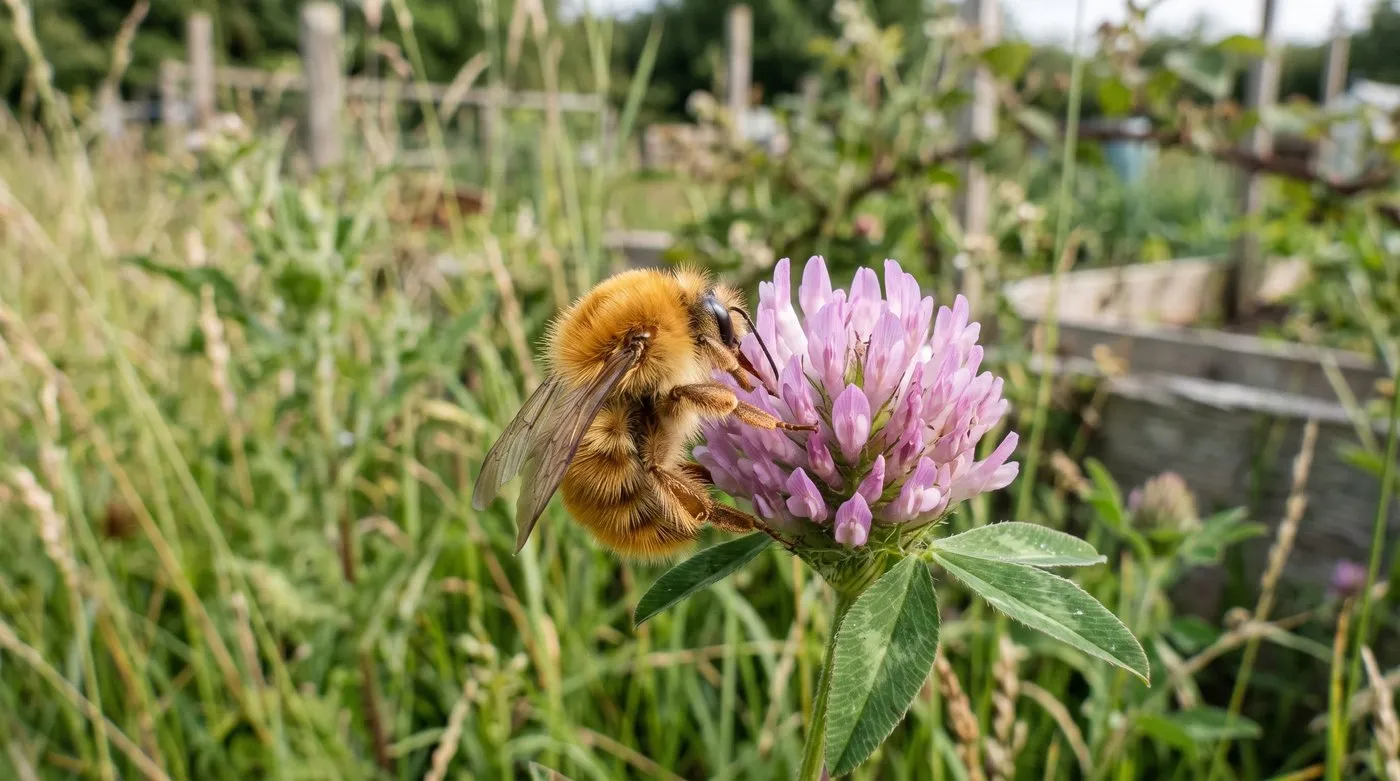
No stripes, no white tail, just ginger fluff: that’s a common carder, here on its favourite red clover.
- When: about March to November, one of the longest seasons.
- Nest: at ground level, in grass tussocks, moss and the base of hedges.
- Flowers: a longer-tongued bee that loves dead-nettles, red clover, comfrey and catmint.
Leaving patches of long grass helps this species more than any other. An untidy corner near a wildlife compost heap works well.
6. Garden bumblebee (Bombus hortorum)
The garden bumblebee has the longest tongue of the common species, so it can reach deep into tubular flowers. It has a yellow collar, a second yellow band at the back of the thorax, another on the abdomen and a white tail. Its face looks long and horsey.
- When: about April to September.
- Nest: usually at or just below ground level.
- Flowers: foxgloves, honeysuckle, red clover, comfrey and delphiniums. Grow foxgloves and you’ll almost certainly see one.
7. Tree bumblebee (Bombus hypnorum)
The tree bumblebee has a ginger-brown thorax, a black abdomen and a white tail. Nothing else common in gardens looks like that. It first arrived in the UK from mainland Europe in 2001 and is now widespread.
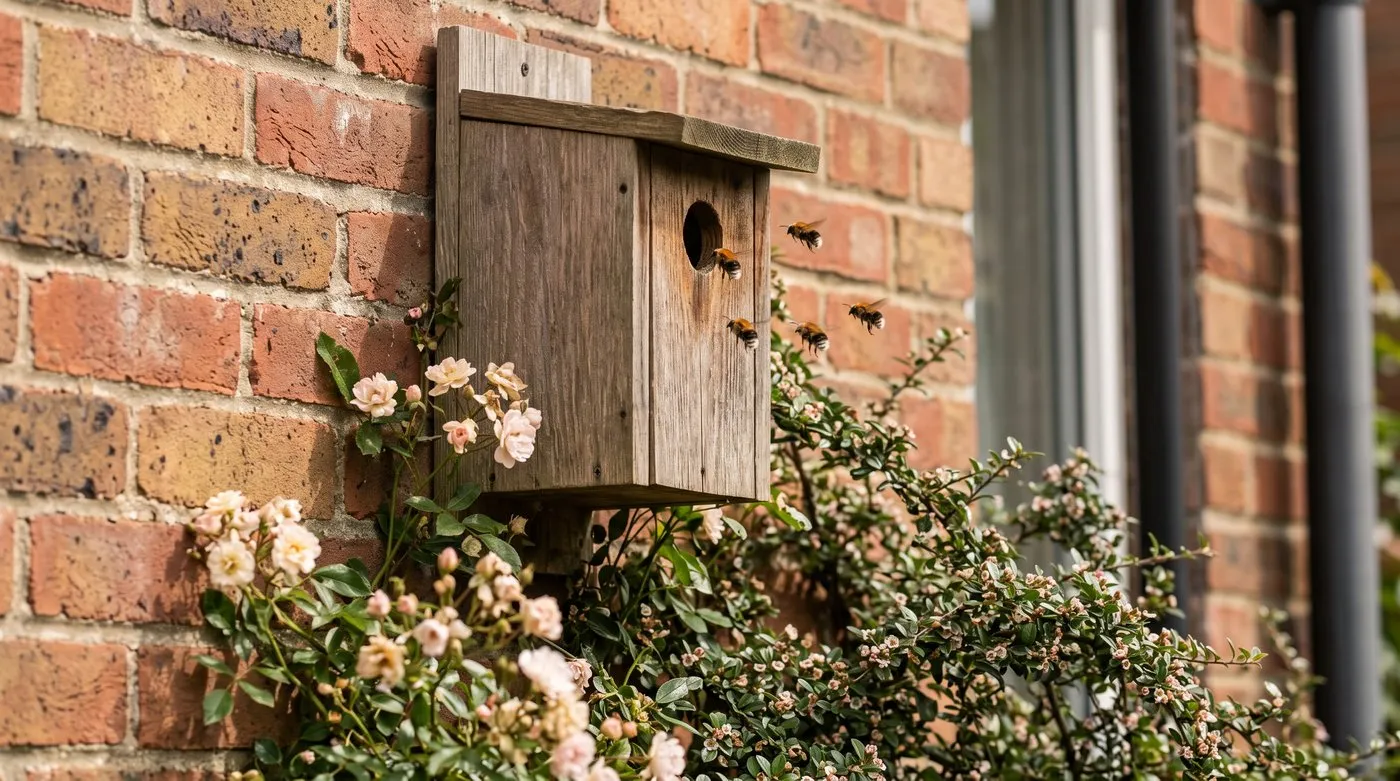
A buzz of bees outside a bird box in June is usually tree bumblebee males. Leave them be and they’ll be gone in weeks.
- When: about March to July, sometimes into late summer.
- Nest: above ground. It loves bird boxes, holes in walls and gaps under roof tiles.
- Flowers: cotoneaster, bramble, raspberry, pyracantha and other flowering shrubs.
A nest in a bird box often has a little cloud of bees dancing outside in early summer. These are males waiting for new queens. They can’t sting. The colony will die off naturally within a few weeks, so the best thing is to leave it alone.
Bumblebee identification table
| Species | Tail | Stripes | Tongue | When it flies | Nests |
|---|---|---|---|---|---|
| Buff-tailed | Buff (queens), white (workers) | Dark yellow collar and abdomen band | Short | Feb-Nov | Underground |
| White-tailed | Clean white | Lemon-yellow collar and abdomen band | Short | Mar-Sep | Underground |
| Red-tailed | Red-orange | None on females | Short to medium | Mar-Oct | Under stones, walls |
| Early | Small, orange-red | Yellow collar and abdomen band | Short to medium | Mar-Jul | Above or below ground |
| Common carder | Ginger-brown all over | None | Medium to long | Mar-Nov | Grass tussocks |
| Garden | White | Two on thorax, one on abdomen | Long | Apr-Sep | At or near ground level |
| Tree | White | Ginger thorax, black abdomen | Short | Mar-Jul | Bird boxes, roofs |
Which flowers suit which bumblebees?
Tongue length decides which flowers a bee can feed from. Grow a mix of open and deep flowers and you’ll suit all seven.
- Short-tongued bees (buff-tailed, white-tailed, tree) like open flowers: lavender, marjoram, heather, bramble, cotoneaster and sedum.
- Long-tongued bees (garden, common carder) like deep flowers: foxglove, honeysuckle, red clover, comfrey, catmint and dead-nettles.
- In-between bees (red-tailed, early) use a wide range: knapweed, bird’s-foot trefoil, white clover and fruit blossom.
Queens waking in late winter need food fast. Our guide to early spring pollinator plants covers February to April flowers, when food is scarcest.
How to help nesting bumblebees
Each species nests in its own way, so a slightly untidy garden suits the most bees.
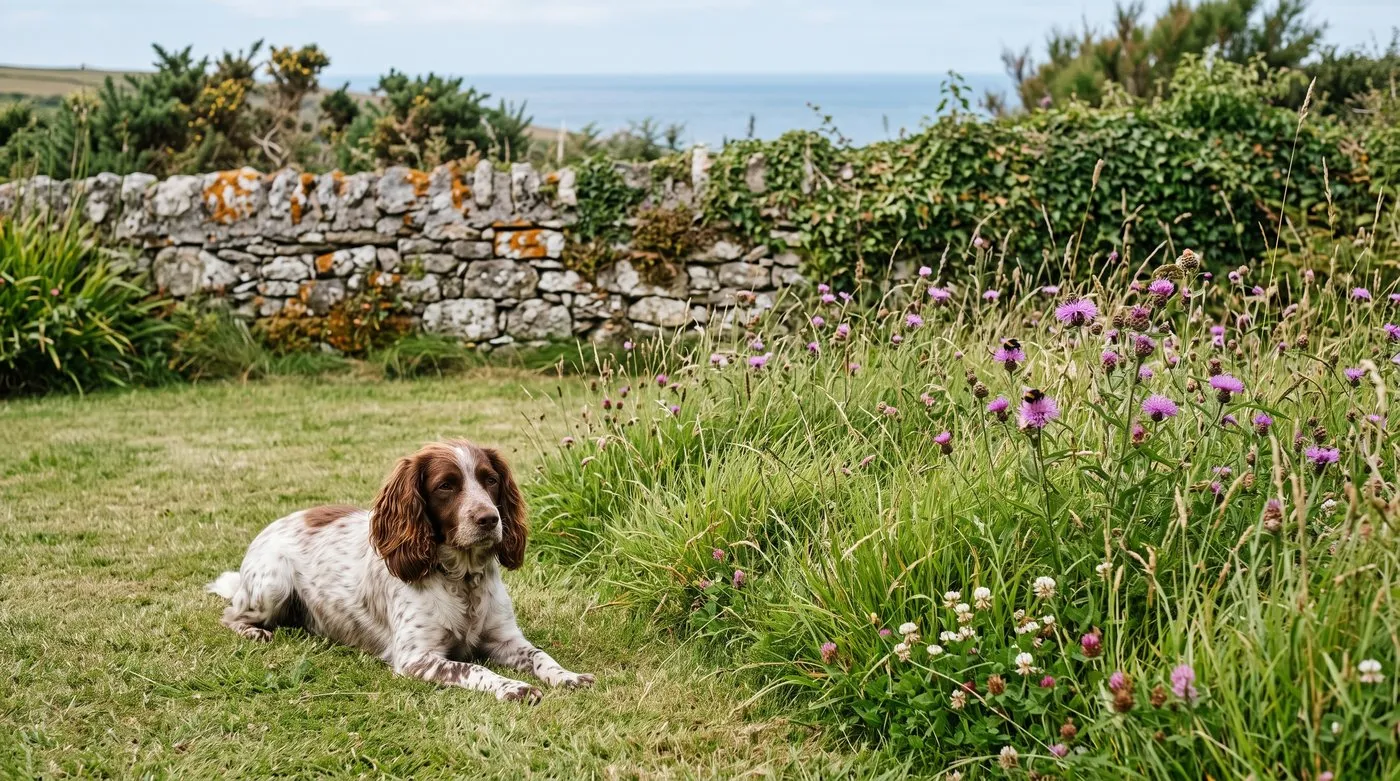
A strip of long, tussocky grass gives carder bees somewhere to nest. The dog approves of less mowing too.
Underground nesters (buff-tailed, white-tailed, red-tailed and often garden bumblebees) use old mouse holes and gaps under sheds, stones and hedges. Avoid digging over quiet borders and banks in spring, when queens are house-hunting.
Ground-level nesters like the common carder need tussocky grass and moss. Leave a strip of grass uncut through summer.
Above-ground nesters like the tree bumblebee move into bird boxes, wall cavities and roof gaps.
Hibernating queens dig into loose soil, often on shady banks or under leaf litter, from late summer. So leave some undisturbed ground, especially on north-facing banks.
Don’t confuse bumblebees with other bees. Small, single bees going in and out of little holes in the lawn are mining bees, not bumblebees. For more on those, see our guide to solitary bees in the garden.
Common mistakes when trying to help bumblebees
Moving or destroying a nest. Colonies only last a few months and are rarely a problem. If one is in an awkward spot, give it a wide berth until it dies off.
Planting only in summer. Queens need food from February and colonies need it into autumn. Plan flowers for the whole season.
Using insecticides. They harm bumblebees as well as pests. Leave pest control to birds and predatory insects where you can.
Tidying every corner. Long grass, leaf litter and undug soil give bees places to nest and hibernate.
Bumblebees in trouble, and how to help
The common garden species are still doing fine, but several others are not. Two UK species have died out, and others such as the great yellow bumblebee and the shrill carder bee now cling on in a few places. Loss of flower-rich meadows is the main reason.
Gardens with flowers from spring to autumn really help. So does recording what you see. The Bumblebee Conservation Trust runs the BeeWalk survey and has a handy ID guide.
Now you can name your bumblebees, read our guide to honeybees in the garden to get to know their busy cousins. You’ll find more in our wildlife gardening guides.
Frequently asked questions
How many bumble bee species are in the UK?
The UK has around 24 bumblebee species, including six cuckoo bumblebees. Most gardens see the same seven: buff-tailed, white-tailed, red-tailed, early, common carder, garden and tree bumblebees. The rest are scarcer, and some survive in only a few places.
How do you identify a bumblebee species?
Look at the tail colour, then the stripes. A black bee with a red tail is a red-tailed bumblebee. A ginger thorax and white tail means a tree bumblebee. Ginger-brown all over is usually a common carder. White-tailed bees with yellow stripes need a closer look.
What is the most common bumblebee in UK gardens?
The buff-tailed bumblebee is one of the commonest. It visits lots of garden flowers and has a long season. Its big queens are often the first bumblebees seen in spring, and in mild southern areas some colonies stay active all winter.
When do bumblebee queens come out of hibernation?
Mostly between February and April, depending on the species and weather. Buff-tailed queens are usually first, sometimes in mild spells in late winter. Early bumblebees follow soon after, while common carders tend to appear a little later in spring.
Are bumblebees endangered in the UK?
Some species are, but the common garden ones are still widespread. Two species have died out in the UK. Others, such as the great yellow bumblebee and the shrill carder bee, now survive in only a few areas. Flower-filled gardens really help.
What flowers do bumblebees prefer?
It depends on tongue length. Long-tongued bees like the garden bumblebee love deep flowers such as foxgloves, honeysuckle and red clover. Short-tongued bees like the buff-tailed prefer open flowers such as lavender, marjoram and bramble. A mix suits them all.
Do bumblebees sting?
Females can, but they rarely do unless handled or their nest is disturbed. Males can’t sting at all. Bumblebees are gentle, so you can garden alongside them. If you find a nest, leave it be, as colonies only last one season.
Our team produces practical UK gardening guidance from source research, contributor records and established horticultural practice. Editorial standards are overseen by Matt W.


