
Key takeaways
- Queen bumblebees wake hungry from February and need food within hours
- Mahonia, winter heather, snowdrops and crocuses bridge the earliest gap
- Pussy willow and blackthorn are brilliant early pollen sources for bees
- Pick single flowers, as many doubles have little or no pollen and nectar
- Plant in clumps in a sunny, sheltered spot so flowers open on cold days
The best early spring pollinator plants flower from February to April, when queen bumblebees wake up hungry. Mahonia, crocuses, snowdrops, hellebores, pussy willow and lungwort are the stars. Plant a few in a sunny spot and you’ll be feeding bees at the hardest time of their year.
This guide picks 14 plants in roughly the order they flower, and shows you where to plant them for the most visits. For flowers through the rest of the year, see our guide to the best bee-friendly plants.
Why early spring flowers matter so much
A queen bumblebee wakes from hibernation with almost no energy left. She needs nectar within hours to fly, and pollen to start laying eggs. If she can’t find food, there’s no nest and no colony that summer.
Butterflies that sleep through winter as adults, like the brimstone, peacock and small tortoiseshell, wake hungry on the first warm days too. So do early solitary bees such as the red mason bee and the hairy-footed flower bee.
The trouble is, very little flowers this early. A few well-chosen plants in your garden can make a real difference.
When do queen bumblebees come out?
Buff-tailed queens are usually first, from February in southern England. In mild southern areas, some buff-tailed colonies now stay active through winter. Other species follow as the weather warms.
| Bumblebee | Usually seen from |
|---|---|
| Buff-tailed | February |
| Early bumblebee | March |
| Red-tailed | March |
| Common carder | April |
| Garden bumblebee | April |
Everything runs a week or two later in the north and in cold springs. Our bumblebee species guide shows how to tell them apart.
14 early spring plants for bees and butterflies
These are listed in rough flowering order. Exact dates shift with the weather and where you live.
Shrubs and trees
1. Mahonia x media ‘Charity’ (November to March). Spikes of lemon-yellow flowers through winter. It’s often the first food buff-tailed queens find. Grows in sun or part shade. See our Mahonia growing guide.
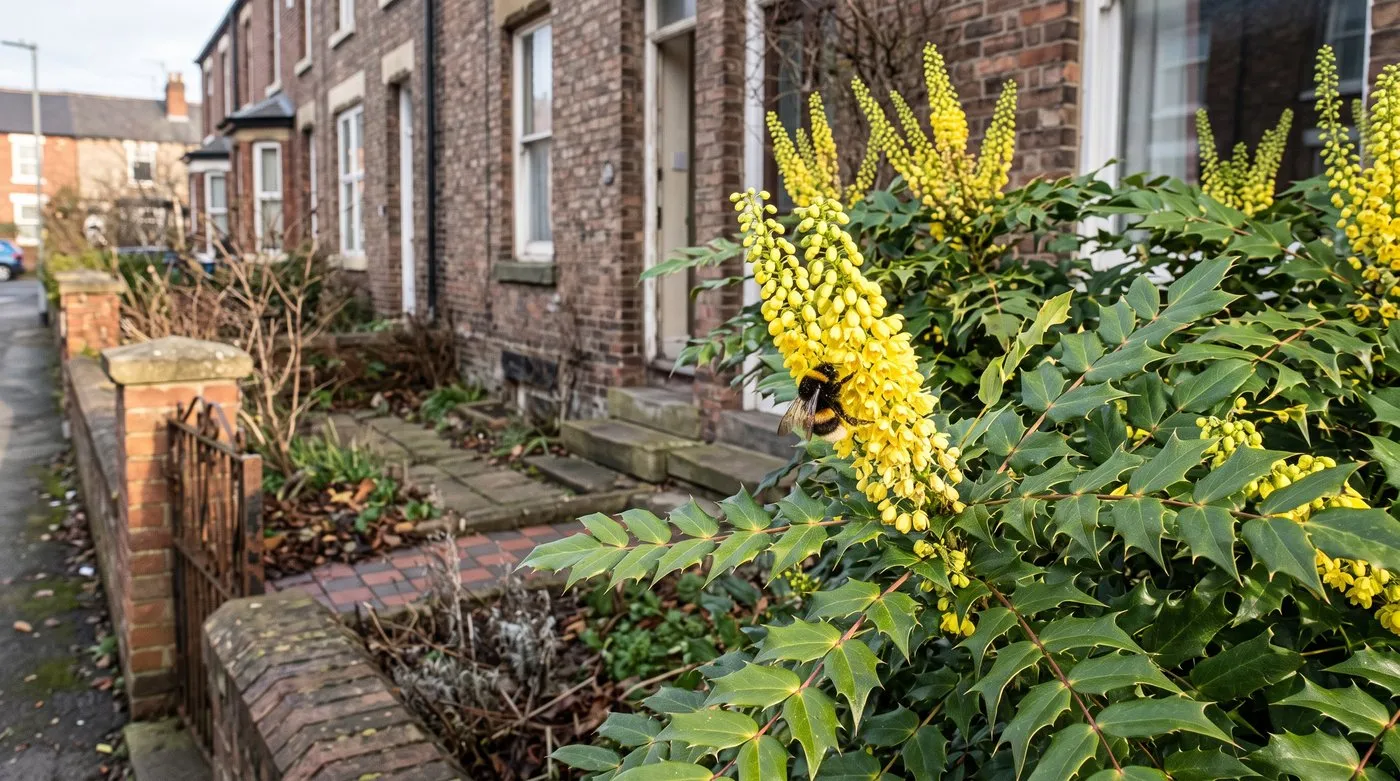
Mahonia flowers right through winter, so it’s often the first meal a waking queen finds.
2. Christmas box, Sarcococca confusa (December to March). Tiny, very scented white flowers on a neat evergreen shrub. Bees visit on mild days. It copes with shade, which is handy by a north-facing door.
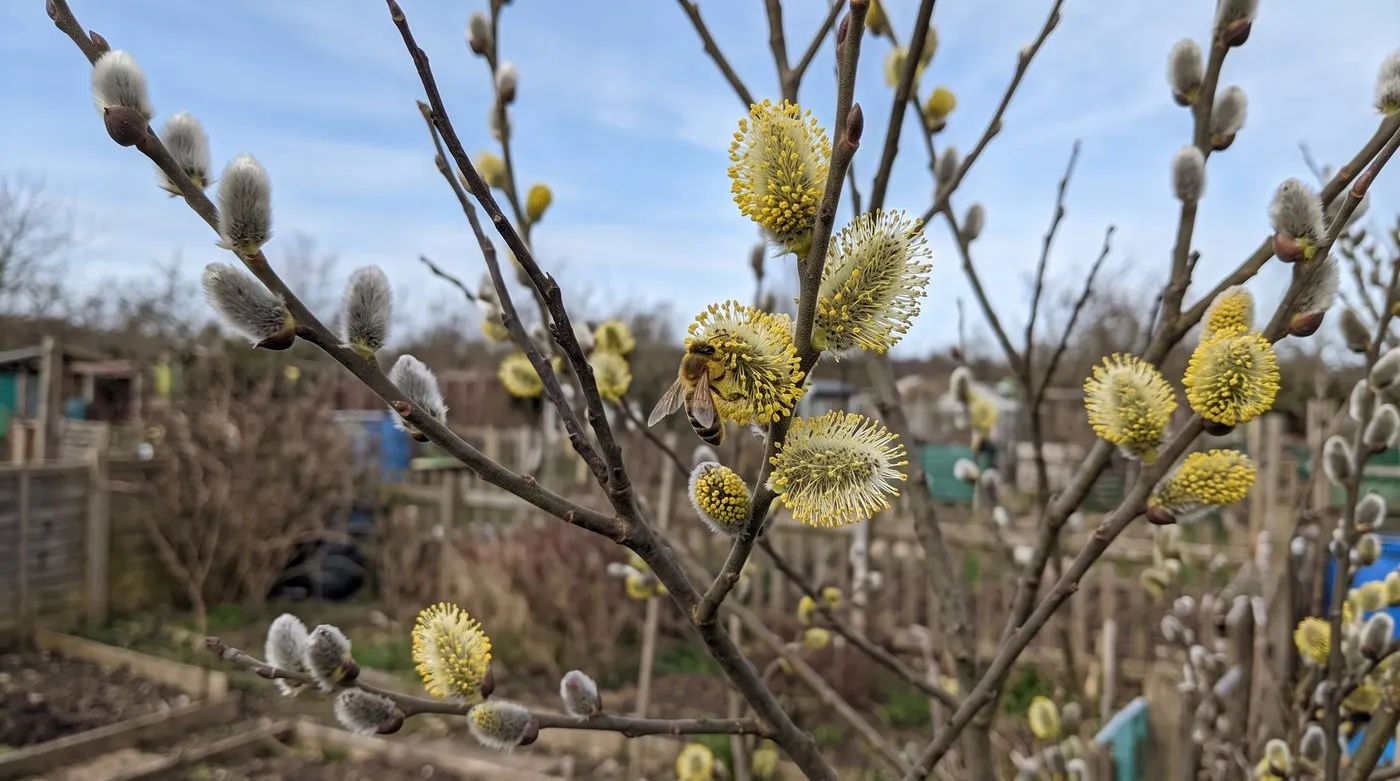
When pussy willow catkins turn yellow with pollen, bees can’t get enough of them.
3. Winter heather, Erica carnea (December to April). Low mats of pink, white or purple flowers. Unlike summer heathers, it grows on neutral and slightly chalky soils too. ‘Springwood White’ and ‘Myretoun Ruby’ are well-known varieties.
4. Hazel, Corylus avellana (February to March). Hazel is pollinated by wind, but bees collect its pollen from the dangling catkins when little else is about.
5. Pussy willow, Salix caprea (February to April). One of the best early pollen sources of all. The fluffy catkins on male plants turn yellow with pollen, and bees swarm over them. Our pussy willow guide covers which to buy and how to keep it small.
6. Blackthorn, Prunus spinosa (March to April). White blossom on bare black branches, before the leaves. Bees and early butterflies feed on it. It suckers and has sharp thorns, so it’s best in a mixed native hedge.
7. Flowering currant, Ribes sanguineum (March to April). Hanging pink flowers loved by bumblebees and hairy-footed flower bees. Easy in sun or part shade.
Bulbs
8. Snowdrop, Galanthus nivalis (January to March). Single snowdrops give bees early pollen and a little nectar. Plant them “in the green”, just after flowering, for the best start. Our snowdrop growing guide has planting depths.
9. Winter aconite, Eranthis hyemalis (January to March). Bright yellow cups with a green ruff, at ground level. They open on cold days and slowly spread under deciduous trees.
10. Crocus tommasinianus (February to March). Small, pale purple crocuses that open wide in sunshine. Bees love them. They flower earlier than big Dutch crocuses and spread happily in grass. Plant corms in autumn in big drifts.
11. Single daffodils (March to April). Daffodils aren’t great bee plants, but bumblebees do visit single ones. The wild Lent lily (Narcissus pseudonarcissus) is a good choice for naturalising in grass.

Single snowdrops offer early pollen when there’s very little else about.
Perennials
12. Hellebores (February to April). Nodding flowers that last for weeks and feed bumblebees, honey bees and solitary bees. Choose single-flowered forms.
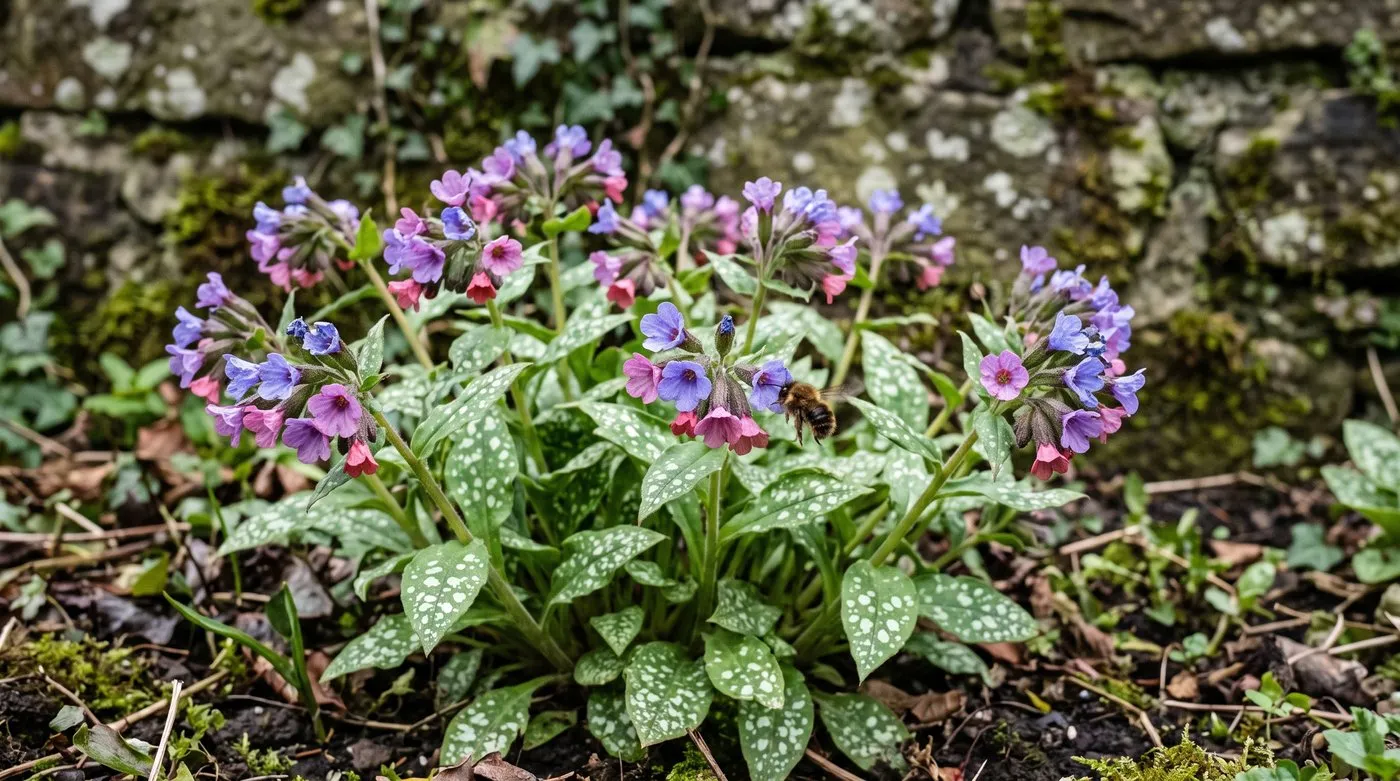
Lungwort is a favourite of the hairy-footed flower bee, one of spring’s earliest and busiest solitary bees.
13. Lungwort, Pulmonaria (March to May). Pink and blue flowers on spotted leaves, in part shade. It’s a favourite of the hairy-footed flower bee, a fast, buzzy bee that looks like a small bumblebee. ‘Diana Clare’ and ‘Trevi Fountain’ are good garden forms.
14. Primrose, Primula vulgaris (March to May). Our native primrose feeds early bees and butterflies such as the brimstone. Grow it in cool, moist part shade. Plain wild primroses are better than big, bright bedding polyanthus.

Single hellebores with open centres feed bees for weeks. Double forms are much less useful.
Why double flowers are a poor choice
Many double flowers have little or no pollen or nectar. Breeding for extra petals often replaces the parts bees feed from, and the extra petals can block the way in.
Look out for these when shopping:
- Double snowdrops, such as ‘Flore Pleno’
- Double hellebores
- Double daffodils, such as ‘Bridal Crown’ and ‘Tahiti’
- Double primroses and double hyacinths
The easy test: if you can’t see the middle of the flower, a bee probably can’t get to it either. Choose single flowers wherever you can.
Make a sunny spot for early bees
Early bees and butterflies need warmth to fly. On a chilly March day, a sheltered, sunny corner can be the only place they’re active. Flowers there open sooner too.
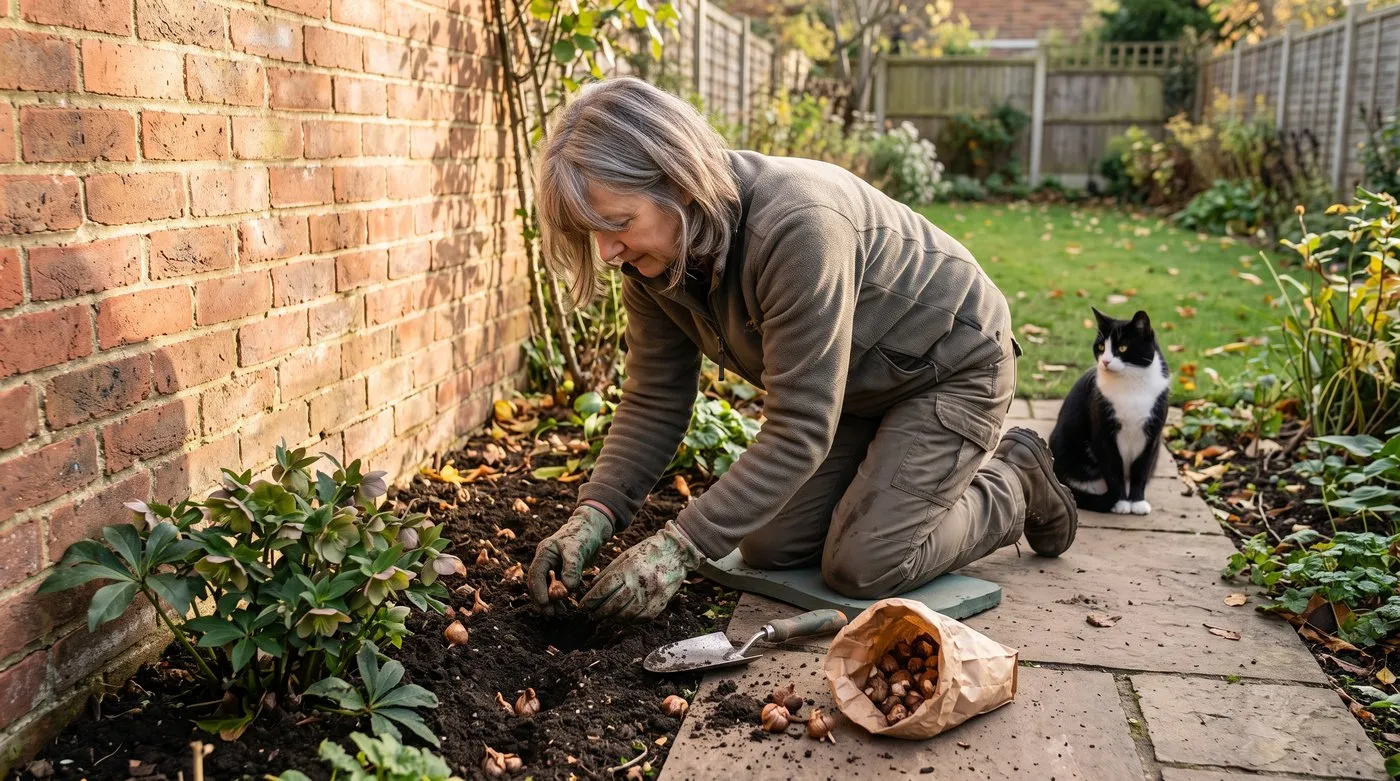
Plant crocuses in a drift at the foot of a sunny wall in autumn, and early bees will find them in February.
- Pick a south or south-east facing wall or fence. It warms up quickly and keeps off cold winds.
- Plant your early flowers at its foot. Crocuses, hellebores, lungwort and primroses all fit.
- Keep tall shrubs from shading the bed in the morning.
- Add a flat stone or two. Butterflies bask on them to warm up before feeding.
Plant in clumps, not singles. A drift of crocuses is far easier for a bee to find than one or two flowers dotted about.
Give early bees somewhere to live
Flowers feed pollinators, but they need a home nearby too.
Bumblebee queens hibernate in loose soil and under leaf litter, often on shady banks. Leave some ground undug and some leaves in place until spring.
Solitary bees like red mason bees nest in hollow stems and holes. A homemade bee house near your early flowers gives them food on the doorstep. Our guide to solitary bees in the garden explains who’s who.
Butterflies like brimstones often hibernate in dense ivy and evergreens. Leave a patch of ivy uncut.
Early spring pollinator calendar
| Month | Who’s about | What’s flowering | Garden jobs |
|---|---|---|---|
| December to January | Buff-tailed bees on mild days in the south | Mahonia, Christmas box, winter heather | Leave ivy and leaf litter alone |
| February | Buff-tailed queens, honey bees | Snowdrops, winter aconite, hazel, early crocuses | Plant snowdrops in the green |
| March | More queens, red mason bees, hairy-footed flower bees, brimstones | Crocuses, hellebores, pussy willow, lungwort, blackthorn, flowering currant | Put up a bee house facing south or south-east |
| April | Common carder and garden bumblebees, peacocks | Primroses, daffodils, flowering currant, blackthorn | Avoid insecticides as bees get busy |
Common mistakes with early spring planting
Buying doubles. They fill garden centre shelves and look great, but feed bees very little. Check for an open centre.
Planting singles. One crocus is hard to find. Plant in drifts of 20 or more.
Planting in shade. Early flowers in a cold, shady bed open late and get few visits. Use the sunniest, most sheltered spot.
Tidying too much in autumn. Leaf litter, undug ground and ivy shelter hibernating bees and butterflies.
Reaching for slug pellets near flowers. Metaldehyde pellets are now banned in the UK. Pick slugs off hellebores by torchlight instead. Squirrels digging up crocus corms? A layer of chicken wire over newly planted bulbs helps.
Now your early food is sorted, read our guide on how to create a wildlife garden to support pollinators all year round. You’ll find more in our wildlife gardening guides.
Frequently asked questions
What is the first plant bumblebees visit in spring in the UK?
Winter-flowering shrubs like Mahonia ‘Charity’ are often first. It flowers from late autumn into early spring, so it’s ready when queens wake. Winter heather, snowdrops and winter aconite follow, then crocuses from February.
Why do double-flowered cultivars fail bees?
Many doubles have little or no pollen or nectar. Breeding for extra petals often replaces the parts bees feed from. The extra petals can also block the way in. Choose single flowers where you can see the centre.
When do UK queen bumblebees emerge from hibernation?
Buff-tailed queens are usually first, from February in the south. Early and red-tailed bumblebees follow in March, with common carders and garden bumblebees from April. Everything runs a little later in the north and in cold springs.
Does a south-facing sun trap really attract more bees?
Yes, warm, sheltered spots help a lot in early spring. Flowers open sooner there, and cold bees can fly and feed more easily. A sunny wall or fence with early flowers at its foot is ideal.
Are crocuses good for bees?
Yes, especially Crocus tommasinianus. It flowers early with open, easy-to-reach flowers full of pollen. Plant the corms in autumn in big drifts, in grass or at the front of a sunny border.
Are daffodils good for bees?
Some help a little, but they’re not the best early food. Bumblebees do visit single daffodils and the wild Lent lily. Doubles offer bees almost nothing. Mix daffodils with crocuses, lungwort and pussy willow for real value.
Our team produces practical UK gardening guidance from source research, contributor records and established horticultural practice. Editorial standards are overseen by Matt W.


