Key takeaways
- Pussy willow is goat willow or grey willow, both native to the UK
- The silver catkins open on bare stems in February and March
- Plant in sun and moist soil, well away from drains, foundations and pond liners
- Prune after the catkins fade, as next year's catkins form on new stems
- Winter cuttings pushed into moist ground root with no rooting powder
- 'Kilmarnock' is a small weeping form that suits pots and small gardens
Pussy willow gives you soft, silver catkins on bare stems in late winter, when the garden needs it most. Plant it in sun and moist soil, give it plenty of space, and cut it back after flowering for more catkins next year. It is also one of the easiest plants to grow from a cutting.
This guide covers which willow to choose, where to plant it, how to root cuttings, pruning for catkins, and smaller forms for little gardens.
What is pussy willow?
Pussy willow isn’t one named plant. It is the country name for two native willows:
- Goat willow (Salix caprea), the one with the biggest, fluffiest catkins.
- Grey willow (Salix cinerea), with smaller leaves, common in wet ground.
The “pussies” are the catkins, covered in fine silver hairs like a kitten’s paw. Willows are male or female. The fat silver catkins come from male plants, and they turn yellow with pollen as they open. Female catkins are slimmer and greener.
For something different, try ‘Mount Aso’ (Salix gracilistyla), with pink-tinged catkins, or the black pussy willow (Salix gracilistyla ‘Melanostachys’), with near-black catkins and red anthers. For a willow grown for its pink and white leaves instead, see the guide to the flamingo willow, Salix ‘Hakuro-nishiki’. The general guide to growing willow covers the bigger willows.
Where to plant pussy willow
Plant pussy willow in sun or light shade and moist soil. It loves damp ground and copes well with heavy clay.
Plan for its size. Left alone, goat willow grows quickly into a small tree around 10m tall. Either give it room, such as at the end of a large garden or beside a pond, or plan to cut it back hard regularly.
Willow roots go looking for water. Keep full-sized pussy willow well away from the house, drains and pond liners, especially on clay soil. In a small garden, choose ‘Kilmarnock’ instead (see below).
Plant bare-root willows from November to March, and pot-grown ones at any time the soil isn’t frozen or dry. The guide to planting bare-root trees shows how.
How to grow pussy willow from cuttings
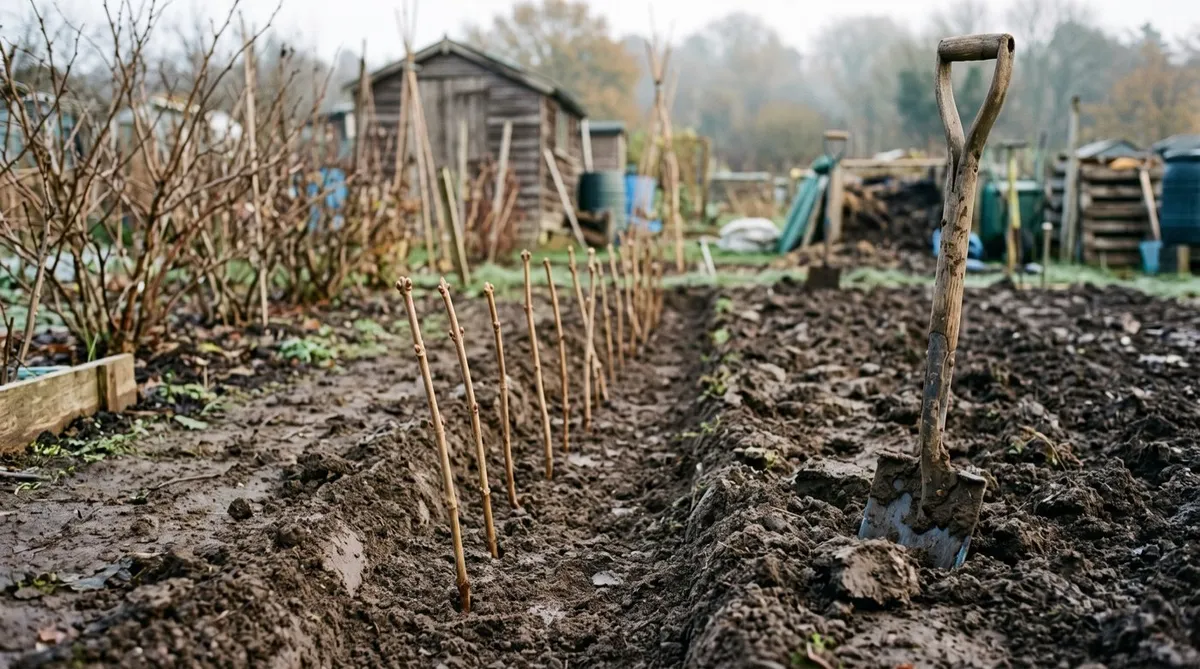
Willow is one of the easiest plants to grow from a cutting. Winter stems pushed straight into the ground usually root by spring.
- Between November and February, cut pencil-thick stems that grew this year.
- Trim them to 20-30cm long. Cut flat at the bottom and sloping at the top, so you know which way up they go.
- Push about two-thirds of each cutting into moist, weed-free soil.
- Firm the soil around them and leave them alone.
- Water in dry spells next spring and summer.
Leaves appear in spring, and you can move the young plants the following winter. The guide to hardwood cuttings covers the method for other shrubs too.

Push about two-thirds of each winter cutting into the soil. Willow roots so easily that no pot or rooting powder is needed.
How to prune pussy willow for more catkins
Prune pussy willow just after the catkins fade, in March or April. That gives the plant all summer to grow new stems, which carry next spring’s catkins. An old willow left unpruned slowly carries fewer catkins.

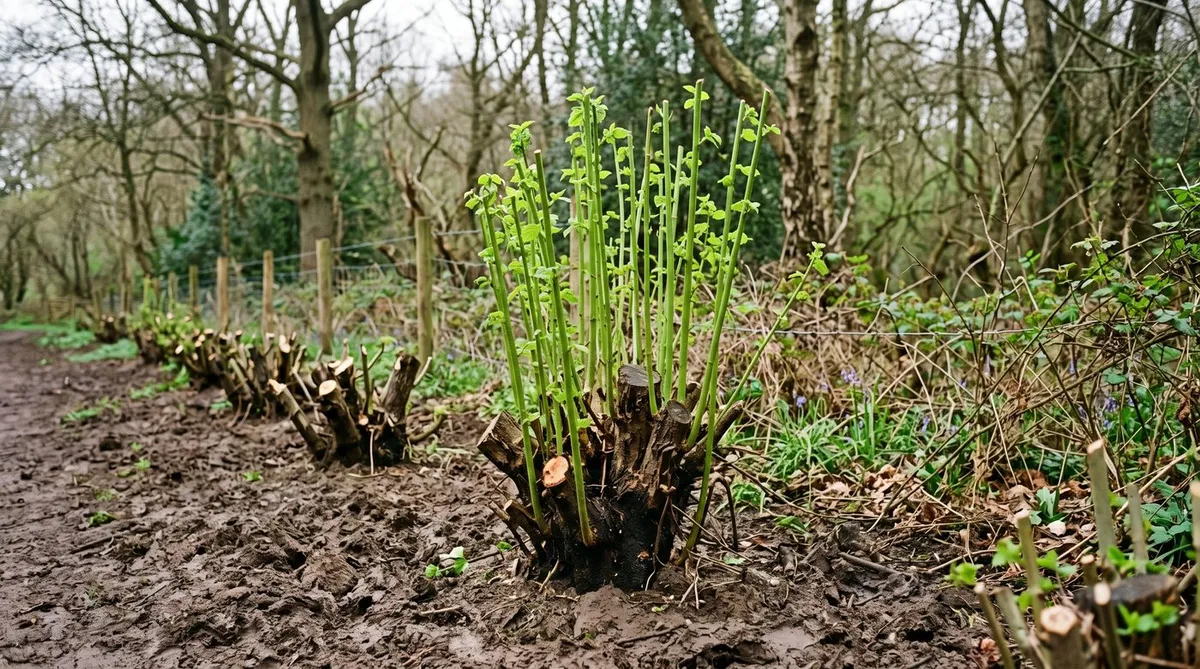
Cut back hard after flowering, a pussy willow sprouts lots of straight new stems, and they carry next spring’s catkins.
There are three easy ways to do it:
- Thin it. Cut about one stem in three right down to the base each year. You always keep some flowering wood.
- Coppice it. Cut all the stems down to a low stump every two or three years. It sprouts lots of long, straight stems, perfect for cutting.
- Pollard it. Cut all the branches back to the top of a short trunk. This keeps it at a set height, with a lollipop of fresh stems.
The guide to pollarding and coppicing explains both in more detail.
Wildlife note: Check for nesting birds before any big prune from March onwards. Damaging an active nest is against the law.
‘Kilmarnock’ pussy willow for small gardens and pots
‘Kilmarnock’ (Salix caprea ‘Kilmarnock’) is a male goat willow grafted onto a short, straight stem. Its branches weep down in a neat curtain, covered in silver catkins in late winter. It only grows as tall as the stem it was grafted onto, so it suits small gardens.
It grows well in a large pot, at least 45cm across, filled with a loam-based compost such as John Innes No 3. Keep the compost moist, as willows hate drying out. After flowering, thin out crowded or dead branches. Rub off any shoots that sprout from the trunk below the graft.

‘Kilmarnock’ stays small enough for a courtyard pot, and still gives a full show of catkins in late winter.
Cutting pussy willow stems for the vase
Pussy willow is a lovely cut stem for late winter. Cut stems when the catkins are at the silver stage, before they turn yellow with pollen.
Kept dry in a jug, the stems last for weeks and the catkins stay silver. In water, they open to yellow pollen and may even grow roots, which you can then plant. For more ideas for early indoor colour, see the guide to forcing flowering branches indoors.

Cut at the silver stage and kept dry, pussy willow stems last for weeks indoors.
Pussy willow for wildlife
Pussy willow is one of the best early-spring plants for wildlife. The catkins open in February and March, when queen bumblebees come out of hibernation and little else is flowering. Their pollen and nectar give the bees a vital early meal. Honeybees and solitary bees use them too.
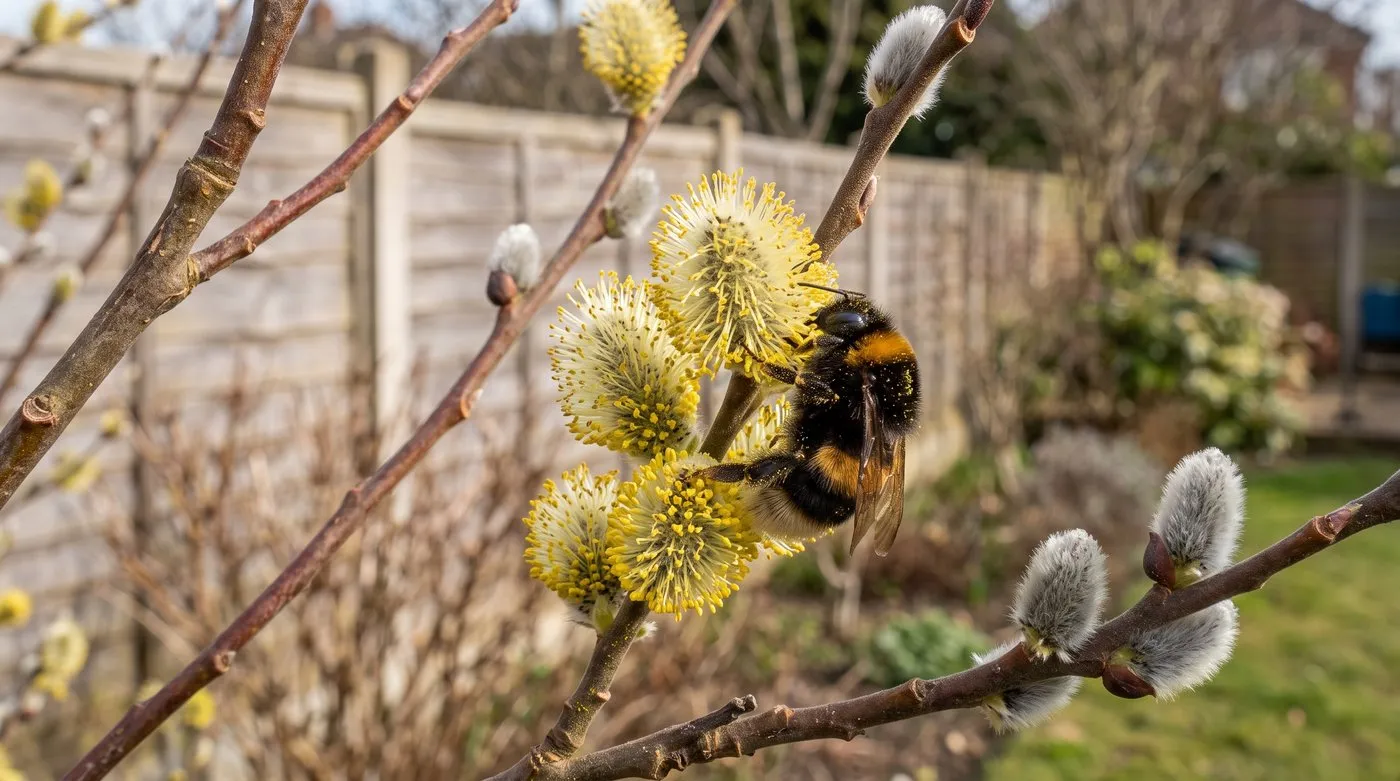
Once the catkins turn yellow with pollen, they’re a lifeline for queen bumblebees just out of hibernation.
Native willows are also food for many moth caterpillars, including the puss moth and sallow kitten. Grow one in a wildlife garden, beside a wildlife pond or as part of a mixed native hedge.
Common problems with pussy willow
- Roots near buildings and drains. The biggest issue. Plant full-sized willows well away from them.
- Willow anthracnose. A fungus that causes brown leaf spots and shoot dieback in wet springs. Prune out affected stems.
- Willow rust. Orange spots on leaves in late summer. Rarely serious.
- Sawfly larvae. These caterpillar-like grubs chew leaves. A healthy willow soon regrows, and birds eat many of them.
- Few catkins. Usually old, unpruned wood, or a female plant. Prune after flowering.
Pussy willow calendar
| Month | What to do |
|---|---|
| January | Take hardwood cuttings. Plant bare-root willows |
| February | Catkins at the silver stage. Cut stems for the vase |
| March | Catkins turn yellow with pollen. Prune after they fade |
| April | Finish pruning. Cuttings start to leaf |
| May to August | Water cuttings and young plants in dry spells |
| September | Watch for rust. Plan winter cutting |
| October | Plant pot-grown willows and ‘Kilmarnock’ |
| November and December | Take hardwood cuttings. Plant bare-root willows |
Frequently asked questions
How do you grow pussy willow from a cutting?
Push a pencil-thick winter stem into moist ground and leave it. Take cuttings 20-30cm long from this year’s growth between November and February. Bury about two-thirds of the length. Most root by spring with no rooting powder.
How big does pussy willow grow?
Goat willow becomes a small tree around 10m tall if left uncut. It grows fast when young. Cutting it back hard every year or two keeps it as a shrub of a few metres, covered in fresh catkin stems.
Why has my pussy willow stopped producing catkins?
Old, unpruned plants carry fewer catkins on tired wood. Cut some of the oldest stems back hard just after flowering. New stems grow over summer and carry next spring’s catkins. Female plants also have smaller, greener catkins than males.
Is pussy willow good for bees?
Yes, it is one of the best early-spring plants for bees. The catkins open in February and March, when queen bumblebees are hungry and little else flowers. Willows also feed the caterpillars of many moths.
Can I plant pussy willow near the house?
Not full-sized goat or grey willow. Their thirsty roots can damage drains and, on clay soil, foundations. Plant them well away from the house. For a small garden, choose the grafted ‘Kilmarnock’ weeping willow and grow it in a large pot.
Got spare willow stems? Turn them into a play den with the guide to building a living willow dome, or browse more plant guides.
Our team produces practical UK gardening guidance from source research, contributor records and established horticultural practice. Editorial standards are overseen by Matt W.