Key takeaways
- Cut hazel and birch in winter, from November to February, when it is leafless
- Use fresh rods within a few weeks, while they still bend without cracking
- Push twiggy pea sticks in early, so plants grow up through them and hide them
- A sweet pea wigwam needs six 2m rods, a 50cm circle and a few woven bands
- Never cut from someone else's hedge or wood without the owner's permission
Hazel and birch make free plant supports that look at home in any border. Cut rods in winter, use them while they still bend, and you can make pea sticks, sweet pea wigwams and peony domes for nothing. Plants grow up through the twigs and by midsummer you can barely see them.
This guide covers when to cut, where to find rods and how to build the four most useful supports. For the wider question of when and how to stake each type of plant, see the guide to staking and supporting garden plants.
Why use hazel for plant supports?
Twiggy hazel gives plants something to hold on to. Peas, sweet peas and climbing beans grab the side shoots and climb without ties. Floppy perennials lean into the twigs and stay upright.
It also looks right. Hazel fades from brown to silvery grey and disappears into the planting once leaves grow up around it. Bought metal hoops do the job, but you often see them all summer.
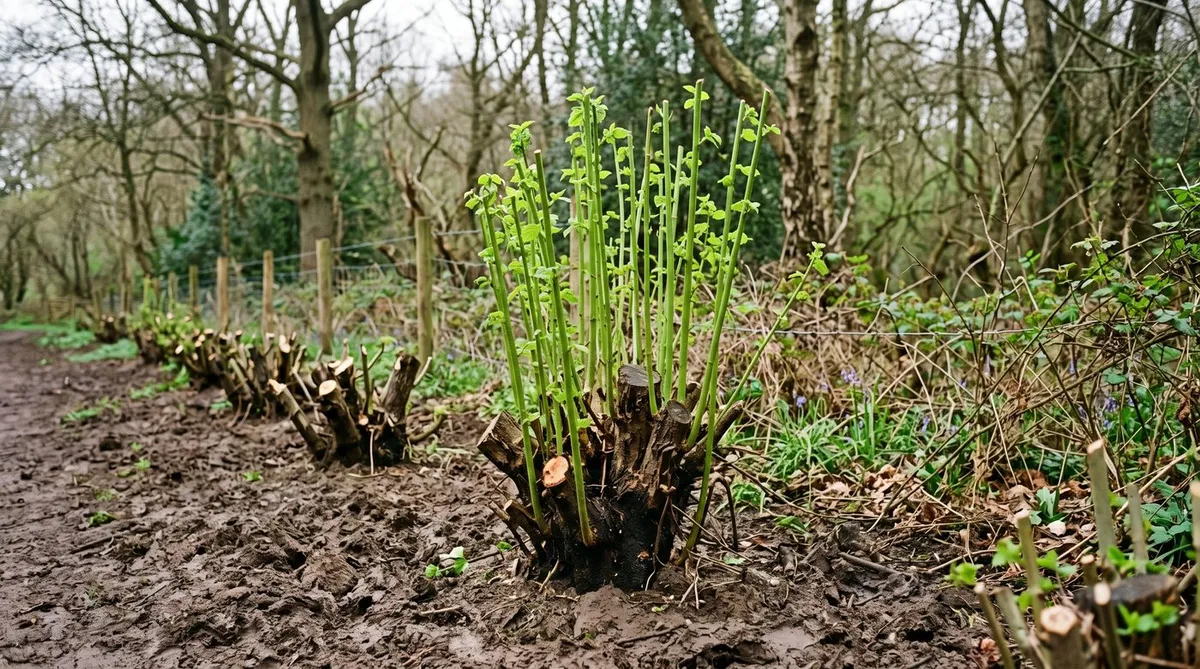
Cutting hazel is good for it too. Hazel has been coppiced (cut down to the base every few years) in Britain for centuries. It regrows with lots of straight, new stems. That’s why there is often spare hazel around in winter if you ask.

By midsummer, sweet peas swallow a hazel wigwam almost completely. You get all the support and hardly see the frame.
When to cut hazel for plant supports
Cut hazel and birch in winter, from November to February, while the stems are leafless and dormant. Leafless rods are easier to trim and sort. Finishing by the end of February also keeps you well clear of nesting birds, which are protected by law.
Fresh rods bend best. Use them within a few weeks of cutting, before they dry and stiffen. If you can’t build straight away, stand the bundle somewhere cool and shady, or soak the bases in a bucket of water for a day before bending.
Avoid cutting in spring and summer. The stems are in leaf and birds may be nesting in the hedge or thicket. The guide to when to cut hedges in the UK explains the nesting rules.

Straight, freshly cut hazel rods from a winter coppice. Use them within a few weeks, while they still bend easily.
Where to find hazel rods and pea sticks
You have more options than you might think. Always ask first, and never cut from a hedge or wood that isn’t yours without the owner’s say-so.
- Your own garden. A hazel in a corner can be coppiced every few years for a steady supply. The guide to pollarding and coppicing trees shows how.
- Coppice groups and Wildlife Trusts. Many run winter coppicing days. Helpers can often take brushwood home.
- Landowners and farmers. Overgrown hazel is common in field hedges. A polite request in winter often gets a yes.
- Tree surgeons. Some are happy to drop off hazel or birch brushwood rather than chip it.
- Craft suppliers. Coppice workers and some garden suppliers sell bundles of pea sticks and bean rods.
Birch brushwood is often easy to find too. It makes lovely pea sticks, though it doesn’t bend well enough for arches.
How to make the four most useful hazel supports
Four simple structures cover most borders and veg beds. Push every upright 20-30cm into the soil so it doesn’t rock in the wind.
Pea sticks
Pea sticks are twiggy branches pushed into the soil. They are the easiest support of all. Push them in among perennials in early spring, when the shoots are still low. Use sticks about 1m tall for tall perennials and a little shorter for low, floppy plants.
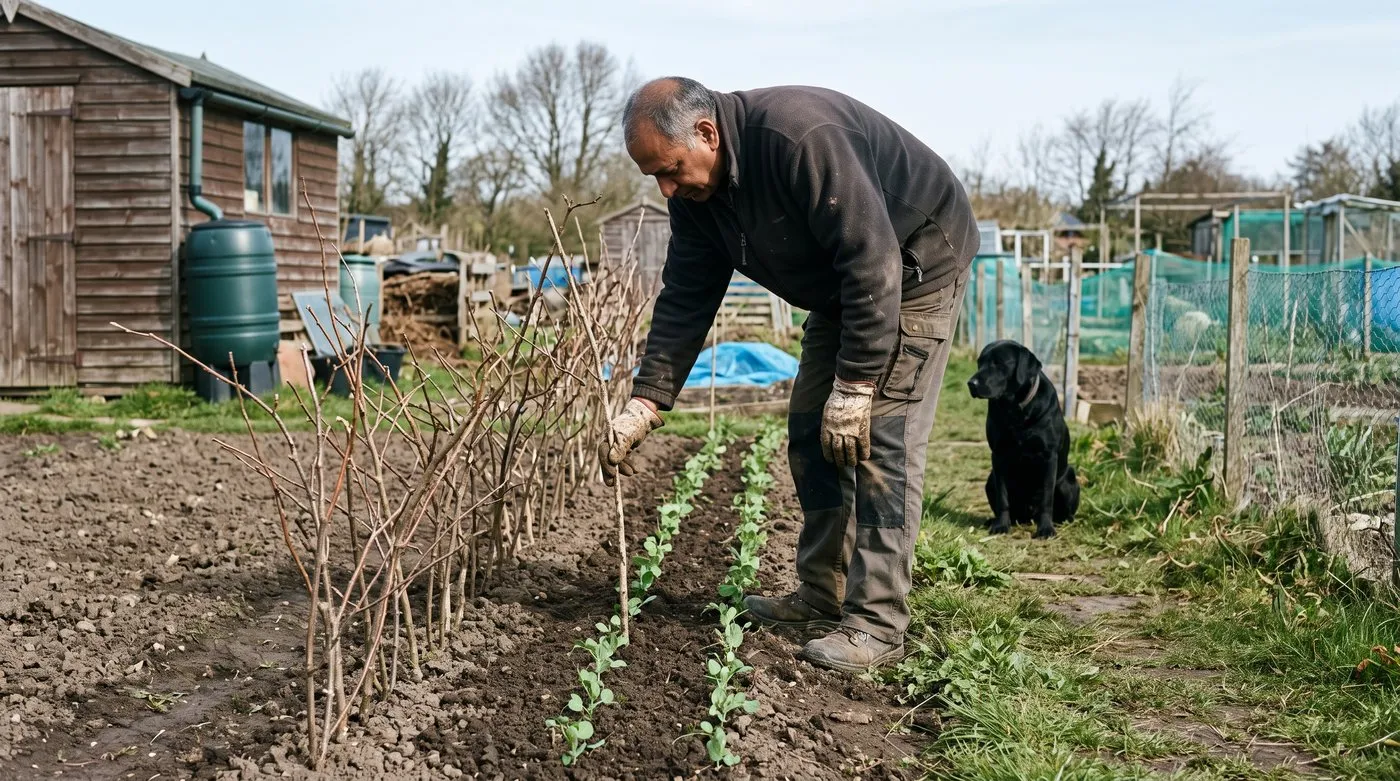
Get the sticks in as soon as the peas come up. The tendrils find the twigs within days and climb on their own.
Plants grow up through the twigs and hide them. For peas, push a row of sticks along each side of the row as soon as you sow. The tendrils grab hold straight away. The guide to growing peas covers sowing and spacing.
Good for: hardy geraniums, asters, achillea, peas and dwarf French beans.
Sweet pea wigwam
A wigwam is the classic hazel support for climbers. You need six straight rods about 2m long and a few thinner, bendy rods for weaving.
- Mark a circle about 50cm across on bare soil
- Push the six rods in, evenly spaced around the circle
- Lean the tops together and tie them firmly with twine
- Weave a thin rod in and out of the uprights about 30cm above the soil
- Add two more bands higher up to stiffen the frame
- Trim any long twiggy ends that stick out
Plant one or two sweet peas at the foot of each rod. The sweet pea growing guide covers sowing and planting out.
Good for: sweet peas, climbing French beans and runner beans.

A finished wigwam waiting for its sweet peas in early spring. The woven bands stop it twisting in the wind.
Peony dome
A dome holds up heavy, floppy clumps such as peonies. Build it before the shoots reach knee height, so the stems grow through it.
- Push one end of a long rod into the soil at the edge of the clump
- Arch it over and push the other end in on the far side
- Repeat with five or so more rods, crossing at the top
- Tie the crossings together with twine
- Weave a thin rod around the edge to hold the shape
Good for: peonies, tall asters, heleniums and sedums that splay.
Twiggy frame for dahlias
Dahlias and tall cosmos need support on every side. Push four sturdy uprights in at the corners of a square around the plant. Tie horizontal rods between them at two heights, then weave brushwood through the sides. The stems grow up inside. The guide to growing dahlias covers planting and feeding.
Good for: dahlias, tall cosmos and cleome.

A wigwam, a dome and a clump of pea sticks, all put in before the plants get going. In a few weeks they will be hidden.
How to bend hazel without snapping it
Bend slowly and work the rod gradually along its length. Give it a slight twist as you bend. This helps the fibres part rather than crack, and hurdle makers use the same trick to wrap rods round the ends of a hurdle.
Fresh rods bend far more easily than dry ones. If a rod creaks or the bark splits, stop. Soak it for a day and try again, or use it as a pea stick instead. Thinner rods bend more easily than thick ones, so save the thick, straight stems for uprights.

Bark splitting on the outside of a bend is your warning. Ease off, add a gentle twist and work the bend along slowly.
Hazel supports or bought metal ones?
Each has its place. Hazel is free if you can find it and gives plants better grip. Metal lasts many more years and suits tidy, formal gardens.
| Hazel and birch | Bought metal or bamboo | |
|---|---|---|
| Cost | Free, or a small cost for a bundle | You pay for each one |
| Plant grip | Twigs give lots of grip | Smooth, so stems often need ties |
| Looks | Blends in and fades to grey | Can stay visible all summer |
| Lifespan | Usually two or three seasons | Many seasons |
| Best for | Peas, sweet peas, floppy perennials | Single tall stems, formal beds |
If you like a sturdier, permanent look, the garden obelisk ideas include long-lasting options.
Storing hazel supports for next year
Bring wigwams and domes in once the plants have been cleared in autumn. Supports kept dry over winter last longer than ones left out in the rain.
- Snip off the old twine and pull the rods out
- Sort them into long uprights and thin weavers
- Stack them off the ground, under a roof or a sheet with air around them
- Check the bases in late winter and replace any that have rotted
Old, brittle pea sticks can go on the compost heap or into a log pile for wildlife.

Raised off the ground and covered, rods stay sound for another season. Air around the stack stops them going mouldy.
Common mistakes with hazel plant supports
Putting supports in too late. Once plants have flopped, you can’t push supports in without snapping stems. Put pea sticks and domes in while shoots are still low.
Using dry, old rods for bending. Dry hazel cracks. Use fresh rods for wigwams and arches, and keep older ones for pea sticks.
Pushing rods in too shallow. Shallow rods rock and lean in wind. Go 20-30cm deep, and make a pilot hole with a metal bar in hard ground.
Skipping the woven bands. A wigwam without them twists and sways. A few bands make it far stiffer.
Cutting without permission or in nesting season. Always ask the owner, and do your cutting in winter.
Hazel plant support calendar
| Month | Task |
|---|---|
| November to February | Cut hazel and birch. Build wigwams soon after cutting |
| March | Push pea sticks into perennial clumps and alongside early peas |
| April | Put up wigwams for sweet peas and beans. Set domes over peonies |
| May | Build twiggy frames for dahlias at planting time |
| June to August | Tuck stray stems back inside. Add a few extra sticks where needed |
| September to October | Clear spent plants. Take supports down and store them under cover |
For more on supporting plants that have already grown tall, read the guide on how to stake tall perennials. There are more practical projects in the how-to guides.
Frequently asked questions
When should I cut hazel for plant supports?
Cut hazel in winter, from November to February, while it is leafless. Fresh rods bend well, so use them within a few weeks. If they start to stiffen, keep them somewhere cool and damp, or soak the bases in water for a day before bending. Finishing by the end of February also keeps you clear of nesting birds.
Where can I get hazel rods for plant supports?
Try your own garden, a local coppice group or a friendly landowner. Many Wildlife Trusts and woodland groups run winter coppicing days where helpers can take brushwood home. Some coppice workers and craft suppliers sell bundles of pea sticks and bean rods. Never cut from a hedge or wood without the owner’s permission.
How long do hazel plant supports last?
Most hazel supports last two or three seasons, sometimes more. Thin twiggy pea sticks go brittle soonest, often after a season or two. Thicker wigwam and dome rods last longer, especially if you bring them under cover for winter. Check the bases each spring, as that is where rot starts.
How do you make a sweet pea wigwam from hazel?
Push six 2m hazel rods into the soil around a 50cm circle. Lean the tops together and tie them with twine. Then weave thinner, bendy rods around the uprights at a few heights to stiffen it. Plant one or two sweet peas at the foot of each rod.
Are hazel pea sticks better than bamboo canes?
For floppy perennials and peas, yes, because the twigs give plants something to grip. Plants climb and lean into the side shoots without needing ties. Bamboo canes last longer and suit single tall stems such as cordon tomatoes, where you tie the stem to the cane anyway.
Can I use birch instead of hazel for plant supports?
Yes, birch brushwood makes excellent pea sticks. It is twiggier and finer than hazel, so it suits peas and delicate annuals. It is less bendy, though, so hazel is better for wigwams and arches. Cut both in the same winter window.
Our team produces practical UK gardening guidance from source research, contributor records and established horticultural practice. Editorial standards are overseen by Matt W.