Key takeaways
- Hazel grows almost anywhere in the UK, on clay, loam, chalk or sand
- Plant bare-root trees from November to March
- Grow two different varieties for a much better crop of nuts
- Cobnuts are ready in September, with the first crop after three or four years
- Catkins appear from January, giving early bees a welcome meal
- Net your trees in August, or the grey squirrels will take the lot
Hazel is Britain’s most reliable native nut tree. It grows on almost every soil, from heavy clay to thin chalk, starts cropping in a few years and is great for wildlife. It needs very little looking after.
People in Britain have been growing hazel for thousands of years, and Kent is still famous for its cobnuts. Growing your own is easy. The only real challenge is getting to the nuts before the squirrels do.
What is the difference between hazel, cobnut, and filbert?
These names confuse everyone. They’re all hazels, but they differ in nut shape and husk.
Wild hazel (Corylus avellana) is our native. It grows as a multi-stemmed shrub or small tree. The nuts are small and round, sitting in a short, frilly husk that leaves the top showing. They taste fine but are small.
Cobnuts are garden hazels chosen for bigger, rounder nuts. The husk is still short and open.
Filberts (Corylus maxima) have longer nuts wrapped in a long, tube-like husk. Purple Filbert is grown mainly for its dark purple leaves.
| Wild hazel | Cobnut | Filbert | |
|---|---|---|---|
| Nuts | Small and round | Bigger and round | Long |
| Husk | Short, nut tip showing | Short and open | Long, wraps the nut |
| Crop | Light | Good | Good |
| Best for | Wildlife, coppicing, hedging | Nuts, garden tree | Nuts, good looks |
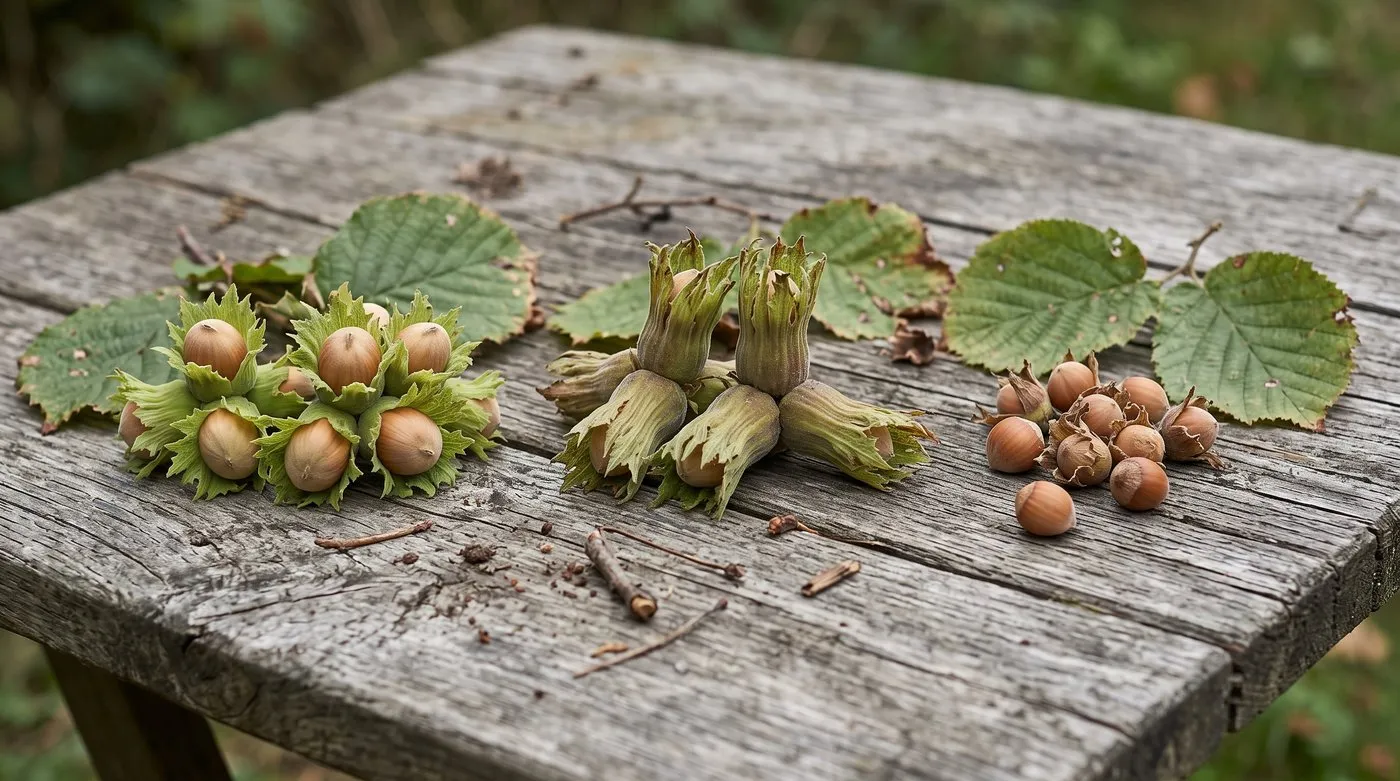
Cobnuts sit in short, open husks, while filberts are wrapped in long, tube-like ones. Both are hazels, just with different nuts.
Which hazel varieties should I plant?
It depends whether you want nuts, a hedge, poles or something pretty. These are good choices for UK gardens.
Kentish Cob (also called Lambert’s Filbert) is the classic for nuts. It gives big nuts and heavy crops. The nuts ripen in mid-September. Plant a partner such as Cosford or Merveille de Bollwiller for pollen.
Cosford is a great partner for Kentish Cob. Its thin-shelled nuts crack easily by hand and ripen a bit earlier. It’s less vigorous, so it suits smaller gardens.
Webb’s Prize Cob gives very large nuts on a compact tree. It’s a little slower to get going and likes well-drained soil.
Purple Filbert (Corylus maxima ‘Purpurea’) is grown mainly for its deep purple leaves. The nuts are smaller but edible. It makes a striking hedge or garden tree, and holds an RHS Award of Garden Merit.
Gunslebert is a vigorous filbert with long, tasty nuts.
 Cobnuts ripening in late summer. Pick them when the husks turn yellow-green, usually in September.
How to plant hazel and cobnut trees
Plant bare-root hazel from November to March. Bare-root trees are cheaper than potted ones and settle in faster.
Our guide to planting bare-root trees covers the basics. For hazel:
Spacing for nuts: Plant trees 4-5m apart, so each has room to spread and you can get round to pick.
Spacing for a hedge: Plant whips 40-50cm apart in a single row, or 30-40cm apart in a staggered double row.
Spacing for coppice: Plant 2-3m apart so each plant has room to send up straight poles.
Soil: Hazel grows on clay, loam, chalk and sand. It’s one of the best trees for clay soil. On very heavy clay, mix in some composted bark to help drainage. Avoid waterlogged spots.
Planting: Dig a hole twice as wide as the roots and as deep as the soil mark on the stem. Spread the roots out, fill in and firm gently. Water well. Mulch around the tree with composted bark, keeping it clear of the trunk.
Staking: Small whips don’t need a stake. Taller trees benefit from a short stake for the first couple of years.
How to prune cobnuts for maximum nut production
Cobnut growers have a special trick called “brutting”. It’s a traditional Kentish method that encourages more nuts.
Brutting (August): In mid to late August, snap (don’t cut) strong side shoots about halfway along, so the end hangs down but stays attached. This slows the shoot’s growth and helps the tree put its energy into flowers and nuts for next year. Do it on strong side shoots that aren’t carrying nuts. Leave the snapped ends hanging until winter.
Winter pruning (February to March): Cut the brutted shoots back to 3-4 buds. Take out dead, crossing or inward-growing branches. Aim for an open goblet shape with 6-8 main branches and lots of short side shoots, as these carry the female flowers that become nuts.
Suckers: Hazel sends up lots of shoots from the base. Remove them in winter with a sharp spade, unless you want a multi-stemmed bush or coppice.
Our fruit tree pruning guide explains the general idea. Hazel follows the same open-centre shape as apples, with brutting added.
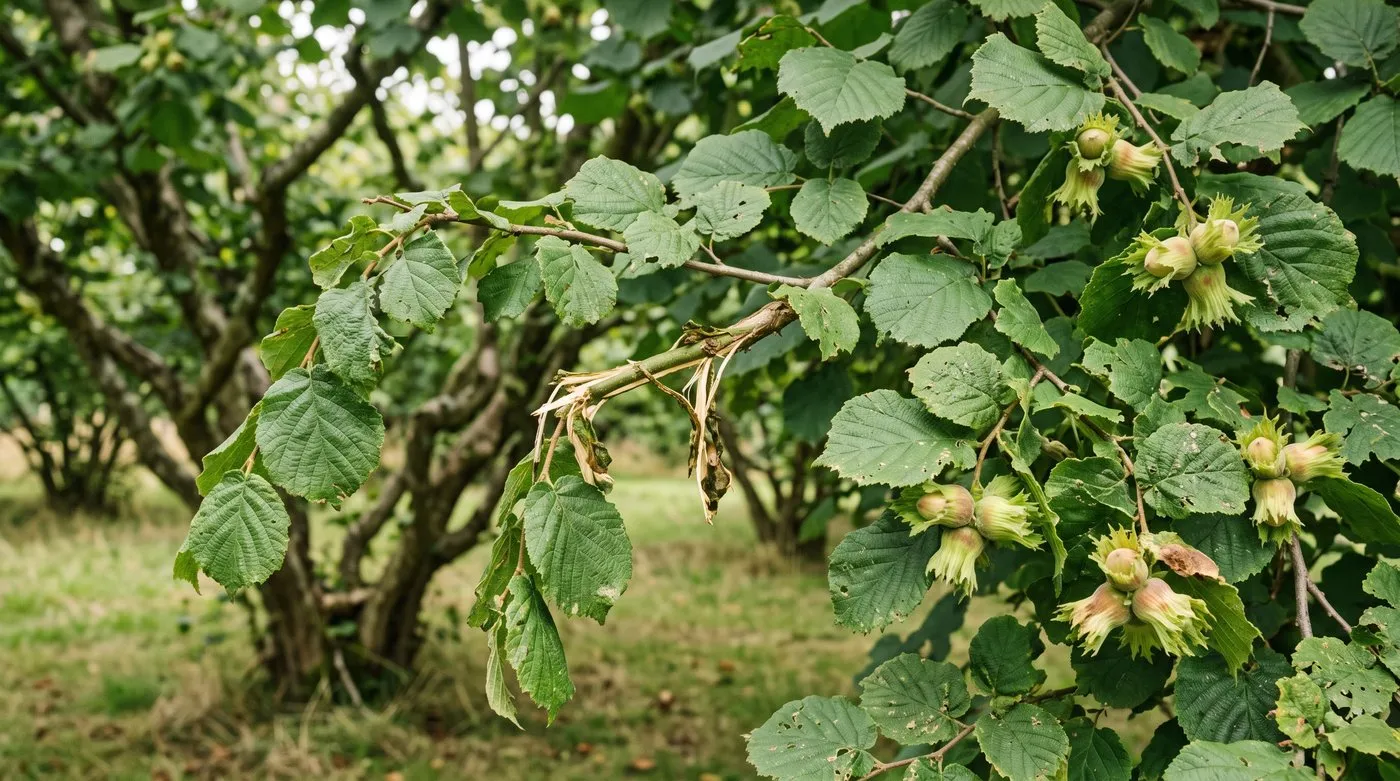
Snap strong side shoots halfway in August and leave the ends hanging. Cut them back to three or four buds in winter.
How to coppice hazel
Coppicing means cutting hazel down to the ground to get a crop of straight poles. It’s an old country craft that’s easy to do at home.
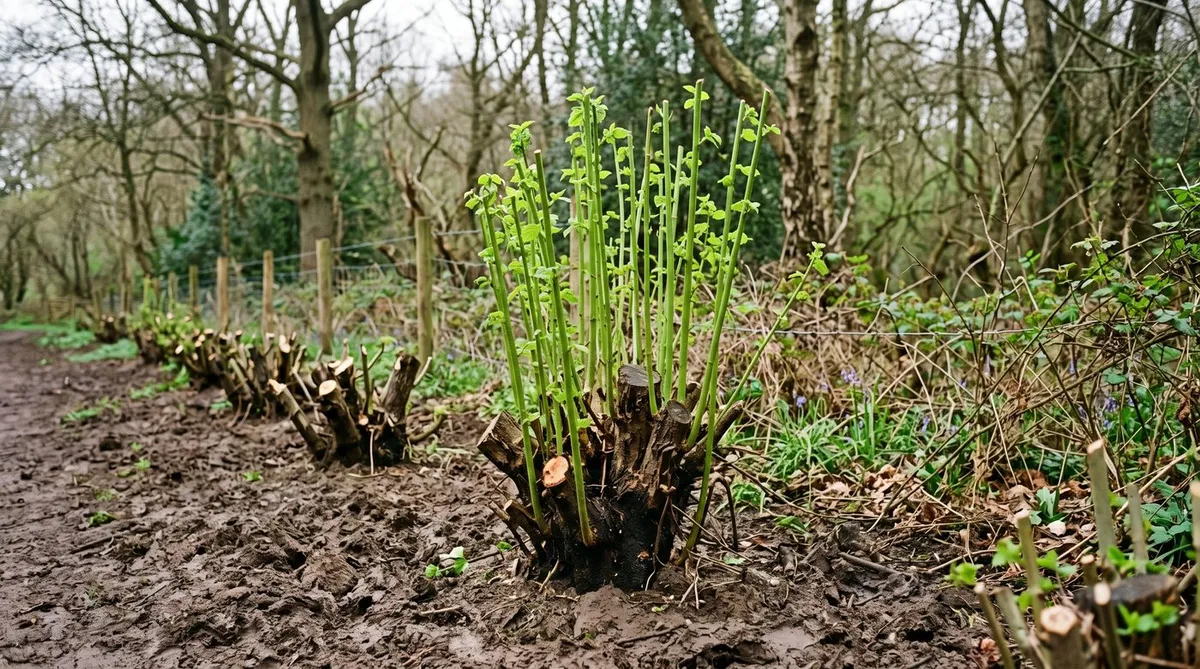
 A hazel stool freshly coppiced in winter. New shoots will appear in spring, and the cut poles are perfect for bean supports.
How often: For bean poles and pea sticks, coppice every five to seven years. For thicker poles for hurdles and fencing, wait a bit longer, around seven to ten years.
When: Cut between November and February, while the plant is dormant and before birds start nesting.
How: Use a sharp bow saw or billhook. Cut each stem as low as you can, at a slight angle so rain runs off. Clean, low cuts regrow strongly.
Regrowth: A healthy stool sends up lots of new shoots in the first year. In the second winter, thin them to the straightest 6-8. In a few years they’ll be tall poles again.
What to use the poles for:
- Bean poles and pea sticks
- Hurdles and woven fencing
- Walking sticks
- Garden arches and plant supports, using young bendy rods
Coppiced hazel lives for a very long time. Cutting it actually keeps it young.
Hazel wildlife value in UK gardens
Hazel is one of the best native trees for wildlife. The Woodland Trust’s hazel page has lots more on the creatures it supports.
Early pollen: Hazel catkins shed pollen from January to March, one of the first meals for queen bumblebees waking up. On a mild winter day you may see bees on the catkins when little else is flowering.
Dormice: The hazel dormouse, a protected species, relies on hazelnuts to fatten up before it hibernates. Thick, coppiced hazel gives it the cover it needs.
Birds: Jays, nuthatches, great spotted woodpeckers and wood mice all eat and hide hazelnuts. Jays bury lots of them, which is how hazel spreads. Nuthatches wedge nuts into bark and hammer them open, which is great fun to watch.
Insects: The hazel leaf-roller weevil rolls leaves into little cigar shapes to lay its eggs in. Lots of moth caterpillars feed on hazel too, which in turn feeds birds and bats. Hazel makes it easy to build a wildlife garden.
Month-by-month hazel care calendar
| Month | What to do |
|---|---|
| January | Catkins open. Coppice older stools. Plant bare-root trees. |
| February | Finish coppicing before the nesting season. Winter prune. |
| March | Tiny red female flowers open. Last chance to plant bare-root. Mulch. |
| April | New leaves. Check for big bud mite. Water new trees in dry spells. |
| May | Fast growth. Weed around young trees. |
| June | Nuts swelling. Remove suckers from the base. |
| July | Nuts filling out. Look for small round holes from nut weevils. |
| August | Brutt strong side shoots. Net against squirrels. |
| September | Pick cobnuts when the husks turn yellow. Enjoy them fresh or dry them. |
| October | Leaves turn gold. Gather fallen nuts. |
| November | Leaves drop. Planting season starts again. |
| December | Plan new planting. Check stored nuts for mould. |
 A hazel hedge in late summer, full of leaves and clusters of young nuts. Plant whips 40-50cm apart for a thick boundary.
How to harvest and store cobnuts
Fresh “green” cobnuts are a real September treat. They taste quite different from dried hazelnuts, with a milky-white, moist, sweet kernel.
When to pick: Pick when the husk turns from green to yellow-green and the nut comes away with a gentle twist. This is usually in September, a little earlier in the south and later in the north.
Fresh cobnuts: Eat within a few weeks. Keep them in a paper bag in the fridge, not in plastic, which makes them go mouldy. They’re lovely with cheese or in salads.
Drying: Spread the nuts in one layer on a rack in a cool, airy shed. Turn them every day for two or three weeks until the shells are hard and pale brown. Dried cobnuts keep for months in a cool, dark place.
How many will you get? A healthy, mature cobnut gives a good basketful. A few trees give more than most families can eat fresh, so share with neighbours or dry some for winter.
Common problems growing hazel in the UK
Grey squirrels are the biggest pest. They start stripping unripe nuts in summer and can take nearly the whole crop. Net the trees from mid-August.
Big bud mite makes buds swell into round, fat lumps that never open. They’re easy to spot in winter. Pick them off and bin them. There’s no spray for it, but hand-picking keeps it down.
Nut weevil lays eggs inside young nuts. The grub eats the kernel and leaves through a neat round hole. Affected nuts feel light. Clearing up fallen nuts and leaves helps reduce numbers next year.
Powdery mildew gives white patches on leaves in late summer, especially in dry years. It looks untidy but rarely affects the nuts. Pruning to let air through helps.
Honey fungus can kill hazel, especially stressed trees in wet soil. Look for white fungal sheets under the bark at the base and black bootlace-like strands in the soil. Dig out and remove infected plants. Our guide to honey fungus explains what to do.
Growing hazel as a hedge
Hazel makes a lovely hedge that gives food, shelter and seasonal colour. It’s one of the best natives for a wildlife-friendly boundary.
Planting: Plant bare-root whips 40-50cm apart in a single row, or 30-40cm apart in a staggered double row. Mix in hawthorn, blackthorn and field maple for a traditional mixed hedge, or keep it all hazel for a neat, even screen.
Trimming: Trim in late winter, before the nesting season. Cut the sides with a hedge trimmer. If you want catkins and nuts, leave the top a bit looser. Once a year is enough.
Laying a hedge: Hedge laying means partly cutting through stems near the base and bending them over along the line. It makes a thick, stock-proof barrier, and hazel is the easiest plant to lay because it’s so bendy.
Cost: Hazel whips for hedging are cheap, so a hazel hedge costs far less than a fence of the same length.
Related reading: Coppicing isn’t just for hazel. See our guide to pollarding and coppicing techniques for UK trees.
Now you know how to grow hazel and cobnuts, explore our guide to growing nut trees for walnuts, sweet chestnuts and almonds, or read about growing fruit trees for more trees to plant this autumn.
Frequently asked questions
When is the best time to plant hazel trees in the UK?
Plant bare-root hazel from November to March, while it’s dormant. Early winter is best, as the roots settle in before spring. Potted hazel can go in any time, but autumn still gives the best start. Avoid frozen or waterlogged ground.
How long does it take for a cobnut tree to produce nuts?
Expect a first small crop after about three or four years. Proper crops follow a few years later as the tree matures. Nursery trees fruit sooner than seedlings because they’re already a couple of years old. With care, a cobnut keeps cropping for many decades.
What is the difference between a hazel, cobnut, and filbert?
They’re all hazels, but the nuts and husks differ. Wild hazel has small, round nuts in short husks. A cobnut is a garden hazel picked out for bigger, rounder nuts, still with a short husk. A filbert has a longer nut wrapped in a long, tube-like husk. Funnily enough, Kentish Cob is actually a filbert.
Do I need two hazel trees for pollination?
Yes, for a good crop you really need two. Hazels crop much better when pollen comes from a different variety. Plant two different varieties near each other, or rely on wild hazel close by. The catkins and the tiny red female flowers both appear from January to March.
How do I stop squirrels eating all my cobnuts?
Net the trees from mid-August, before the nuts ripen. Grey squirrels are the biggest threat to your harvest. Netting draped over the whole tree and pegged down works better than bagging single branches. Picking early, when the husks turn yellow but the shells are still pale, helps too.
Can I grow hazel in a small garden?
Yes, as long as you keep it in check. Left alone, hazel grows into a big multi-stemmed shrub or small tree. Coppicing every few years keeps it much smaller. A cobnut pruned into a goblet shape fits a modest space, and Purple Filbert makes a lovely small-garden tree. Hazel also makes a great hedge.
Is hazel good for wildlife in the garden?
Yes, it’s one of the best native trees for wildlife. Its catkins give early bees pollen in late winter. Its leaves feed lots of insects, and nuthatches, jays, woodpeckers and wood mice eat the nuts. The hazel dormouse, a protected species, relies on hazelnuts to fatten up for winter.
Our team produces practical UK gardening guidance from source research, contributor records and established horticultural practice. Editorial standards are overseen by Matt W.