
Key takeaways
- Hazel is the easiest nut tree, cropping in three or four years on almost any soil
- Walnuts grow into big trees, so give them space, shelter and patience
- Sweet chestnut likes acid to neutral soil and crops best in southern England
- Plant bare-root trees from November to March, when the ground isn't frozen or waterlogged
- Grey squirrels are the biggest thief, so net or cage trees from late summer
- Plant two hazels or two chestnuts of different types for a better crop
Growing nut trees in the UK is a lovely long-term project. Three kinds do really well here: hazel, English walnut and sweet chestnut. Each suits a different amount of space, type of soil and level of patience.
These aren’t fussy exotic trees. They’ve grown in Britain for centuries and are well used to our soils and our changeable weather.
Which nut trees grow best in the UK?
Hazel, walnut and sweet chestnut give the most reliable crops. Which one you choose depends on your soil, your space and how long you’re happy to wait.
Hazel (Corylus avellana) is a British native. It grows as a bushy, many-stemmed shrub or small tree, and you can keep it to around 3 to 5m. It copes with almost any soil, from heavy clay to chalk, in sun or part shade. Catkins dangle in February and the nuts ripen from late summer.
English walnut (Juglans regia) is a big, long-lived tree. It wants deep, well-drained, fertile soil and a sheltered spot. It’s hardy, but the flowers can be caught by late spring frosts. This is very much a tree you plant for the future.
Sweet chestnut (Castanea sativa) grows into a broad, spreading tree. It likes acid to neutral soil and does best in southern England and the Midlands, where summers are warm enough to fill the nuts. The wood is great for fencing and garden structures too.
| Hazel | English walnut | Sweet chestnut | |
|---|---|---|---|
| Size | Small, about 3-5m | Very large | Large |
| Space needed | Small garden | Big garden | Big garden |
| First nuts | 3-4 years | 5-7 years (grafted) | 10+ years |
| Soil | Almost any | Deep, well-drained, fertile | Acid to neutral |
| Partner needed? | Better with two varieties | Better with two | Yes |
| Good variety | ’Kentish Cob' | 'Broadview' | 'Marron de Lyon’ |
| How easy | Easy | Medium | Medium |
How to plant nut trees in the UK
Plant bare-root nut trees between November and March, while they’re dormant. Roots settle in over winter before the leaves arrive.
 A ‘Kentish Cob’ hazel loaded with clusters of green cobnuts in their leafy husks. Hazel is the quickest nut tree to crop.
Choose the spot carefully. Walnuts need full sun and shelter from cold north and east winds. Hazels cope with part shade and more exposed sites. Sweet chestnuts want full sun and plenty of air around them.
Dig a wide hole, not a deep one. Make it about twice as wide as the roots and the same depth. Trees planted too deep can rot at the base. For walnuts, knock in a stake before planting and fix the tree to it with a tree tie. Hazels and sweet chestnuts rarely need staking.
Give them room. Plant hazels 3 to 4m apart for a nut walk or hedge, or closer if you plan to coppice them. Walnuts need at least 12m between trees, and sweet chestnuts about 10 to 12m.
Mulch after planting. Spread a thick layer of woodchip or leaf mould in a circle about 1m across, keeping it a hand’s width away from the trunk. It keeps weeds down and holds in moisture. Our best fertilisers for gardens guide has more on mulches.
Water in dry spells through the first spring and summer. Once settled, nut trees rarely need watering.
What is the best hazel variety for UK gardens?
‘Kentish Cob’ (also sold as ‘Lambert’s Filbert’) is a great hazel for eating. It’s a long-standing Kent favourite, with large, tasty nuts and thin shells that crack easily.
Other good choices:
- ‘Cosford’ has sweeter nuts, a little smaller.
- ‘Webb’s Prize Cob’ is another popular, well-tried variety.
Plant at least two different varieties. Hazel is pollinated by the wind, and a mix of varieties gives a much better crop. A wild hazel in a nearby hedge helps too.
Hazel suits a mixed planting scheme, and our companion planting guide has ideas. The light shade underneath suits spring bulbs, wild garlic and woodland flowers.
Can you grow walnuts in a small garden?
Honestly, an ordinary walnut is too big for most gardens. It grows into a very large tree with a wide canopy. If you have a medium garden, choose a grafted variety, which crops younger, and be ready to prune.
 A young English walnut in a suburban garden, with its big compound leaves and green walnuts just starting.
‘Broadview’ is a popular grafted walnut that crops young and comes into leaf late, so it often misses spring frosts. ‘Buccaneer’ is another late-leafing choice, handy for colder or more exposed gardens.
Walnuts don’t like close neighbours. Their roots and leaves release a natural chemical that holds back some plants, including tomatoes, potatoes and apples. Keep walnuts well away from the veg patch and fruit trees.
Prune walnuts in summer only. Cut in winter or spring and they bleed sap badly. Prune between mid-July and late August, and keep it light: dead wood, crossing branches and any low branches in the way. Our grafting guide explains more about grafted trees.
How to grow sweet chestnuts in the UK
Sweet chestnuts crop best in southern England and the Midlands. Further north they grow into fine trees, but summers often aren’t warm enough to fill the nuts.
 A sweet chestnut in early autumn, its spiny husks splitting to show glossy brown nuts. Look out for the deeply twisted bark too.
Check your soil. Sweet chestnuts get yellow leaves on chalky, alkaline ground. They like acid to neutral sandy or loamy soil. If your soil is chalky, grow hazel or walnut instead. Our best plants for acid soil guide helps you work out what you’ve got.
Named varieties give bigger, tastier nuts. ‘Marron de Lyon’ is a popular choice for eating, with fewer but larger nuts in each husk. ‘Bouche de Betizac’ is another well-known variety.
Plant two. Sweet chestnuts need a partner of a different type nearby to make proper nuts. A lone tree may give husks with flat, empty nuts inside.
Collect chestnuts from mid-October, when the spiny husks split and drop. Gather them every day, as squirrels, mice and jays will beat you to them. Wear gloves for the prickly husks. Chestnuts don’t keep as long as walnuts or hazelnuts, so enjoy them fresh.
When do nut trees produce a harvest?
Hazel is the quickest. Expect a few nuts from the third year and a decent crop a couple of years after that.
| Tree | First nuts | Harvest | Keeps |
|---|---|---|---|
| Hazel | Year 3-4 | September-October | Months, once dried |
| Walnut (grafted) | Year 5-7 | October-November | Months, in the shell |
| Walnut (from seed) | Often 10+ years | October-November | Months, in the shell |
| Sweet chestnut | Often 10+ years | October-November | Best eaten fresh |
Pick hazelnuts when the husks start turning brown and the shells go from green to tan. Pick clusters by hand, or put a sheet under the bush and give it a shake. Dry them on racks in a warm room for two or three weeks, until the kernels rattle.
Collect walnuts when the green husk splits and they fall. Gather them every day. Take the husk off straight away, wearing gloves, as it stains your hands brown for days. Wash and dry the nuts in a warm, airy room for a couple of weeks. Dried walnuts keep for months in their shells.
Nuts are the grand finale of the edible hedgerow year, which starts with spring greens.
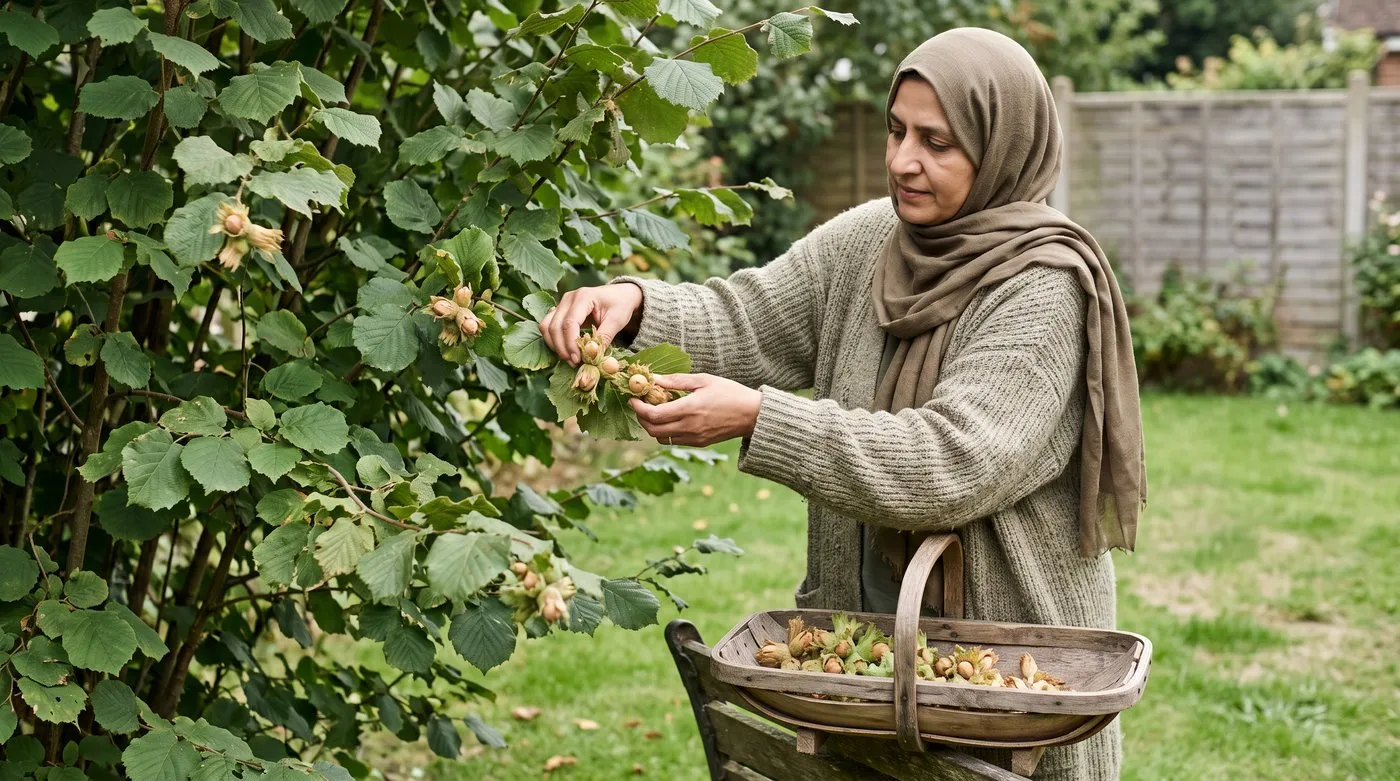
Pick hazelnuts when the husks start to brown and the shells turn tan. Spread them on racks in a warm room for a few weeks until the kernels rattle.
How do I protect nut trees from squirrels?
Grey squirrels take more nuts than any pest or disease. They strip hazels from August, often before the nuts are ripe, and bury walnuts for winter.
Barriers are the only thing that really works. Cage young trees in wire mesh through summer and autumn. Net hazel bushes from early August, tucking the net in at the base, and take it off after harvest.
Pick a little early. Hazelnuts picked slightly green in late August finish ripening nicely on racks indoors. Kent cobnut growers have done this for years to beat the squirrels.
Guard young trunks. Squirrels can strip the soft bark of young walnuts and chestnuts. A spiral tree guard around the trunk helps for the first few years. Loosen or replace it as the trunk thickens.
A wildlife garden brings in lots of welcome visitors too, so it’s worth sharing a few nuts!
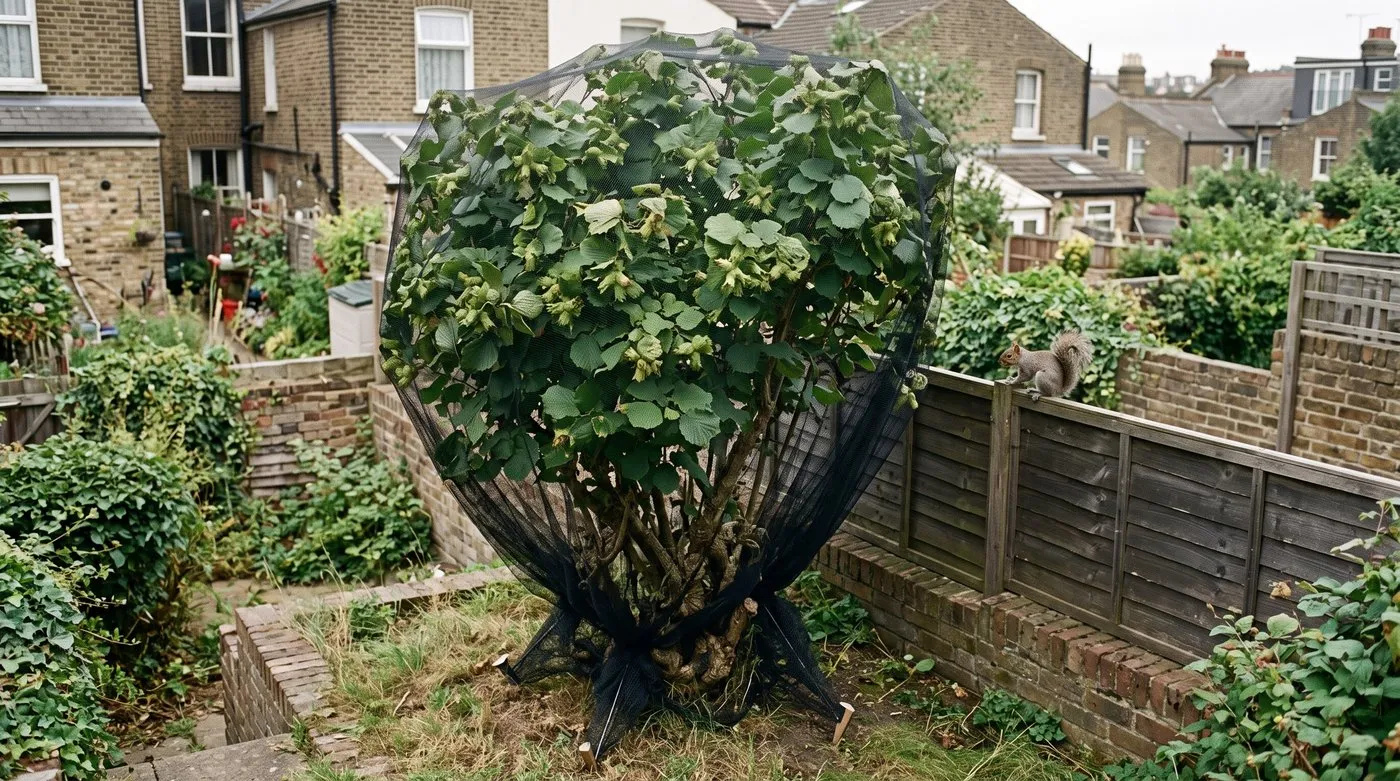
Net hazel bushes from early August, tucking the net in at the base, and take it off once you’ve picked. Barriers are the only defence squirrels really respect.
What pests and diseases affect nut trees?
Nut trees have fewer problems than most fruit trees. Squirrels aside, the main ones are nut weevil and walnut blight.
Hazel nut weevil grubs live inside developing nuts. You’ll find a neat round hole in the shell and nothing inside. Pick up and bin fallen nuts in autumn, and lightly fork the soil under the bushes in winter.
Walnut blight causes black spots on leaves and young nuts, which then shrivel and drop. It’s worst in wet springs. Prune in summer to keep the tree open and airy. There’s no spray for gardeners, so choosing a healthy tree and good spot matters most.
Sweet chestnut blight is a serious disease that has turned up at a few sites in England. If you spot orange patches and cankers on chestnut bark, check the Forest Research guidance on what to look for and how to report it. Buy chestnut trees from a reputable UK nursery.
Honey fungus can attack all three, though hazel copes better than the others. Avoid planting where you know honey fungus is in the soil. Our honey fungus guide explains how to spot it.
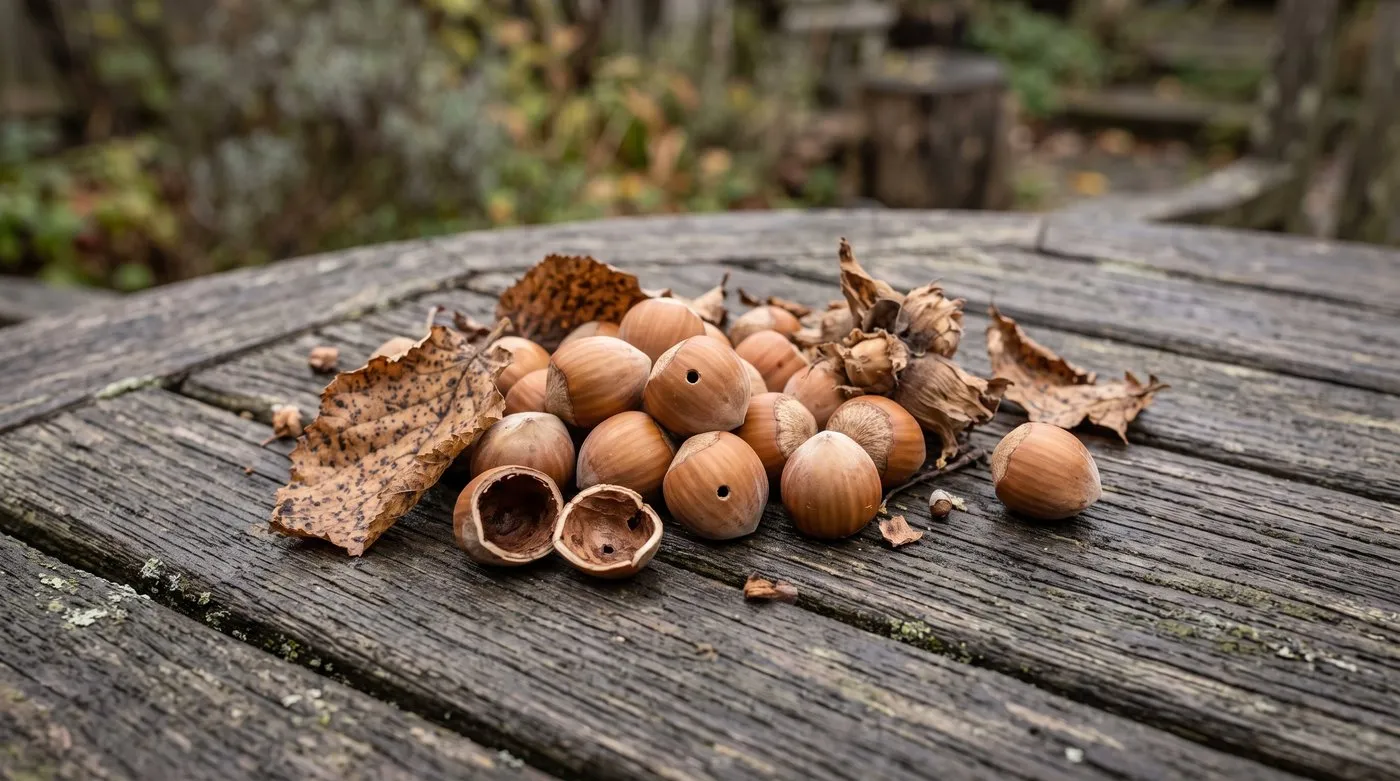
A neat round hole and an empty shell is the sign of hazel nut weevil. Gather and bin fallen nuts in autumn to break the cycle.
How to prune nut trees for maximum crop
Each nut tree likes a different approach.
Hazel: break in August, cut in February. This old Kent method is called brutting. In August, snap strong side shoots about halfway, around 15cm from the branch, and leave them hanging. In February, cut those shoots back to two or three buds. Pull out suckers from the base and keep six to eight main stems in an open goblet shape.
Walnut: summer only. Prune from late July to August, never in winter or spring when the sap bleeds. Keep it light. Take out dead wood, crossing branches and low branches, and that’s about it.
Sweet chestnut: winter. Remove dead, damaged or diseased wood between December and February. Thin the middle to let light and air in. Sweet chestnuts take hard pruning well and can even be coppiced for poles and firewood.
A forest garden is a lovely way to grow nut trees, with fruit bushes, herbs and ground cover planted in layers beneath them.
Nut trees for wildlife and biodiversity
Nut trees are some of the best trees you can plant for wildlife. Hazel catkins give bees early pollen in late winter, when little else is flowering. Dormice, which are now rare in much of the UK, rely on hazelnuts to fatten up for winter.
Crops go up and down from year to year. Hazel, walnut and chestnut all have mast years, when they produce a huge glut, followed by leaner years. The Woodland Trust has more on why hazel is so good for wildlife.
Sweet chestnut flowers feed lots of insects, and the deep cracks in the bark give hiding places for beetles, spiders and bats. Fallen chestnuts feed badgers, deer and jays. Walnut trees bring woodpeckers into the garden.
Plant even one nut tree and you add something special. Mixed into a new hedge, hazels make the backbone of a productive, wildlife-friendly garden.
Short on space? Our guide to dwarf fruit trees for small gardens shows how to fit fruit and nuts into a smaller plot.
Frequently asked questions
What nut trees grow well in the UK?
Hazel, English walnut and sweet chestnut all grow well here. Hazel is the easiest, happy on most soils in sun or part shade. Walnut needs a sheltered spot with deep, well-drained soil. Sweet chestnut likes acid to neutral soil and does best in the south of England. All three cope fine with a British winter.
How long before a nut tree produces nuts?
Hazel usually crops in three or four years. A grafted walnut such as ‘Broadview’ starts in five to seven years, but a walnut grown from seed can take well over a decade. Sweet chestnut is slow too, often ten years or more. Grafted trees crop sooner than seedlings.
Can you grow walnuts in the north of England?
Yes, but crops are less reliable. Late spring frosts can damage the flowers in April and May. Choose a late-leafing variety such as ‘Broadview’ or ‘Buccaneer’, which miss the worst frosts. Plant in a sheltered, sunny spot that isn’t a frost pocket.
How do I protect nut trees from squirrels?
Use a physical barrier, as nothing else really works. Grey squirrels strip hazels from August and take walnuts before they ripen. Cage young trees with wire mesh. Net the branches of hazel bushes from early August. Where squirrels are a real pest, pick hazelnuts a little early and finish ripening them indoors.
What is the best hazel variety for eating?
‘Kentish Cob’ is a great choice for UK gardens. It gives large, tasty nuts with thin shells that crack easily. ‘Cosford’ is another good one, with a sweeter flavour but smaller nuts. ‘Webb’s Prize Cob’ is also popular. Plant at least two different types so they pollinate each other.
When should I plant nut trees in the UK?
Plant bare-root trees from November to March. Avoid frozen or waterlogged ground. Pot-grown trees can go in at other times but settle best in autumn. Stake walnuts for their first few years. Hazels rarely need a stake.
Do nut trees need a pollination partner?
Some do, and most crop better with one. Hazel is pollinated by wind, and planting two or more varieties gives more nuts. A wild hazel in a nearby hedge helps too. Walnut can set nuts on its own but does better with a second tree. Sweet chestnut needs a partner of a different type nearby.
Our team produces practical UK gardening guidance from source research, contributor records and established horticultural practice. Editorial standards are overseen by Matt W.


