Key takeaways
- A forest garden stacks edible plants in seven layers, from fruit trees to ground cover and roots
- Start small with one fruit tree, a few currant bushes, comfrey and wild strawberries
- Plant bare-root trees and bushes between November and March
- Mulch bare ground with 10-15cm of wood chip so weeds don't take over
- Currants crop in about two years, while fruit trees take three to five
- Once settled, the work is mostly winter pruning, mulching and picking
Forest gardening means growing food the way a woodland edge grows. Tall fruit trees, bushes, herbs, ground cover and roots all share the same patch. Once it settles in, it largely looks after itself. There’s no yearly digging and very little bare soil to weed.
You don’t need an acre. A single apple tree with currants, comfrey and wild strawberries underneath is a forest garden in miniature. This guide explains the layers, the easiest plants to start with, what to do in your first winter and the jobs through the year.
The idea was adapted for the British climate by Robert Hart in Shropshire. Martin Crawford’s forest garden at the Agroforestry Research Trust in Devon has shown how well it can work here.
What are the seven layers of a forest garden?
A forest garden fills seven layers, each at a different height, so every bit of light and soil gets used. You don’t need all seven on day one. Think of them as gaps to fill over a few years.
- Canopy: the tallest fruit and nut trees, such as apples, pears and plums.
- Understorey: smaller trees that cope with some shade, such as damsons, medlars and elder.
- Shrubs: fruit bushes such as blackcurrants, redcurrants, gooseberries and jostaberries.
- Herbaceous: perennial herbs and veg, such as comfrey, chives, mint, sorrel and Good King Henry.
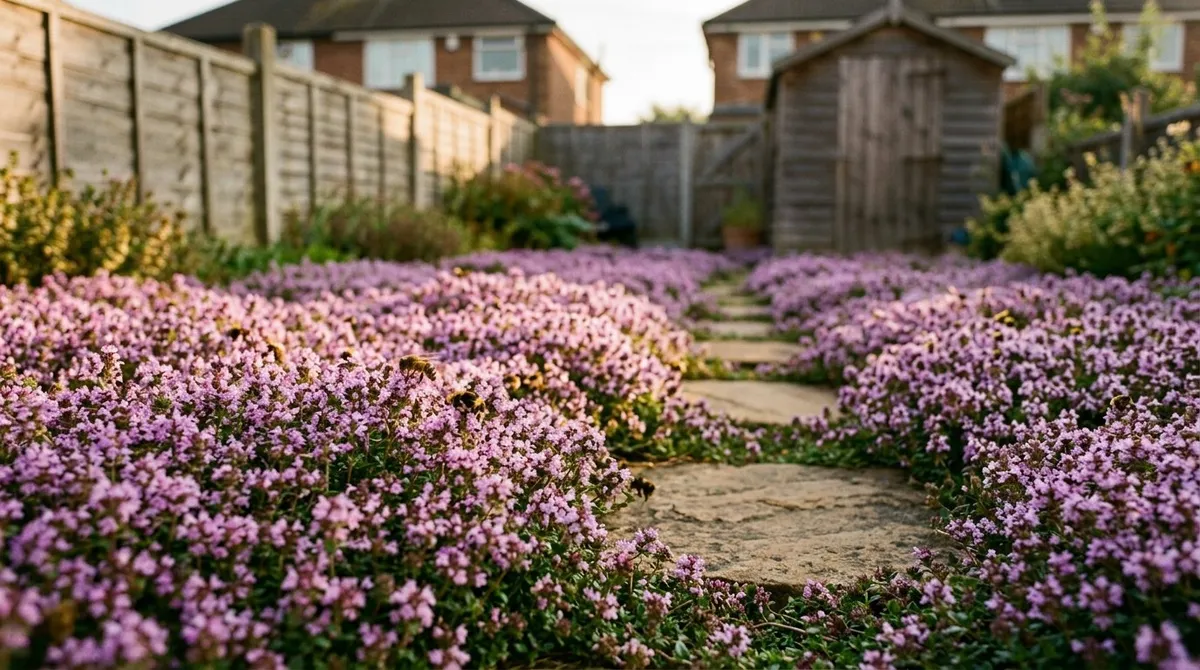
- Ground cover: low plants that carpet the soil, such as wild strawberry, creeping thyme and sweet woodruff.
- Climbers: plants that scramble up trees, poles or walls, such as hardy kiwi, grapes and climbing beans.
- Roots: crops below ground, such as Jerusalem artichokes, horseradish and skirret.
In a small garden the canopy and understorey often merge into one tree on a dwarfing rootstock. That’s fine. The idea is to fill each height with something useful, not to tick boxes.

A young forest garden in a suburban plot. The apple is the canopy, currants fill the shrub layer and strawberries cover the ground.
Is a forest garden right for you?
A forest garden suits you if you’d rather pick fruit and perennial crops than sow annual veg each spring. It’s slow to start but light on work once it’s going.
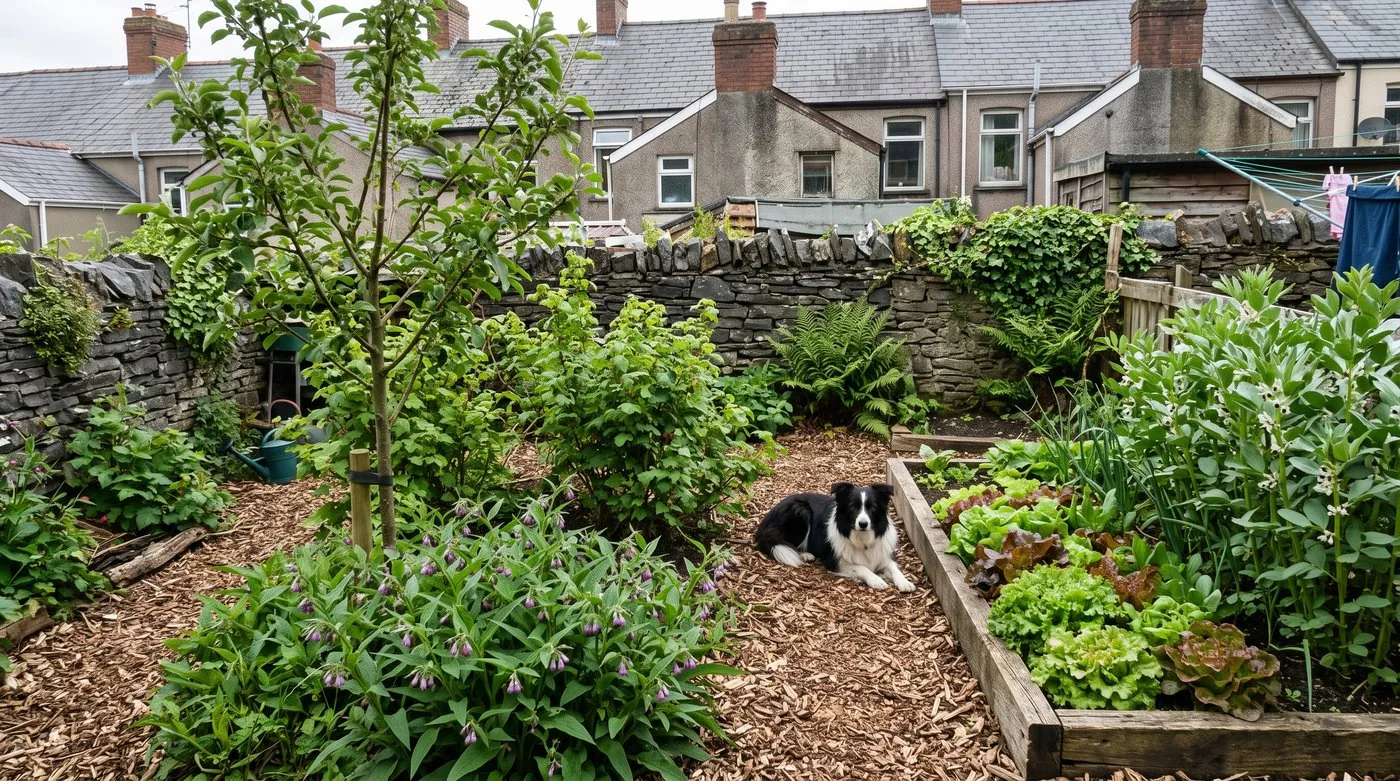
A forest garden and a small veg bed make good neighbours. The fruit looks after itself while you sow salads alongside.
| Forest garden | Annual veg plot | |
|---|---|---|
| Main crops | Fruit, nuts, herbs, perennial leaves | Annual veg such as carrots, beans and salads |
| First harvest | Herbs in year one, currants in about year two | Salads within weeks of sowing |
| Yearly work | Pruning, mulching and picking | Digging or mulching, sowing, weeding, watering |
| Weeds | Smothered by ground cover and mulch | Need regular weeding |
| Wildlife | Plenty of shelter at every height | Less year-round cover |
The two work well side by side. Many people keep a small no-dig veg bed for salads and tomatoes, and let the forest garden handle the fruit. If you like the bigger picture, our guide to permaculture principles for UK gardens explains the thinking behind it.
What are the easiest plants to start with?
Start with four backbone plants: an apple tree, blackcurrants, comfrey and wild strawberries. They grow almost anywhere in the UK and fill four different layers between them.
Apple is the most reliable canopy tree. An MM106 rootstock grows to about 4-5m; for a smaller garden, choose a more dwarfing one. Our guide to fruit tree rootstocks explains the choices. Plant a second apple or a crab apple nearby for pollination.
Blackcurrants crop well in part shade and on heavy soil. Plant them about 1.5m apart. The blackcurrant and redcurrant growing guide covers pruning. Gooseberries and redcurrants are good partners.
Comfrey has deep roots and big leaves you can cut several times a summer. Lay the leaves around fruit trees as a mulch, or soak them in water for a few weeks to make a liquid feed. Choose ‘Bocking 14’, which doesn’t self-seed. Plant it where you want it for good, as any root left behind regrows.
Wild strawberry (Fragaria vesca) spreads by runners into a low carpet. It copes with shade and gives tiny, sweet fruit through summer.
| Plant | Layer | Shade | First crop |
|---|---|---|---|
| Apple (MM106) | Canopy | Needs sun | 3-5 years |
| Blackcurrant | Shrub | Copes with part shade | About 2 years |
| Gooseberry | Shrub | Copes with part shade | About 2 years |
| Comfrey ‘Bocking 14’ | Herbaceous | Copes with part shade | Leaves in year one |
| Wild garlic | Herbaceous | Happy in shade | Leaves in spring |
| Wild strawberry | Ground cover | Copes with shade | First summer |

Nuts, currants, apples and herbs from different layers. A mixed late-summer harvest is the whole point of a forest garden.
More plants to add later
Once the basics are in, add plants to fill the gaps. Hazel gives nuts and, if coppiced, bean poles. Elder gives flowers for cordial in June and berries in September; always cook the berries, as raw ones can upset stomachs. Medlars give fruit for jelly in late autumn.
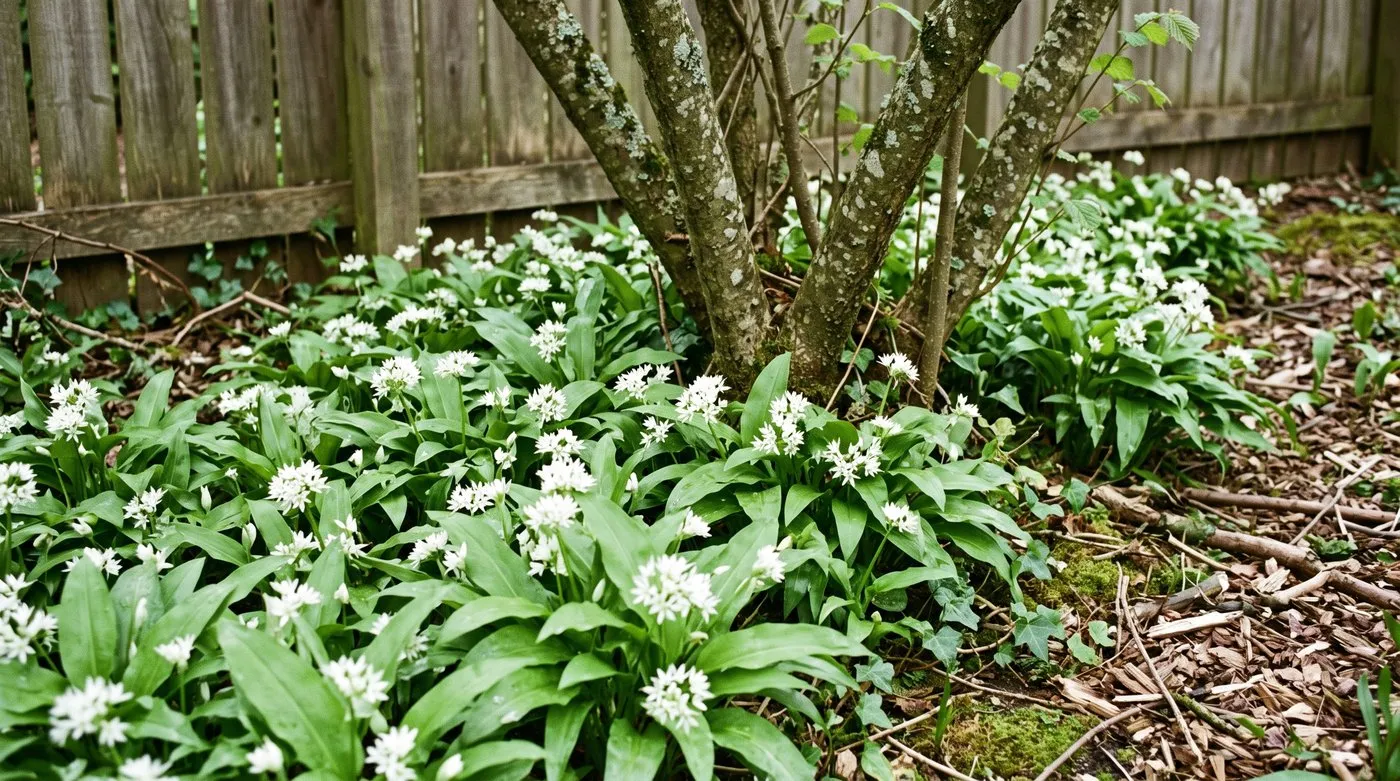
Wild garlic is happy in the shade under trees and gives fresh leaves from March to May.
For the herb layer, try chives, Welsh onion, sorrel and Good King Henry, a perennial spinach. Grow mint in a sunken pot, or it will spread everywhere. Wild garlic loves shade and gives leaves from March to May. Keep it well away from lily of the valley, whose leaves look similar but are poisonous.
For more ideas, the guide to perennial vegetables lists crops you plant once and pick for years.
How do you plant a forest garden in your first winter?
Plant the trees and bushes as bare-root stock between November and March, then add the lower layers in spring. Bare-root plants are cheaper than pot-grown ones and settle in well.
- Look at your plot. Note where the sun falls, which way the wind comes and which spots stay wet. Fruit trees want the sunniest spot.
- Plant the trees first. Allow about 4-5m between trees on MM106. Our guide to planting bare-root trees shows how.
- Add the bushes. Put currants and gooseberries around and between the trees, on the side that gets some shade.
- Mulch the ground. Spread 10-15cm of wood chip over bare soil, keeping it a hand’s width from the trunks.
- Plant herbs and ground cover in spring. Put comfrey near the trees, herbs where you can reach them, and wild strawberries in the gaps.
- Leave paths. Keep paths about 60-80cm wide so you can reach everything to pick and prune.
Water new trees and bushes in dry spells through their first two summers. For detailed spacing, path layouts and a five-year plan for a typical back garden, see our guide to food forest design for suburban plots.
Why wood chip mulch matters so much
Wood chip mulch keeps weeds down, holds in moisture and slowly feeds the soil as it rots. Leave it on the surface; never dig it in.
Local tree surgeons often have chip to spare, so it’s worth asking. Top it up each autumn or winter until the ground cover has knitted together.

Wild strawberries and sweet woodruff knitting together under a tree. Once the ground cover closes up, there’s very little weeding to do.
What jobs does a forest garden need through the year?
Most of the work is winter pruning, mulching and a lot of picking. This calendar shows the main jobs.
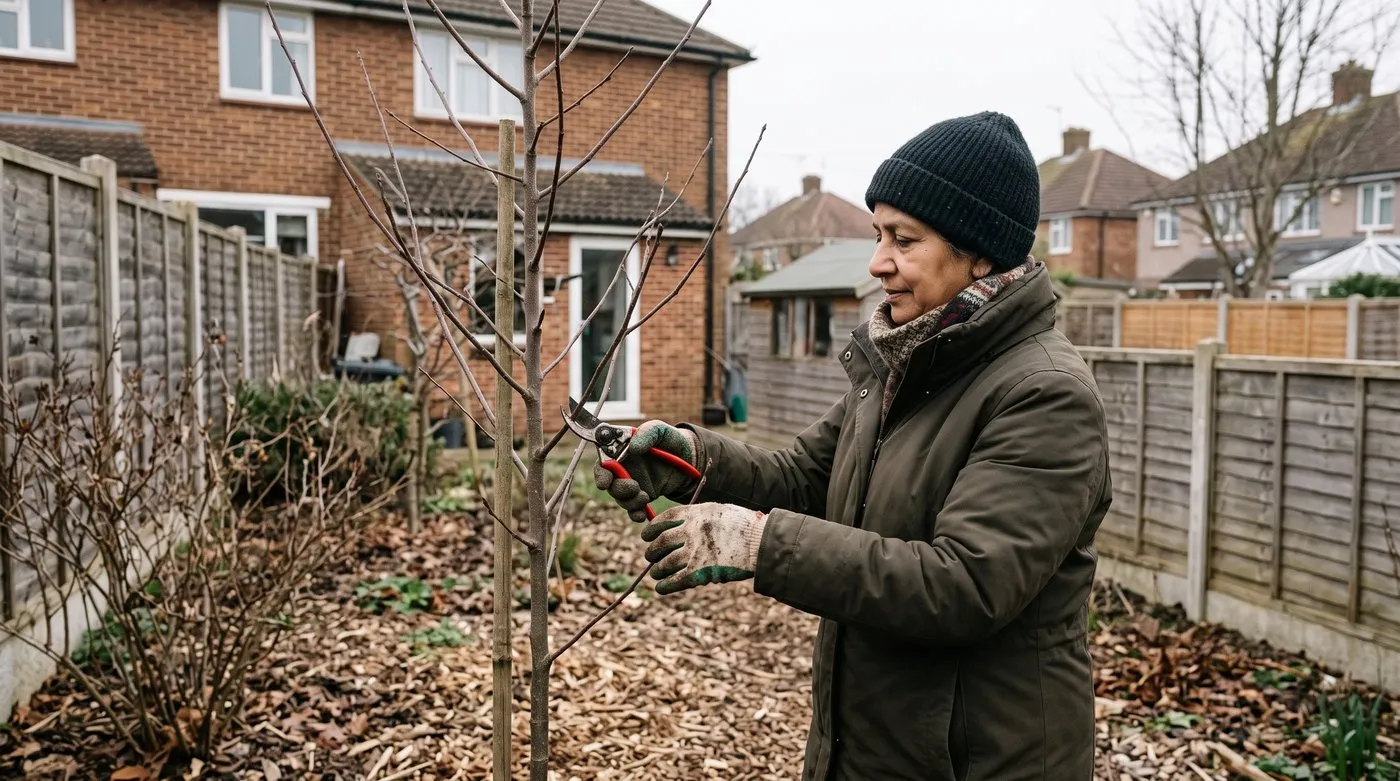
Winter pruning is the biggest job of the year. A morning in January keeps the apples cropping and lets light reach the bushes below.
| Month | Jobs |
|---|---|
| January | Winter-prune apples and pears. Order bare-root trees and bushes |
| February | Prune currants and gooseberries. Top up wood chip mulch |
| March | Cut back dead stems on perennials. Divide crowded clumps. Last bare-root planting |
| April | First comfrey cut for mulch. Check tree ties and stakes |
| May | Pick wild garlic leaves. Thin apples if the crop is very heavy |
| June | Pick gooseberries, wild strawberries and elderflowers |
| July | Pick currants and herbs. Cut comfrey again |
| August | Pick plums and early apples. Water young plants in dry spells |
| September | Main apple harvest. Pick hazelnuts and cooked elderberries |
| October | Pick pears and late apples. Store sound fruit somewhere cool |
| November | Plant new bare-root trees and bushes. Spread fallen leaves as mulch |
| December | Have a look round and plan what to add next year |
Our guide to pruning fruit trees covers the winter cuts for apples and pears.
How does a forest garden help wildlife?
The layers give birds, insects and small mammals shelter at every height. Currant and gooseberry flowers feed early bumblebees in spring. Comfrey flowers keep bees busy for much of the summer.
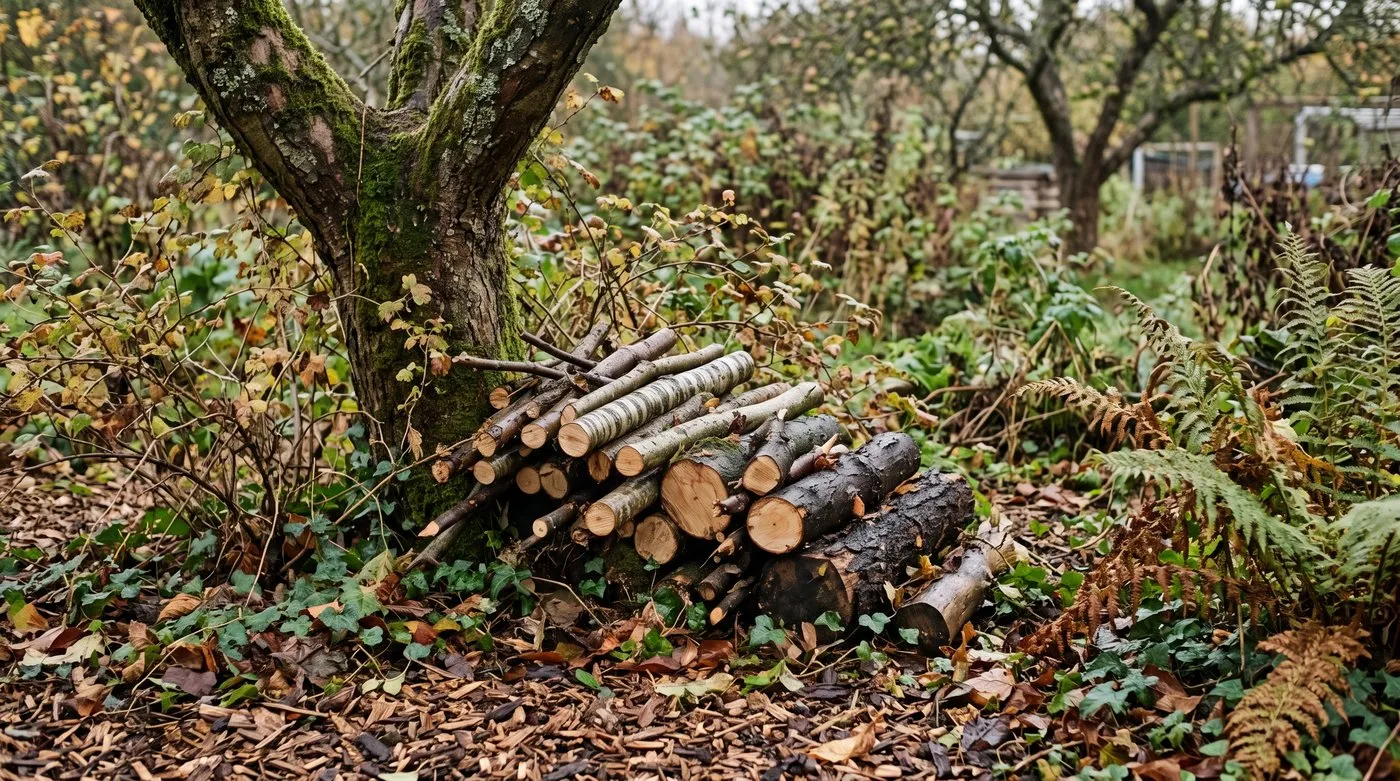
A simple log pile under a tree gives beetles, slow worms and hedgehogs somewhere to hide.
The mulch and leaf litter shelter ground beetles, slow worms and hedgehogs. Leave a log pile at the base of a tree for extra cover. Avoid heavy pruning of trees and bushes from March to August, when birds may be nesting in them.
Common mistakes when starting a forest garden
Too many trees. It’s easy to overplant. In a few years the canopy shades out the bushes and herbs below. Leave space for light to reach the lower layers.
Bare soil. Uncovered ground between young trees fills with weeds fast. Mulch at planting time and add ground cover in the first spring.
Sun-lovers in the shade. Light levels drop as the trees grow. Put the sun-loving herbs on the south side and shade-tolerant plants underneath. Blackcurrants, wild garlic and sweet woodruff all cope with shade.
Forgetting about access. You’ll need to reach every plant to pick and prune. Plan paths from the start.
Planting spreaders in the wrong place. Mint, comfrey and Jerusalem artichokes are hard to remove once settled. Think about where they go before you plant.
Frequently asked questions
How big does a forest garden need to be?
A small back garden is enough to start one. A single dwarf fruit tree with a few bushes, herbs and ground cover beneath it already uses most of the layers. Larger plots simply fit more trees. For laying out a typical suburban garden, see the food forest design guide.
How long does a forest garden take to establish?
Expect three to five years before it feels settled and productive. Herbs and ground cover fill in within a season or two. Currants and gooseberries crop from about their second year. Fruit trees usually take three to five years to give a decent crop, depending on the rootstock.
Can I grow a forest garden on clay soil?
Yes, many forest garden plants are happy on clay. Apples, plums, blackcurrants and gooseberries all cope with heavy soil. Avoid planting in spots that sit waterlogged all winter. A thick wood chip mulch on the surface slowly improves the soil structure.
What fruit trees work best in a UK forest garden?
Apples are the easiest and most reliable choice. Pick an MM106 rootstock for a tree of about 4-5m, or something smaller for a tight space. Pears on Quince A and plums on St Julien A also do well. A crab apple helps with pollination and gives fruit for jelly.
Does a forest garden need full sun?
The fruit trees need sun, but the lower layers cope with shade. Currants, gooseberries, wild garlic and sweet woodruff are all happy in dappled light. A south or west-facing plot gives the best crops, and you can plan around a shadier one by choosing shade-tolerant plants.
What is the difference between a forest garden and permaculture?
A forest garden is one technique, while permaculture is a whole design approach. Permaculture also covers water, energy and waste. Forest gardening is the part that copies woodland with edible plants. You can use permaculture ideas such as no-dig and home composting within a forest garden.
Ready to plan your own? Read our guide to growing fruit trees in the UK to choose and plant your canopy layer, or browse more garden design ideas.
Our team produces practical UK gardening guidance from source research, contributor records and established horticultural practice. Editorial standards are overseen by Matt W.