Key takeaways
- Two to four small fruit trees is the limit for a typical back garden
- Choose small rootstocks, such as M26 or MM106 for apples, and space trees about 3-4m apart
- Plan paths about 80cm wide before you plant, so you can reach every bush
- Plant the trees first, then add shrubs, perennial veg and ground cover over the next two years
- Plant bare-root trees from November to March, with no compost or fertiliser in the hole
- Hops are poisonous to dogs, and elderberries must be cooked before eating
A food forest in a suburban back garden is a smaller, tighter version of a woodland-style edible garden. You stack fruit trees, soft fruit bushes, perennial veg, ground cover and climbers so each uses a different level of light. The secret on a small plot is keeping the trees few and small, and planning the paths first.
This guide is about sizes, spacings and layout for an ordinary UK garden. If you’re new to the idea and want to know what the layers are and the easiest plants to start with, read our forest gardening for beginners guide first.
How does a small garden change food forest design?
Three things matter more in a back garden than on a smallholding: how many trees, which rootstocks and how you reach everything.
Keep it to two to four trees. Small saplings look like they leave lots of space, but the canopies spread. Plant too many and they join up into a roof, and the bushes and veg below get too little light. Shade-loving wild garlic might cope, but currants and most perennial veg won’t crop well.
Use small rootstocks. A fruit tree’s final size depends mainly on its rootstock. On a vigorous one, a single apple tree can shade a big chunk of a small garden. Our guide to fruit tree rootstocks explains the options.
Plan your paths. A smallholding has grass aisles. A back garden needs deliberate paths winding through the planting, or you can’t reach the fruit to pick it.

Young fruit trees, bushes and bark paths in a fenced back garden. The paths let you reach every bush.
The seven layers in a back garden
Each layer uses light the one above leaves behind. On a small plot, cut the number of plants in each layer, not the number of layers.
| Layer | What it is | Good choices for a back garden |
|---|---|---|
| Canopy | Small fruit trees | Apple, pear, plum on small rootstocks |
| Small trees | Shorter trees below | Hazel (coppiced), elder, medlar |
| Shrubs | Soft fruit bushes | Blackcurrant, gooseberry, jostaberry, aronia |
| Herbaceous | Perennial veg and herbs | Rhubarb, sorrel, Good King Henry, lovage |
| Ground cover | Low, spreading plants | Wild strawberry, creeping thyme, white clover |
| Roots | Crops below ground | Jerusalem artichoke, skirret, garlic |
| Climbers | Plants up fences and trees | Grape, hardy kiwi, hops, climbing beans |
Which fruit trees and rootstocks suit a small food forest?
Choose trees on rootstocks that keep them small, and space them about 3-4m apart.
- Apples: M26 gives a tree of roughly 2.5-3m. MM106 is a bit bigger and copes with poorer soil. Space M26 trees about 3m apart and MM106 trees nearer 4m.
- Pears: Quince C is smaller than Quince A. Both suit a small garden at about 3-4m apart.
- Plums: Pixy keeps trees smaller than St Julien A. Plums cope with a little shade better than apples.
Avoid vigorous rootstocks such as M25 or MM111, which make large trees. Check the rootstock on the label before you buy. Put the trees on the north side of the plot where you can, so they don’t shade the rest of the garden. Our dwarf fruit trees for small gardens guide has variety ideas.

An apple tree on a small rootstock. Leave a gap to the next tree so light reaches the bushes below.
Small trees below the canopy
One or two small trees fit beneath and between the fruit trees. Hazel gives nuts and can be coppiced (cut to the ground every few years) to keep it small, which also gives you pea sticks and bean poles. Elder copes well with shade and gives flowers and berries. Elderberries must be cooked before eating, as raw ones can make you ill. A medlar stays small and fruits in autumn.
Put these on the north or east side of the fruit trees so they don’t steal their sun.
Soft fruit and perennial veg: the productive middle
The shrub layer and herbaceous layer do most of the feeding in a small food forest. They sit in the dappled light between the trees, where annual veg would struggle.
Shrubs: blackcurrants, gooseberries and jostaberries all cope with part shade. Aronia (chokeberry) is tough enough for the shadier corners. Plant bushes about 1.2-1.5m apart, and four to six bushes suits a 150 square metre plot. Keep them about 60cm back from paths, because they spread outwards as they grow.
Perennial veg: rhubarb, sorrel, Good King Henry and lovage come back every year without resowing. Don’t pick rhubarb in its first year, so it can settle in. Our perennial vegetables guide has more to try.

Blackcurrants and gooseberries cropping in the gap between two young trees, with rhubarb at the front.
Ground cover, roots and climbers
These outer layers cost little and protect the soil.
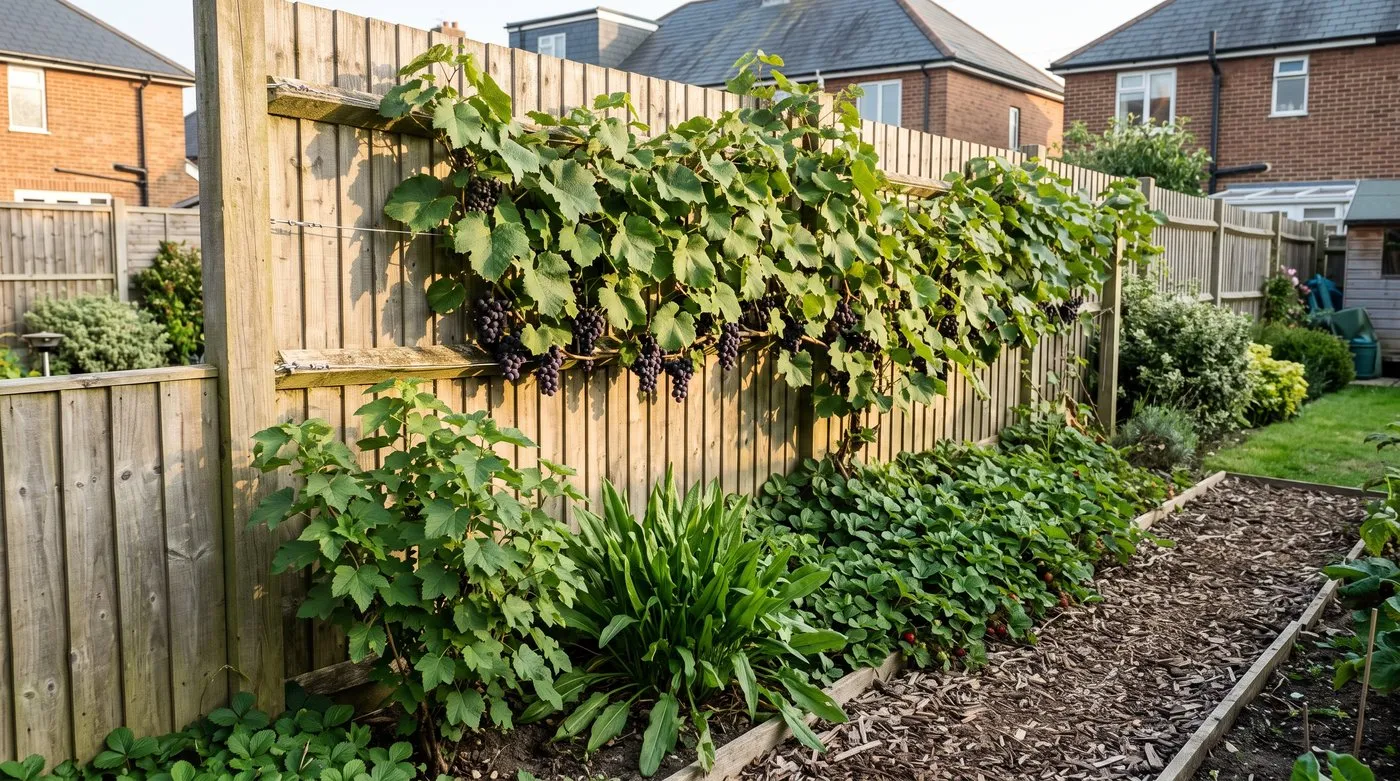
A sunny fence is free growing space. Train a grape along it and plant the lower layers beneath.
Ground cover acts as a living mulch and keeps weeds down. Wild strawberry carpets shady spots and gives small, sweet fruit. Creeping thyme suits the sunny edges. White clover adds nitrogen to the soil and copes with a little foot traffic. Our ground cover plants guide lists more options.
Root crops use soil the others ignore. Jerusalem artichokes spread hard, so give them one corner on their own. Skirret and garlic are better behaved.
Climbers use the fences you already have. Train a grape vine along a sunny fence. Hardy kiwi needs a male and a female plant unless you buy a self-fertile variety. Climbing beans can scramble up a hazel pole. Hops grow fast for shade, but they’re poisonous to dogs, so skip them if you have one.

Wild strawberry and creeping thyme covering bare soil, so there’s far less weeding to do.
How to lay out a food forest in a back garden
Plants are the easy part. The layout is where small food forests go wrong.
Map the sun first. Look at the garden at 9am, midday and 4pm on a clear day and note the shady spots. Put the trees where they won’t shade the house or your neighbour, often the north side. Put sun-lovers such as grapes and thyme on the south and west edges.
Draw the paths before any plants. Lay out a winding loop of paths about 80cm wide that gets you within arm’s reach of every bush and bed. It can feel like a lot of space, but it’s the difference between a garden you can pick and a thicket.
Check the boundaries. Keep trees far enough from fences that branches don’t hang into a neighbour’s garden as they grow.
Feeding the food forest with support plants
A food forest is meant to feed itself, mostly. You build that in with small groups of support plants around each tree, often called guilds.
Nitrogen fixers add nitrogen to the soil. White clover does this at ground level. A shrubby elaeagnus, such as Elaeagnus x ebbingei or goumi (Elaeagnus multiflora), does it higher up, and goumi has edible berries too.
Comfrey grows big, deep-rooted leaves. Cut them a few times a year and lay them around trees as a mulch, or make a liquid feed with our comfrey liquid feed recipe. Choose the variety ‘Bocking 14’, which doesn’t spread by seed.

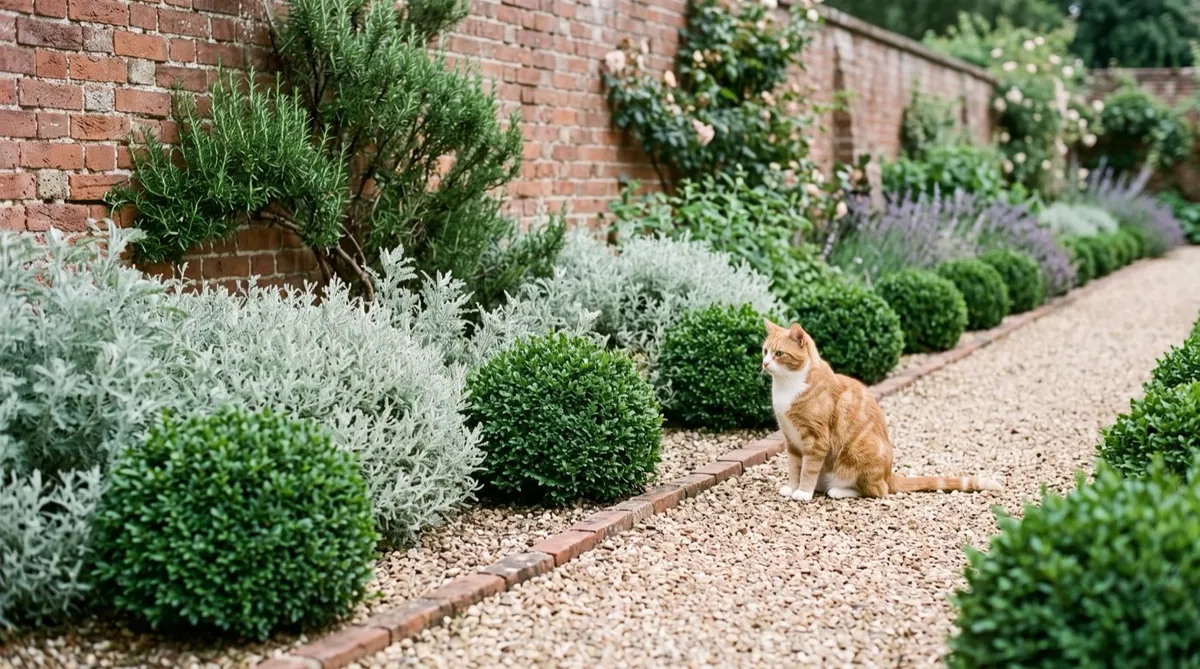
Comfrey at the base of a young tree, with a silver-leaved shrub behind. Cut the comfrey leaves and lay them around the tree.
A year-by-year plan for planting a food forest
Plant in stages so young trees aren’t competing with everything at once.
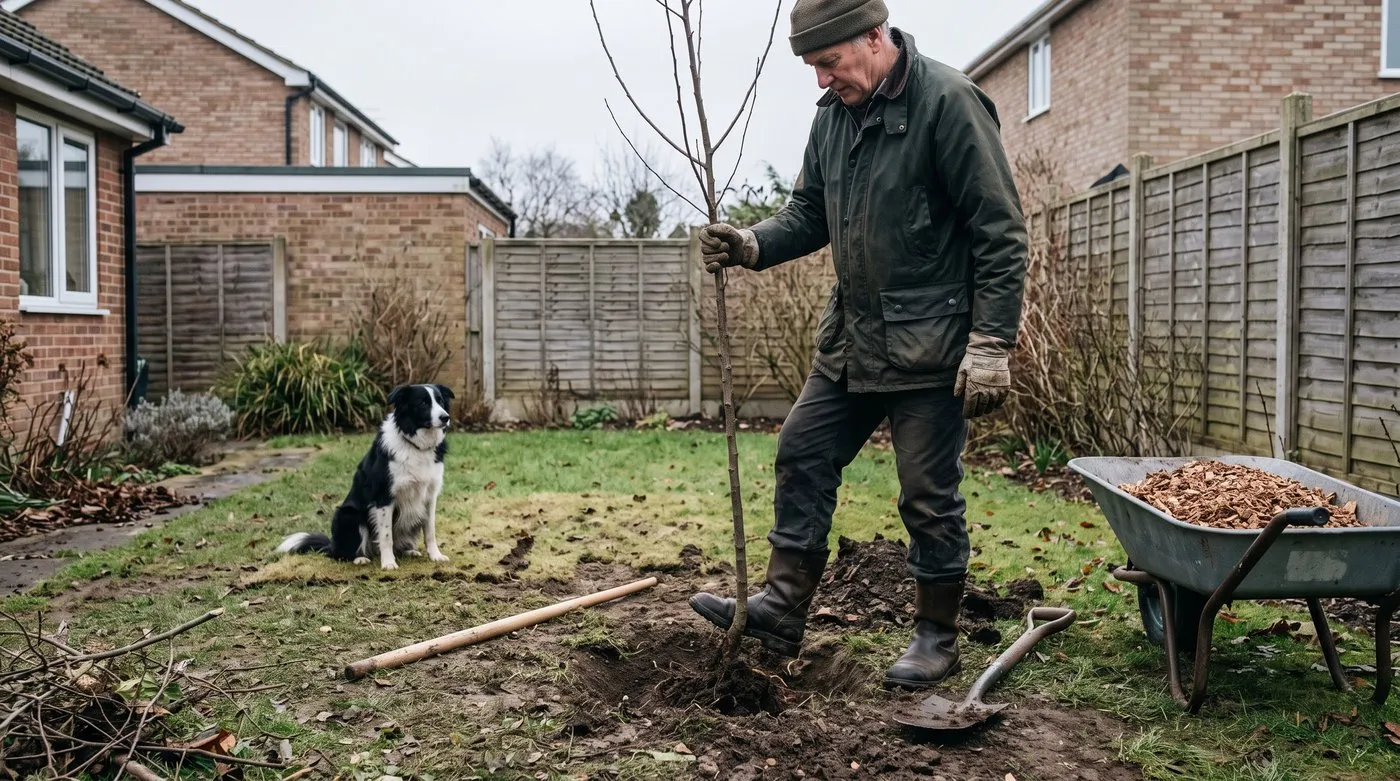
Plant bare-root trees in winter and backfill with the soil you dug out. No compost in the hole.
Year 1: plant the trees and improve the soil. Plant bare-root trees between November and March. Don’t add compost, manure or bone meal to the planting hole, just backfill with the soil you dug out. Our guide to planting bare-root trees shows how. Spread wood chip about 7-10cm deep over the bare ground, keeping it clear of the trunks, and sow clover in open patches.
Year 2: add the soft fruit bushes, perennial veg, ground cover and root crops.
Years 3 to 5: add climbers and fill gaps. The trees start fruiting and the lower layers settle into a steady harvest.
| Month | What to do |
|---|---|
| November to March | Plant bare-root trees and bushes. Winter-prune apples and pears |
| March to April | Mulch with wood chip. Plant perennial veg and ground cover |
| May to June | Pick rhubarb and sorrel. Cut comfrey for mulch |
| July to August | Pick currants and gooseberries. Water young trees in dry spells. Summer-prune plums |
| September to October | Pick apples and pears. Lift Jerusalem artichokes from autumn |
Common food forest mistakes in small gardens
Using vigorous rootstocks. One big tree can shade a quarter of a small garden. Check the rootstock before you buy.
Too many trees. Saplings look tiny, but in a few years the canopies join up. Stick to two to four and sketch their full-grown size as circles on your plan.
No paths. Without paths you can’t reach the bushes and the fruit goes to waste. Draw them first.
Planting everything at once. Bushes and ground cover compete with young trees for water. Plant in stages.
Ignoring the fences. Bare fences are the easiest space to add crops. Use them for grapes, kiwi or beans.
Now you’ve planned the layout, our guide to growing fruit trees covers staking, pruning and looking after the canopy layer. Browse more layouts on our garden design hub.
Frequently asked questions
How small can a food forest be?
A small one can work in a typical back garden. Around 100-250 square metres fits a few small fruit trees with shrubs and perennial veg beneath. In a smaller space, skip the trees and plant a layered bed of soft fruit, perennial veg and ground cover.
What rootstock is best for a small food forest?
M26 or MM106 for apples, and Quince A or C for pears. M26 makes a tree of roughly 2.5-3m, and MM106 a little bigger. For plums, Pixy is smaller than St Julien A. Avoid vigorous rootstocks such as M25, which make big trees.
How far apart should food forest trees be?
About 3-4m apart, depending on the rootstock. Smaller rootstocks such as M26 can go closer, while MM106 needs more room. Too close and the canopies join up, shading out the shrubs and plants below.
How many layers fit in a suburban garden?
All seven can, with fewer plants in each. That’s canopy, small trees, shrubs, perennial veg, ground cover, roots and climbers. Two trees, four bushes and a carpet of ground cover still works as a food forest.
How long until a food forest produces food?
Leafy perennials such as sorrel give light pickings in the first year. Currants and gooseberries usually start cropping in year two. Fruit trees on small rootstocks often fruit from about year three. Expect the whole garden to be properly productive after three to five years.
Do I need to feed a food forest?
Very little once it’s established. Wood-chip mulch, comfrey leaves cut and laid around trees, and nitrogen-fixing plants such as clover and elaeagnus do most of the work. Young trees may need a feed in spring while they settle in.
Our team produces practical UK gardening guidance from source research, contributor records and established horticultural practice. Editorial standards are overseen by Matt W.