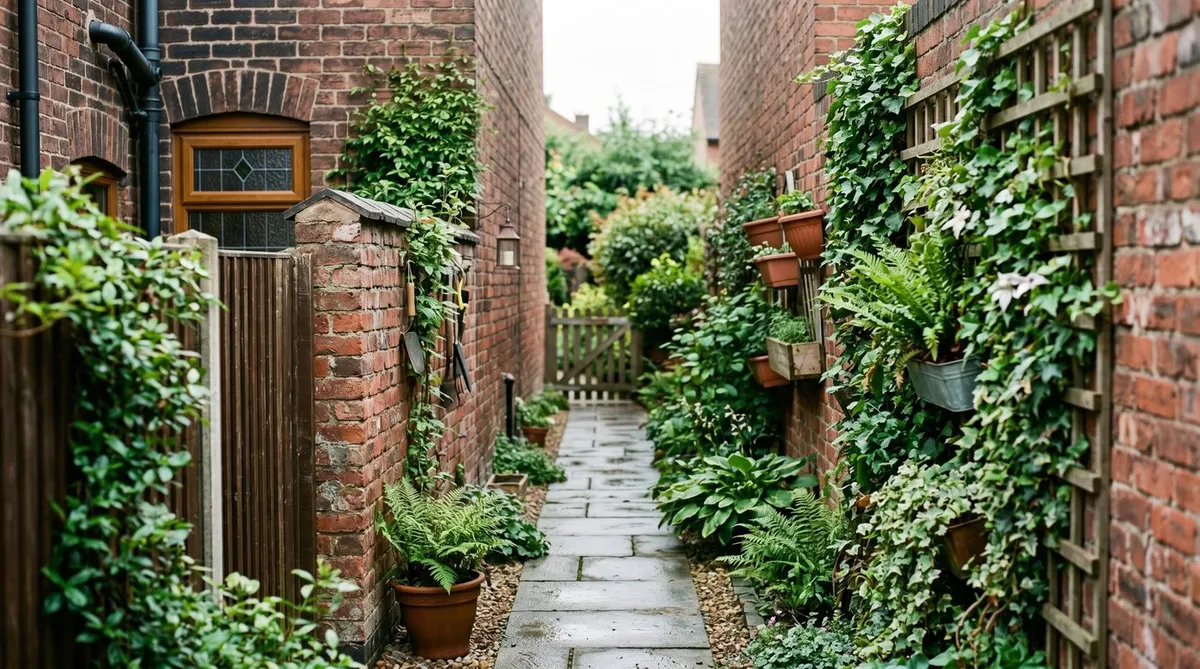
Key takeaways
- An obelisk adds height and a focal point in the middle of a bed, where there's nothing else to climb
- Sweet peas, clematis, shorter climbing roses and runner beans are the classic obelisk climbers
- Pick 1.5-1.8m for borders and pots, and 1.8-2.4m for focal points and beans
- Sink the legs firmly, because a leafy obelisk catches the wind like a sail
- Plant about 30cm out from the base and tie in little and often
- A home-made hazel wigwam is the cheapest obelisk of all
A garden obelisk is the quickest way to add height and a focal point to a flat garden. It lifts climbers up to eye level, draws your eye along a border or path, and turns a bare patch into something special. Best of all, it’s one simple structure you can move if you change your mind.
Below are ten obelisk ideas, from a scented sweet pea tower by the door to a bean wigwam on the allotment and a smart metal pillar of clematis in a border. You’ll also find the best climbers to grow and how to keep an obelisk standing straight.
Why use a garden obelisk?
An obelisk adds height in the middle of a bed, exactly where a flat border needs it. Most borders have plenty of low and medium plants but little height away from the fences. An obelisk fixes that where there’s nothing else to climb.
It also shows a climber off better. Against a wall, a climber spreads sideways and half of it is hidden. On an obelisk, you see it from every side, and it stays at a size you can manage. That suits moderate climbers like clematis, sweet peas and shorter climbing roses.
10 garden obelisk ideas to try
Choose your obelisk by the job you want it to do: flowers, crops, a focal point or height in a pot.
| # | Obelisk idea | Best for | Climber to grow |
|---|---|---|---|
| 1 | Painted timber sweet pea tower | Scent and cut flowers | Sweet peas |
| 2 | Rustic hazel or willow wigwam | Allotments and cottage gardens | Runner beans, sweet peas |
| 3 | Metal obelisk in a border | Long-season flowers | Clematis viticella |
| 4 | Border focal point | Drawing the eye | Climbing rose |
| 5 | Obelisk in a large pot | Patios and small gardens | Compact clematis |
| 6 | A matched pair framing a path | Formality and rhythm | Matching roses |
| 7 | Runner bean wigwam | A big crop in a small space | Runner beans |
| 8 | Repeat-flowering rose pillar | Months of flowers | Climbing rose |
| 9 | Cut-flower sweet pea obelisk | A picking patch | Sweet peas |
| 10 | Modern metal or copper | Contemporary gardens | A single clematis |
Ideas one, nine and the rose pillars are all about flowers. A painted sweet pea tower by a door or path is hard to beat for scent. Picking the flowers often keeps them coming all summer, as our guide to growing sweet peas from seed explains.
A metal obelisk of clematis brings colour to the middle of a border for months. The hard-pruned viticella types in our clematis growing guide are ideal. A repeat-flowering climbing rose gives flowers from early summer into autumn, and our pick of the best climbing roses includes shorter ones that suit an obelisk.

A clematis viticella on a slim metal obelisk gives the middle of a border colour from midsummer into autumn.
Runner bean wigwams and other productive obelisks
On the veg plot, an obelisk is a crop support. It lifts runner beans, climbing French beans and sweet peas off the ground for easy picking, and takes up far less space than plants left to sprawl.
The classic is the runner bean wigwam. Push a circle of canes or hazel rods into the soil and tie them together at the top. Plant one bean at the foot of each upright. Beans twine on their own, but if you help them, wind them anticlockwise, the way they naturally grow. Water well once they start flowering, because dry plants drop their flowers. Our runner bean growing guide covers sowing, spacing and picking.
A rustic hazel wigwam is the cheapest obelisk you can have. Push sturdy hazel poles into the ground in a circle, tie the tops, then weave whippy willow or dogwood stems around the base. It looks at home on any allotment and makes good use of winter prunings. Our guide to hazel pea sticks and DIY supports shows how to cut and use hazel.

A home-made hazel wigwam costs next to nothing, and runner beans turn it into a tower of flowers and pods.
Obelisks for pots, paths and focal points
In a small garden or on a patio, an obelisk in a big pot adds height where there’s no border to plant in. Use a wide, heavy, frost-proof pot at least 45cm across and fill it with a loam-based compost, which is heavier and holds water better than multi-purpose. A compact clematis or a few sweet peas suit a pot best.
A matched pair of obelisks framing a path or gate makes a lovely entrance. Plant them the same, with the same rose or clematis on each, so they read as a pair. For a bigger feature over a path, a rose arch does a similar job, and our guide on how to build a rose arch in a weekend shows how.
A single obelisk works best as a focal point on a clear sightline from a door, seat or path. Surround it with lower planting so the eye goes straight to it.

Two matching obelisks on either side of a path give a lovely sense of arrival. Plant them the same so they read as a pair.

A wide, heavy pot keeps an obelisk steady on a courtyard patio and gives the roots room to grow.
Which climbers grow best up an obelisk?
The best obelisk climbers are moderately vigorous, easy to train and flower or crop for a long time. Something too vigorous will swamp the frame in a single season.
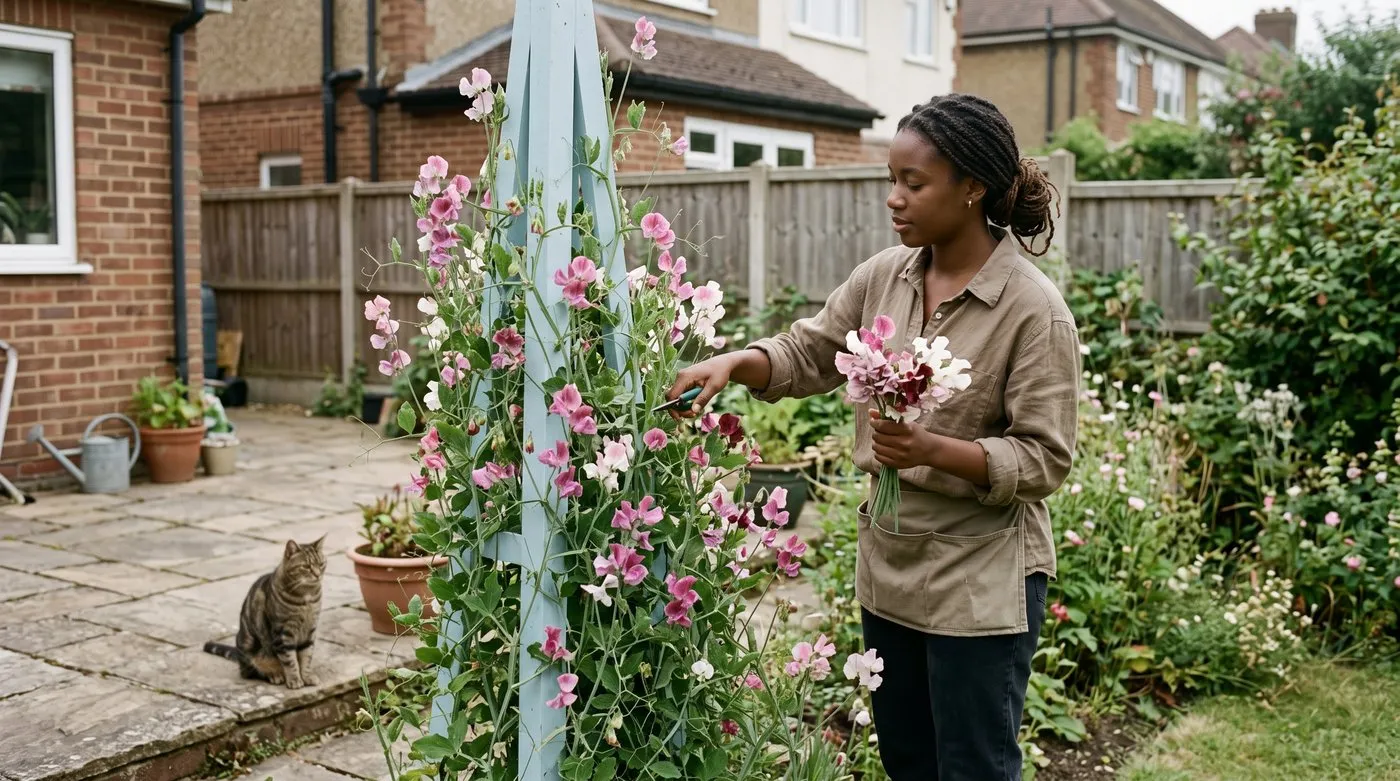
Pick sweet peas every few days and the obelisk keeps flowering all summer.
- Clematis (Group 3, such as viticella types). Long-flowering and cut back hard each February or March, so they never outgrow the frame. Our guide to pruning clematis by group has the timings.
- Climbing roses. Choose shorter, repeat-flowering climbers. Ramblers are usually too vigorous for an obelisk.
- Sweet peas. The classic annual choice for scent and cutting. Sow in autumn or spring.
- Runner and climbing French beans. Quick from seed and heavy cropping.
- Golden hop (Humulus lupulus ‘Aureus’). A vigorous perennial for a large, sturdy obelisk. It dies back in winter and grows again in spring.
Avoid self-clinging climbers like ivy and Virginia creeper, which hide the frame, and fast growers that outgrow it in a season.
Choosing an obelisk: materials and height
Pick the material for your style and budget, then match the height to the spot.
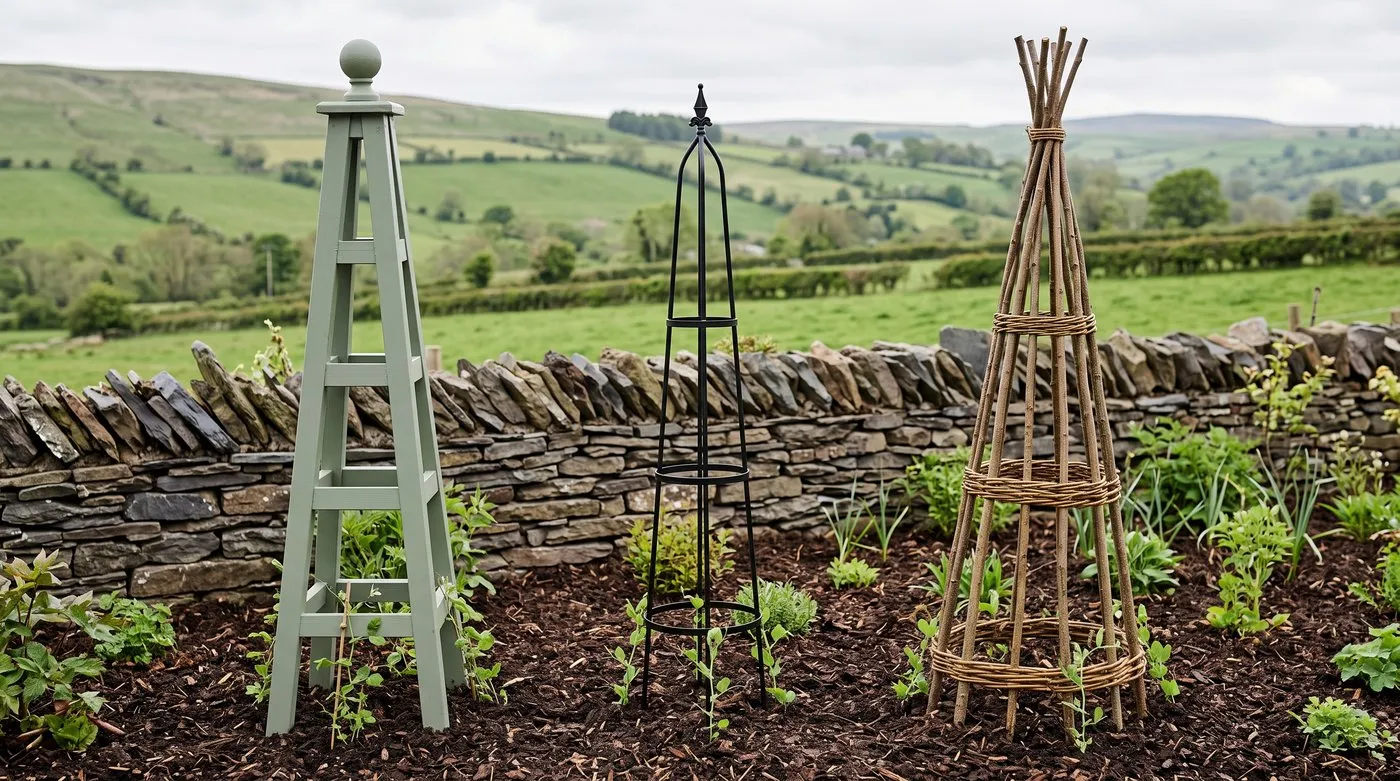
Timber, metal and hazel all do the job. Pick the one that suits your garden’s style and budget.
| Material | Look | Lasts | Best for |
|---|---|---|---|
| Painted timber | Classic, cottage | Many years with repainting | Sweet peas, roses, borders |
| Metal | Slim, modern or traditional | Many years | Clematis, roses, pots |
| Hazel or willow | Rustic | A few seasons | Beans, sweet peas, allotments |
| Bamboo canes | Simple, practical | A season or two | Beans and annual climbers |
For height, use 1.5-1.8m in borders and pots, and 1.8-2.4m for focal points and runner beans. A tall obelisk dwarfs a small bed, while a short one disappears at the back of a deep border. Remember that some of the length goes into the ground.
How to plant, train and anchor an obelisk
Anchor it first, plant about 30cm out from the base, then tie in little and often.
Anchor it firmly. A fully grown, leafy obelisk catches the wind like a sail. Sink the legs at least 30cm into the ground. In soft soil or windy spots, go deeper or set them in post concrete. Give it a good shake before you plant: it shouldn’t move.
Plant away from the legs. Set climbers about 30cm out from the base, where the soil stays moister, and lead the shoots in to the frame with a cane. Plant clematis about 5cm deeper than they sat in the pot. This helps them send up new shoots if the plant is damaged or hit by clematis wilt.
Train little and often. Wind the stems gently round the obelisk and tie them in with soft twine every week or two in the growing season. Keep early shoots low and angled. This encourages flowering side shoots all the way up, not just a tuft of flowers at the top. Sweet peas cling with tendrils but still do better with the odd tie.

Tie new shoots in loosely with soft twine. Angling them round the frame brings flowers from top to bottom.
Common obelisk mistakes
- Too vigorous a climber. A rampant plant smothers the obelisk and pulls it over. Stick to moderate climbers.
- Not sinking it deep enough. A shallow obelisk leans after the first summer gale. Bury the legs well.
- Planting right against the legs. The soil there is dry and the roots get squashed. Plant about 30cm out.
- Letting shoots run straight up. You get bare stems with flowers only at the top. Wind and tie them in early.
- Too small a pot. A narrow pot dries out fast and blows over. Use a wide, heavy one.
For more ways to add height in small spaces, browse our garden design guides. Now you’ve chosen your obelisk, read our guide to training young climbers to get the shape right from the start.
Frequently asked questions
What is the best plant to grow up a garden obelisk?
Clematis, climbing roses and sweet peas are the best flowering choices. Runner beans are the best edible one. Pick climbers of moderate vigour, such as Group 3 clematis and shorter repeat-flowering roses, so they don’t swamp the frame.
How tall should a garden obelisk be?
Most garden obelisks are 1.5-2.4m tall. Use 1.5-1.8m for borders and pots, and 1.8-2.4m for focal points and runner beans. Match it to the setting: a tall obelisk swamps a small bed, while a short one gets lost at the back of a deep border.
How do you anchor a garden obelisk so it doesn’t blow over?
Sink the legs at least 30cm into the ground. In soft or windy spots, go deeper or set the legs in post concrete. For an obelisk in a pot, use a wide, heavy container and stand it out of the strongest wind.
How do you train a climber up an obelisk?
Plant it about 30cm out from the base and lead the shoots to the frame. Wind the stems gently round the obelisk and tie them in with soft twine. Keep early shoots low and angled, so flowers appear all the way up.
Can you put an obelisk in a pot?
Yes, and it’s a great way to add height to a patio. Use a wide, heavy, frost-proof pot at least 45cm across, a loam-based compost and a compact climber. Water often in summer, as pots dry out quickly.
Is a wooden or metal obelisk better?
Both work well, so choose by style and budget. Painted timber suits cottage gardens and is easy to repaint. Metal is slim and long-lasting. Hazel or willow is the cheapest but needs replacing every few years.
Our team produces practical UK gardening guidance from source research, contributor records and established horticultural practice. Editorial standards are overseen by Matt W.