Key takeaways
- A 2.2m tall, 1.2m wide, 60cm deep arch suits most garden paths
- Sink 100mm square posts 60cm into the ground, and deeper on windy sites
- Use timber rated for ground contact (Use Class 4), oak or sweet chestnut
- Run training wires up the sides of the arch, never across the path
- Plant one climbing rose each side, 30cm out, with the graft union at soil level
- Pick repeat-flowering climbers, not big ramblers that will swamp a small arch
A wooden rose arch is one of the most satisfying weekend builds in a garden. You need four posts, a simple top frame, a few wires and two climbing roses. Get the posts deep and straight and the rest is easy.
This guide is about building the arch itself. For ideas on bigger structures, see our pergola ideas for UK gardens, and for choosing what to grow over it, see the best climbing roses for UK gardens.
What size should a rose arch be?
A good all-round size is 2.2m tall, 1.2m wide and 60cm deep. With 100mm posts, that leaves about 1m of path between them and around 2m of headroom under the top rails.
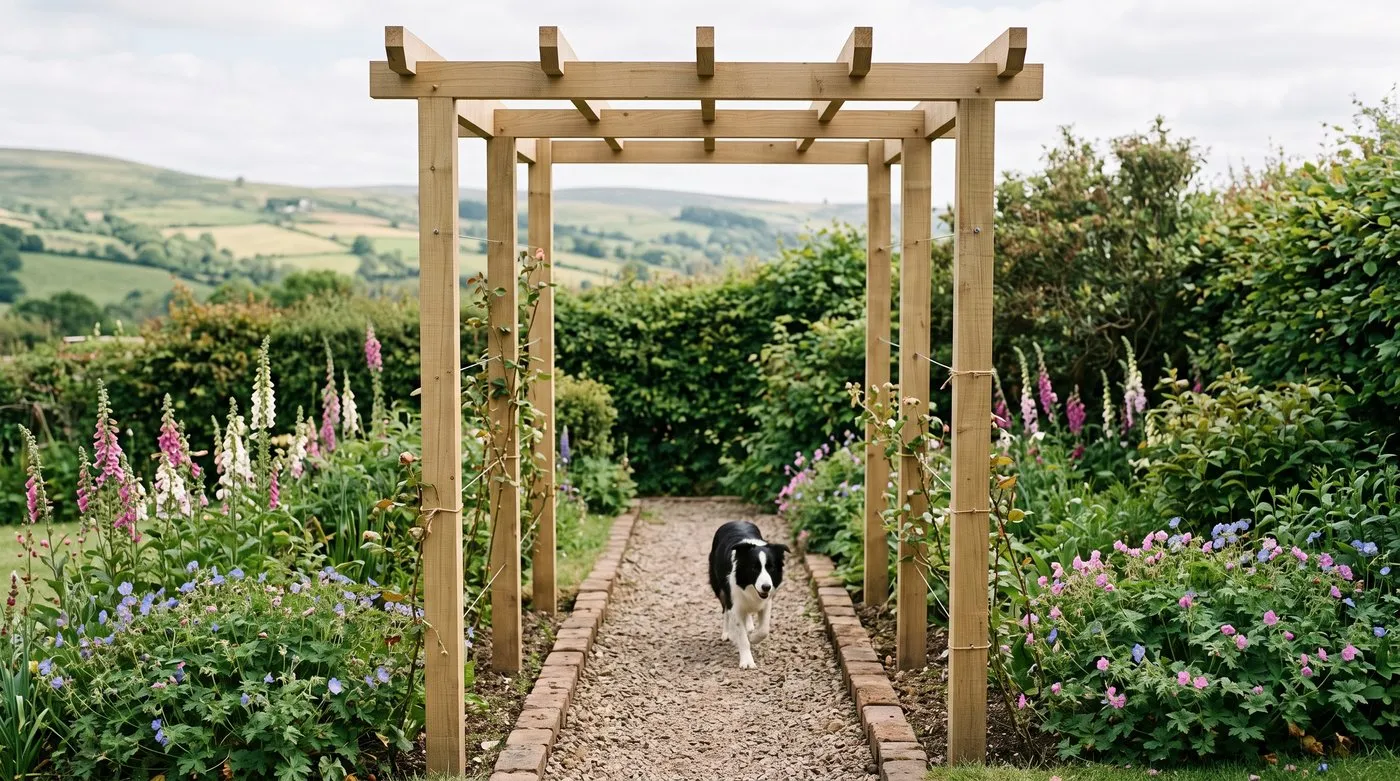
Around 1m between the posts leaves room for you, the dog and a few years of rose growth.
| Dimension | Good size | Why |
|---|---|---|
| Height above ground | 2.2m | Headroom under the frame once roses hang down |
| Width (outside of posts) | 1.2m | About 1m clear for walking through |
| Depth (along the path) | 60cm | Steadier than a single pair of posts |
| Posts | 100mm x 100mm | Stiff enough to carry a mature rose in wind |
| Post depth in the ground | 60cm, or 75-80cm if windy | Stops the arch leaning over time |
| Post length | 2.8m, or 3m for deep sets | Height above ground plus depth below |
Wider is fine if you push a wheelbarrow through. Narrower than about 1m feels pinched once the roses fill out, and the thorns catch your sleeves.
Which timber should you use for a rose arch?
Use timber that’s made to sit in the ground. Treated softwood is the budget choice, and oak or sweet chestnut last much longer without treatment.
| Timber | Cost | Lifespan | Notes |
|---|---|---|---|
| Treated softwood | Lowest | Good if rated Use Class 4 | Look for “ground contact” or UC4 on the label |
| Western red cedar | Mid | Good | Light and easy to cut, but softer, so use 100mm posts |
| Sweet chestnut | Higher | Long | Naturally rot-resistant and British grown |
| Oak | Highest | Longest | Heavy, strong and silvers to grey |
Avoid untreated softwood for the posts. It rots quickly where it meets the soil. That ground line is always the first place an arch fails. A coat of bitumen paint on the buried part of softwood posts helps them last.
If you’d rather not dig at all, ready-made metal arches bolt to ground spikes or a patio. They suit lighter climbers better than a big rose.

Wires give the rose stems something to tie on to. Put them on the sides of the arch, never across the path.
Tools and materials for a wooden rose arch
This list is for the 2.2m x 1.2m x 60cm arch.
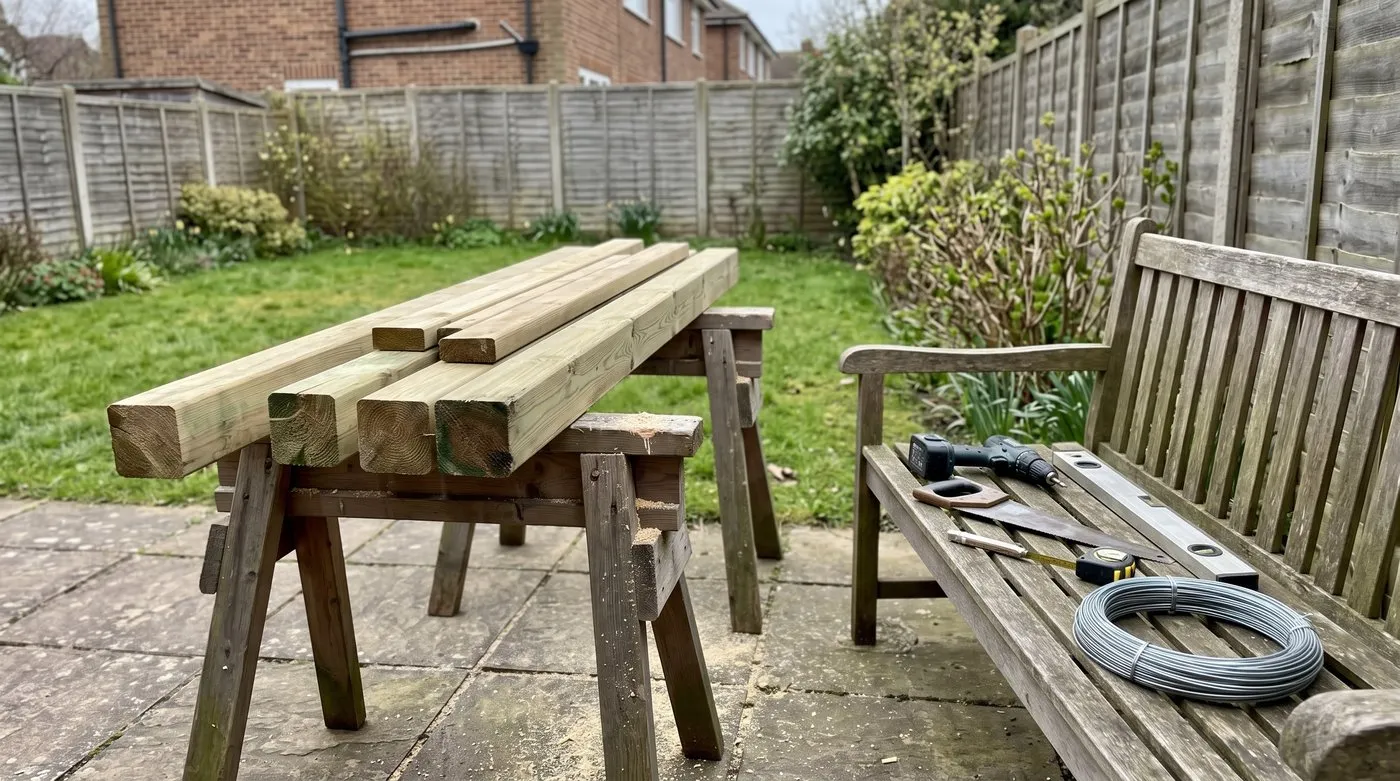
Cut and lay out every piece before you start digging. It’s much easier to spot a short rail now than halfway up a stepladder.
Materials:
- Four 2.8m x 100mm x 100mm posts
- Two 1.4m x 100mm x 50mm top rails, for the faces you walk through
- Two 800mm x 75mm x 50mm side rails, to join the front and back
- Four 800mm x 50mm x 50mm roof bars, for the roses to sit on
- Post-fix concrete, about one bag per post
- Garden wire, vine eyes and wire tensioners
- Exterior coach screws, 75mm long
- Two climbing roses
Tools: a spade and post-hole digger (you can hire an auger for hard ground), a drill, a saw, a spirit level, a tape measure, string and pegs, safety glasses, gloves and a stepladder.
How to build a rose arch, step by step
Set the posts on day one and leave the concrete to harden. Fit the top and wires on day two. Plant the roses in the dormant season.
1. Mark out the footprint
Choose a level spot that gets sun for most of the day. Peg out a rectangle 1.2m across the path and 60cm along it. Check the corners are square with the 3-4-5 method: mark 30cm along one side and 40cm along the other. The diagonal between the marks should be exactly 50cm.
2. Dig the four post holes
Dig a hole at each corner about 60cm deep and 25cm wide. On coastal, hilltop or very open sites, go to 75-80cm and use 3m posts. A post-hole digger makes neat, narrow holes with less spoil.
3. Set the posts in concrete
Stand each post in its hole with 2.2m showing. Brace it with two offcuts screwed on at angles. Check it’s vertical on two faces with the spirit level. Then add post-fix concrete, following the instructions on the bag, and recheck as it sets. Make sure the tops of all four posts are level with each other. Leave the braces on until the concrete is hard.
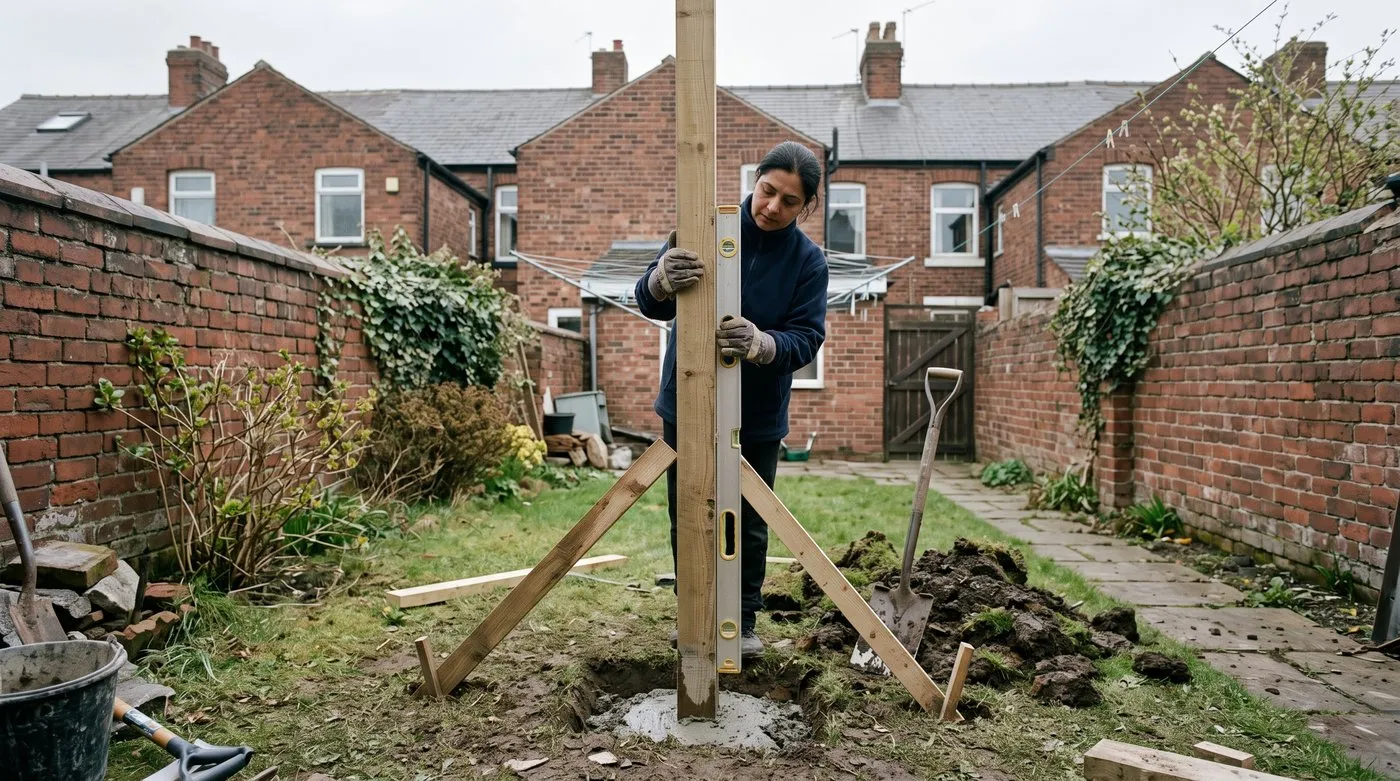
Check each post on two faces as the concrete goes in. A post that’s slightly off now will look wonky for years.
4. Fit the top frame
Pre-drill and screw a 1.4m top rail across the top of each pair of posts you walk through, so it overhangs 10cm each end. Join the front and back with the two 800mm side rails. Screw four roof bars across the top, evenly spaced, so the roses have something to grow over. Use two coach screws at every joint.
5. Add the training wires
Screw vine eyes into the inside faces of the posts on each side, about 40cm apart going up. Run wire between the front and back post on each side and tighten it with a tensioner. The wires sit along the sides, so they never cross the path.
6. Plant the roses
Dig a hole about 30cm out from the outside of each pair of posts. Plant one climbing rose on each side, with the graft union (the knobbly bit where the stems meet the roots) at soil level. Firm in, water well and mulch. Lean the stems towards the arch and tie them loosely to the lowest wires.
Best climbing roses for a garden arch
Choose repeat-flowering climbers that grow to roughly 2.5-3.5m. They flower all summer and stay in scale with the arch.
| Rose | Colour | Good to know |
|---|---|---|
| ’New Dawn’ | Pale pink | Tough, healthy and copes with some shade |
| ’Gertrude Jekyll’ (climbing) | Deep pink | Strong old rose scent |
| ’Wollerton Old Hall’ | Apricot fading to cream | Scented and repeat flowering |
| ’The Generous Gardener’ | Soft pink | Vigorous, so ties in well over the top |
| ’Mortimer Sackler’ | Soft pink | Very few thorns, handy over a path |
A pink and an apricot either side look lovely together. Avoid big ramblers such as ‘Rambling Rector’ or ‘Kiftsgate’. They suit trees and barns and will smother a small arch.
Want something other than a rose, or a partner for one? Our guide to scented climbers for walls, arches and pergolas has more ideas.

Stems tied along the wires flower along their length, not just at the tips. That’s how an arch gets properly covered.
Planting and training the roses on your arch
Plant bare-root roses from November to March, when the ground isn’t frozen or waterlogged. Potted roses can go in any time the soil is workable, but autumn and spring are easiest. Our guide on when to plant roses covers timing in more detail.
Don’t cut a new climber hard back. Just remove dead or damaged stems. For the first two years, focus on tying in.
- Spread the stems out. Tie the main stems to the wires, leaning them as close to horizontal as you can. Bending stems sideways makes them flower all along their length.
- Wind them up. As stems reach the top of the posts, take them over the roof bars and along the top.
- Water in dry spells. Give a good soak once a week in the first summer rather than a little every day.
- Feed and mulch in spring. Use a rose fertiliser and a layer of compost or bark, kept clear of the stems.
Once the arch is covered, prune each winter. Shorten the side-shoots that flowered by about two-thirds, and take out any old, dead or crossing stems. Our rose pruning guide explains the cuts.

Soft garden twine and a gentle hand are all you need. Tie stems loosely so they can thicken without being strangled.
Making a rose arch last in wind and wet
A rose-covered arch catches wind like a sail, and the post bases sit in damp soil all winter. A few small choices make a big difference.
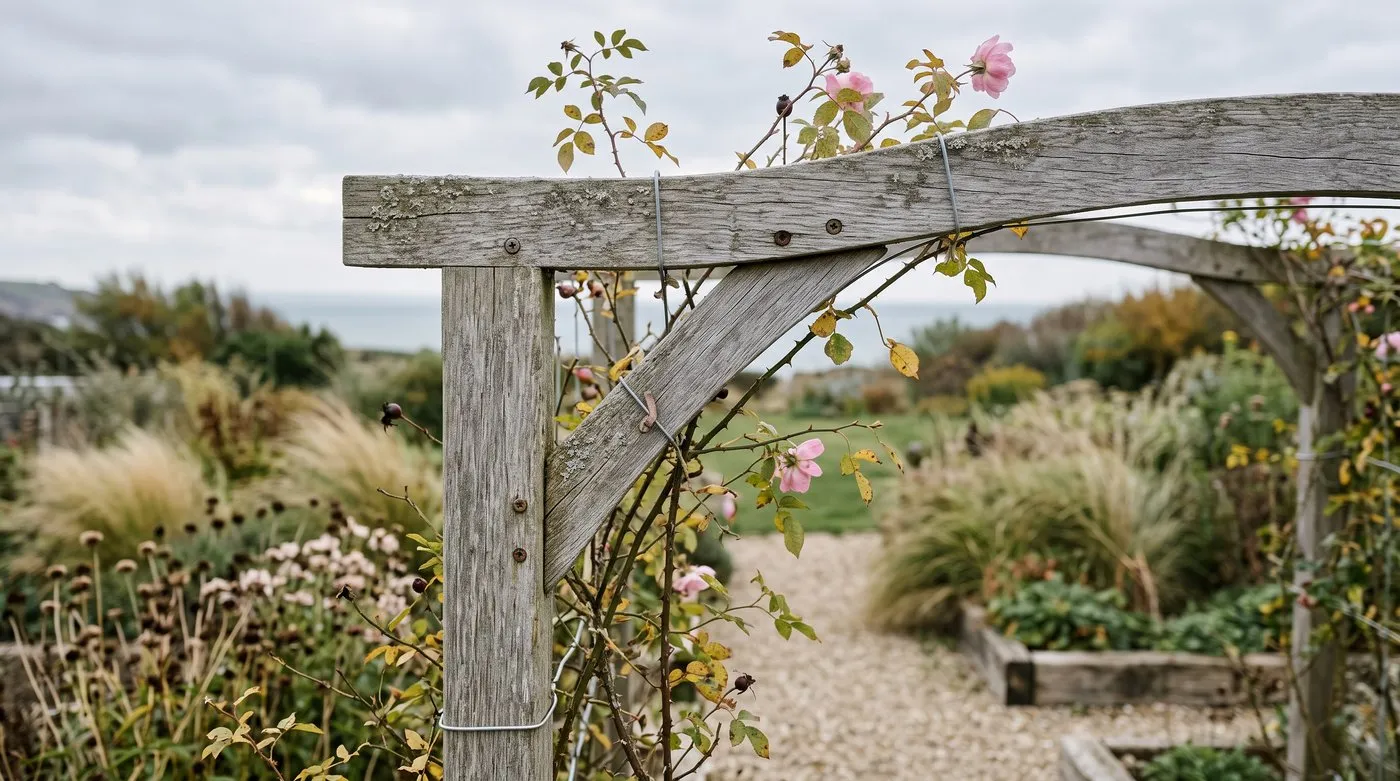
A short brace at each top corner stiffens the frame. It’s well worth adding on windy or coastal sites.
- Go deeper on windy sites. Sink posts 75-80cm and add a short diagonal brace at each top corner.
- Protect the ground line. Paint the buried part of softwood posts and slope the top of the concrete so rain runs away.
- Keep the top light. In autumn, shorten very long, whippy stems so they don’t flap and rock the frame.
- Check it every winter. Look for soft wood at the base and tighten loose screws and wires.
Treated timber and oak both fade to silver-grey after a couple of years. That’s just weathering, not rot.
Common rose arch mistakes
- Shallow posts. Posts sunk only 30-40cm lean within a few winters. Go to 60cm at least.
- Untreated timber. It rots at ground level. Use ground-contact treated wood, oak or sweet chestnut.
- Too vigorous a rose. Big ramblers smother a small arch and make it hard to prune. Pick a climber.
- Planting right against the post. The concrete leaves little root room. Plant about 30cm out.
- Burying the graft union. Set it at soil level so it doesn’t rot or send up rootstock shoots.
- No wires. Without them, stems flop, snap and flower only at the top.
Rose arch care through the year
| Month | Job |
|---|---|
| November to March | Plant bare-root roses when the soil isn’t frozen |
| December to February | Prune established roses. Shorten flowered side-shoots by two-thirds |
| March to April | Feed and mulch. Tie in new stems |
| May | Check for black spot and pick off affected leaves |
| June to August | Deadhead repeat flowerers. Water in dry spells. Keep tying in |
| September | Stop deadheading if you want hips |
| October | Shorten long, whippy stems. Check posts and wires before winter |
If dark blotches appear on the leaves, our guide to black spot on roses explains what to do. For more projects like this, browse our how-to guides.
Frequently asked questions
How long does it take to build a rose arch?
Allow a weekend, plus time for the concrete to set. Set the posts on day one. Fit the top frame and wires on day two. Plant bare-root roses between November and March.
What size should a rose arch be?
About 2.2m tall, 1.2m wide and 60cm deep suits most gardens. That leaves roughly 1m of path between the posts and around 2m of headroom. Go wider for a wheelbarrow, but don’t go much narrower, or the thorns snag you as you pass.
What is the best wood for a rose arch?
Ground-contact treated softwood is cheapest; oak or sweet chestnut lasts longest. Check treated timber is rated Use Class 4 for ground contact. Western red cedar is light and durable but softer, so use chunky posts.
How deep should rose arch posts go?
Sink them about 60cm, and 75-80cm on windy sites. A rose-covered arch catches a lot of wind. Shallow posts work loose and lean within a few winters.
What roses should I grow over an arch?
Repeat-flowering climbers that reach about 2.5-3.5m are ideal. ‘New Dawn’, ‘Gertrude Jekyll’, ‘The Generous Gardener’ and the nearly thornless ‘Mortimer Sackler’ all suit arches. Avoid big ramblers like ‘Rambling Rector’, which soon swamp a small arch.
How far from the arch should I plant a climbing rose?
Plant about 30cm out from the posts. That gives the roots room away from the concrete and the post base. Lean the stems in towards the arch and tie them loosely to the wires.
Do I need to prune a climbing rose after planting it on an arch?
No, just trim off dead or damaged stems. Climbers shouldn’t be cut hard after planting. Spend the first two years tying stems in, then start pruning side-shoots each winter.
Now your arch is up, read our guide to living willow structures for a green arch you can grow from cuttings.
Our team produces practical UK gardening guidance from source research, contributor records and established horticultural practice. Editorial standards are overseen by Matt W.