Key takeaways
- Plant bare-root roses from November to March, ideally in November or December
- Potted roses can be planted almost any time, but autumn to spring needs least watering
- Give roses at least six hours of sun and a spot with good air flow
- Plant with the graft union, the knobbly join above the roots, at soil level
- Replace the soil or choose a new spot where roses have grown before
- Water new roses well every week in dry spells through their first year
The best time to plant roses in the UK depends on how you buy them. Plant bare-root roses from November to March, while they’re dormant. Potted roses can go in at almost any time, but autumn to spring is easiest because they need less watering.
This guide covers the planting windows for each, where to plant and how to plant step by step. For the rest of the year’s care, including pruning, feeding and disease, see the main guide to growing roses.
When is the best time to plant roses?
| How you buy it | When to plant | Best time | Notes |
|---|---|---|---|
| Bare-root | November to March | November to December | Plant while dormant, when the ground isn’t frozen or waterlogged |
| Potted (container) | Almost any time | October to April | Summer planting needs lots of watering |
Autumn and winter planting gives roots time to settle before the plant starts growing in spring. A rose planted in summer spends its first season just coping with heat and dry soil.
When to plant bare-root roses
Bare-root roses are dug up while dormant and sold without soil. Specialist nurseries send them out from November to March. They are usually cheaper than potted roses and come in far more varieties. The guide to what to plant in November has more ideas for the same month.
| Month | How good? | Why |
|---|---|---|
| November | Excellent | Soil is still workable and roots settle in over winter. The best choice from nurseries |
| December | Very good | Plants fully dormant. Plant on mild days |
| January | Good, with care | Frozen or waterlogged ground is more likely. Wait for a better day |
| February | Good | Plant when the soil is workable |
| March | Fine early on | Plant before the buds swell. Water if spring is dry |
If the ground is frozen when your roses arrive, don’t plant. Heel them in instead. Dig a shallow trench in a sheltered spot, lay the roses in at an angle and cover the roots with soil or damp compost. They’ll be fine for a few weeks. If the ground is frozen solid, keep them in a cool, frost-free shed with the roots wrapped and damp.

Soak bare-root roses in a bucket of water for an hour or two before planting, so the roots are plump and ready.
When to plant potted roses
Potted roses are sold growing in compost in garden centres all year. You can plant them in any month when the ground isn’t frozen or waterlogged.
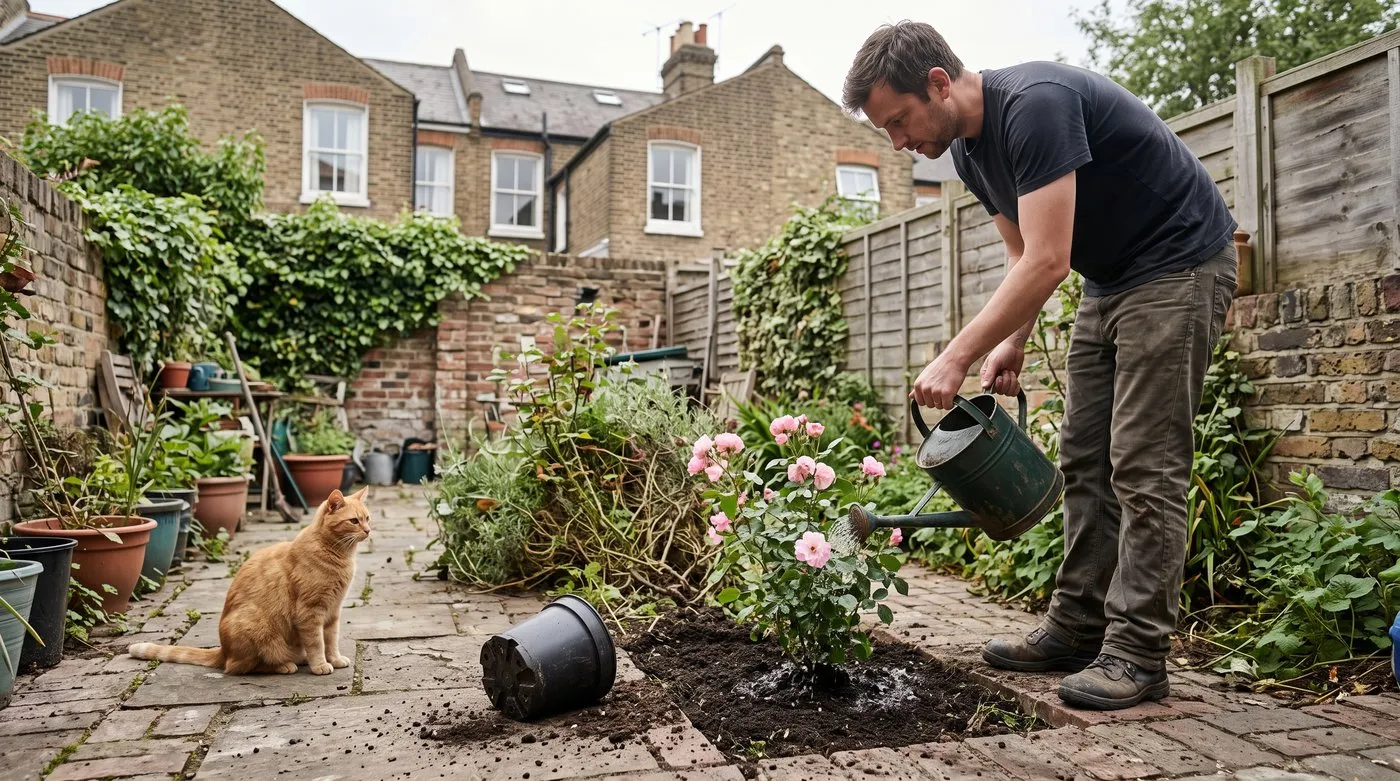
A rose planted in summer needs a thorough soak at least once a week until autumn.
- October to April is easiest. Rain does most of the watering while the roots spread.
- May is fine, but water weekly if the weather is dry.
- June to August works if you’re keen to water. Give each rose a thorough soak at least once a week, more in hot spells, until autumn.
Gardener’s tip: Before you buy a potted rose, check it’s not pot-bound. A solid mat of circling roots means it has been in the pot too long. Look for healthy, fresh green shoots too.
Where to plant a rose
Roses need sun. Aim for at least six hours of direct sun a day. Morning sun is especially useful, as it dries dew off the leaves and helps keep black spot at bay.
Give them air too. A rose crammed against a wall or between big shrubs gets more disease. Plant climbers about 45cm out from a wall or fence, where the soil is less dry, and lean them back towards it.
Avoid deep shade and spots under trees. If you’re unsure which rose suits your space, the guide to types of roses explains the differences.

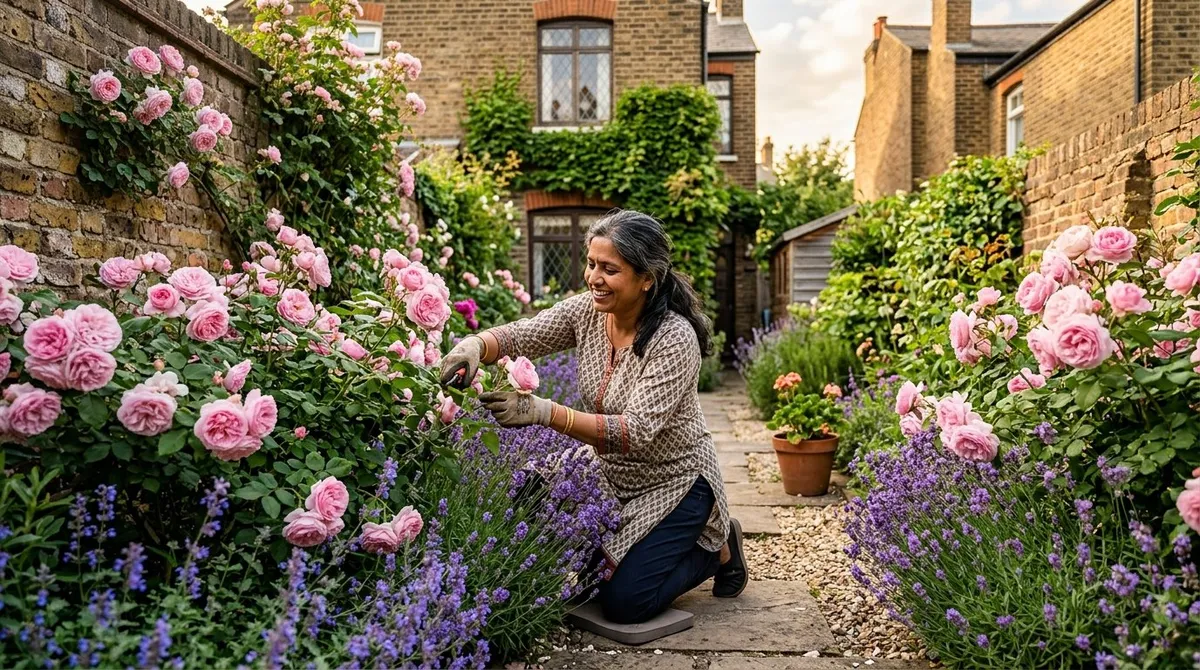
A sunny wall is perfect for a climbing rose. Plant it a little way out from the wall so the roots get some rain.
How to plant a rose step by step
- Soak bare roots in a bucket of water for an hour or two. Water potted roses well an hour before planting.
- Dig a hole about 40-45cm wide and deep enough for the roots. Loosen the soil at the bottom with a fork.
- Mix some well-rotted compost into the soil you dug out. Don’t add fresh manure to the hole.
- Add mycorrhizal fungi if you like. Sprinkle it onto the roots, following the pack.
- Set the depth. Spread bare roots over a small mound of soil in the middle of the hole. Lay a cane across the hole and set the graft union, the knobbly join between stems and roots, at soil level.
- Backfill and firm. Fill in with soil, firming gently as you go to get rid of air pockets.
- Water well, then mulch with well-rotted manure or compost, keeping it clear of the stems.
For potted roses, tease out any circling roots before planting, and plant with the graft union at soil level, as above.
Planting where roses grew before
New roses planted where old roses grew often struggle. This is called rose replant disease, and the cause isn’t fully understood.
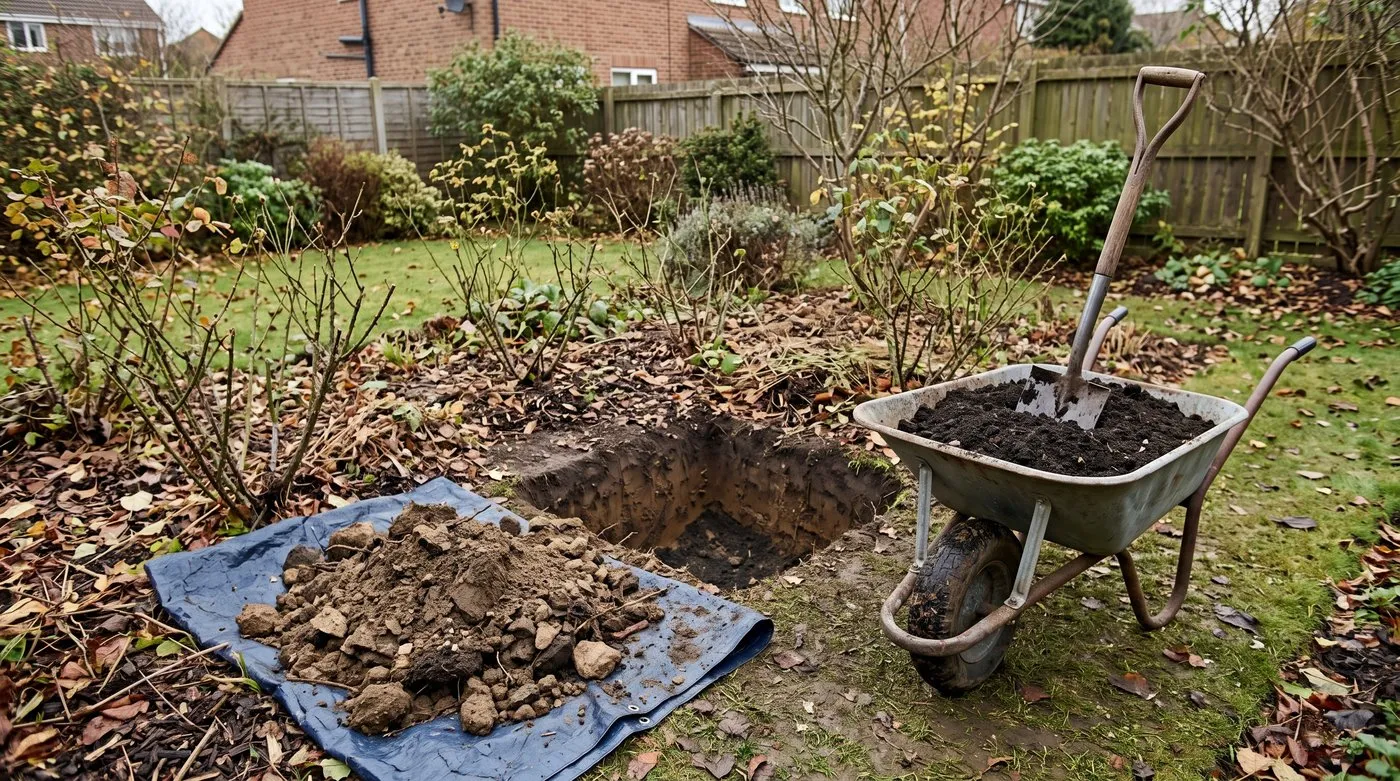
Swapping the soil gives a new rose a fresh start where an old one grew before.
The simplest fix is to plant in a fresh spot. If you want a rose in the same place, dig out the soil to about 45cm wide and deep. Swap it with soil from a part of the garden where roses haven’t grown. Mycorrhizal fungi may also help.
Looking after new roses in their first year
Water is the most important thing. New roses need a thorough soak once a week in dry spells from spring to late summer, even if you planted them in winter. Water the base, not the leaves, as wet leaves encourage black spot. A watering can of about 10 litres per rose is a good guide.
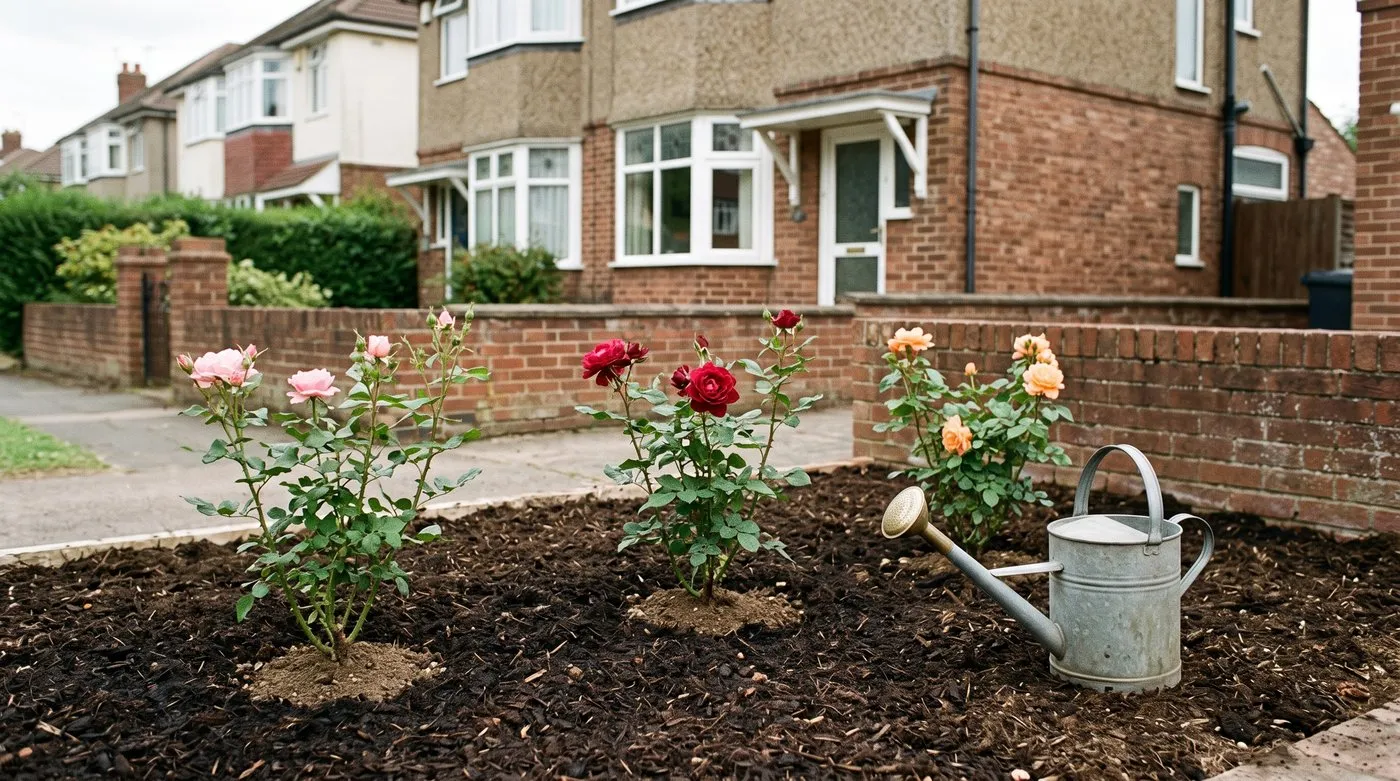
A spring mulch and a weekly soak in dry spells are all a new rose needs in its first year.
Mulch each spring with well-rotted manure or compost, keeping it a little away from the stems. It holds in moisture and feeds the soil.
Pruning comes later. Bare-root roses are usually trimmed back by the nursery, and roses are pruned in late winter. The guide to pruning roses explains when and how.
If a new rose is slow to flower, the guide to why roses don’t flower covers the common causes.
Rose planting calendar
| Month | What to do |
|---|---|
| September | Order bare-root roses. Prepare new beds |
| October | Plant potted roses. Dig over planting spots |
| November | Plant bare-root roses as soon as they arrive. Heel them in if the ground is frozen |
| December | Plant bare-root roses on mild days. Firm in any rocked by wind |
| January | Plant bare-root roses if the ground allows |
| February | Plant bare-root roses. Prune established roses late in the month |
| March | Finish bare-root planting before buds swell. Mulch new roses |
| April | Plant potted roses. Water new roses if spring is dry |
| May to August | Plant potted roses only, with weekly watering. Water all new roses in dry spells |
Common mistakes when planting roses
- Planting in too much shade. Fewer flowers and more disease. Give roses at least six hours of sun.
- Burying the graft union or leaving it high. Plant it at soil level.
- Planting in old rose soil. Replace the soil or plant in a new spot.
- Forgetting to water in the first summer. Winter-planted roses still need watering in dry spring and summer weather.
- Putting gravel in the bottom of the hole on clay. It doesn’t help drainage and can make a sump. Improve the whole bed with organic matter instead.
Now you know when and how to plant, find the right climber for your wall in the guide to the best climbing roses. For roses on a patio, see growing roses in containers, or browse more on the plants hub.
Frequently asked questions
When is the best month to plant roses in the UK?
November is a great month for bare-root roses. The soil is still workable and roots settle in over winter. December to March also works when the ground isn’t frozen or waterlogged. Potted roses plant well from autumn to spring.
Can I plant roses in summer?
Yes, but only potted roses, and they need lots of watering. Bare-root roses are only sold while dormant in winter. A rose planted in summer needs a thorough soak at least weekly, more in hot spells, until autumn.
How deep should I plant a rose?
Plant so the graft union sits at soil level. The graft union is the knobbly join where the stems meet the roots. Don’t bury it, and don’t leave it sitting high above the soil.
Should I add mycorrhizal fungi when planting roses?
It’s optional, but it can help a new rose settle in. Sprinkle it onto the roots as you plant, following the pack. It’s most worthwhile where roses have grown before.
What is the difference between bare-root and potted roses?
Bare-root roses are sold without soil while dormant, from November to March. They are usually cheaper and come in more varieties. Potted roses are sold growing in compost all year. Both make equally good plants once settled.
Why has my new rose not grown?
Dry roots in its first spring and summer are a common cause. Wrong planting depth, waterlogged soil, too much shade and planting where roses grew before are others. Water new roses well every week in dry spells.
Can I plant a rose where an old rose was?
Only if you replace the soil first. New roses often struggle in soil where roses grew before, known as rose replant disease. Dig out and replace a hole about 45cm across and deep, or plant somewhere else.
Our team produces practical UK gardening guidance from source research, contributor records and established horticultural practice. Editorial standards are overseen by Matt W.