Key takeaways
- Plant garlic now, tips about 2.5cm below the soil and 15cm apart
- Sow hardy broad beans such as Aquadulce Claudia for early crops next year
- November is a perfect month for tulips, about 15cm deep
- Bare-root fruit trees, roses and hedging go on sale and can be planted now
- Plant blackcurrants a little deeper than they grew in the nursery
- Lift dahlia tubers once frost blackens the foliage, or mulch them in mild areas
November is one of the busiest planting months of the year, even as the garden goes quiet. Garlic, broad beans and tulips all go in now, and bare-root plants start arriving from nurseries. Choose a dry day, when the soil crumbles rather than sticks, and you can get a lot done.
This guide covers what to plant and sow this month. For leaf clearing, frost protection and other seasonal chores, see the winter gardening jobs checklist. If October got away from you, October’s planting guide has spring bulbs and onion sets that can still go in early this month.
Vegetables to plant and sow in November
November planting is short but valuable. These crops use the winter cold and give you the earliest harvests next year.
Garlic
Garlic planted in November usually gives bigger bulbs than spring planting. It needs a cold spell to split into separate cloves, and winter does that for you.
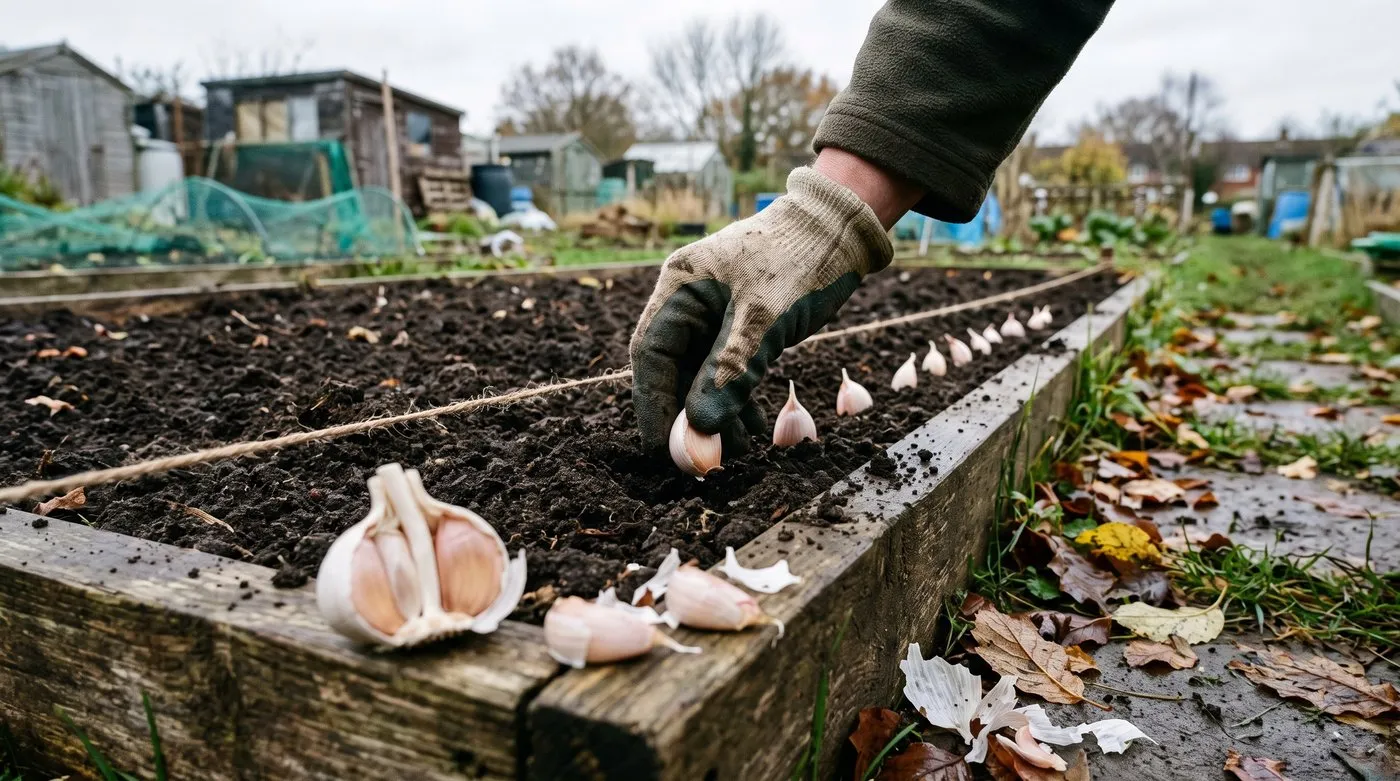
Pointed end up, tips just under the surface, 15cm apart. Winter cold does the rest.
Choose a hardneck variety, such as ‘Lautrec Wight’ or ‘Caulk Wight’, for flavour, or a softneck, such as ‘Solent Wight’ or ‘Picardy Wight’, for longer storage. Buy seed garlic from a garden supplier rather than using supermarket bulbs, which may carry disease or suit a different climate.
Split the bulb into cloves. Push each one in pointed end up, with the tip about 2.5cm below the surface. Space them 15cm apart in rows 30cm apart. Garlic hates sitting wet, so on heavy clay plant into a raised bed or start cloves in modules and plant out in spring. The full guide to growing garlic covers harvest and storage.
Broad beans
Hardy broad beans such as ‘Aquadulce Claudia’ can be sown outdoors in November. They sit through winter as small plants and crop earlier than spring sowings.
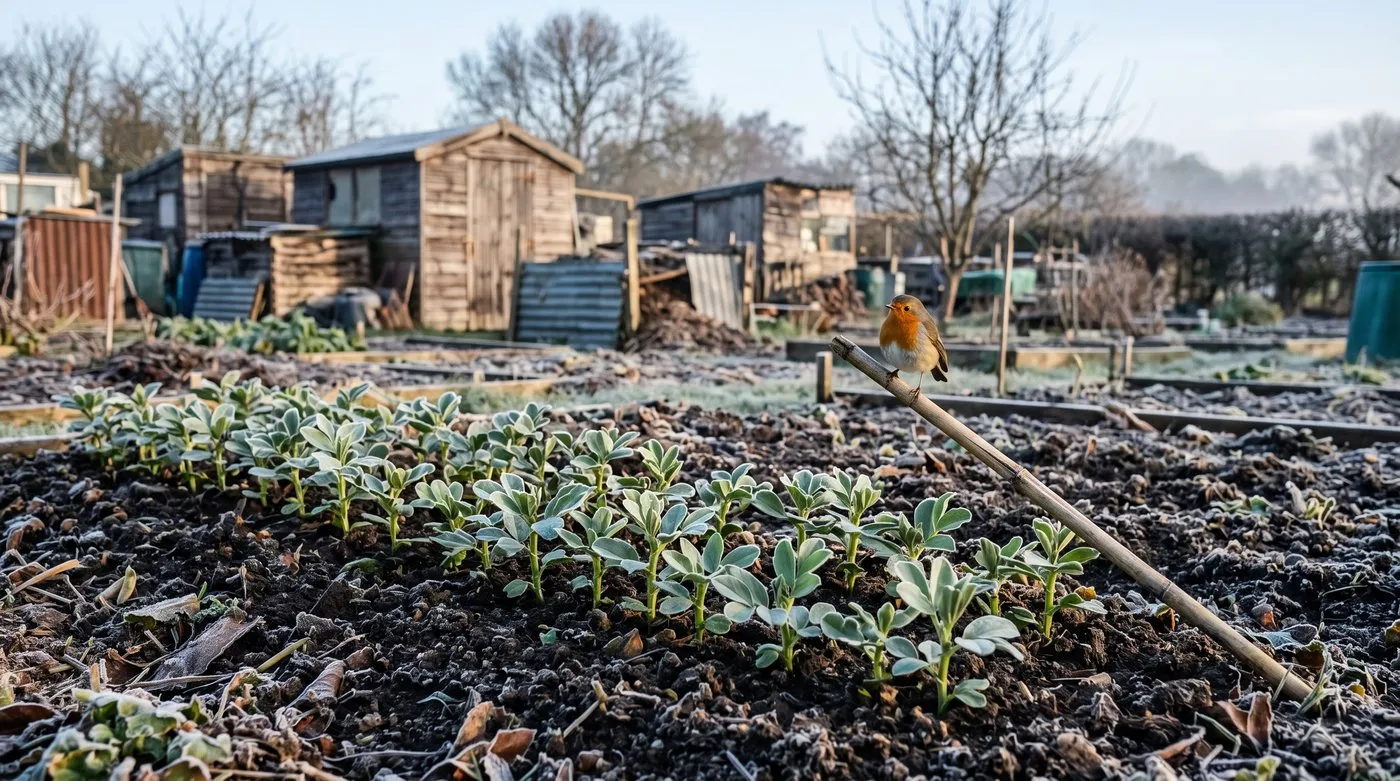
Autumn-sown broad beans sit through winter as small, tough plants. They give you the first beans of the year.
Sow seeds 5cm deep and 20cm apart, in double rows. In cold, exposed or wet gardens, sow into deep pots in a cold frame instead and plant out in early spring. The guide on when to plant broad beans compares autumn and spring sowing.
Gardener’s tip: Next spring, pinch out the tips of your broad beans once the first pods start to form. Blackfly love those soft tips.
Rhubarb crowns
November is a good month to plant bare-root rhubarb crowns. Plant with the buds just at the soil surface in rich, well-drained soil, about 90cm apart. ‘Timperley Early’ and ‘Victoria’ are reliable choices. Don’t pick any stems in the first year.
Flowers to plant in November
Tulip bulbs
November is the perfect month for tulips. Planting them late, in cool soil, helps avoid tulip fire, a fungal disease that distorts leaves and rots bulbs.
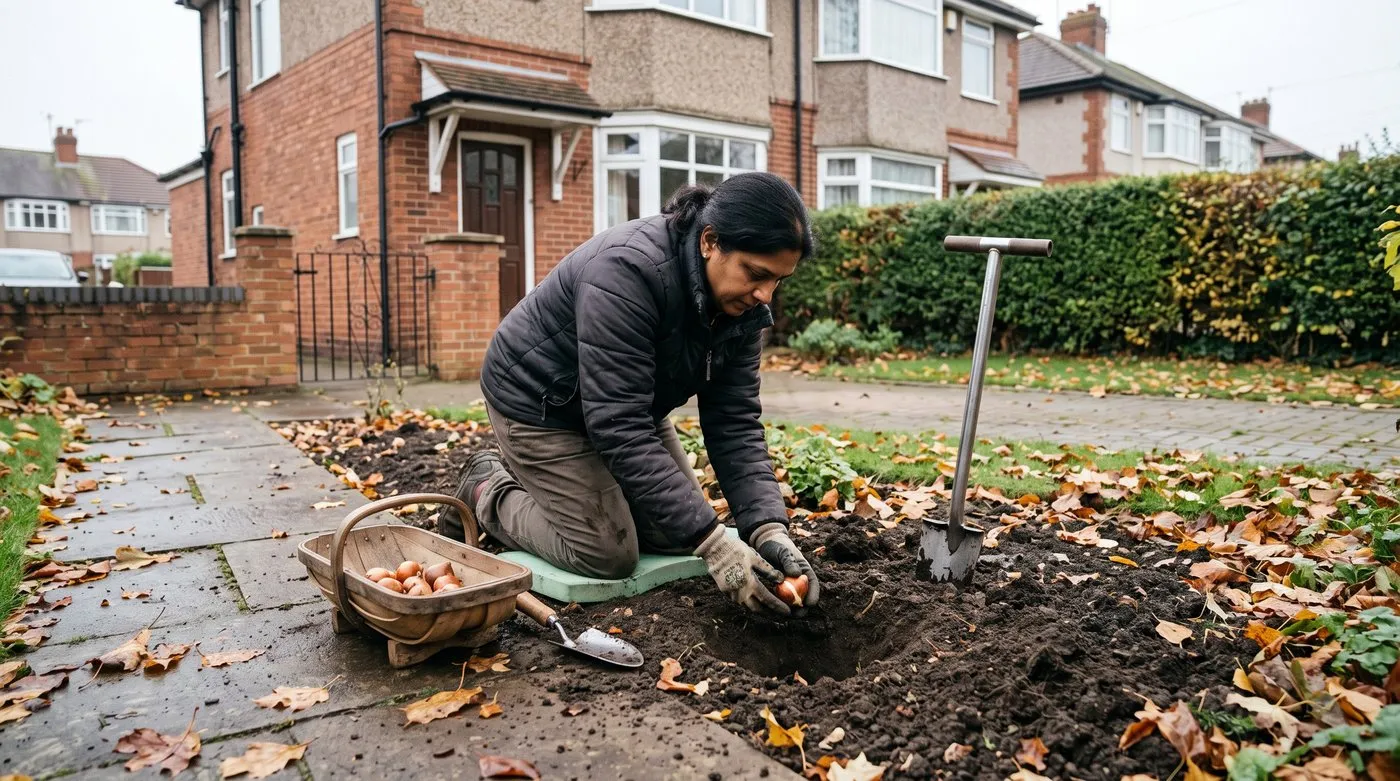
Tulips go in about 15cm deep. Planting late in cool soil helps keep tulip fire at bay.
Plant bulbs about 15cm deep, pointed end up, in well-drained soil or pots. Deep planting also helps keep squirrels off. Plant in groups for a good show, and mix early, mid and late varieties for colour from March to May. You can carry on planting into early December. The guide on when to plant tulip bulbs covers pots, borders and lasagne planting.
Wallflowers and other spring bedding
Plant out wallflowers and sweet Williams early in the month in a sunny spot. Firm them in well. Winter pansies, violas and primroses can go into pots and window boxes now too for colour on mild days.
Lifting dahlia tubers
Once the first frost blackens the leaves, it’s time to deal with dahlias. Cut the stems back to about 10cm. Ease the tubers out with a fork, taking care not to spear them. Turn them upside down for a few days so water drains out of the hollow stems.
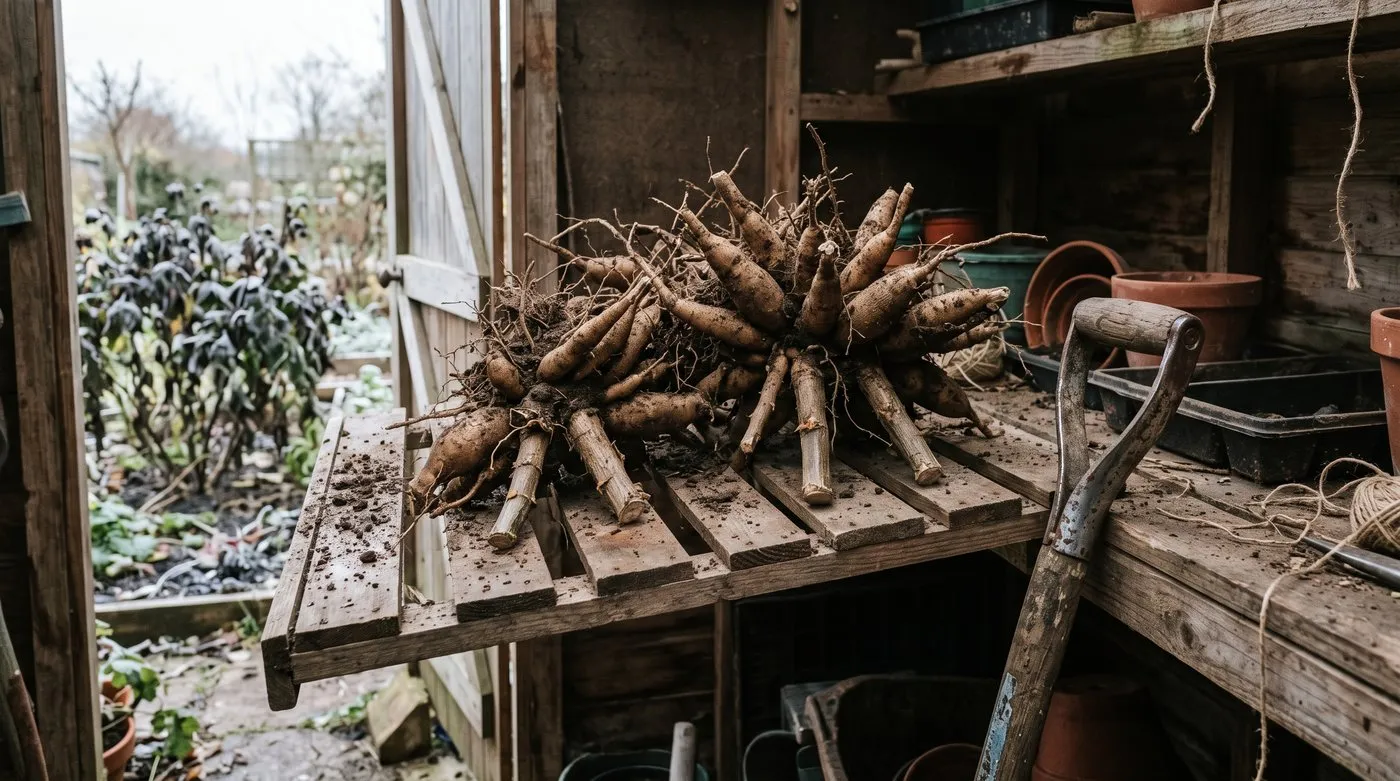
Let lifted tubers dry off for a few days before storing them somewhere frost-free.
Store them in trays of dry compost or vermiculite somewhere cool and frost-free, and check them every month for rot. In mild areas with well-drained soil, you can leave them in the ground under a thick mulch instead. The guide to storing flower bulbs and tubers explains both options.
Planting bare-root fruit and hedging in November
November is when bare-root season gets going. Trees, bushes and hedging are lifted from nursery fields once dormant and sold without pots. They’re cheaper than potted plants and root quickly.
Fruit trees
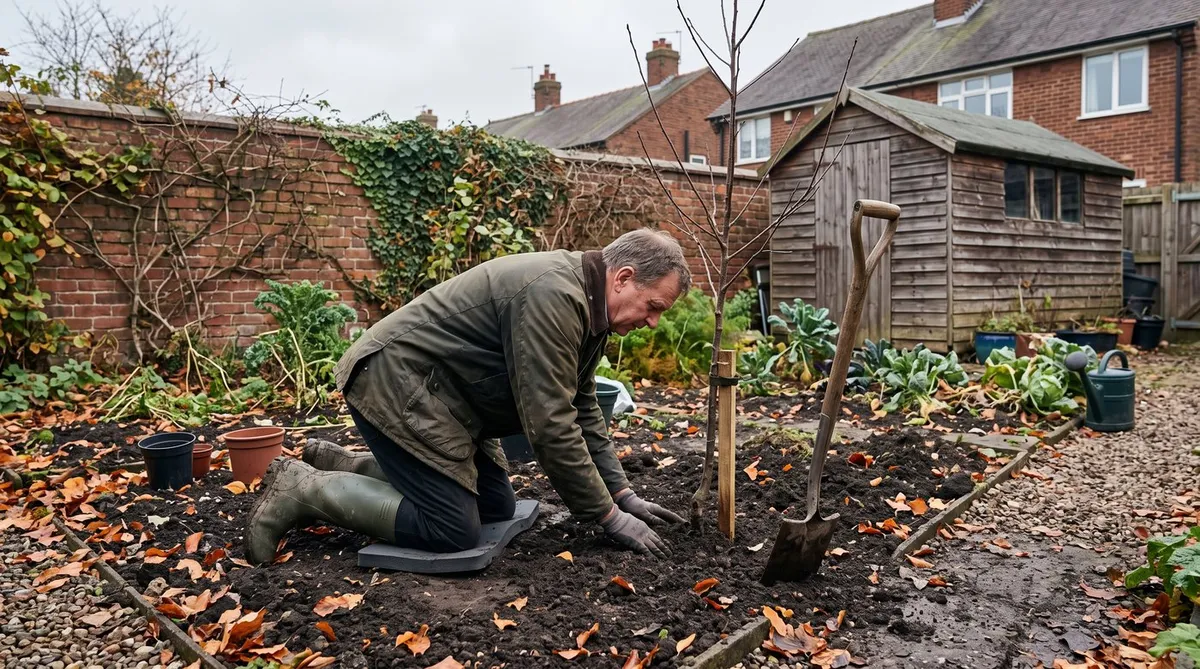
Plant bare-root apple, pear, plum and cherry trees whenever the soil isn’t waterlogged or frozen. Dig a hole wide enough to spread the roots out, but no deeper than they grew. Look for the soil mark on the trunk and match it to your ground level. Don’t add compost or fertiliser to the hole.
Knock in a short stake on the windward side and fix it with a tree tie. Water well, even if it’s been raining, to settle soil around the roots. The guide to planting bare-root trees has the full method.
Check pollination before you buy. Many apples and pears crop better with a partner tree nearby. ‘Conference’ pear is partly self-fertile, and ‘Victoria’ plum is self-fertile, so both suit a garden with room for one tree.
Fruit bushes
Plant bare-root gooseberries, redcurrants, blackcurrants and raspberries now too. Plant blackcurrants about 5cm deeper than they grew in the nursery. That encourages strong new shoots from below ground. Gooseberries and redcurrants go in at the same depth as before.
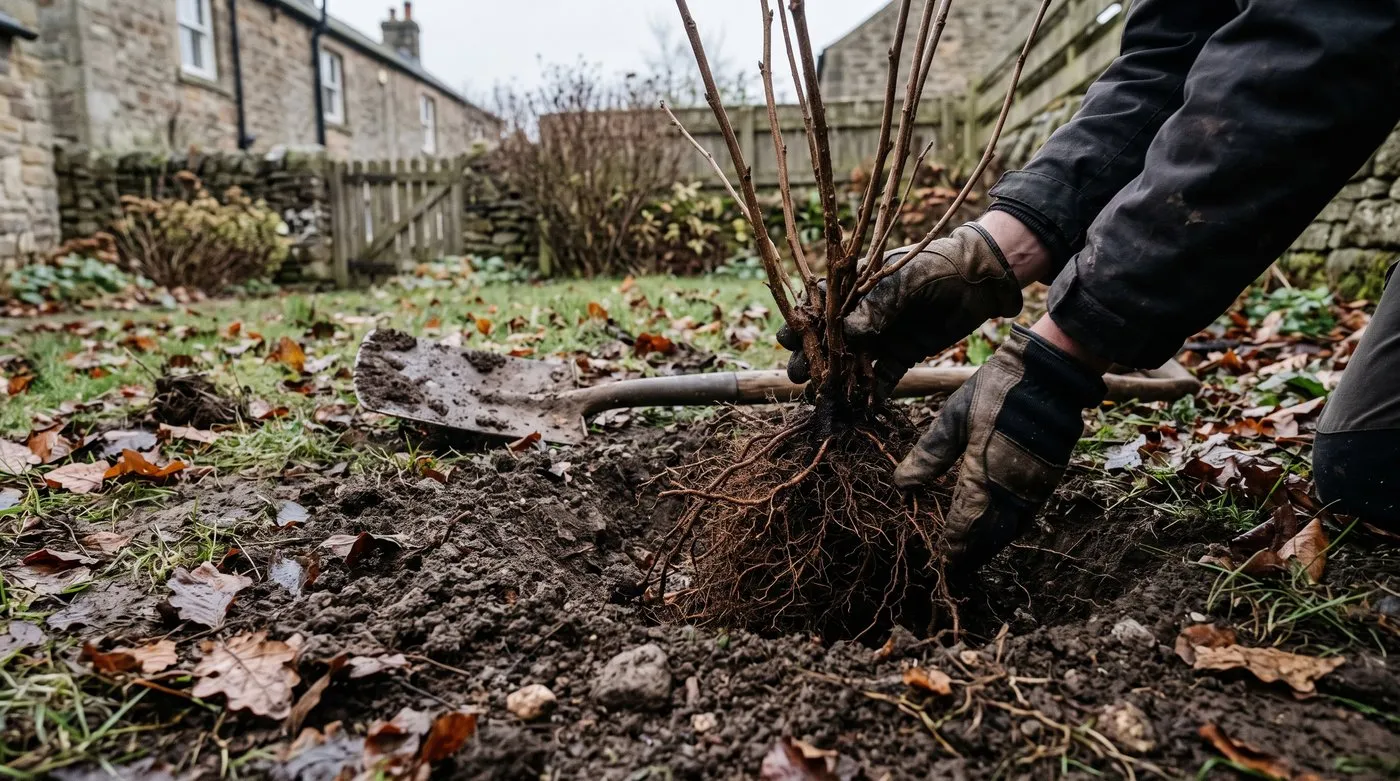
Blackcurrants go in about 5cm deeper than before. New shoots then spring up from below the soil.
Roses and hedging
Bare-root roses go in with the graft union, the knobbly bump where the stems meet the roots, at soil level. Soak the roots for an hour or two first.
Bare-root hedging such as hawthorn, blackthorn, field maple and hazel can be planted from now until March. Space whips 30-45cm apart in a trench. Native hedges are brilliant for birds and insects.
Warning: If the soil squelches underfoot, don’t plant. Heel bare-root plants into a spare patch of soil and wait for drier weather.
What can you harvest in November?
Several crops taste better after a frost, so November is a good month for winter veg.
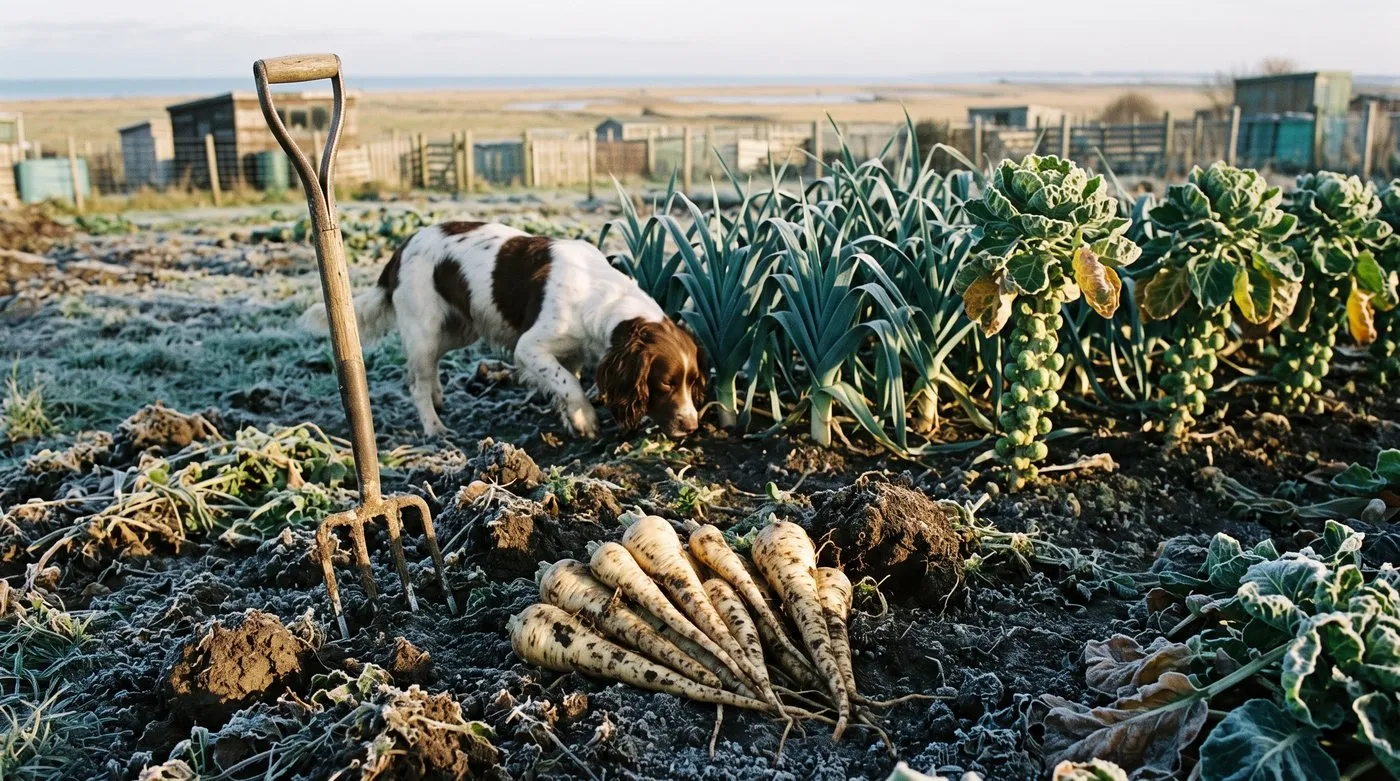
Parsnips are at their sweetest after the first frost. Lift them as you need them through the winter.
| Crop | How to harvest |
|---|---|
| Parsnips | Lift as needed. They’re sweetest after the first frost |
| Leeks | Lift as needed, starting at one end of the row |
| Brussels sprouts | Pick from the bottom of the stem upwards |
| Kale | Pick outer leaves and leave the growing tip |
| Winter cabbage | Cut when heads feel firm |
| Beetroot and carrots | Lift and store before the ground freezes hard |
| Winter salads | Pick corn salad and winter purslane little and often |
November planting at a glance
| When | Plant or sow | Also |
|---|---|---|
| Early November | Garlic, broad beans, wallflowers | Plant spring bedding in pots |
| Mid November | Tulips, rhubarb crowns, fruit bushes | Lift dahlias after frost |
| Late November | Bare-root fruit trees, roses, hedging | Heel in plants if the soil is wet |
| Into December | Last tulips and garlic | Keep planting bare roots on dry days |
Common November planting mistakes
Planting into waterlogged soil. Garlic, bare roots and bulbs rot in standing water. Wait for a drier spell, use raised beds or start cloves in pots.
Planting garlic too shallow. Frost and birds lift shallow cloves. Keep the tips about 2.5cm below the surface and push any lifted ones back in.
Burying the rose graft. The graft union belongs at soil level. Buried too deep, the stem can rot.
Forgetting to stake new trees. Wind rocks young trees and tears new roots. Fit a short stake when you plant.
Using supermarket garlic. It may carry virus or suit a warmer climate. Seed garlic from a garden supplier is far more reliable.
Frequently asked questions
Can you plant garlic in November in the UK?
Yes, November is one of the best months for garlic. Plant cloves pointed end up, tips about 2.5cm below the surface and 15cm apart. Garlic needs a cold spell to split into cloves, which winter provides. Lift the bulbs next summer.
Is November too late to plant tulip bulbs?
No, November is ideal for tulips. Cool soil helps prevent tulip fire, a fungal disease. Plant bulbs about 15cm deep, pointed end up, in well-drained soil or pots. You can carry on into early December.
Can I sow broad beans in November?
Yes, hardy varieties such as Aquadulce Claudia can be sown outdoors now. Sow them 5cm deep and 20cm apart in well-drained soil. On cold, wet ground, sow in deep pots in a cold frame instead and plant out in spring.
What fruit can I plant in November?
Bare-root apple, pear, plum and cherry trees, plus currants, gooseberries and raspberries. Plant while they are dormant and the soil is workable. Stake fruit trees at planting and water them in well.
When should I lift dahlia tubers?
Lift them once the first frost blackens the leaves. Cut the stems to about 10cm, ease the tubers out with a fork and let them dry upside down. Store them in trays of dry compost somewhere cool and frost-free.
Is it worth planting wallflowers in November?
Yes, if you plant them early in the month. Wallflowers planted now settle in and flower in spring. Firm them in well, as wind rock loosens them over winter.
Once November’s planting is done, carry on with what to plant in December, the peak month for bare-root roses, fruit and hedging. There’s more seasonal help in our growing section.
Our team produces practical UK gardening guidance from source research, contributor records and established horticultural practice. Editorial standards are overseen by Matt W.


