
Key takeaways
- Give roses at least four to six hours of direct sun a day
- Prune repeat-flowerers in late winter, but ramblers and once-flowerers just after they flower
- Too much nitrogen gives lots of leaves and few buds, so use a high-potash rose feed
- Cut blind shoots back by half to a strong bud and they often flower later
- Pull suckers off at the root, as they can take over a grafted rose
- Water deeply once a week in dry spells rather than a little every day
A rose that won’t flower is almost always telling you something simple. It is in too much shade, it was pruned at the wrong time, it is getting too much nitrogen, or it is thirsty, young or old. Work through the nine causes below and you will usually find the culprit in a few minutes.
Most roses bounce back within a season once the problem is fixed. For general care, see the guide on how to grow roses in the UK.
Quick check: which cause fits your rose?
Match what you see to the likely cause, then jump to that section.
| What you see | Likely cause | Quick fix |
|---|---|---|
| Lots of leaves, no buds, after a hard spring prune of a rambler | Wrong pruning time | Prune ramblers after flowering next year |
| Lush dark leaves, few buds, near a fed lawn | Too much nitrogen | Switch to a high-potash rose feed |
| Stems ending in leaves, no bud | Blind shoots | Cut back by half to a strong bud |
| Different-looking shoots from the base | Rootstock suckers | Pull off at the root |
| Tips and buds bitten off | Rabbits or deer | Fence or mesh the rose |
| Planted this year, few flowers | Still settling in | Water well and wait |
| Leggy stems leaning towards the light | Too much shade | Move it to a sunnier spot |
| Buds go brown and drop in summer | Drought | Deep weekly watering and mulch |
| Old woody stems, black tips | Old wood and dieback | Renewal pruning over 2-3 years |
1. Pruning at the wrong time
When you prune depends on the type of rose. Get it wrong and you can cut off a whole year of flowers.
Repeat-flowering roses, such as most hybrid teas, floribundas and English shrub roses, flower on this year’s new growth. Prune them in late February or March, just as the buds begin to swell.
Ramblers and once-flowering roses, including many old shrub roses, flower on stems made the year before. Prune these straight after flowering in summer. Cut them hard in winter or spring and you remove the very stems that would have flowered.
If you have already cut a rambler too hard, don’t worry. You have lost one summer’s flowers, not the rose. The guide on how to prune roses shows the cuts for each type.

Late winter is the time to prune repeat-flowering roses. Leave ramblers until just after they flower.
2. Too much nitrogen
Nitrogen makes leaves; potash helps flowers. A rose fed too much nitrogen grows into a big leafy bush with few buds.
Common sources are lawn feed scattered onto nearby borders, generous helpings of rich manure, and general-purpose feeds used too often. Mushroom compost is also alkaline, which roses don’t love, so keep it for other plants.
The fix is simple. Use a high-potash rose feed in spring and again in early summer, following the pack rates. Mulch with well-rotted manure or composted bark rather than fresh manure. Keep lawn feed off the border. Check the label: rose feeds list more potash (K) than nitrogen (N).
3. Blind shoots
A blind shoot is a healthy stem that ends in leaves instead of a flower bud. Cold spells and poor light in spring make them more common, so some years are worse than others.
Cut each blind shoot back by about half, to a strong, outward-facing bud. That bud often grows into a new shoot that does flower. Leave blind shoots alone and they just carry on making leaves.

A blind shoot ends in leaves rather than a bud. Cut it back by half and it often has another go.
4. Rootstock suckers taking over
Most roses sold in the UK are grafted: the named rose is joined onto a tougher wild rose root. Sometimes the root sends up shoots of its own, called suckers. Left alone, they can crowd out the named rose and flower poorly or not at all.
Suckers usually:
- grow from below the graft, often straight out of the soil
- have leaves that look different, often smaller, paler and with more leaflets
- have different thorns from the rest of the plant
Don’t cut a sucker off at ground level, as it just grows back. Scrape away the soil to find where it joins the root, then pull it off firmly. When you plant new roses, set the graft union at soil level.

Suckers come up from below the graft. Dig down and pull them off at the root rather than snipping them.
5. Rabbits, deer and muntjac
If buds and soft tips keep vanishing, something may be eating them. Rabbits nibble low shoots. Deer and muntjac take buds and tips higher up, often overnight.
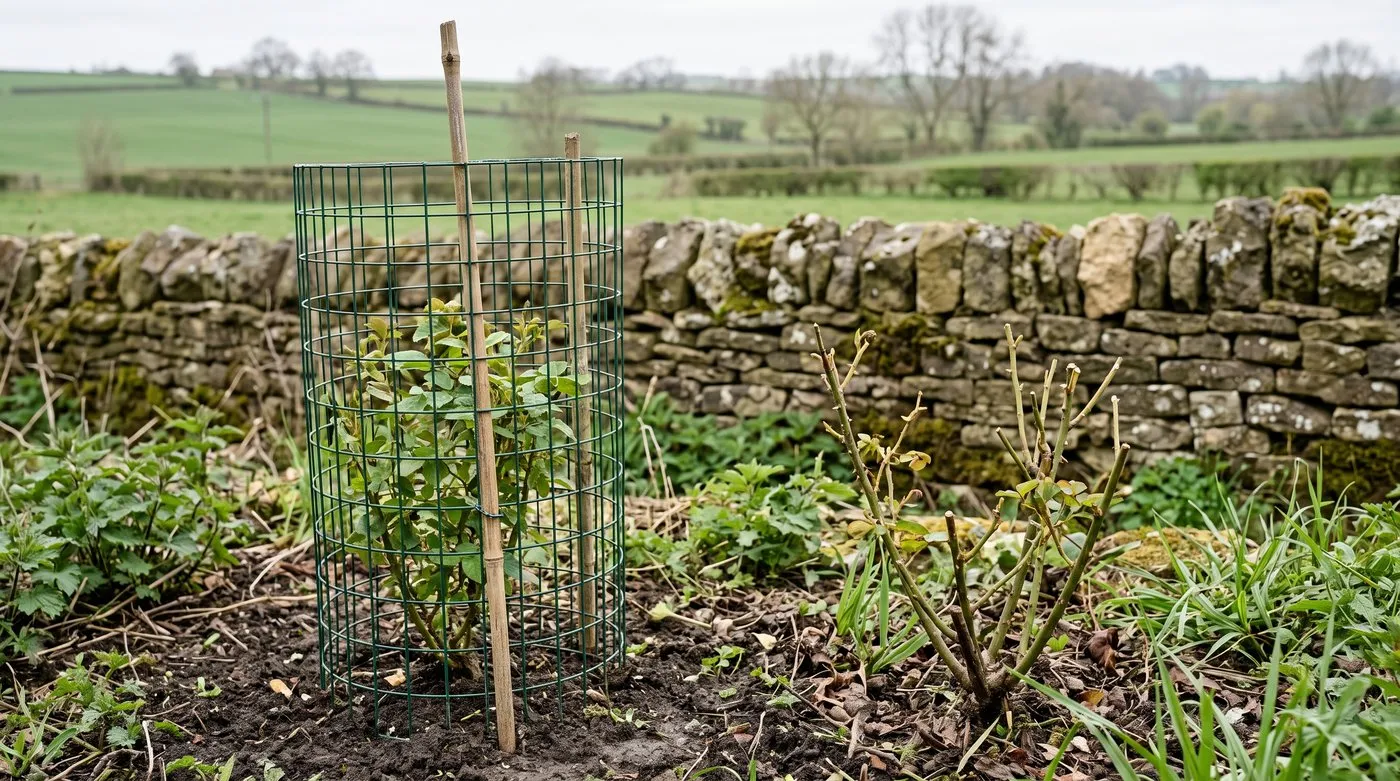
Bitten-off tips and missing buds point to rabbits or deer. A simple mesh guard keeps them off young roses.
Look for cleanly bitten ends with no sign of insects or disease. The fix is a physical barrier: a wire-mesh guard round young roses, or proper fencing where deer visit often. The guide to keeping deer out of the garden covers fence heights.
6. The rose is still too young
A bare-root rose planted between November and March spends its first season building roots. It usually flowers in its first summer, but lightly. Container roses planted in summer can be slow too, as they settle in.
Be patient. Water new roses well through their first summer, feed in spring and keep weeds away from the base. Most put on a proper show by their second year. The guide on when to plant roses covers the best planting times.
7. Too much shade
Roses are sun lovers. Most need at least four to six hours of direct sun a day. In deeper shade they grow tall and leggy, lean towards the light and make few buds.
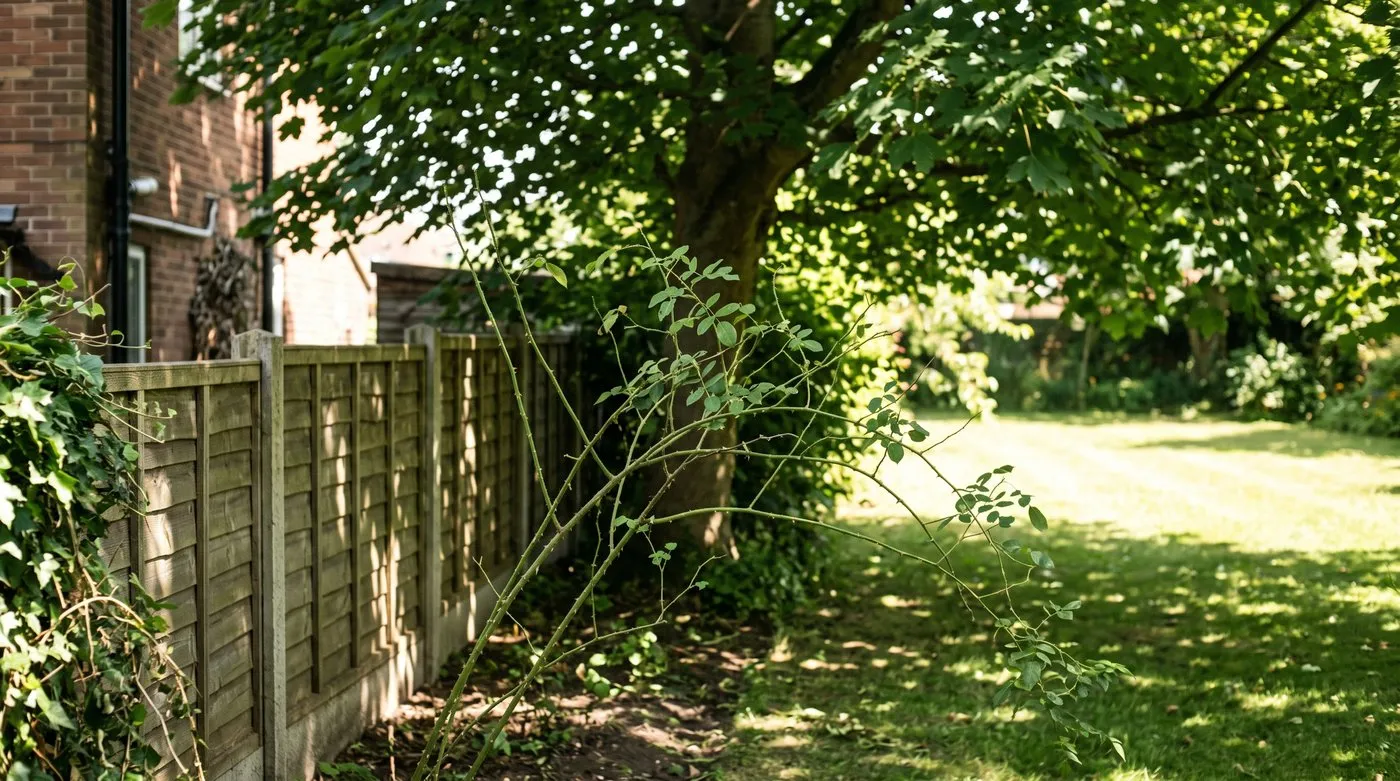
A rose stretching out of the shade like this is asking for more sun. Move it to a brighter spot in winter.
A few roses cope better with some shade. Hybrid musks such as Penelope and Buff Beauty, and the climber Madame Alfred Carrière, are good choices for a less sunny spot.
If your rose is in heavy shade, move it in late autumn or winter while it is dormant. Dig up as much root as you can and replant it at the same depth. Thinning overhanging branches can also let in more light.
8. Drought stress
Roses are fairly tough once settled, but long dry spells make buds brown and drop before they open. Roses in pots, against walls and on sandy soil suffer first.
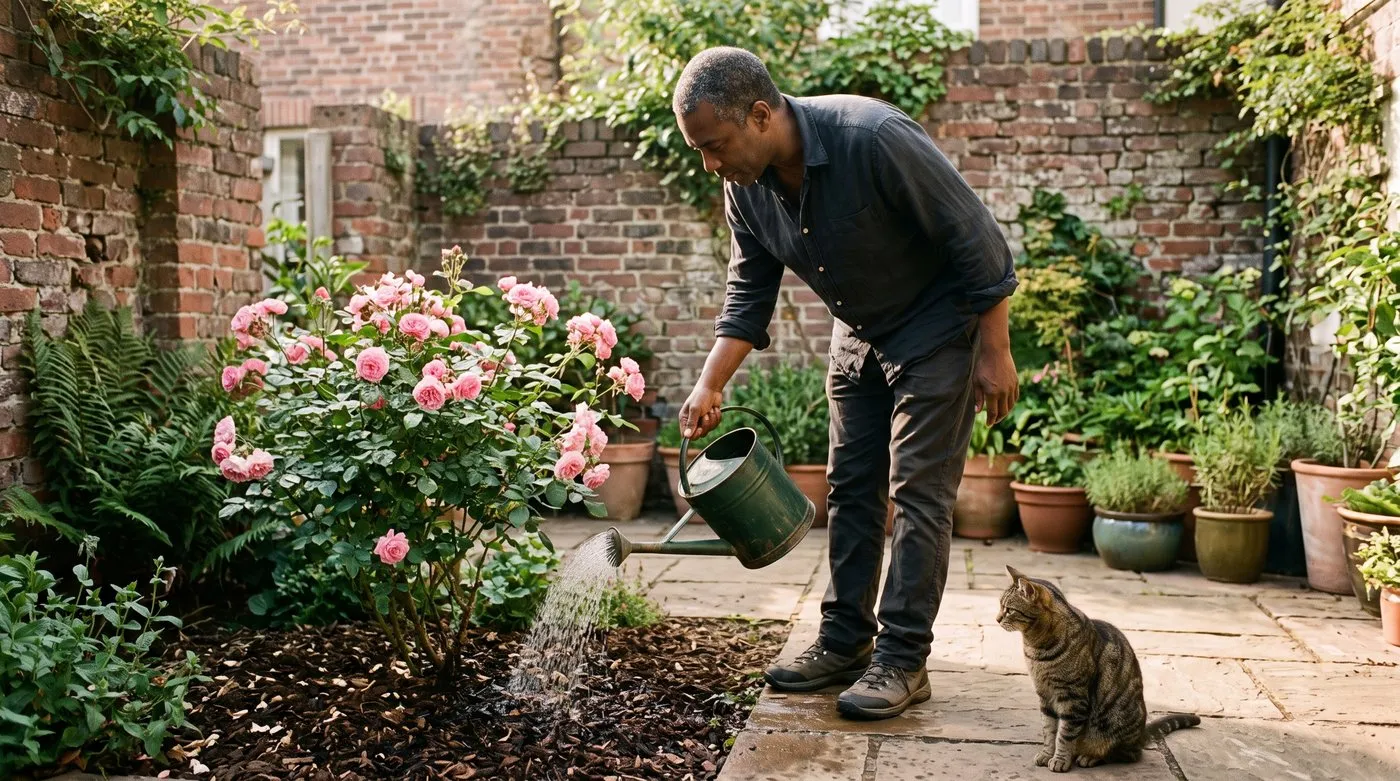
One slow, deep soak a week at the base does more good than a daily sprinkle over the leaves.
Water deeply once a week in dry weather rather than a sprinkle every day. A full watering can per plant, poured slowly at the base, reaches the roots. Avoid wetting the leaves, as damp foliage encourages black spot. A thick mulch of compost or bark in spring holds moisture in. The guide to watering your garden properly has more tips.
9. Old wood and dieback
On roses that have been in for many years, old woody stems flower less and less. Dieback, where stems blacken from the tip downwards, makes things worse.
Renew the plant gradually over two or three years:
- In late winter, cut out one or two of the oldest stems at the base, and cut any dieback back to healthy green wood.
- The next year, take out another one or two old stems. New shoots should be growing from the base by now.
- In year three, remove any remaining old wood and shape the new growth.
There is no need to paint cuts with a sealant. Clean, sloping cuts heal well on their own. Black spot can weaken stems too, so see the guide to black spot on roses if leaves are spotty.

Taking out a few of the oldest stems each year encourages fresh shoots that flower well.
What about buds that form but don’t open?
If your rose makes buds that turn brown and stay shut, it is probably balling. Rain soaks the outer petals, which stick together and rot. It is common on roses with lots of petals in wet summers. The guide to flower balling in roses and peonies explains what to do.
Month-by-month rose flowering calendar
| Month | What to do |
|---|---|
| January | Check whether any rose sits in heavy shade. Plan moves |
| February | Prune repeat-flowering roses late in the month. Cut out dieback |
| March | Finish pruning. Feed with a high-potash rose feed. Mulch around the base |
| April | Watch for blind shoots and suckers. Guard roses from rabbits |
| May | Cut blind shoots back by half to a strong bud |
| June | Give a second rose feed. Water deeply in dry spells |
| July | Prune ramblers after flowering. Deadhead repeat-flowerers |
| August | Keep deadheading and watering in dry weather |
| September | Stop feeding so new growth can harden before winter |
| October | Shorten very long stems to stop wind rock |
| November | Plant bare-root roses with the graft at soil level. Move roses that need more sun |
| December | Mulch around the base once the soil is moist |
Common mistakes with roses that won’t flower
- Pruning every rose the same way. Repeat-flowerers like a late-winter prune. Ramblers want pruning after flowering.
- Using general or lawn feed. These are often high in nitrogen. A rose feed has the extra potash flowers need.
- Snipping suckers at ground level. They grow back thicker. Pull them off at the root.
- Watering little and often. Light sprinkles only wet the surface. Water deeply once a week instead.
- Forgetting to deadhead. Repeat-flowering roses produce more flowers if you remove faded blooms.
Frequently asked questions
Why is my rose growing leaves but no flowers?
Usually too much nitrogen, too much shade or the wrong pruning. Lawn feed, rich manure and general feeds push leaves at the expense of flowers. Switch to a high-potash rose feed, check the rose gets at least four hours of direct sun, and check when you last pruned it.
When should I prune roses in the UK to make them flower?
Prune repeat-flowering roses in late February or March. Ramblers and roses that flower only once a year bloom on the previous year’s stems, so prune those straight after flowering in summer. Pruning them in winter or spring cuts off the stems that would have flowered.
How do I tell a rose sucker from a normal shoot?
A sucker grows from below the graft, often straight out of the soil. Its leaves usually look different from the rest of the rose, often smaller, paler and with more leaflets. Scrape away the soil and pull it off where it joins the root, rather than cutting it at ground level.
How much sun does a rose actually need?
At least four to six hours of direct sun a day for most roses. In heavier shade most roses make leaves but few flowers. A few, such as the hybrid musk Penelope and the climber Madame Alfred Carrière, cope better with some shade.
Will my new bare-root rose flower in its first year?
Usually yes, though lightly. A bare-root rose planted between November and March spends its first season building roots, so expect fewer flowers at first. Water it well through its first summer and it should flower properly from its second year.
Why do my rose buds form but never open?
That is usually balling, where rain-soaked outer petals stick together and rot. It is common on roses with lots of petals in wet summers. Pick off balled buds, and grow roses with fewer petals in damp, shady spots.
Now you know why your rose isn’t flowering, the year-round pruning calendar will help you prune every rose at the right time. For more fixes, browse the garden problems section.
Our team produces practical UK gardening guidance from source research, contributor records and established horticultural practice. Editorial standards are overseen by Matt W.


