Key takeaways
- Balled buds reach full size, then the outer petals fuse into a brown papery shell
- Rain followed by quick drying sun is the usual trigger, often in June
- Very double roses with thin petals and big double peonies suffer most
- Single and semi-double roses rarely ball
- There is no spray for it, so choose tolerant varieties and an open, airy spot
- Snip off balled buds quickly so grey mould doesn't move in
Flower balling is when a rose or peony bud fattens up, turns brown and soft, and never opens. It isn’t a pest or a disease. It’s the weather: rain soaks the outer petals, then sun dries them into a stuck-together shell that traps the flower inside.
It’s frustrating, because the plant looks healthy and the buds looked so promising. The good news is that balling doesn’t harm the plant, and a few changes to variety and position stop it happening year after year. This guide shows you how to recognise it, how to tell it apart from look-alike problems, and what to do next. If your rose isn’t making buds at all, that’s a different problem: see why a rose won’t flower instead.
What does a balled rose or peony bud look like?
A balled bud reaches full size, then stops at the last step. The outer petals fuse into a brown, papery shell, and the flower stays sealed inside.
Run your fingers over it. It feels soft or slightly slimy at first, then dries to a crisp brown casing. Gently prise the outer layer apart and the inner petals often look pink and fresh, just squashed and damp. That fresh-looking centre is the giveaway. A bud rotted by disease is brown right through.
Balling usually hits the first big flush of flowers in June and early July. That’s when buds are fattest and the weather swings between showers and sunshine. A later flush in a settled August often opens perfectly on the same bush.

Same bush, same weather. The bud on the left balled while its neighbour opened, which shows how hit-and-miss balling can be.
Why rain and then sun seal the bud shut
Balling needs two things in a row: rain soaking the outer petals, then sun drying them fast before the bud can open. Either one alone does little harm.
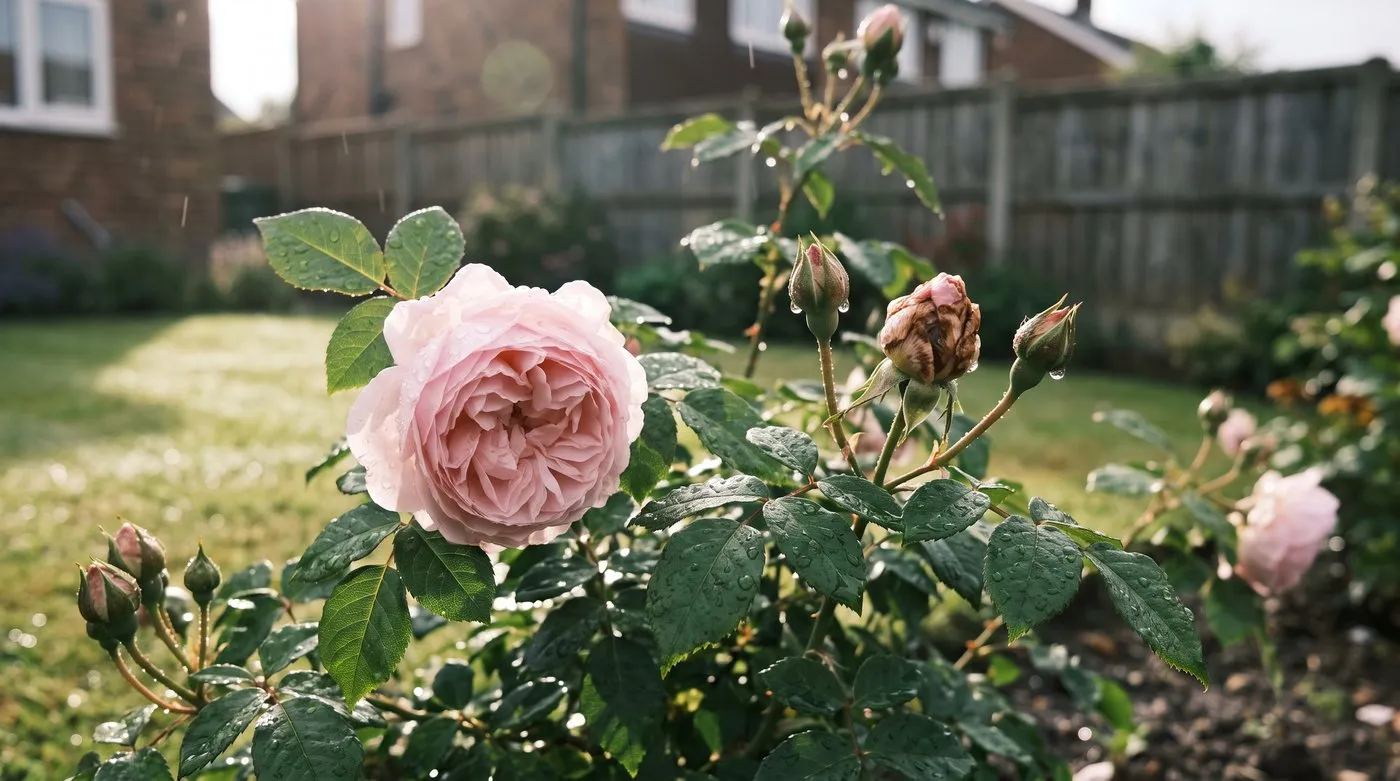
Rain then quick sunshine is the classic balling weather. Buds that stay wet longest are most at risk.
Wet petals act like damp tissue paper. They swell and cling together, then stick at the edges as they dry. The more thin petals a flower has, the more surfaces there are to glue together. That’s why a fully double rose with dozens of petals suffers, while a five-petalled single opens happily beside it.
Position plays a part too. A bud in shade or still air stays wet for hours, so the shell has time to set. A bud in morning sun with a breeze dries quickly and often escapes.
Is it balling, grey mould, thrips or bud blast?
Several problems brown a bud and stop it opening, and each needs a different response. The quickest way to tell them apart is the feel and the timing.
| Problem | What you see | Key clue |
|---|---|---|
| Flower balling | Brown papery shell, bud sealed shut | Bud reached full size; inner petals look fresh |
| Grey mould (botrytis) | Fuzzy grey coating, soft rot | Furry and grey, can spread down the stem |
| Thrips | Silvery flecks and brown edges on petals | Tiny thin insects inside the bud |
| Bud blast | Bud dries and browns while still small | Never swells fully; often drought or frost |
Balling and grey mould often turn up together. The bud balls first, then the mould moves into the damp, trapped petals. Thrips are more of a problem in hot, dry weather, the opposite of balling weather. For other rose and border problems, the garden plant diseases guide helps with identification.

Balling on the left is dry and papery. Grey mould on the right is furry and grey. The mould often follows the balling.
Which roses ball and which resist it?
Very double roses with many thin petals ball worst. Single and semi-double roses, with fewer and firmer petals, usually open in any weather. If balling spoils your roses every summer, variety choice will help more than anything else.
| Rose type | Petals | Balling risk |
|---|---|---|
| Single, such as ‘Ballerina’ | About 5 | Very low |
| Semi-double | Roughly 8 to 20 | Low |
| Open cluster-flowered floribundas | Varies | Moderate |
| Very double shrub and old roses | Dozens | High |
‘Souvenir de la Malmaison’, a very double old Bourbon rose, is the textbook example of a rose that balls in wet weather. Many fully double shrub and old roses behave the same way, especially in wetter, western parts of the UK.
Gardener’s tip: Love the full, many-petalled look? Give those roses your sunniest, most open spot, and grow singles and semi-doubles in the shadier or more sheltered corners.

Flowers with fewer petals open flatter, shed rain and dry quickly, so they shrug off a wet week far better than tight doubles.
Why peony buds ball and turn brown
Peonies ball for the same reason as roses. The big double peonies are the usual victims, especially in a wet late May or June when the heavy buds are nearly open. Rain sits in the bud, the outer petals stick, and the head browns and droops. Single and Japanese-form peonies, with their open centres, rarely ball.
Three things make it worse:
- Floppy stems. Heavy double heads bend down into wet foliage and stay soaked. Put ring or grid supports in place in spring, before the buds fatten. The guide to staking tall perennials shows how.
- Shade. Peonies want full sun or very light shade so the buds dry out fast.
- Planting too deep. The pink buds on the crown (the “eyes”) should sit no more than about 5cm below the soil. Deeper than that and peonies flower poorly.
Brown, rotting peony buds with a grey fuzz and blackened stems may be peony wilt, a form of grey mould, rather than plain balling. Cut out affected stems to healthy growth and bin them.

Double peony buds that balled after a wet spell. Heavy heads that flop into damp leaves stay wet and seal shut before they can open.
How to stop flower balling
There’s no spray for balling, because it’s caused by the weather rather than a disease. The fix is variety, position and airflow, with quick removal of any buds that do ball.
- Choose tolerant varieties. Singles and semi-doubles rarely ball. If you garden somewhere wet, weight your planting towards them.
- Plant in an open, sunny spot. Morning sun and moving air dry buds before the shell sets. Avoid damp, sheltered corners for very double roses.
- Give plants room. Space roses by their expected spread so air can move between them, and cut back anything overhanging that shades them.
- Prune for an open centre. An open-centred bush dries faster after rain. The guide on how to prune roses shows the shape to aim for.
- Water the soil, not the flowers. Aim the can at the base, ideally in the morning.
- Snip off balled buds promptly. Cut back to a leaf below the bud and put it in the bin, not the compost heap, so grey mould can’t spread.
If a bud has only just started to stick, you can try gently peeling back the outer petals to free it. It doesn’t always work, but it costs nothing.

Snip off balled buds before grey mould takes hold. The bush then puts its energy into the next flush.
Where to plant roses that ball easily
Where you plant a ball-prone rose matters almost as much as which one you choose. An open, sunny, airy spot dries buds before the petals can stick. A rose squeezed into a shady corner or a crowded border stays damp for longer after every shower.
Keep borders from getting too packed around your roses, and lift low branches of nearby shrubs if they keep the air still. If a favourite rose balls every wet year where it is, move it to a sunnier spot in late autumn or winter while it’s dormant. The guide on moving a shrub safely covers the method.

An open border with air moving between the bushes. Buds here dry quickly after rain, which is the best defence against balling.
Flower balling through the year
Balling follows the weather and the flowering flush, so there’s a simple yearly rhythm to staying ahead of it.
| Month | What to do |
|---|---|
| February to March | Prune roses for an open centre |
| April to May | Put supports round peonies before the buds fatten |
| June | Peak risk. Check buds after wet-then-sunny spells |
| July | Snip off balled buds. Keep deadheading spent flowers |
| August to September | Lower risk in settled weather. Remove any late balled buds |
| October | Note which roses and peonies balled this year |
| November to March | Move the worst offenders or plant tolerant varieties |
That autumn note is the most useful job on the list. A variety that balls one wet summer will usually ball the next, so move it or swap it.
Common flower balling mistakes
Reaching for a fungicide. Balling is a weather problem. No spray stops it, so put the effort into variety and position.
Keeping a very double rose in shade. It will ball every wet year. Move it into sun and open air.
Leaving balled buds on the plant. Sealed, damp buds are a perfect home for grey mould. Snip them off and bin them.
Letting peonies flop. Heavy heads lying in wet foliage stay soaked. Get supports in early.
Watering over the flowers in the evening. Wet petals overnight help both balling and grey mould. Water the soil in the morning instead.
Frequently asked questions
What causes flower balling on roses and peonies?
Rain soaks the outer petals, then sun dries them into a sealed shell. The bud can’t push through the stuck petals, so it rots inside. Damp weather followed by bright spells is the classic trigger.
Is flower balling the same as grey mould?
No. Balling is caused by weather, grey mould is a fungus. A balled bud is dry and papery on the outside. Grey mould (Botrytis) shows as a fuzzy grey coat, and it often moves into balled buds afterwards.
Which roses are most prone to balling?
Very double roses with lots of thin, delicate petals ball worst. Many old roses and fully double shrub roses are prone, with ‘Souvenir de la Malmaison’ a famous example. Single and semi-double roses shed rain and rarely ball.
Why do my peony buds go brown and never open?
Usually balling after wet weather, though grey mould and dry spells can cause it too. Double peonies are most prone. Check the crown isn’t planted more than 5cm deep, support the stems and give the plant full sun.
Can you save a balled bud?
Rarely, so it is usually best to remove it. You can try gently peeling back the stuck outer petals, but most balled buds still fail. Snip them off and bin them before grey mould takes hold.
Does balling kill the rose or peony plant?
No, balling only spoils individual buds. The plant stays healthy and flowers again, often cleanly in a later, drier spell. The bigger risk is grey mould spreading from rotting buds onto nearby stems.
Now you know why your buds balled, read our guide on how to grow peonies to plant them for clean, open blooms next summer, or browse more plant problem guides.
Our team produces practical UK gardening guidance from source research, contributor records and established horticultural practice. Editorial standards are overseen by Matt W.