Key takeaways
- Plant bare-root peonies from October to March with the eyes no more than 2.5cm below the soil
- Planting too deep is the most common reason peonies don't flower
- Once settled, peonies can flower for decades and get better with age
- Tree peonies keep a woody frame all year and have the biggest flowers
- Give them sun or light shade, and plant them where they can stay, as they hate being moved
- Put support hoops over herbaceous peonies in early spring before the stems reach 30cm
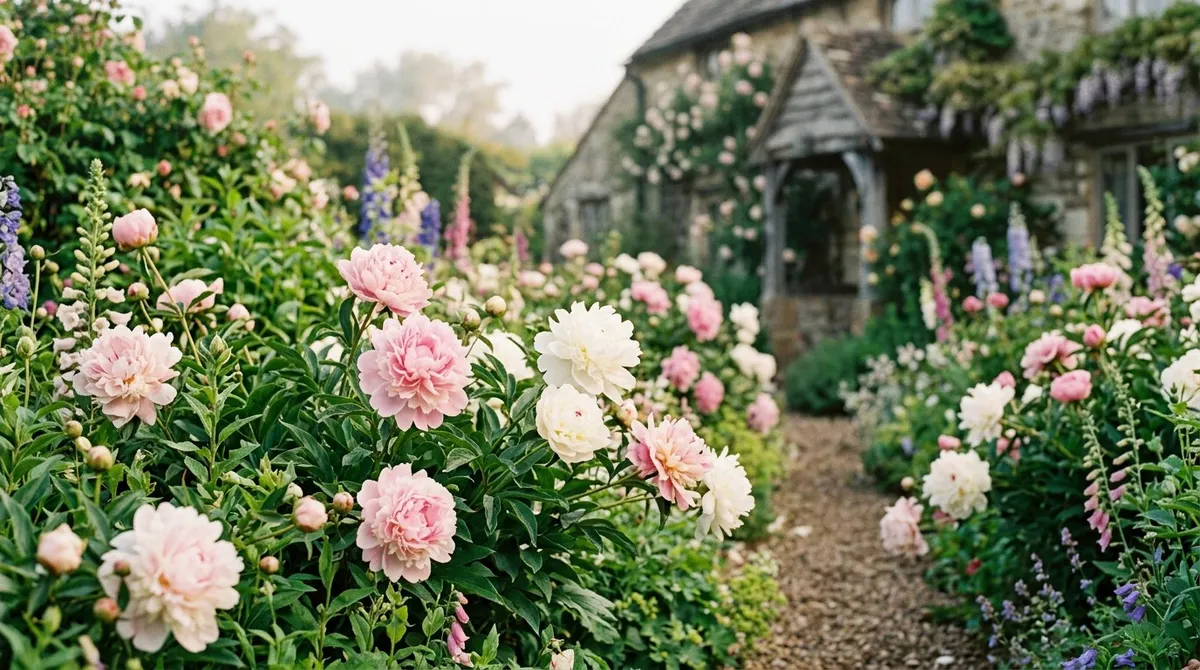
Peonies are some of the most showstopping plants you can grow in a British garden. In late spring and early summer they open huge, often scented flowers, from pure white through every pink to deep crimson. A peony in full bloom really does stop you in your tracks. Better still, they get better with age and can outlive the gardener who plants them.
The secret is getting the planting right. Depth matters most of all. Plant too deep and you’ll get lots of leaves but no flowers, sometimes for years. Here’s how to plant them, look after them, and choose between the different types. Peonies are perfect in a cottage garden planting plan with roses, foxgloves and hardy geraniums.
What types of peony can I grow in the UK?
There are three main types for British gardens. Each has its own look and flowering time.
Herbaceous peonies (Paeonia lactiflora)
Herbaceous peonies are the most popular kind. They die right back to the ground each winter and send up fresh shoots in spring. They grow 70-100cm tall and flower from late May to June. The flowers can be single, semi-double or fully double, and a settled clump gives you armfuls. Try ‘Sarah Bernhardt’ (double pink), ‘Bowl of Beauty’ (pink and cream), ‘Duchesse de Nemours’ (scented double white) or ‘Karl Rosenfield’ (deep crimson double).
Tree peonies (Paeonia suffruticosa)
Tree peonies keep a woody frame all year and slowly grow to 1.5-2 metres. Their flowers are enormous and open in April to May, a few weeks before herbaceous types. They take longer to settle but eventually make beautiful shrubs. ‘Shima Nishiki’ (red and white stripes), ‘Hana Kisoi’ (semi-double pink) and ‘Joseph Rock’ (white with dark blotches) are lovely choices.
Itoh peonies
Itoh peonies are a cross between herbaceous and tree peonies. They have the big flowers and colours of tree peonies but die back in winter like herbaceous ones. They grow to 70-90cm and are very sturdy, so they rarely need staking. ‘Bartzella’ (double yellow), ‘Cora Louise’ (white with purple flares) and ‘Julia Rose’ (apricot fading to pink) are popular. They flower from late May to June.
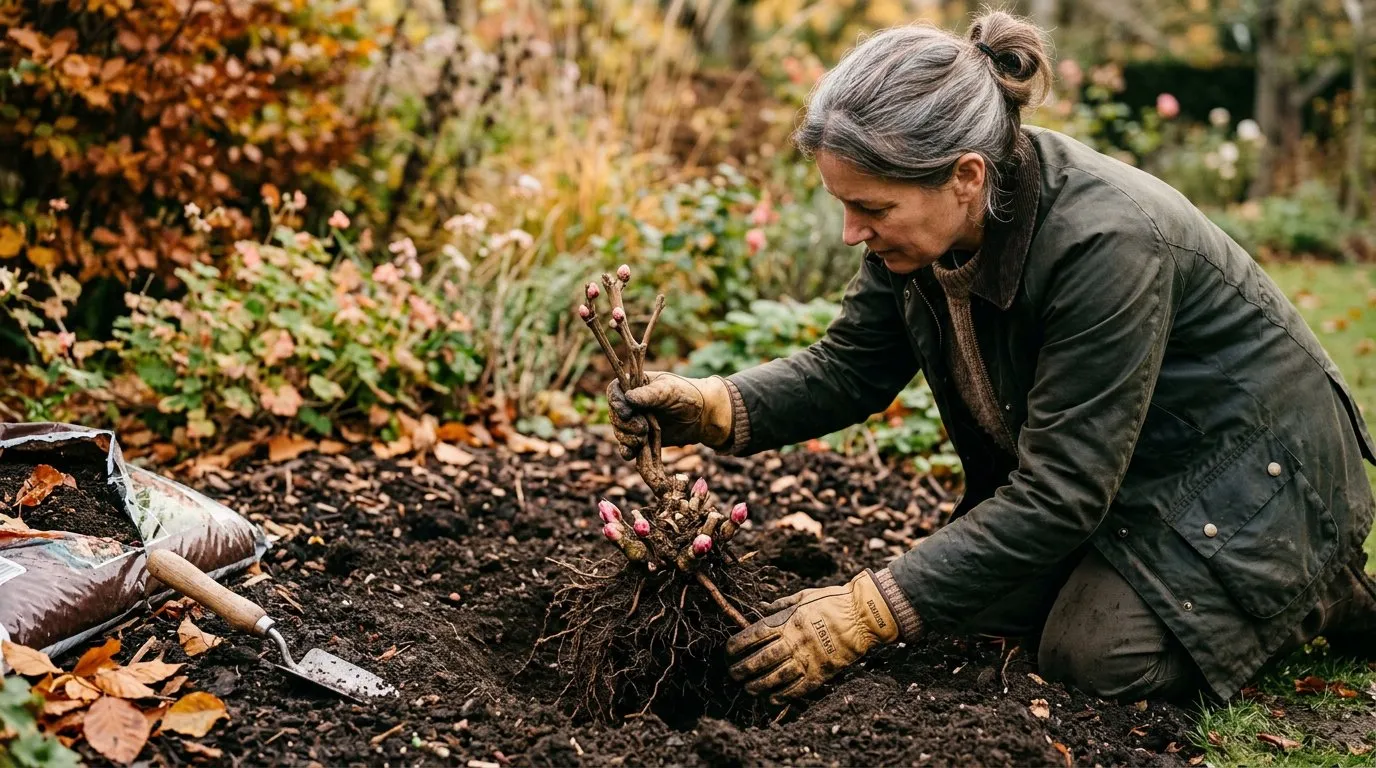
Plant bare-root peonies with the eyes no more than 2.5cm below the soil. Any deeper and they may not flower.
How do I plant peonies correctly?
Depth is everything. The eyes (pink or red buds) on a bare-root herbaceous peony should sit no more than 2.5cm below the soil. Get this right and you’ve dodged the most common peony mistake. Tree peonies are different and usually go in deeper, so follow the planting advice on the label. The RHS peony growing guide is handy for more on varieties and care.
Getting the hole ready
Dig a hole 45cm wide and 30cm deep. Mix the soil you dig out with a bucket of well-rotted garden compost or composted bark. On heavy clay, add plenty of grit too, as peonies hate sitting wet. Our guide on how to improve clay soil has more tips.
Planting bare-root peonies
Set the root in the hole so the eyes will sit 2.5cm below the soil once you’ve filled in. Spread the roots out, fill in with your improved soil and firm gently. Water well. Spread a 5cm layer of mulch around the plant, keeping it off the crown.
Planting potted peonies
Plant potted peonies at the same depth they were in the pot, with the top of the rootball level with the soil. Don’t bury it deeper. Water well afterwards.
Where should I plant peonies?
Peonies like full sun or light, dappled shade. Morning sun and afternoon shade is perfect, as it stops the flowers fading in hot spells. In deep shade you’ll get leaves but few flowers. Our guide to plants for shade has better choices for darker spots.
Space herbaceous peonies 90cm apart and tree peonies 1.2 metres apart. Air moving between them helps keep grey mould away. Avoid planting near big trees, whose roots steal water and food.
Choose the spot carefully. Peonies hate being moved once settled and can sulk for years afterwards. Plant them where you’d like them to stay for good.
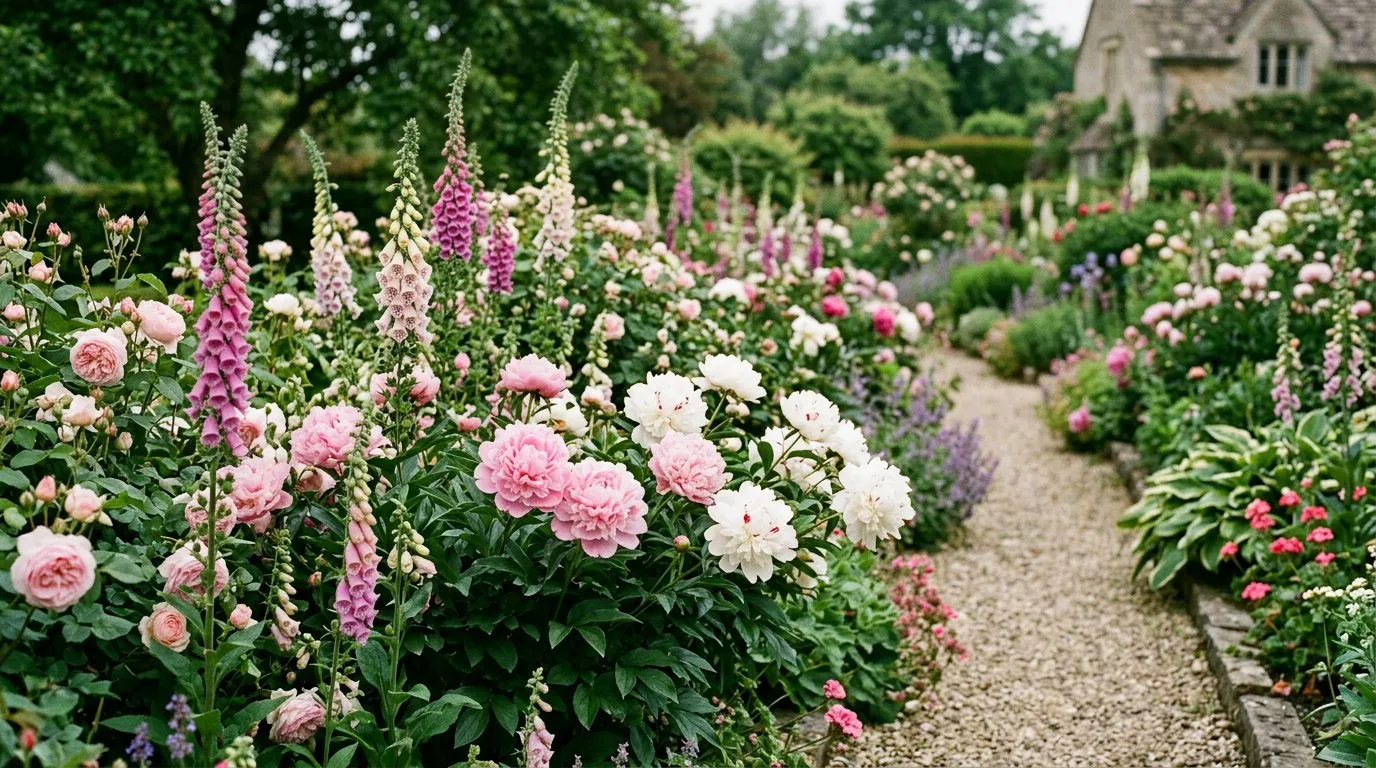
Peonies look wonderful with roses, foxgloves and alliums in a mixed border.
How do I care for peonies through the year?
Spring (March to May)
Put grow-through support hoops over herbaceous peonies in March, before the stems reach 30cm. Trying to prop up floppy stems later is fiddly and can damage them. Scatter a balanced fertiliser, such as blood, fish and bone, around the base. Water in dry spells, especially for the first two years.
Summer (June to August)
Deadhead faded flowers by cutting back to a strong leaf. Enjoy the dark green leaves, which look good in the border long after flowering. Water in long dry spells, and mulch to keep the roots cool and moist.
Autumn (September to November)
Once the leaves have turned brown and died back, usually in October or November, cut herbaceous peony stems to the ground. Clearing the old leaves helps stop disease. Autumn is also the best time to divide crowded clumps and plant new bare-root peonies. Spread a fresh 5cm mulch of compost, keeping it off the crown.
Winter (December to February)
Peonies need a cold winter to flower well. UK winters give them that naturally, which is why they do so well here. Leave tree peonies unpruned, apart from cutting out any dead or damaged wood.
What are the best peonies for cutting?
Peonies make wonderful cut flowers and last about a week in a vase. Cut them when the buds feel soft, like a marshmallow, and are just starting to open. Cutting early in the morning helps them last longer.
Good for cutting: ‘Sarah Bernhardt’ (double pink, the classic florist’s peony), ‘Duchesse de Nemours’ (double white, beautifully scented), ‘Karl Rosenfield’ (deep crimson double), ‘Coral Charm’ (semi-double coral fading to peach) and ‘Festiva Maxima’ (double white with crimson flecks).
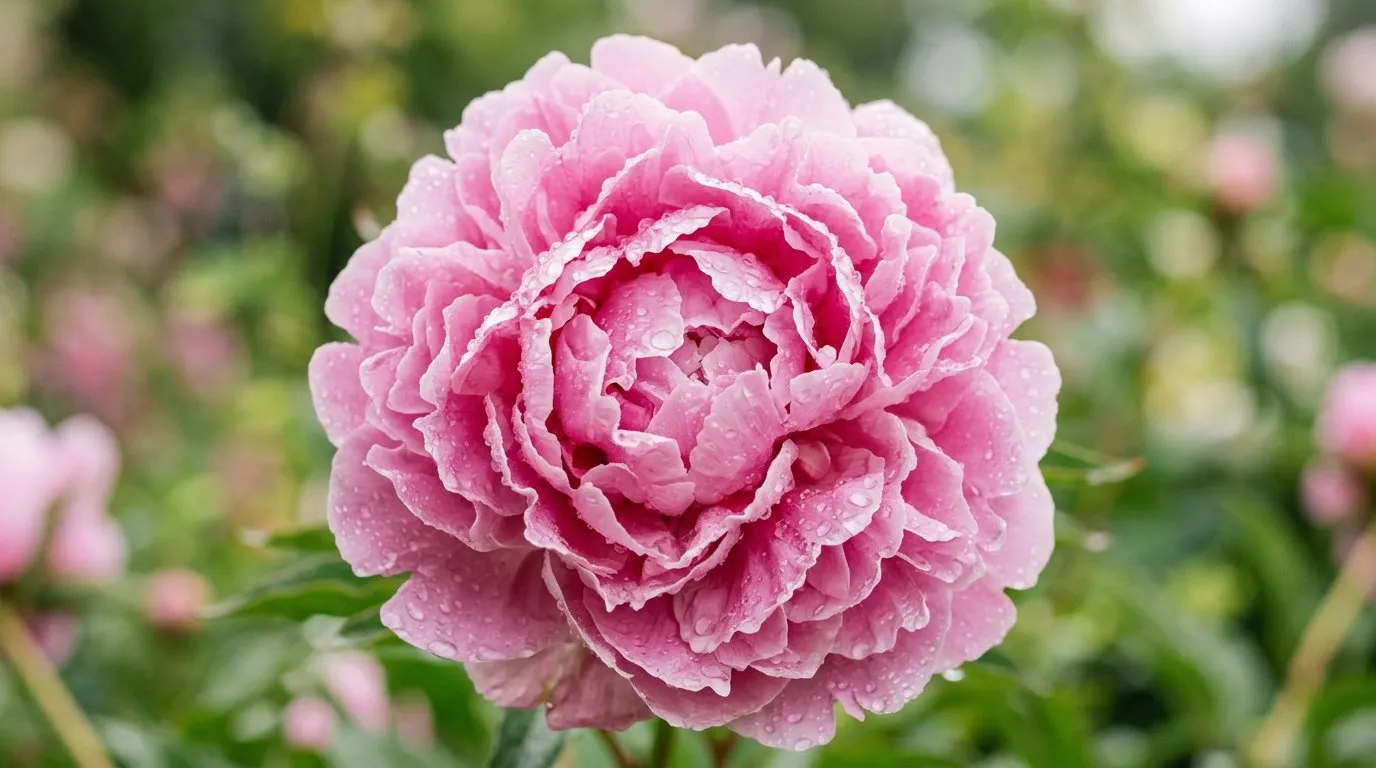
‘Sarah Bernhardt’ is the most popular peony for cutting, with big double pink flowers that last about a week in a vase.
Common peony problems in the UK
Peony wilt
The most serious peony disease. Stems wilt, collapse and turn brown at the base, with grey mould in wet weather. Cut affected stems to the ground straight away and bin them, don’t compost them. Give plants more space so air can move.
Ants on peony buds
Ants on peony buds are just after the sweet sap the buds give off. They do no harm, so leave them be. When cutting flowers for a vase, give the stem a gentle tap to shake them off before you bring them in.
Leaf blotch
Purplish-red spots on the leaves in summer are usually peony leaf blotch. It’s mostly cosmetic and doesn’t affect flowering. Clear and bin the affected leaves in autumn to cut down on it next year.
Growing peonies with companion plants
Peonies look great with other classic border plants. Try them with roses, foxgloves, hardy geraniums and tall alliums. Their fresh spring leaves hide the dying foliage of earlier bulbs. Later flowers like Japanese anemones, asters and sedums keep the border going long after the peonies have finished.
Underplant them with low growers like alchemilla, ajuga or hardy geraniums, which fill the space around the base without blocking the light.
Now you’ve got peonies sorted, read our guide on growing roses in the UK, another long-lived favourite that looks lovely beside them.
Frequently asked questions
Why is my peony not flowering?
It’s most likely planted too deep. The pink buds, or eyes, of a herbaceous peony should sit no more than about 2.5cm below the soil. If yours is too deep, lift it carefully in autumn and replant it higher. Other causes are heavy shade, a recent move, or a plant that’s still young.
When should I plant peonies in the UK?
Plant bare-root peonies from October to March, ideally in autumn. That lets the roots settle in over winter before growth starts. Potted peonies can go in at almost any time, but they settle best in autumn too. Choose a sunny spot that drains well, and avoid soggy or frozen soil.
Can I grow peonies in pots?
Yes, if the pot is big, at least 45cm across and 40cm deep. Use John Innes No. 3 with some grit mixed in. Peonies need winter cold to flower, so leave the pot outside all year. Water regularly in spring and summer and give a balanced feed in spring.
How long do peonies take to establish?
Usually two to three years. They may flower little or not at all at first. By the third year you should see several strong stems, and it just gets better from there. Don’t move them in the meantime. Once settled, they flower for decades with little fuss.
Should I deadhead peonies?
Yes, once the flowers fade. It keeps the plant tidy and stops it wasting energy on seed. Cut each faded flower back to a strong leaf. Leave the leaves on until they die back in autumn, as they feed the roots for next year’s flowers.
What is peony wilt?
It’s a fungal disease, a kind of grey mould. Stems collapse and turn brown at the base, often with fuzzy grey mould in wet weather. Buds may blacken and fail to open. Cut affected stems to the ground and put them in the bin, not the compost heap. Give plants space and water the soil, not the leaves.
Can I divide peonies?
Yes, you can divide herbaceous peonies in early autumn. Dig up the clump with a fork and wash off the soil. Cut it into pieces, each with three to five eyes and healthy roots. Replant straight away at the right depth. They may take a couple of years to flower again. Don’t divide tree peonies.
Our team produces practical UK gardening guidance from source research, contributor records and established horticultural practice. Editorial standards are overseen by Matt W.