
Key takeaways
- Astrantia loves partial shade and moist soil, so it's great for north-facing borders
- Deadhead every two or three weeks to keep flowers coming from June into September
- It makes a lovely, long-lasting cut flower
- 'Hadspen Blood' has the darkest red flowers and 'Shaggy' the biggest, starriest ones
- It self-seeds if you don't deadhead, and the seedlings may not match the parent
- Divide clumps every four or five years in spring to keep them lively
Astrantia, also called masterwort, is one of the loveliest plants for a shady UK border. Its pin-cushion flowers appear from June to September in spots where many flowers won’t bother. It likes moist, rich soil and part shade, and asks for little more than regular deadheading and the odd split.
Here you’ll find the best varieties, how to plant and care for them, and why they’re so good in a vase. For more shade-loving ideas, see our guide to the best plants for shade.
‘Hadspen Blood’ has the deepest red flowers of any astrantia, and glows in shade or dappled light.
What is astrantia and where does it grow?
Astrantia major is a clump-forming perennial from European mountain meadows and woodland edges. It’s been grown in British gardens for centuries. Each “flower” is really a cluster of tiny flowers surrounded by a ruff of papery petal-like bracts, and it’s the bracts that give the colour.
Plants grow 60-90cm tall and about 45-60cm wide. The hand-shaped leaves look good from spring until the autumn frosts. Flowers start in June and keep going until September if you deadhead.
In the wild it grows in damp meadows and at woodland edges, which tells you what it likes in a garden: part shade and soil that stays moist through summer. North-facing borders, spots under deciduous trees and stream sides are all ideal.
It’s fully hardy across the UK and copes with clay, chalk or loam, as long as the soil doesn’t dry out completely.
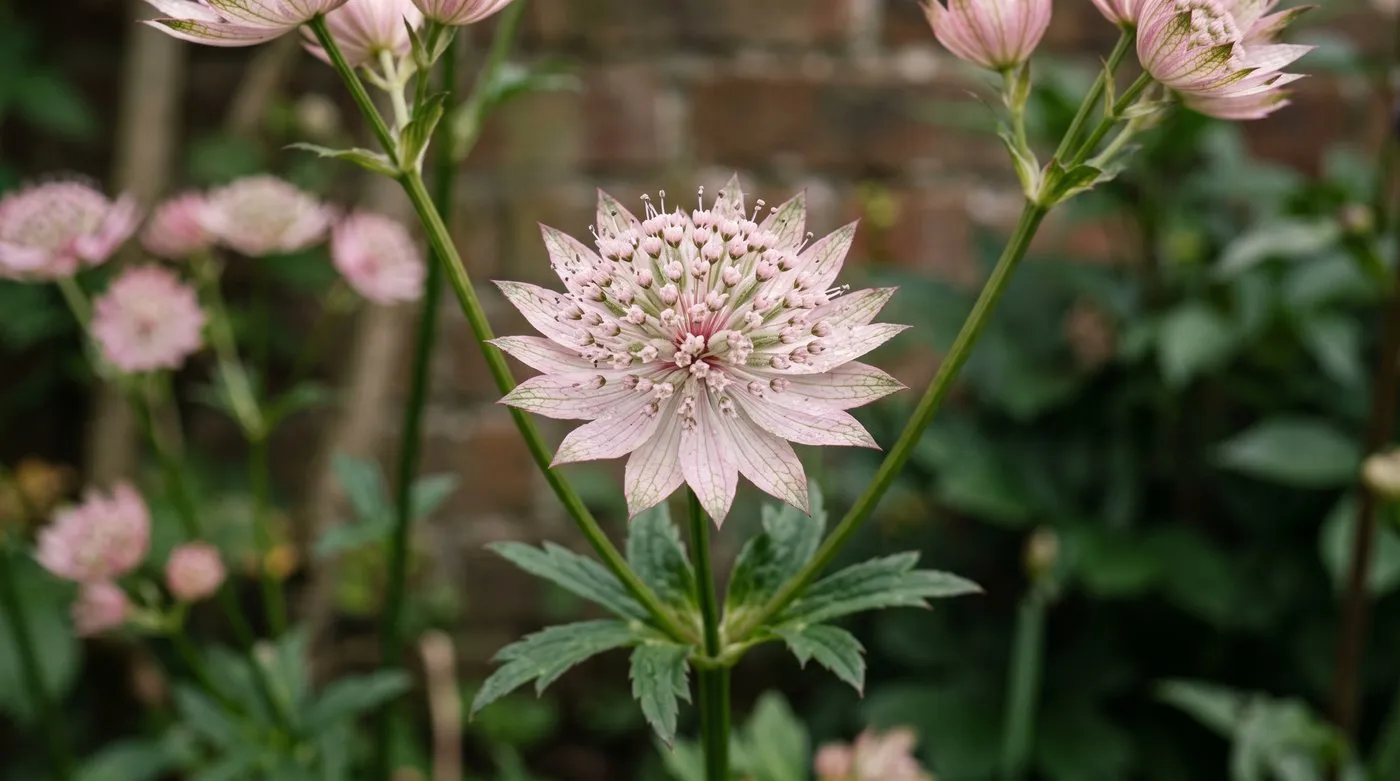
The colour comes from the papery bracts around the edge, not the tiny flowers in the middle. That’s why astrantia lasts so well in the border and the vase.
Best astrantia varieties for UK gardens
There’s a variety for every spot, from compact 40cm plants to tall 90cm ones, in white, pinks and near-black reds.
| Variety | Height | Flower colour | Why grow it |
|---|---|---|---|
| ’Roma’ | 60cm | Clear pink | Long flowering season |
| ’Hadspen Blood’ | 60cm | Deep red | Darkest flowers |
| ’Shaggy’ (Margery Fish) | 75cm | White with green tips | Biggest, starriest flowers |
| ’Star of Billion’ | 40cm | Pink with silver tips | Compact, for the front of a border |
| ’Buckland’ | 70cm | Soft pink | Vigorous, big flower heads |
| ’Venice’ | 60cm | Deep rose-pink | Rich colour, strong stems |
| ’Sunningdale Variegated’ | 60cm | Pale pink | Cream-edged leaves in spring |
| A. major var. rosea | 75cm | Rose-pink | Easy, classic species form |
‘Roma’ is a great all-rounder. It has clear pink flowers over a long season, strong stems that rarely flop, and keeps its colour well in shade.
‘Hadspen Blood’ is the one for drama. The flowers open dark ruby-red and hold their colour. It looks stunning next to silver-leaved Pulmonaria ‘Majeste’ or white foxgloves. Keep it in part shade, as strong sun can fade the flowers to a dull pink.
‘Shaggy’ (also sold as ‘Margery Fish’, after the famous Somerset plantswoman) has the biggest flowers, with long pointed bracts that make each one a star. The white, green-tipped flowers are really elegant. It self-seeds more than most named varieties.
The name links nicely with Margery Fish’s cottage-garden lessons, where astrantia fits right into her relaxed, layered style of planting.
How to plant astrantia
Plant astrantia in spring (March to April) or autumn (September to October), with the crown at soil level in soil rich in organic matter. Spring planting gives it time to settle before flowering.
Pick a spot in part shade or dappled light. North-facing borders are fine, and morning sun with afternoon shade is ideal. Avoid the dark, dry ground under dense evergreens.
Dig a hole twice the width of the pot and fork in plenty of garden compost or leaf mould. Astrantia likes rich soil. Plant at the same depth it was in the pot, firm gently, water well and mulch with compost, keeping it off the crown.
Space plants 40-50cm apart. A group of three to five makes a lovely drift within a couple of years. For a cottage garden planting plan, pair it with foxgloves, hardy geraniums and ferns.
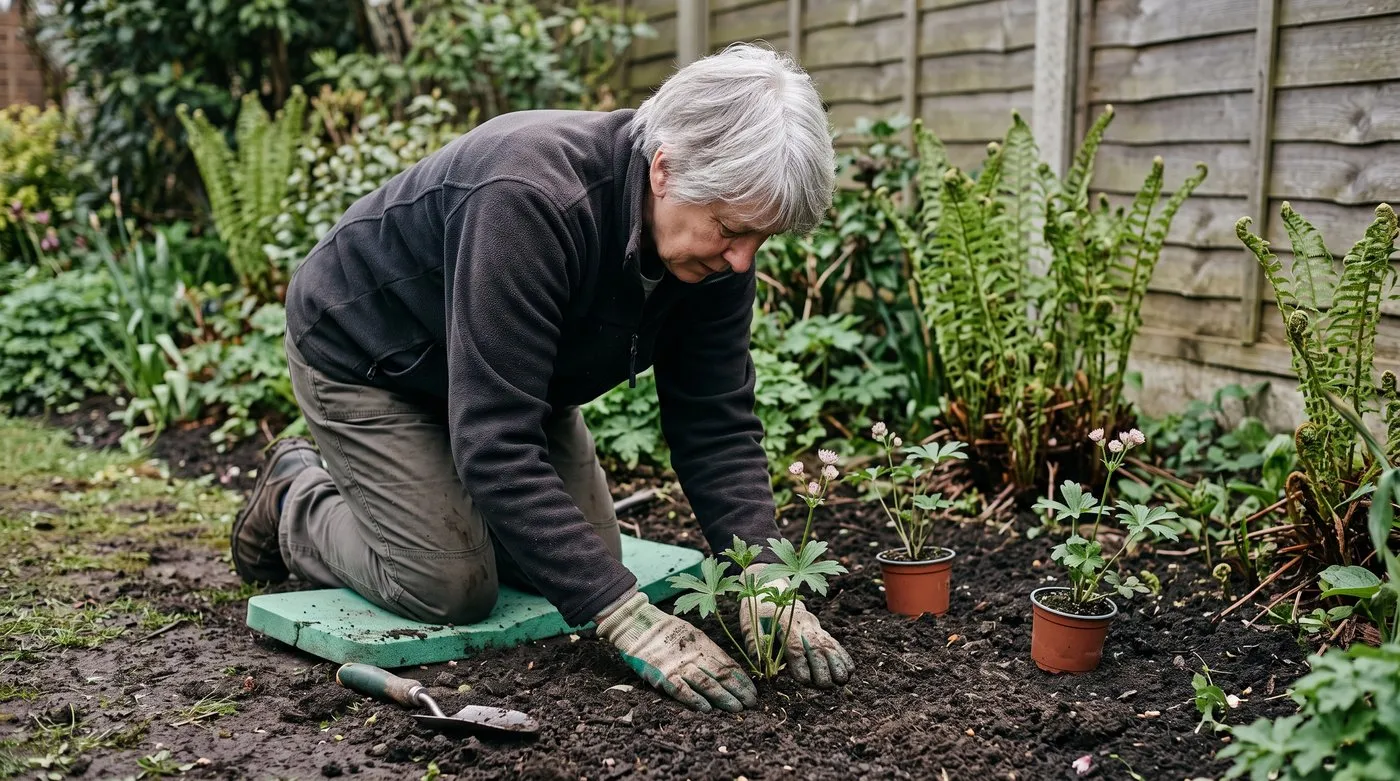
Plant at the same depth it sat in the pot and keep the mulch off the crown. Spacing groups of three about 45cm apart gives a lovely drift within a couple of years.
Does astrantia grow well in shade?
Yes, astrantia is one of the most reliable flowering plants for shady UK borders. It comes from woodland edges and damp meadows, so lower light suits it.
With a few hours of sun a day it flowers freely with strong colour. In deeper shade with no direct sun it still flowers, just with fewer, slightly paler stems.
Full sun is harder. In a dry, south-facing border the leaves scorch and wilt, and flowering is short. If you must plant in sun, water deeply twice a week in summer and mulch thickly.
Good shady partners include hostas, ferns, brunnera, tiarella and Japanese anemones. For more ideas, see our guide to the best perennials for UK gardens.
Astrantia ‘Roma’ flowering happily in part shade with ferns and hostas.
How to deadhead astrantia for longer flowering
Regular deadheading is the best way to keep astrantia flowering for longer. It’s the most useful job you can do for this plant.
Every two or three weeks, cut faded flower stems back to the next bud or leaf with sharp secateurs. Take the whole stem down to a side shoot or leaves, not just the flower head. This nudges the plant into sending up new flowering stems.
Stop deadheading in July and the plant sets seed and soon stops flowering. Keep going and you can have flowers from June to mid-September. The later ones may be a bit smaller, but they’re still pretty.
Leave the last flush in September to turn into papery seedheads. They look great through winter, especially with frost on them.
The Chelsea chop isn’t much use on astrantia. Deadheading once flowering starts works much better.
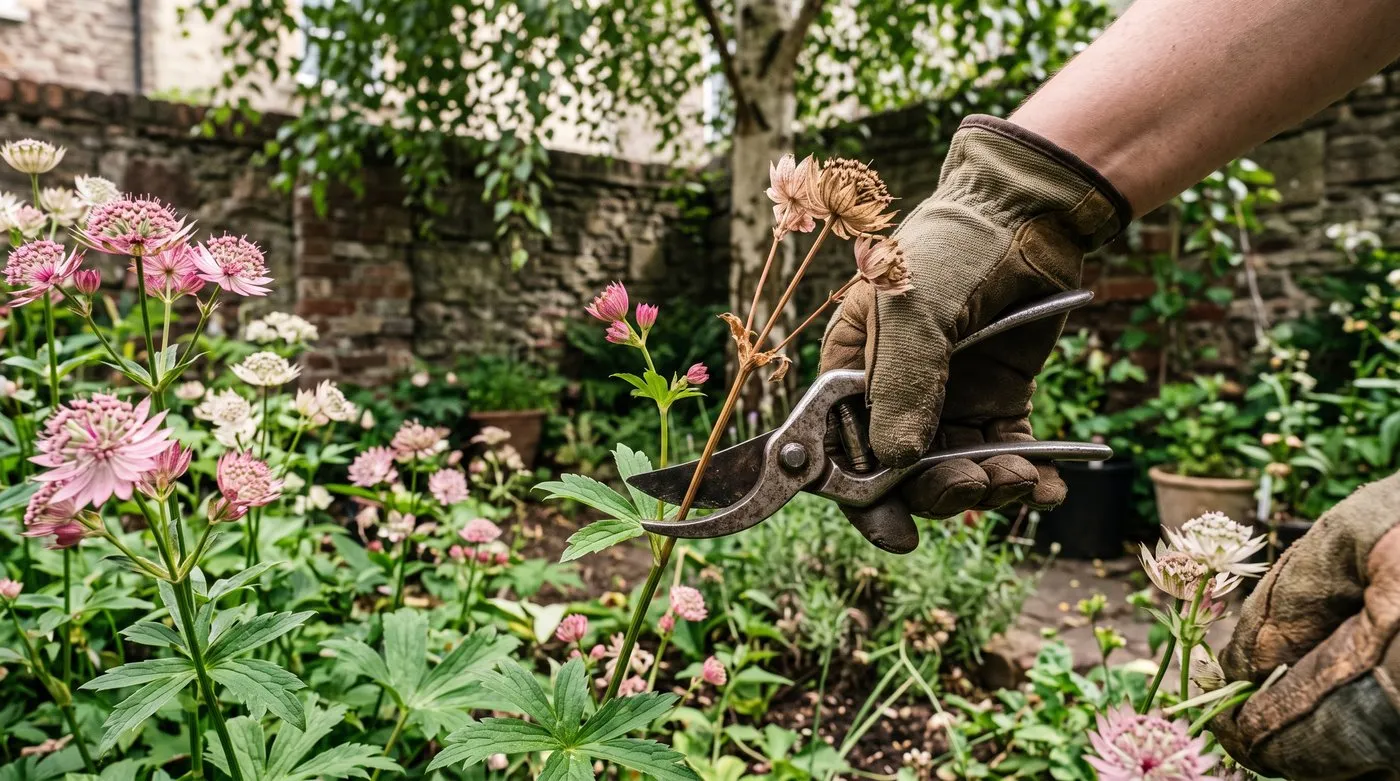
Take the whole faded stem down to a side shoot or leaves, not just the flower head. Do it every two or three weeks and flowers keep coming into September.
Astrantia as a cut flower
Astrantia is one of the best perennials for cutting, and lasts well in a vase. Florists love its delicate, lacy look in bouquets.
Cut stems in the morning, when the outer bracts are fully open but the dome of tiny flowers in the middle is still tight. Pick stems with several flower heads and cut them long, right down at the base.
Strip off the lower leaves and stand the stems in deep, cool water with flower food. Leave them somewhere cool for a couple of hours before you arrange them.
To dry them, cut stems at their best and hang them upside down in small bunches in a warm, dry, airy room for two or three weeks. The papery bracts keep their colour for months.
If you want a row just for cutting, ‘Roma’ and ‘Venice’ both have long, strong stems with plenty of flower heads. Our cut flower growing guide helps you plan a cutting patch, and our conditioning guide has tips for keeping cut flowers fresh.
How to divide and propagate astrantia
Divide astrantia every four or five years in March or April. It keeps clumps lively, stops them going woody in the middle, and gives you more plants for free.
Lift the whole clump with a big garden fork and shake off the loose soil. Pull or cut it into pieces, each with a few healthy shoots and a good bunch of roots. Throw away any woody, dead bits from the middle.
Replant straight away at the same depth in soil with added compost. Water well and mulch. Most divisions flower in their first season, especially if you split them early in spring.
Self-seeding: Astrantia seeds itself around if you leave the flowers on. Seedlings pop up near the parent in spring, so pull out any you don’t want while they’re small. Seedlings from named varieties won’t look like the parent and usually come out pale pink or white. To get identical plants, divide instead.
Root cuttings: Another way to grow more of a named variety. In January or February, take pieces of root about 5-7cm long. Lay them flat in a tray of gritty compost, cover with 1cm of compost and keep them in a cold frame. Shoots appear in spring.
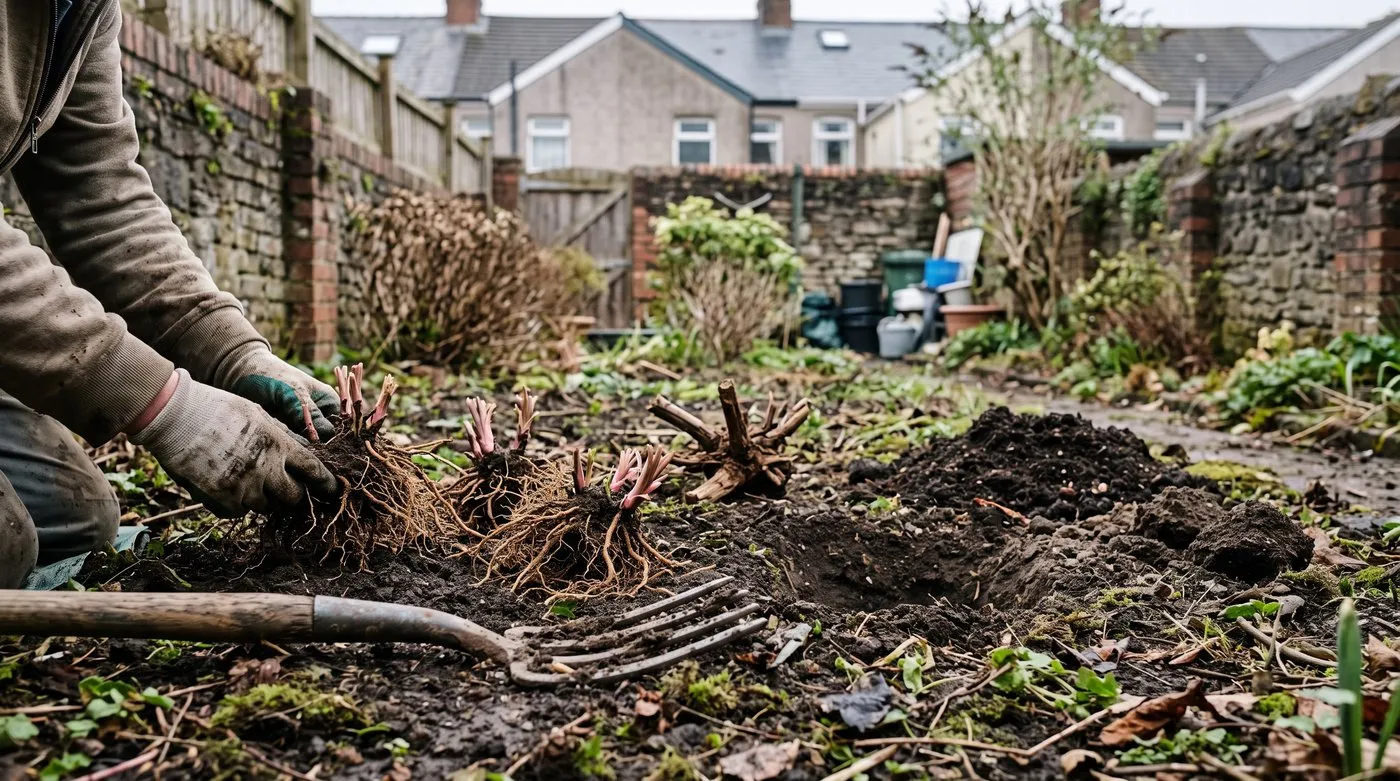
Each piece needs a few healthy shoots and a good bunch of roots. Bin the woody middle and replant the young outer bits straight away.
Companion planting with astrantia
Astrantia looks great with other shade-loving plants and grasses that like moist, rich soil. Its delicate flowers stand out against bold leaves and tall spikes.
| Companion | Height | Why it works |
|---|---|---|
| Hostas | 30-60cm | Big bold leaves next to dainty flowers |
| Hardy ferns | 60-90cm | Soft texture, same shade and moisture |
| Foxglove | 100-150cm | Tall spikes rising above |
| Japanese anemone | 60-120cm | Keeps the colour going into October |
| Brunnera ‘Jack Frost’ | 40cm | Silver leaves brighten dark corners |
| Hakonechloa macra | 40cm | Flowing grass for shade |
For a shady cottage garden, plant astrantia with foxgloves, Rosa ‘Gertrude Jekyll’ and Alchemilla mollis. Astrantia fills the middle height between the low alchemilla and tall foxgloves.
For a more modern look, try ‘Hadspen Blood’ with dark-leaved Actaea ‘Brunette’, white tiarella and Hakonechloa macra. Dark red flowers against dark leaves look moody and smart.
Among the best flowering shrubs for UK gardens, hydrangeas make natural partners, as both enjoy moist soil and part shade.
Common problems with astrantia
Astrantia is pleasingly trouble-free. Most problems come from the spot it’s in rather than pests or diseases.
Powdery mildew: A white powdery coating on the leaves in hot, dry spells, especially in August. Thin out crowded clumps, water at the base and keep the soil moist. Good spacing is the best prevention.
Slugs and snails: They like the young spring shoots. Protect new growth with wildlife-friendly slug pellets, beer traps or nematodes. Established plants soon outgrow the damage.
Wilting in dry soil: The most common problem. Astrantia flops when the soil dries out, even briefly. It perks up after a drink, but repeated dry spells weaken it and cut flowering. Mulch thickly and water deeply in dry weather.
Too many seedlings: Left alone, astrantia can seed around a lot, and seedlings of named varieties come out paler. Deadhead to keep this in check. The plain species seeds the most; named varieties like ‘Roma’ less so.
Crown rot: Rare, but it happens in soil that sits waterlogged over winter. Improve drainage or use a raised bed if your soil stays wet. Astrantia likes moist soil, but not standing water.
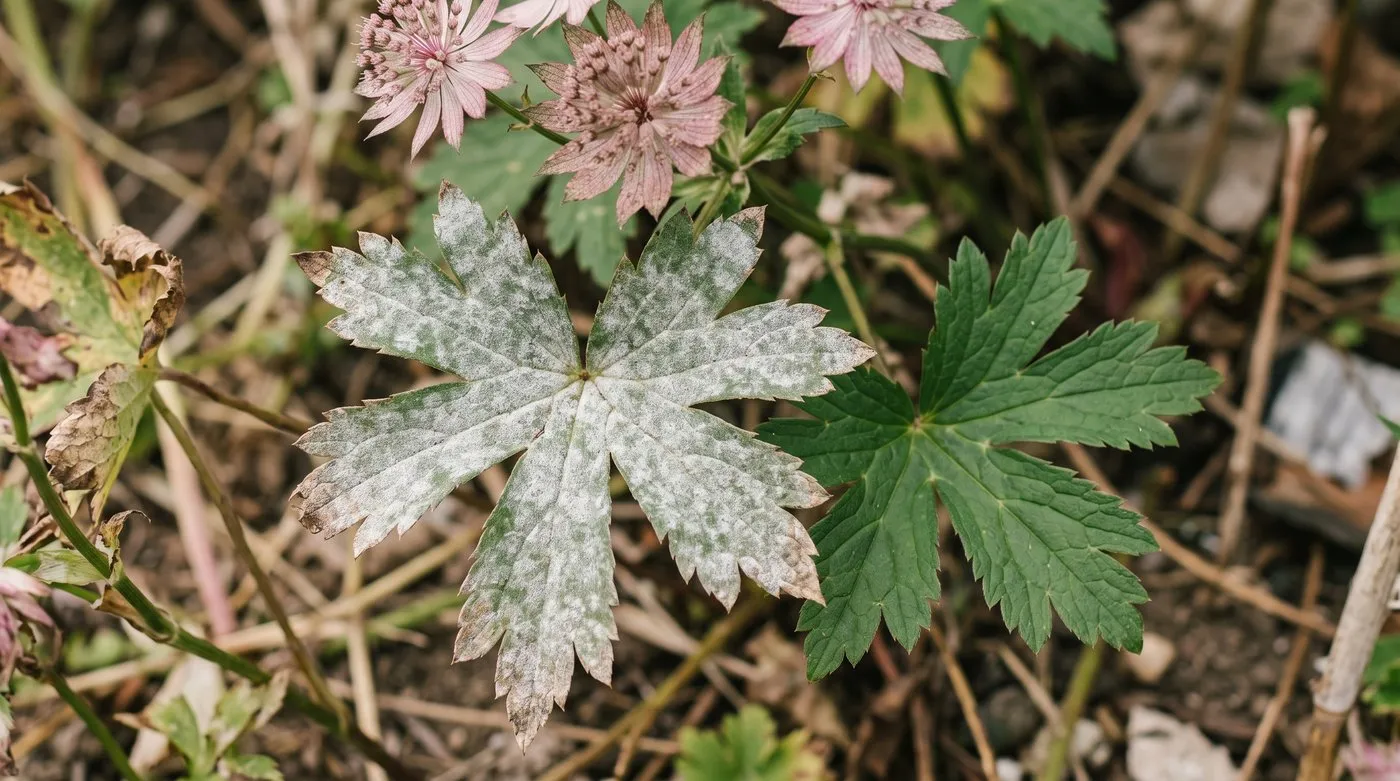
Powdery mildew shows up in hot, dry spells on crowded clumps. Thinning the plants and keeping the soil moist does more good than anything else.
Frequently asked questions
Does astrantia grow well in shade?
Yes, astrantia loves partial shade and dappled light. It flowers well in north-facing borders with no direct sun. Under dense evergreens it flowers less, though the leaves stay healthy. Avoid full sun unless you can keep the soil moist all summer.
When should I cut back astrantia?
Cut it to the ground in late autumn once the leaves die back. Through summer, deadhead faded stems every two or three weeks to keep flowers coming. Leave the last flowers in September to turn into seedheads for winter.
How do I stop astrantia spreading?
Deadhead before the seeds ripen. That stops most of the self-seeding. Divide crowded clumps every four or five years in March or April, and pull up unwanted seedlings while they’re small. Named varieties seed around less than the plain species.
Is astrantia a good cut flower?
Yes, astrantia is a lovely, long-lasting cut flower. Cut it when the papery outer petals are fully open but the middle is still tight. Strip the lower leaves and stand the stems in cool water. The dried seedheads are nice in winter arrangements too.
Can astrantia grow in full sun?
Only if the soil stays moist all summer. In a dry, sunny border the leaves scorch and it flowers poorly. A sunny spot can work with regular deep watering and a thick mulch, but partial shade gives much better results.
How do I divide astrantia?
Divide in March or April as new growth appears. Lift the clump with a fork, split it into pieces with a few shoots and healthy roots each, and replant straight away at the same depth. Divisions settle quickly and often flower the same year.
Which is the best astrantia variety?
‘Roma’ is a great all-rounder for UK gardens. It has clear pink flowers over a long season. ‘Hadspen Blood’ has the deepest red flowers, ‘Shaggy’ the biggest, starriest ones, and ‘Star of Billion’ at 40cm suits small spaces.
Our team produces practical UK gardening guidance from source research, contributor records and established horticultural practice. Editorial standards are overseen by Matt W.


