Key takeaways
- Move deciduous shrubs October to March; evergreens in early autumn or April
- Dig the new hole before you lift, so the roots are out of the ground for minutes, not hours
- Wrap the root ball in hessian or a sack so the soil stays on the roots
- Replant at the same depth, never deeper
- Wilting and leaf drop in the first summer are normal signs of transplant shock
- Water weekly through the first growing season, and more in dry spells
You can move an established shrub without killing it if you keep plenty of roots, keep them moist and replant fast. Pick the right season, dig the new hole first and wrap the root ball, and most shrubs settle in within a year.
This guide walks you through moving one shrub, from the day before to its first summer in the new spot. For a timing table for different plant groups, root-ball sizes and which plants hate moving, see our wider guide to moving perennials and shrubs.
When should you move a shrub?
Move deciduous shrubs while they’re bare, from October to March. Evergreens keep losing water through their leaves, so move them in early autumn or in April, when the soil is warm and the air is damp.
Pick a mild, still, overcast day with moist soil. Avoid three things:
- Hot or sunny weather, when the leaves lose water faster than damaged roots can replace it.
- Frozen ground, which breaks the root ball apart.
- Waterlogged soil, which turns to sludge and falls off the roots.
Large or old shrubs move better if you root-prune them a year ahead. Cut a circle round the roots with a spade the autumn before, and they’ll grow new fine roots right where you’ll dig.
Getting the shrub ready the day before
A little preparation makes the move much easier on the plant.
- Water it well. Soak the shrub the day before. Moist soil clings to the roots, while dry soil just falls off.
- Dig the new hole. Make it about twice as wide as the root ball you’ll lift, and the same depth. Loosen the sides with a fork.
- Tie the branches in. A loop of soft string round a bushy shrub keeps the stems out of your way and stops them snapping.
- Mark a side (optional). Tie a ribbon on the side facing the sun so you can replant it the same way round.
- Find your wrapping. An old hessian sack, a sheet of tough fabric or a tarpaulin, plus some twine.
How to lift and wrap the root ball
Dig the biggest root ball you can safely lift, at least a third as wide as the branches. Most of the fine roots that take up water are out towards the edge, so a wide ball keeps more of them.
- Cut a circle with a sharp spade all the way round, just outside your planned root ball.
- Dig a trench a spade wide around the outside of that circle, about 30cm deep.
- Undercut the ball, pushing the spade in at an angle from all sides until the shrub rocks freely.
- Tip it to one side and slide the hessian under, then tip it back and pull the sack through.
- Wrap it up tightly and tie it with twine, so the soil can’t fall away from the roots.

Dig the trench outside your root-ball line, then work underneath. The more fine roots you keep, the quicker it recovers.
How to move a heavy shrub safely
Always lift by the root ball, never by the stems. Pulling on the stems tears the roots away from the soil.
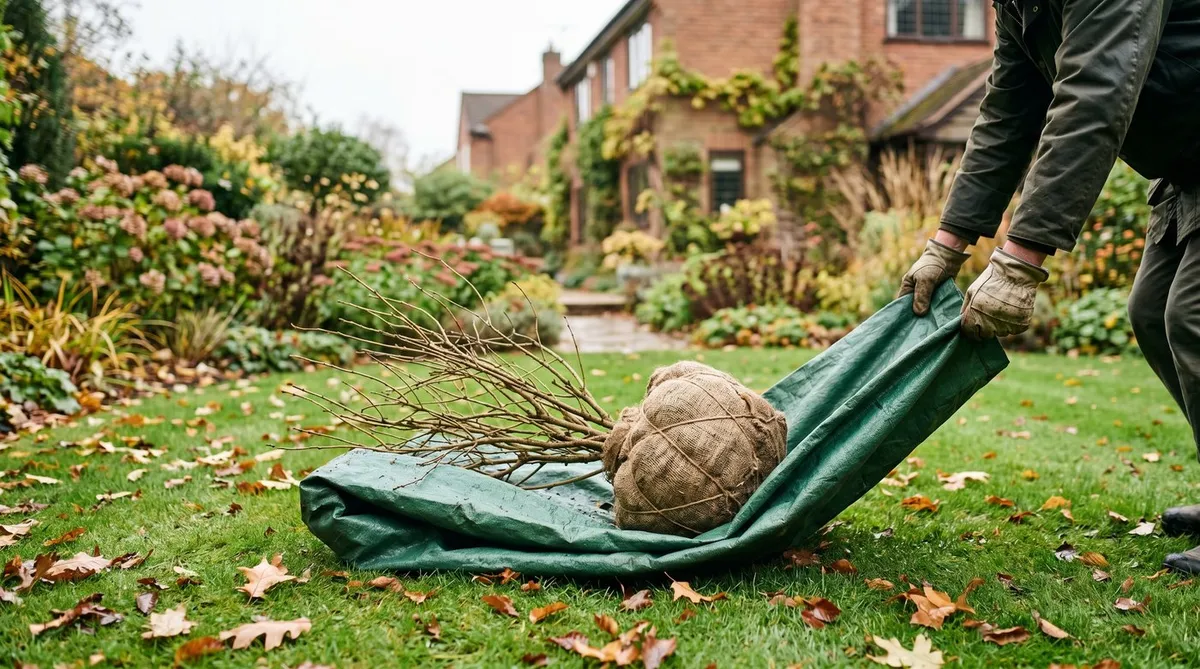
For anything bigger than a bucket-sized root ball, slide the wrapped shrub onto a tarpaulin or old sheet and drag it. A sack truck or a wheelbarrow works on firm paths. A big shrub is a two-person job, so ask for help rather than straining your back. If you’re held up, keep the wrapped root ball in the shade and damp until you can replant.

Wrapped and tied, the root ball stays in one piece. That keeps the fine roots in their soil while you move it.
How to replant a moved shrub
Get the shrub into its new hole as soon as you can, ideally within the hour.
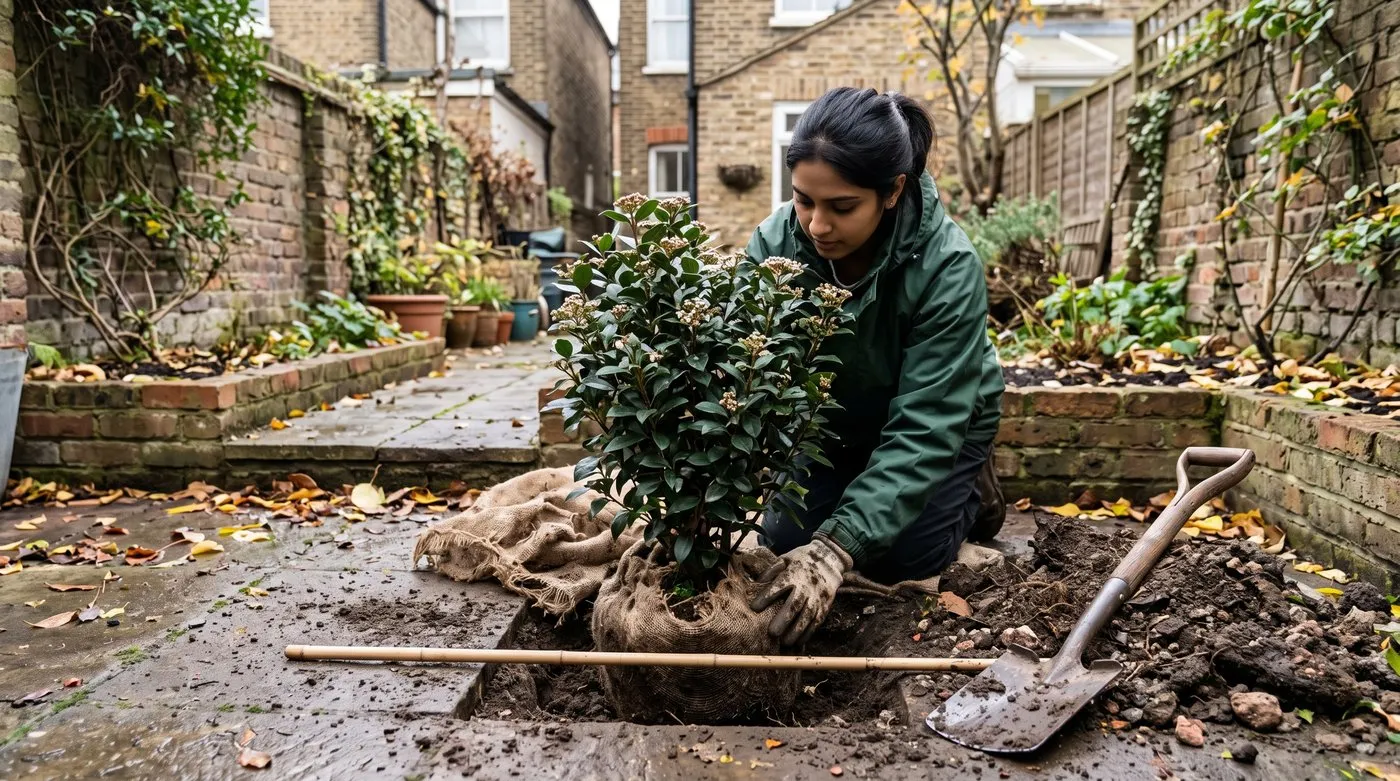
A cane across the hole shows at a glance whether the old soil mark sits level with the ground.
- Same depth. Lay a cane across the hole and check the old soil mark on the stem sits level with the ground. Planting deeper can rot the bark.
- Unwrap in the hole. Lower the shrub in, then untie and slide the hessian out. Natural hessian can be left underneath if it won’t come out.
- Backfill with the dug soil, not bagged compost, and firm it in layers with your heel.
- Water in well, with a whole can or two, so the soil settles round the roots.
- Mulch 5-8cm deep over the root area with bark or compost, keeping it clear of the stem.
On a windy site, a short stake set at an angle stops a top-heavy shrub rocking while new roots grow. The same backfill and firming rules apply when you plant a bare-root tree.
Aftercare through the first year
The first growing season is when moved shrubs are lost. The roots are still regrowing, so your watering does their job for them.
- Water weekly from spring to autumn, and twice a week in hot, dry spells. A slow, deep soak is far better than a daily splash.
- Check before you water. Push a finger into the soil near the root ball. Damp means leave it. Soggy soil can rot roots too.
- Shield evergreens from wind. A screen of fleece or netting on the windward side stops cold, drying winds scorching the leaves.
- Hold off on feeding until you see healthy new growth. Then a light general feed is fine.

A low ring of soil round the root ball holds each can of water exactly where the roots need it.
Signs of transplant shock and how to help
Transplant shock is the stress a shrub shows after losing roots. Wilting on warm days, yellowing leaves, leaf drop and brown, crispy edges on evergreens are all common in the first summer. They don’t mean the shrub is dying.
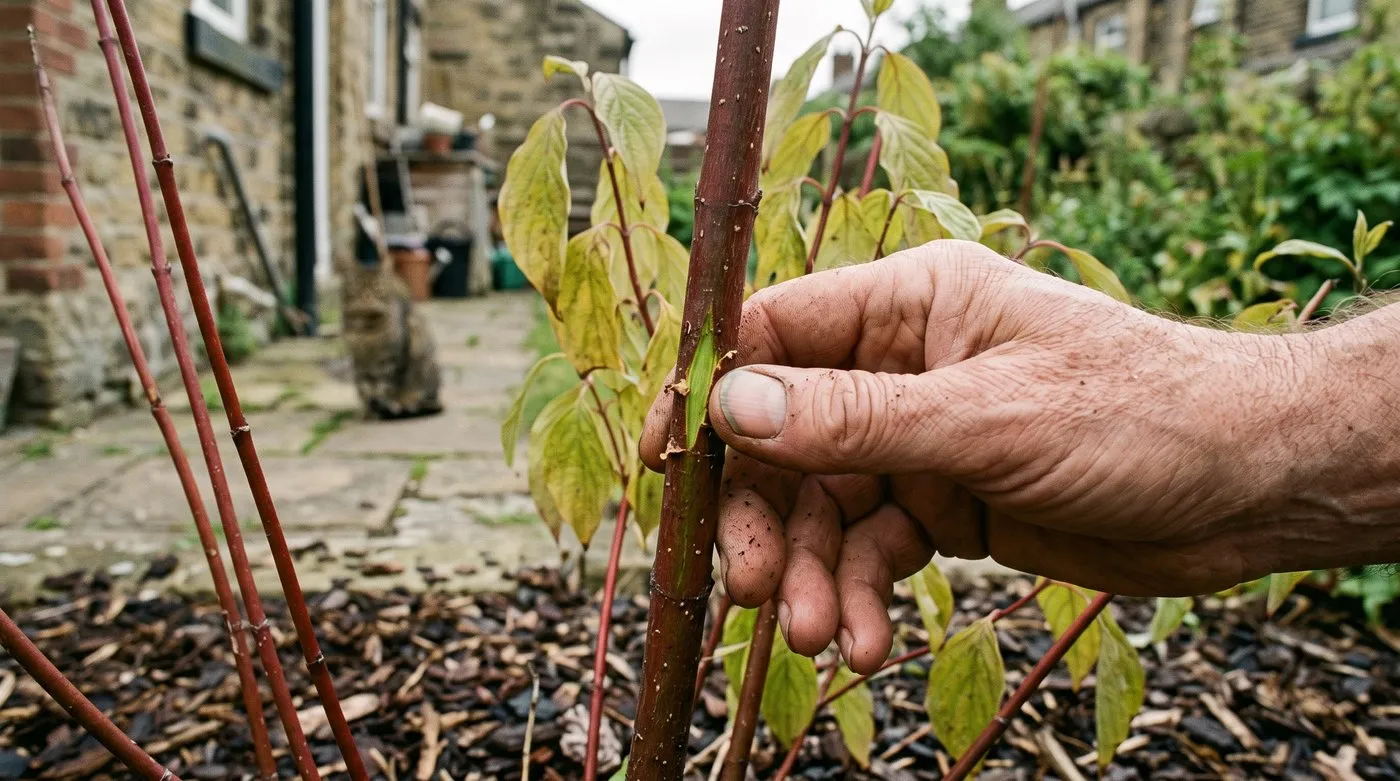
Droopy leaves after a move are normal. A quick scratch shows green underneath, so keep watering and give it time.
- Keep the watering steady. Most shrubs come through with regular soaks.
- Give shade on hot days. A sheet of fleece or shade netting helps a struggling evergreen.
- Don’t feed it. Fertiliser pushes new leaves the roots can’t yet support.
- Do the scratch test. If it looks dead, scratch a stem with a thumbnail. Green underneath means it’s alive.
- Be patient. Wait until late the following spring before giving up. Many shrubs that drop every leaf come back.
Common mistakes when moving a shrub
- Lifting before the new hole is ready. The roots dry out while you dig. Always dig the new hole first.
- A tiny root ball. It’s easier to lift, but the shrub wilts for summer after summer.
- Letting the soil fall off. Water the day before and wrap the ball tightly.
- Planting too deep. Keep the old soil mark level with the ground.
- Stopping watering too soon. One dry fortnight in the first summer can undo a perfect move.
If the new spot is shadier than the old one, check it suits the plant with our guide to the best shrubs for shade. Some shrubs, such as daphne and magnolia, really hate being moved. If you’re replacing one rather than risking a move, our lists of evergreen shrubs for year-round interest and the best flowering shrubs have good options. For more garden jobs, see all our how-to guides.

Give it a year of steady watering and a moved shrub is soon back to flowering in its new home.
Frequently asked questions
When is the best time to move a shrub?
Move deciduous shrubs while dormant, between October and March. Evergreens move best in early autumn or April. Avoid hot weather, frozen ground and waterlogged soil.
How big should the root ball be when moving a shrub?
As big as you can safely lift, at least a third of the branch spread. The wider the root ball, the more fine roots the shrub keeps. Get a helper for anything large.
Should you prune a shrub before moving it?
Trimming a deciduous shrub back by up to a third can help. Fewer leaves means less water lost while the roots recover. Go lightly on evergreens, and don’t cut spring-flowering shrubs in bud.
What does transplant shock look like?
Wilting, yellowing leaves, leaf drop or brown, scorched edges. It’s common in the first summer after a move. Keep watering steadily and most shrubs recover by the following year.
How do I know if a moved shrub is still alive?
Scratch a stem gently with a thumbnail and look for green underneath. Green and moist means it’s alive. Brown and dry means that stem has died, so try lower down before giving up.
Can you move a shrub in summer?
Only if you have no choice. Lift a large root ball, trim back the top, replant at once and shade it from hot sun. Then water every couple of days until autumn.
Now your shrub is in its new home, read our guide to pruning shrubs to keep it in good shape once it has settled.
Our team produces practical UK gardening guidance from source research, contributor records and established horticultural practice. Editorial standards are overseen by Matt W.