Key takeaways
- Put supports in during spring, when shoots are about 20-30cm tall
- Aim for supports around two-thirds of the plant's final height
- Use grow-through rings or link stakes for bushy clumps like peonies
- Give each delphinium or lupin spike its own cane
- Tie stems loosely in a figure of eight so they don't rub or strangle
- A plant that has already flopped can be propped up, but rarely looks as good
Stake tall perennials in spring, while the shoots are short. They grow up through the support and hide it, and they stay upright through summer rain. Wait until they’ve flopped, and you’re left tying up a squashed, gappy clump.
This guide is about the tall stars of the flower border, such as delphiniums, peonies, asters and heleniums. For supporting everything else, from beans to sweet peas, see our wider guide to staking and supporting garden plants.
Why tall perennials flop
Tall perennials flop for three main reasons. Knowing them helps you spot which plants need help.
- Heavy flowers. Double peonies and big delphinium spikes are top-heavy.
- Rain. Water sits in the flowers and leaves, and the extra weight bends the stems over.
- Wind. Tall stems rock about until they splay or snap at the base.
Rich soil and shade make it worse. Plants on rich, moist soil grow soft and tall. Plants in shade stretch towards the light. Both flop sooner than the same plant in sun on leaner soil.
Once stems have lain over for a while, they bend up at the tips and rarely straighten fully. That’s why the timing of staking matters more than the type of support.
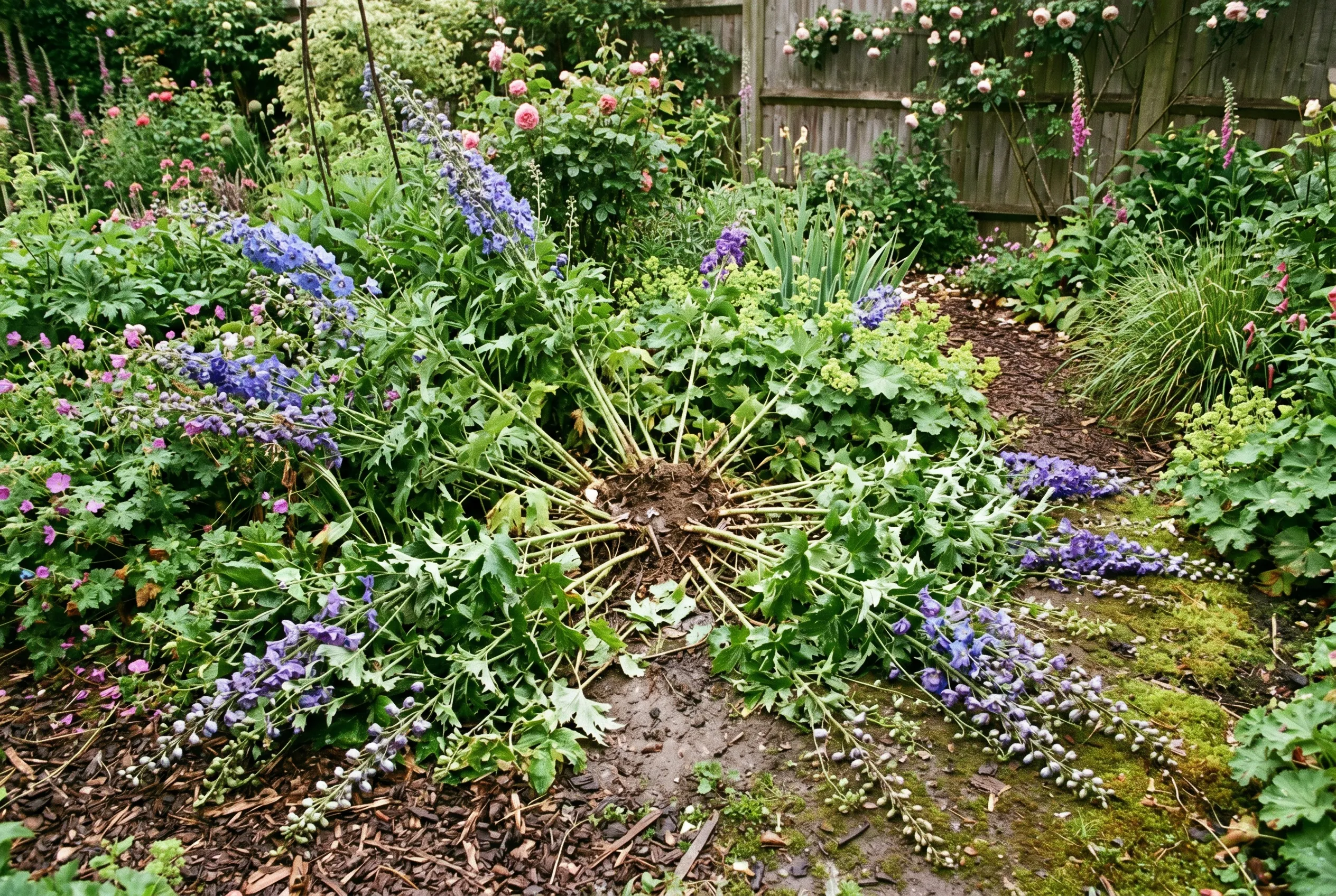
This is what one heavy downpour can do. Supports put in during spring would have held it all upright.
When to stake tall perennials
Put supports in during spring, when shoots are about 20-30cm tall. That’s usually April or early May, depending on the plant and where you live.
At this stage it’s easy to place supports without breaking stems. The plant then grows up through them and hides them by flowering time.
A good rule: anything that reached knee height or taller last year needs support this spring. A quick walk round the border in April with a bundle of supports does the job.
How high should plant supports be?
Aim for supports about two-thirds of the plant’s final height. A helenium that grows to about 1.2m wants its support at about 80cm.
- Too low, and the top of the plant flops over the edge.
- Too high, and bare metal or canes show above the leaves all summer.
Check the label or last year’s growth to know how tall the plant will get. Some grow-through supports have adjustable legs. Start them low over the young shoots and raise them as the plant grows.
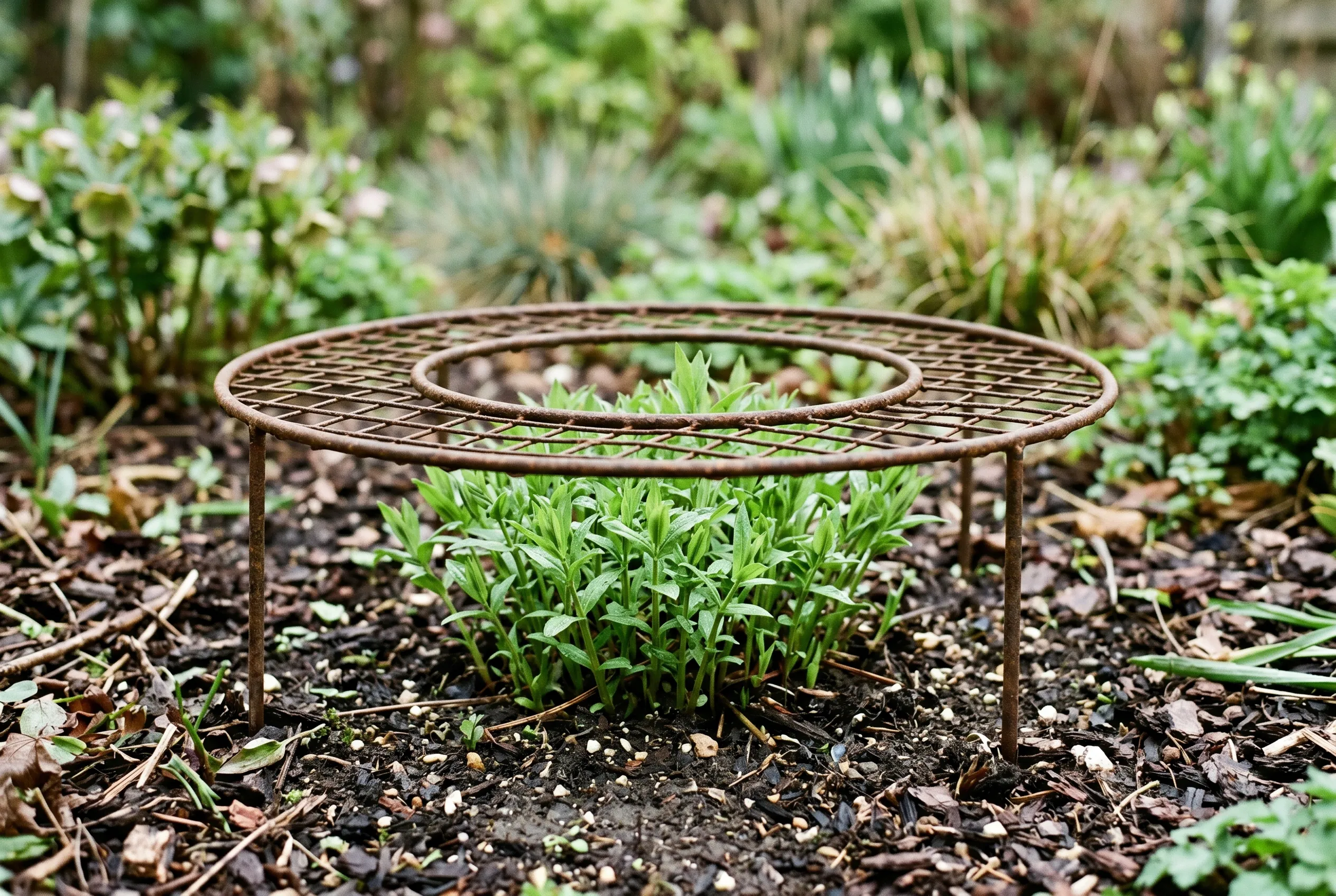
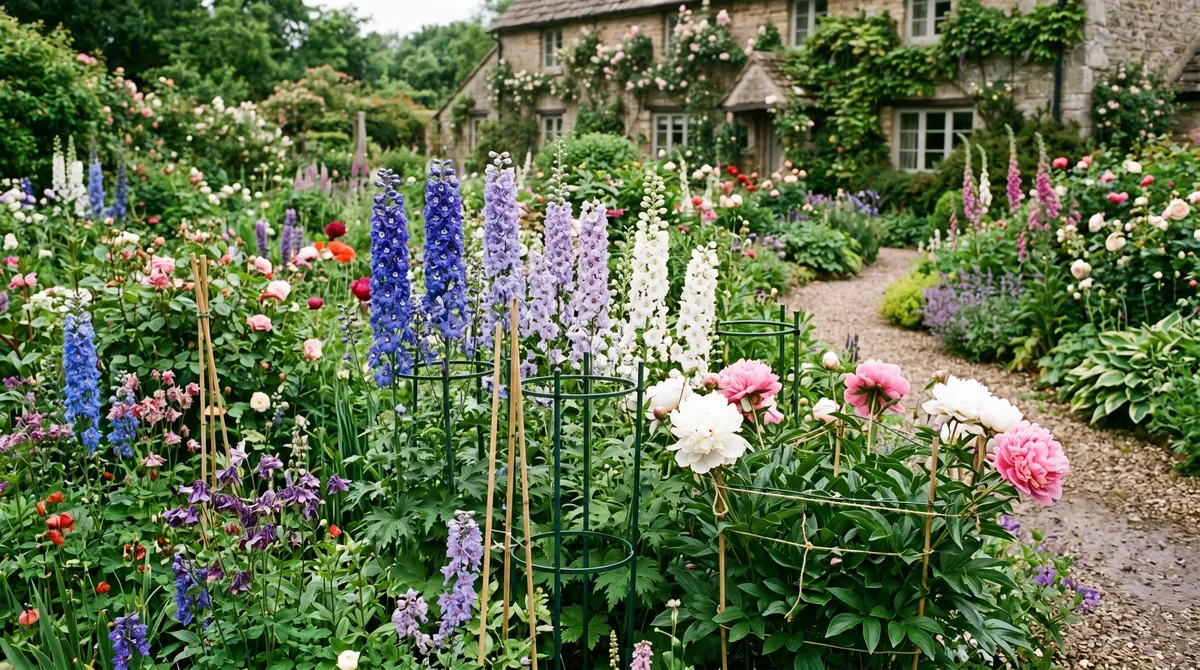
Set rings over the shoots early, while they’re short. The stems grow up through the grid and soon hide it.
Which support suits which perennial?
The shape of the plant decides the support. Bushy clumps need a ring or cage. Tall single spikes need a cane each.
| Support | Best for | How it works | Looks once grown |
|---|---|---|---|
| Grow-through ring | Peonies, asters, heleniums, phlox | Stems grow up through a grid | Hidden |
| Link stakes | Big or oddly shaped clumps | Hook together to fit any shape | Mostly hidden |
| Cane and tie | Delphiniums, lupins, tall spikes | One cane per spike | Cane partly shows |
| Pea sticks | Hardy geraniums, gypsophila, airy plants | A twiggy network plants grow through | Hidden |
Grow-through rings are ideal for clumps that grow from one crown. Link stakes are the most flexible, as you can build a cage to fit the plant. Single canes are the only reliable way to hold tall, heavy spikes. Pea sticks are free and look the most natural.
Our guide to the best perennials for UK gardens will help you work out which group your plants fall into.
How to stake delphiniums and other tall spikes
Give each main flower spike its own cane. A big delphinium spike can reach head height and catches the wind like a sail.
- Push a sturdy cane in early, close to each main shoot but clear of the crown.
- Tie in as it grows, at two or three points up the stem.
- Use a figure-of-eight tie. Loop soft twine round the cane, cross it over, then loop it round the stem. The cross sits between the two and stops rubbing.
- Keep it loose. Leave room for the stem to thicken.
- Cap the cane tops with a cane topper or an upturned pot, to protect your eyes as you work.
Use soft jute twine or proper plant ties, never wire or thin string that cuts in. Our guide to growing delphiniums covers the rest of their care.
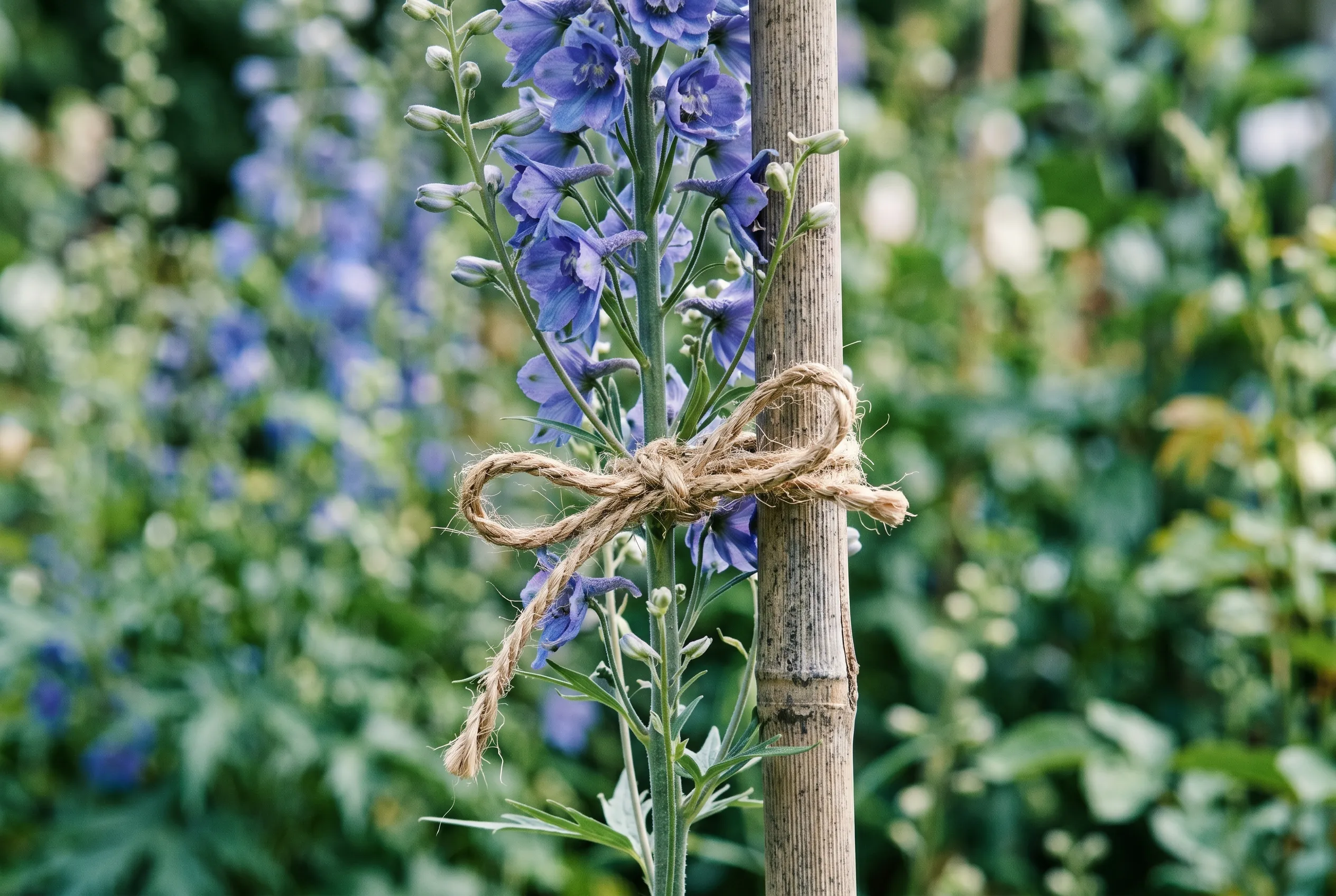
Soft jute twine is kind to stems. Tie loosely so the spike can thicken without being strangled.
Using pea sticks for airy perennials
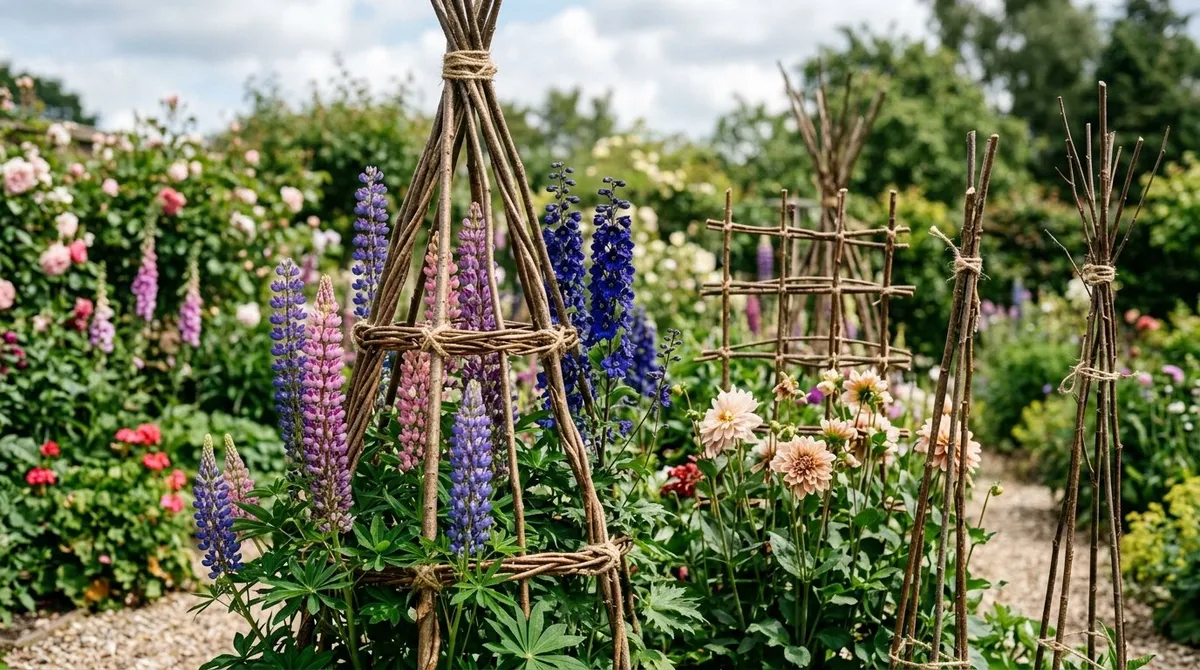
Pea sticks are twiggy branches from hazel, birch or other shrubs. They’re free if you save your winter prunings, and they vanish into the planting.
Push them firmly into the soil around the young shoots in spring. Angle them slightly inwards so the tops meet over the middle of the clump. Cut them a little shorter than the plant’s final height so the flowers stand above the twigs.
They suit softer, airy plants like hardy geraniums, gypsophila and shorter asters. Our guide to hazel pea sticks shows how to cut and use them, including making peony domes.
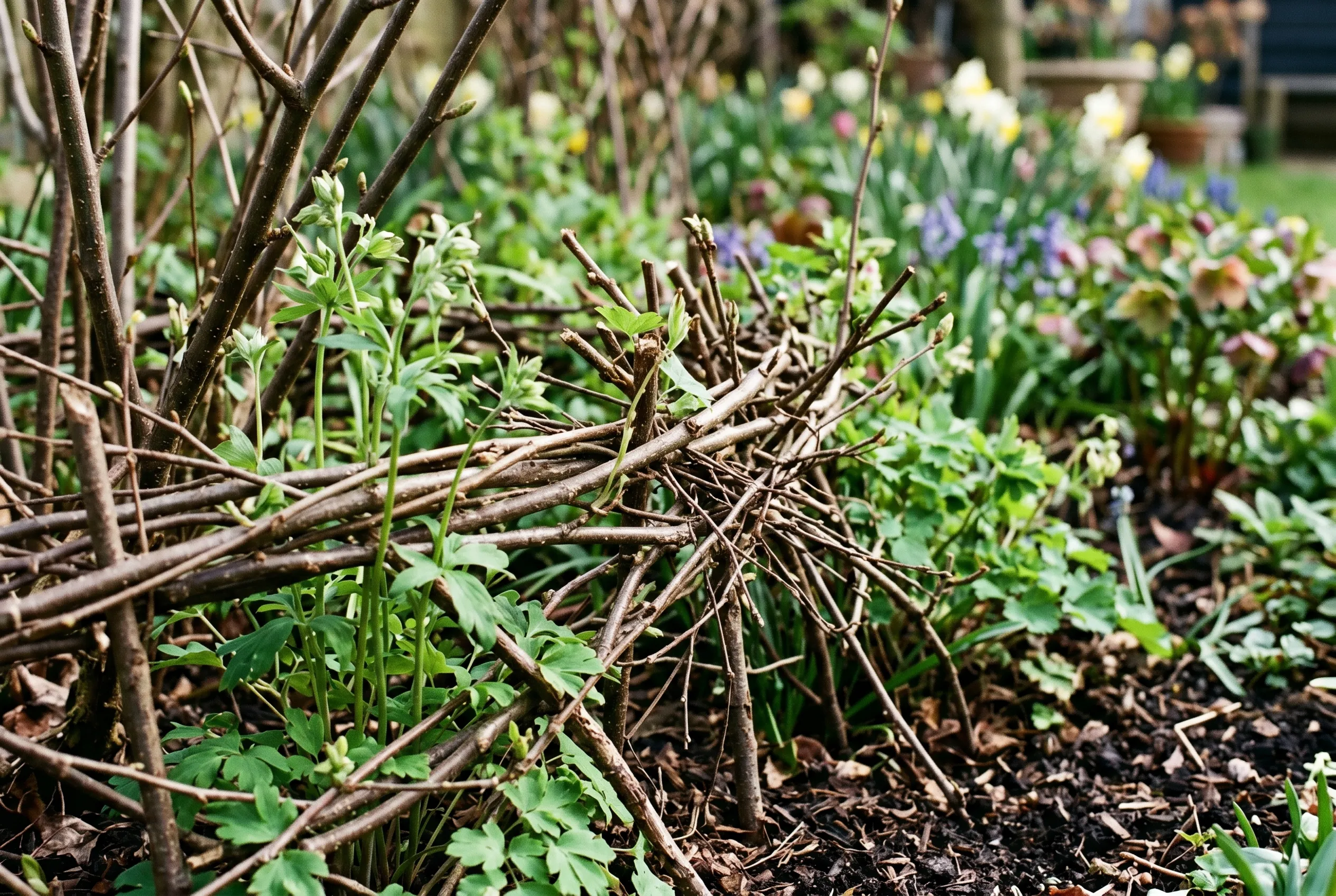
Pushed in early, pea sticks give airy perennials a free, hidden support. By June you’ll hardly see them.
Which UK perennials need staking?
These tall perennials usually need support in a British summer:
- Delphiniums and lupins: a cane for each spike.
- Large-flowered peonies: a ring set over the crown as the red shoots appear.
- Tall asters and heleniums: a ring or link stakes.
- Tall phlox and campanulas: a ring or pea sticks.
- Dahlias: a stout stake put in at planting time. Our guide to growing dahlias explains how.
Fed up with staking? Some tall plants stand up on their own. Veronicastrum gives tall spires on stiff stems that rarely need help. The Chelsea chop also makes asters, heleniums and sedums shorter and sturdier.
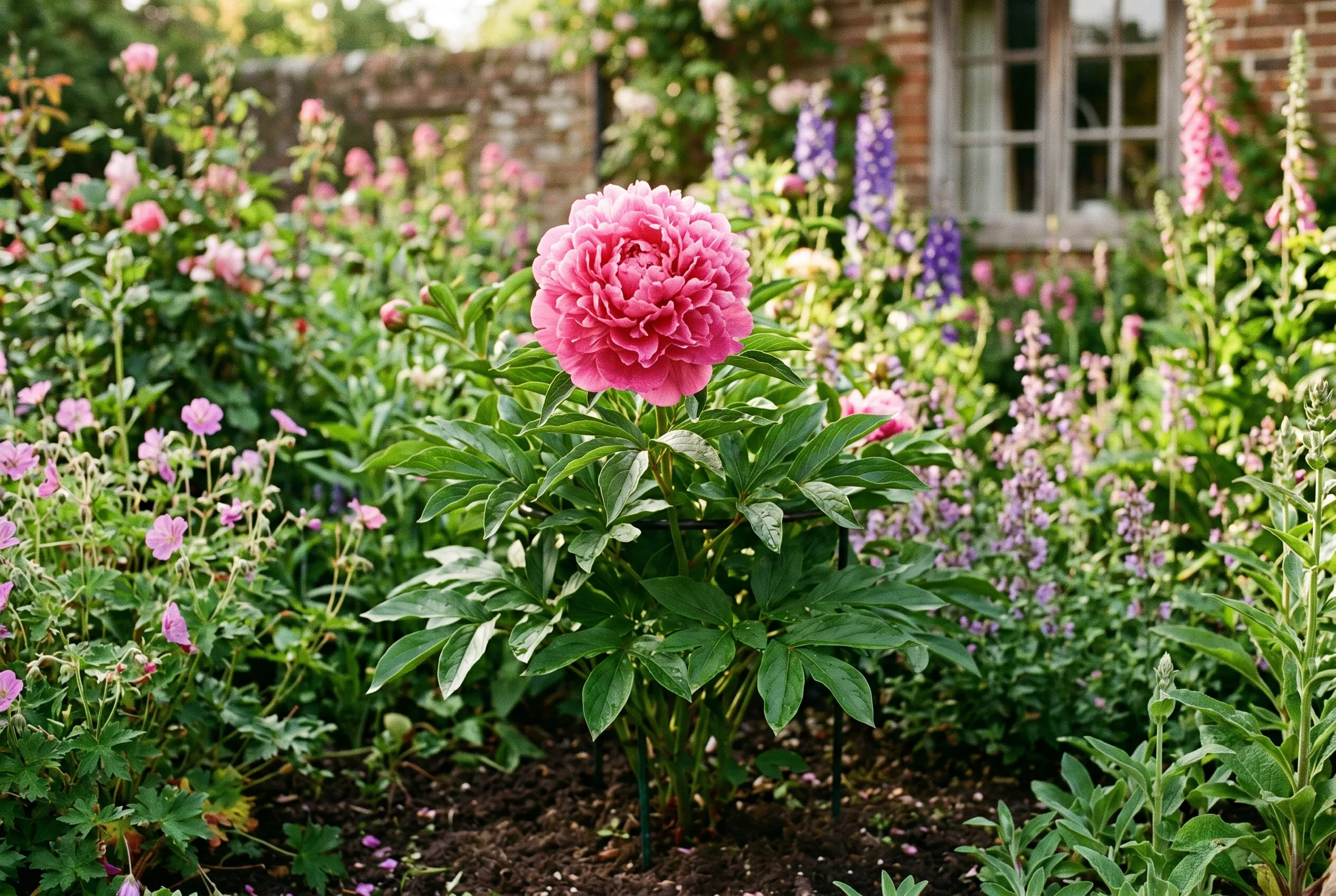
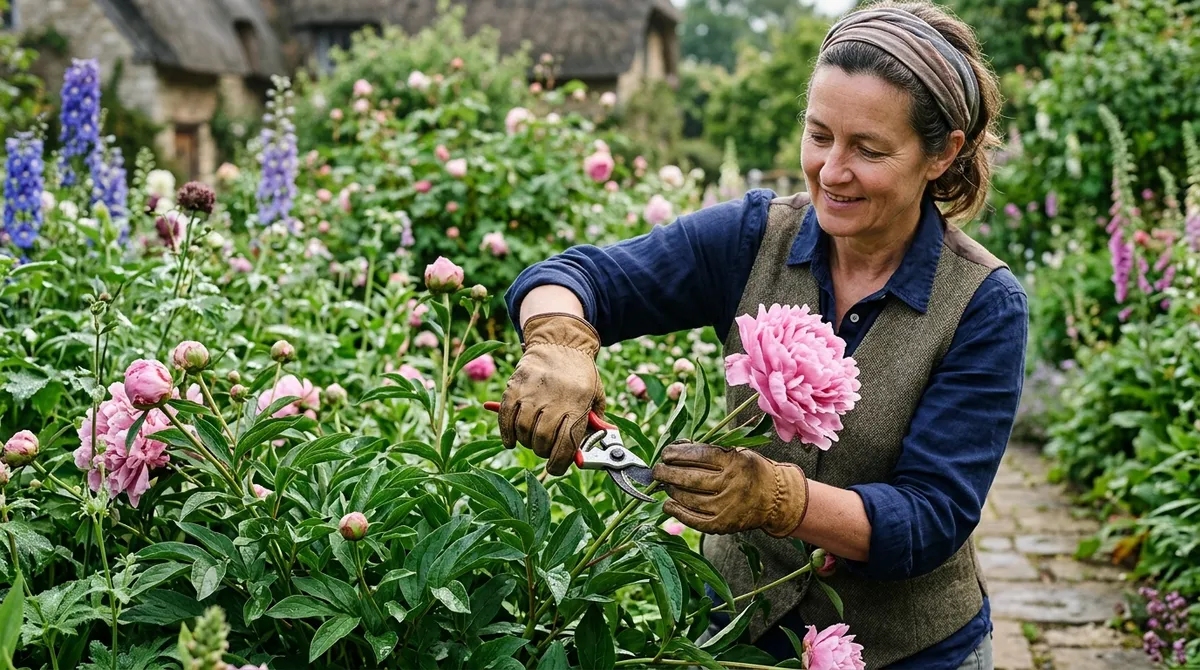
The aim: a heavy peony bloom held upright, with the ring completely hidden inside the leaves.
Common staking mistakes
- Staking too late. Supports added after a flop tie up a ruined shape. Put them in during spring.
- Supports too short. The top third flops over the rim. Aim for two-thirds of the final height.
- Tying too tight. Tight loops strangle stems as they thicken. Tie loosely in a figure of eight.
- Rings for spike plants. Delphiniums and lupins need a cane each.
- Bare canes everywhere. Use supports the leaves can hide, and push canes in behind the stems.
For more seasonal border jobs, browse our how-to guides.
Frequently asked questions
When should you stake tall perennials?
In spring, when the shoots are about 20-30cm tall. The plant then grows up through the support and hides it. Staking after a plant has flopped is much less successful.
How do you stake perennials without it looking ugly?
Put grow-through rings or link stakes in early. By flowering time the leaves hide them. Dark green or rusty metal supports blend in best, and so do twiggy pea sticks.
What is the best support for delphiniums?
A sturdy cane for each flower spike, with soft ties. Tie the spike in at two or three points as it grows. A ring alone won’t hold tall, heavy spikes in wind.
Do peonies need staking?
Most big, double-flowered peonies do. Their heavy blooms fill with rain and drag the stems down. Put a peony ring over the crown in early spring as the red shoots appear.
Can you stake a perennial that has already flopped?
Yes, but it rarely looks as good. Gently gather the stems into a ring or tie them to a few canes. Then make a note to stake it earlier next year.
What can I use instead of buying plant supports?
Twiggy pea sticks from hazel, birch or shrub prunings are free. Push them in among the young shoots in spring. The plant grows up through them and hides them.
Now your border is standing tall, read our guide to the best UK peony varieties to pick sturdy peonies for next year.
Our team produces practical UK gardening guidance from source research, contributor records and established horticultural practice. Editorial standards are overseen by Matt W.