Key takeaways
- Stake perennials in April, when shoots are 15 to 20cm tall and still flexible
- Grow-through rings are best for bushy, heavy-headed plants like peonies
- Single canes suit tall, single-stemmed plants like delphiniums and hollyhocks
- Hazel pea sticks look natural and suit lighter perennials and sweet peas
- Put supports in at planting time for beans, sweet peas and tomatoes
- Tie with soft twine in a figure-of-eight, and leave room for stems to thicken
Good staking is the difference between a border that stands tall through a July storm and one that flops overnight. The trick is to do it early, before plants need it, and to pick the right support for each plant.
When should you stake garden plants?
Stake early, before you think you need to. Once a stem has bent or snapped, no amount of twine will fix it.
For perennials like delphiniums, peonies and tall asters, put supports in during early April. The shoots should be about 15 to 20cm tall. They’re still bendy then and will grow up around the support. By June the leaves hide it completely.
For climbers, put supports in at planting time. Runner beans, sweet peas and cucumbers need something to grab from day one. Adding supports later can disturb the roots.
For dahlias, push the stake into the hole before you plant the tuber. That way you won’t spear the tuber later when you can’t see it.
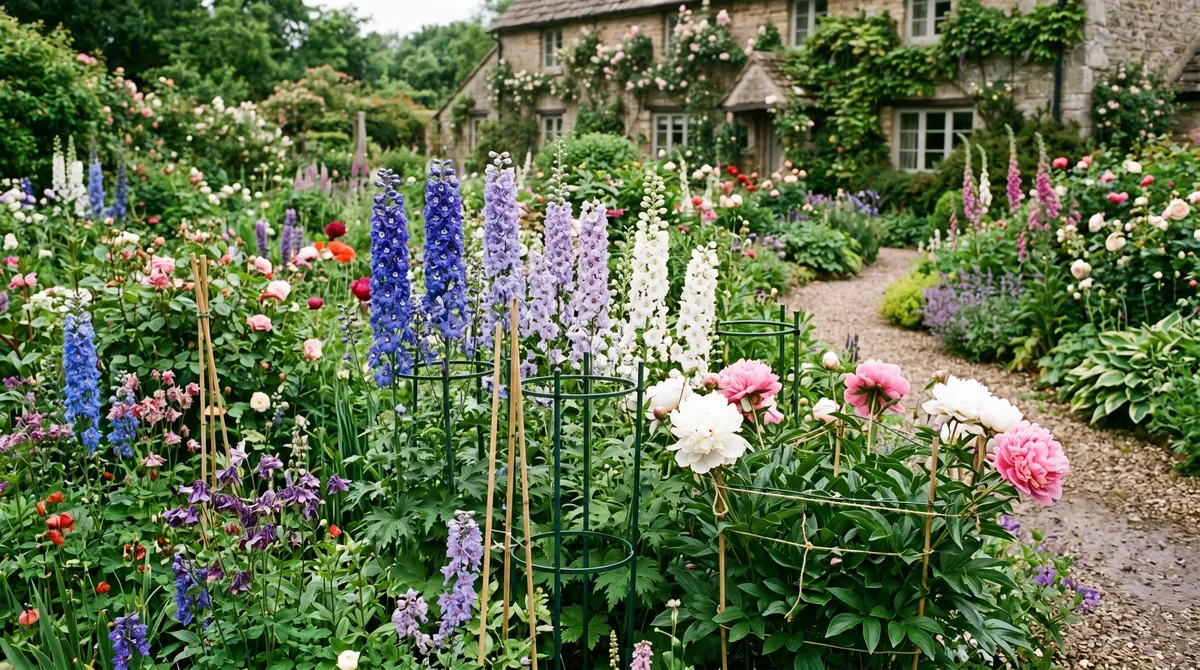
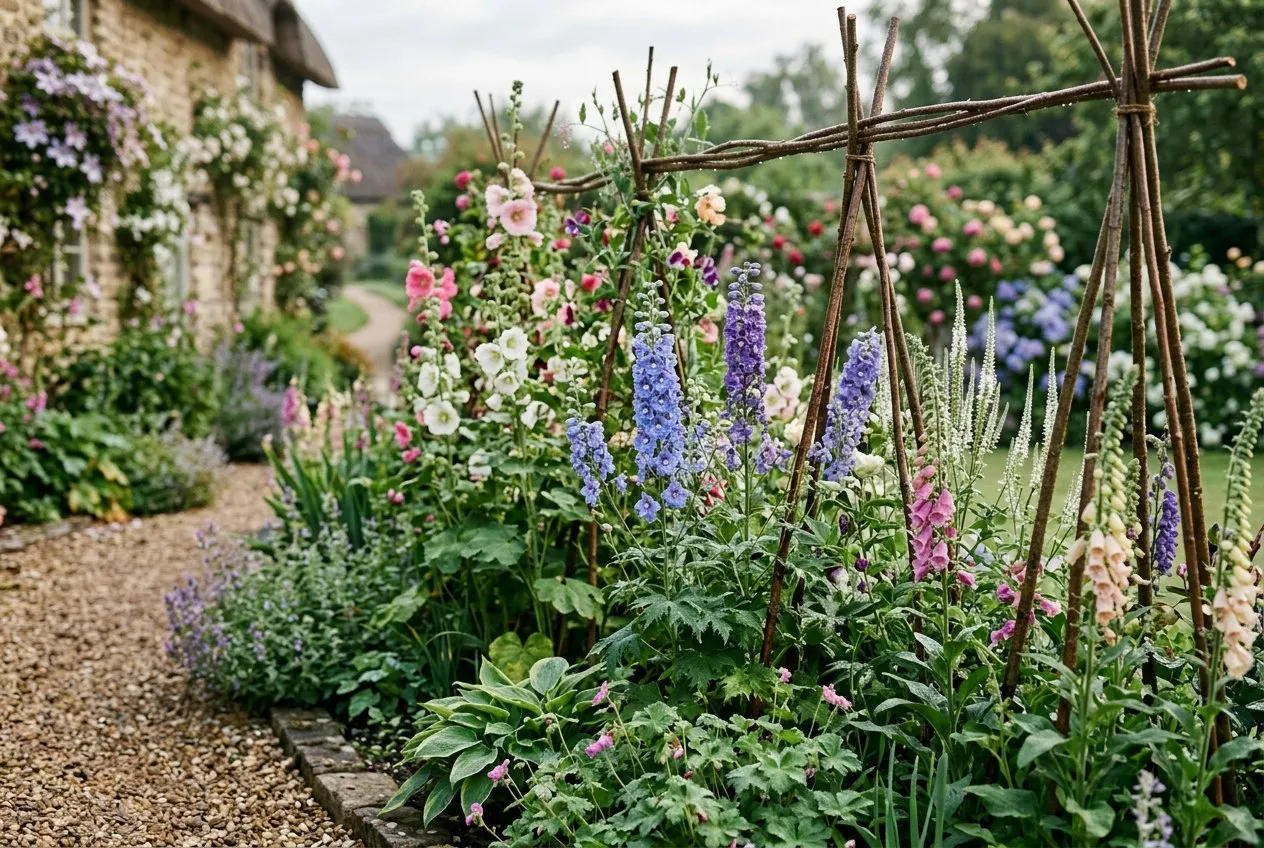 Hazel pea sticks give tall perennials natural-looking support in a cottage border.
Six ways to support plants
Each type of support suits different plants and styles. Here’s a quick comparison.
| Method | Lasts | Best for | How it looks |
|---|---|---|---|
| Single bamboo cane | A few seasons | Delphiniums, lilies, single-stemmed plants | Visible |
| Grow-through ring | Many years | Peonies, asters, tall geraniums | Hidden by June |
| Hazel pea sticks | One season | Lighter perennials, sweet peas, hardy annuals | Natural |
| Metal obelisk | Many years | Clematis, climbing roses, sweet peas | A feature in itself |
| Bamboo wigwam | A few seasons | Runner beans, French beans, squash | Visible |
| Trellis or netting | Years for metal, a season or two for plastic | Wall-trained fruit, climbing plants, peas | Fixed to a wall or fence |
Single bamboo cane and twine
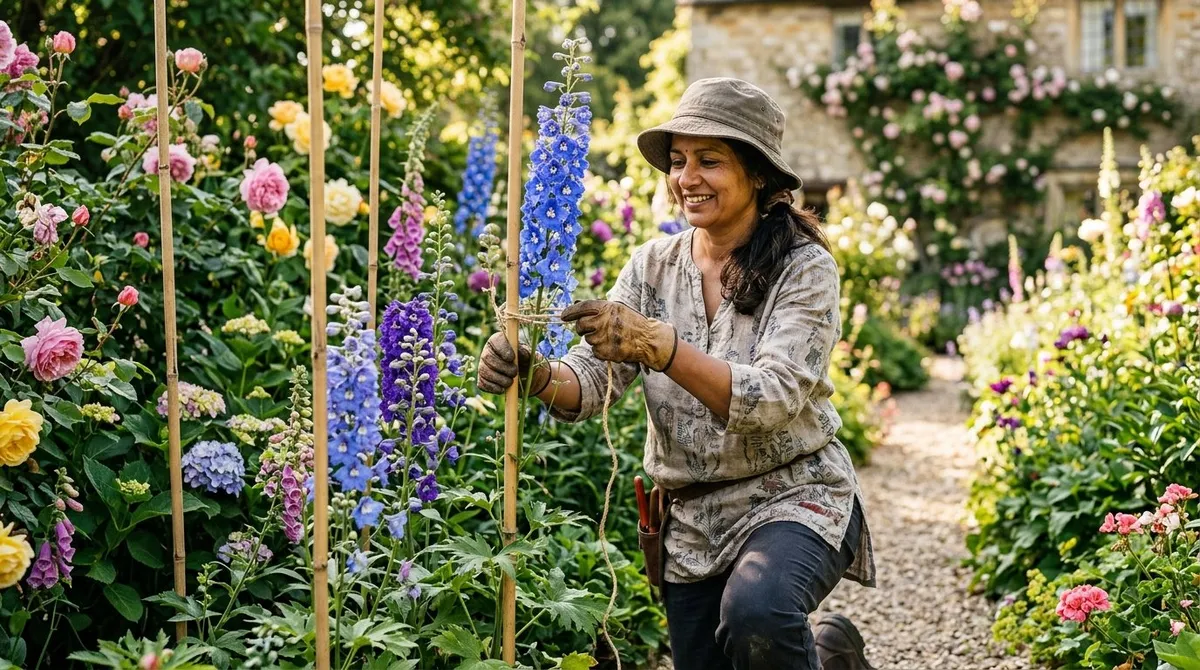
The simplest method. Push a cane firmly into the soil beside the plant and tie the stem in two or three places as it grows. It’s ideal for plants with one tall main stem.
Best for: delphiniums, hollyhocks, standard roses, tall lilies, gladioli and sunflowers.
How to tie: Use a figure-of-eight. Loop the twine round the cane, cross it over, then loop it loosely round the stem. The cross keeps the stem from rubbing on the cane.
Use soft jute twine or plant ties with a foam cushion. Avoid wire, cable ties and thin string, as they cut into stems as they grow.
Grow-through ring supports
A metal grid on legs that you set over the plant in early spring. The stems grow up through the gaps and the leaves soon hide it.
Best for: peonies, tall perennials, asters, heleniums, Verbena bonariensis and tall hardy geraniums.
Choose galvanised or powder-coated steel. They cost more than plastic but last for years. Cheap plastic rings tend to buckle under heavy peonies.
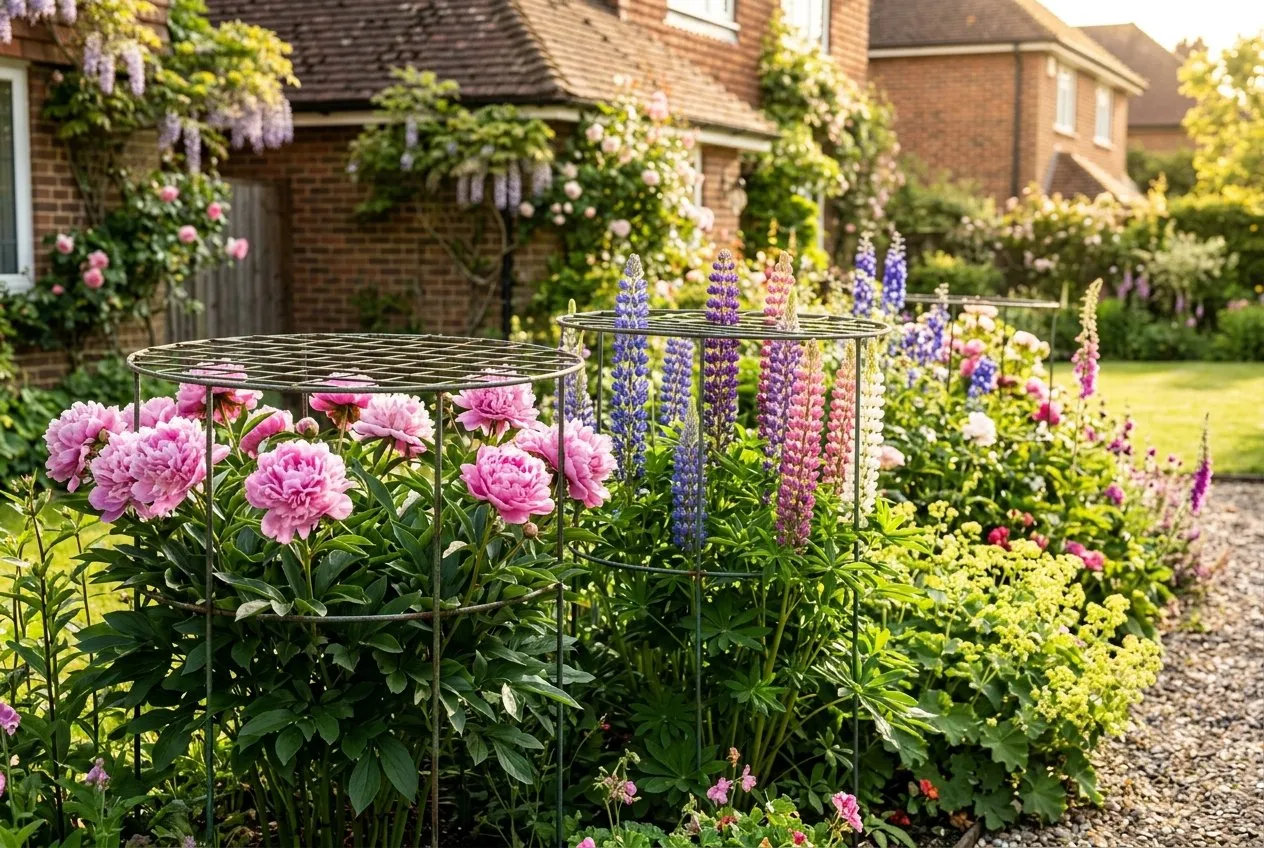 Metal rings holding up peonies and lupins. By midsummer the leaves hide them completely.
Hazel pea sticks
The traditional cottage garden way. Push twiggy hazel or birch sticks into the soil around a clump. Bend the tops inwards and weave them together to make a natural cage.
Best for: sweet peas, lighter perennials, cornflowers, larkspur and hardy annual cut flowers.
If you have your own coppiced hazel, pea sticks are free. Otherwise, some nurseries sell bundles. They last a season and then go on the compost heap. The RHS staking guide has helpful pictures.
Pea sticks are perfect for cottage garden planting, where metal supports can look out of place.
Obelisks and plant pillars
Tall freestanding frames in metal or wood. They hold up climbers and look lovely in borders and big pots.
Best for: climbing roses, clematis, sweet peas and annual climbers like morning glory and black-eyed Susan.
Metal obelisks last for years. Wooden ones need a coat of preservative now and then. Put the obelisk in before you plant, then train new shoots up from the bottom.
Bamboo wigwams
A ring of canes pushed into the soil and tied together at the top. It’s the classic allotment support for climbing veg.
Best for: runner beans, French beans, climbing courgettes and outdoor cucumbers.
Use tall canes, about 2.4m, and push each one well into the soil. Space six to eight canes evenly round a circle about 60cm across. Tie the tops together tightly with plenty of turns of strong twine.
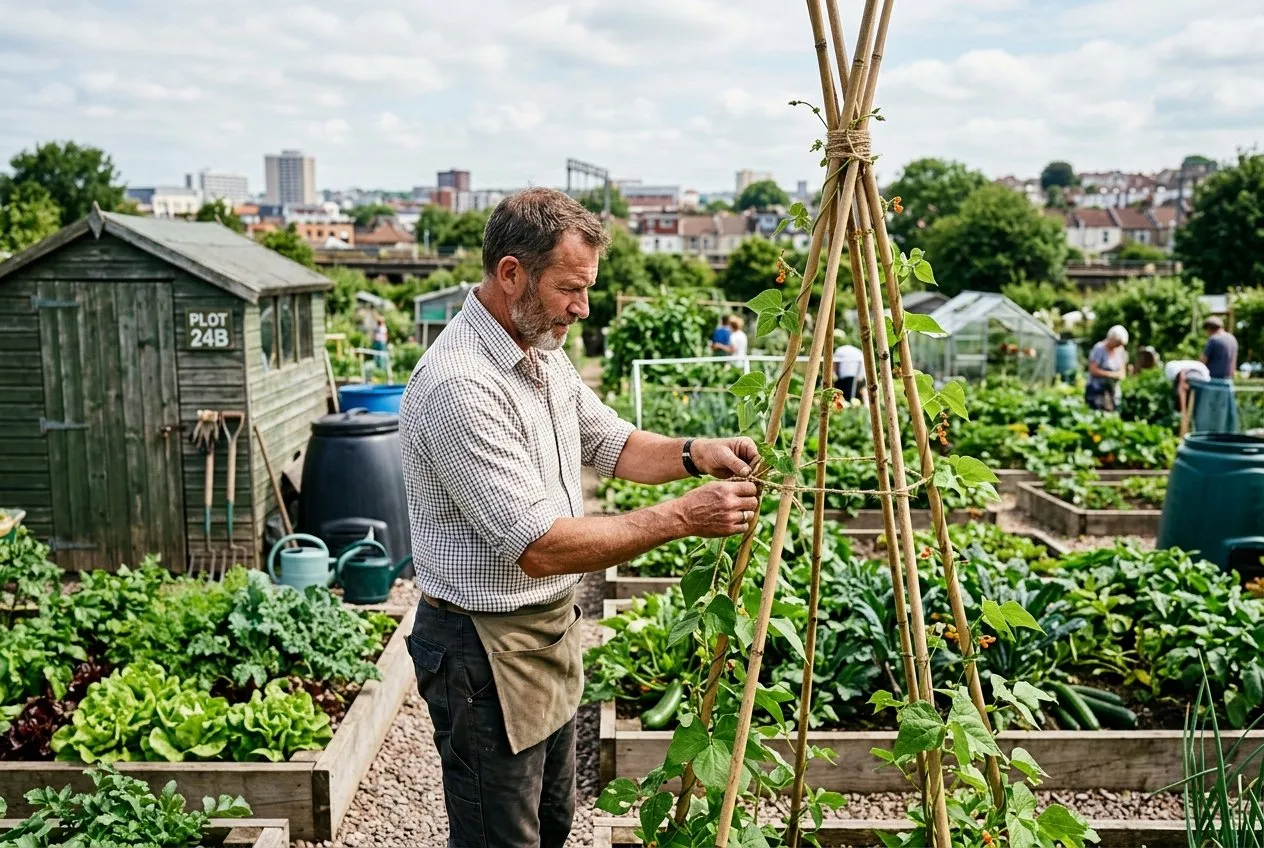 An eight-cane wigwam holding up runner beans. Tie the top firmly so it doesn’t collapse under the crop.
Trellis, netting and wall training
Supports fixed to walls, fences or posts. Use trellis panels, wires or netting.
Best for: espalier and fan-trained fruit, peas, wall climbers and wall shrubs.
For wall-trained fruit, fix horizontal wires about 30cm apart using vine eyes. They’ll last for years. For peas and annual climbers, netting stretched between posts is cheap and does the job for a season.
Plant-by-plant staking guide
Here are the plants most often staked in UK gardens and what suits each.
| Plant | Best support | When | Good to know |
|---|---|---|---|
| Delphiniums | Single cane per stem | April | Tie in as the stem grows |
| Peonies | Grow-through ring | April, early | Get the ring in before buds form |
| Dahlias | Single thick cane | At planting | Put the stake in before the tuber |
| Tall asters | Grow-through ring | April | Pinch tips in May for bushier plants |
| Hollyhocks | Single cane | April | May need two canes in windy spots |
| Sweet peas | Pea sticks or obelisk | At planting | Pinch out the tips for more branches |
| Runner beans | Wigwam | At sowing or planting | Tie the top tightly |
| Tomatoes | Single cane or string | At planting | Remove sideshoots weekly on cordon types |
| Sunflowers | Single thick cane | When knee-high | Use thick canes for giant ones |
| Gladioli | A cane per group | At planting | Tie loosely as the spike grows |
| Lupins | Ring or pea sticks | April | Heavy spikes snap in rain without support |
| Clematis | Obelisk or trellis | At planting | Guide young stems with loose ties |
What to buy and what to avoid
Good buys:
- Thick bamboo canes, which last longer than thin ones
- Galvanised steel grow-through rings, which last for years
- Soft jute twine, which rots down on the compost heap
- Cushioned plant ties, which you can reuse
- Hazel pea sticks, cut yourself or bought in bundles
Best avoided:
- Thin plastic-coated wire, which cuts into stems
- Cable ties, which strangle stems as they thicken
- Cheap plastic rings, which buckle and go brittle in sunlight
- Canes that are too short. Match the cane to how tall the plant will grow
Common staking mistakes
Staking too late. The big one. By June, stems are stiff and won’t bend into place. You’ll snap them or leave ugly kinks. Stake in April every year.
Tying too tight. Stems thicken over the summer. A tie that fits in May can strangle by August. Leave some slack and check ties every month.
Only tying once. A single tie at the top acts like a hinge, and the stem can snap there in wind. Use two or three ties spread along the stem.
Forgetting about rain. Wet flowers are much heavier than dry ones. That’s why rings work better than single canes for heavy-headed plants like peonies.
Ignoring the wind. On windy sites, put the stake on the side the wind usually comes from. In much of the UK that’s the south-west. The plant is then blown away from the stake rather than rubbing against it.
Frequently asked questions
When should I stake garden plants in the UK?
Stake perennials in April, when shoots are about 15 to 20cm tall. The stems are still bendy and grow around the support easily. Once flowering starts it’s too late, as stiff stems can snap. For beans and tomatoes, put supports in at planting time.
What is the best material for staking plants?
Bamboo canes are the most useful all-rounder. They suit everything from delphiniums to tomatoes. In borders, metal grow-through rings are better as plants hide them by midsummer. Hazel pea sticks suit lighter perennials and cottage gardens.
How do I tie plants to stakes without damaging stems?
Use soft twine tied in a figure-of-eight. Loop it round the stake, cross it over, then loop it loosely round the stem. That stops the stem rubbing on the stake. Never use wire, cable ties or thin string, which cut in as stems thicken.
Do peonies need staking?
Yes, most peonies need support in the UK. The big double flowers get very heavy, especially after rain. Without support they flop into the mud. Put a grow-through ring in place in April and the leaves will hide it by late May.
Can I make my own plant supports?
Yes, hazel or birch pea sticks make lovely free supports. Cut twiggy stems in winter from your own coppiced hazel. Push several sticks round each clump in early spring. Bend the tops in and weave them together to make a natural cage.
How do I support climbing beans on an allotment?
A bamboo wigwam of six to eight canes is the sturdiest choice. Use canes about 2.4m tall, pushed well into the soil. Space them evenly round a circle about 60cm across. Tie the tops together tightly with plenty of turns of strong twine.
How long do bamboo canes last outdoors?
Usually a few seasons in British weather. The bottoms rot first where they sit in wet soil. Thick canes last longer than thin ones. Bring them in under cover over winter and they’ll last even longer.
Our team produces practical UK gardening guidance from source research, contributor records and established horticultural practice. Editorial standards are overseen by Matt W.