
Key takeaways
- Stake every stem early, as the tall hollow stems snap in wind
- Slugs are the biggest threat, so protect new shoots from February
- Cut spikes to the ground after flowering for a second show in September
- Sow seed indoors in February or March and keep it cool
- Magic Fountains are shorter and need little staking
- Plants fade after a few years, so take basal cuttings in April to keep favourites going
Delphiniums are the stars of a classic English border. Nothing else gives you those tall columns of pure blue in midsummer. They do take a bit of effort, as they need staking, slug protection and the right spot. But a clump in full flower in June is one of the most striking sights a garden can offer.
Below you’ll find everything from choosing varieties and sowing seed to beating slugs and cutting back for a second show. Delphiniums team up beautifully with lupins, foxgloves and sweet peas in a cottage garden planting plan.
Which delphinium varieties should I grow?
The tall border delphiniums are the ones you see in every classic English garden. They have bold spikes in blue, purple, white and pink, flowering in June and July.
| Variety | Height | Colours | Best for |
|---|---|---|---|
| Pacific Giants | Tall | Blue, purple, white, pink, lavender | Growing from seed, back of the border |
| New Millennium series | Tall | Lots, including two-tones | Sturdy, longer-lived named plants |
| Centurion series | Medium to tall | Blue, white, pink, sky blue | Cut flowers |
| Magic Fountains | Short | Blue, white, lavender, cherry | Windy spots, small gardens |
| ’Black Knight’ | Tall | Deep violet with a black centre | Dramatic drifts |
| ’Blue Nile’ | Tall | Mid-blue with a white centre | The classic border blue |
Pacific Giants are the usual choice from seed. Sown early indoors, they can flower in their first summer. Plants from one packet vary a little in shade, but they’re even in height.
New Millennium hybrids come from New Zealand and are generally sturdier and longer-lived than Pacific Giants. Named ones such as ‘Purple Passion’ and ‘Morning Lights’ are grown from cuttings, so they come true, and they stand up to the weather better.
Magic Fountains are a short strain that needs little or no staking. They’re the right choice for windy gardens.
For named varieties, the RHS Award of Garden Merit list is a great place to start, as these plants have been judged good garden performers.
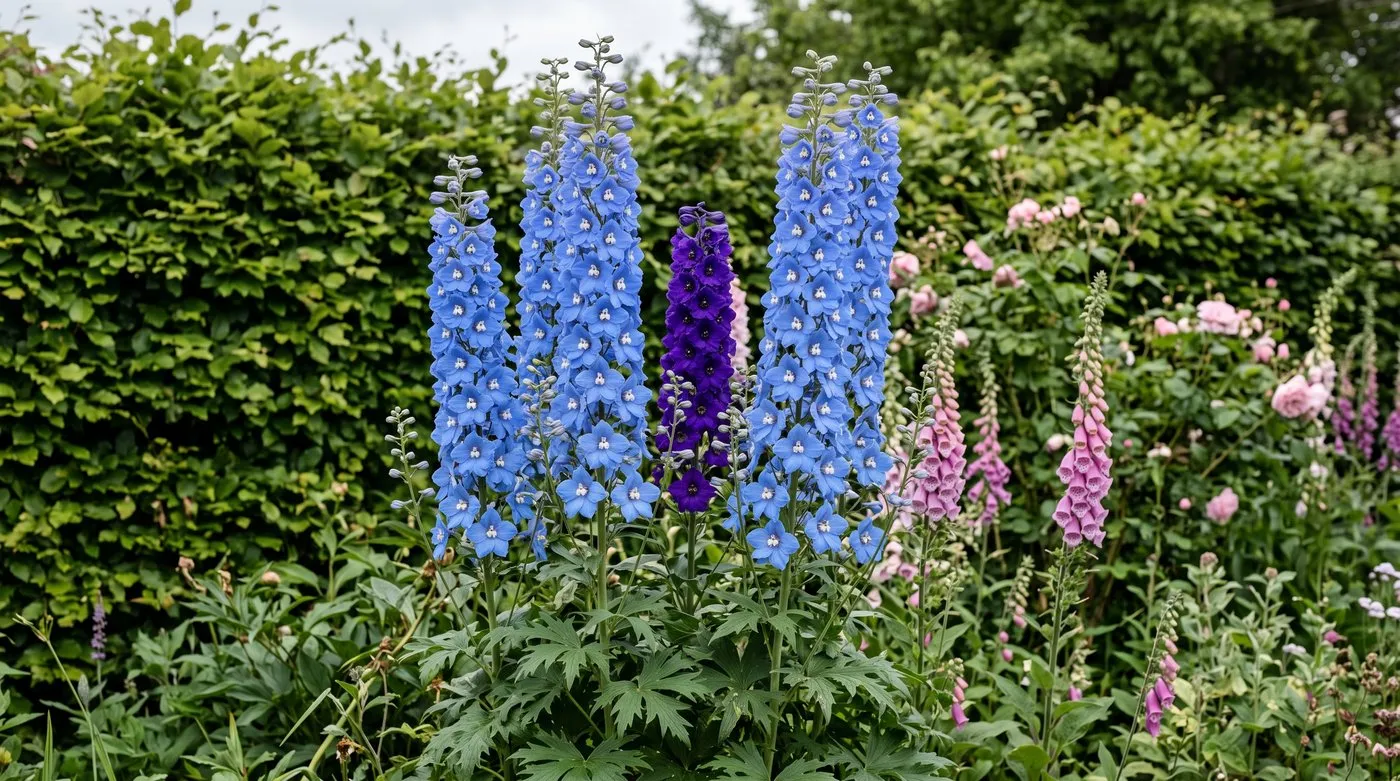
Mid-blue with a white eye is the classic border delphinium. Plant a darker violet behind it and the blues really sing.
What do delphiniums need?
Delphiniums are clear about what they like, and they sulk if they don’t get it.
Full sun. At least six hours of direct sun a day gives the strongest plants. In shade, they lean towards the light, flower less and get more mildew.
Rich, moist soil. They’re hungry plants. Before planting, dig in two or three buckets of well-rotted manure or garden compost per square metre. Our companion planting guide has ideas for neighbours that help shade the soil. Mulch 5 to 7cm deep every April to keep moisture in.
Shelter. This really matters. The stems are tall and hollow and snap in a strong gust. A wall, fence or hedge on the windy side helps a lot. Even in shelter, stake every stem.
Good drainage. They like moisture in summer but hate sitting wet over winter. Mix grit and organic matter into heavy clay before planting.
How and when to plant delphiniums
Pot-grown plants can go in from spring to early summer. Plant at the same depth as in the pot, water well and mulch straight away. Space them 60 to 90cm apart, as they bulk up fast and need air around them to keep mildew away.
Bare-root plants and divisions are best planted in October or November, or in March or April, when the soil is moist and mild. Autumn planting gives the roots a head start.
Mix a handful of general fertiliser into the bottom of the planting hole. Each spring, give established clumps a general feed to set them up for flowering.
How to grow delphiniums from seed
Growing from seed is easy if you use fresh seed and keep it cool.
Sowing indoors (February to March):
- Fill 7.5cm pots or seed trays with multi-purpose compost. Firm and water.
- Scatter seed thinly on top and cover with a fine layer of vermiculite.
- Keep somewhere cool, about 15 to 18°C. They don’t like too much heat.
- Seedlings usually appear in two to three weeks. Keep the compost moist.
- Prick out seedlings into their own pots once they have two true leaves.
- Harden off for a week or so, then plant out after the last frost, usually mid-May.
Our seed sowing calendar has timings for other plants, and our guide on how to sow seeds indoors covers propagators and aftercare.
Sowing outdoors (May to June):
Sow straight into a prepared seedbed. Thin to 15cm apart, then move them to their final spot in autumn. These flower the following year.
Use fresh seed. Delphinium seed doesn’t keep well, and old seed comes up patchily. Store spare seed in a sealed tub in the fridge, not the freezer.
How to stake delphiniums
Staking is the most important job of all. Leave it late and you’ll be tying bent stems to canes rather than training straight ones.
Put canes in when shoots reach 20 to 30cm, usually late April to early May. Use canes a little taller than the expected height of the plant. Push them in firmly, about 10 to 15cm from each main stem.
Tie stems with soft twine in a loose figure of eight. Add a new tie every 30cm or so as the stem grows. A stem tied at the bottom and middle but not the top can still snap.
In very windy gardens, put metal grow-through supports over the crowns in March, before growth starts.
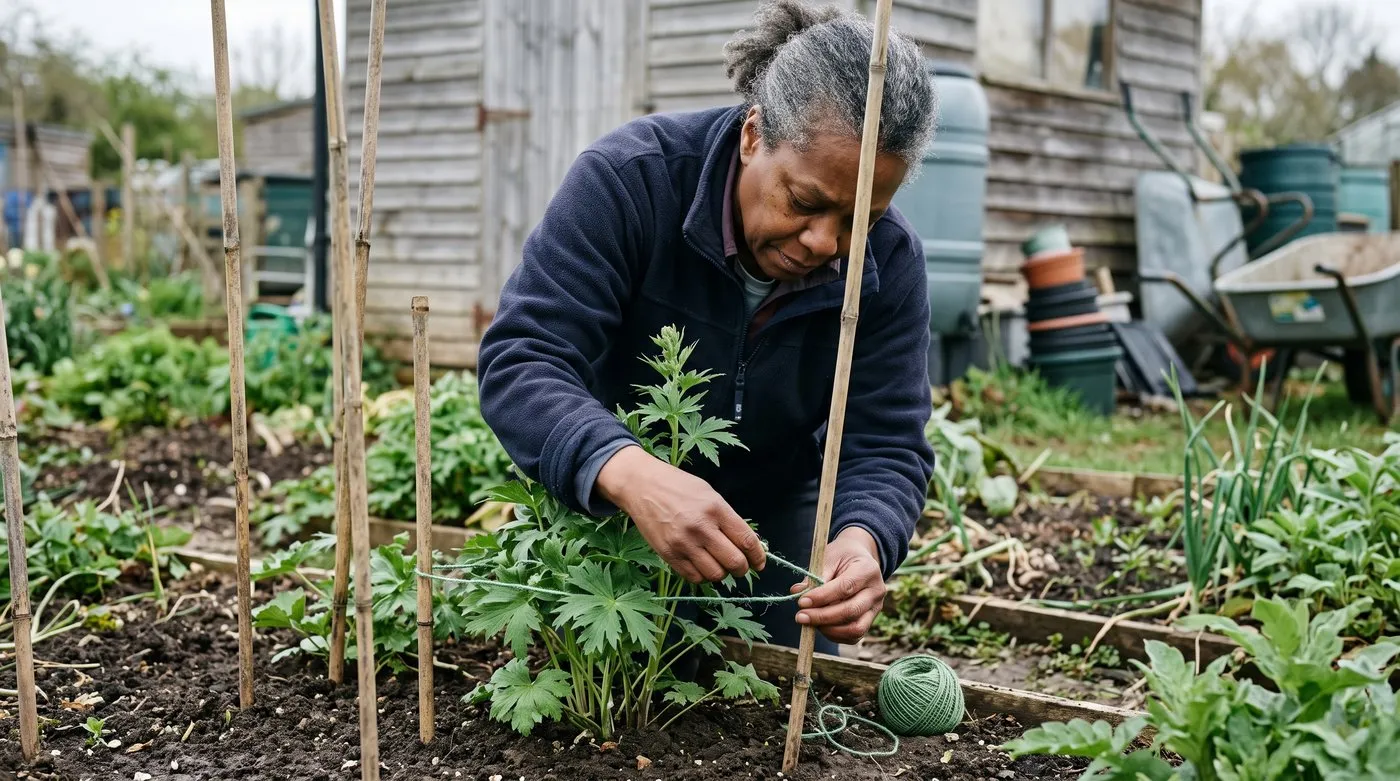
Get canes in while the shoots are still short, then add a loose tie every 30cm or so as the stems grow.
How to protect delphiniums from slugs
Slugs are the biggest danger, especially in late winter and spring when new shoots are soft and tasty. One bad night can strip a whole crown.
Start in February, before shoots show. In mild weather, slugs are already about and will nibble the crown before you see any growth.
Ways to stop them:
- Ferric phosphate slug pellets, scattered thinly around the crowns every week or so from February
- Copper tape or rings around single crowns
- Sharp grit spread around the crowns, which slugs don’t like crossing
- Slug-killing nematodes watered in once the soil is warm enough, usually from late March
- Torch patrols on damp evenings in March and April
Keep going until the stems toughen up, usually by mid-May. New shoots after the July cut back need protecting too.
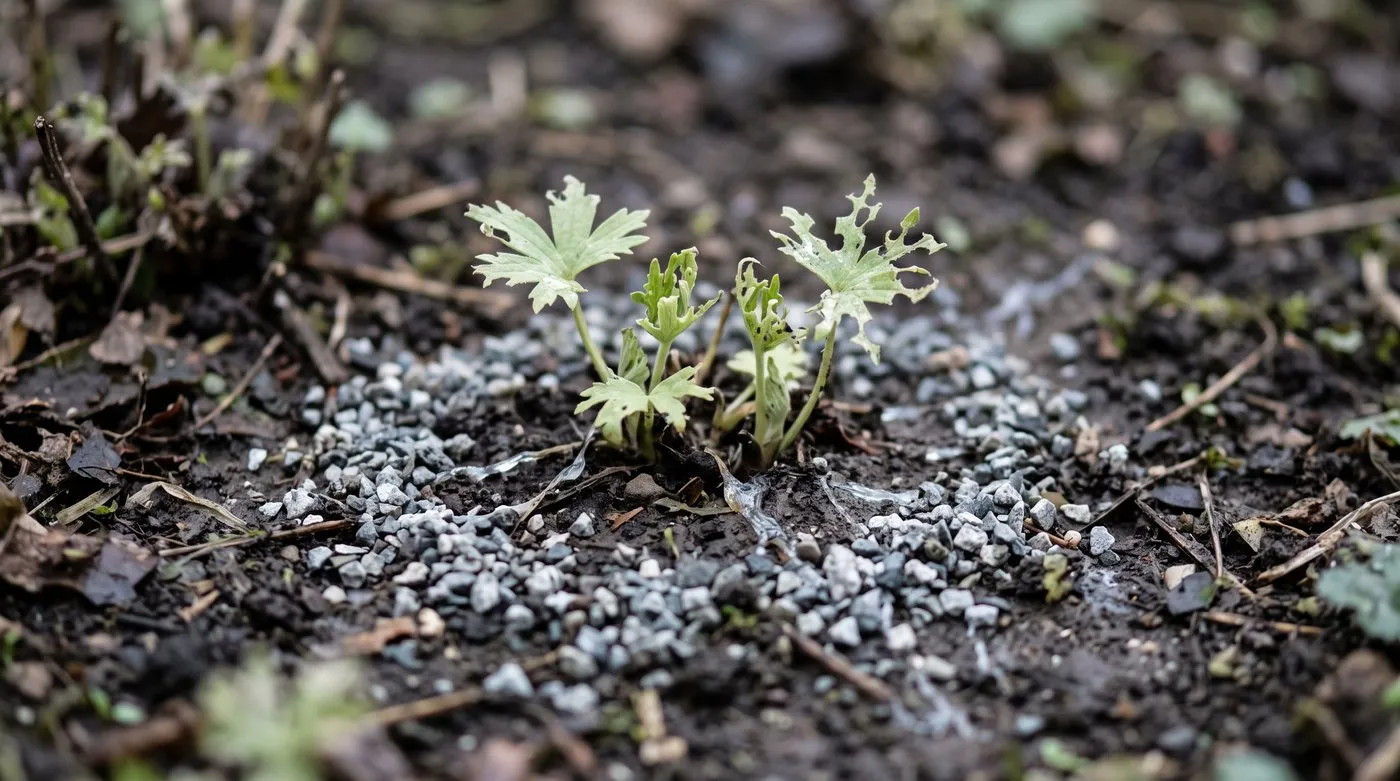
Ragged holes and silvery trails on new shoots mean slugs have found the crown. Start protecting in February, before you see any growth.
How to get a second show of flowers
Cut the spikes down to the ground as soon as they finish, usually mid-July. New shoots appear within a couple of weeks. Feed straight away with a tomato feed at the strength on the bottle.
The second flowers open in late August to September. They’re smaller than the first, but in a warm September they can be lovely. It’s one of the delphinium’s best-kept secrets.
Our spring gardening jobs guide covers the soil prep, staking and feeding that set a border up for this.
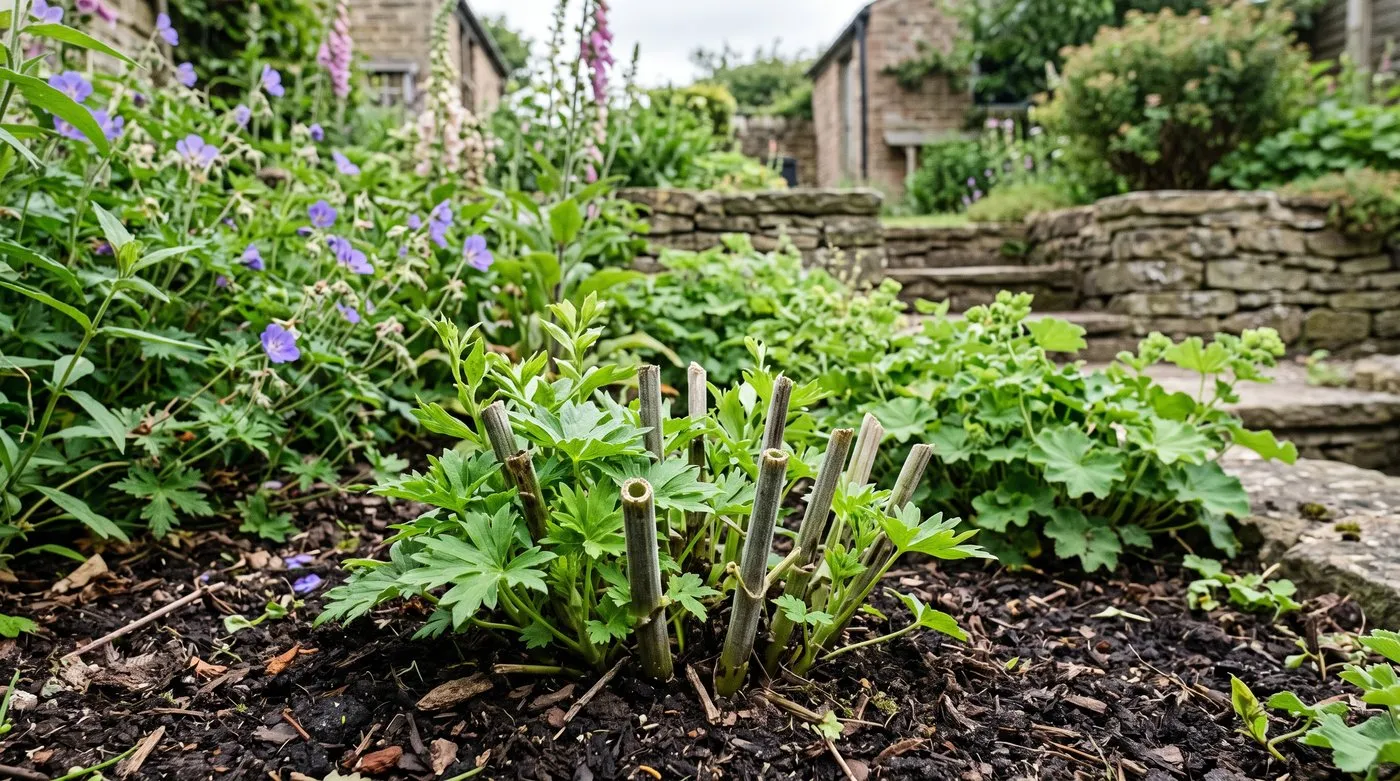
Cut spikes to the ground as soon as they fade and feed straight away. New shoots like these can flower again in September.
How to take basal cuttings
Delphiniums tend to fade after three or four years, and named varieties don’t come true from seed. Basal cuttings are the way to keep them going.
Take cuttings in April, when shoots at the base are 7 to 10cm tall.
- Cut a shoot right at the base with a sharp knife, taking a tiny sliver of the crown with it.
- Remove the lower leaves, keeping two or three at the tip.
- Push it into a pot of half sharp sand and half perlite.
- Water well and put it in a propagator, or cover with a clear plastic bag.
- Roots usually form in three to four weeks. Pot on when roots reach the edge of the pot.
- Harden off and plant out in late May or early June.
Take three to five cuttings from each plant, as not all will root. It’s also a lovely way to share plants with friends.
Dealing with powdery mildew
Powdery mildew is a white, dusty coating on leaves and stems. It’s common in dry summers, especially on the new growth after cutting back. It rarely kills plants, but it weakens them.
Prevention works best:
- Water well at the roots, especially in August and September
- Mulch to keep the soil moist
- Space plants 60 to 90cm apart for airflow
- Choose resistant varieties, such as the New Millennium series
For light attacks, pick off the worst leaves. Don’t use home-made sprays such as milk. If you need a fungicide, choose one approved for home garden use and follow the label exactly. Water in the morning and avoid wetting the leaves.
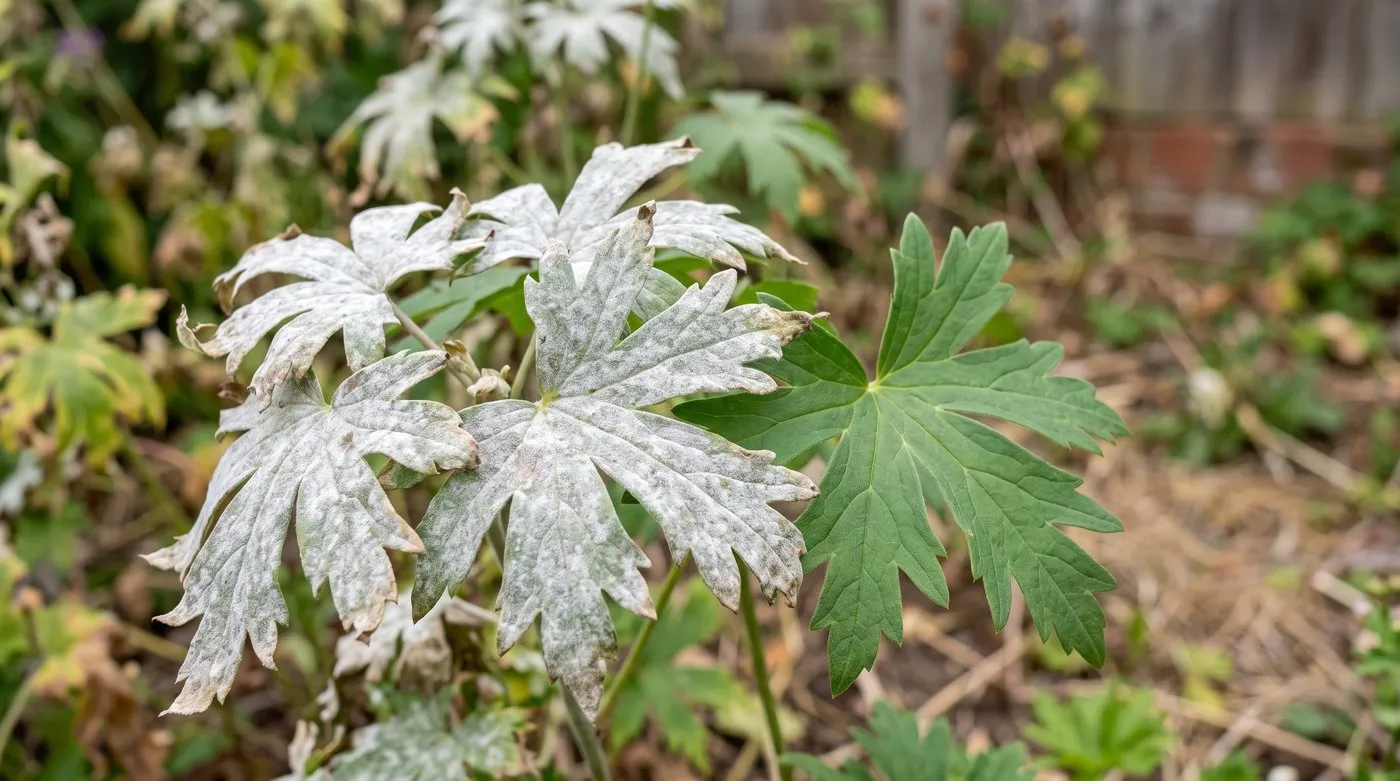
That white, dusty coating is powdery mildew. Watering at the roots in dry spells and giving plants room to breathe does more than anything else.
Delphinium jobs month by month
| Month | What to do |
|---|---|
| February | Start slug protection. Order bare-root plants. |
| March | Sow seed indoors. Feed established plants. |
| April | Take basal cuttings. Start staking when shoots reach 20 to 30cm. |
| May | Plant out seedlings after the last frost. Tie in stems. |
| June | Flowering starts. Water deeply in dry spells. |
| July | Cut spikes to the ground after flowering and feed straight away. |
| August | Second flush grows. Water and watch for mildew. |
| September | Second flowering. Deadhead to stop self-seeding. |
| October | Cut everything down after the first frost. Mulch crowns with compost. |
| November to January | Resting. Mark where the crowns are so you don’t dig them up. |
Now you’ve got delphiniums sorted, read our guide on growing lupins in the UK next.
A strangely flattened, broad flower spike is usually harmless fasciation.
Delphiniums repay the effort. Stake early, start slug control in February and pick a sheltered spot. Do those three things and you’ll have some of the most striking spires in any garden, in June and again in September. If that sounds like too much work, baptisia gives similar indigo spires with no staking and no slug patrols.
For a border built around delphiniums, roses add summer structure while sweet peas bring scent. Need plenty of organic matter for the soil? Our guide on how to make compost shows how to make your own. And the Delphinium Society lists specialist nurseries and runs a seed scheme if you want to try more named varieties.
Frequently asked questions
When do delphiniums flower in the UK?
Mainly in June and July. Cut the spikes back to the ground after flowering and feed, and a second, smaller show often follows in late August or September. It’s shorter than the first, but well worth having.
How tall do delphiniums grow?
The tall border types usually reach 1.2 to 2m. Pacific Giants are typically 1.5 to 1.8m. Dwarf Magic Fountains stay at about 70 to 80cm, which makes them good for windy gardens or the front of a border. Rich, well-prepared soil gives taller spikes.
Do delphiniums come back every year?
Yes, but they don’t live very long. Most do well for three or four years, then start to fade. Sow fresh seed every couple of years to replace seed-grown plants, and take basal cuttings in April to keep named varieties going.
How do I stop delphiniums from falling over?
Stake every stem with its own bamboo cane early on. Put the canes in before the stems reach 30cm, and tie in with soft twine as they grow. Plant in a sheltered spot, and in windy gardens choose sturdier or shorter varieties.
What is the best soil for delphiniums?
Rich, moist soil that drains well, with plenty of organic matter. Dig in a couple of buckets of well-rotted manure or garden compost where each plant will go. They cope with most soils but struggle in soggy clay or thin, dry sand. Mulch every spring to hold in moisture.
Are delphiniums poisonous?
Yes, all parts are poisonous to people and animals. Eating them can cause vomiting and muscle weakness, and can be serious. Wear gloves when cutting back or taking cuttings. Keep children and livestock away from the plants.
How do I protect delphiniums from slugs?
Start in February, before the shoots appear. Scatter ferric phosphate pellets thinly around the crowns, or use a slug-killing nematode once the soil is warm enough. Grit and copper rings help as barriers. Keep going until the stems toughen in May, and again for new shoots after the July cut back.
Our team produces practical UK gardening guidance from source research, contributor records and established horticultural practice. Editorial standards are overseen by Matt W.


